In FY24 the state supported Chicago to St. Louis trains carried 586,200 riders and had an average load factor of 50.5%. They cost state and federal taxpayers approximately $24.9 million before amortization of capitalized expenditures, which was an average operating subsidy of $42.47 per rider. For the three years ended FY24 ridership increased 23.2%.
Comparatively, the average load factor for all the state supported trains was 38.4%. For the three years ended FY24 ridership increased 42.1% The average cost to the state and federal taxpayers per rider was $41.51
The Chicago/St. Louis trains appear to be well patronized. Whether speeding them up would draw significantly more riders willing to cover the incremental cost is problematic. Many if not most of the passengers are not end point to end point riders; speeding up the train(s) for them probably would have a sliding marginal return.
There is talk about rerouting the trains between Joliet and Chicago via Metra’s Rock Island. There are a lot less railroad crossings at grade via the Rock, however you run the risk of following a commuter if Amtrak is out of slot.
I don’t have any dogs in this fight. However, for an investment of $2 billion I agree with @JL_Chicago that the tax payers should have gotten a little more bang for their buck in terms of reduction of overall travel time.
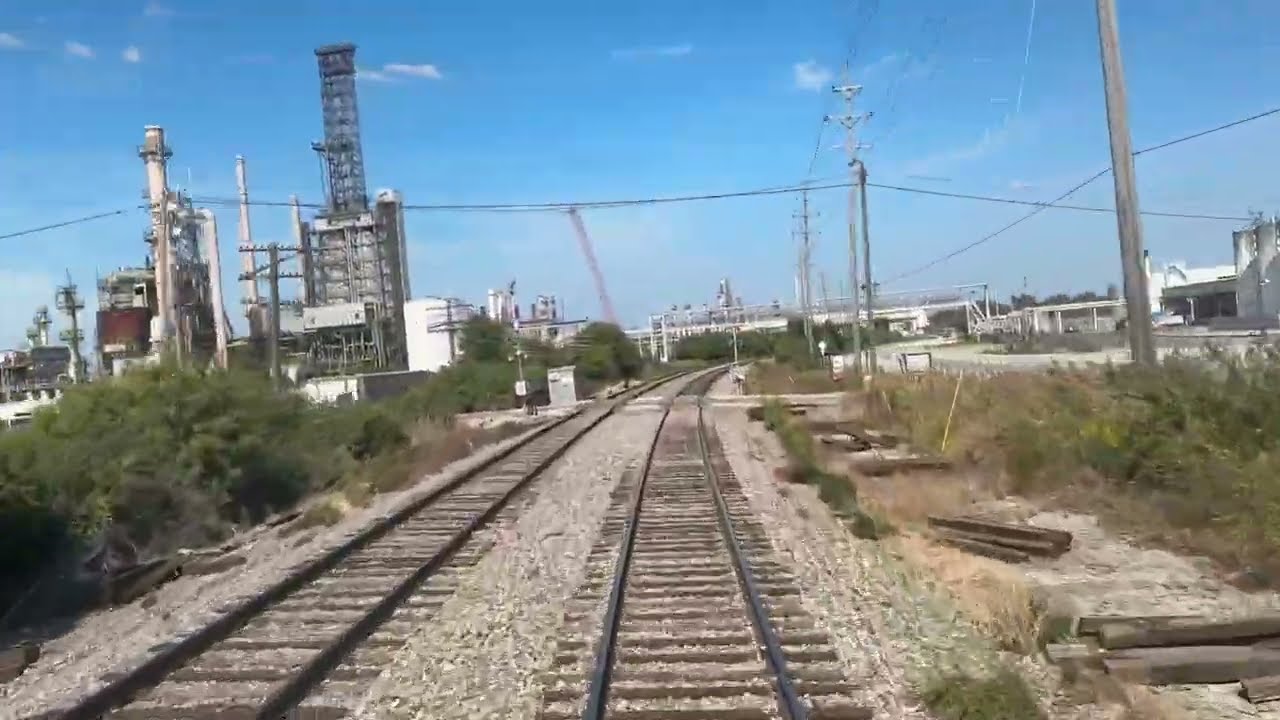
I found the Metra Heritage Corridor cab ride video linked below. The train makes pretty good time until it hits the series of high traffic rail crossings at CP Canal (IHB), Lemoyne (BRC), Corwith (BNSF), and Brighton (NS/CSX). Track condition deteriorates noticably north of Brighton, with slow 20-25 mph running between Brighton, Bridgeport (jct. with CN’s Freeport Sub), and 21st Street (jct. with NS’ ex-PRR line). One “gem” along this stretch is where 3 tracks narrow to 1 track between two switch points before splitting back into 3 tracks again (2 to Union Station and 1 to CN’s St. Charles Air Line route). From 21 Street on into Union Station its all 10 mph. Also of note in the video is Amtrak 21 getting jammed up behind a Global IV transfer train at CP Canal and waiting for the Metra train to pass in order to cross over to Main 2 for a runaround move.
Speaking of Chicago, how about the name of a good hotel within walking distance of Union Station. I plan to be in the Windy City for a couple of days in August.
The only way to determine if the money spent to upgrade the Chicago to St. Louis line was prudent would be via an independent audit by a national audit firm, i.e. PWC, EY, KPMG, etc.
The area around Union has long been gentrified so it’s a great neighborhood. I’d recommend using Google Maps and first zoom in on Union Station and then search on hotels. Then pick the dates you’ll be here. I’d avoid south of station only because it’s more industrial and less to do and see.
It will show all hotels with an availability. You can select for your price range and amenities. I’ve had good luck with this. Only suggestion is do not use fly by night apps to book hotel. They are not reliable. Stick with hotel official site or good name third party like Expedia or Priceline etc.
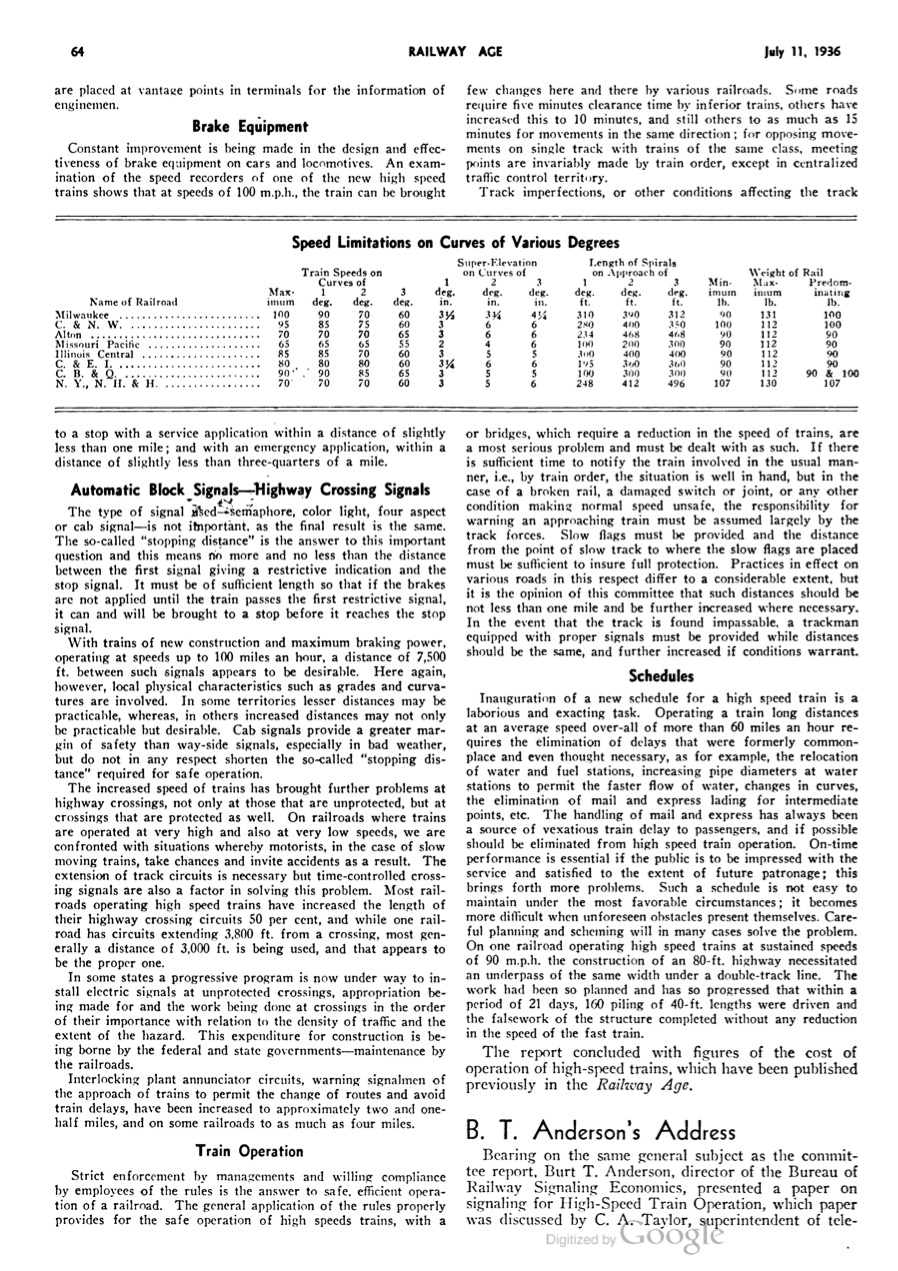
Found a report that described the track improvements made to the lines between CHI-MSP in the 30s. Basically increased cant superelevation on the curves plus adding transitioning spiralling between the tangents and the curves. Interesting to see how different railroads used different standards back then.
Also kind of a hoot that MoPac, Alton, and New Haven were still considered high speed with speeds only in the 65-70 range. Those speeds were high speed before the 30s speed up but those high speeds were also common in the 1890s. Note the Milwaukee was the only 100mph. CNW was 95 and CBQ was 90.
Keep in mind in 1935 these lines were already in pretty good condition. Chicago - Twin Cities was (and is) an important route for each railroad, so were all well maintained. You know, we’re not talking about a TGV electrified train or something. It’s more like making the track a little better, installing more automatic grade crossing signals, adjusting the crossing signal timing to come on sooner to give more time for traffic to stop (since the trains would be coming faster than before), increasing the super-elevation an inch, etc. so you can cut travel time by an hour or so.