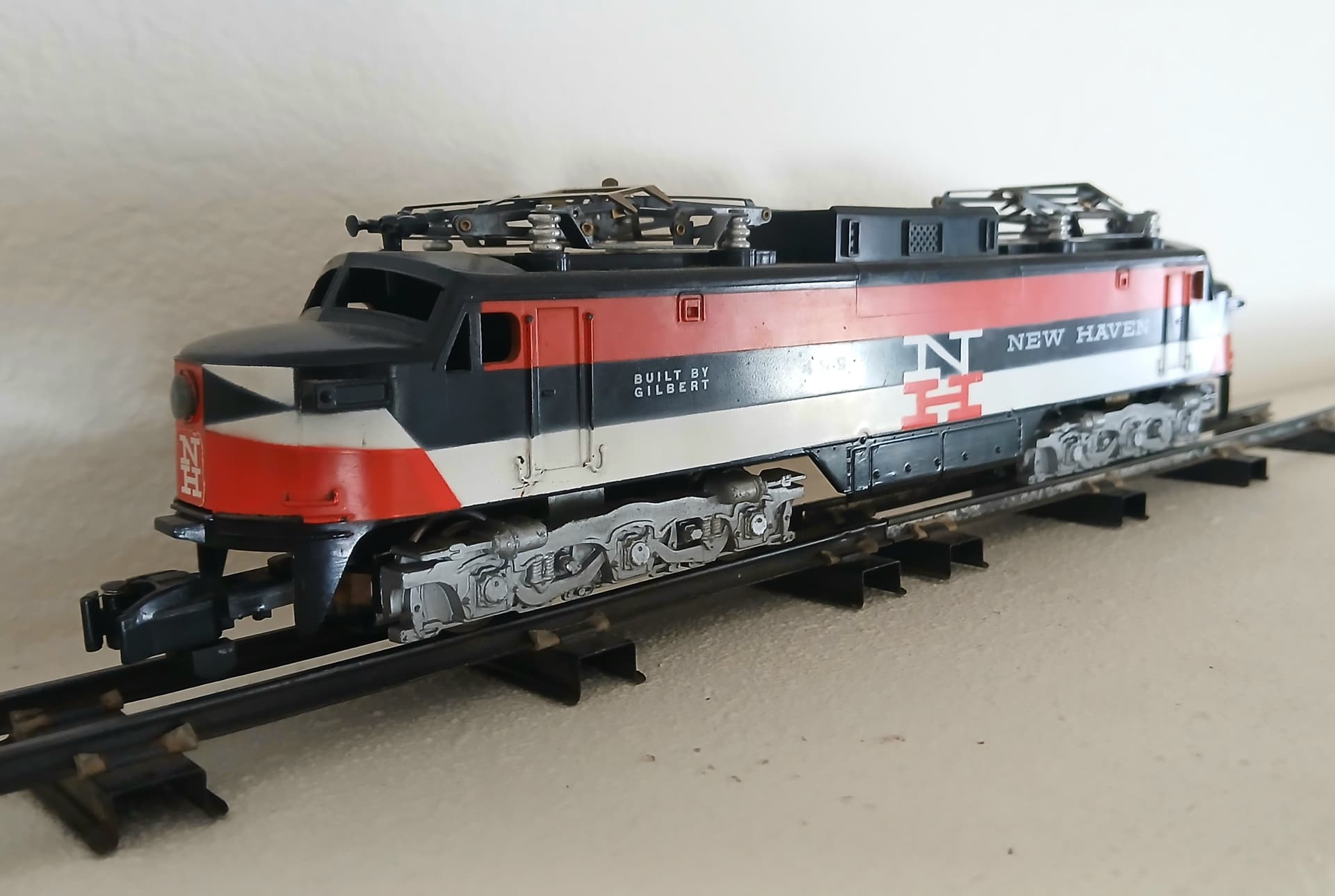
Beautiful Alcos Greg! Here’s a picture of their cousin. It was the first Flyer locomotive I ever ran, and the subject of my profile picture!
7 Likes
Quite right Chuck. Thats why its interesting to see the catalog depict it with a yellow stripe. 
1 Like
Some yellow stripe decal 405’s exist. Bob Bubeck’s Rarity Guide lists them as 5+.
2 Likes
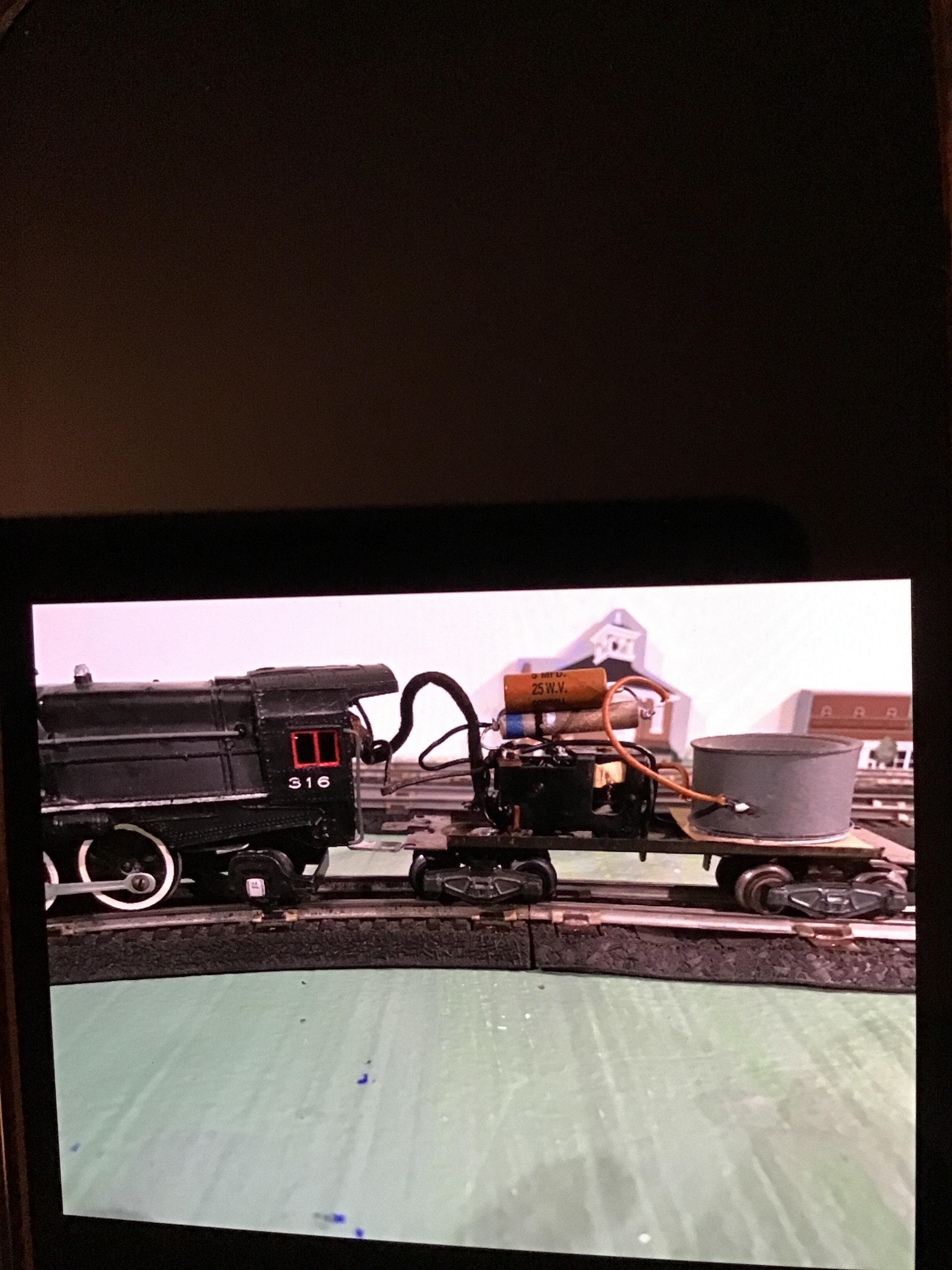
Probably not the right place for this, but, it is my AF 316 , does anybody know what that drum ( speaker? ) is and what or when does it make noise?
2 Likes
Sure, it’s an air-chime whistle. To operate it you will need a 708 remote control. Below are the instructions with the connection diagram. Note that all track power must go through the 708 or it will not work.

6 Likes
Aww, beat me to it Tom! 
2 Likes
Me too
Chuck
2 Likes
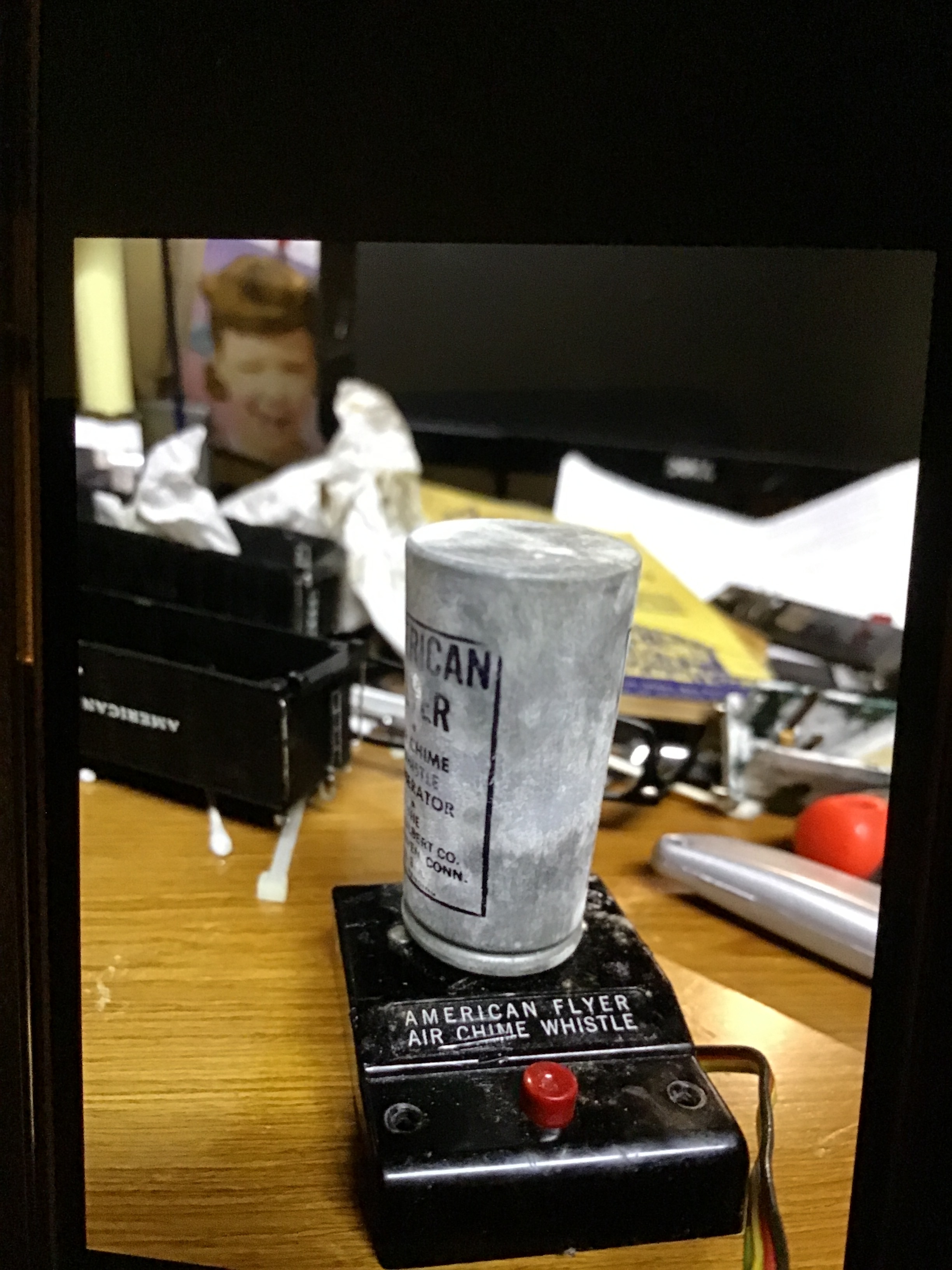
Exactly. That tube is a vibrator that sends a signal down the rails on top of the track power to blow the whistle.
1 Like
It is worth pointing out that these seldom still work. Usually the old capacitors in the tender need replacing, and I have heard sometimes the tubes can benefit from being opened up and cleaned inside. I have not attempted either, yet, but I do have a controller and an Alco B unit with an Air Chime horn.
-El
1 Like
On that note, some whistle tenders and dummy diesels have resistors in the circuit as well. They don’t really function as intended (making a clearer sound), and just overheat, which can melt plastic shells. Thankfully they can be cut out without affecting operation.
Ok, I’m sure my Dad had it working… 72 years ago  I will give it a shot, I think I saw another “ vibrater” in the box of stuff
1 Like
Both a resistor and a capacitor are visible in the picture. I would first test it on the track with the tender shell off.
1 Like
The shell is metal so I don’t think it’s going to melt. And the engine isn’t going anywhere until I get the reverse unit cleaned up. Does anyone know how to unsolder ( it’s not the unsoldering I’m having issues with but the Resoldering , I think I’m going to invest in a 30watt iron , I was thinking about swapping the unit out for another one
For soldering, just make sure you heat the work, so that the joint melts the soldier, not the iron by itself. This makes sure you dont get a “cold” joint. I would say that unless the reverse unit is really beat up, they don’t usually need to be replaced outright. I’ve brought back several and they’re pretty bulletproof. Do you have a photo of it?
1 Like
OK, I’m just going to go ahead and ask: how does a vibrating anything cause a whistle in a tender to blow?
The reason for testing with the tender shell off is so the whistle can be diagnosed and repaired if it does not work. The resistor is almost always good, the condenser is frequently bad. If the speaker cone is not torn or damaged it should work. A modern ceramic capacitor of 22mfd works, or two electrolytics in series with the negative poles connected together.
The vibrator tube may need to be taken apart and the contacts cleaned.
The vibration is the “whistle.” The vibrator produces harmonics at around 400hz that are imposed on the 60hz track power and then reproduced by the speaker. The R/C network filters out the 60hz so the speaker does not reproduce it. Just do not expect a sound that actually sounds like a whistle.
As I understand it, the “Air Chime” whistle/horn works by modulating the track power at a frequency that vaguely resembles a whistle or horn. The train picks up the modulated power, and you hear the sound through the speaker.
-El
1 Like
The vibrator tube superimposes a modulated signal over the normal track power. The capacitor in the tender filters the normal AC out, but allows the modulated frequency through to blow the whistle.