I had the same impression that he had stopped going up the ladder because someone was in the doorway of the cab. I don’t think footwear had anything to do with his falling. It appeared he lost his grip on the handrails, probably due to a combination of his size and not used to climbing ladders like that.
It was, or had been raining, but it appeared to me that he didn’t have the grip strength to hold on too long. Had he been able to go straight up and into the cab, he may not have fell.
A grip strength test was part of the physical agility test given at hiring sessions. Now it seems all interviewing and hiring is done via electronic means, no in person interaction until the actual class begins. So some of the physical testing is done in the beginning of the new hire class.
Pacing would be a truly terrible thing to try to do for this trip.
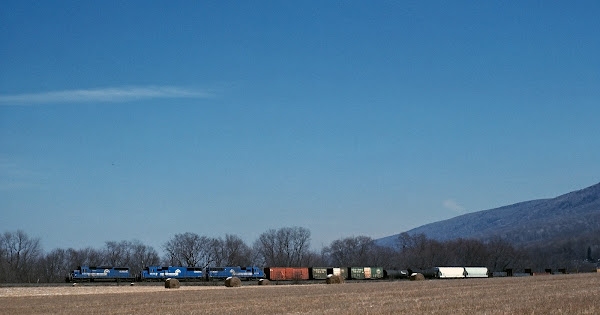
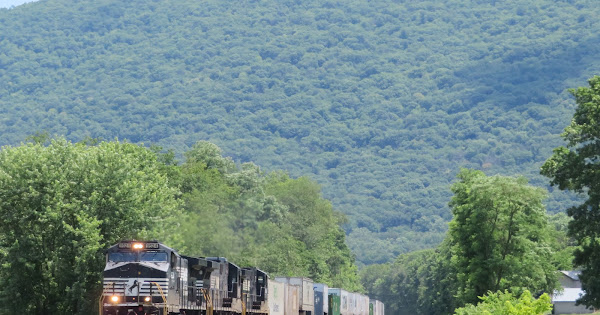
Here’s a few good spots between Harrisburg and Altoona to catch it, though.
It will be REALLY hard to get ahead of the train, so pick one and camp out.
If it were me, I’d pick one of the first two, the head to Orbisonia and spend some time at the East Broad Top, then visit the locomotive at Altoona at the end of the day.
Doing ‘field’ railroading requires more strength and athleticism than most people realize.
Those that poo poo railroads using former cabooses as shoving platforms have never hung on the side of a freight car as it is in the lead of a shoving movement for a mile or two, handling the rocking shocks of a track only maintained to Excepted track standards - all at O’dark thirty with a brakemans lantern illuminating the way.
I remember long ago my first experience as a track commander going cross country (off road). It’s like riding on the back of a mechanical bull, you have to read a map and talk on the radio as well as intercom (internal crew only) all at the same time (add in rain or sleet), on top of all that formulate a tactical plan A, B and if you have time C on what to do if A and B do not work. Looks easy on the Hollywood movies and the recruiting commercials but it was one of the most challenging tasks I ever did. It comes easier with practice. The first time though…wow…sensory overload.
I don’t know if my butt looks better, I’m just happy to still be able to find it with one or both hands.
The front of the heel has to have a 90 angle where it meets the boot. It has to be a boot, I think the requirement is still 6 inches high - my boots are 8 inch, to provide ankle support. Steel toes aren’t required for train, engine and yard crews, but are recommended. MOW, Signal and Mechanical people are required to have steel toes. (Newer boots may use plastic instead of steel for toe protection. They are OK. It’s just easier to use the old term.)
Boots are great for walking on ballast or boarding equipment but once in the seat I always changed to sandals. Boots are way too hot to wear all day.
Mark Vinski