I’m a Mohawk fan. Of course, I’m biased in favour of the four Rutland 4-8-2’ s which were built in 1946 and retired far too soon. None survive, but I keep hoping that someone will clean out Grandpa’s attic and find some forgotten films of those beautiful machines in action!
The thing I still can’t figure out is why he posts the L2a, and not 3001 in Elkhart, the great restoration priority once 5550 is funding-assured. Not only is that the closest thing to a Hudson we have (and, from many angles, need to have!) but it’s nearly close to a Niagara; in fact, I plan to discuss whether fitting it with the lightweight Timken gear (now almost a commodity thanks to the 5550 development) makes it a better low-augment touring engine … of course it could be readily reverted to its historical rods and gear within a few days at most if desired.
It may be sacriledge to say so, and may get me burned at the stake for heresy, but you know what? I’ve always preferred the look of the Mohawk to the Hudson, the Dreyfuss Hudson’s excepted.
Why? I don’t know why. I just do.
No argument from me. I’ve always loved the “feedwater heater on the door look”, but they look pretty nice without it too:

Job well done by the folks in Saint Louis! [bow]
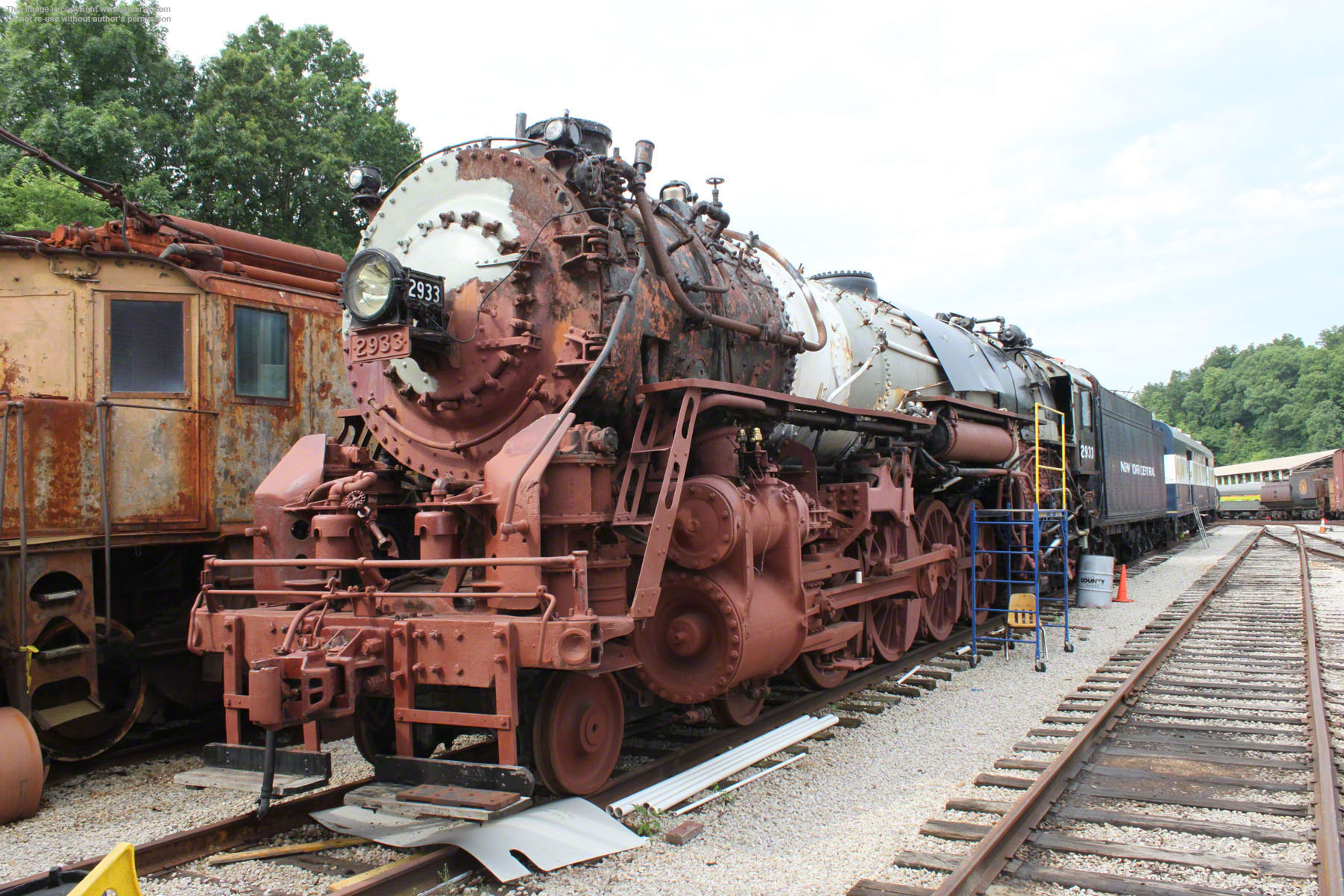
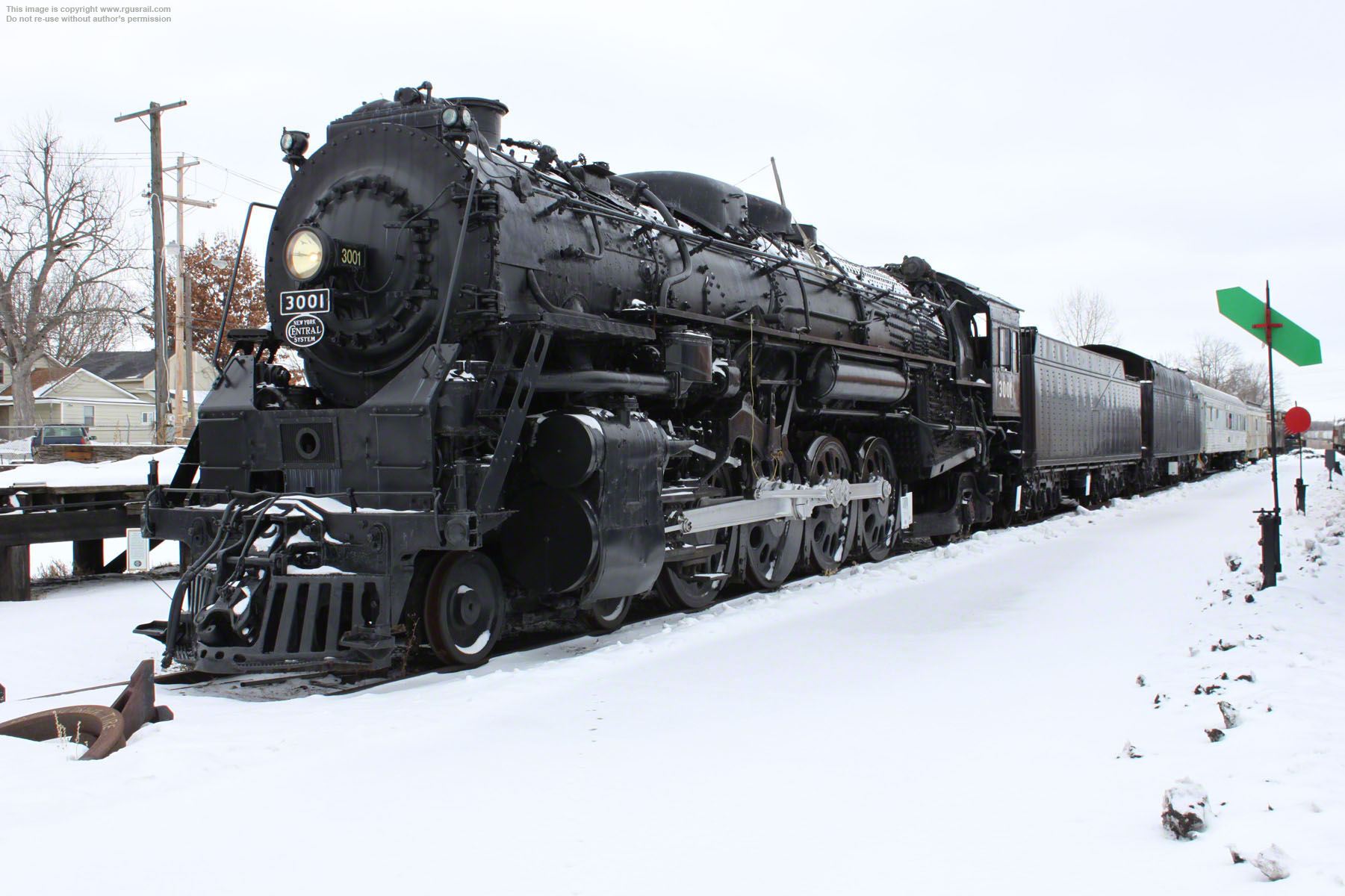
Every bit as pretty as the Hudsons and probably better pullers if one ever enters excursion service.
Fantastic! I’d love to see one in excursion service myself, and I’m sure we’re not alone, but I’m not holding my breath.
Still, a “Big Boy” did come back, so you never know, do you?
I am convinced that the same methods, and the same organization, that got 576 under restoration would work in Elkhart. I’d be pushing it now if I were there, and I suspect so would Dr. D once he understood the politics of getting to yes. 3001 might even be an easier restoration.
I want to update my profile page with a list of my favorite passenger steam engine of Northern America, and this is the list as of Sep 12, 2019:
1. PRR S1 6-4-4-6
Pros - Aesthetically pleasing, unchallengeable top speed and beauty, the peak of Art Deco Streamliner.
Cons - Unrealistic size, unfavorable weight distribution, short service life.
 (mirrored)
2. Southern Pacific GS-3
Pros - “Cadillacs” of Steam Power, good looking, delightfully streamlined, outstanding performance, perfect safety record, long service life, successful smoke lifting design.
Cons - Mediocre tender design, slightly underpowered for the assigned train service.

3. PRR S2 6-8-6 with small smoke deflector
Pros - Best looking non-streamlined steam engine, handsome “Pennsy face” front end, powerful with favorable top spe

Being from Cleveland, I’ve always had a soft spot for the Mercury’s. They look like they’re straight out of Kane’s Gotham. And I do agree that the headlight is in a basically useless spot.
“Kane’s Gotham.” Perfect! Why didn’t I think of that? [:$]
You probably weren’t watching cartoons in the 90’s. Although this one is definitely a Pennsy Torpedo, I do remember NYC prototypes also being used:
Superman had his own run-in with a Torpedo in 1942:
I am pleased to know that I am not that only one here having chemistry with Henry Dreyfuss’s first “Steam-Streamliner”! If the term “Art Deco” is an adjective, I thank the Mercury engine was a very art deco locomotive. [Y]
In reality, only B&O kept the tradition of using all-12-wheel-car consist til the streamlining era (sleeper/lounge/dining) in America (Correct me if I am wrong), it was probably the only way to provide “Pullman Standard” riding quality.
The B&O were among the first to adopt four wheel trucks on the 1934 ACF built Royal Blue and Abraham Lincoln trains, which may have been built with US Government subsidy. It was felt that these did not ride as well as conventional cars and all further streamliners until WWII were rebuilt heavyweight cars. It is also possible that the rebuilds were cheaper than new streamlined cars, particularly when the Federal Government wasn’t paying for them.
Peter
Thank you for reminding me of the facts, Peter. I shouldn’t say “they kept the tradition” of using 6-wheel trucks for their cars in this case. I think B&O was right, intentionally or not, to use betterment cars that provide better riding quality than more modern lightweight cars. If it was about government subsidy, they probably didn’t have a choice, just like the NYCRR Mercury.
I wonder what would it have been like if the NYC Mercury used newly constructed cars in the early 1930s. I remember the prototype of the Pullman Standard lightweight car looked like a long tin can.
After the disspointment in the ride quality of the lightweight Royal Blue, the B&O’s streamling of the Royal Blue, Columbian, Capitol Limited and National Limited was at cooperative effort betweeen Pullman and the B&O’s own Mt. Clare Shops in rebuilding equipment into the ‘new’ streamlined trains. Pullman did the betterment of the sleeping cars; Mt. Clare did the betterment of the coaches, lounges and dining cars.
I am don’t know any of the particulars of govenmental loans that issued, I think, by the Reconstruction Finance Corp. I do know that the B&O had a lot of debt to service comming out of the Depression and WW II. The B&O did not declare bankruptcy during the Depression or anytime thereafter.
Virtually all common carrier passenger transportation vehicles place the passengers in a long tin can - railroads, buses or airplanes.
The Mt. Clare Shops built some outstanding quality tin cans.[:)] Although I don’t have the chance to ride on them in person, I know they were great in the name of B&O.

My favorite sleeper is PRR betterment 10-3 sleeper in F.O.M livery, never produced as model in any scale, except in post-war PRR livery:
