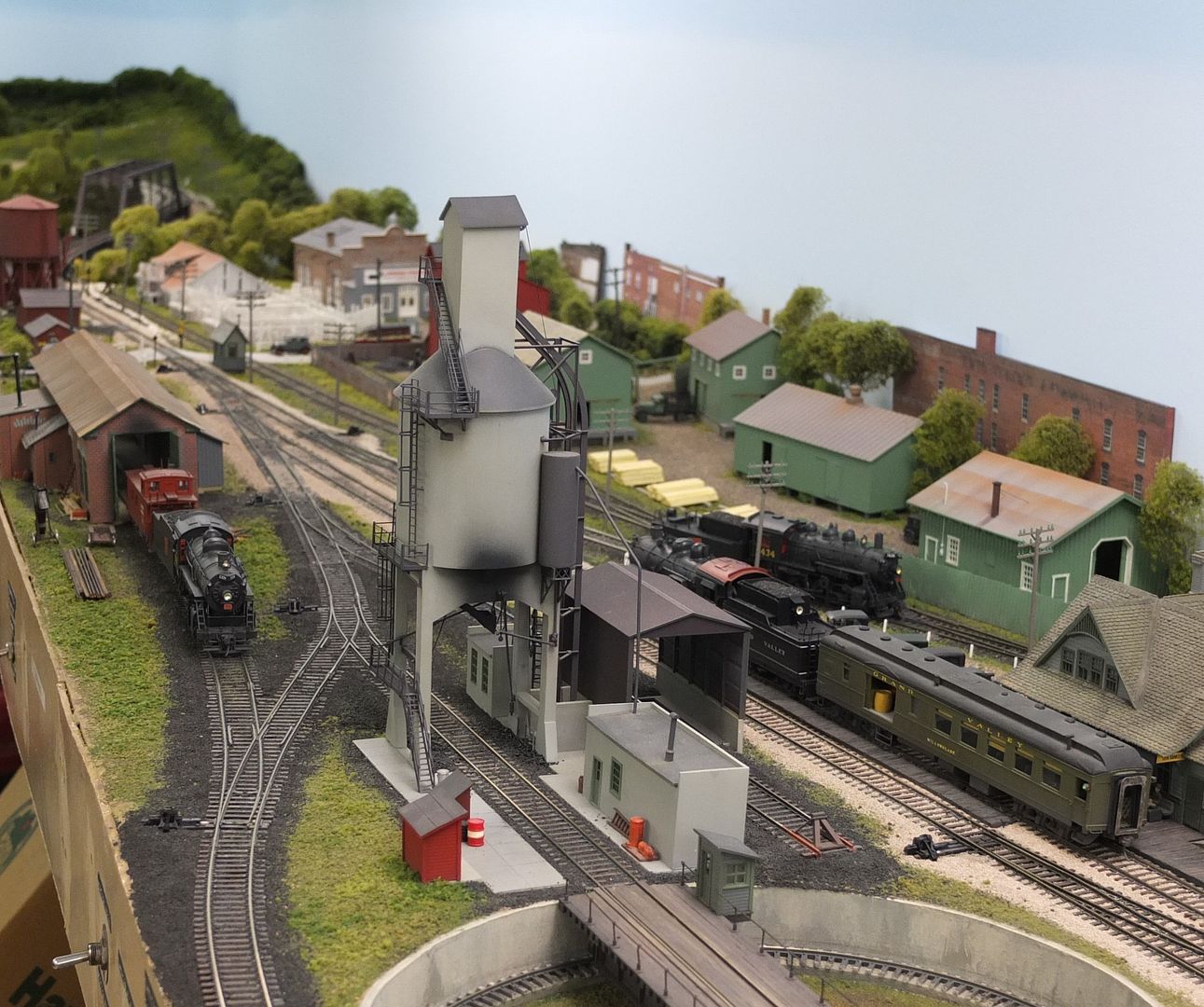
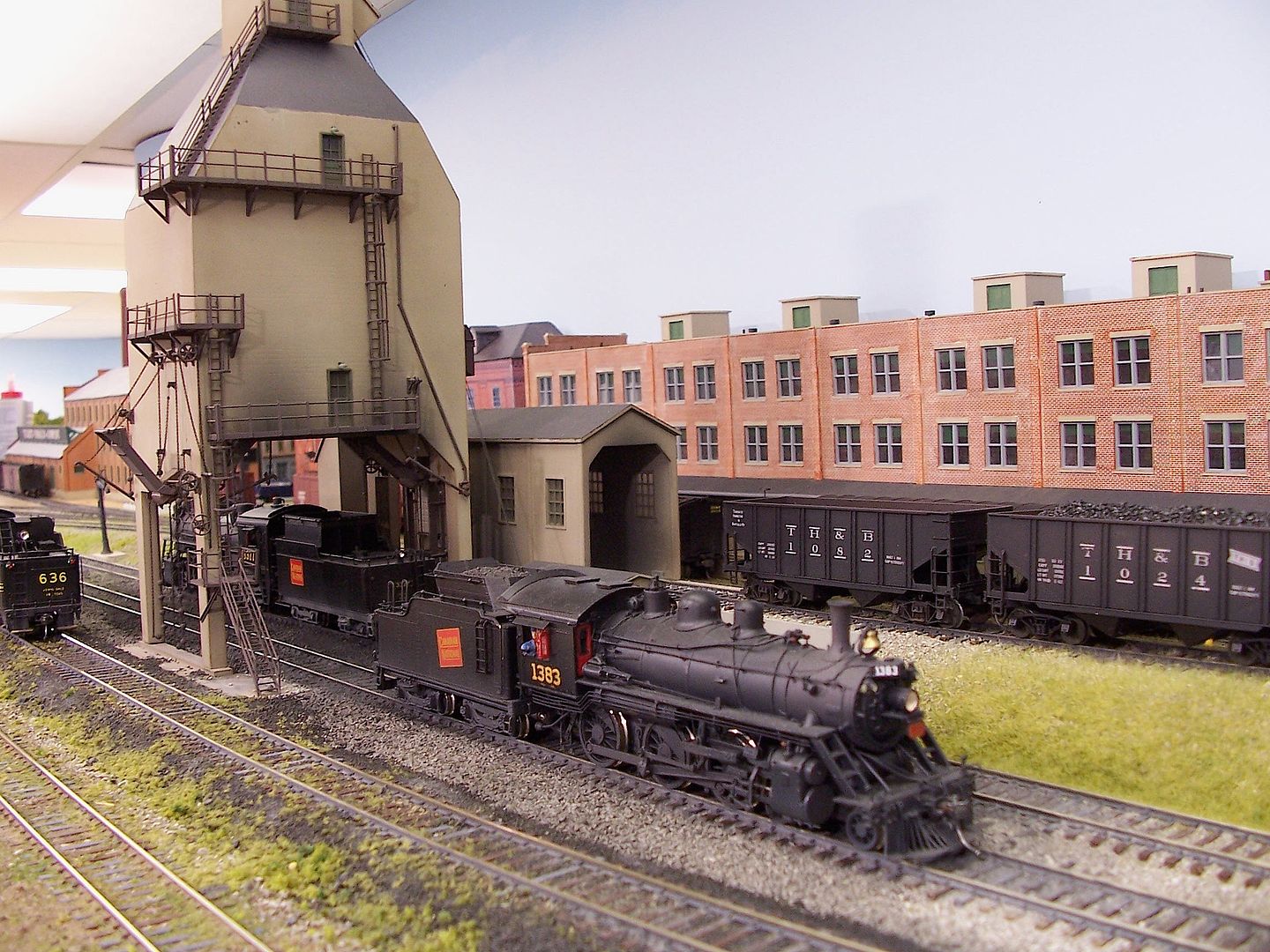
TF … I was not talking about you at all. Your post is appreciated!
I was hoping we would not digress into a conversation about coal being replaced by other energy sources.
This comment from somebody else could lead to unwanted conversations: "Enjoy it while you can. Coal is going the way of the Dodo … " … Next, somebody might spout off about fossile fuels, and politics might be after that.
I just want to show and talk about model train operations in this thread.
For all of you modeling coal operations, do you remove the loads to show the empties returning or do you have a separate set of empty cars in a staging area?
Soupy … Thanks for your excellent question. On my layout , I would like to convert all coal hoppers so they have removable loads. Then I could have more realistic operations.
Until then, I return loaded cars to the mine after the operating session is completed. Same with empty cars to be returned to coal receiving industries.
It was really neat Garry! I was at a train show quite a few years back. This guy had a pretty large layout set up with coal mining operations only.
The plant where the coal was dumped had an enclosure over the top with magnets that pulled the coal loads out of the hoppers. Of course the hand of God would have to flip the roof that had hinges on it to reclaim the loads. It still was cool seeing the cars pulled out empty though.
I have ever known only one layout that had empty hoppers arriving at a mine, then full hoppers leaving.
Basically it worked by having two parallel lines with a turnout at each end. Engine run round is also provided at the mine entrance end. A backscene was between the parallel lines.
A train of empties leave the staging area and travel the line in front of the backscene. Once at the other end the turnout was changed and the train reverses down behind the backscene to the staging area.
After a suitable time a similar train, of this time full hoppers, would leave the staging area and travel behind the backscene and be seen at the other end. The locomotive runs round the wagons so to be at the front. Then the train heads towards the staging area in front of the backscene.
No loading or unloading, just two identical trains. One of loaded hoppers, the other empties. Simple, yet very effective and convincing.
What a great idea for a thread. Includes nostalgia, steam, coal, long trains, and great scenery. Your layout looks very good, Garry. And I offer my thanks to all who have played along. [:P]
Here are a few contributions. Most of you know them well.
A buddy of mine models the coal operations south of Canton IL (so the Buckheart Mine) as the loads are brought north to Yates City IL, a stop on the CB&Q/BN line between Galesburg and Peoria. He has used “live” loads of actual pulverized coal so that the staging yard yardmaster (me) could empty the loads into old coffee cans and the cars could be returned to Yates City as empties. Sounds great in theory (and in truth the loads looked – and smelled!! – very realistic, and the insides of his coal hoppers got very realistically weathered by coal dust, but frankly it was tiresome for the yard operator to get so dirty in the process. So he tried something else: foam rubber cut to the precise size of his coal hoppers and spray painted black. When pushed into the coal hoppers by the staging yard operator it was remarkably realistic. The foam rubber coal loads were kept in an old shoe box.
More recently however his operating system has evolved so that he has a set of empties and a set of loads, and he hand stages the loads at Yates City between sessions.
This question but also the OP’s original topic are a good reminder that Illinois was a considerable coal producing state and that the CB&Q but also other railroads including the C&NW, Milwaukee Road, C&IM, Illinois Central, had a considerable traffic in Illinois coal. And not all of is was southern Illinois. There was coal in the central and northern parts of the state too. Much of it was dedicated to the railroad itself back in steam days, meaning the coal had a single final customer: the railroad itself. In the case of the C&IM I think all their coal went to Con Edison which owned it.
Not far from Galesburg, a short line called the Galesburg & Great Eastern was a coal road that used steam until the late 1950s, and interchanged with the CB&Q north of Galesburg running 9 miles to Victoria IL. The track is now gone and the op
I’ve got, I think, 11 of those old Tyco clamshell hoppers. I load them at an old Vollmer loader, which is wholly inadequate because at best it holds about 2 cars worth, but it’s still fun.
I’ve also got one of the old Tyco between-the-tracks triggers that causes the doors to open and the coal to be dropped. I built a ramp with a trestle, and put a box beneath the layout to catch the coal.
This is one of the cars. My first step with these was simply to replace the original Talgo horn-hooks with body-mounted Kadees. Later, I replaced what was left of the old trucks, because they didn’t come apart and I wanted to get rid of the plastic wheelsets and replace them with metal. While I had the cars apart, I repainted the metal body frames black and weathered the cars.
The cars run a lot better with the Intermountain wheelsets.
I use WS “cinders” ballast for coal. It’s quite light, but does the job.
TF … Thanks for describing an interesting method to simulate coal hauling.
David North Brit … You described a concept similar to a Model Railroader project layout of maybe 30 years ago. It was the Clinchfield Railroad layout in N scale. A loaded coal train departed the mine and circled around the layout to the power house. It then entered the power house and continued through a mountain. From there it would enter the back of the mine (out of view). Next it emerged from the mine to repeat the proces. Meanwhilee, and empty coal train dis the same thing running in the other direction.
Dave Nelson … Thanks for your good discussion of coal hauling in Illinois. That is basically what I attempt to simulate. … Your friend may have been too realistic using real coal dust. I wonder how often he had to clean his track. Real coal dust would be messy. I can see how his method evolved into running loaded trains and empty trains back and forth.
jjdamnit … Thanks for describing your using Tyco hoppers.
Mr. B … Your photos and discussion are very interesting. I have thought about doing something similar for hauling coke from my coke oven. My idea was to use operating side dump cars. (I never have time for all of my ideas. LOL )
CB&Q used SD7’s to haul coal from southern Illinois mines. The units were equipped with creep controls so they could move a train slowly through the mine loading equipment.
Those are some great photos to start this thread, Garry, and more good ones have been added to the thread, too.
I also don’t have room for a coal mine, but I do have two coaling towers and coal (and ice) dealers in most of the towns on my layout, which is set in the late '30s.
I use “live” loads in all of my open cars (flats, gondolas, and hoppers), and use Black Beauty blasting medium to represent Anthracite coal, and coke breeze (the fines from industrial coke production) to represent coal, as there was plenty of both at the steel company where I worked - they used the Black Beauty in place of traction sand for the in-plant locomotives, and turned out hundred of tons of coke every day.
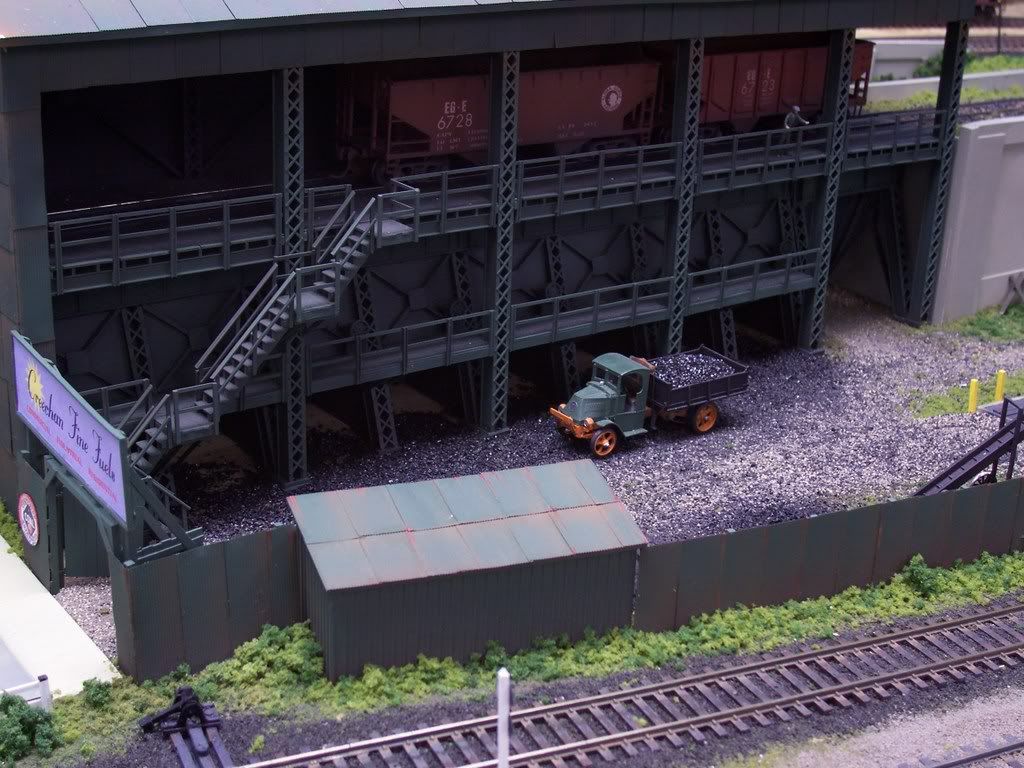
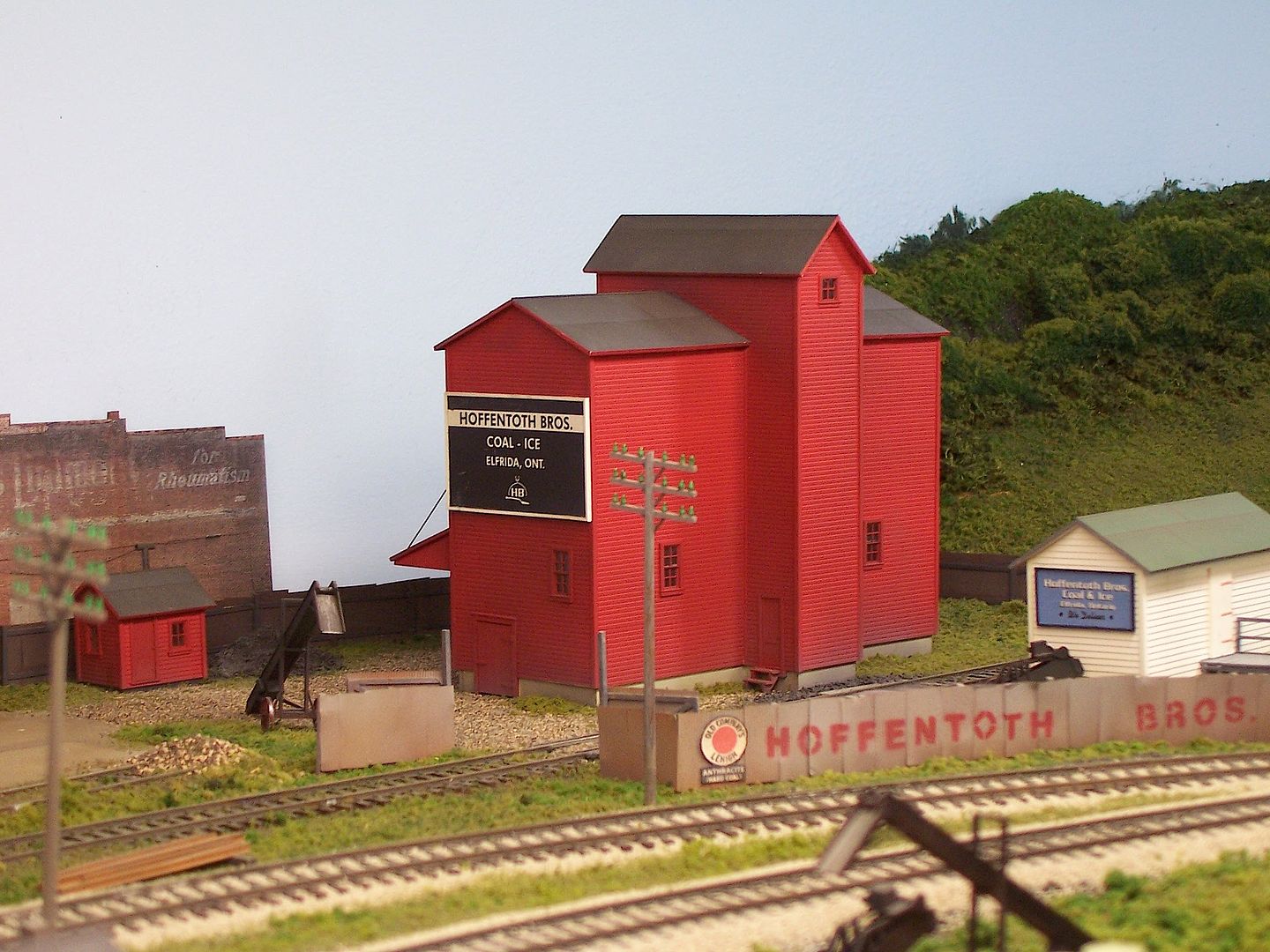
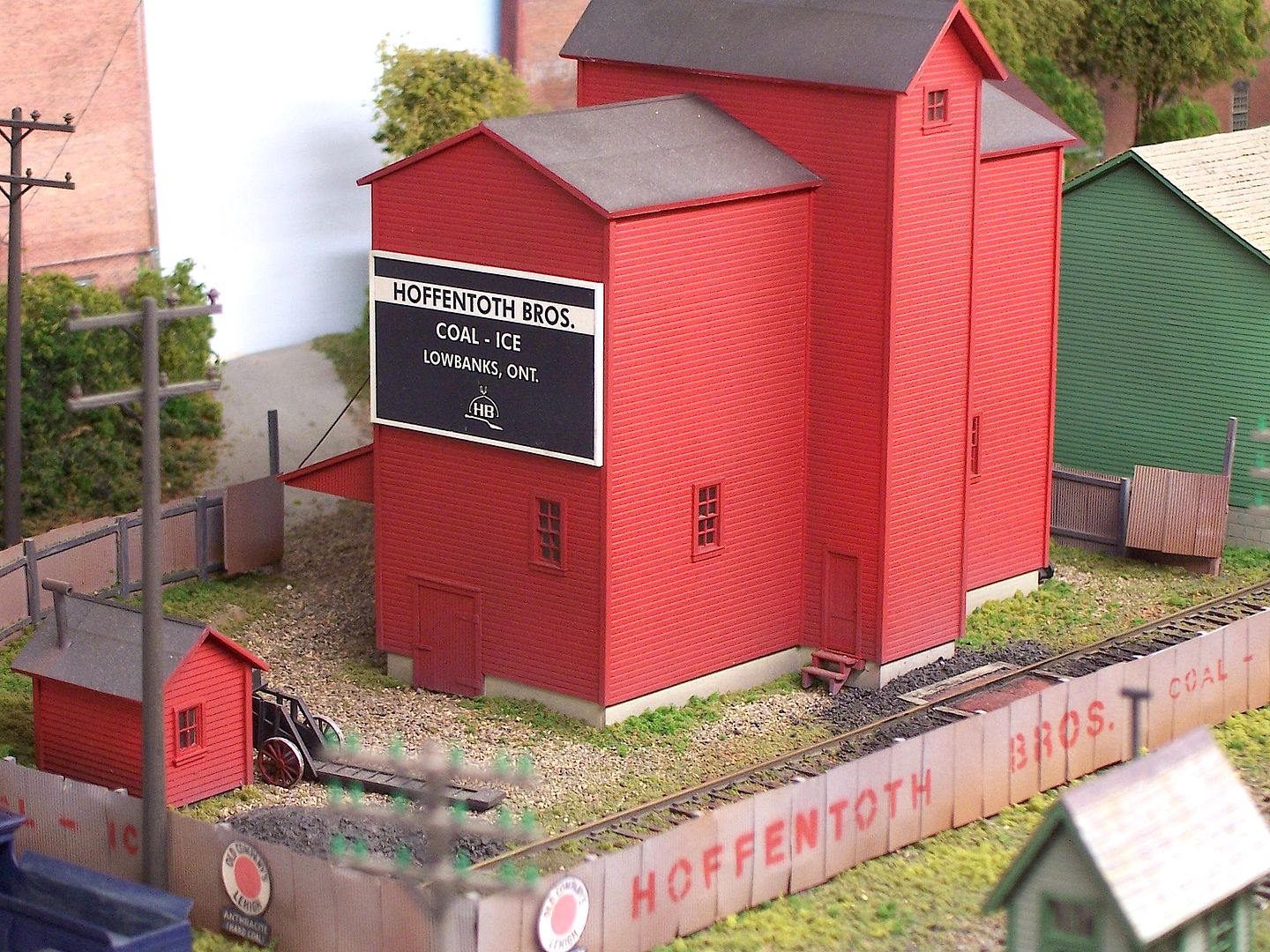
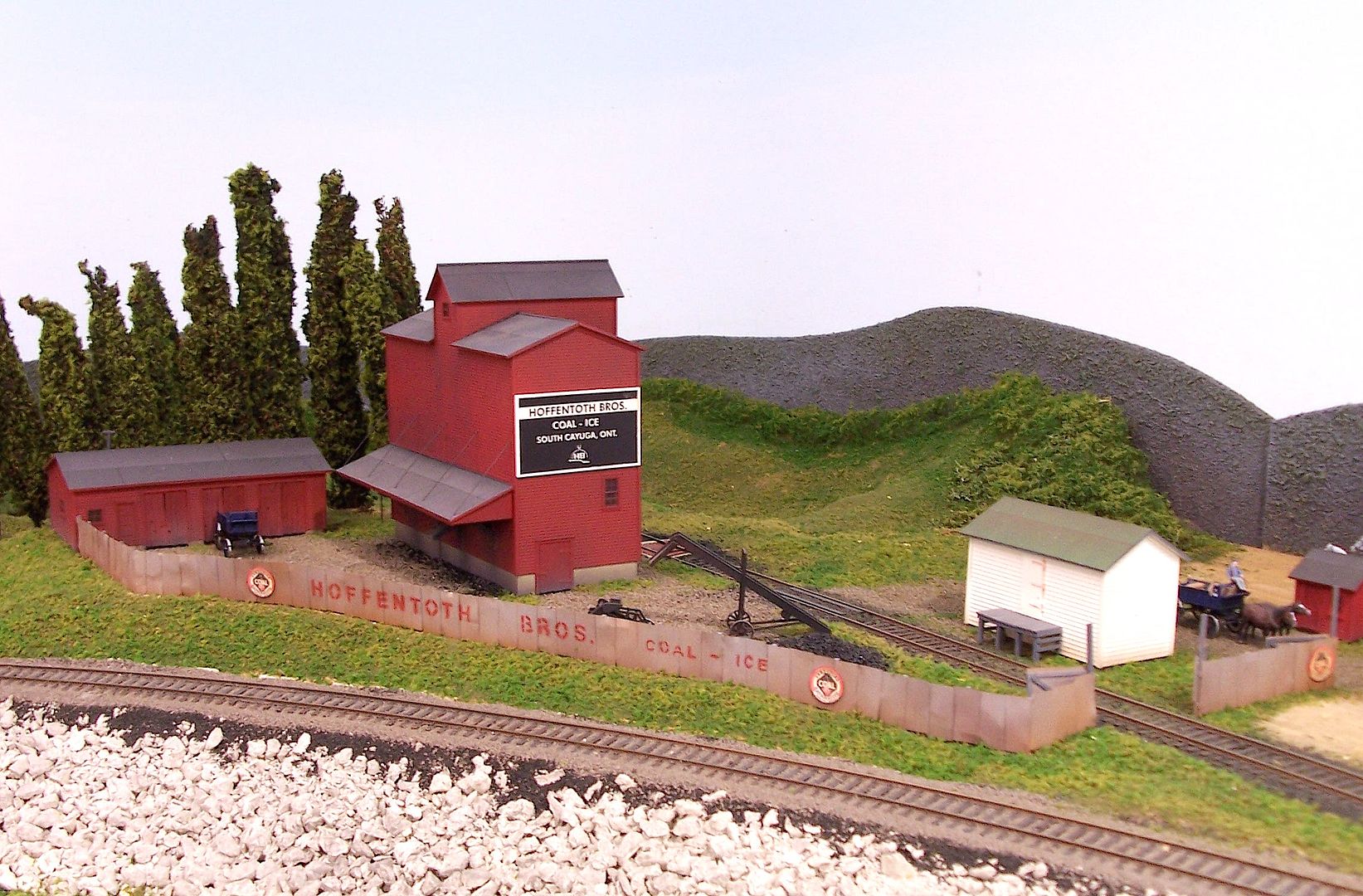
A few of the coal dealerships (as usual, click on the photos for a larger view)…
…and the coaling tower at Lowbanks…
…and the one at Mount Forest…
I have over 70 open hopper cars, the majority representing my freelanced roads. The rest represent real railroads, mostly in the U.S., although the Toronto Hamlton & Buffalo Railway, based in my hometown of Hamilton, Ontario, used a laker boat to send 32 empty TH&B hoppers from
In the western Great Lakes before the advent of unit coal trains, coal was moved west by boat using bulk carriers that would take iron ore back east. Most port towns had coal docks where coal moved inland by train or truck.
Here is a 10 car coal train headed south to the Edgewater generating plant from the Reiss Coal Company docks on Lake Michigan. This was a daily occurance that ran as an extra in the real world and on my layout. More coal moves west in way freights to various power plants along the way and the paper making industries further to the west.
I already explained in a previous post how I use matching sets of coal trains, one for empties and one for loads, which run in opposite directions so I don’t need to unload them. The exception is for the two coaling towers, one at the main engine facility and one on my branchline. For those I have 3 extra cars of loads that the loaded coal train will set out at the main yard and a switcher moves them to the coaling tower. After the ops session is over, I remove the loads. My loads are simply slabs of styrene paint black and then piled with WS black ballast glued in place. I’m experimenting by burying a KD between-the- rails magnet inside the piled coal and using a KD under-the-rails magnet to lift them out. I need to trim the edges of the coal slabs so they pop out more easily but I think this will work. When the empty coal train comes through it picks up these three empties and takes them back to staging. From there I fiddle those three hoppers back into the loaded coal train and drop the loads back in. It works the same on the branchline except only one load is dropped at the branchline interchange yard since it requires far less coal than the mainline.
One other point. The branchline is still under construction and I haven’t built the engine servicing facility yet. It might not have a tower at all but instead a coal pile with a conveyer to load tenders. I’ll make that decision when the time comes.
Thanks, Rich. A long time ago I read John Armstrong’s book on layout design and was fascinated when he explained the loads in/empties out concept. I wanted to incorporate that in my current layout which I have been working on for almost 20 years now. I just couldn’t work it in and have space for other things I wanted so this was the compromise solution.
Wayne… Thanks for your nice comment. Your photos certainly are realistic. Thanks for explaining you have several receivers of coal. Your hoppers are very nicely detailed, painted, lettered, and weathered.
Bear … Thanks for the link to an explantion about making removable lads.
Terry … It sounds like you have a good way to run caol trains.
Scott … Thank you for commenting. It is interesting you are operting coal trains as they were operated with coal from ships on Lake Michigan. Nice work !
John NYBW… Your method for delivering three carloads of coal as part of your operations is very interesting. Thanks for explaining it. … You also talked about having two matched trains (one loaded and one empty). My current operation is similar, but in my case I don’t need the trains to match.