Link, please
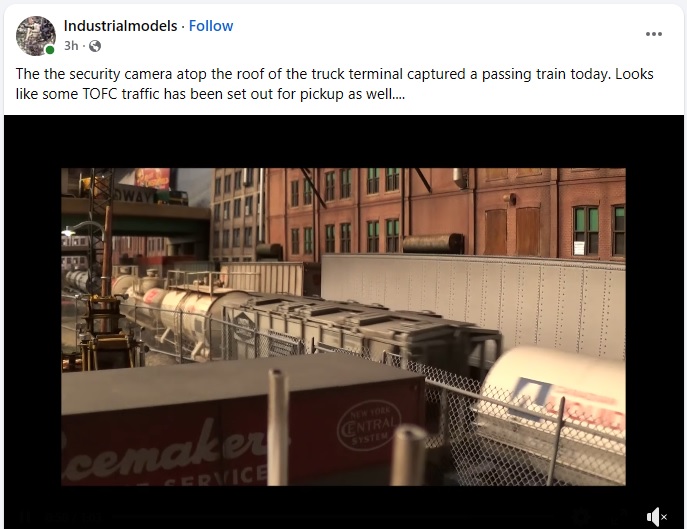
The Woodland scenics light pole is a giveaway. The ultra realism is really nice, but this is exactly the kind of overcrowded urban layout that I’m not particularly interested in.
No one can argue with the modeling quality on this layout and all the others that look a lot like it on the NMRA calendar. But it’s a reflection of the claustrophobic
urban setting that’s become very trendy on layouts in the last couple of decades, possibly started by George Selios. We can wonder why the design is gone this direction, but I think it’s because overtime, we’ve become an urbanized country, where as you look at Model Railroad 60 years ago, many of them were small town settings because the modelers grew up in small towns, like me.
51+ year 1:1 railroader - the first 1/10 of my career was as a Extra Train Order Operator on multiple Divisions of the B&O. Time on the St. Louis Divisions - Timetable & Train Orders with Automatic Block Signal protection - at most all the locations between Cincinnati and E. St. Louis - Southern Indinana and Illinois. A Summer on the Pittsburgh Division on all the train order stations on the P&W subdivision between Pittsburgh & New Castle - mountain current of traffic railroading with manned helpers working both directions on Bakerstown Hill. The a few years on the Akron-Chicago Division working both ‘regular’ train order offices as well as a number of Temporary Train Order Stations in support of various MofW maintenance and construction projects.
The one thing that all these locations ended up teaching me - to have a viable railroad, it must be profitable. To be a profitable railroad there must be business in a high volume. Scenic vistas for railroads generate very little traffic, in fact if railroads depended upon the revenues generated by scenic vistas they would all be rail trails at the present time. The St. Louis Division was beautiful with many fields of grain waiving in the breeze - but not that much year round generated traffic. The Pittsburgh and Akron-Chicago Divisions had steel and the raw material necessary for its manufacture as their traffic base - train loads of the raw materials inbound to the multiple steel plants on each division as well as train loads of finished steel products being transported to their destinations all across the country, It was hard, gritty, dirty high volume business - it was the business that kept the property running in black ink, instead of the red ink that overtook the Rock Island and Milwaukee Road as well as the myriad of Eastern carriers when the steel belt in the USA became the Rust Belt with the collapse of the steel industry.
What kind of model railroad anyone wants to build is up to them, and they are the only one that needs to be satisfied with the result.
1 Like
Great response .
Except for one point. Only a prototype railroad has to be profitable! The only thing a Model Road has to produce is fun! And the other requirement is to look good!
My railroad has a very short annual report, with only one page with only one sentence that says” the Midland western looked really good this year!”

I believe in two things. #1: Keep life simple. #2: In keeping with #1, let layouts evolve naturally.
Case in point:
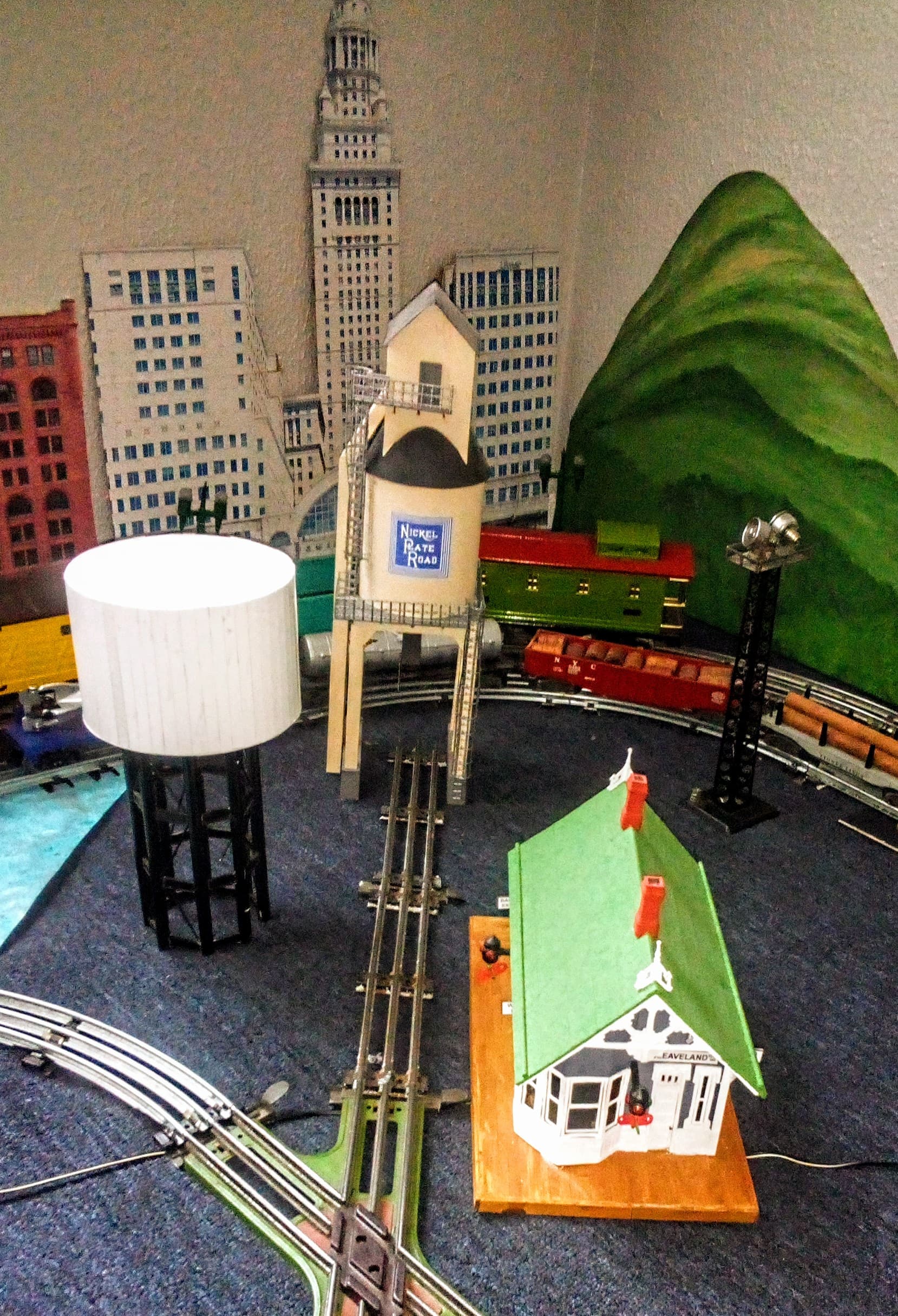
The barren navy blue landscape of my layout space. I’m building everything but the trains, track, lamps and signals by hand one at a time. As I go I learn. More recent layouts had few budget constraints. This one has a budget of zero dollars. I’m trying to not only build everything myself, I’m also trying to learn, develop or invent techniques as I go along. How detailed it will be depends on those limitations.
PS everything will still be 3 rail of course! 
2 Likes
Super detailing a layout will tend to move the focus of the scene away from the trains and more towards the surrounding details, like soda machines, trash bins, barking dogs, etc IMO.
I’m keeping the shelves of the layout narrow as to keep the space needed to detail at a minimum. Thereby focusing on detailing the ROW and immediate area.
As has been said, for my tastes, too little detail is better than too much.