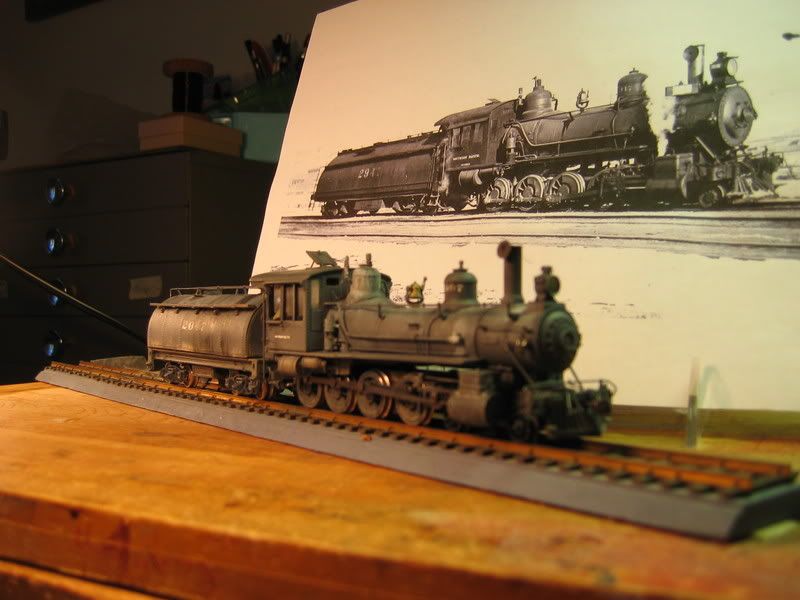
This is my first post on this site. I have been modeling steam for some time and I have always painted my side rods black. Is this correct? I have noticed that a lot of locomotives in some black and white photos actually look silver. Where they painted?
I think most steam had their siderods either silver or just natural metal, but they would get all dark and dirty pretty quickly. Steam had long since been replaced by diesel by the time I was around, so I can’t tell you for sure.
On most railroads, side and main rods were simply wiped down with oil to keep them from corroding. They were left their natural, unpainted steel to make inspection for cracks easier. The oil would collect dust and crud, so they would only be shiny if freshly wiped down.
Many preserved locomotives have their siderods painted to protect them from corrosion, which can be a source of confusion for folks who never saw steam in common-carrier service.
I have seen ‘stuffed’ locomotives with the flute portion of the rods painted with such unlikely colors as baby blue! I don’t doubt that the folks who operated and maintained them cringe at the thought.
Chuck (modeling Central Japan in September, 1964 - with coal-burning steam)
[#ditto] I paint mine a natural steel silver color, staying away from the chrome or metal flake look. Then weathering them with assorted amounts of grime, staying away from any rust color unless it is a derelict loco in the scrap line.
I can’t say for sure what colour the rods would be in the U.S. Here in the U.K. they were definitely not painted but were bare metal and kept well oiled to prevent rust.
To get that finish on a model you should be able to obtain from a good hobby store various substances to blacken the rods. Normally there is one for nickel silver, one for brass and one for white metal. This is O.K. if you know what the rods are made from. However, if it is a ready to run model this may not be too apparent. You could count out the white metal-- not usually hard enough for rods.
What I use here is gun blue, obtainable from a gunsmiths, and is a clear, slightly blue liquid, that will stain any metal to the colour found on the exterior of gun barrels.
Now, whether you buy the stuff that the hobby store sells or the gun blue from the gunsmith they are both poisonous and you should use rubber gloves while handling it.
Ensure that there is no oil on the rods and joints as this will impair the colouring performance.
Use a Q tip and dip in the solution and then wipe over the rods just once, in around 30 seconds you will see the metal start to turn a brownish colour and be patient and it will turn progressively darker until you obtain the darkness you want.
At that point use another Q tip this time soaked in water and wipe over the rod to nutralise the solution.
You can afterwards, when the rods are dry, just brush a light coat of clear gloss varnish over the rods to seal in the colour.
I hope you are successful you just need a bit of practice and it will work O.K. Good Luck.
I can’t say for sure what colour the rods would be in the U.S. Here in the U.K. they were definitely not painted but were bare metal and kept well oiled to prevent rust.
To get that finish on a model you should be able to obtain from a good hobby store various substances to blacken the rods. Normally there is one for nickel silver, one for brass and one for white metal. This is O.K. if you know what the rods are made from. However, if it is a ready to run model this may not be too apparent. You could count out the white metal-- not usually hard enough for rods.
What I use here is gun blue, obtainable from a gunsmiths, and is a clear, slightly blue liquid, that will stain any metal to the colour found on the exterior of gun barrels.
Now, whether you buy the stuff that the hobby store sells or the gun blue from the gunsmith they are both poisonous and you should use rubber gloves while handling it.
Ensure that there is no oil on the rods and joints as this will impair the colouring performance.
Use a Q tip and dip in the solution and then wipe over the rods just once, in around 30 seconds you will see the metal start to turn a brownish colour and be patient and it will turn progressively darker until you obtain the darkness you want.
At that point use another Q tip this time soaked in water and wipe over the rod to nutralise the solution.
You can afterwards, when the rods are dry, just brush a light coat of clear gloss varnish over the rods to seal in the colour.
I hope you are successful you just need a bit of practice and it will work O.K. Good Luck.
I have to chime in on this. When the PRR did an annual inspection they would paint the rods with a white paint to check for cracks. When placed back in service they would check for rust streaks or oily residue on the white paint where the cracks would be. Sometimes during a monthly boiler wash the rods would be painted again. It was not real paint more like a white wash and it seemed to have some talc or something in it. A real fine powder.
I can agree with everyone that says the rods are Natural metal. I spent last saturday washing Pere Marrqutte 1225(that was a chore) and we had to whipe the rods down with used oil to keep them from rusting. Otherwise an unwashed steam engine tends to be like a greyish color from the dust and crap sticking to the oil