I model the Tonopah and Tidewater circa 1912 and to say there isn’t much available is a reasonable statement. I would love to see more pre-WW1 equipment and buildings. - Nevin
Based on what I have read here, you could say anything Canadian other than CP and CN is underrepresented. E&N; PGE/BC Rail; ON; BC Electric/BC Hydro; Winnipeg Hydro; NAR; etc…not much for any of them. I also think that specific western logging lines should be in the list, like Comox Logging or how about WFP’s (former CanFor) Englewood Logging?
The answers you get of course will be based on what the responders interests are, the above are mine.
This is one of the current standard assumptions that I can’t figure out. Why is the assumption that everyone wants, has room for, and can afford a railroad that supports a multi person operating session? Do 90% of the modelers out there really build basement empires with TT&TO/CTC ops, 40 trains a session through half a dozen towns with 12 operators and a dispatcher? Doubt it. Most layouts are probably more suited size wise to represent the L&W even though they are called Santa Fe, UP, Pennsy or such. And that L&W would probably provide just as much or more fun per hour/dollar to the builder than the unobtainable dream layout that won’t ever happen.
I have to update you on my building permit for making a train room.
Turns out the bureaucrat who decided to bill me $304.00 for a putting up a few dividing walls in my garage didn’t know her rules very well. When my permit application went to the planning department they couldn’t figure out why she charged me anything! There is no permit required for simple dividing walls! Only if you are planning on running ductwork, plumbing etc. etc. into the area does the permit come into play.
I got a very pleasant call from Barry Grost in the planning department, first to clarify my plans, and then to suggest that I come in to the office to get a refund.
There is a somewhat humerous aspect to this, although it perhaps falls into the ‘black’ humour category. The nice staff at the planning office could not figure out how to credit my account. Maybe that is an indication of how few times they actually return money! Must have left them sleepless[(-D] But hey - I’m sure happy!!
Dave
I feel that some of the fallen flags of CSX and NS in the SOUTHEASTERN US are overlooked by the HO model railroad manufacturers. Also some locomotives both steam and diesel such as ATLANTA & WEST POINT 4-6-2 290, SAVANNAH & ATLANTA 4-6-2 750 and CSX or SBD B36-7s in HO.
That is not an assumption, and exactly why I said “UNLESS ONE IS A LONE WOLF…”. It makes a big difference. If one tried to run prototypically with multiple operators most people would be standing around doing nothing but watching the operator of the one train…
There is another thing that I am surprised someone didn’t point out. Nothing says one could not model the layout of the L&W but run un-prototypically 3-4 trains a day. That would mean the loco roster would have to be much larger, but it would still work and be fun.
And surprise, surprise, surprise look at the railroad modeled in the layout design contest winner in the December issue. Lousiville & Wadley.
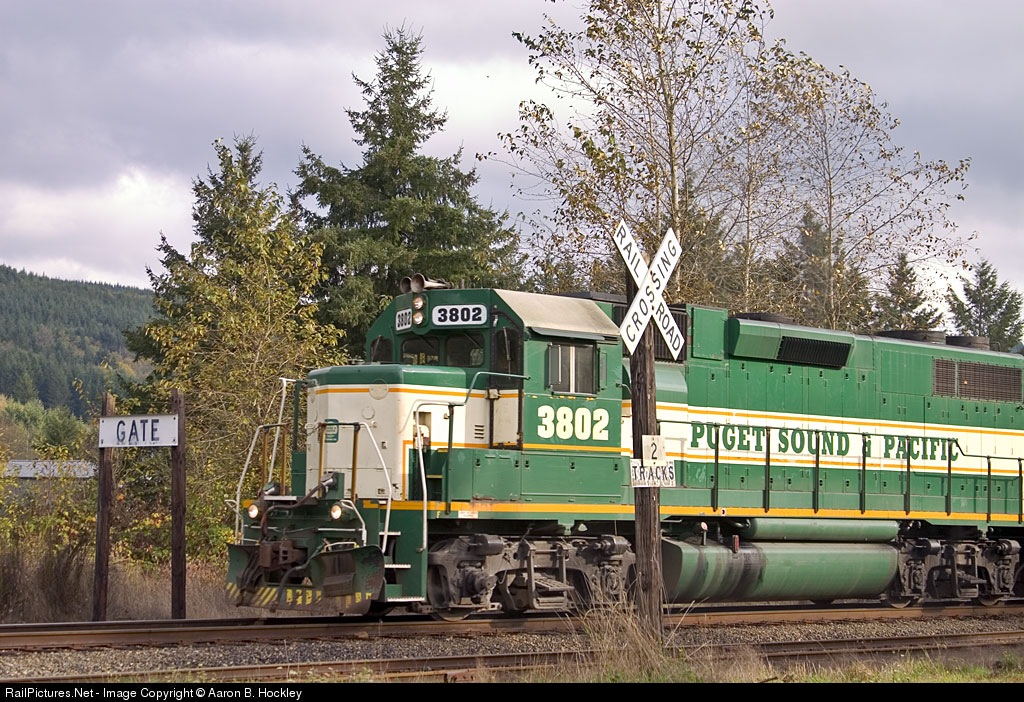
actually y’know something that is under represented in this hobby is the smaller private roads, like this one which is based out of Centralia, Wa. the town that I live just north of. it interchanges with BNSF, but as of late the only private loco I’ve seen roaming that area is CEFX’s GP20D #2009. I wonder if there is an N scale model of the GP20D, but PS&P is probably what led to my fictional road Centralia Northern that I need to come up with a scheme for.
Texas Zepher!
I agree totally. Single line railroads generally lack the opportunity for varied operations. Even if you are a LONE WOLF, building a layout with few opportunities for switching will get boring real fast. Hense my decision to not model my favourite railroad (Algoma Eastern) except in cameo.
I find that I am running out of things to do before I actually build my layout (yes - the walls are going up as we speak!) I have a bunch of painting and weathering to do but I have enough rolling stock to keep me happy for several years. I need a few more decoders. Outside of the layout construction costs the decoders will be my only major rolling stock investments for some time to come.
The fact is that I am getting a bit bored with just working on rolling stock and structures. I really need to get to work on the layout!! (Understatement of the year!)
My point is that I will not have come this far only to build myself a boring layout. I have spent a lot of time designing my layout and having the opportunity to do many varied things with it is paramount to my goals.
Just my [2c] worth on layout functionality.
Dave
Interesting in that I have always thought it a rare treat to see any NP photos in an issue of MR. That and Milwaukee Road.
There is one facet of modern rail operation that is vastly under-represented in the hobby - and I, for one, don’t miss it.
I refer to the control of the railroad from a room in an office building several miles (or several state lines) away from the action, everything done by track detectors, signal indication and radio.
Some clubs, and a few individuals with big layouts, have done this sort of thing. I don’t see it becoming a major (or even a minor) trend.
Chuck (Modeling Central Japan in September, 1964)
yeah seems like the good old days are gone, luckily the sidings down the BNSF main still have their original manual switches, but the one on the outside of tenino is for some reason has been occupied by a flat car train, much like the abandoned container cars outside of grand mound, they’ve been sitting there my whole life and I’ve yet to figure out why.
These are surplus cars that still have time on their depreciation left. So the railroads stash them in out of the way spurs.
Steam of the Lehigh Valley seems to be under modeled. Engines that I see are all decorated and detailed to the specifics of , say, the Pennsy, NYC, Reading, N&W, B&O, C&O, and so on. Though I can kind of see why. The Valley had some very specific locomotive models, and the largest were the mighty 4-8-4s. However, there is an opportunity to do some yard switching and interchange work on the Valley in Sayre and south to Towanda during the early 1920’s.
ah thanks, I feel they’d serve a better purpose being used rather then just sitting.