Last but not least, a couple of group shots
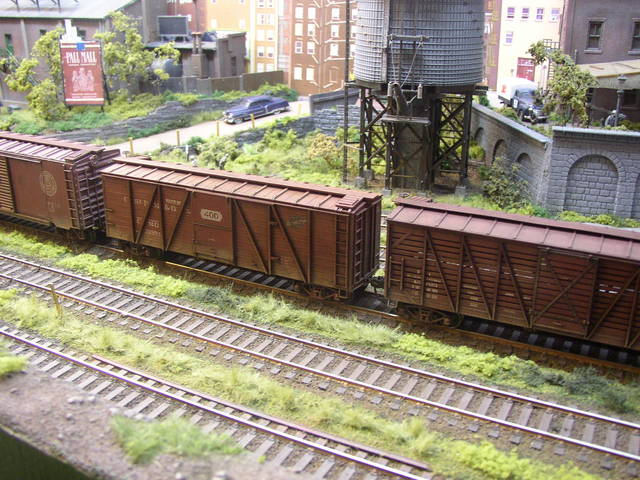
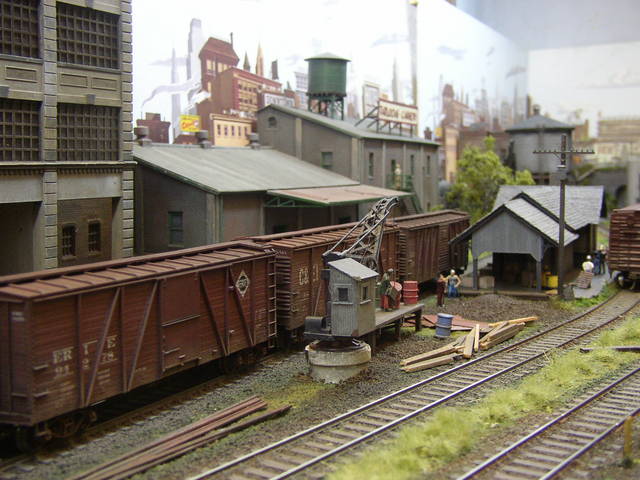
Whilst I don’t profess to being an expert on the subject, I hope this ‘how to’ encourages a few fellow modellers to have a go at weathering some freight cars.
It makes all the difference.
Jon
Last but not least, a couple of group shots
Whilst I don’t profess to being an expert on the subject, I hope this ‘how to’ encourages a few fellow modellers to have a go at weathering some freight cars.
It makes all the difference.
Jon
Jon, Terrific series! Everyone should be able to get something out of it! Lou[bow][bow]
Jon,
I echo the other comments here with a hearty thank you for taking the time to document the whole process for us. Much appreciated! Beautiful work. [^]
Nelson
Great thread Jon, many thanks for taking the time to post your step by steps. You make it look so easy, I’m sure I have a few Tycos lying around that are going to get some ‘over exuberant’ weathering really soon, then a repaint or trip to the big siding in the sky.
Always a pleasure to see advanced forum members sharing their knowledge with the rest of us.
Have fun & be safe,
Karl.
Jon,
Many thanks for the thorough job you did documenting your weathering process. Your work gives me something to aspire to and your instructions and example will help me along the way. Needless to say, you did a great job on the freight cars and on the layout too.
Lyle
A final few more action shots
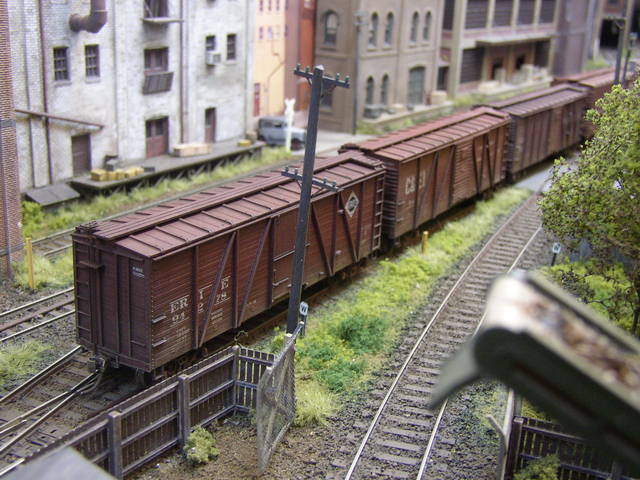
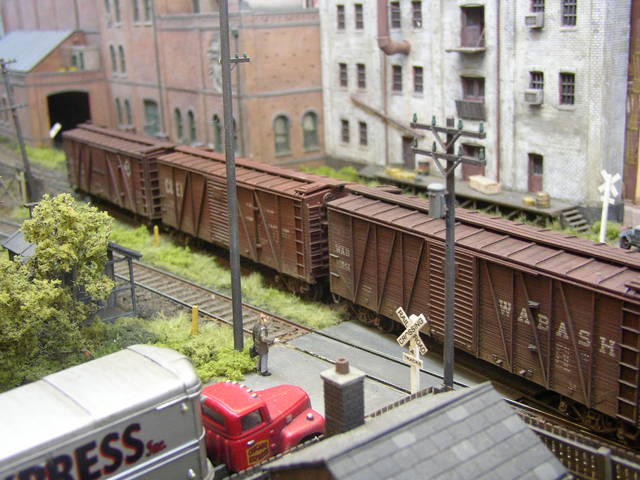
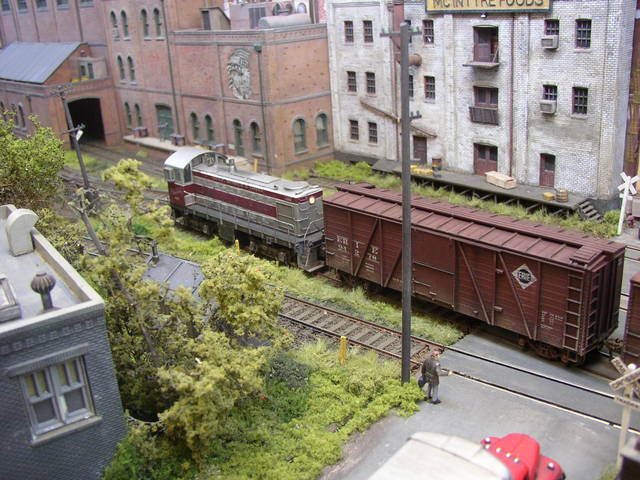
Jon
Nice job, fer sher. Way cool. [8D]
A couple of questions for you. 1) When you did the drybrushing along the bottoms, you didn’t do anything on the trucks? A couple of the pictures looked like maybe the trucks had been lightened with some of the “road grime” from the drybrushing. 2) Do you do any kind of dull-coat after you are done to preserve it and/or remove any plastic gloss that happens to still be there?
Thanks for the tutorial. I have this link bookmarked for when I need it (and I will).
FT
FT, thanks for the questions.
I put some road dirt on the trucks and wheels at an early stage when I was doing the underframes. the weathering powders hid some of this later on.
there are a couple of freight cars - the C&BT and Bowser - which need some dullcoat to cover the glossy body colour. I have some brush-on acrylic matt varnish which I like to use, and just picked up another bottle yesterday.
I’ll post a couple of pics later.
Jon
This tutorial has been great. Thank you for posting it. Ive long admired the images you have posted of your layout. Ive actually taken a couple of boxcars out and tried the techniques…with not as good results.
This is the first time Ive tried dry brushing so I have some questions. Should I use a stiffer or softer brush, and also about how many drybrush applications do you apply for each step to get the effects you get?
Once again, great tutorial.
Bob
Thanks Bob.
I use a stiffer brush for drybrushing, but not so stiff that the bristles scratch off the weathering effect underneath.
When I drybrushed the road dust on to the lower bodysides, I brushed back and forth at 45 degrees to the verticle, both / and \ , which helped to hide any brushmarks.
After applying the main dust colour, I added some ‘light sand’ or white to the paint to lighten it somewhat. This was drybrushed onto the raised areas and edges to highlight the dust.
Jon
i hope you dont mind if i post my wethering here.

my SOO Line tyco car
What make and where do you get it please Jon? Do you find it to be as good as Dullcote? Better? Different?
TIA
(PS… any chance on a thread on weathering your buildings [}:)]: they look good[8D]).
Really Cool. Just great to see someone successfully weathering freight cars without the use of an airbrush. I’ve used similar techniques on buildings, but not tackled the fleet yet.
Have you got any similar tips on how to weather the dozens of black hoppers that I’ve ended up with? Cheers!
Good Stuff Jon! As an armour geek, I learned to drybrush. It is one of my favorite things to do on a car!
Keith
BUMP.
WOW.
What is a fiberglass pen, how does one use it, and where does one get it?
I believe this is what he uses. http://www.ares-server.com/Ares/Ares.asp?MerchantID=RET01229&Action=Catalog&Type=Product&ID=14259

Jon, your weathering technique is considerably different than mine but I was, nevertheless, impressed with the lightness of your brushings; I am going to try your technique on at least one car at some time in the future.
Let me throw something out to you:
Have you ever reflected on the fact that IF:
Rear-Admiral Sir Thomas Graves had defeated Rear-Admiral Comte de Grasse at the Battle of the Chesapeake on the 5th day of September, 1781 - instead of the other way around - that there is a good possibility that the western boundries of the thirteen British Colonies in North America would end at the crest of the Allegheny Mountains, Quebec would extend all the way down to the Ohio River, California would still be a Spanish possession, we would all be driving on the left side of the road, and you would be giving this topic utilizing two-axle goods wagons?
And all that because, on that 5th day of September, 1781, when it counted most, the British didn’t quite know how to whup up on the French.
But then, Winston Churchill was once ask what he considered was Britain’s greatest contribution to world history and he responded, “The United States.”
Jon, thanks for the tutorial…i’m bookmarking it. Going to get to weathering my new freight cars after i finish painting 'em.
I really like your industrial buildings too in the pics.
And can’t pass by the historical reference, 'cause you know, it wasn’t just Sept 1781…August 30, 1776, if not for a fog in New York Harbor…the whole Continental Army would have been lost in the evacuation after the disaster of the battle of Long Island. Fog set in to obscure Washington’s nighttime evacuation to Manhattan. Otherwise, he was trapped between Cornwallis and the Royal Navy.