Where is the hobby going?

i’ve asked about shortcomings. shortcomings suggest a need that could be fulfilled with some new idea (technology)

there was oviously a desire to be able to control multiple locomotives on the same track. cab control was limiting and requires a lot of wiring.

before DCC, people were atempting to use higher frquency demodulators in locomotives to be able to control them. the problem would be that the frequency for each loco was fixed and throttle would have replacable tuning circuits

I don’t know how they intended to control the motor. i heard about this in college in the early 80s before processors and digital control using h-bridges took off.

on the other hand, new technology might lead the way. Blunami is an example. but it hasn’t taken off even though it seems to fulfill a shortcoming.

but not everything needs to be technological

as i’ve said, economics is also a driver. Foam benchwork is an example that simplifies construction

new material is another driver, ground foam was a step up from lichen and dyed sawdust.

ready-to-run is another driver that lead to manufacturing of higher detailed locos in china. Plug-and-play is another driver that makes using technology simpler.

another driver may be reliablilty. Presuambly one motivation for using batteries is reliable power that can replace the use of keep alives and avoids the need to keep track clean

is better performance due to the availability of metal wheels from venders like Intermountain.

again, i think if you want to know where the hobby is going you need to look at what it is missing, its shortcoming

1 Like

This is correct. While DCC may now finially dominate HO, and maybe N scale, it is likely uses by no more than 25% of all the people with model trains of all scales.

It is still my contention that adoption has taken so long not because modelers don’t see the added benefits, but because the costs are hard to justify unless you are new, or in some way srarting over.

Sheldon

2 Likes

One can hope the hobby, at least in HO scale, continues its push for correct road specific detailing.

Sheldon, I agree with your assessment, but one factor you left out regarding switching to DCC is SOUND. At least in my case.

Regards, Chris

We’ve been fighting the “train wars” for years.

There are those who are enamored with the trains of the past and there are those who count every rivet before they will declare wether it’s worthy of their interest or not.

That will never change.

1 Like

That is a good thing no question, but we have already seen that not everyone is willing to pay the high cost of many of those models.

Personally, I have my share of high detail RTR. But in the era I model we are still a long way from conplete roster coverage with such models.

Given the supply and marketing issues that exist in this hobby we will never see that as the universal standard.

Sheldon

That’s nothing new. At one time people were not willing/able to pay for blue box wide body locomotives. Which is why Life Like, Tyco and Bachman existed. Today we have Walthers Mainline, Accurail and others filling that space.

Greg asked about shortcomings/things we need.

Service parts for $300 to $1000 locomotives.

More/better paint for locomotives and rolling stock.

Larger radius curved turnouts from the commercial track lines.

More affordable scenery products.

Less duplication by manufacturers, more total variety, more readily available.

Sheldon

4 Likes

3D printing is low cost, whereas making an injection mold is a $100k investment, so there’s a lot of models that will never be made by injection molding. 3D printing is transformative for the hobby. It’s a new way of scratchbuilding.

Interest in operations is definitely up, but it does vary by regions within the US and I’m sure globally as well.

Yes. I talked with Bruce Chubb for a while this summer at one of his op sessions.

So basically you can just claim whatever you want because maybe someday some new breakthrough technology might magically do something. Even if batteries got safter and doubled their energy density, it does almost nothing to overcome all of the fundamental and logistical problems with putting batteries in indoor scale locomotives.

6 feet? I wire every section of rail. I want 100% reliable DCC power.

This is kind of hilarious, as Bruce Chubb has been using NCE DCC for 20+ years. He even re-engineered his boosters so that he could run 30+ boosters, as that was before circuit breakers.

The idea that DCC with signaling is as complicated to wire as advanced DC systems is patently false. Even your relatively simpler system that few people could set up is going to be more complicated than even the most complex DCC systems designed for full automation, which themselves are significantly more complex than DCC systems designed just for CTC with yards and industrial areas being dark territory.

DCC has been the biggest thing to happen to model railroading in decades. It has literally changed the way we design and operate layouts, and changed it for the better. Gone are the spaghetti bowls, and now we have linear, sincere, walkaround layouts with DCC and sound. Now ProtoThrottle is doing the same thing for switching layouts or districts by allowing people to operate trains more prototypically.

Maybe if you count everyone who has a loop of track in a box in their closet. If you count serious model railroads, especially thsoe that operate, you’re looking at 90%+, and alternative control systems like the horrible RailPro having a larger marketshare than DC block.

I absolutely agree. So much for referring to DCC as a minor evolution. :face_with_raised_eyebrow:

2 Likes

Agreed. Most 3D printers are relatively inexpensive, as is printing with them. Not only that, but you can do things with a printer that you can’t dream of with a mold. The quality of the print depends on numerous factors: your settings, how many dollars you shell out for the printer, how detailed your model is, and (seriously) what temperature it is.

2 Likes

Yes. We know that it’s for making specialized (clunky?) models. My observation was about how clunky 3d printed models look compared to injection molded with wire details.

Has the 3d technology accomplished equally fine model building or is it still behind in that area?

Perhaps it can provide a level of detail that is currently equal to injection molded structure components like walls?

So let’s be clear about something. DCC is a great thing for the most of the more advanced/serious HO and N scale modelers.

They do not represent the WHOLE hobby, it is much bigger than that even if HO is the most popular scale.

Secondly, there were several very good Command Control Systens before DCC, but they were proprietary. FYI Command Control is the generic name for what DCC does, controlling the locomotive directly, not by controlling track voltage..

I will propagate a list of them later if I have time.

DCC works great, but it is “older technology” as that sort of stuff goes. Older is fine in my book as long as it does the job.

The problem with all comparisons of wiring complexity and dificulty are subjective based on a long list of possible features and methods.

So as the OP of this thread, I will ask another physophical question.

When does this hobby stop being something that shows personal skill and artistry? RTR trains, KATO Uitrack, plug and play electronics, Woodland Scenic built up structures, and bench work that requires no construction tools?

And I really don’t want hear all the extreem criticism of this question.

I buy RTR and I still built kits.

I use commerical track, but it does not snap together on the carpet.

I buy “electrical components” and build what I need.

The real heart of my question is how much easier would you like it to be? And at what price? Litterally and figuratively?

3D printing is a fantastic advancement especially for those who model smaller roads. Even filament 3D printing is advancing a whole lot.
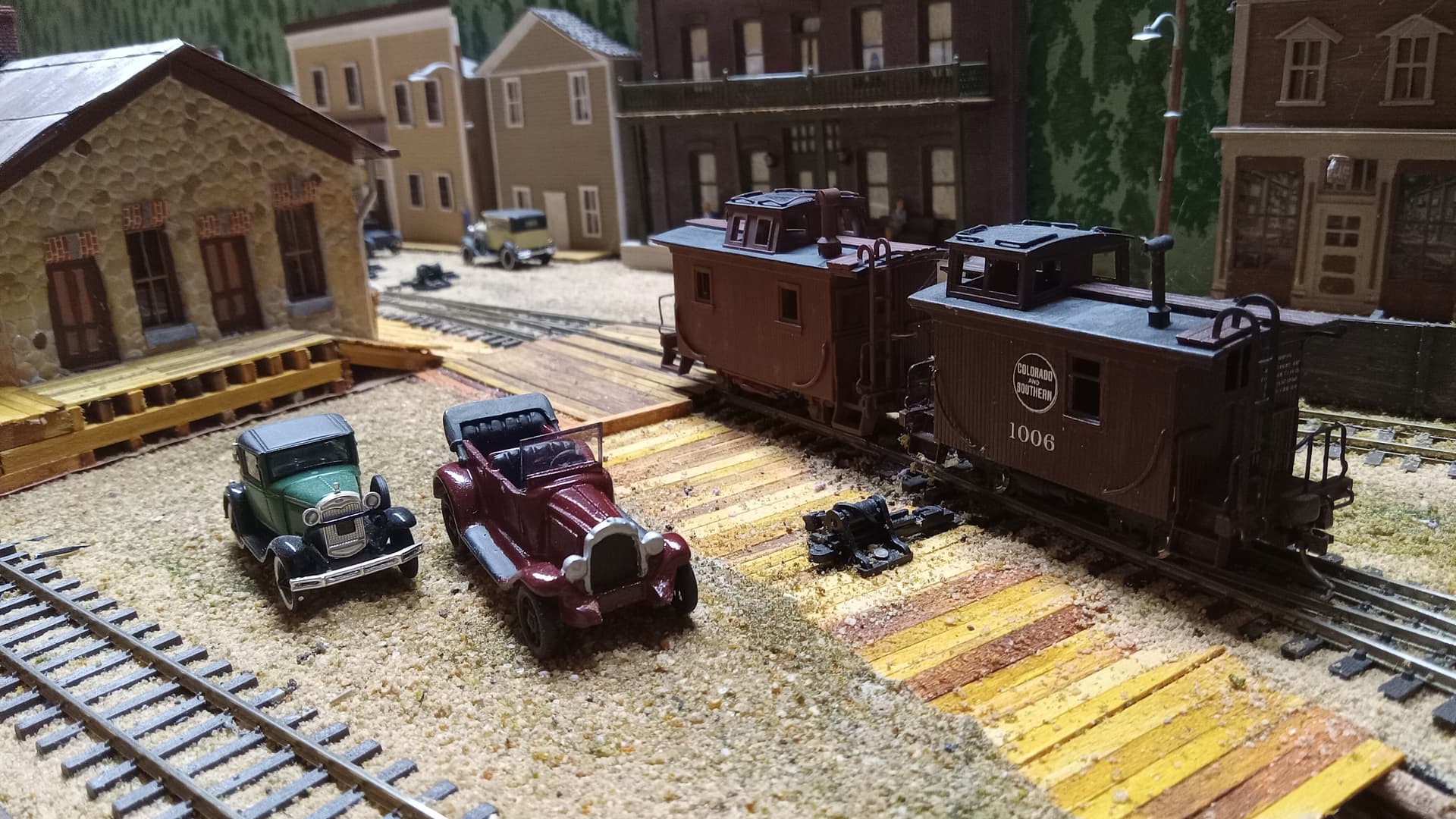
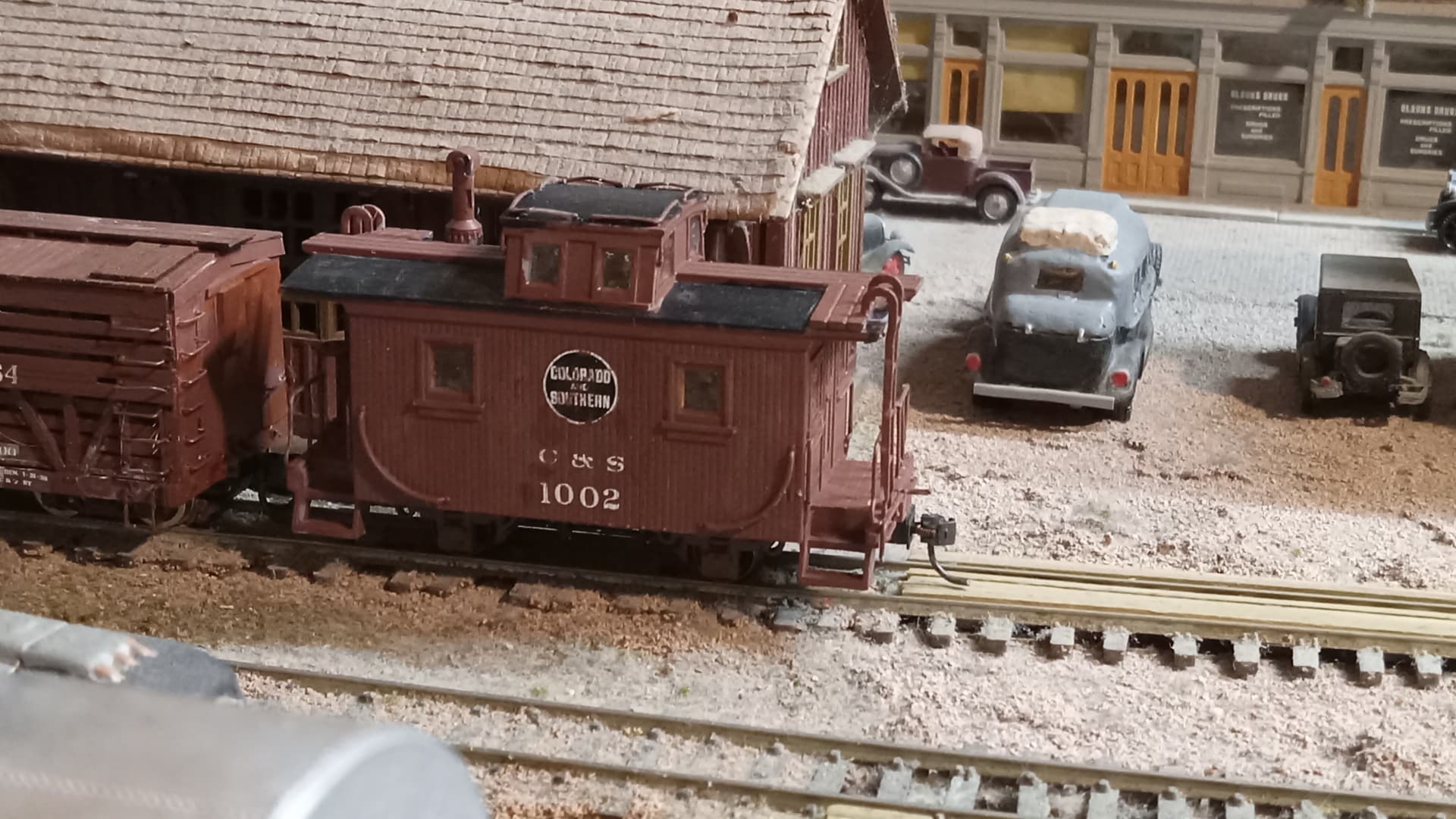
How about a comparison because a picture says a thousand words. This is a 3D printed caboose from 3DP Train/ Western Rails- It is resin printed as 2 pieces- endrails and free standing grab irons included The other piece is the underframe. You just add Kadee wheels and couplers.


For comparison here is a Balboa Brass model next to one. (Balboa on the right) The detail is just as good and in many ways better.

This brings up a point as to what 3D printing does for those that do a less modeled road- in HOn3 these cabooses have never really been made. Each one was an individual and Grandt line made a 1005 and with the exception of a small run of 1002s every caboose in brass has been 1006. 3DP Train offers every variation (12 total) and they do it in HOn3 and On3/30.
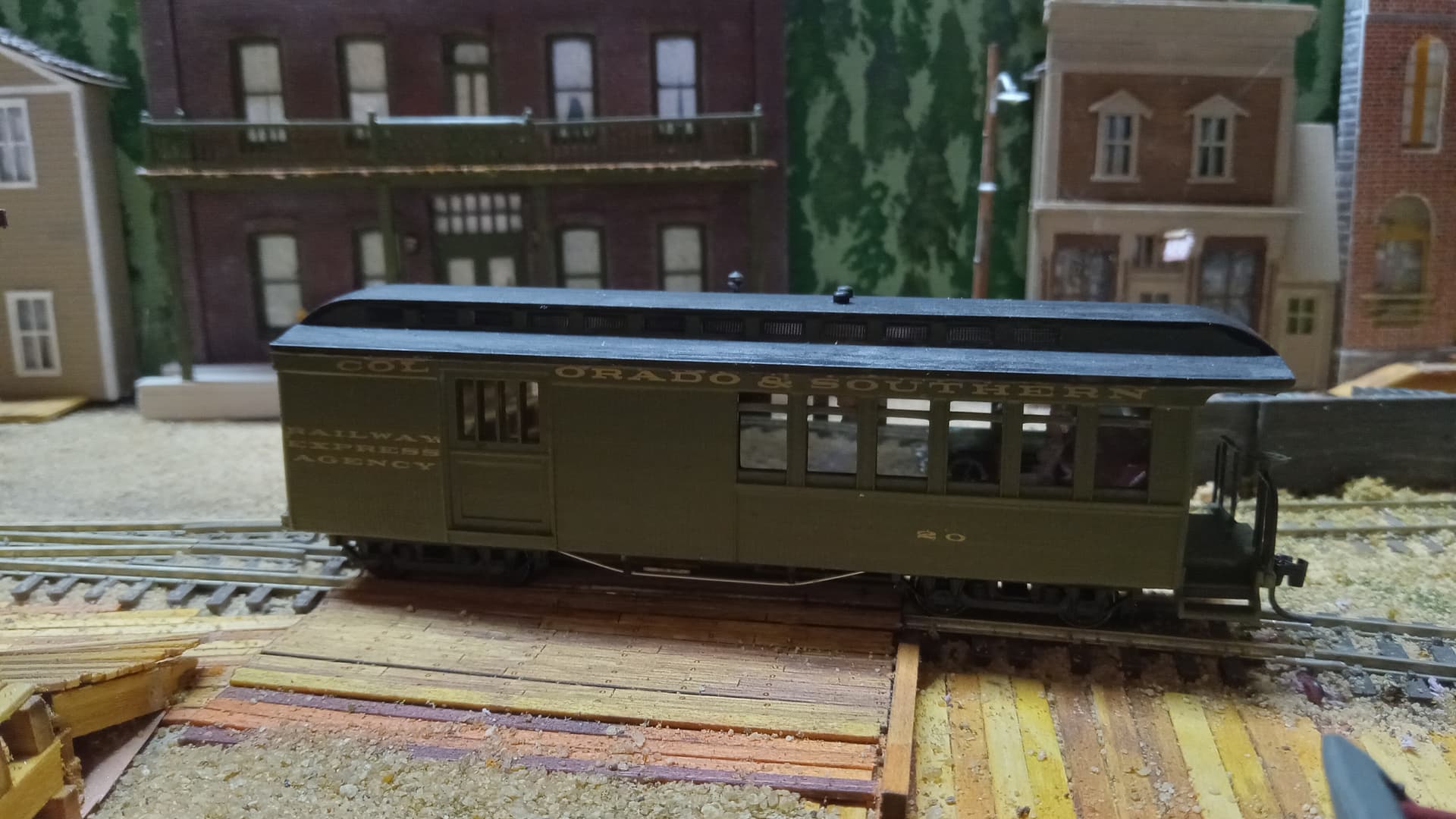
Ride Trains is another example- they make most variations of passenger cars of both the D&RGW as well as many from the C&S. Blackstone came out with one passenger car in its runs at roughly $150. These are a kit at 30 each but do come with an interior. The only other option in HOn3 is brass or Labelle wood kits. I do love the Labelle kits but they are time consuming.


It is a little hard to call either the 3DP train or Ride Trains kits- the cabeese are two pieces plus wheels and couplers- the Ride trains are almost as simple- one for the body, two for the interior, the underframe and truck frames and monofilament for the truss rods. You provide Kadee wheels and couplers. You do have to paint and letter them and both companies do have decals available (although I already had some)

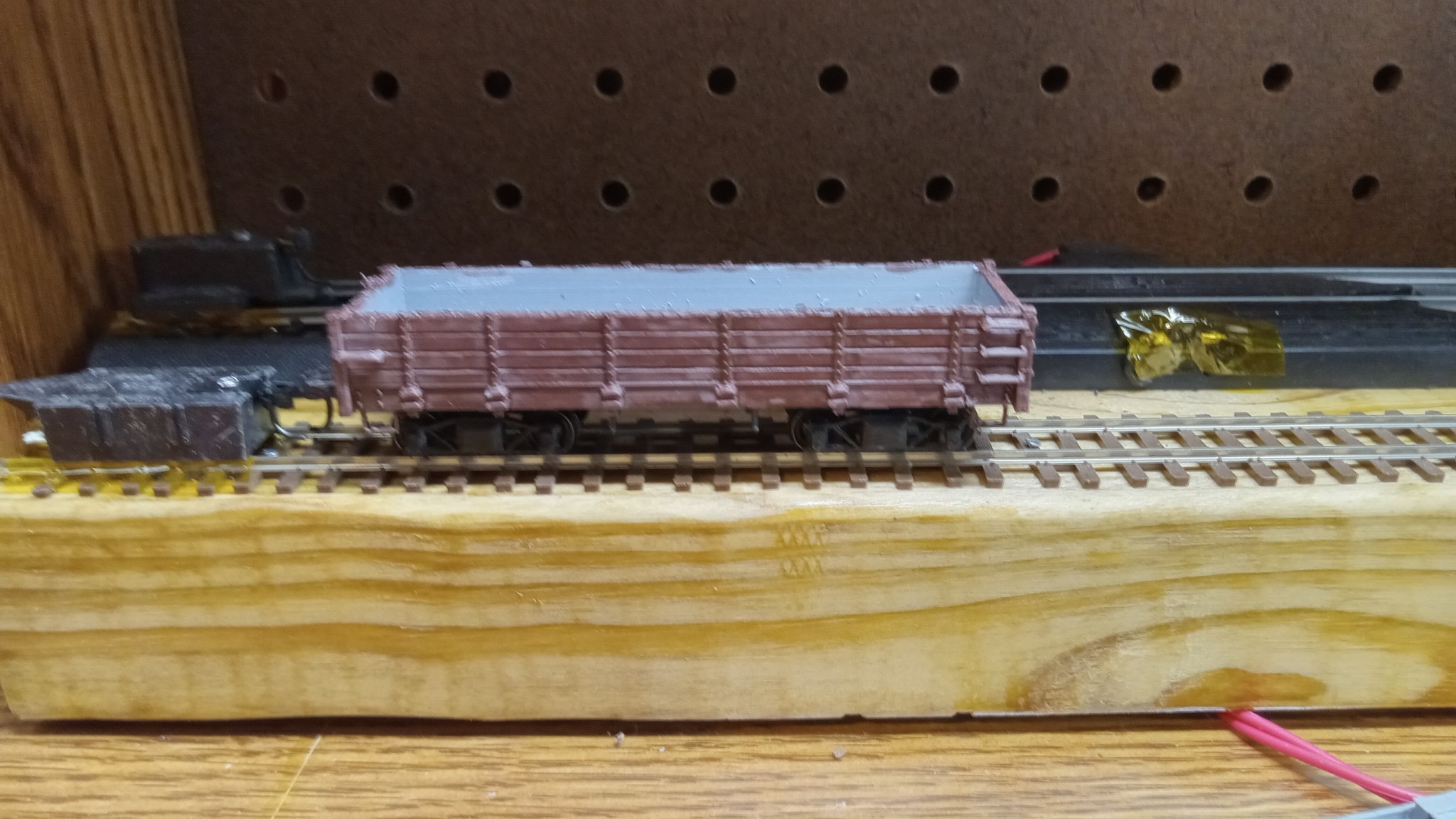
As for 3D printed structures they have been done mostly with the filament printers. They do not do as fine a work but they often have a larger print bed and are more cost effective for larger prints and the bigger the print the greater the cost difference. These are improving a lot but do require some clean up. I have a friend at our club that is experimenting with some gondola files we found in thingiverse- this was a first test print with a filament printer and he is working on it a bit. For about 4-5 bucks in materials I can not complain a bit- The grabs are still free standing. I need to give it another coat of paint and weather the interior.


Jim

2 Likes

drgwcs is right–3D printing, depending upon how you fiddle with the settings and what kind of printer you have, can equal or surpass injection molding–though wire details are still handy in some places. 3D printed models are rarely “clunky”.

2 Likes

Wow! I really just thought the whole point of a thread entitled “Where is the hobby going?” allowed me to dream a little. Yes, I can claim just about anything.

As far as the magic part, I grew up with Dick Tracy comics showing TV wristwatches. I don’t think at that time anyone envisioned anyone carrying a small handheld device that allows instant access to information from anywhere in the world, but here we are.

So, yes, I can claim whatever I want because someday some new breakthrough technology might ‘magically’ do something. I’m not sure I would call a battery operated train as magic, but that’s just me.

2 Likes

Well, except for Nikola Tesla…

3 Likes

Wire details can still be handy- there are some areas that because of supports needed you can’t quite do everything. On the cabooses the brake beams on this are little pieces of jewelry and just wonderfully made. The needed supports and the tiny size of these cabeese made it nigh impossible to add brake rods especially in the crazy Rube Goldberg manner that the C&S had to add them. Even if you could have added them it would be impossible to get the supports needed to print them cut off as their simply isn’t room on these tiny underframes. I did add a little bit of rudimentary wire brake rods to mine but it certainly was not necessary and the model looks great without them as is. To be fair the brass Balboa’s don’t get it right and have missing gear too and the 3DP print has much better looking brake shoes and beams. The only ones to get it right and have full brake rigging were the Overland brass models in Sn3 and On3- they had room to work.

1 Like

It is spectacular what can be done with a printer–especially resin ones. When you count in some of the “cousin” technologies (laser cutting, 3D scanning, etc.), 3D technology is almost limitless!

2 Likes

A 3d printed modern covered hopper or tank car would require lots of monofilament or wire details to be added. The printed part of the model is mainly the big pieces I guess.

I can see why it would be attractive with other gauges and eras.

1 Like