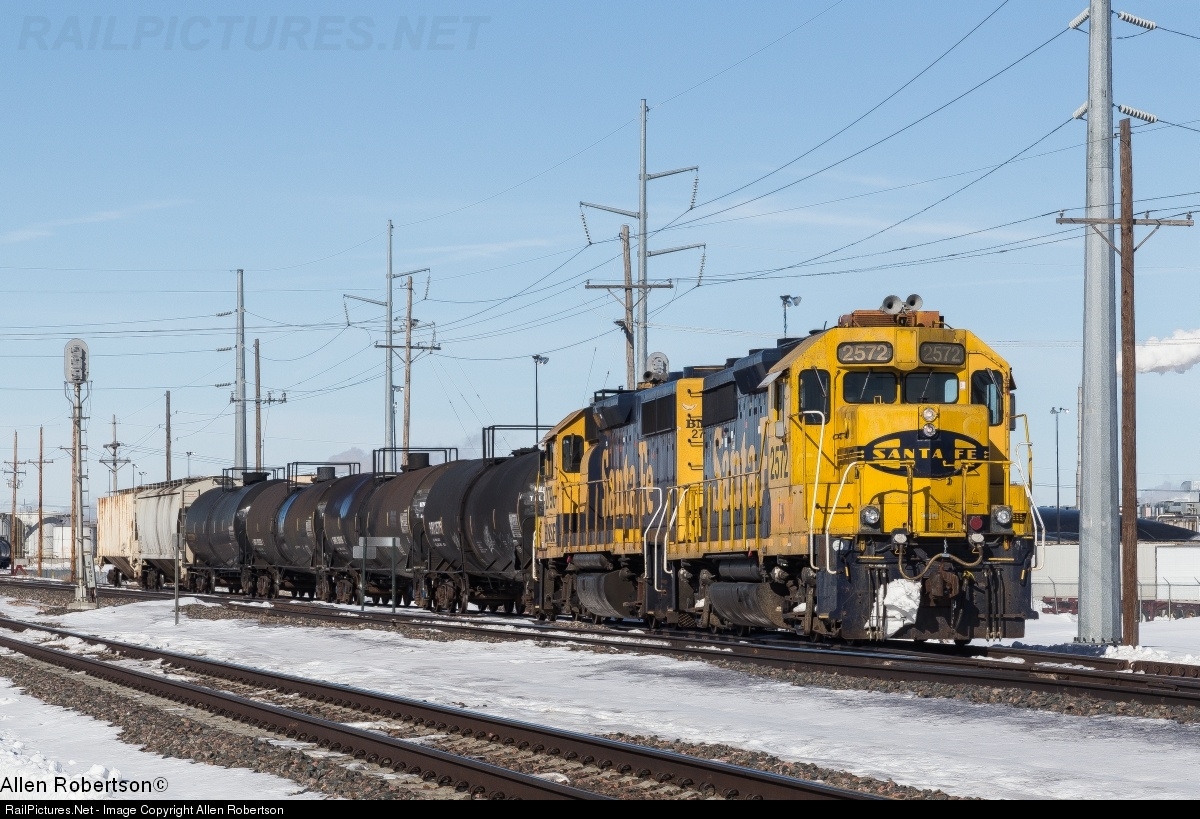
On the flip side, I grew up next to high line of the Minneapolis, Northfield & Southern Ry., which except for one engine (Baldwin DRS 6-6-15) used switchers on road trains. Baldwin VO-660 and VO-1000s and FM H-10-44 and H-12-44 early on, later EMD SW-1200 / SW-1500s. Trundling along at 10 MPH or so, they seemed to work fine.
There is nothing new about using older road engines for switching. Even in steam days, it was not unusual for railroads to assign road engines to switching service. In the 1950’s, the B&O used 2-10-2’s on the hump at Willard, Ohio, and they used Q-4 2-8-2’s to switch coal and ore cars at such major Lake Erie ports as Fairport Harbor. Union Pacific almost completely ignored the 0-8-0 type, preferring 0-6-0’s for light switching and 2-8-0’s and 2-8-2’s for the heavy work. PRR used 2-8-2’s and 2-10-0’s as hump engines at numerous locations. Indeed, the PRR only had 90 C1 0-8-0’s on its roster. This would be a lot on many other roads, but it was a very small portion of the massive PRR’s roster, and it is a tiny contingent in comparison with the PRR’s 666 0-4-0’s and 0-6-0’s in classes A5s, B6, B6sa, B6sb, B8, and B28s. Those 0-4-0’s and 0-6-0’s were intended for lighter switching. PRR’s total of 90 0-8-0’s pales in comparison with B&O’s 225 0-8-0’s, or NYC’s total of over 500 of the type. In fact, the PRR had so many H6, H8, H9, and H10 2-8-0’s that it would have been wasteful to retire them as they were displaced by larger mainline engines. They were easily reassigned to branches, secondary runs, transfers, and of course heavy switching.
Even when brand new, the ubiquitous GP was always considered a General Purpose locomotive, available for mainline service in multiples, or as single units for branch, local, and switching service.
The idea of using an older mainline engine for heavy switching is definitely not new. There were even times when “road engines” were purchased brand new, specifically for heavy switching, such as the CNW’s purchase of SD38’s for hump service.
N&W took old F-M Trainmasters and cut them down to be yard slugs.
Tom,N&W used Alco C-628s as yard switchers in Portsmouth(Oh) for six months then GP35s replaced those big Alcos. Later the Geep 35s was replaced with SD35s.
Lately, I would say yes. In my last extensive bit of trainwatching on BNSF in 2015, I saw NO through trains with GP’s. The way-switcher, however, was a GP38-2 and a former GP50.
Should a loco shortage occur, then the GP’s get put where they’re needed.
For several years the UP has been storing surplus power in the Grand Junction yard, south of the Amtrak station. Initailly there were quite a few switchers, but they are gone. Most of the engines are GP15s that had been used as switchers, some radio controlled. I haven’t counted them but there are at least a hundred, plus a hand full of leased units. As I understand, the leasing companies had no current use for them and told the UP to hold on to them.