If his friends cared about him, considering the rigors of any transcon trip in those days, they would have provided the best available, which was probably the Century and the Overland Limited. They would have sought out the dining car steward at South Station and givn him the cash to cover the meal to Chicago. If the UP had an office in Boston, they might have been able to work out some special arrangement on the Overland Limited for meals paid in advance.
Parmelee vans would have handled the transfer between stations, with the ticket included in the through ticket and fare. Probably luggage would have gone in a separate van from the passengers, but would be delivered directly to the drawing room or compartment.
Thank you – and everyone for all this helpful information!
An additional question about luggage on the 20th Century Limited. Would a porter have taken the luggage from the curb and then delivered it directly into the room? How would that work? I assume the room is specified on the ticket. Wouldn’t the passenger need to accompany the porter carrying their luggage, if only to tip them and make sure it got placed in the right room?
Was there enough room for a couple and their luggage in the room with them? I assume it was stored overhead? Or?
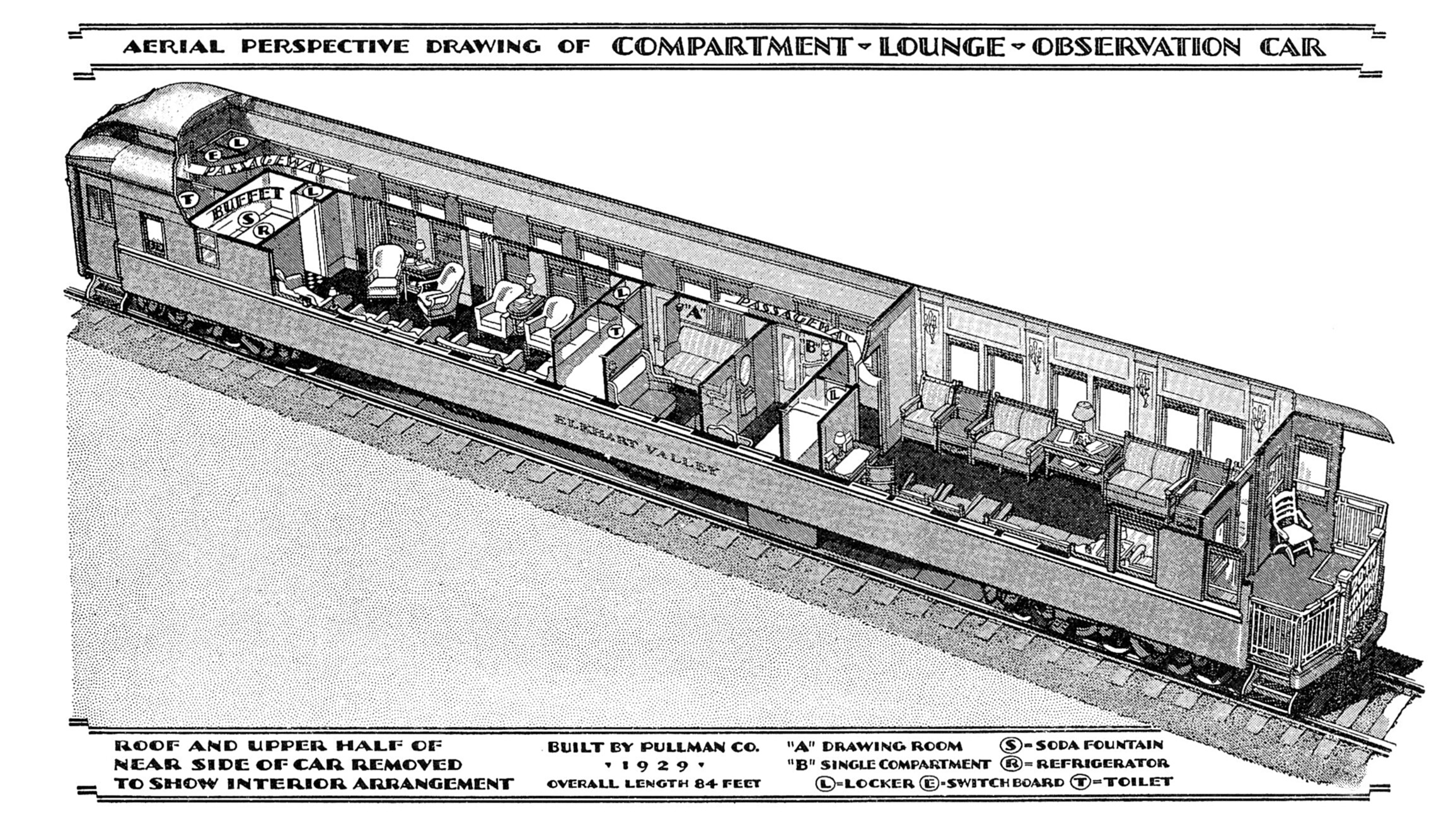
Would people sit in the compartments, too? Or just go there to sleep and wash up? Was there some configuration that allowed for seats in them? Or would people sit in the observation car or elsewhere when they weren’t dining or sleeping?
And, while it’s unlikely anyone knows the answer to this: it looks like there weren’t a lot of seats in the observation car, or as many seats as passengers. Do you think there was some jostling or competition to secure them? Or were these mostly used by the people waiting to dine or who had just dined? And were beverages served there?
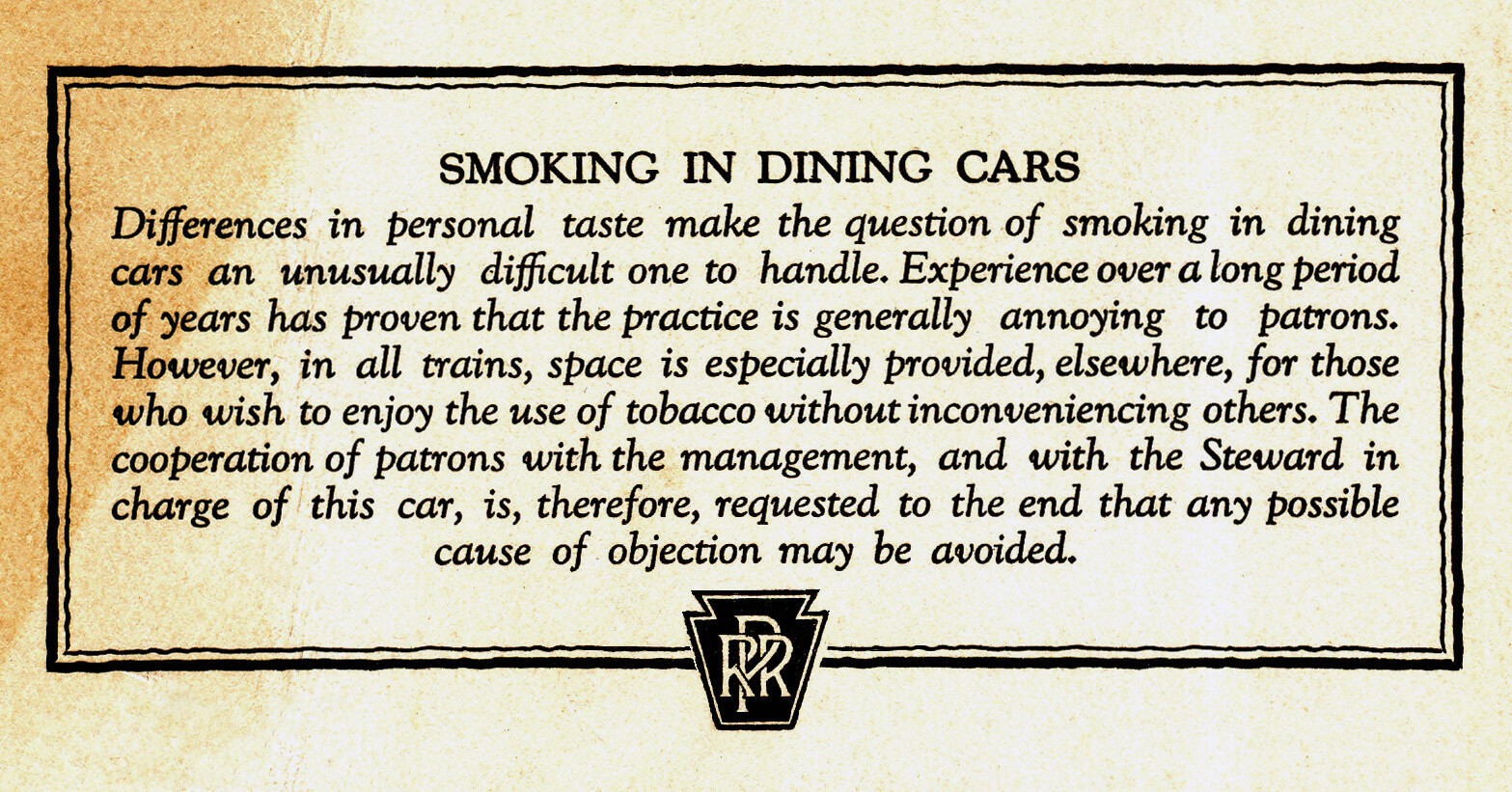
and, finally, was smoking allowed anywhere in the train, not just the smoking car?
Your compartment would not have beds when you entered it, just seats (and in bigger rooms, a sofa). Since you were paying extra for the privacy of a drawing room or compartment rather than an open section, you most likely spent a good deal of time there.
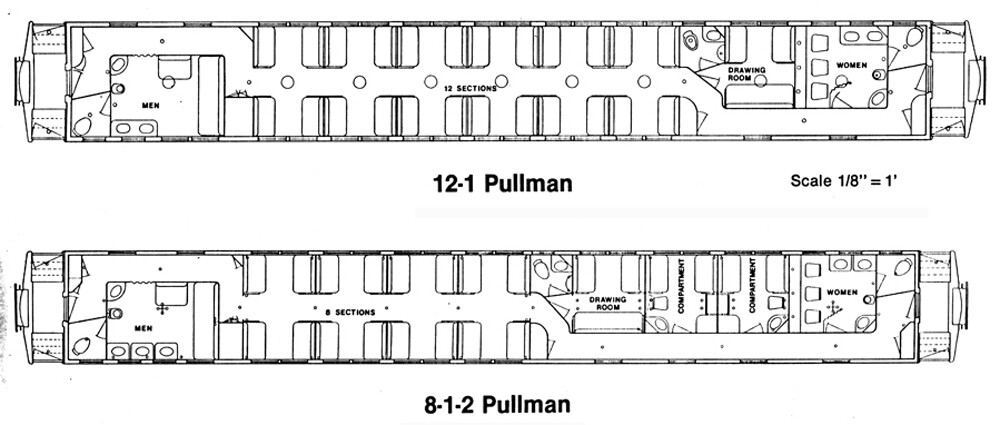
At night, the Pullman porter came in and ‘created’ the beds. Some beds folded down from the wall, some were converted from the seats. See the drawing rooms and compartments in the diagrams below.
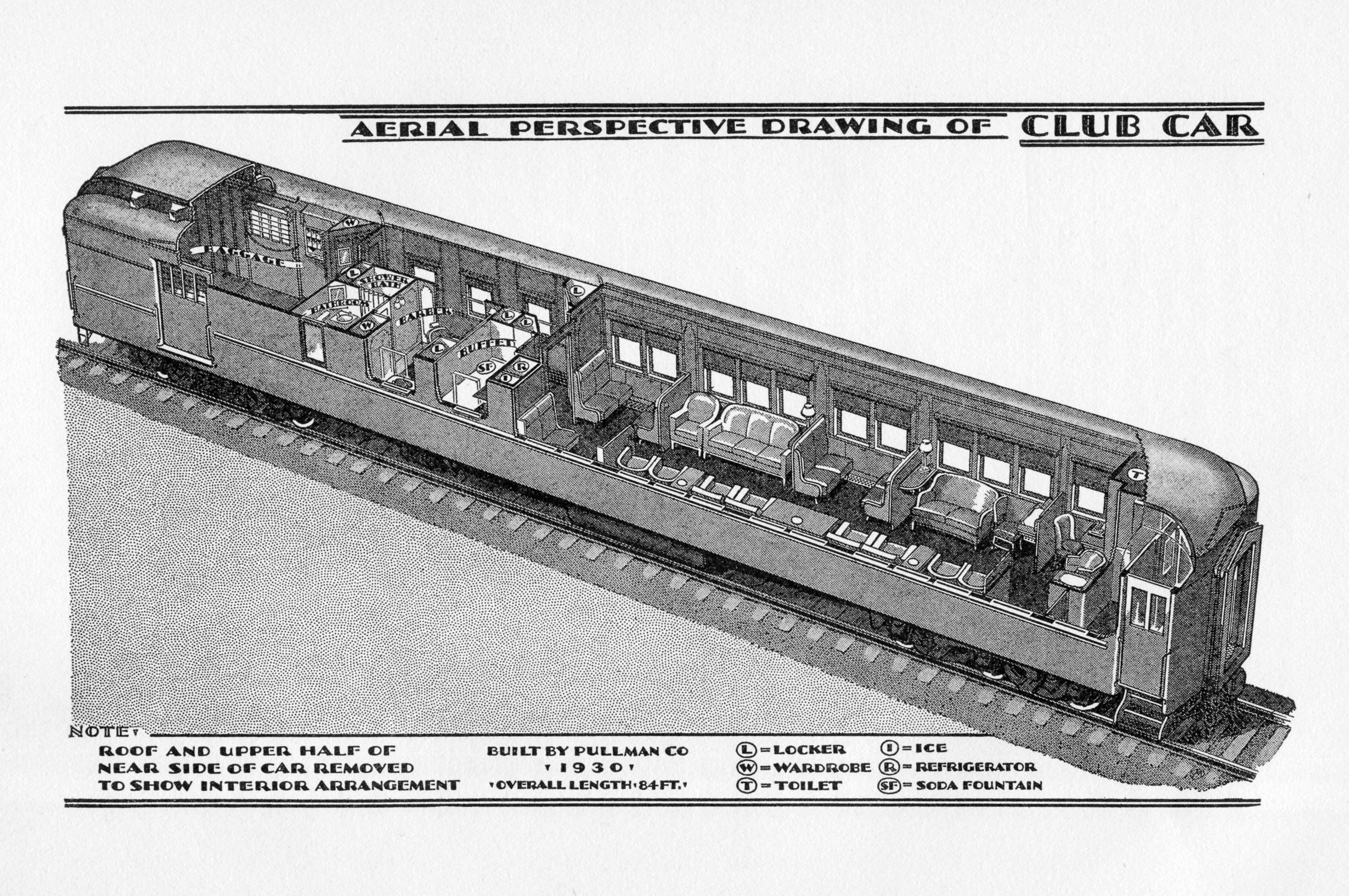
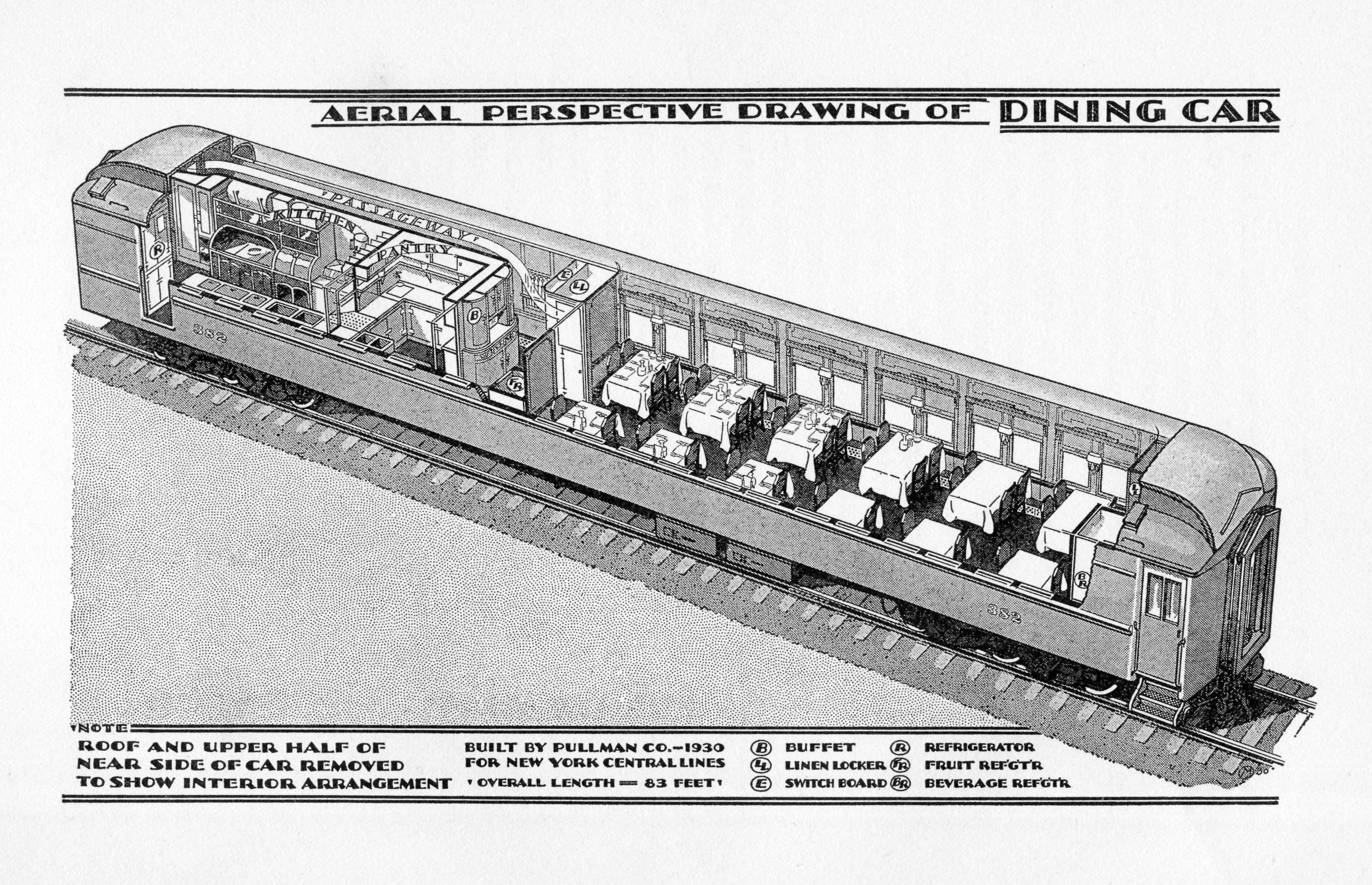
First, maybe helpful to understand the make-up of a long distance train back then. The first car or cars were the “head end cars” - Baggage cars, Railway Post Office cars, etc. After them, the coaches for shorter trip travelers or those who couldn’t afford first-class (sleeping car) rates. Then the dining car. After the dining car came the Pullman sleeping cars, with an observation at the end. The Obs could be a full car like a lounge, or just a rear section of a sleeper.
Generally people hung out in the observation car to maybe get a drink or just relax for a little while. If it had tables and chairs, a card game might break out. In the 1920s, some cars would have a radio (quite new then). But people normally didn’t ride for hours in the observation car.
Note that on some railroads, the dining car was a true divide; coach passengers on those railroads could only go as far back as the dining car. They couldn’t go back to the first class cars or the observation car.
No, just in the smoking car. (Well OK maybe Pullman let you smoke in your own compartment or drawing room?) The smoking car was often a baggage-lounge combine, put between the head-end cars and the coaches. They would often have drinks or snacks available, but it was mainly the place to smoke.
I think I remember seeing a built-in steel ashtray on the wall of my roomettes or bedrooms when Amtrak was still operating Heritage fleet sleepers. As I recall, they were hinged at the bottom and folded down from the wall in order to be emptied.
They were vestigial traces of a previous time, just as those square plates on the walls of today’s Viewliner sleepers mark the place where the TV screens or monitors had been mounted when those cars were new about 1990 or so.
Most trains in the 1920s just had one “class” – that is, everyone on the train paid the same railroad fare. A coach passenger paid $32.70 to ride NY to Chicago (assuming no extra fare) and a Pullman passenger paid $32.70 plus whatever his accommodation cost.
The OP seemed to be using a European model of train operation, which would not have applied to most United States practice in the '20s.
As noted, there was a government-regulated fare charged by the railroad (usually known as ‘transportation’ when making up tickets) and then there was the Pullman Company’s charge for the sleeping and other amenities provided by them (known as ‘accommodation’).
The only thing comparable to ‘first class’ in that era might have been a parlor-car service. Timz would have examples.
The ‘extra fare’ was charged by train, not for parts of the train. Of course many of the extra-fare trains were ‘all-Pullman’ so there were no coach passengers.
What there was on the regulated transportation side were classes of rate depending on time. One example was New York to Chicago (part of this question) where some railroads had decidedly slower trains than others. Lower transportation was charged in increments, the ones I remember being 20, 24, and 28-hour services, presumably extending to intermediate stops on a pro-rata basis as well as budget ‘end-to-end’. I don’t remember the date of the railroad agreement to set prices accordingly, but again I think timz will know.
For the trip to be exhausting and take 6 days, I would suspect not only was the character riding a 28-hour train from New York, he encountered delays en route…
Coach and First Class fares were used right into the first few years of Amtrak (I think 1974 was the changeover year, also the first year Amtrak tickets could be prepared on ATC airline ticket stock). Coach fares applied to coaches and special equipment like Slumbercoaches (Sleepercoaches on the NYC). B&O/C&O changed to a coach fare only basis in the mid-1960s. First Class fares were required in parlor cars as well as Sleepers, both Tourist and regular Pullman cars. Railroad-operated exceptions included Milwaukee’s Touralux cars.
Prior to World War II, most sleeping cars and many parlors were owned by the Pullman Company and leased to the operating railroads (This included cars painted in railroad colors). After 1947 many Pullman cars were transferred to railroad ownership and those and new postwar cars leased back to Pullman for operation. (Slumbercoach was actually a Pullman trademark.) Pullman also owned a large fleet of “pool” cars that could be used anywhere. Railroad-owned cars were routinely reassigned by Pullman to other railroads for seasonal and special service, especially to Florida trains.
After New York Central pulled on-line sleeping cars from the Pullman contract in 1958 Pullman only lasted ten years, with the last Pullman-operated cars finishing their runs on December 31, 1968.
What I meant was not a ‘first-class fare’ but a separate car marked and reserved for First Class only, as was often seen in Europe.
Until very recently, the language in Amtrak’s documents for private cars specifically referenced some number of ‘first-class fares’ (I think it was 29) plus other fees and charges. The post-private-car-ban terms have gone to per-mile charges.
Parlor cars would have been common in the 1920s. They were the daytime-train version of First Class. You paid extra to get to sit in a comfy lounge chair (perhaps swiveling) or sofa instead of a standard coach seat paired with another seat.
The 1975 standard was 18 first-class fares for non-passenger-carrying cars and 24 for passenger-carrying cars. Switching and storage charges were extra. In steam heat days a scheduled stop of at least 15 minutes was required to add or remove private cars. There were still many locations where railroad mechanical department employees were still around - not the case today with Amtrak Mechanical Department assistance required.
In the early 1970’s, I enjoyed a number of trips aboard Amtrak’s parlor cars during my ninety minute ride between New Haven and NYC. Simply put, those parlor cars were out of this world in terms of genuine old-time railroad luxury. The chairs themselves were as comfortable as any leather recliners—and they swiveled! Shortly after departure an attendant, always an older Black man with seniority, would discreetly approach and ask if I wanted something to eat or drink. When he returned, the little table affixed to the wall supported those, while I looked around and tried to drink in deeply an atmosphere that was at once old fashioned, luxurious, fun, and doomed, because one just knew that nothing this nice could last long in the cost-cutting approach Amtrak was taking in those days.
The parlor car experience was the daytime equivalent of the roomette or bedroom experience on overnight trains, and Amtrak’s Acela First Class, even in a single seat, isn’t half so cool.
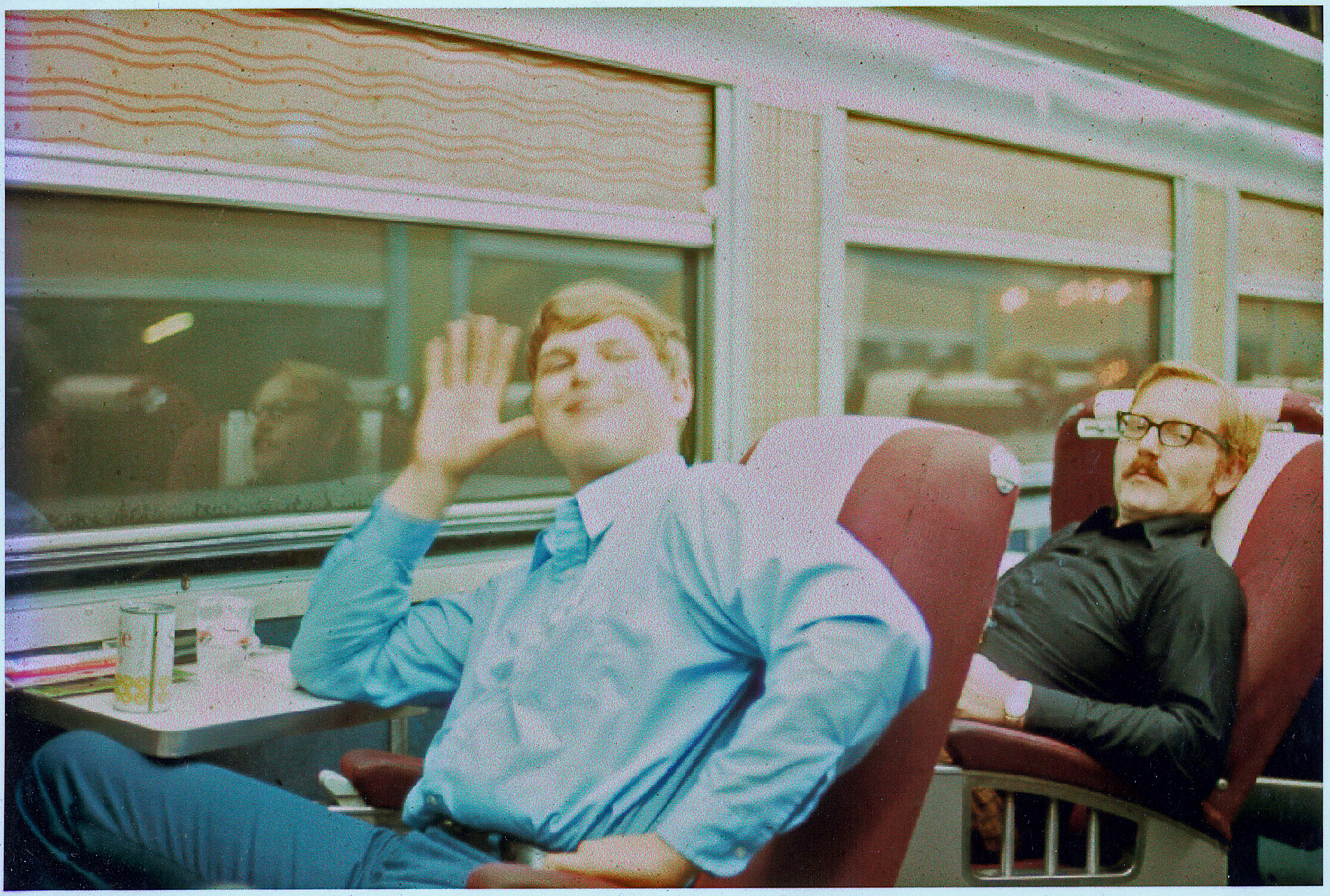
Here we are on the Nathan Hale also riding between New Haven and Penn Station. I’m pretty sure it is a Pennsy Budd parlor car as the PRR was fond of that wavy star pattern on the window shade probably from the drawing board of Raymond Loewey. I think we were on the Merchant’s Limited that night.
Back then you could ask the conductor if there were any rooms available and for a couple dollars you could upgrade your coach fare to a parlor ‘day room’, which was usually a roomette or bedroom in an ordinary Pullman. In fact many of the parlor cars had a drawing room of sorts so that a couple of business men could conduct a meeting while en-route.
Just recently rewatched ‘The Sting’ - Newman and Redford
The poker game scene taking place on a section/compartment sleeper with what appeared to be the Pullman Conductor acting as the bank and all the high rollers participating in the game.
Heavyweight compartments and drawing rooms were usually laid out with a “section”, within a larger enclosed space. Drawing rooms got an extra bed along the aisle of the car. Both types had private toilets, the compartment’s in the room space, the drawing room’s in an “annex”. There were various layouts for double bedrooms, compartments and drawing rooms (and “Master Rooms”) on lightweight cars, with the toilet enclosed in nearly all postwar cars for all three types.
Sleeping car rooms usually required a minimum number of first-class fares in addition to the room charge. In the 1974 Amtrak tariff book, there were published charges for duplex roomettes, roomettes, bedrooms, compartments and drawing rooms. Bedrooms and compartments required a minimum of 1 1/2 fares, drawing rooms (where found) required 2. Compartments were later re-designated as bedrooms. Drawing rooms were found on only a few trains by that time and were later also designated as Bedrooms.