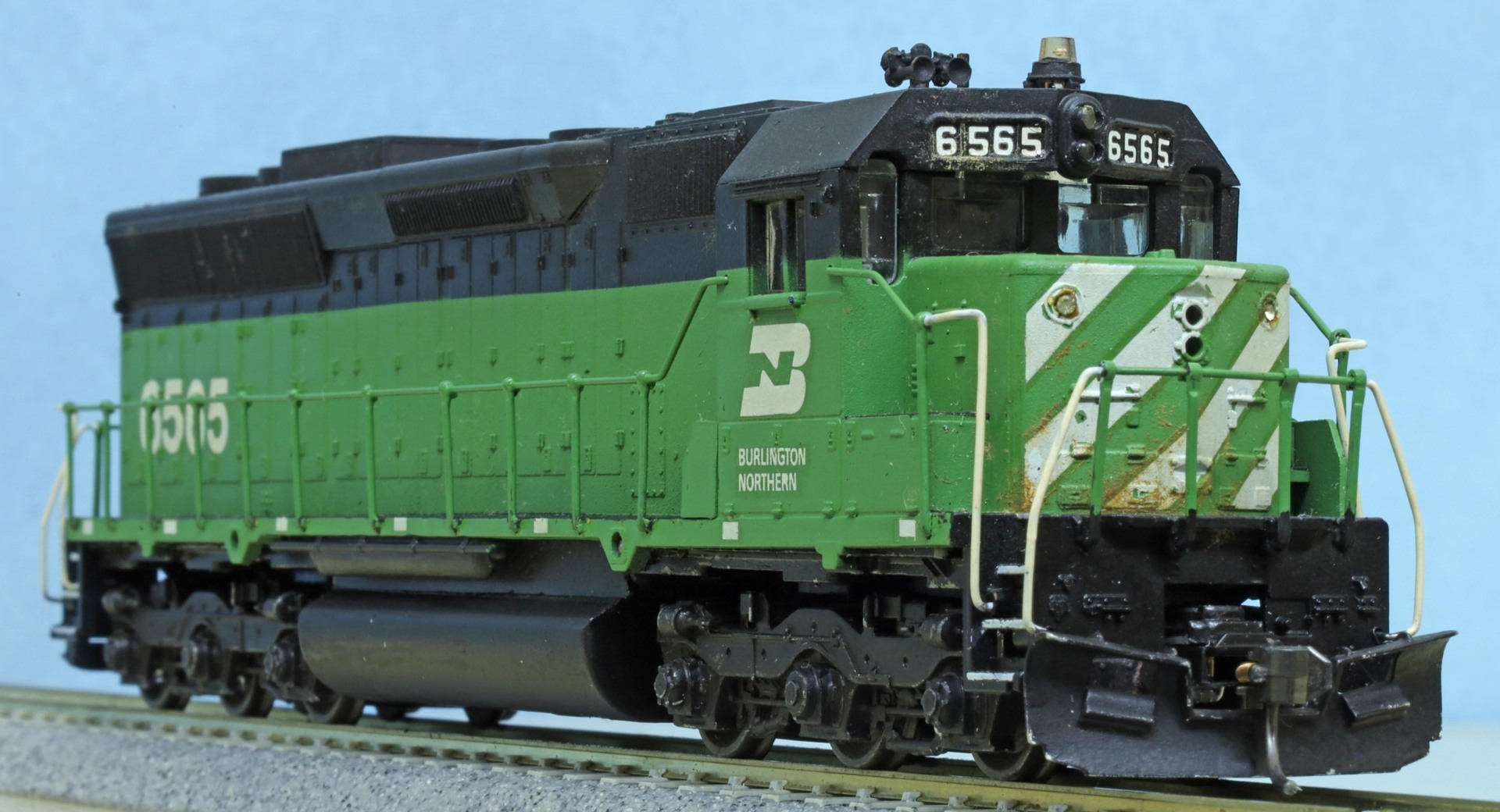
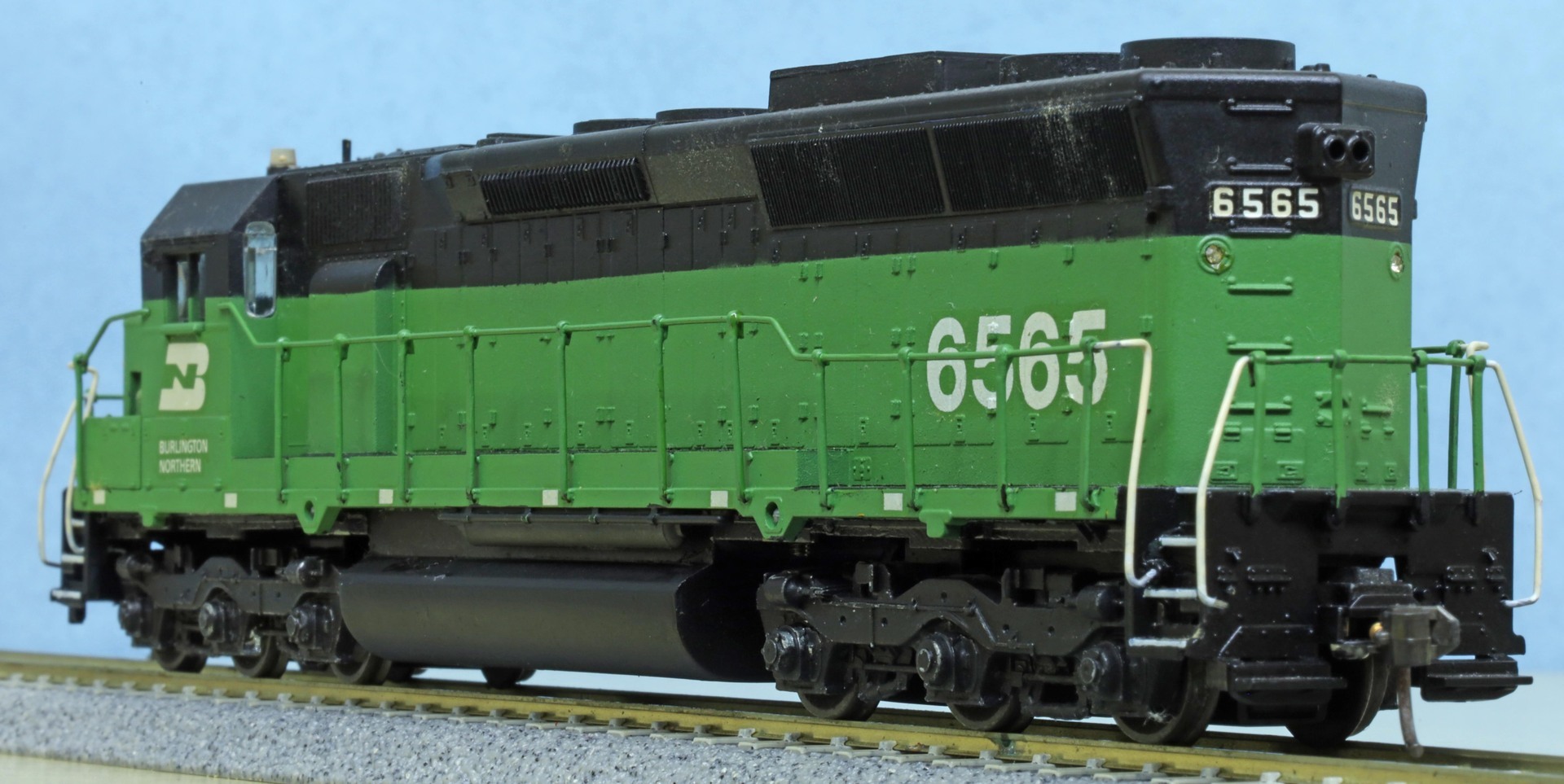
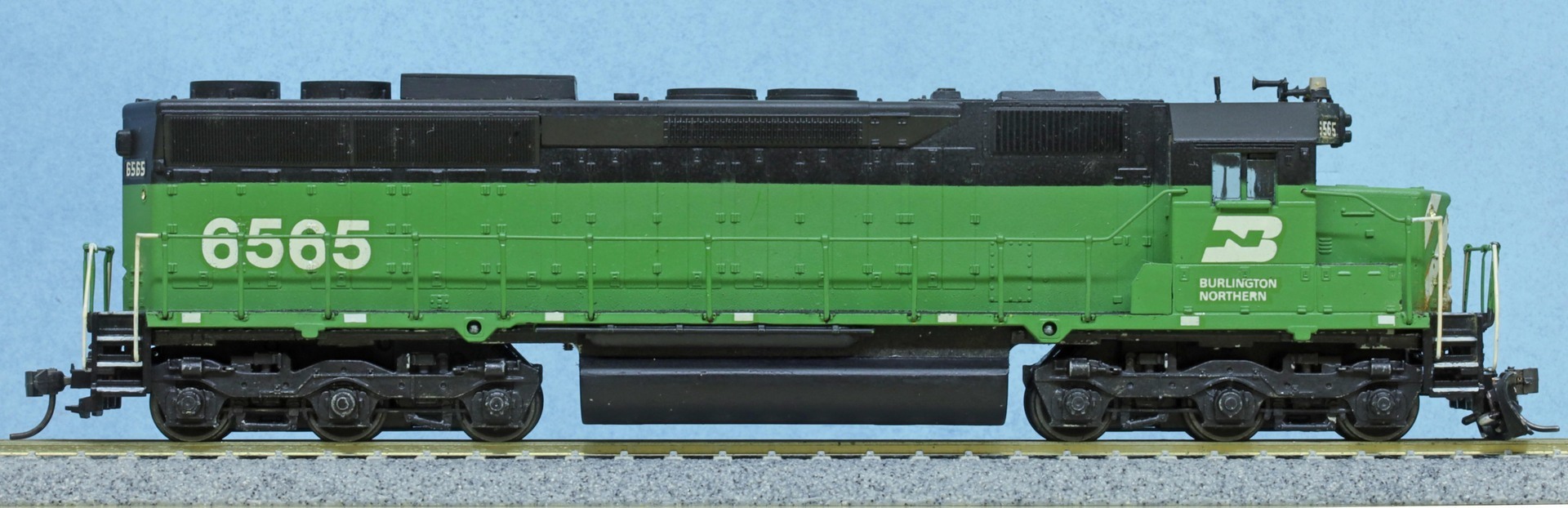
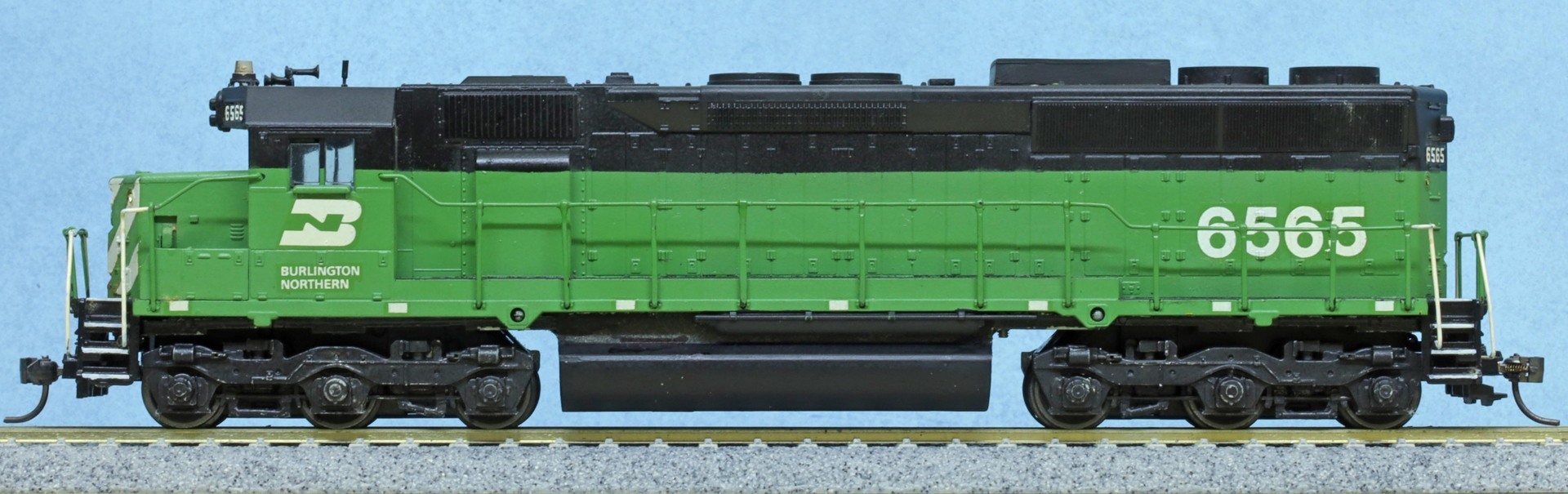
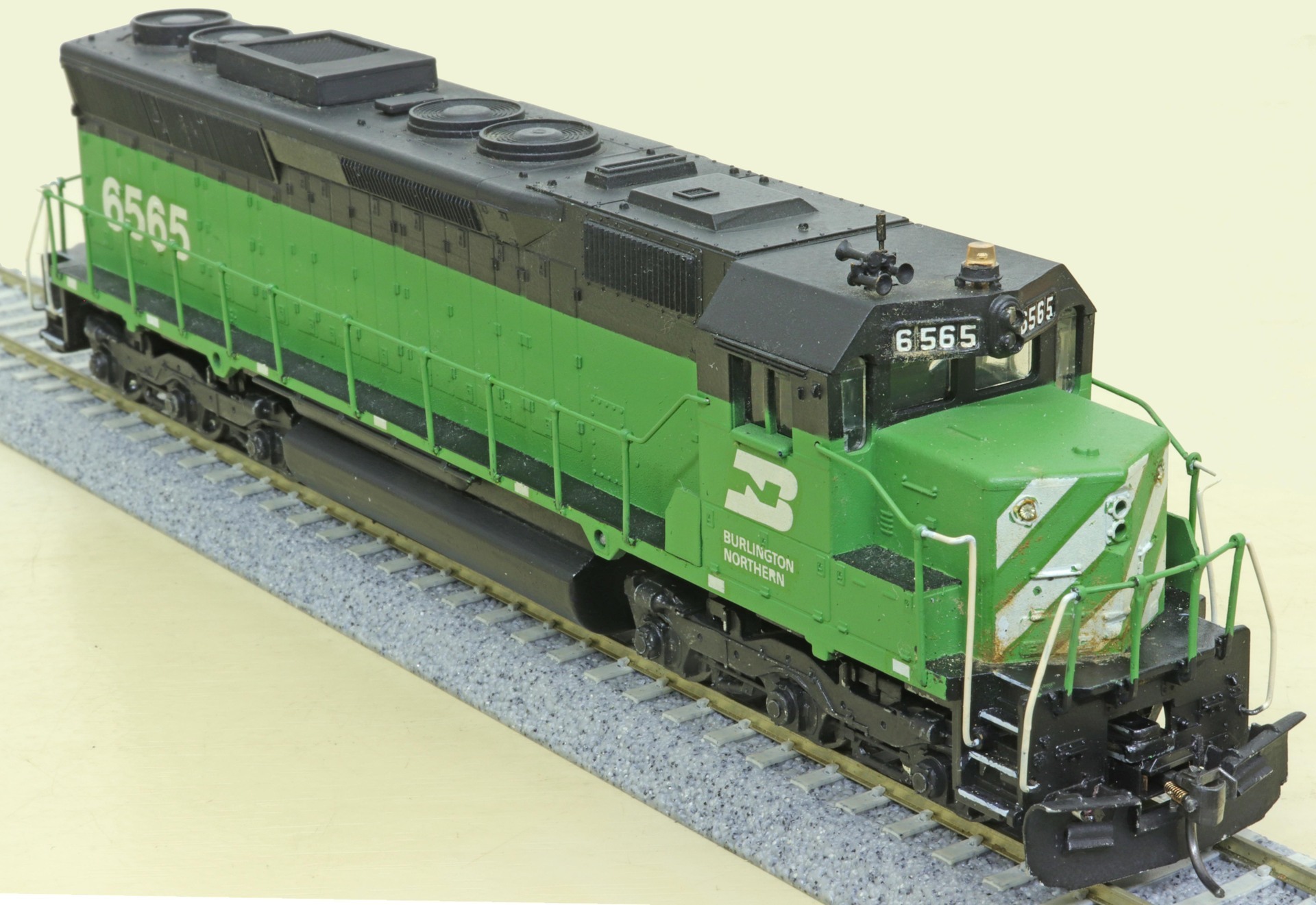
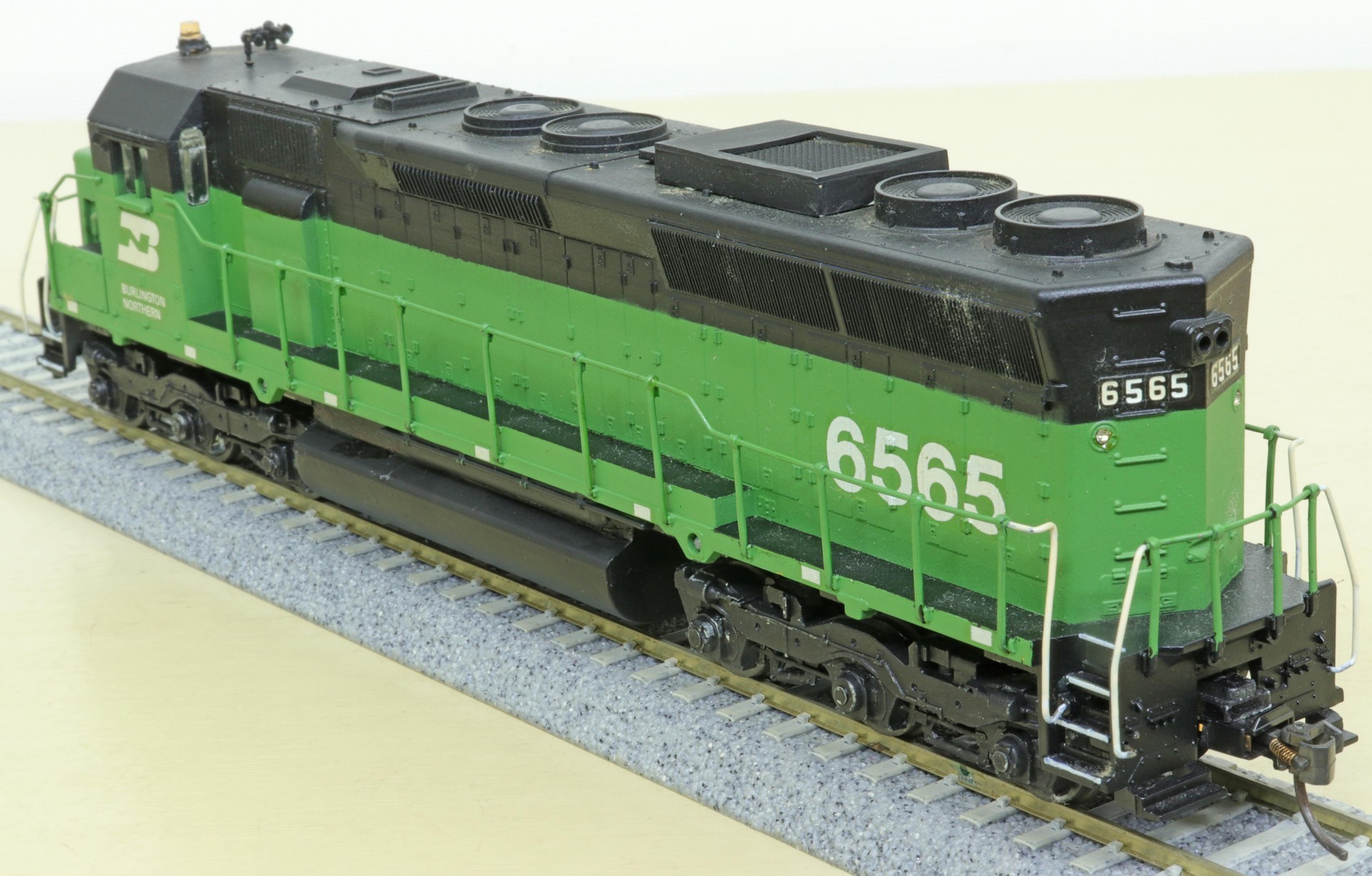
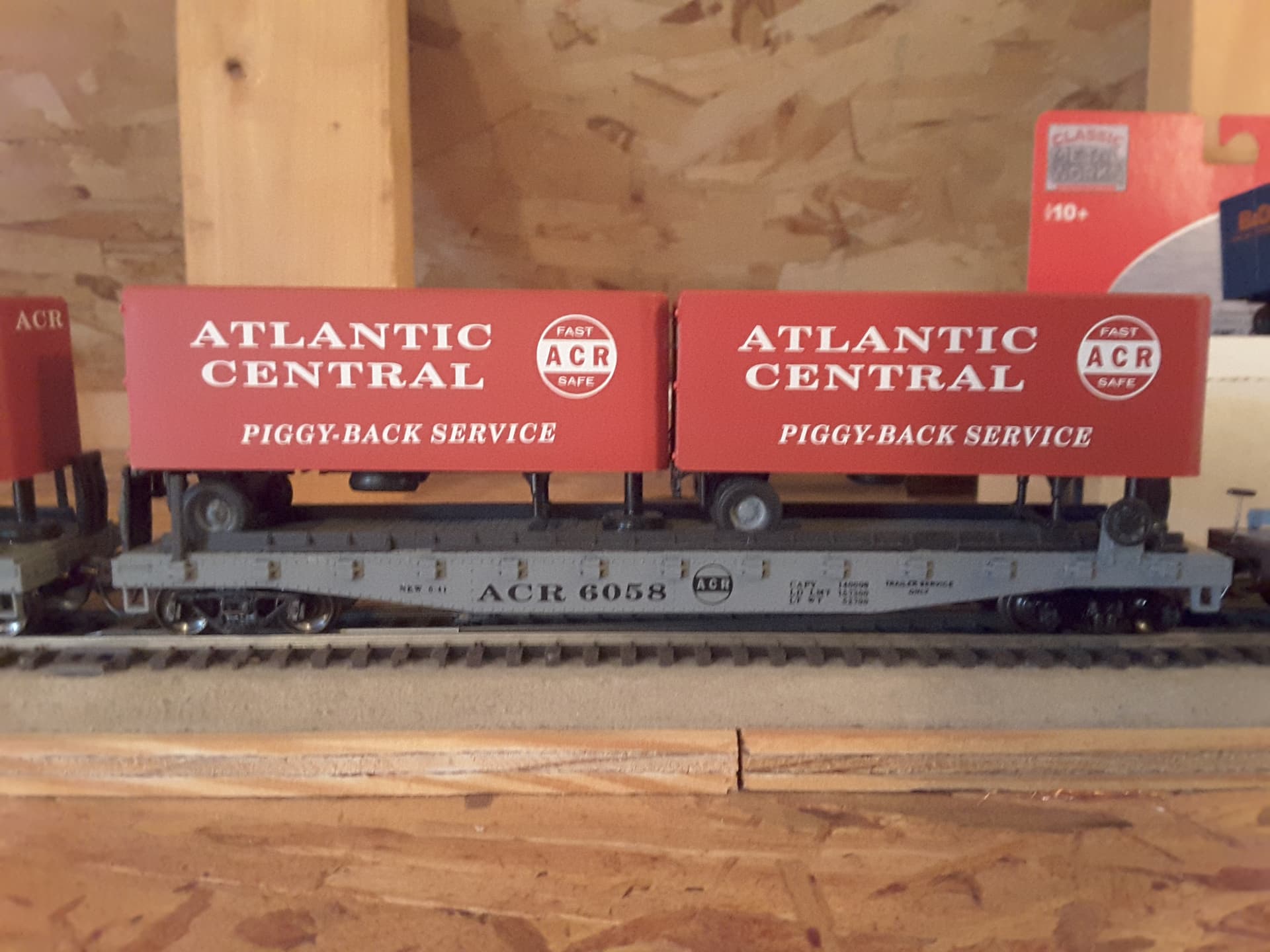
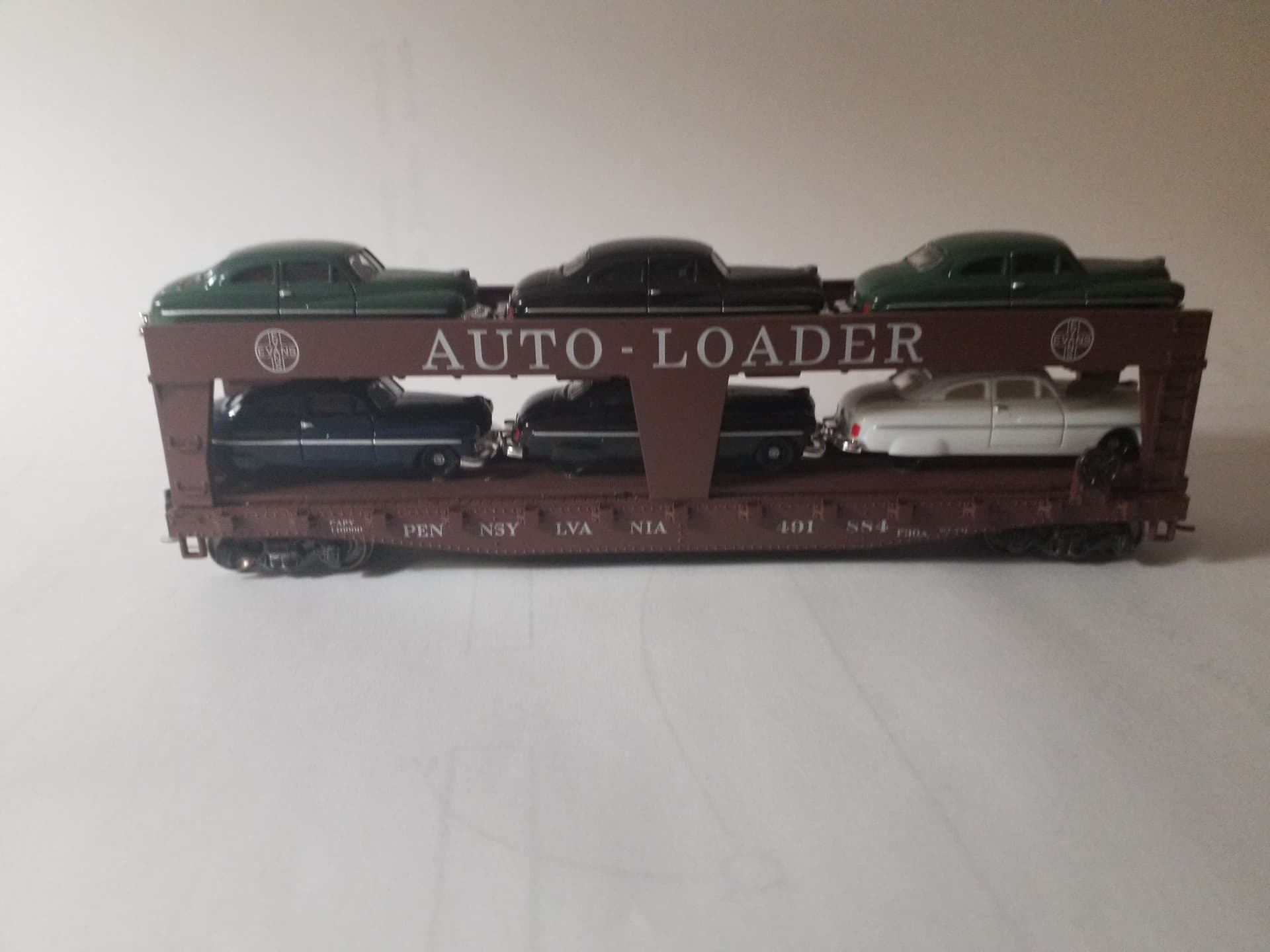
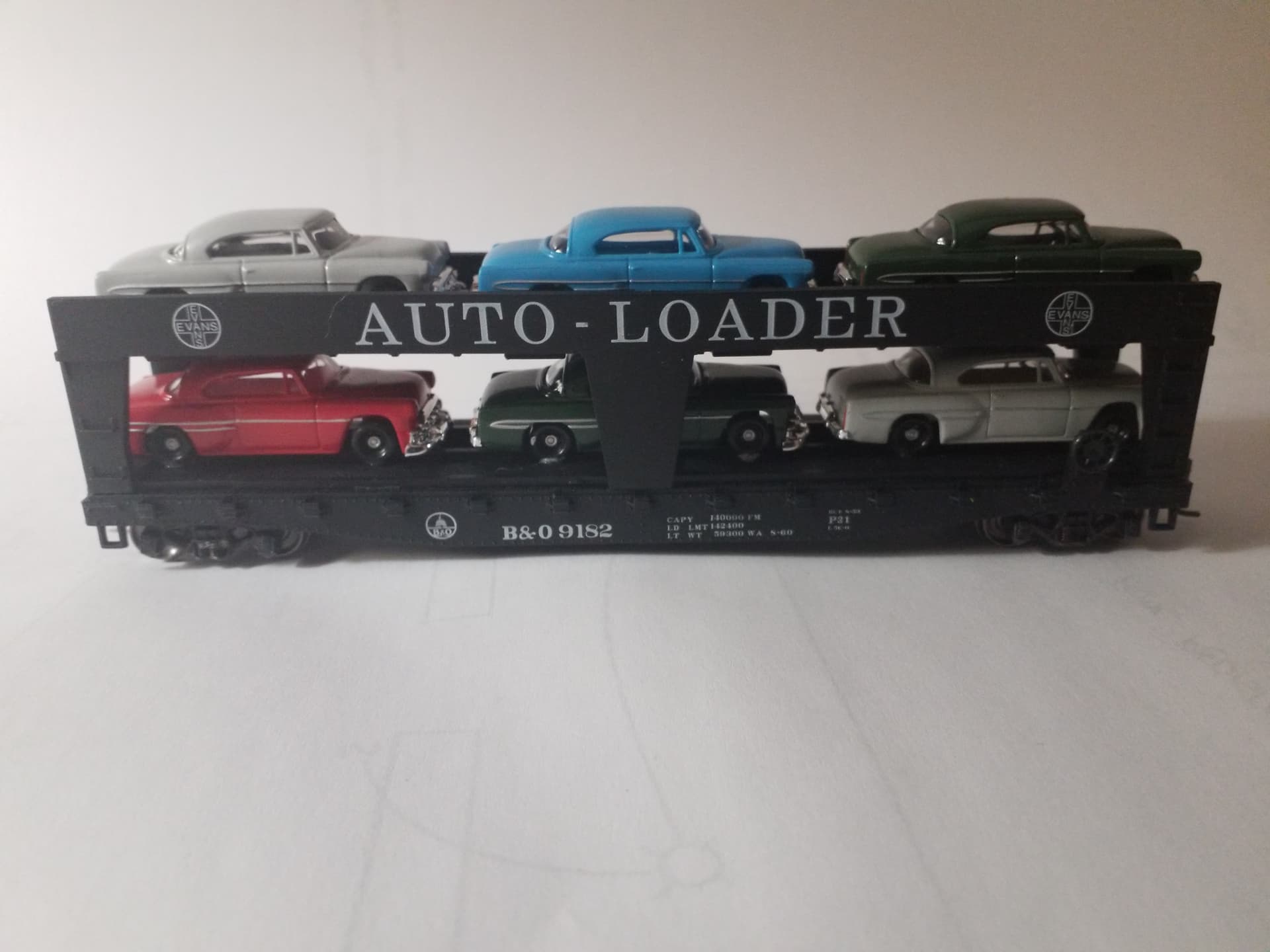
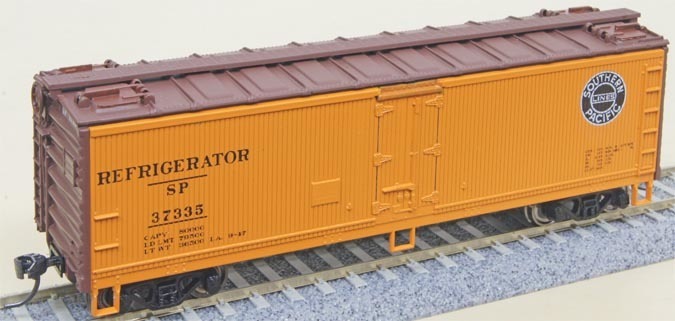
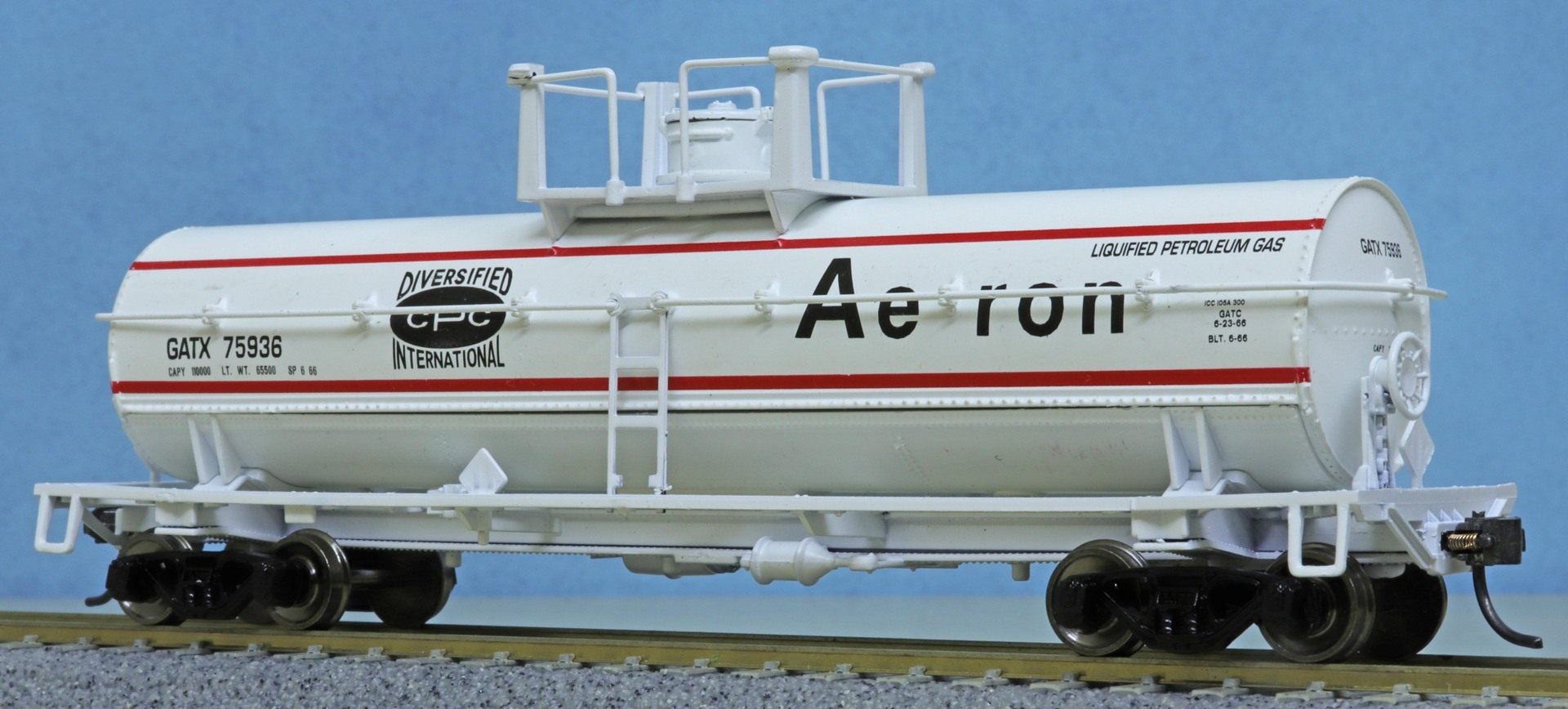
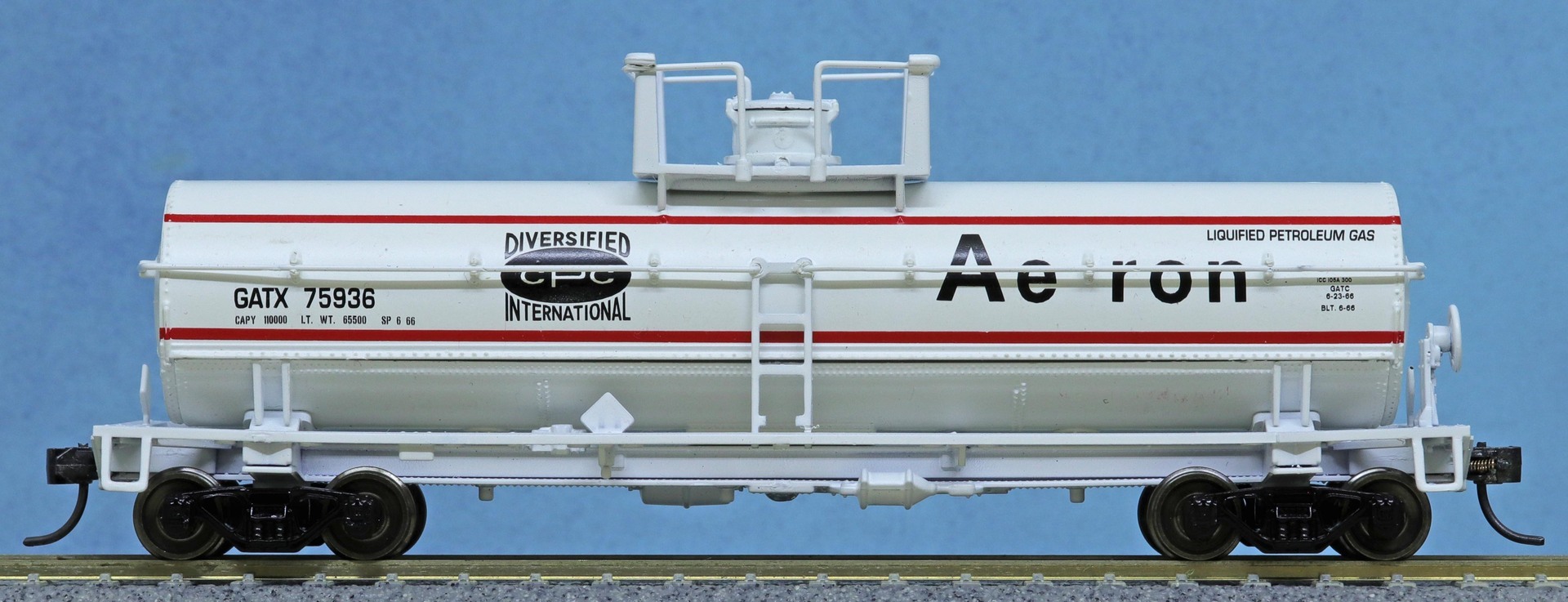
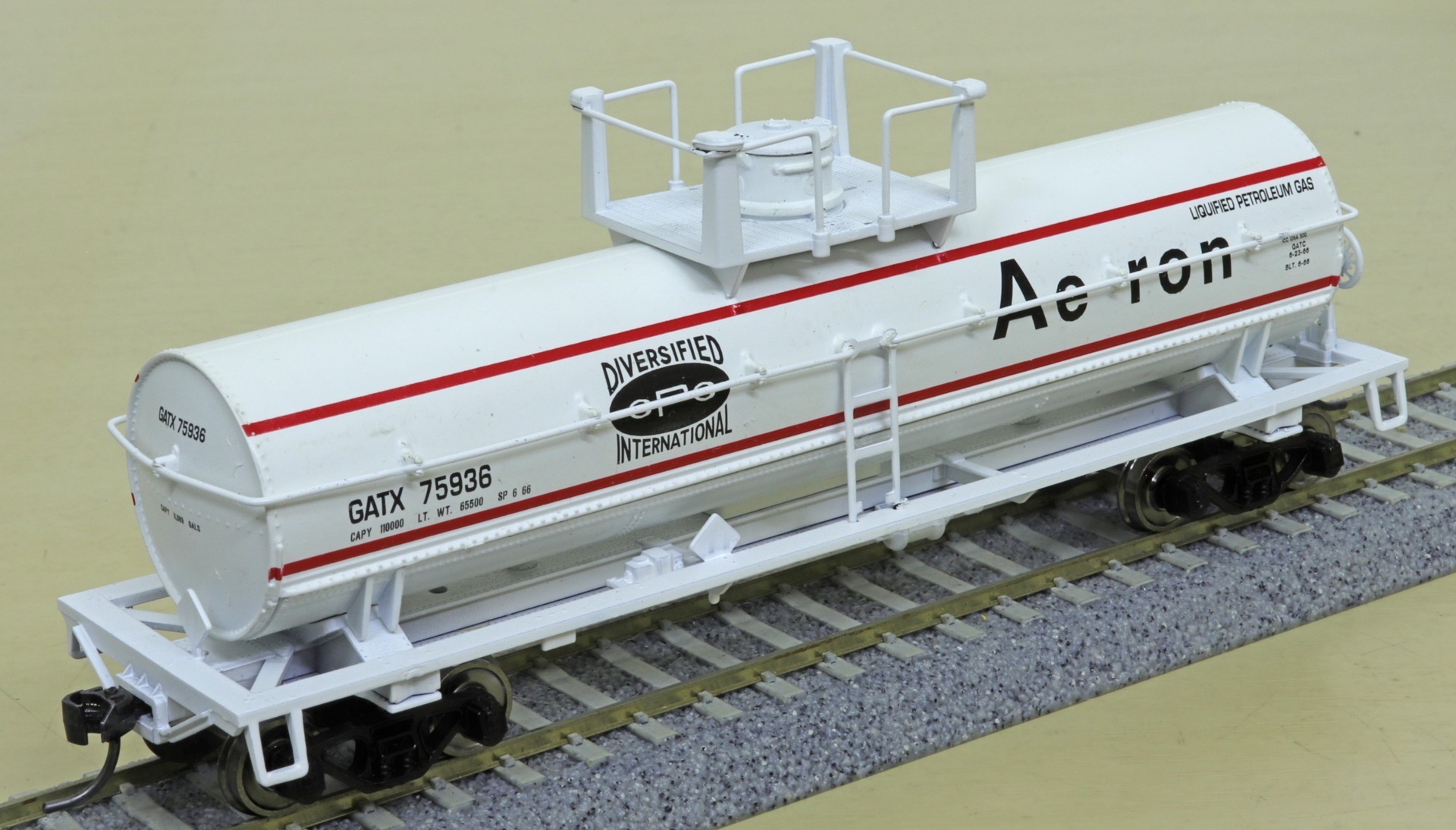
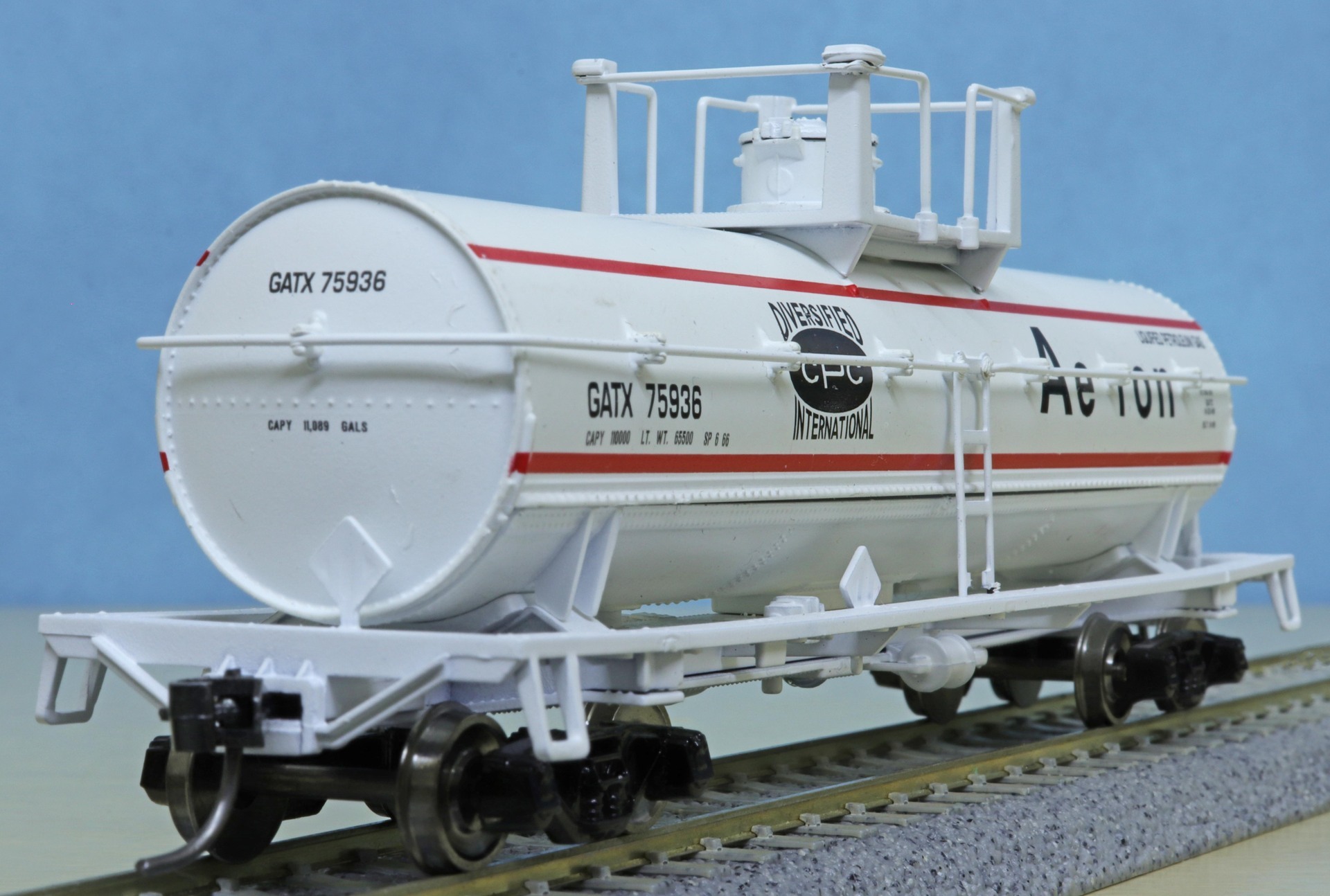
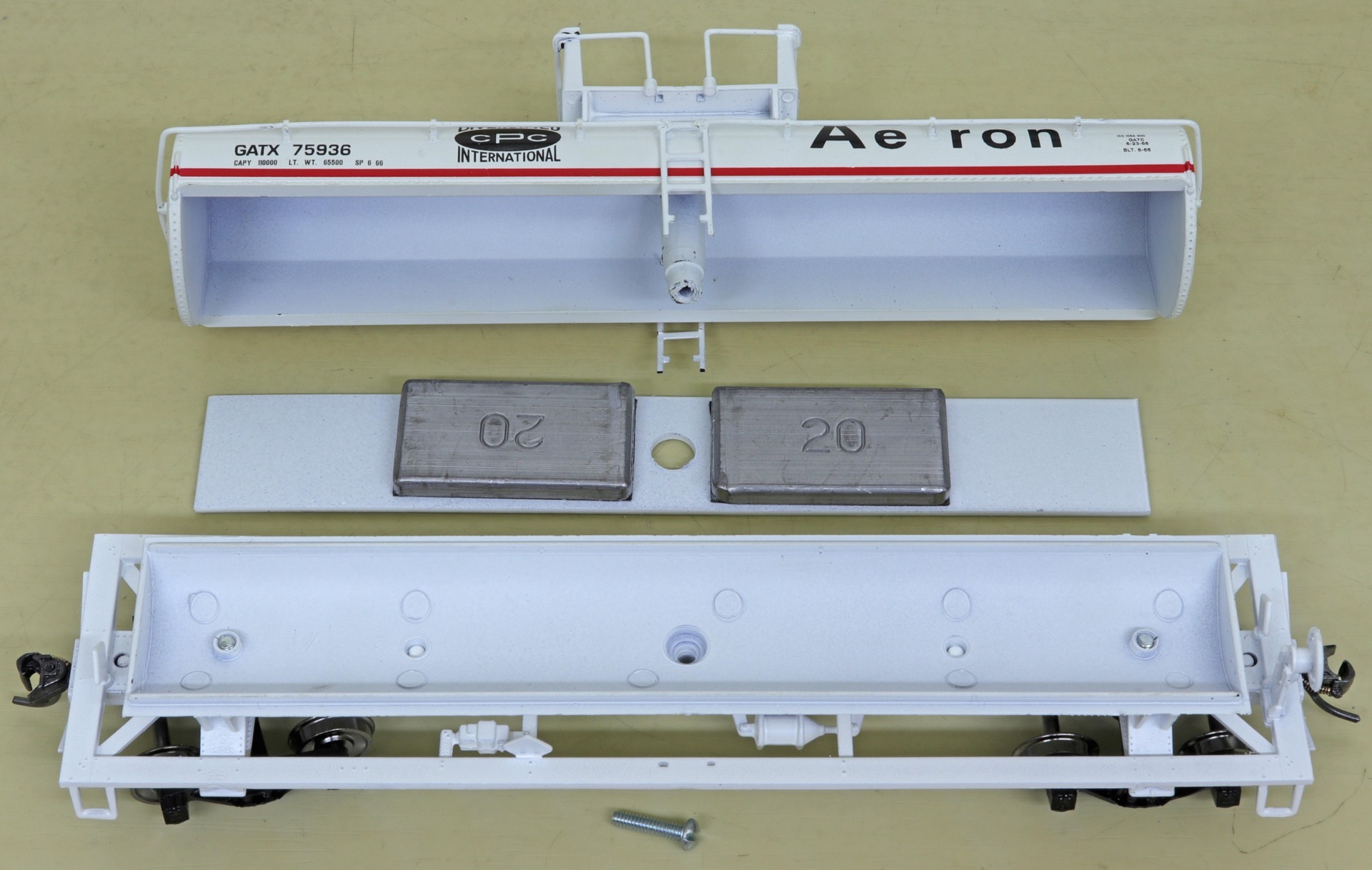
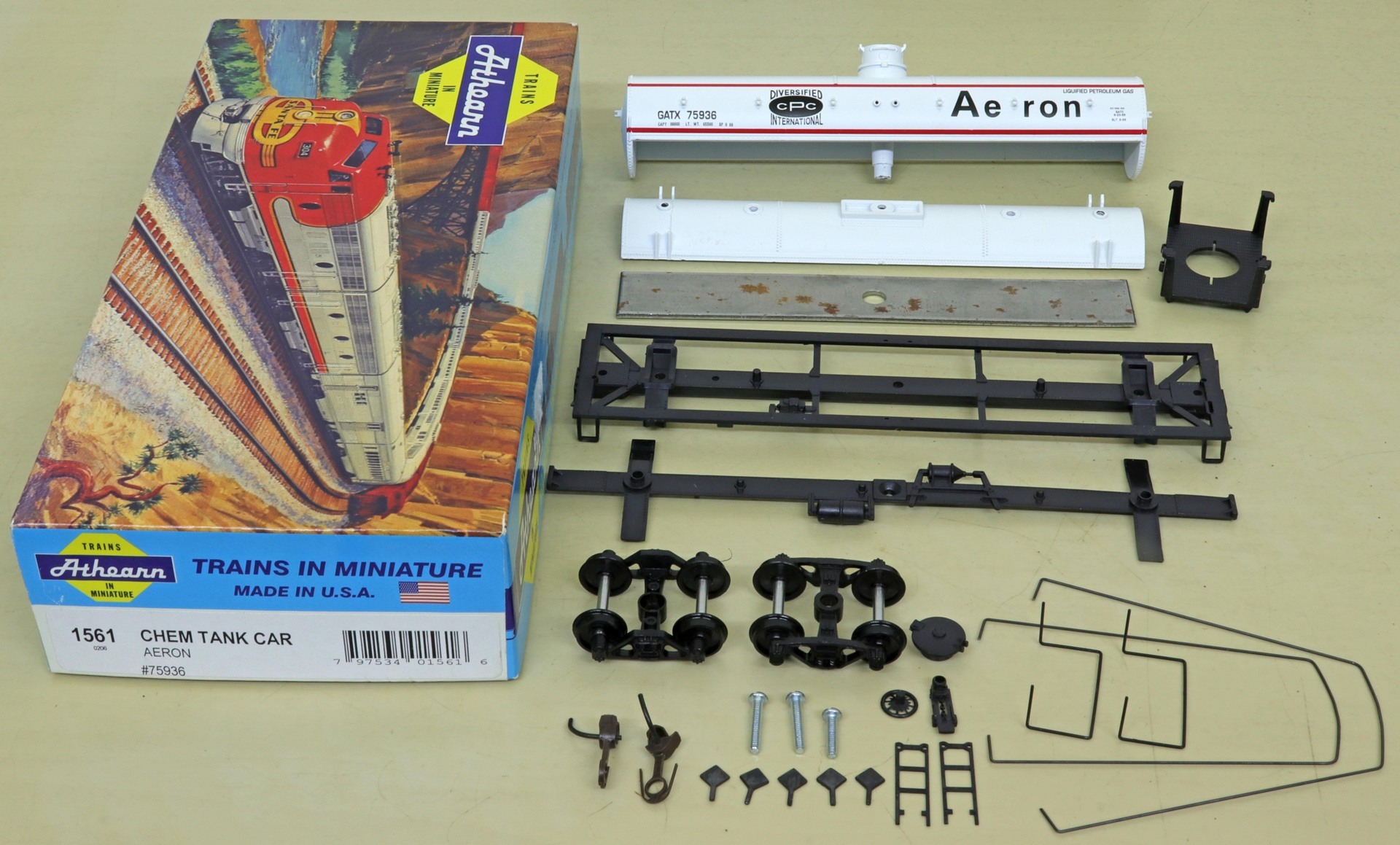
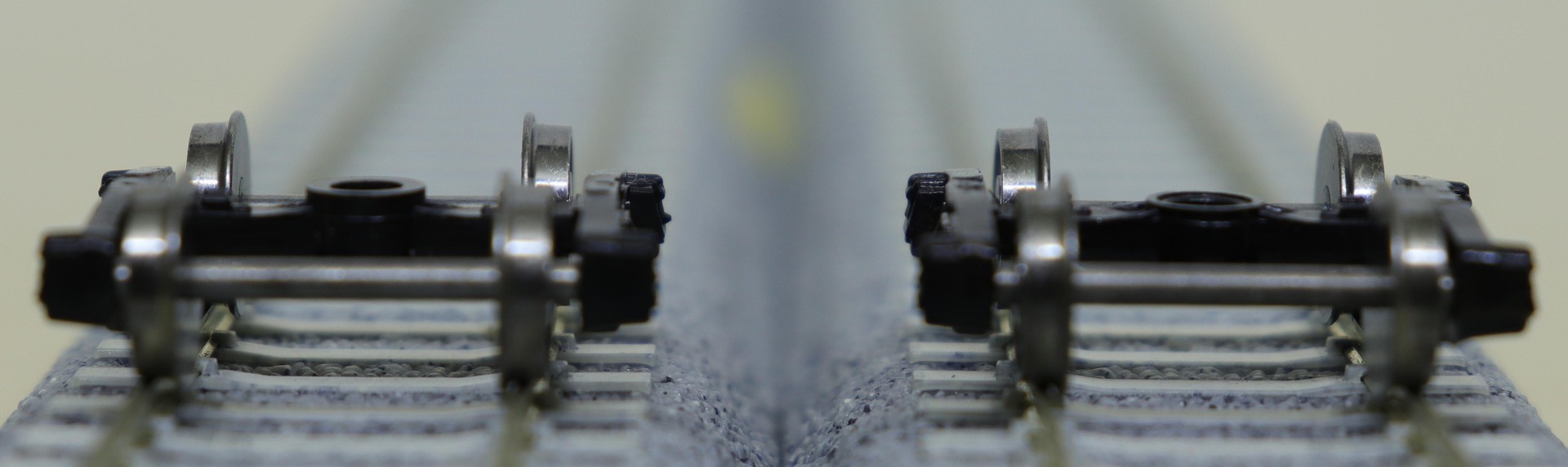
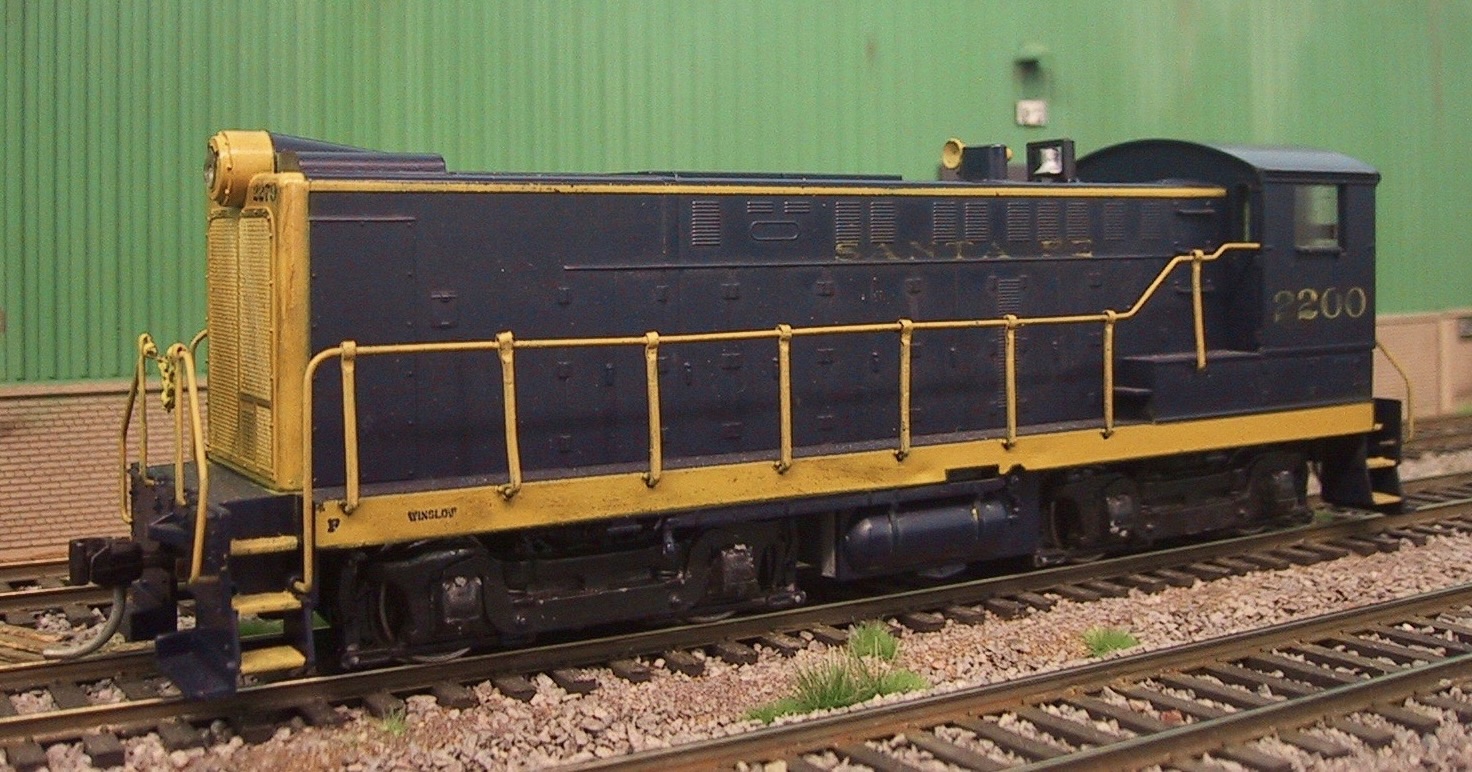
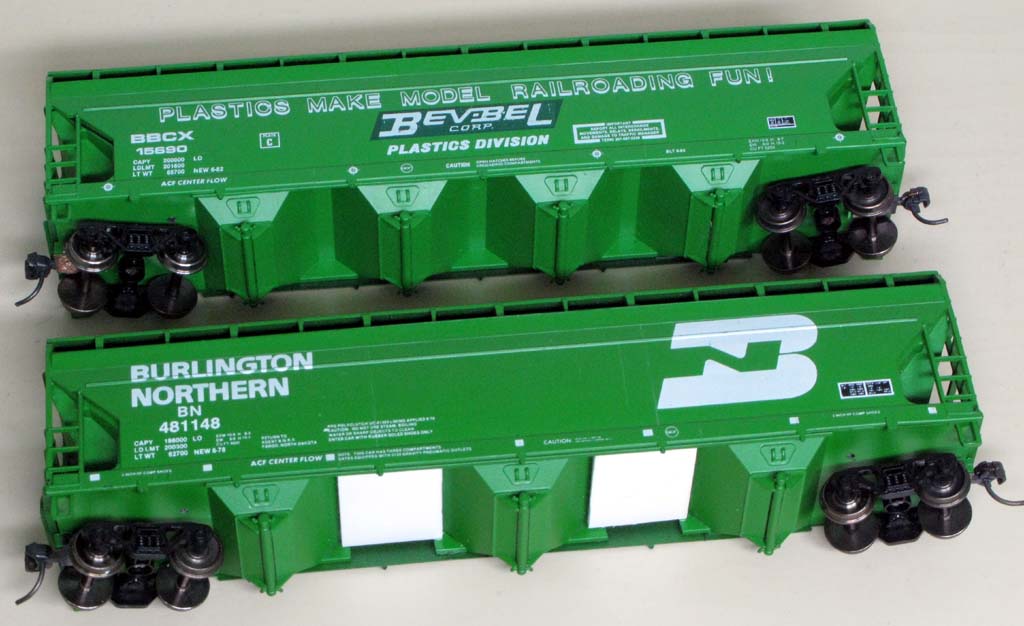
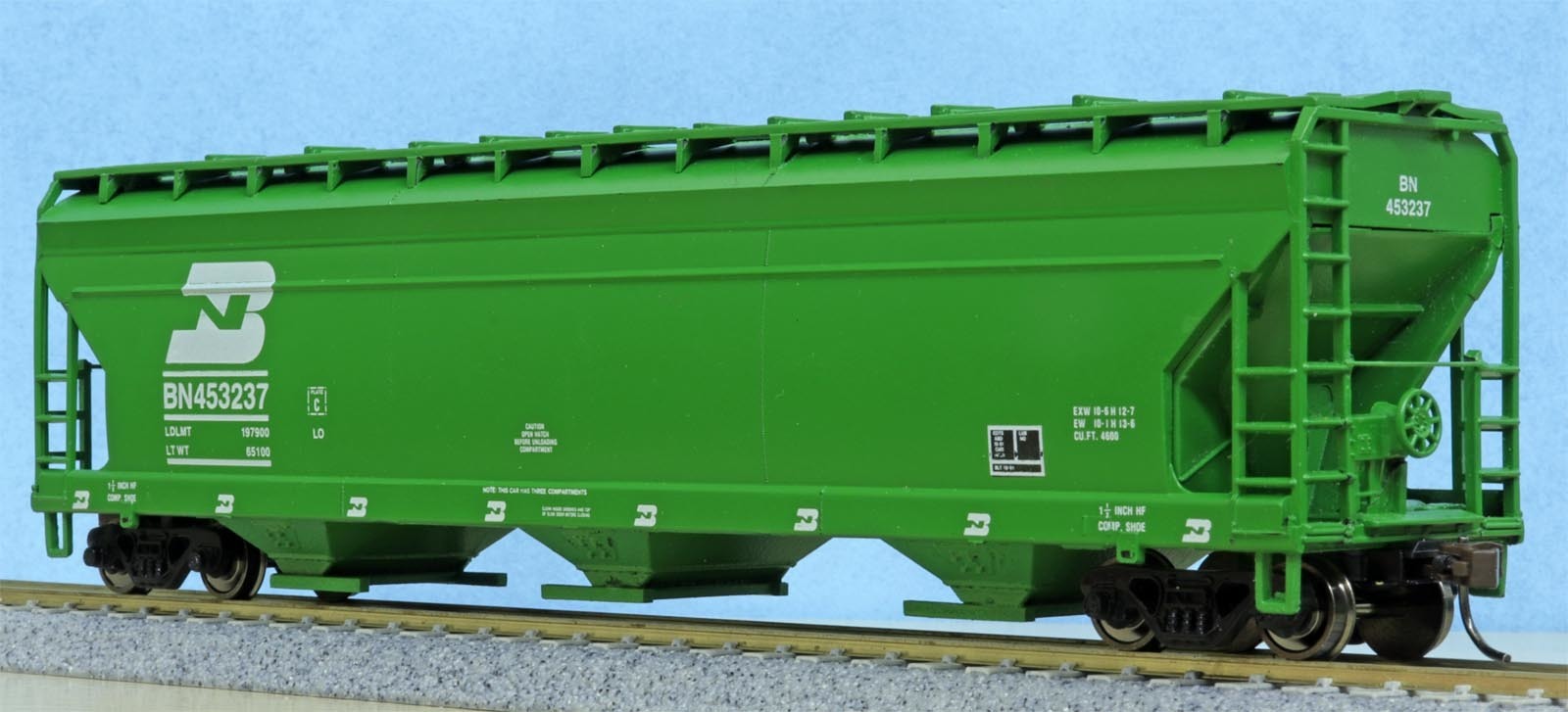
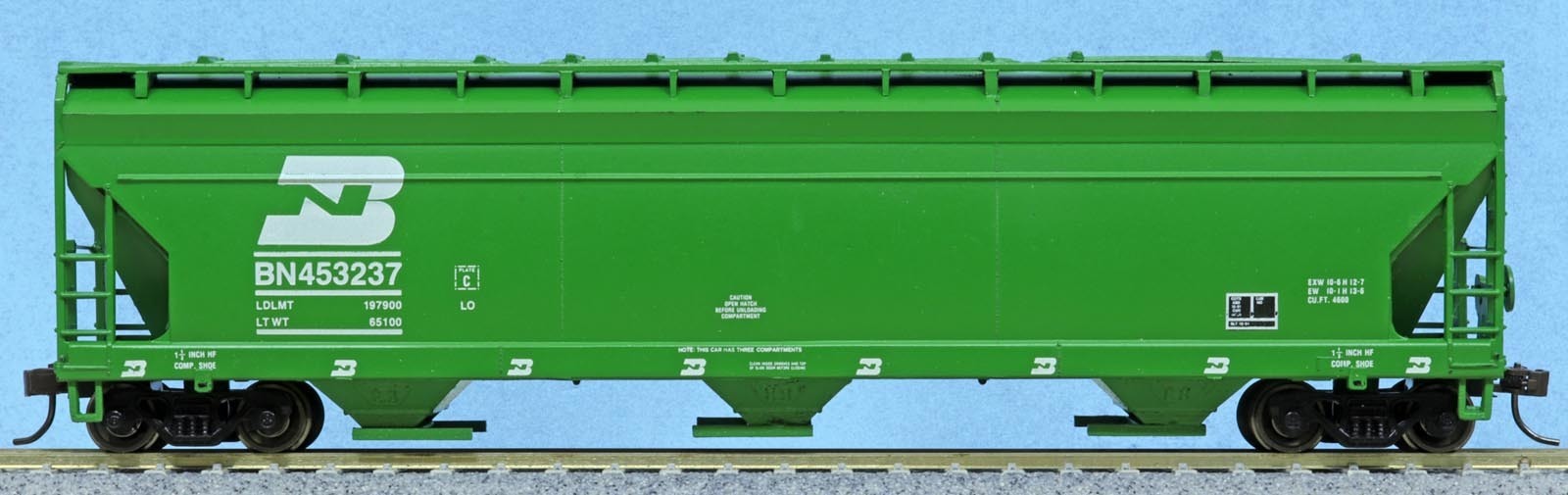
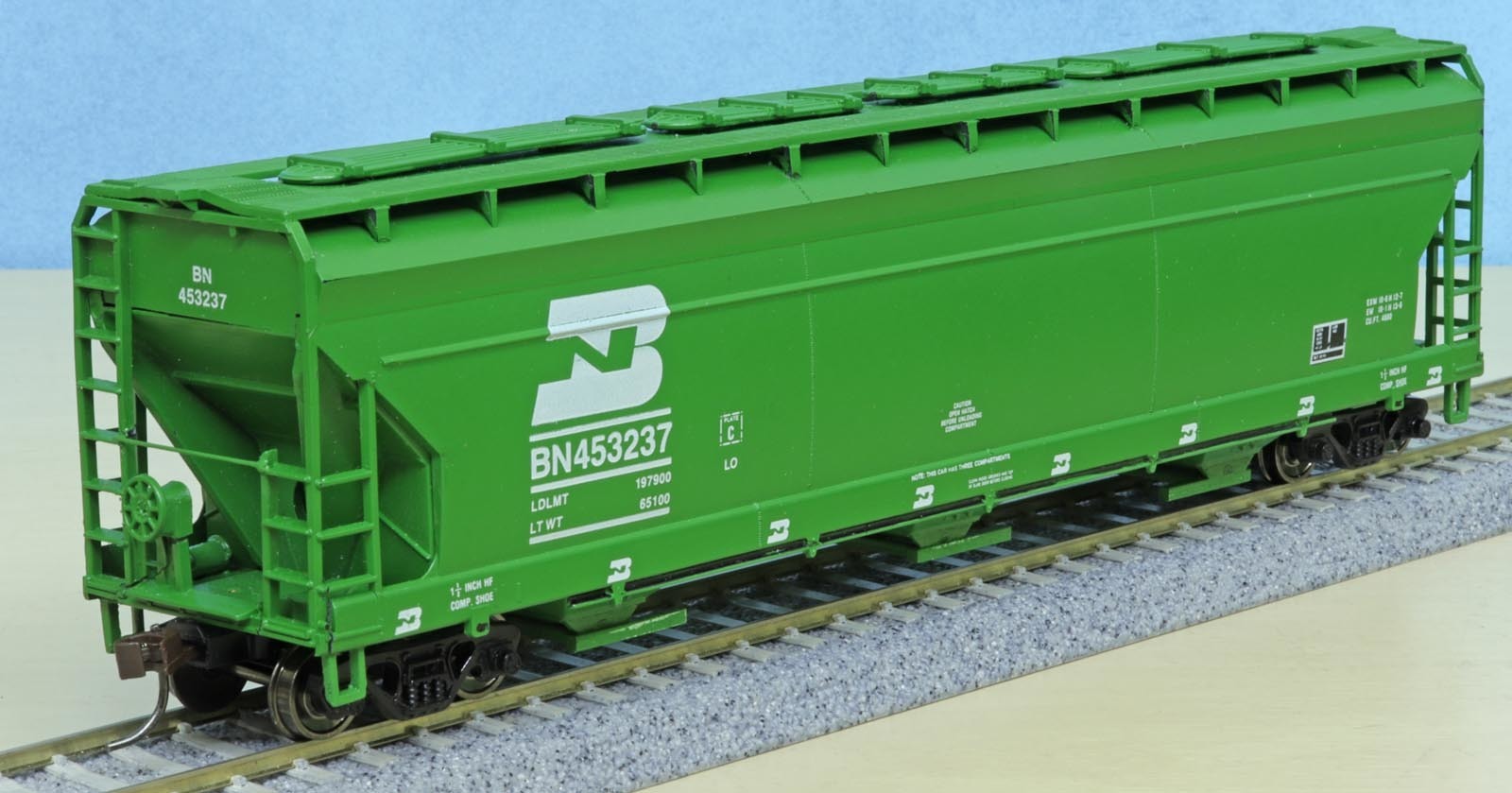
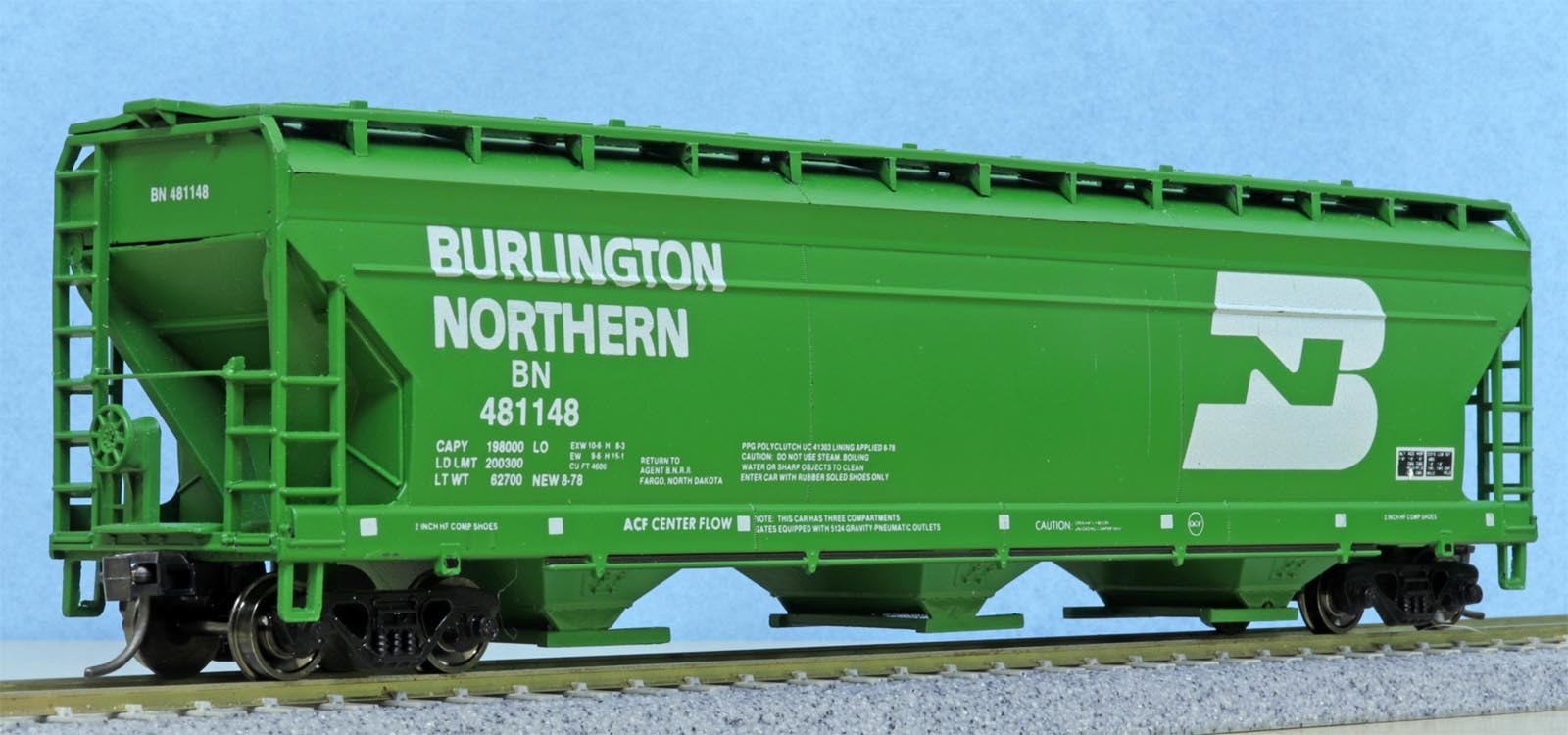
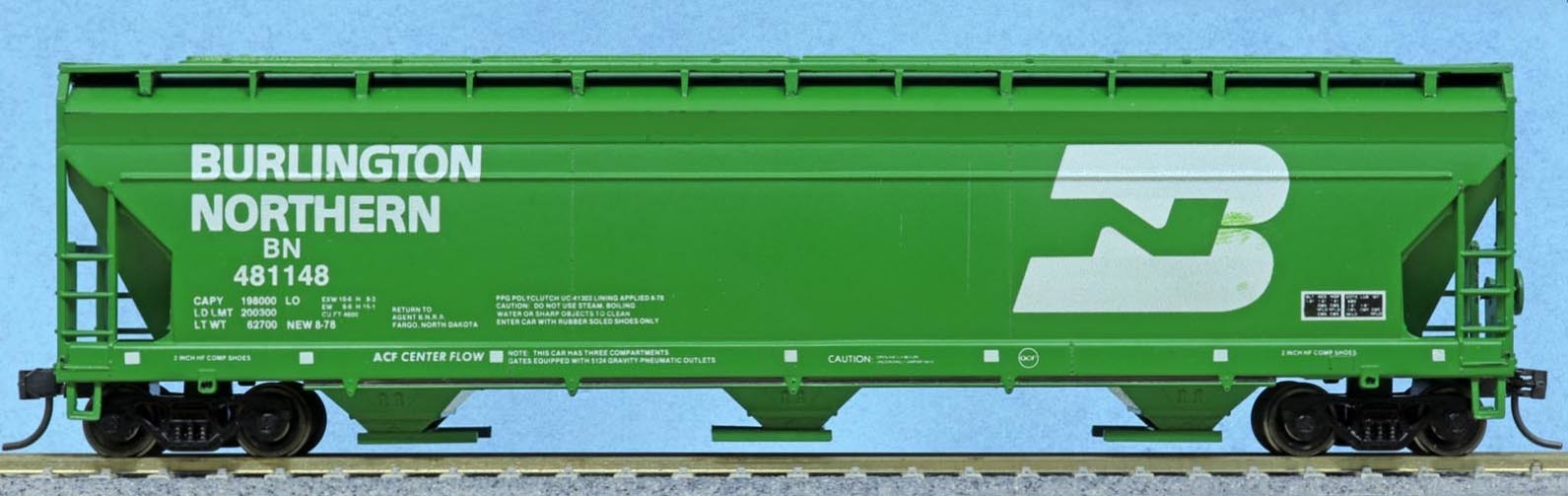
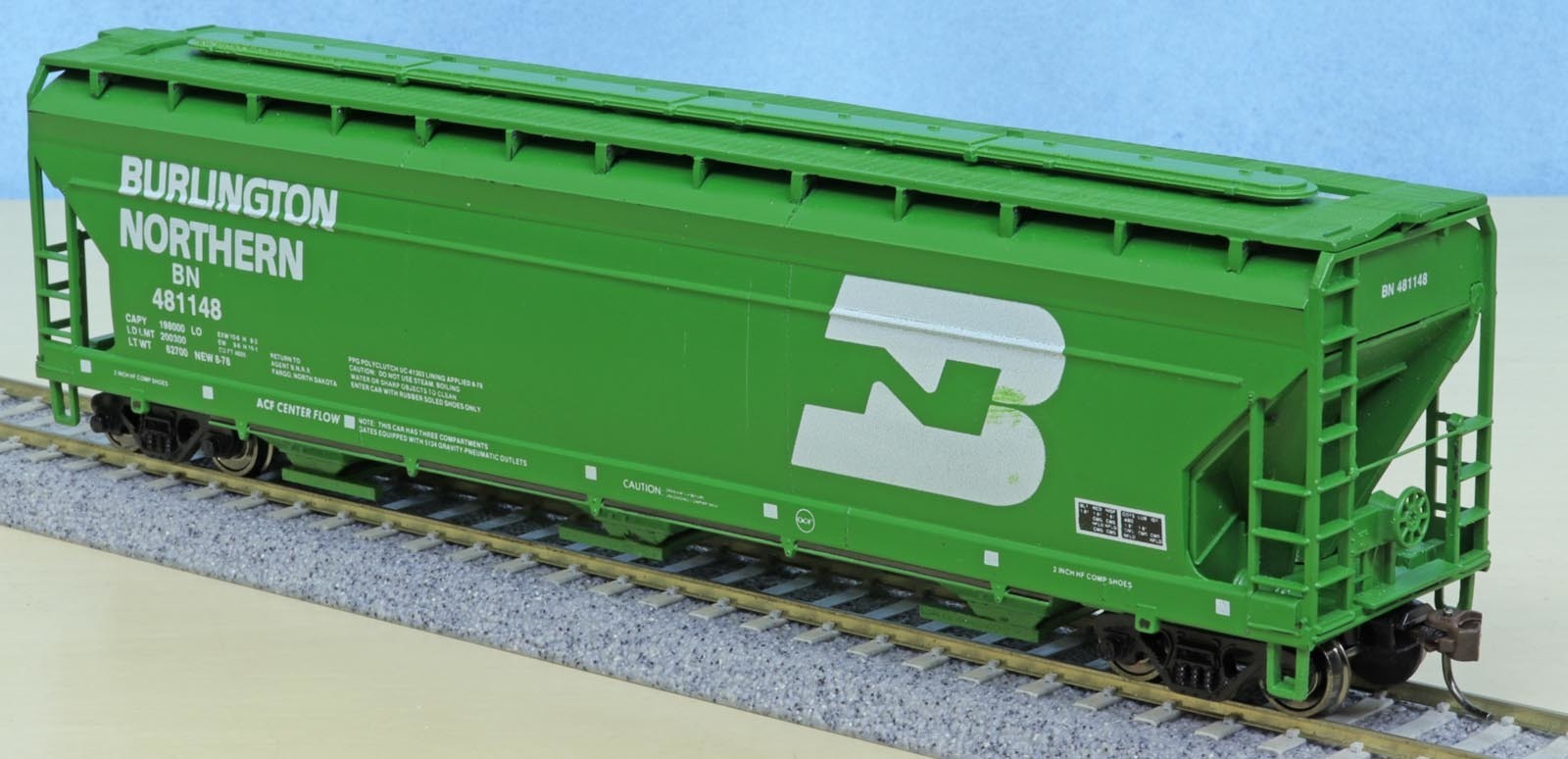
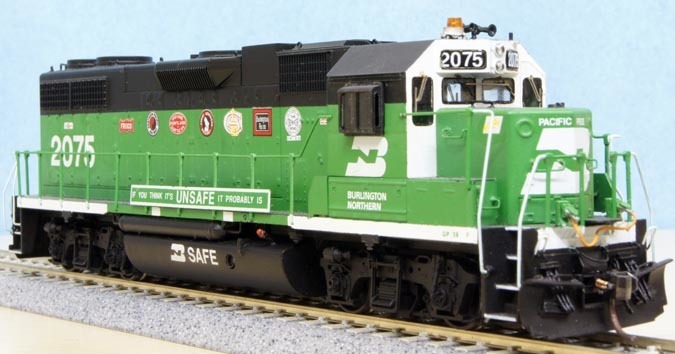
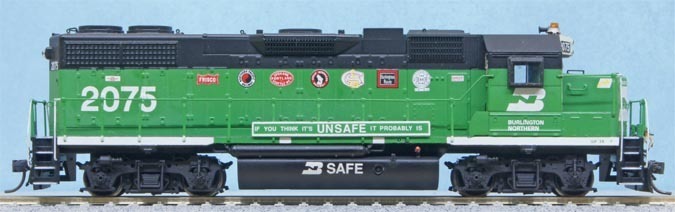
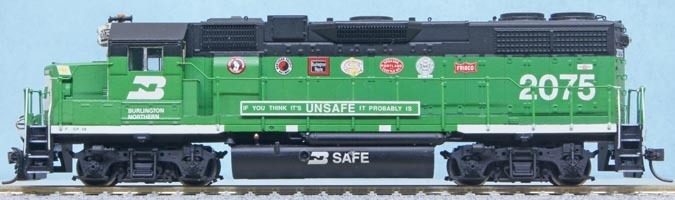
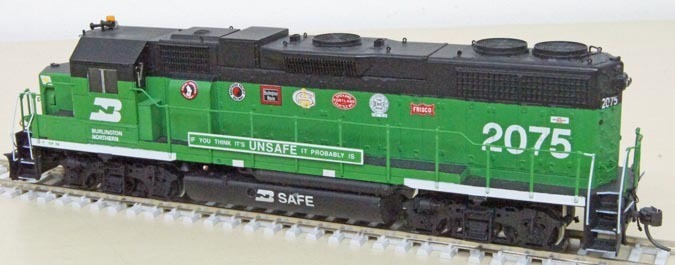
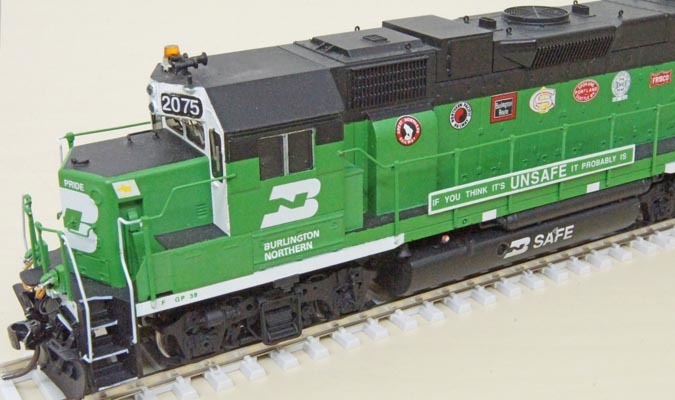
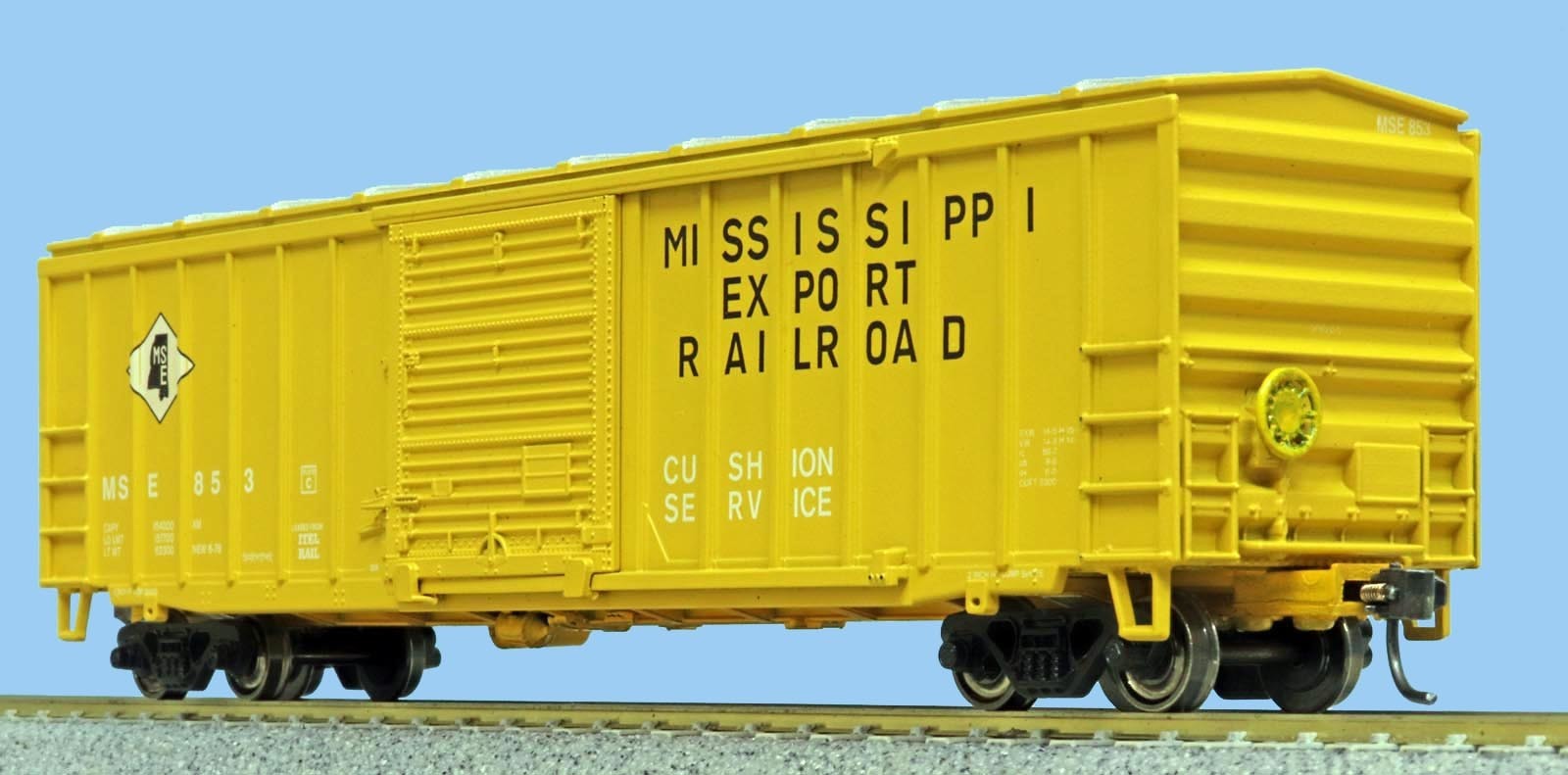
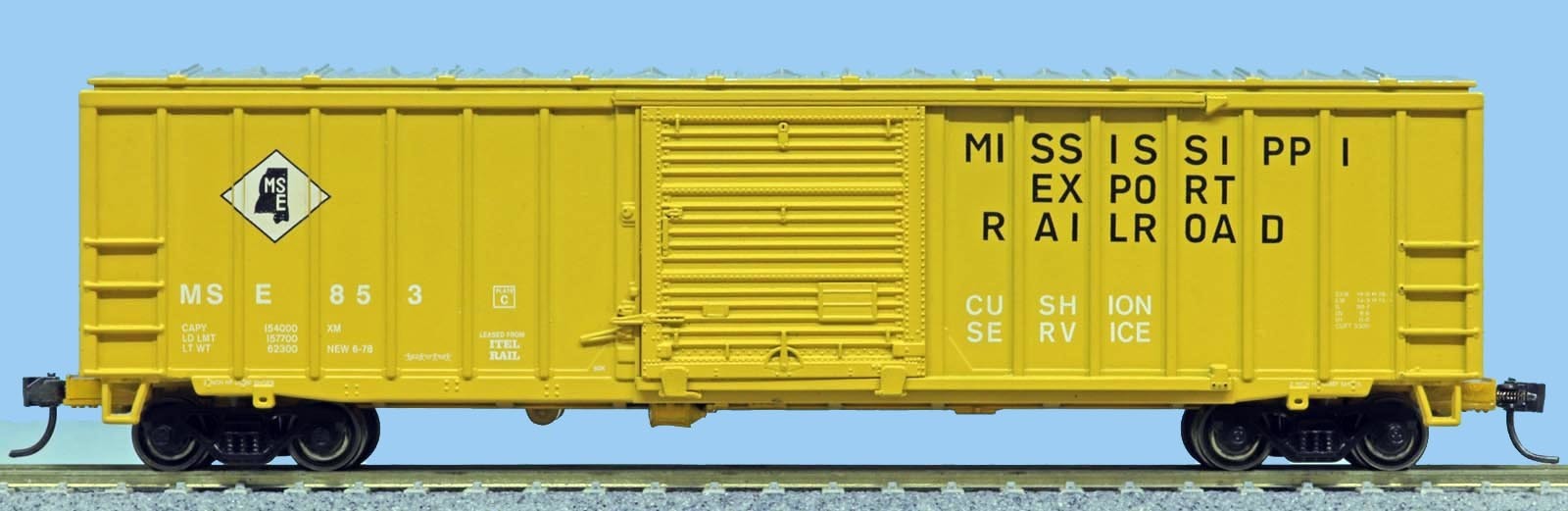
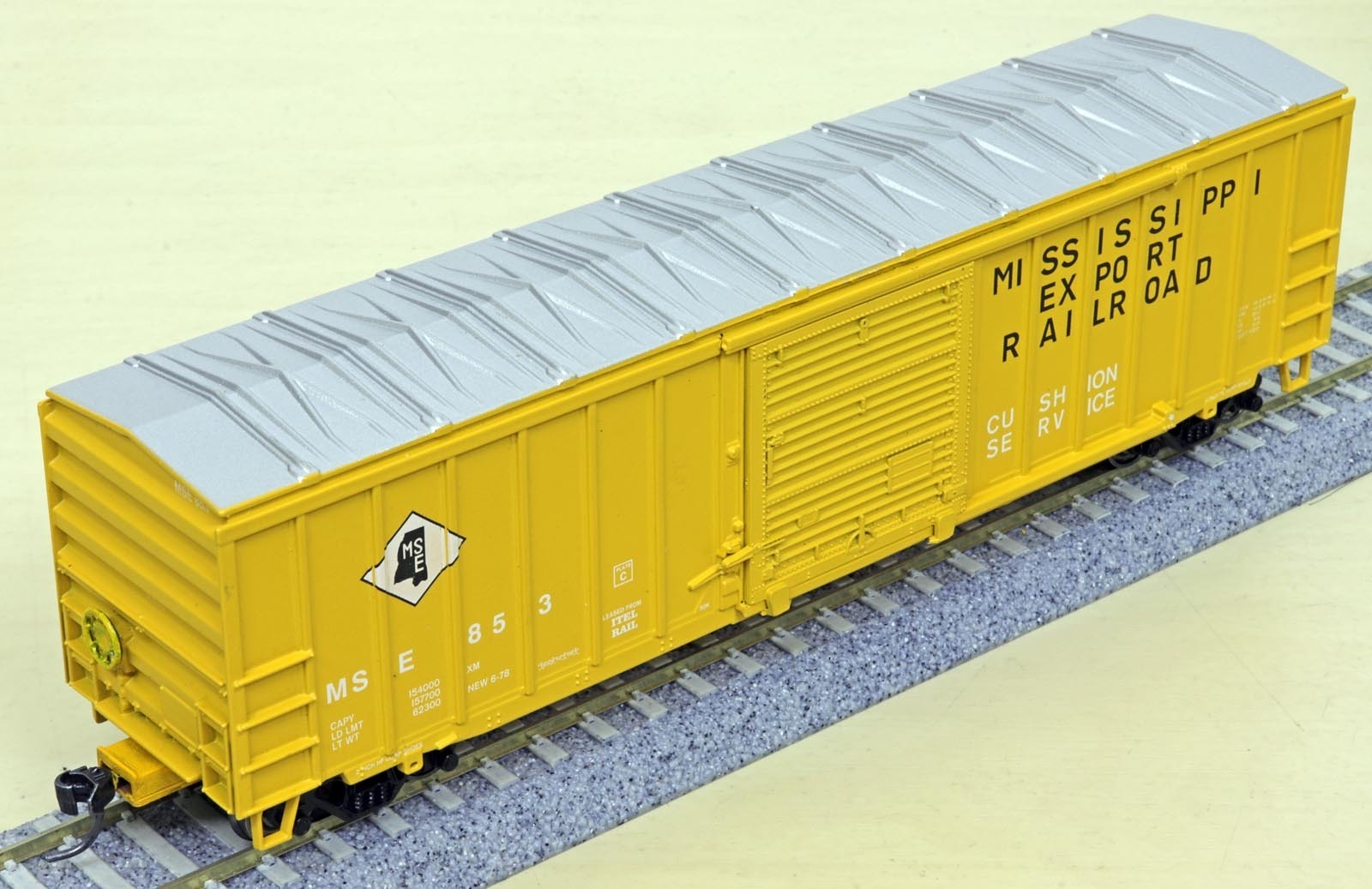
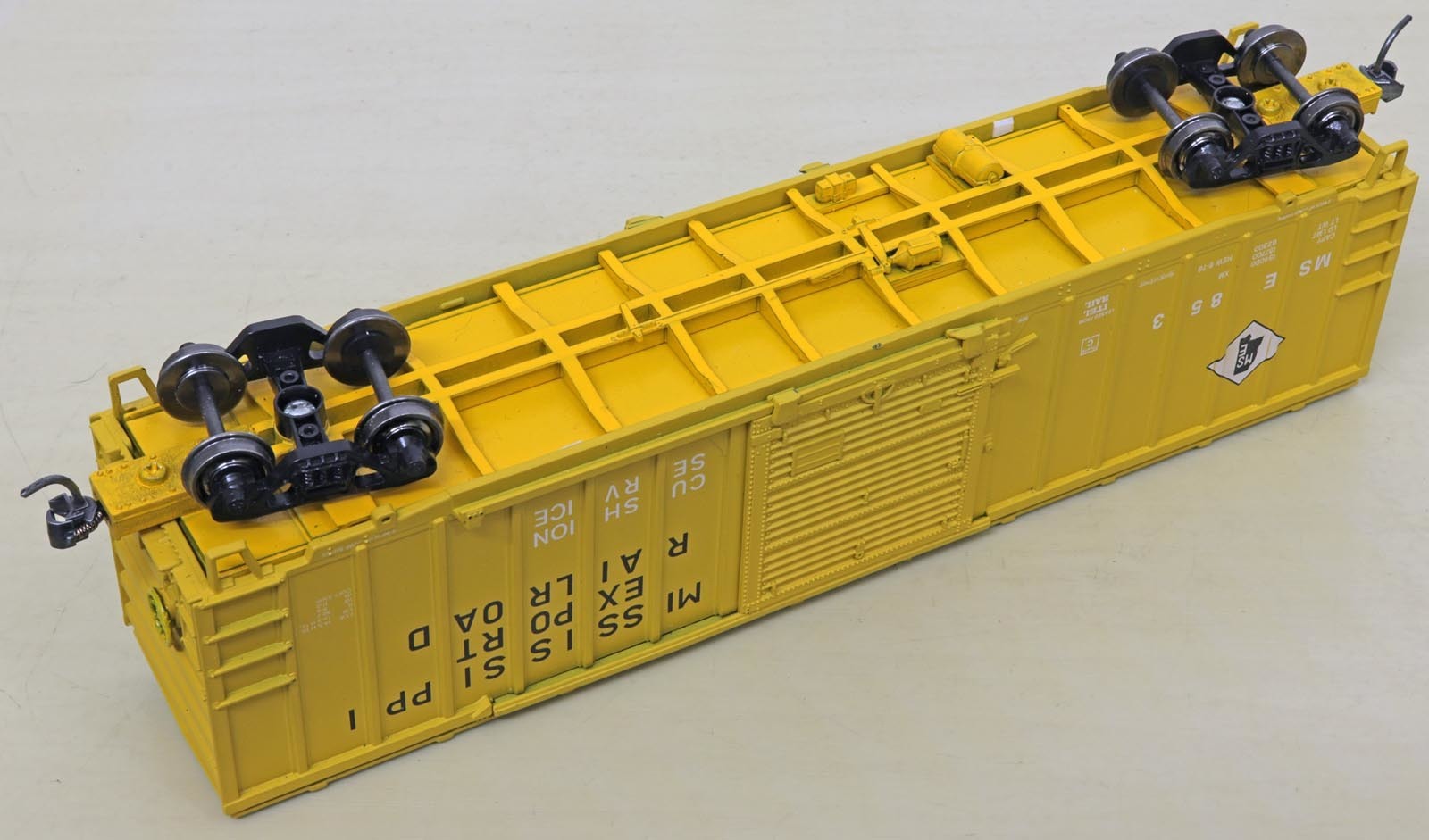
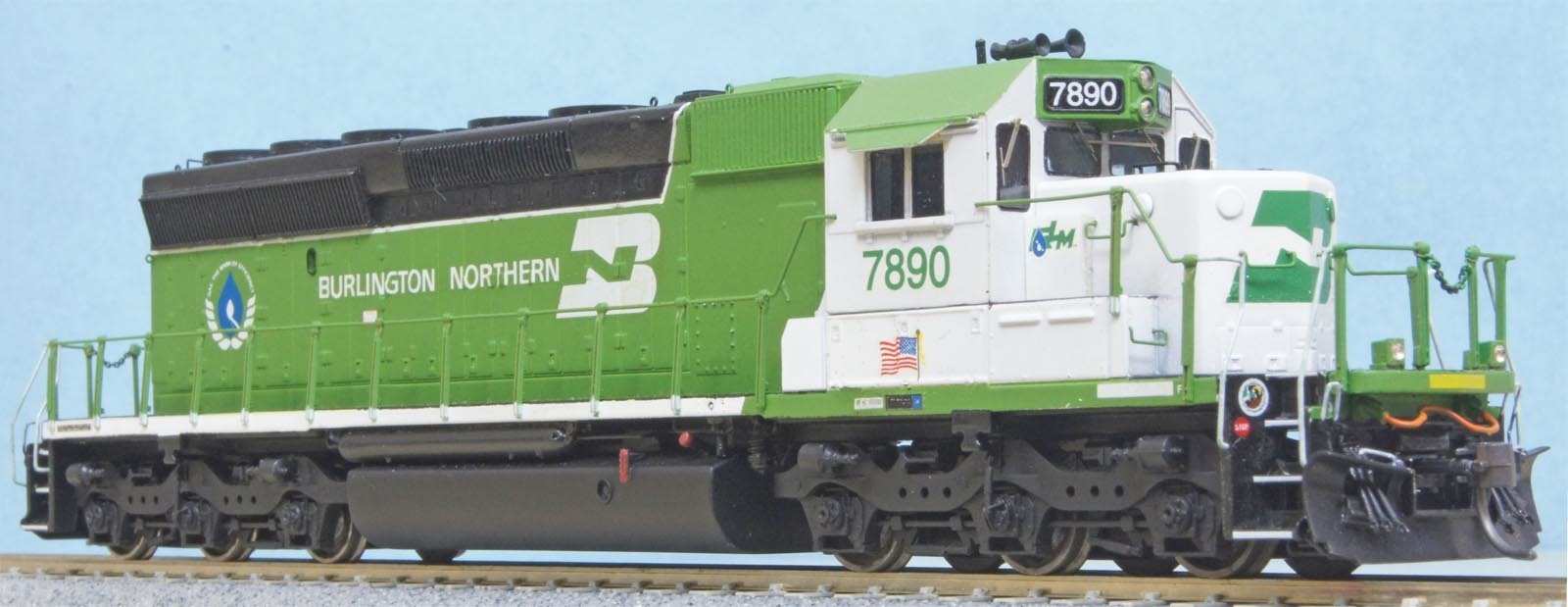
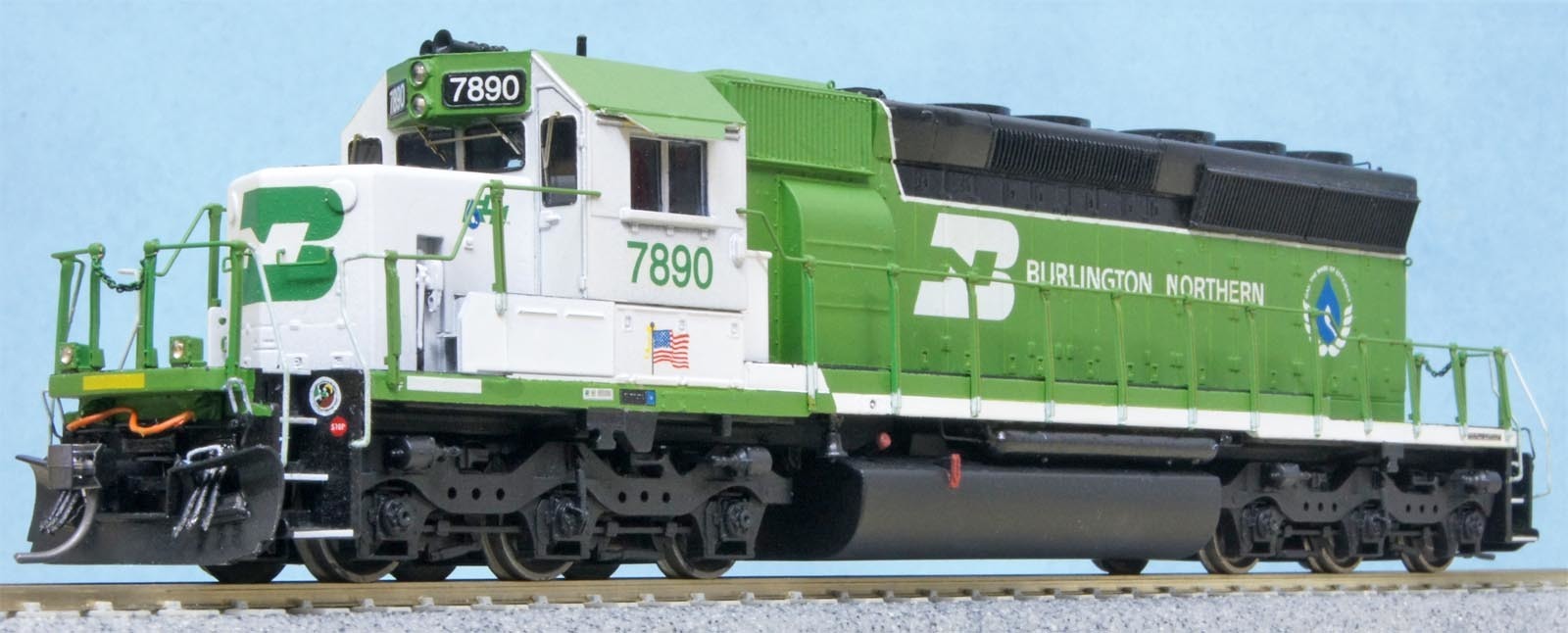
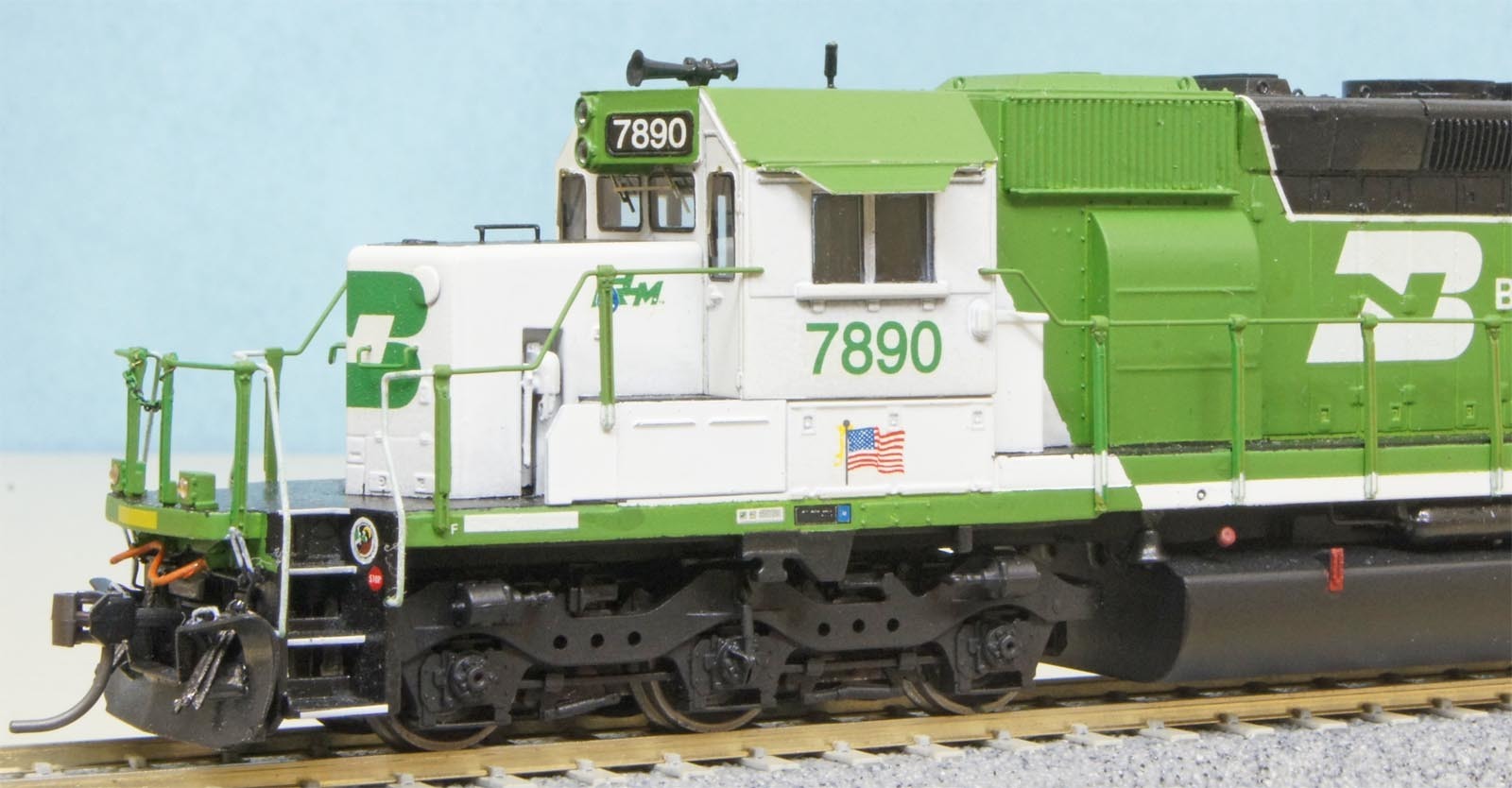
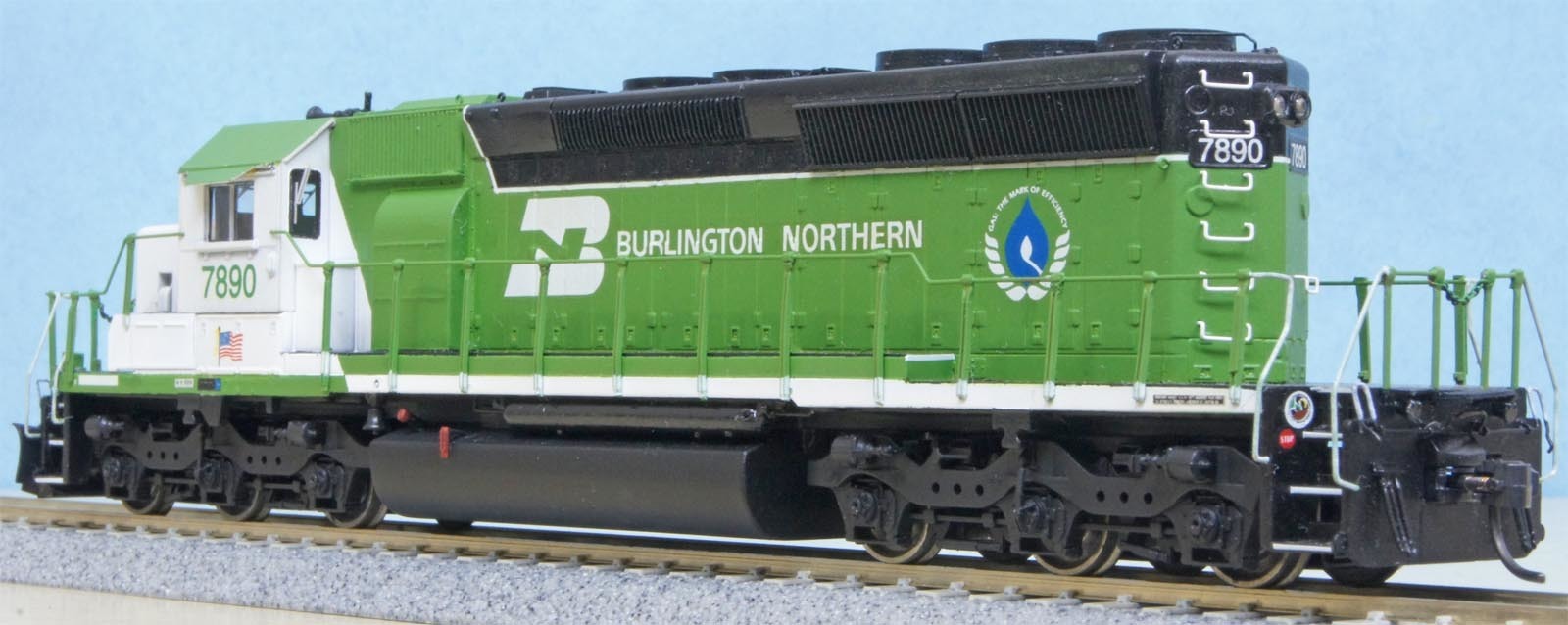
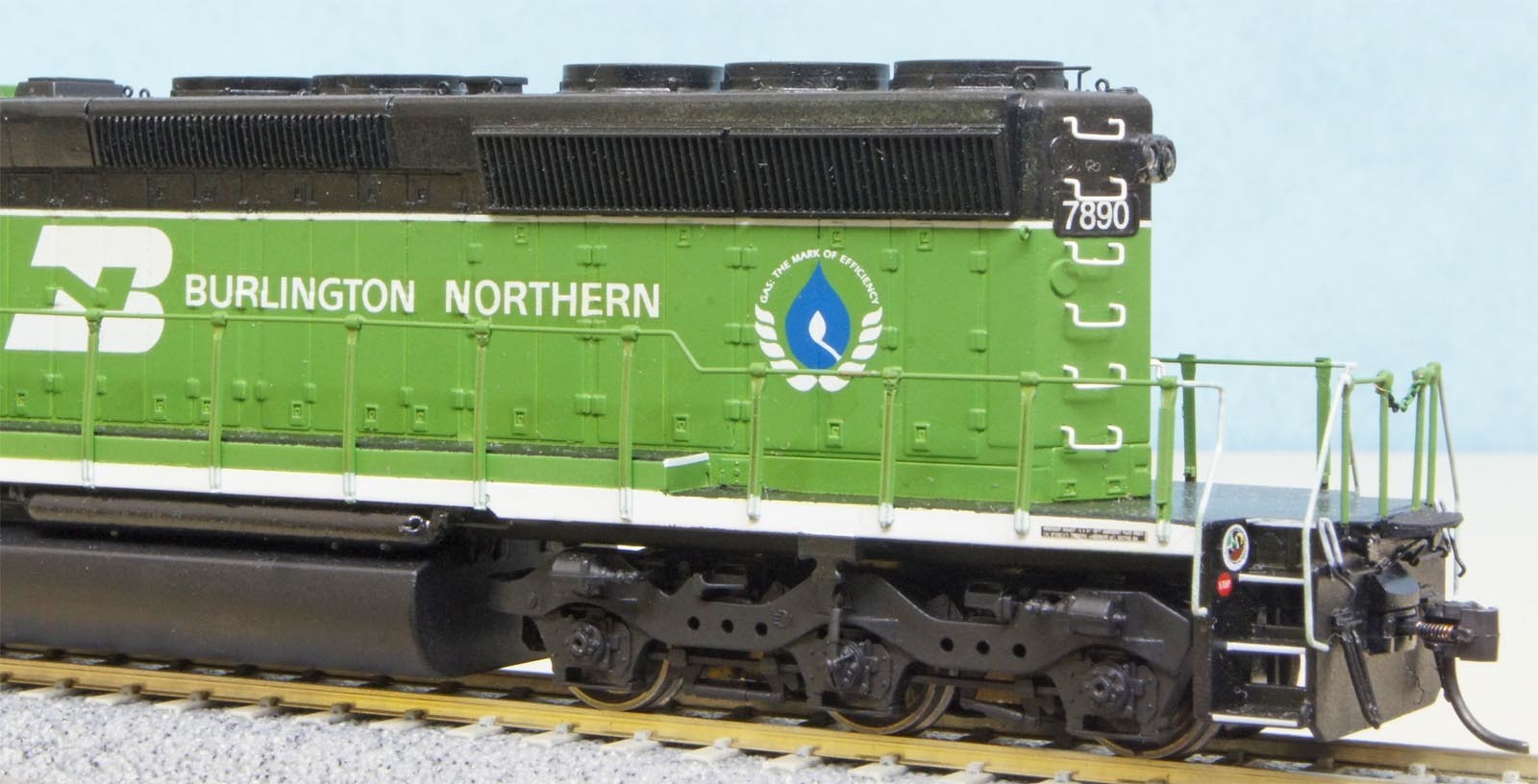
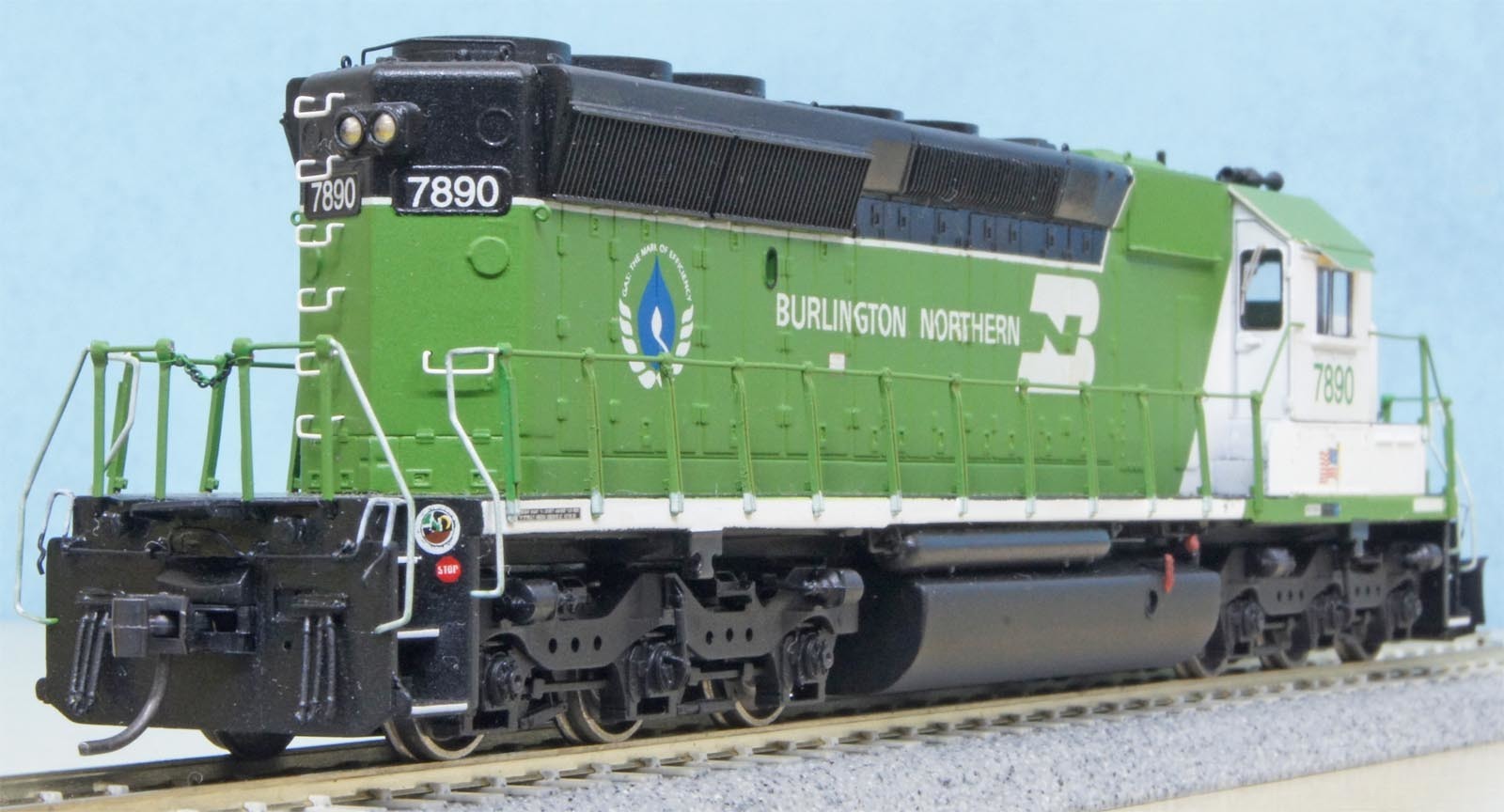
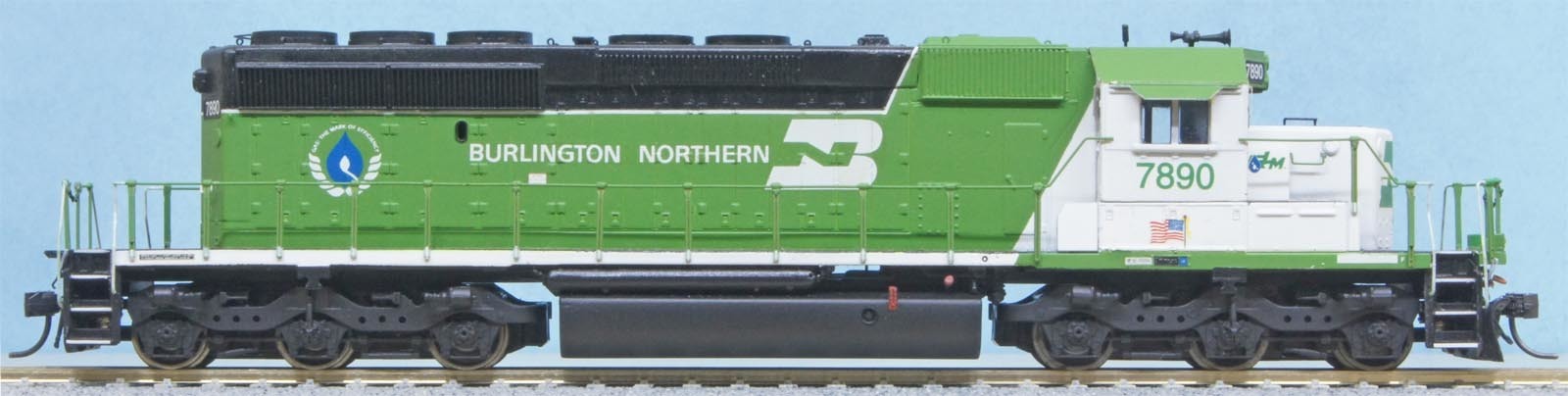
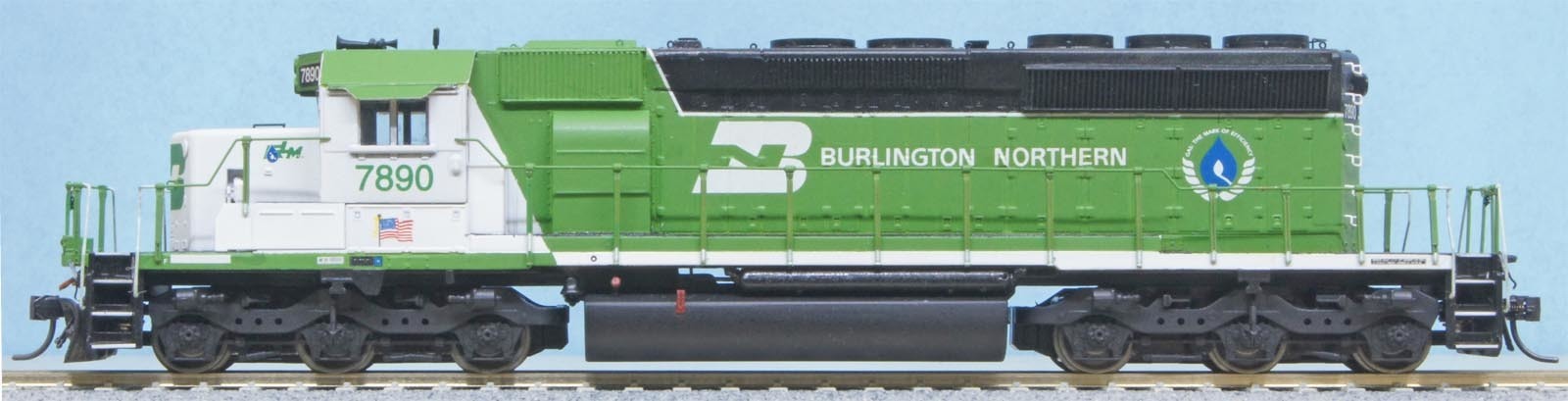
This is a custom painted model I bought in June 1993 at the North End Train Center, a model shop in Seattle, Washington. At the time, there were few Cascade Green products, so it looked very attractive. I immediately painted the walkway black.
Here I’ll be showcasing some of the HO-scale Athearn Blue Box models I’ve built over the past 40 years. Of course, your models are welcome too, including Ready-To-Rolls and Roundhouses if their origins are in BB. I’d also love to hear your memories of BB models.
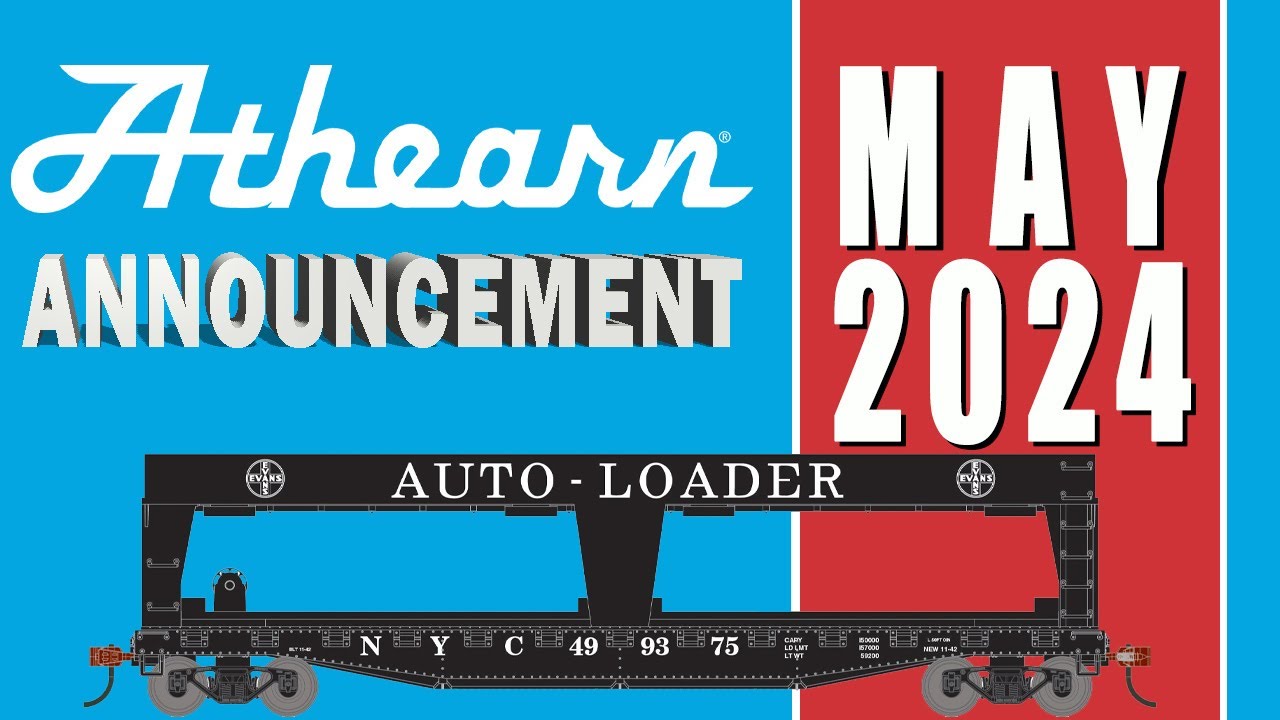
The Auto-Loader is still sold today. Athearn supplied this to Lionel in 1958, and the interesting story behind it has been posted on the Atlas Rescue Forum (Apr 29, 2024).
Yes, I am very familiar with the prototype and model history of the autoloader. In my little freelanced world, they made it past the experimental stage.
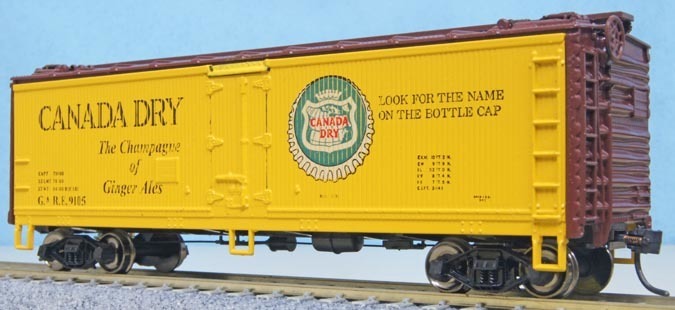
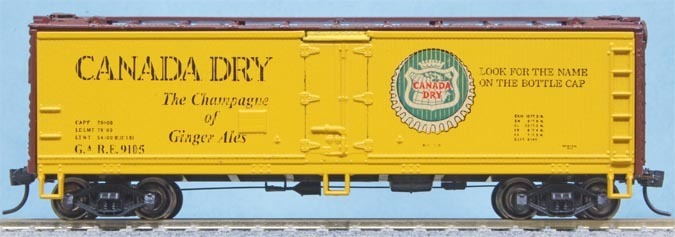
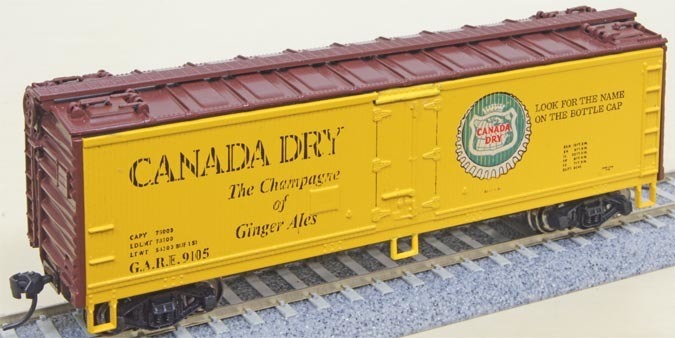
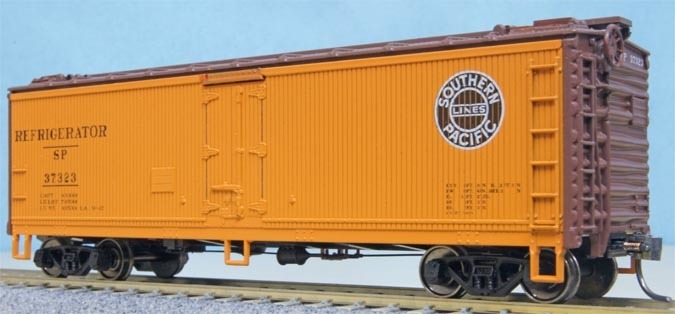
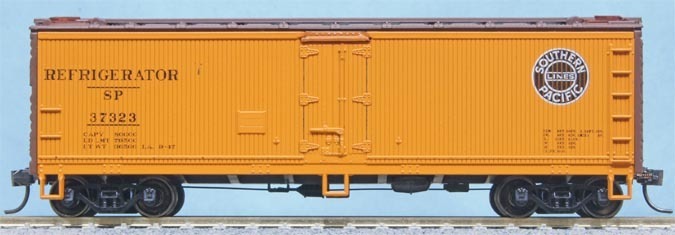
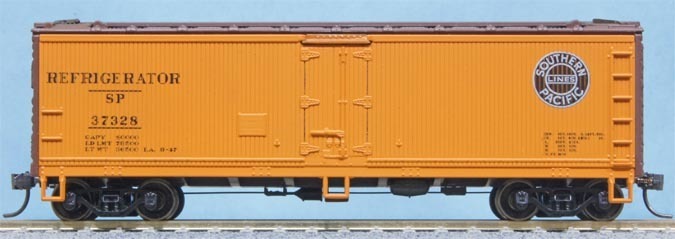
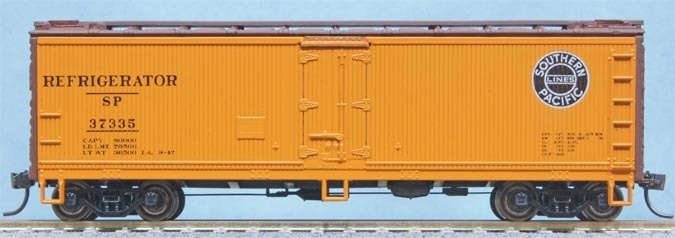
This 40’ wood-side reefer was released in 1970, 13 years after the steel-side reefer of 1957. The basic structure remained the same, but the stirrups were larger.
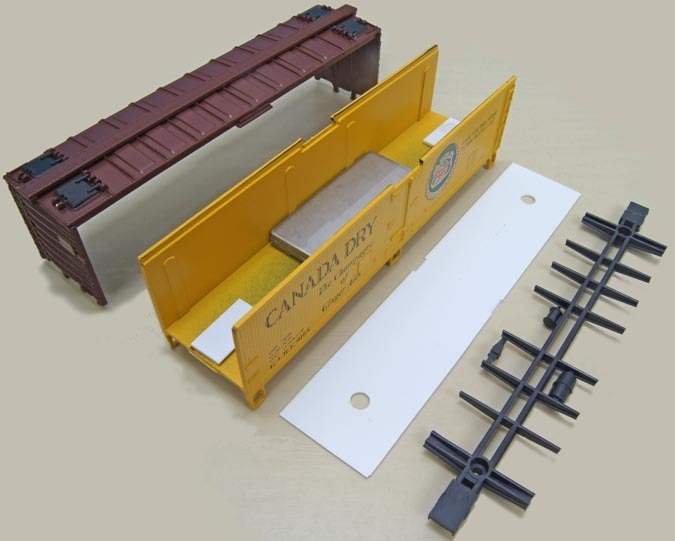
The Canada Dry car is my first Athearn, purchased from Tenshodo in Tokyo, Japan in 1985. I started by fitting Kadee couplers, then replaced the wheels with metal ones after a while, and painted the door eaves, ice hatches and brake wheel. In 2015 I added a set of brake rigging (Accurail #180) under the floor.
In this way, the BB models can be enjoyed at various stages.
This Athearn BB Baldwin holds a prominent and lasting place in my display case. Purchased in the early 80s at the local hobby shop it helped open the door into the fascinating world of Model Railroading, while creating lots of good memories. Plying the rails and sparking the imagination of adults and children alike. “The things that dreams are made of.”
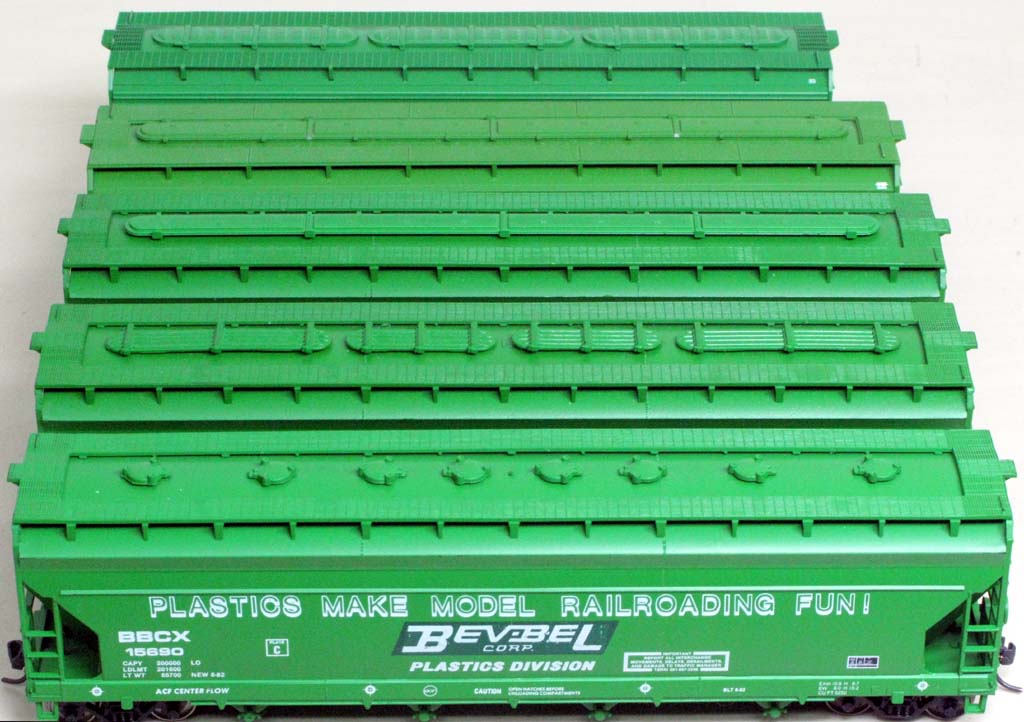
The three cars from the front of this photo are Athearn 4-bay (5250cuft), the fourth car is a 3-bay Accurail 4600cuft, and the fifth car at the far end is also a 3-bay Atlas 4650cuft. Looking at this, you can see that although there are some differences, the upper body remains the same and it would not be strange to just replace the lower body.
In addition, the roof loading hatch on the third car was replaced with a trough (continuous) type. This is a separately sold part from Accurail.
Back then, Kitbash was in its heyday. Athearn’s UNDECs dominated, offering a wide variety of models, including the SD40-2, SD40T-2, GP38-2, GP40-2, GP50, C44-9W, and AC4400CW. In addition, Detail Associates, Details West, Smoky Valley, Cannon & Company, and others filled in any gaps, and of course, paints and decals were also plentiful. In addition to MR and RMC, other magazines that served as sources of information included Mainline Modeler, Railmodel Journal, Railroad Modeling, and Prototype Modeler. The internet was not yet widely available.
Now that 25 years have passed since the beginning of the 21st century, it seems like “that was all in the past.” But no, that’s not the case. I plan to continue enjoying Kitbash in the short time I have left.
This a great thread for fans of Athearn Blue Box, thankyou BN7150
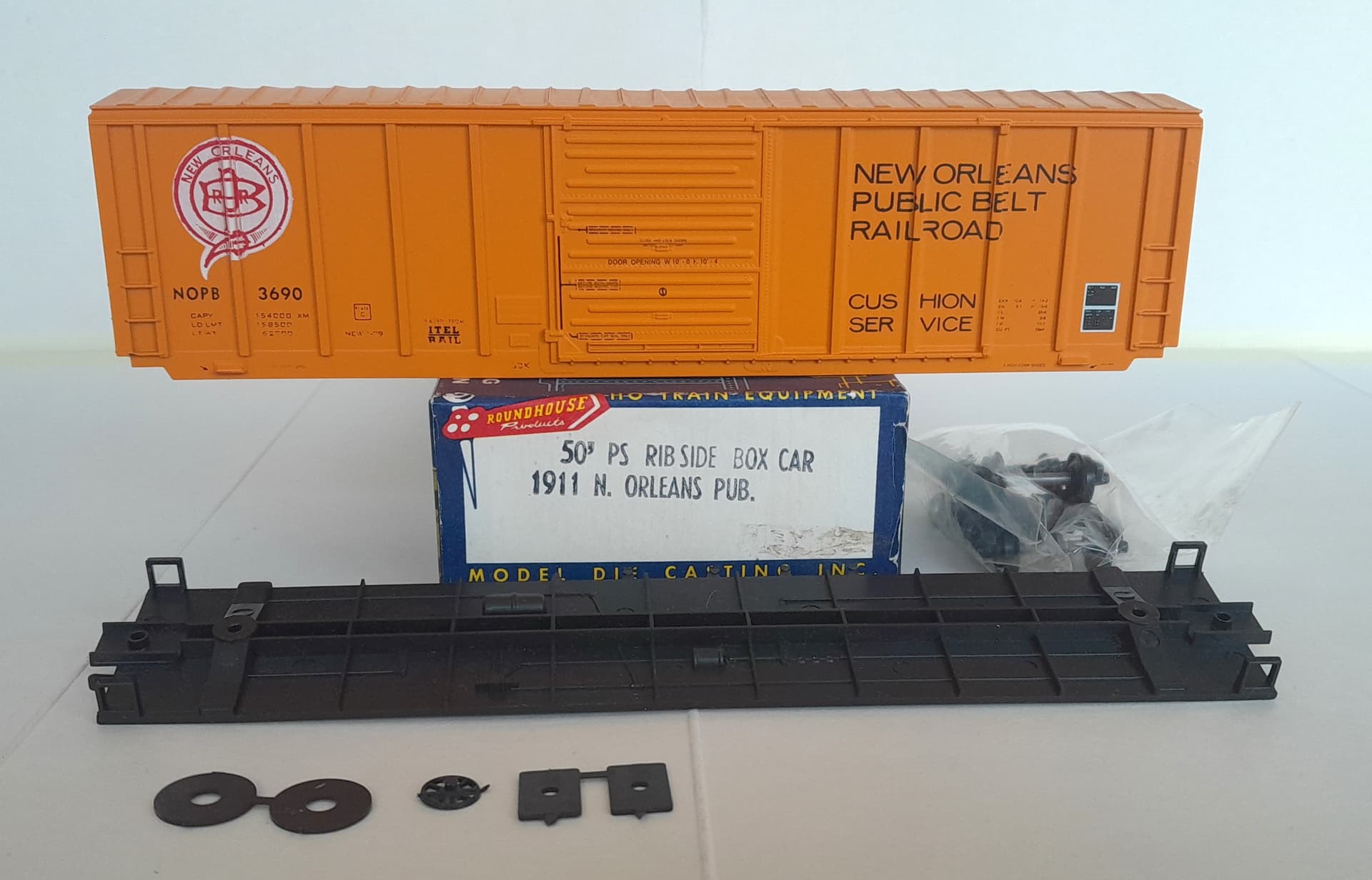
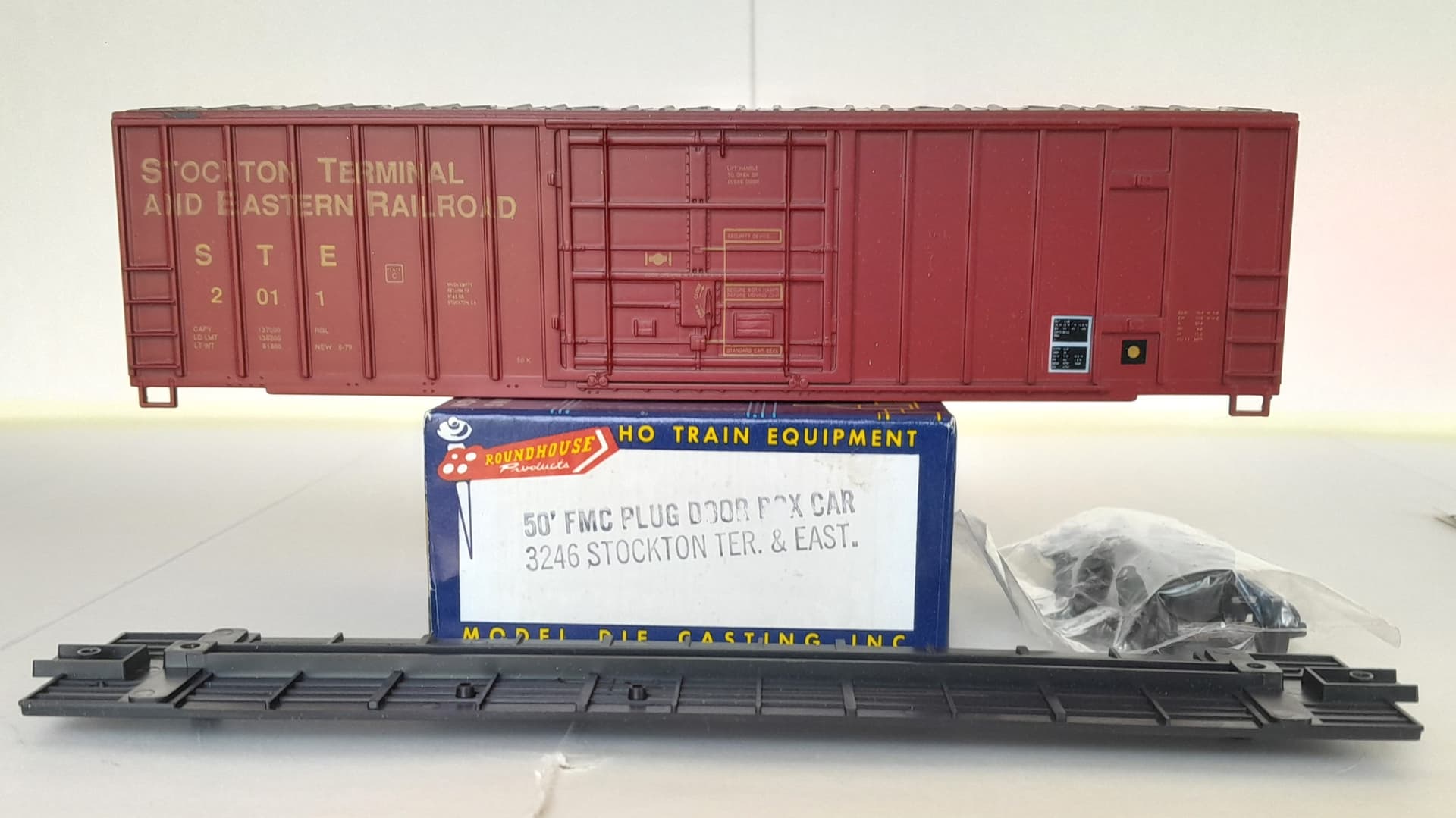
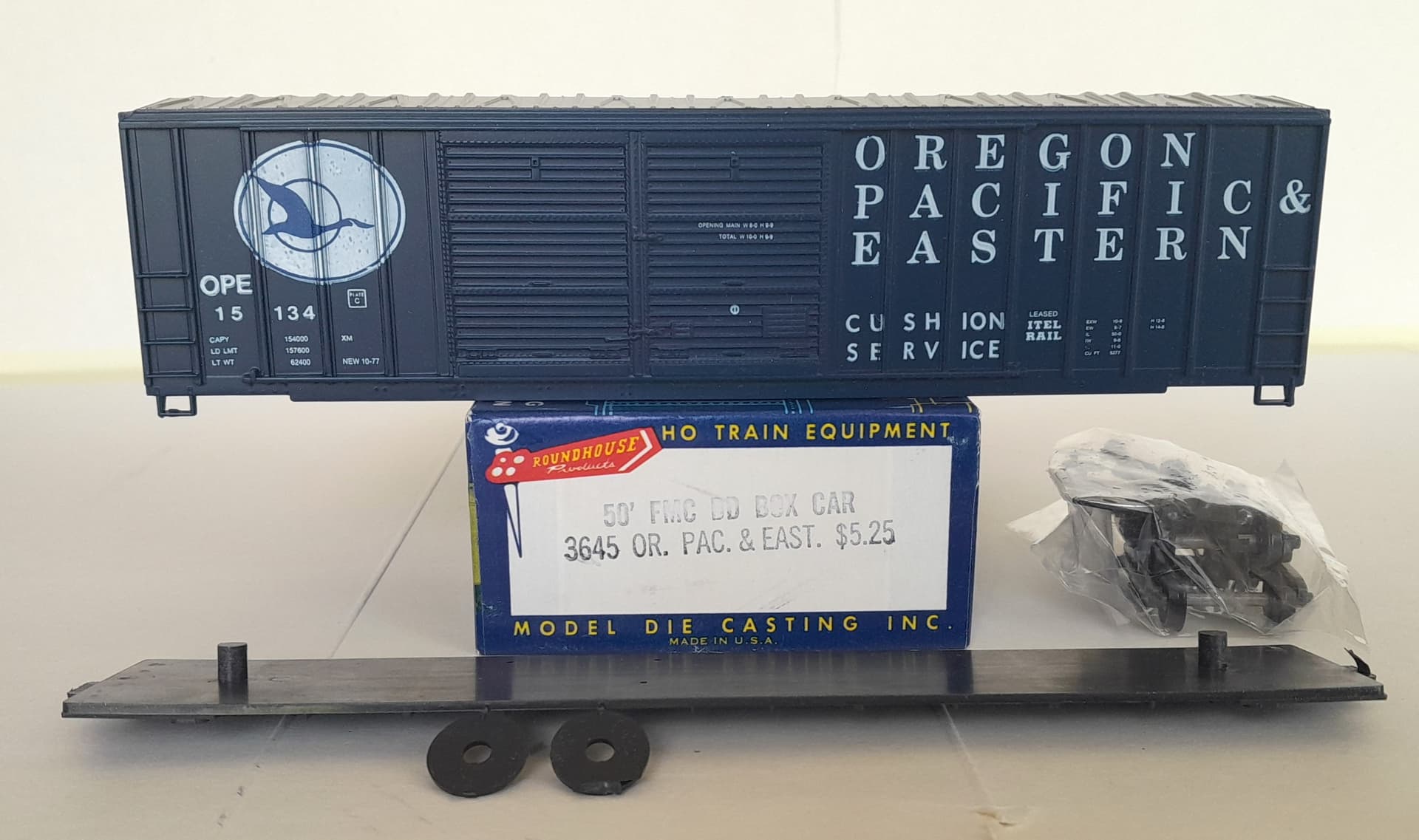
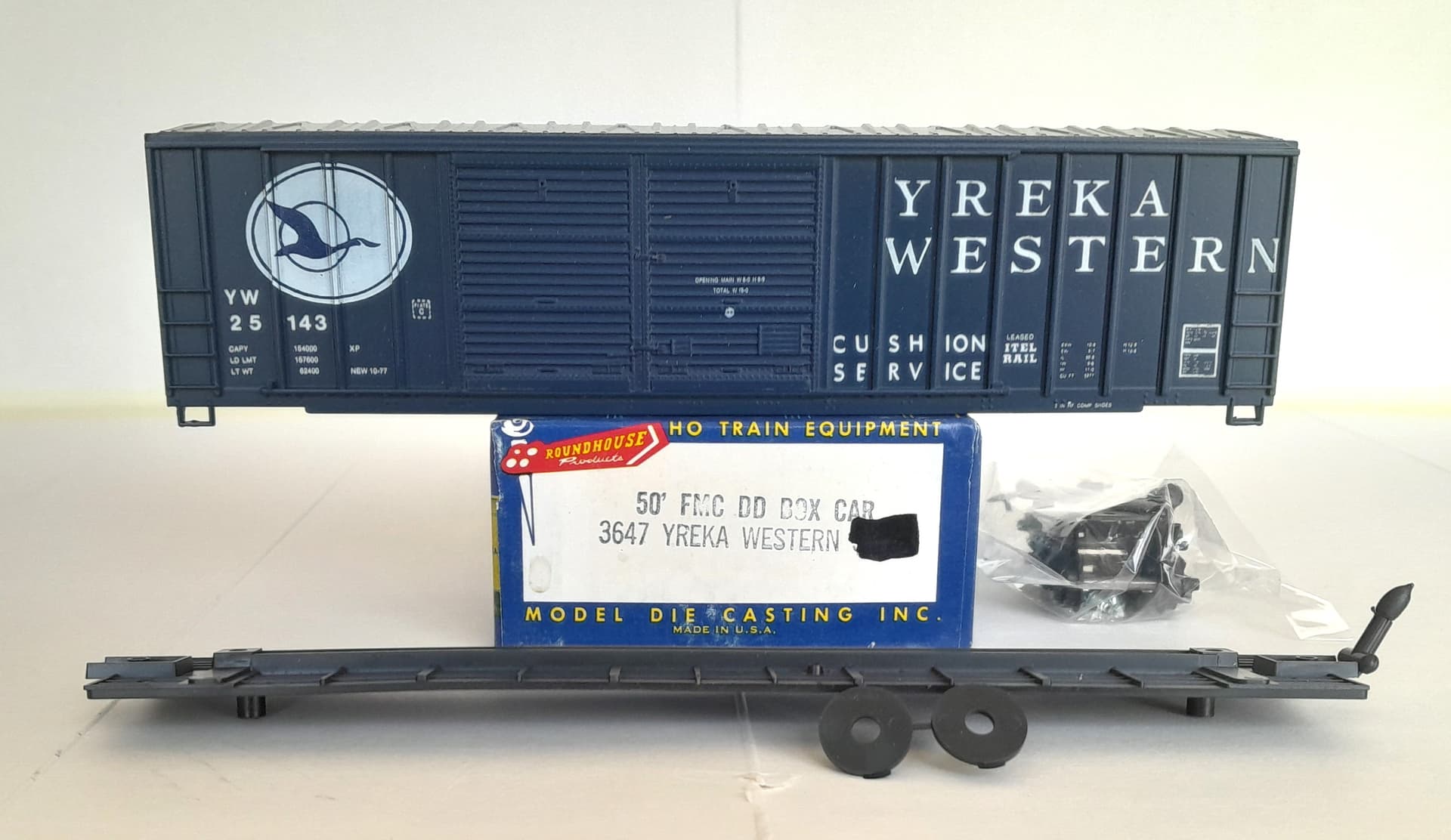
I recently caught a glimpse of one of these Boxcars in a YouTube video and I kept thinking I was sure I had a similar model - turned out I did and it is Roundhouse #1914 PS 50’.
Eventually I found it, in a Walthers box and I had not added it to my models list!
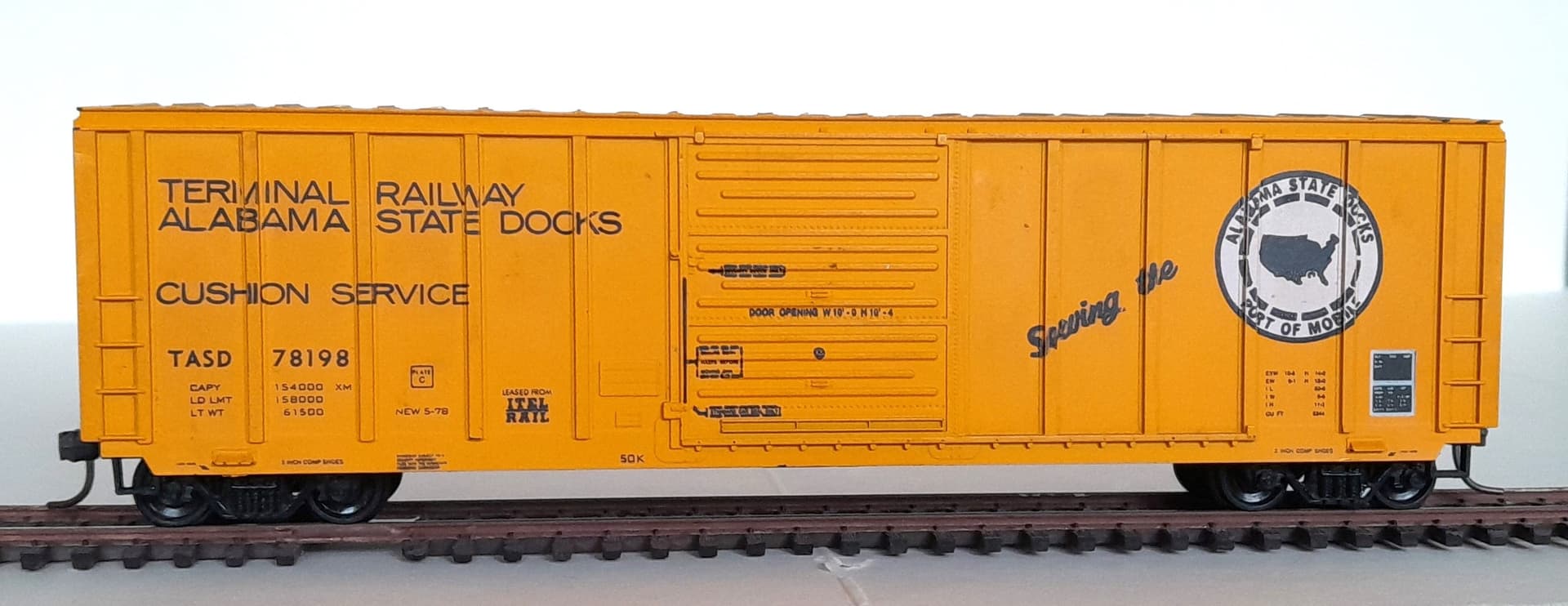
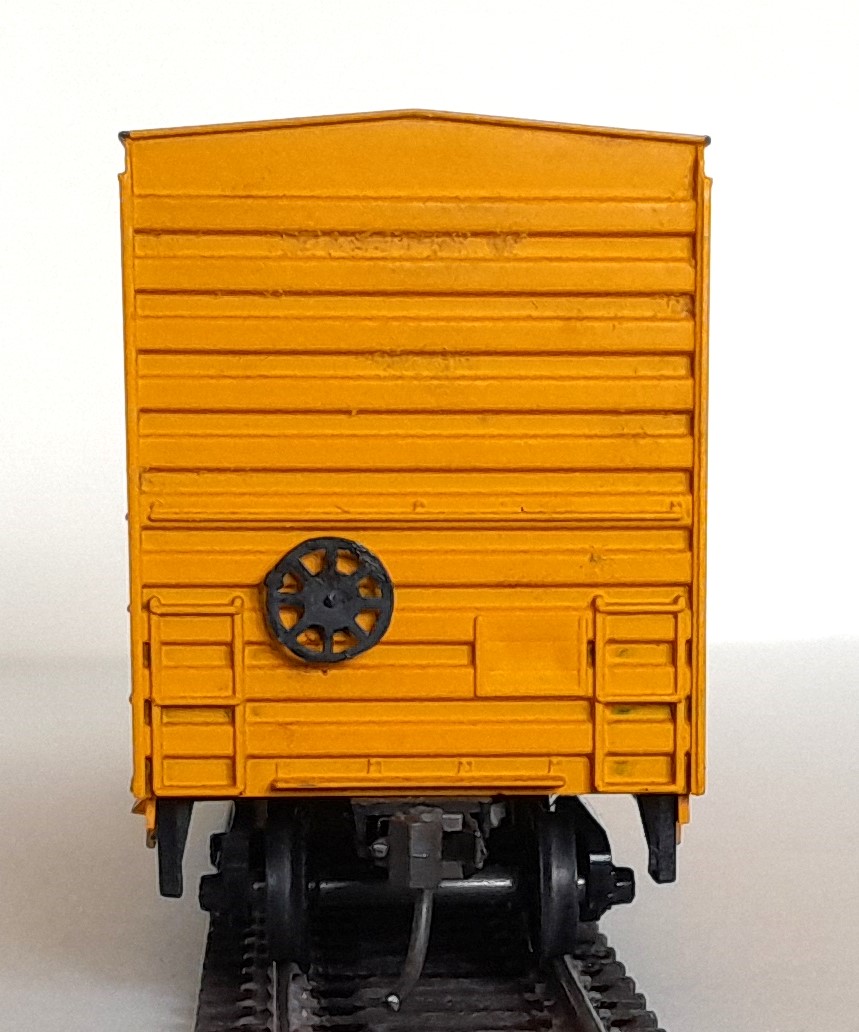
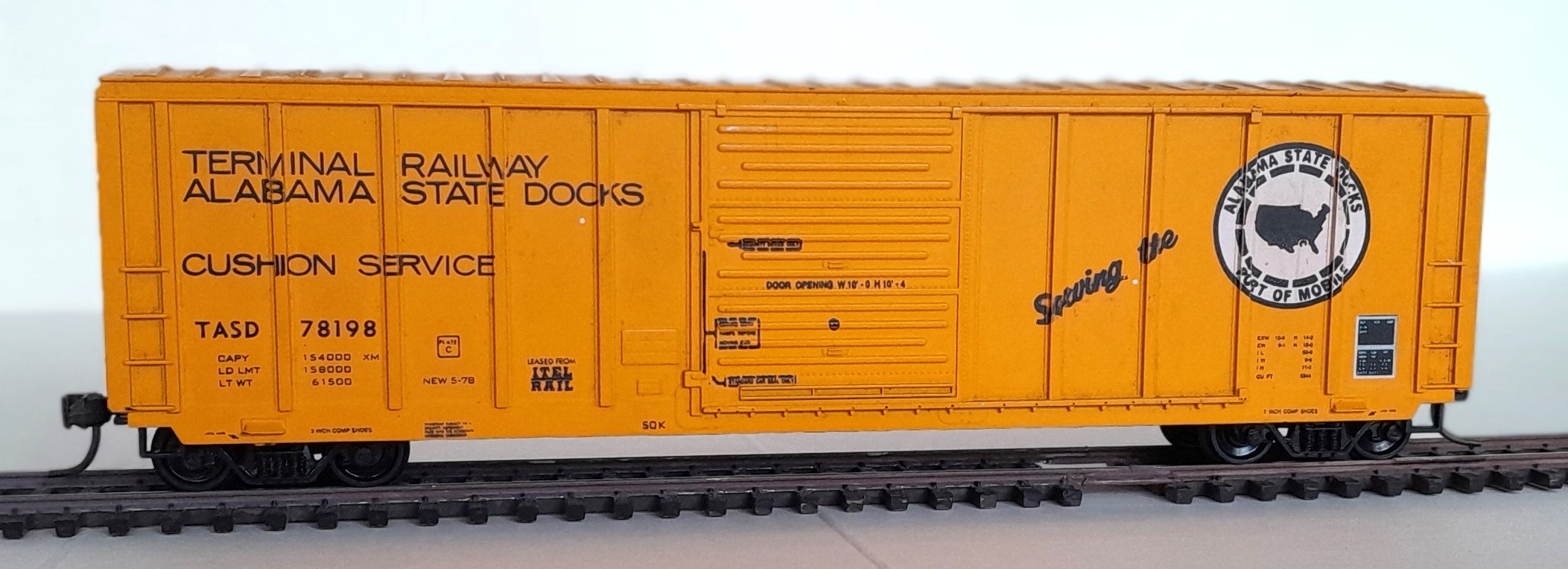
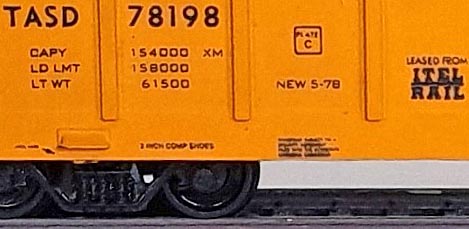
This is one of a group known as “shortline’s IPD boxcars.” You’ll be surprised to know that these cars only appeared during a brief period in American railroad history, from the 1970s to the early 1980s. You can see that your car is stenciled “NEW 5-78.”
Approximately 40,000 cars were built new for over 100 railroads, and each one sported a colorful livery. This made them incredibly popular, with many being released today by Athearn, Atlas, Bachmann, Walthers, and others. Each new model features the correct doors, height, and width, along with accurate and precise lettering.
In contrast, the Athearn BB and MDC/Roundhouse models from the 1980s and 1990s are not like this, so they’re unpopular and sold cheaply on the used market.
Conversely, this situation is ideal for us BB modelers.
We like beautiful liverries and schemes, so it doesn’t matter to us if the product is a little different from the prototype, or if the mold is a little inferior.
What do you think?
Now is the best time for us!
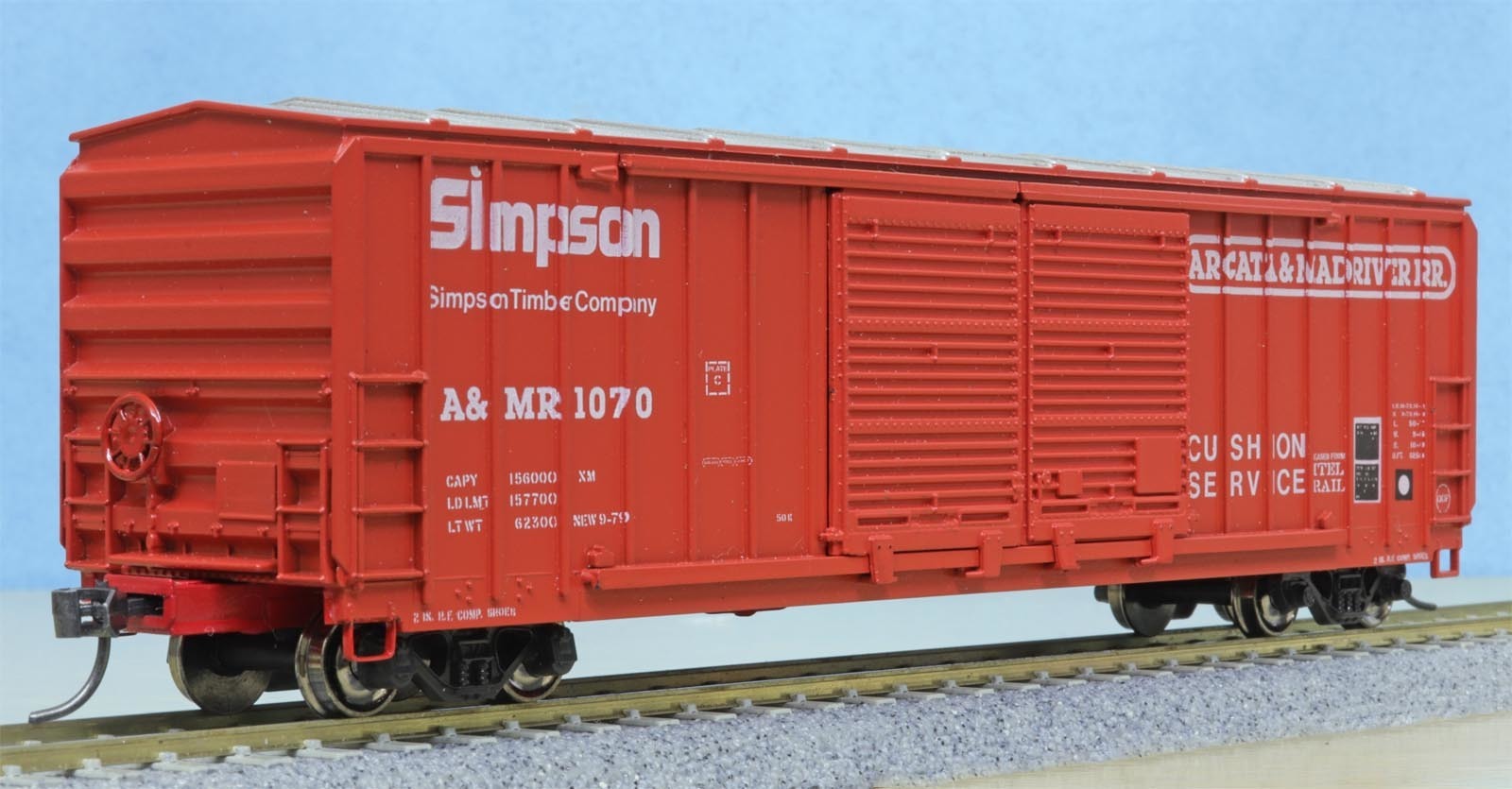
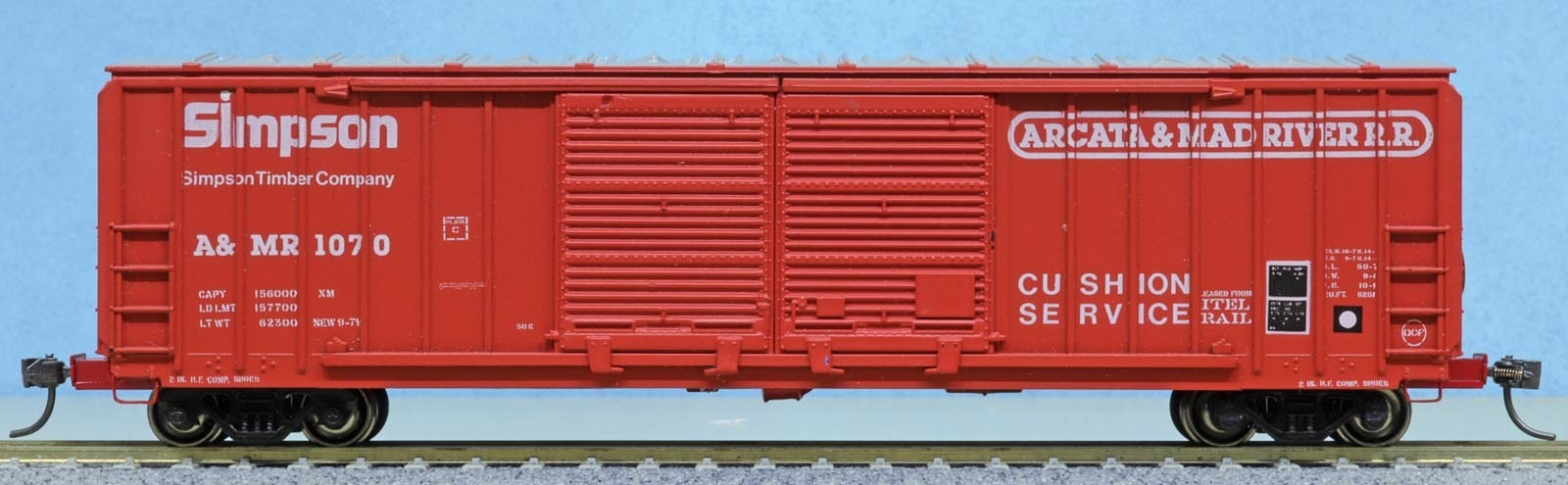
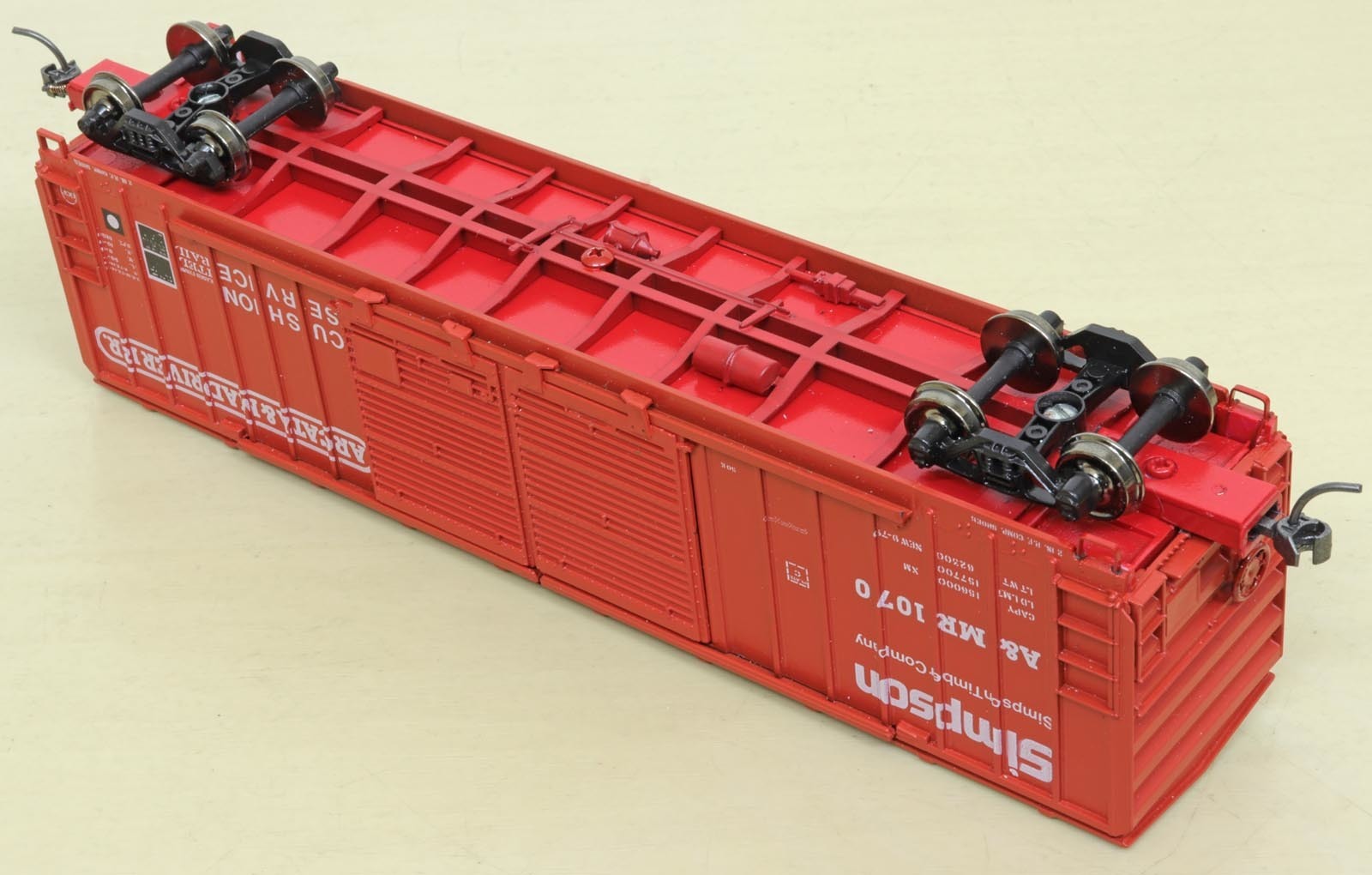
Arcata & Mad River Railroad, NEW 9-79
Simpson Timber Company, Leased from Itel Rail
50’ double-door outside-braced boxcar #5072, 1992 model
I did a bit of research and was pleased to find that NOPB and STE remain operational.
OPE & YW were part of the Willis Kyle group of Shortlines which is now no more - but I like the ‘Blue Goose’ Emblem.
I have seen faded prototypes of NOPB, STE & one of the Kyle Boxcars on Virtual Railfan - some time ago and this drew me to these cars when they came up for sale.
I don’t know if these fit the “shortline’s IPD boxcars” category, but I read the page on ‘Trackside Treasures’ and I’m going to check through my collection.
Paul.
I could go crazy with pictures of Athearn BBs. At least half my fleet is Athearn BB or kitbashes thereof. However, I’ll keep it to four for the purposes of this post.
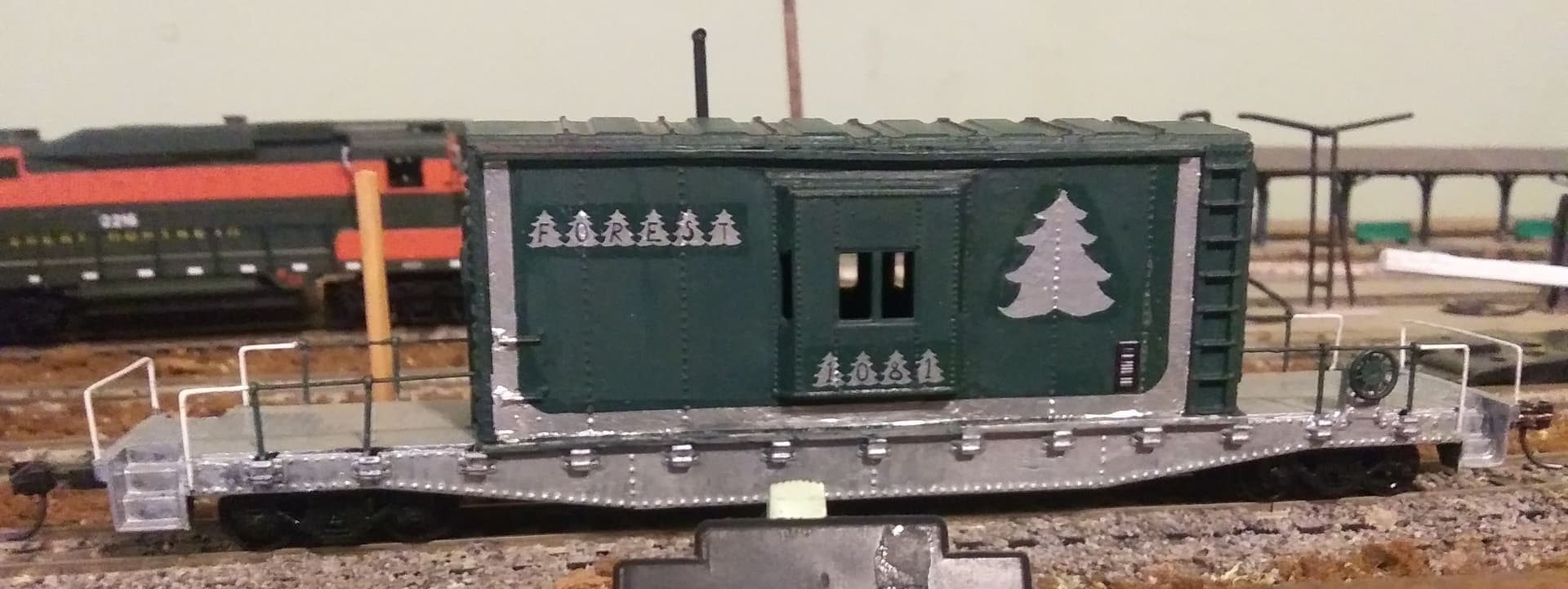
First one is this:
This is a kitbash using a 50’ flat car, a 50’ DD Boxcar, and a bay window caboose and other scratch building parts. The lettering is custom. Paint is PS MEC Green and ATSF Silver.
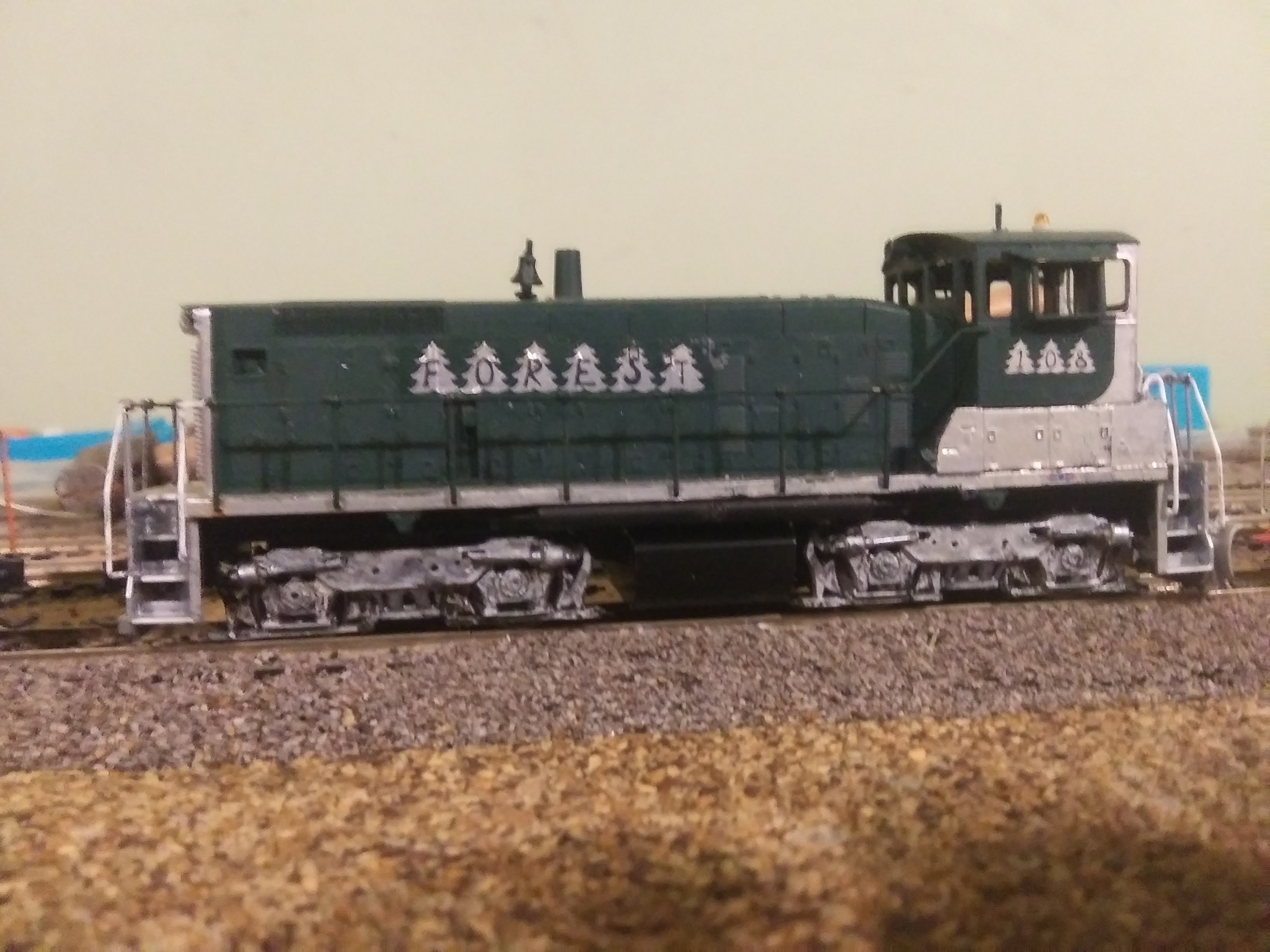
Second is this unit:
This is a stock SW1000 except for the sideframes. They are OOP Smokey Valley Flexi-coil sideframes representing a unit designed for road service. The decals are custom as well. Paint is PS MEC Green and ATSF Silver.
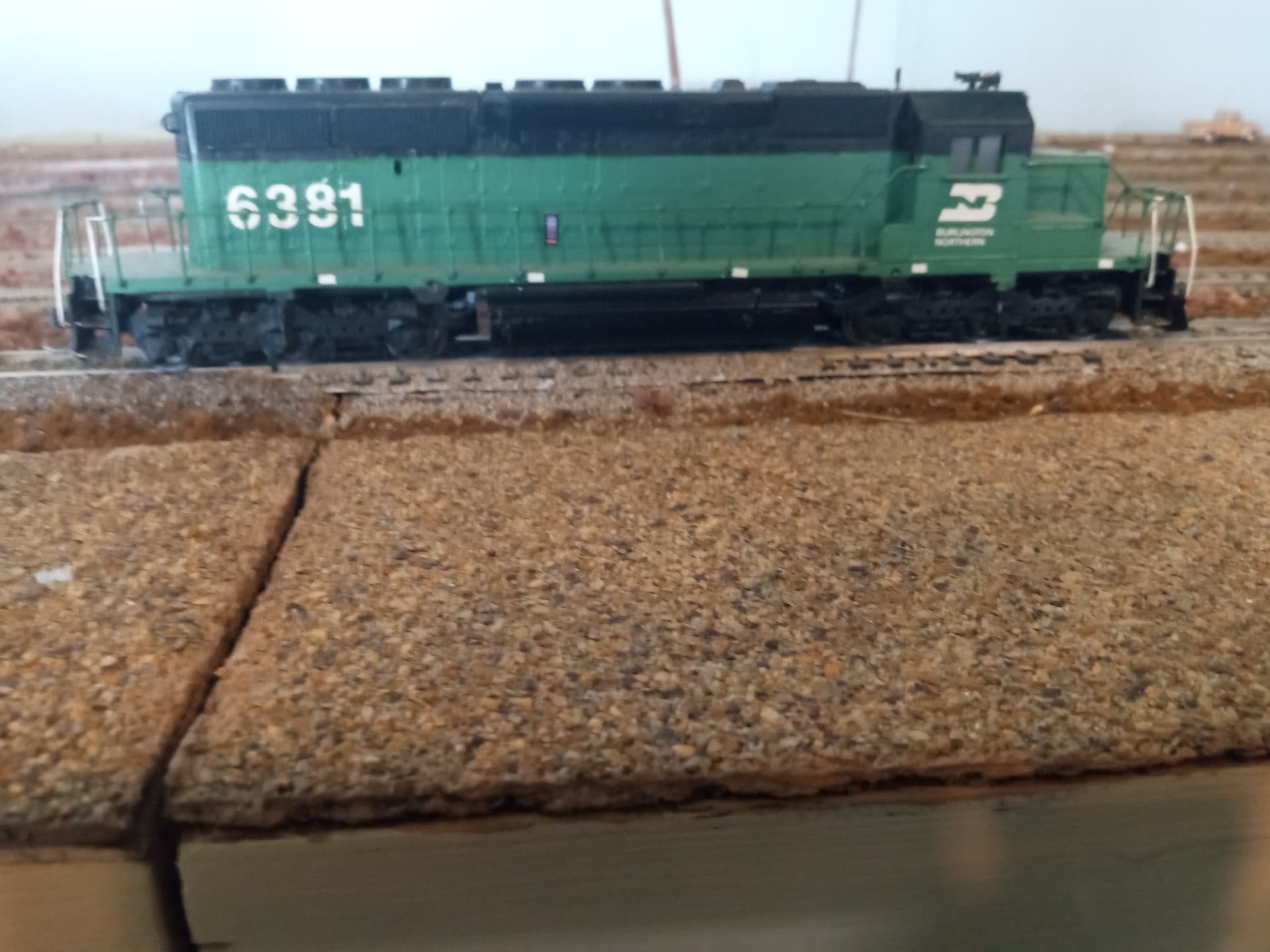
Third is this one:
This is an SD40-2. It is a bit different as it is built from two different sources. The drive is stock except for a piece of styrene on the back of the light bracket for insulation. The shell needed some work as the lock pins were broken off. They were replaced with some styrene shaped to match the existing mounts. The insulation was needed as the shell kept shorting out the engine with the light bracket. The green is a custom mix from now OOP Model Master paints. The decals are standard Microscale ones.
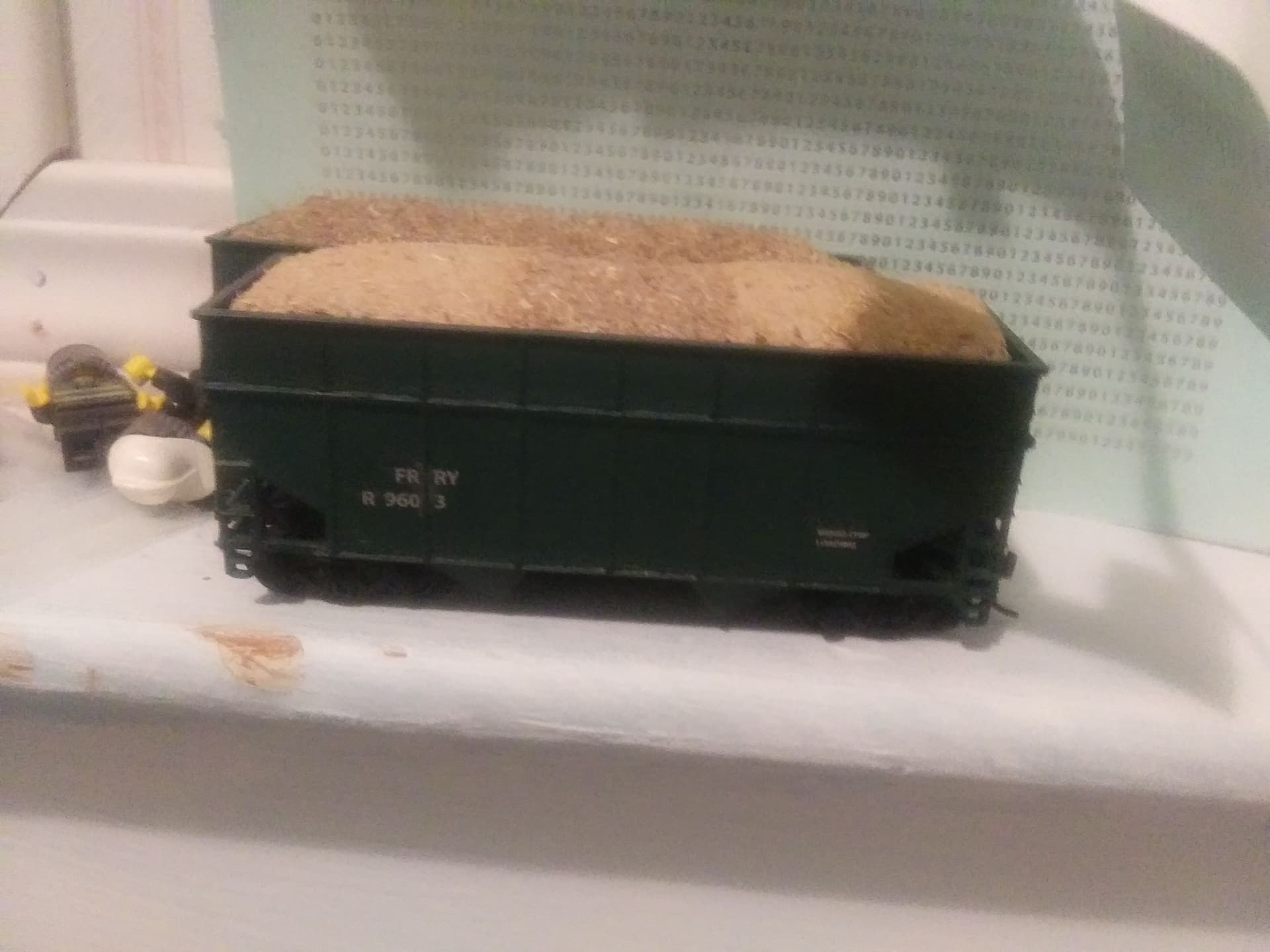
Fourth and final is this:
This is a kitbash using two 34’ two bay hoppers. I have a fleet of these. The original idea was inspired by the 36’ units that the NP build for wood chip operations. The load is a coal load covered with sawdust that has styrene supports for the extra height. The lettering is custom as well. The paint is PS MEC Green.