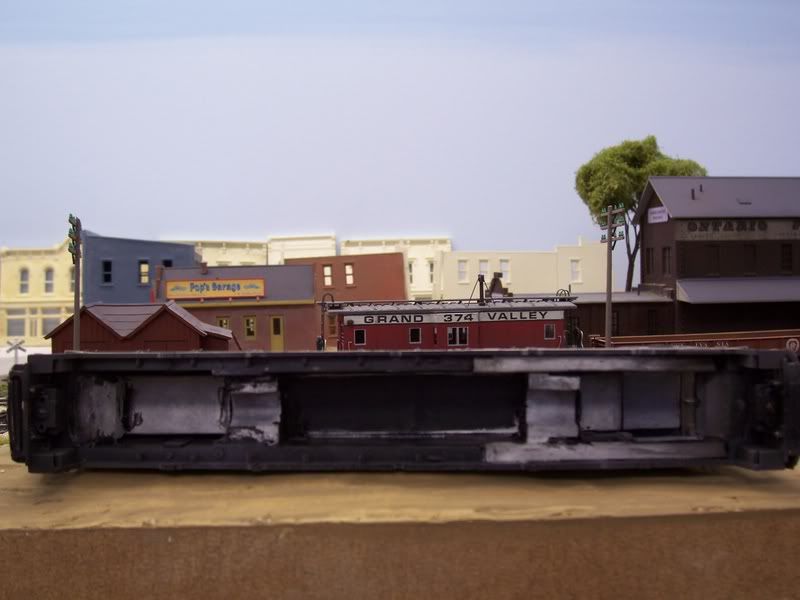
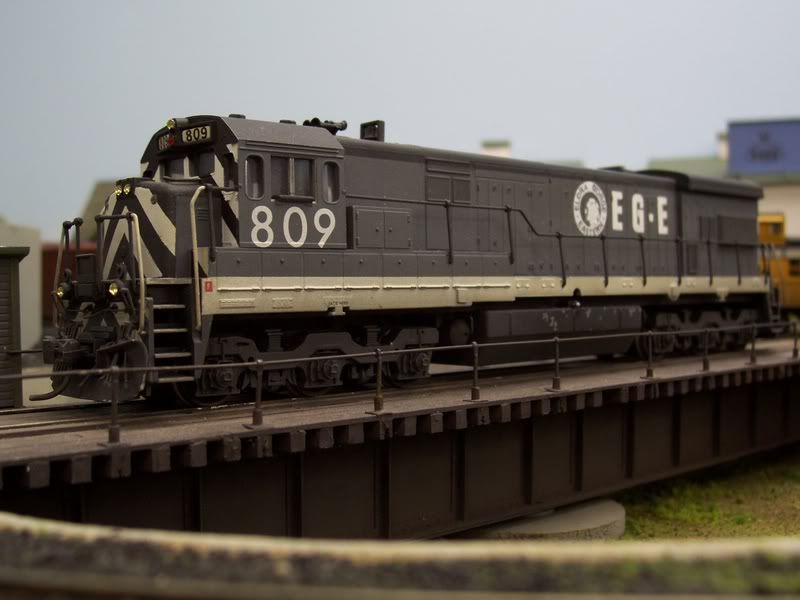
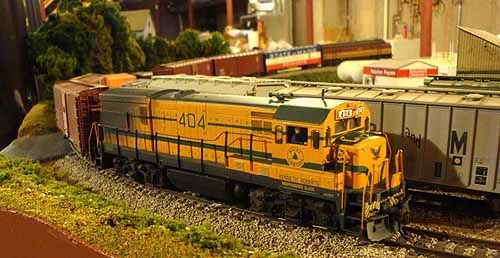
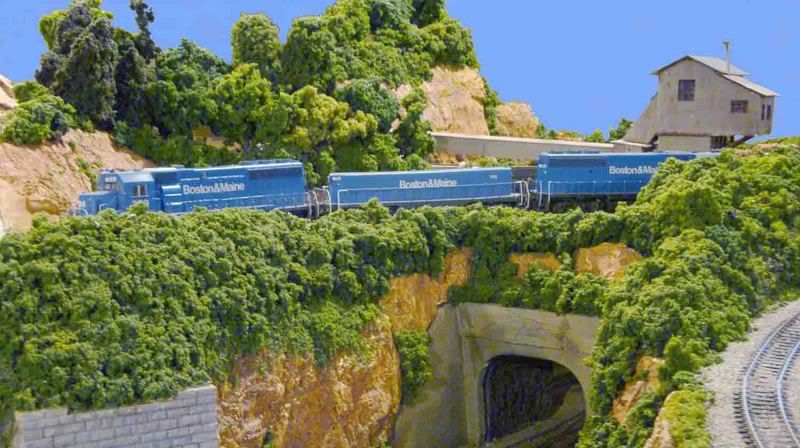
In my more than 50 years of model railroading I’ve collected quite a number of locomotives as well as rolling stock.During the first decades most of my purchases were Athearn BB’s with an occasional Tyco and Roco/Atlas. Later of course came Atlas, Kato, Steward and Athearn rtr and Genesis. Most of my earlyAthearns (U-boats, SDs and GPs) still haul trains on my layout although I musat confess that they all have their original motors replaced by can motors but they still have the original gears and wheels. Sure they are a bit noisier than their modern brethren but some of them sound remarkably like a diesel engine and therefore the noise doesn’t bother me a bit. They lack the beautifull detailing of ther modern Chine made locomotives bur with a bit of superdetailing they are not that much inferior in appaearance.The modern locomotives have fine scale handrails among other fine details but I’m surely not the only one who has occasionally damaged these delicate handrails. Give me the sturdy and only slightly oversized metal handrails of my BBs anyday and moreover they hold paint much better. Another plus a found out is the in my experience perfect conduct of track electricity to the motor. The sintered wheels are reputed to bed less conductive but my BBs never stall whereas some of the other makes do occasionally and then need a gentle nudge to get them moving again. These are some of the reasons why I felt I had tot pay tribute and give credit to the quality of Athearn’s BBs.
I have a BB. F7 that is very old. It has been detailed somewhat and equipped with nwsl wheels and a Soundtraxx sound decoder. Still has the original motor and gears. One of my best runners and one of my favorites. Athearn got me started in this hobby in a big way and I thank them for it.
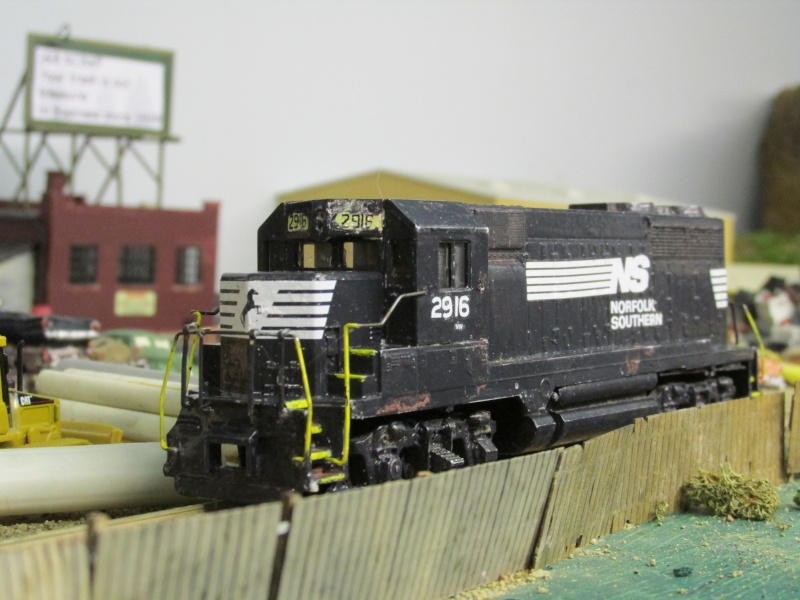
I got a GP38 that I used for the base to create a low nose NS GP35. I need to replace the motor with the DCC one Atherean has, and get some of the motor parts (I am missing a connecting piece between the truck and the motor.
I’m also a fan of the good old BB loco. I have several, and a lot of them have been updated with better lights and decoders, while maintaing the original motors. I have found that the “gold or brass” colored motors are a good inexpensive update to the older darker colored motors, and are far more suitable for DCC adaption. And I have a few that still have the cast metal sideframes, although I have replaced the motor, as I just mentioned above, or have used them as non-powered (dummies…I hate using that word) to fill in consists. I like these because I can still use metal wheel sets, and hook up lights, even though it’s non-powered.
You can shave off the cast on grabs, add your own, and other details, and you have a great looking model, although some detail fanatics will call out the fact that some of the Athearn shells are way out of size, such as the width of the SD45 nose and hood. And I guess if your building an absolute model of a particular prototype, this can be important, but it’s never bothered me.
Those that have run a lot of Athearns, have probably experienced this, as I have, every once in a while you come across one that seems to out run some of the others, in performance, noise and starting speed. I’ve got a few GP50’s that fall into that catagory, and some GP35’s.
I like this article the best, as far as a “how-to” for maintaining and improving the BB loco:
I’d still have and run my original GP-35 had it not been lost in a fire. I do have enough BBs that they could run my RR. I’m still quite fond of them. I have plenty of the newer locos you mentioned too. Dan
I’ve put new chassis under old shells, or gutted the motors to create dummy engines. Some are “sound dummies” with decoders, lights and speakers but no motors.
These engines have been with me for over half a century. I can’t give them up, or even keep them in a box. I want to take them out and run them, even if they need some help from a Proto to get them around the layout.
Actually the old Athern BB’s offer a lot of possibilities for those who like to tinker with and customize their engines. You can start with engines pulled out of under-the-table boxes at train shows and bought cheaply. F-units can be detailed with a “diesel dress-up kit” after the shells have been stripped and custom painted. Motors can be cleaned and lubed or replaced. gears can be replaced if needed from old chassies kept in the parts box for that purpose. If you like to operate some of your trains running opposite the flow of electricity for head-to-head meets, you can simply drop the trucks and swap them end-for-end and your Athern BB becomes an opposite runner. The older units are durable and easy to work on and, since they are not costly, you can weather them without fear of ruining a valuable piece of equipment. I operate a considerable fleet of these units, including several A-B-A lash-ups and have had a lot of fun with them over the years. The newer Athern Genesis locos are fine pieces of equipment, to be sure, but you can’t beat the cost of the earlier models and meeting the challenge of upgrading and detailing them is a lot of fun!
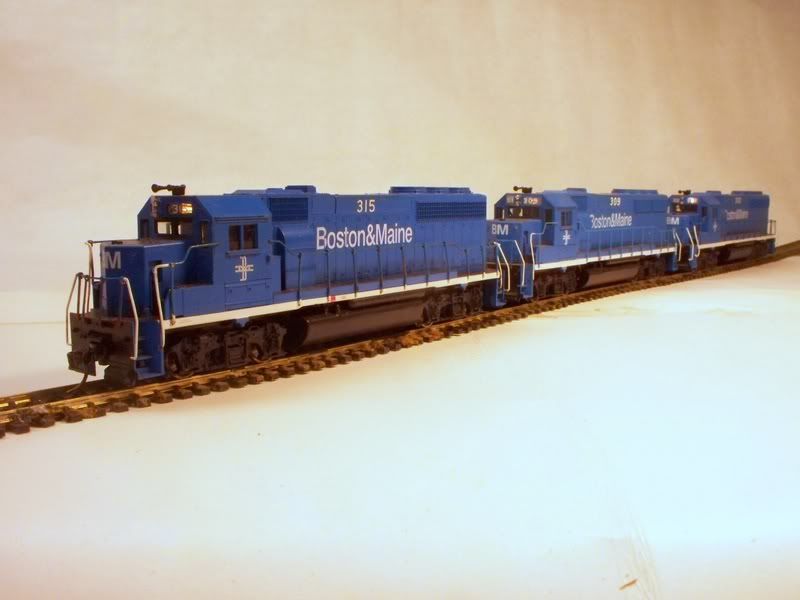
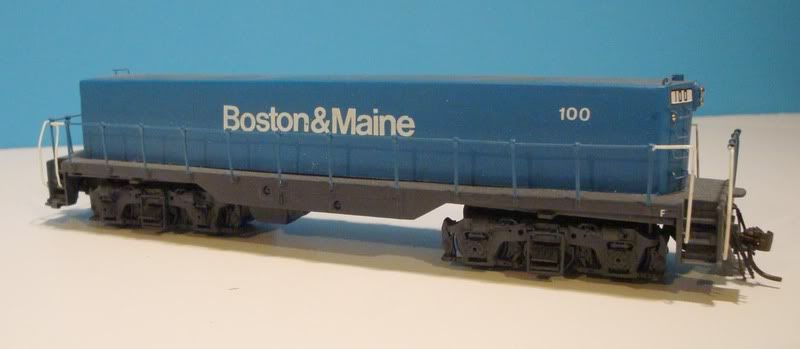
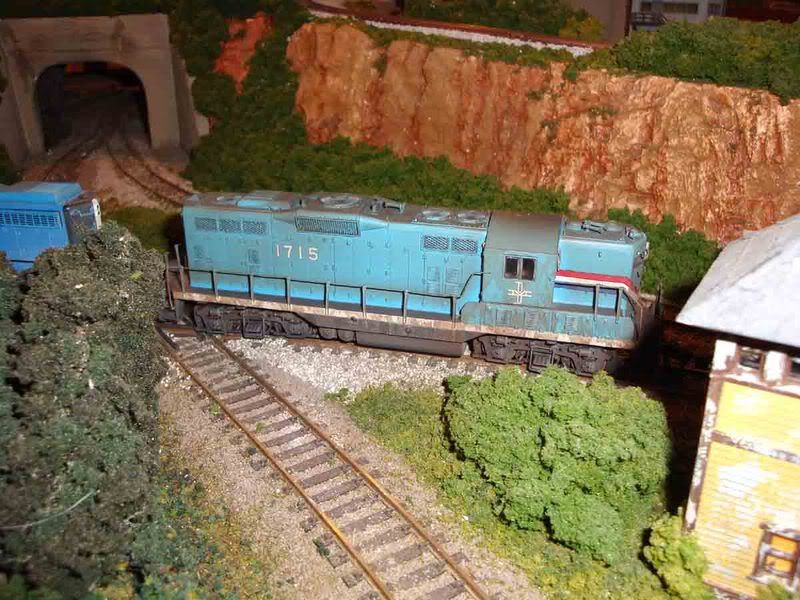
These are all mostly stock. Factory paint. Factory lettering. I got some Blue Box GP’s. I installed constant brightness lighting in all three. Added light shields to keep the headlamps from shining out the cab windows. Changed the road number on two of them, so as not to have three GP’s all sporting the same number. Just painted over the factory numbers with Floquil B&M blue and re decaled with Microscale sheet 87-934. Painted the truck side frames with dark gray auot primer to kill the plastic glossiness. One of these days I’ll give the F units the same treatment.
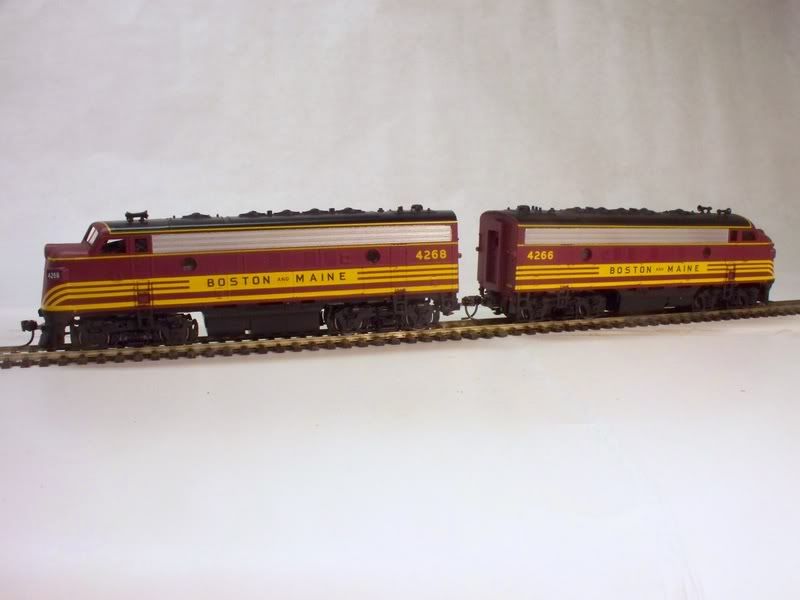
And some F Units. I glazed the windows and cleaned all the gears in the truck gear towers. That made them run quieter. And hardwired the power with so,me 1/4 inch FASTONs. Both units took a dreadful fall off the AVRA modular layout to the floor at the Hanover show. They are currently on the RIP track, but they will run again when I get around to working on them.
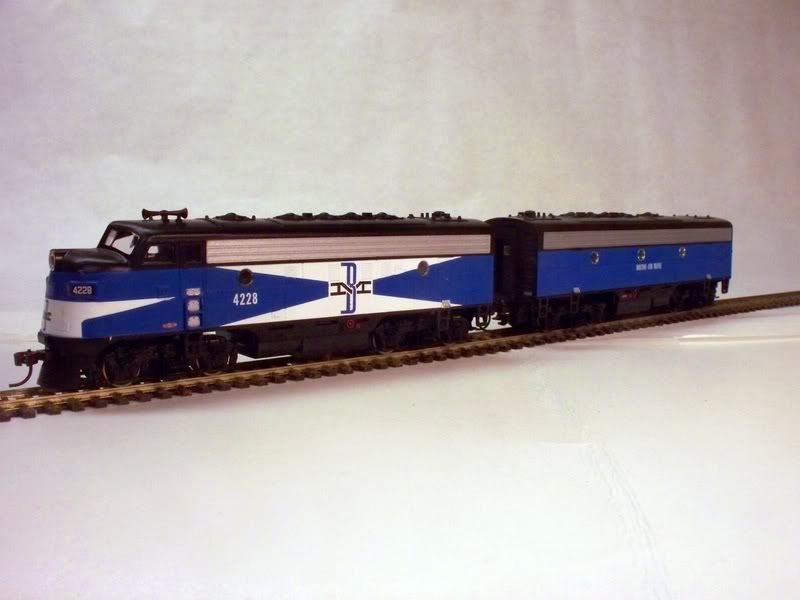
And some more F units. These are straight stock. One of these days I’ll do some work on them.
They all run good. And I have had a lot of fun tinkering with them. And the price was reasonable.
Of the 63 diesel locomotives I have, 50 are Athearn BB. I still look for BB’s before going to anything else.
What I have always liked about the BB’s is that they are generally generic versions of a locomotive making them highly ‘customizable’, I also like them for durablity. Compared to todays RTR or Genesis, BB’s are nearly bullet proof which for me being arthritic and very klutzy is a good thing. Two years ago I bought a pair of RTR SD60’s and every time I’ve had to handle them I end up damaging parts. They run a little better than the 8 SD40-2’s I got many years ago that still have original motors. Their detail was…was…much better, now they are a patchwork of CA and look as ragged as their BB brethern.
Mind you…I certainly am not picking on Athearn. Contemporary Bachmann, Atlas, Bowser, etc all pose difficulties for a kinked up clod like me. I would gladly surrender some of that detail to get some durablity back.
Athearn BBs were my first “model locomotives” (1970s). Since then I’ve sold / traded all of my powered BB units except for two SCL U33Bs. Although the Athearn BB EMD hood units look glaringly wide, the GE BBs don’t look as obvious due to the radiator housing section being wider than the hood section.
The link is a thread in which talented modeler CMarchan did a beautiful job updating and detailing an Athearn BB U33B into a U36B:
I have bought a lot of ‘BB’ locomotives over the years. In the 70’s/80’s I had a good fleet of Milwaukee Road engines that were detailed/painted/lettered. I rebuilt all of the drives:
Trued the motor comutator
Adjusted brush spring tension
‘Hard Wired’ the electrical pick system - Much more reliable that those ‘rusty’ snap-on metal things
Replaced the ‘sintered’ iron wheels with either JayBee or NWSL n/s wheels
Added ‘constant lighting’
All of my Athearn GP7’s were redetailed into GP9’s(9 of them), 4 SD7’s, an ABA & an AB set of F7’s, and a couple of switchers for my ‘operations’ layout After detailing/painting, the ‘fat body’ GP’s really did not look too bad(until I bought 3 P2K GP18’s that were converted th phase 3 GP9’s). The ‘fat body’ Athearns really stood out then! I also has a lot of Rock Island U-Boats and CGW F’s. If one cleaned up the ‘flash’ on the gears, they were decent runners.
As I got into DCC in the late 90’s, I started to pick more P2K GP’s and the old Athearn fleet was sold off on eBay and at local train shows - I got my mileage out of them!
I always found them to be a reliable running model, and one could always get ‘parts’. For those into redetailing and kit-bashing - Athearn was a staple item. I did convert one of the GP’s to DCC, but spending more money on them did not seem to be a good investment when I was buying correct P2K GP’s from M B Klein for about $40 each!
Today, my roster of Milw stuff is mainly P2K engines. My ‘modern’ stuff is BNSF and is made up of Atlas & Kato engines - Some of the smoothest and most reliable engines I have.
My very first diesels were Athearns before they became Athearn: an A-B-B-A set of Globe F-units. They were in Santa Fe Warbonnet paint when I got them, then spent some years in CPR maroon and grey, before getting the dark green and double grey of my freelanced road. One unit had one Lindsey power truck, the others were dummies:
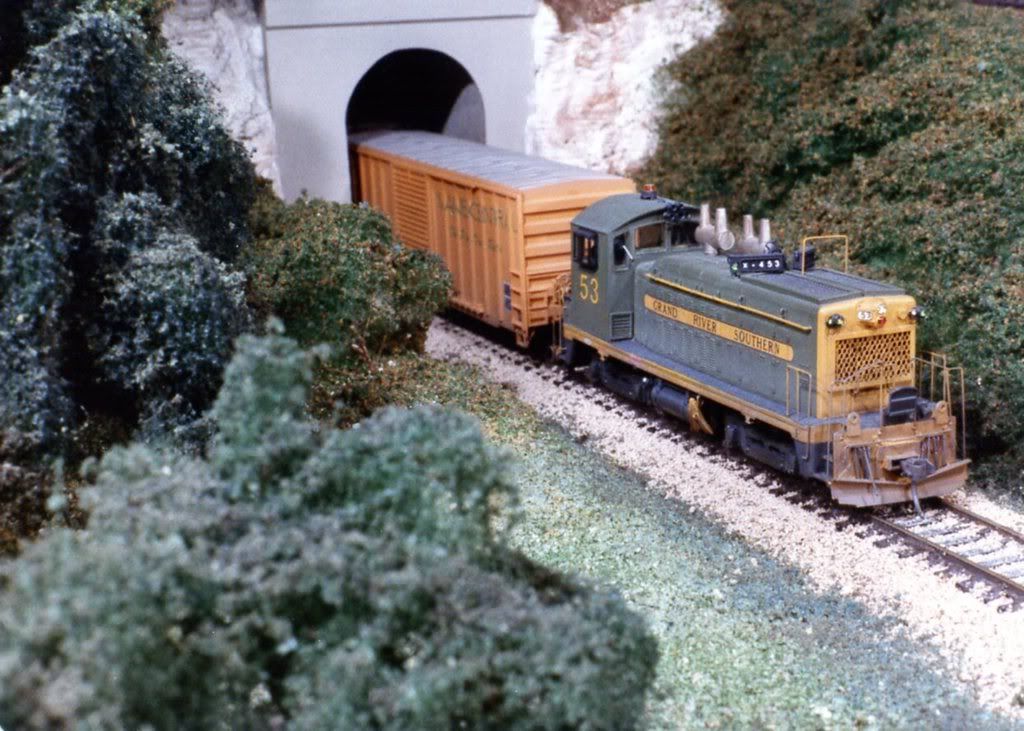
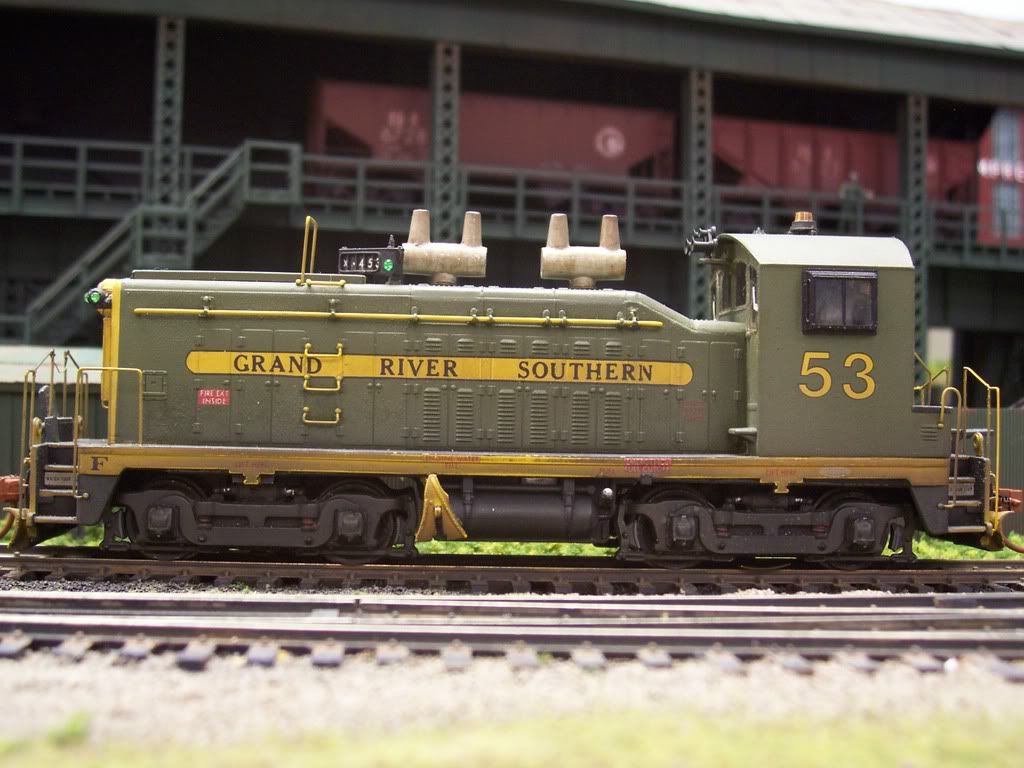
This NW2 started as Athearn’s original SW1500 - a misnamed SW9, I think. This one has a very large Sagami can motor - so large that I had to use a mill file to widen the interior of that famous overly-wide hood. It also has Ernst gears and a GSB cab interior, along with Tomar track wipers. No matter how much crud built-up on the wheel treads, she’d keep motoring along. Eventually, the build-up would get so thick that the loco would begin to bounce when pulling a heavy train and the crud would then start to flake off in chunks - self-cleaning wheels! [tup]
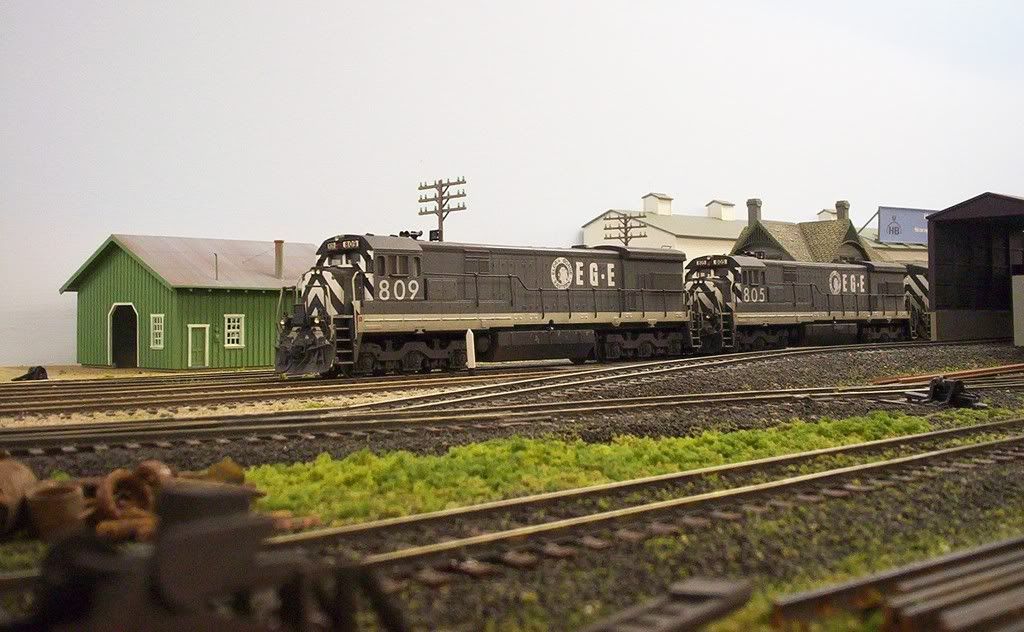
These monsters (there are three of them) started as U33Cs:
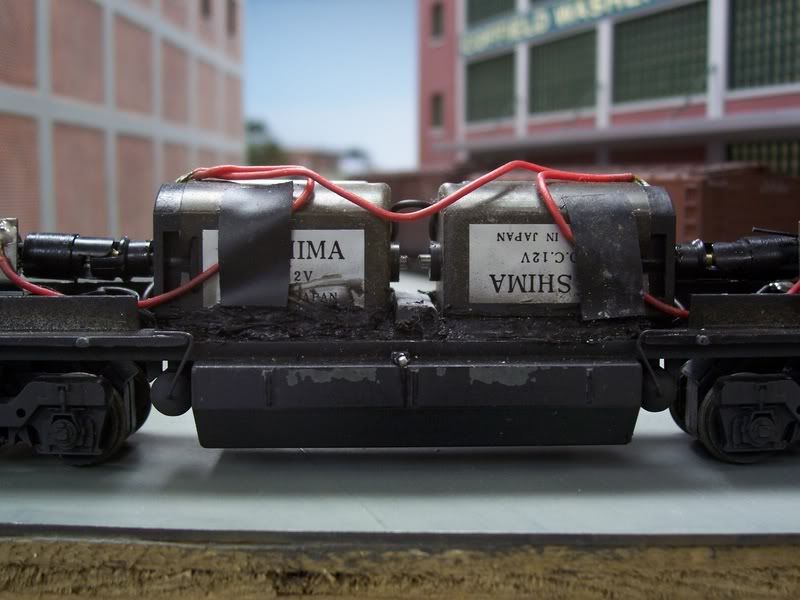
I remotored them with two Mashima can motors each…
…then ballasted them to just over 33oz. apiece, re-dubbing them U36HTs (High Traction):
Yup, they’re noisy ( real locos are ) they’re not the best detailed ( doesn’t bother me ) but over half of my 80 loco’s are BB an I’ll never tire of them
Athearn’s SW1500/SW7/(or whatever) have correct width hoods. I’ve got a Southern cow/calf that I hope to upgrade someday: new motor and DCC, for sure. And maybe some decent lighting. And a Cannon cab. And sealing up the incorrect steps on the calf. And… What’s nice with this paint scheme is it’s all black, so touch up paint is/should be super simple.
I’m a bit less sentimental for the fat bodied stuff. A very large bit. Somewhere I’ve got a BB project of kitbashing to make an Athearn-based SDP45 and SD40-2. When I find it, it’ll get scrapped for parts.
Where the “BB boosters” have a really valid point is in the handrails. Not that the old Athearn ones are good enough, but they did, indeed, stay straight and square. I miss that. I would really like to see cast beryllium copper stanchions and ACCURATE metal preformed handrails. That would/could provide strong, square and scale handrails.