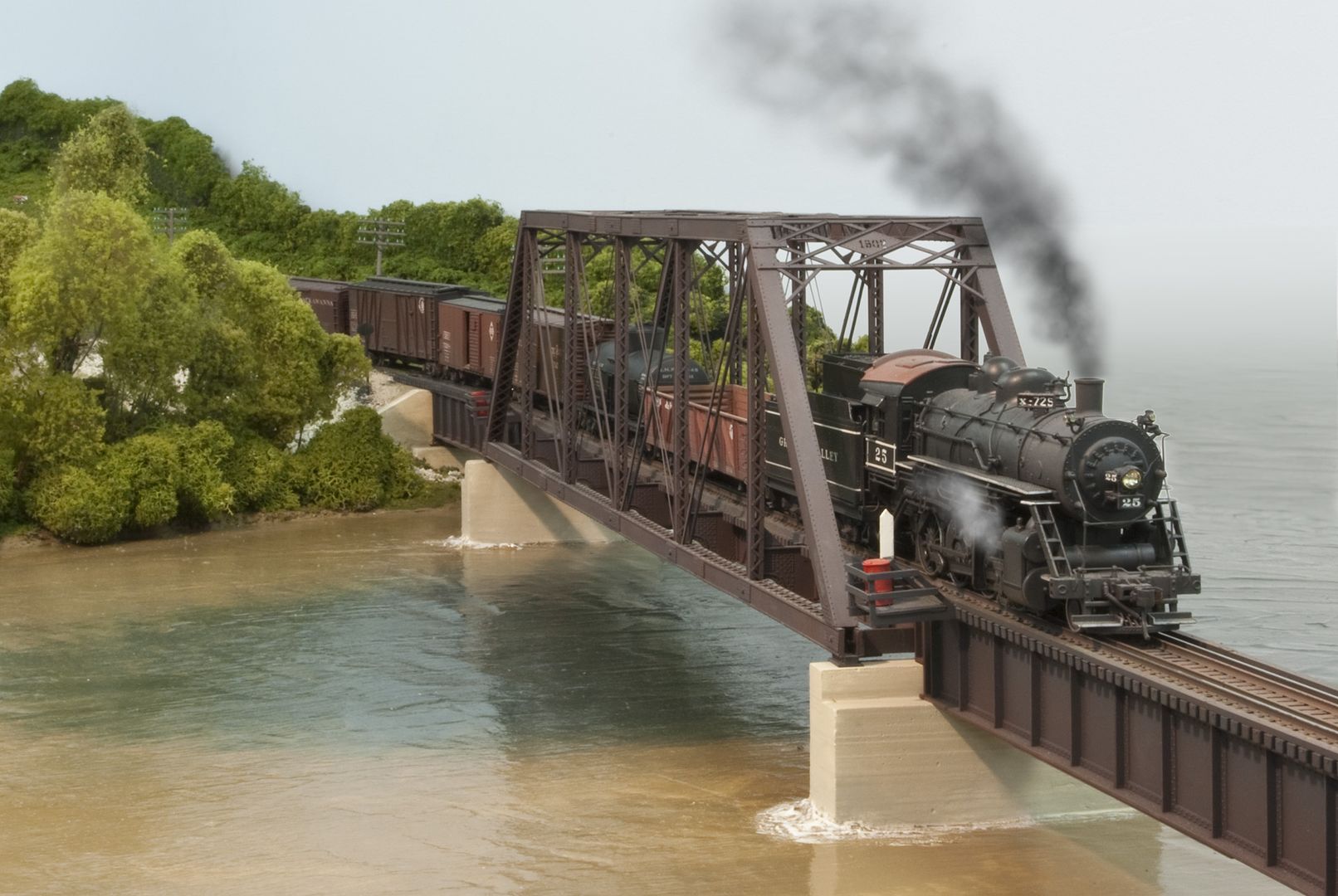
I’m starting to see this word a lot. Hydrocal. Like in Downtown Deco’s structure kits and other places I’m rummaging around in, and someone just mentioned modeling with it here in recent post.
I looked it up quickly and there’s a photo on Amazon that looks like a pile of baking flour on a countertop. Not much of a clue there about what its advantages are, why I would want a model kit made out of it, or what the gotchas are.
Do you have any exerience with it? Or even an educated or uneducated opinion about it? What’s it good fer? Why Hydrocal?
It’s a casting plaster, similar to Plaster of Paris. I think it’s a bit finer scale and castings come out harder and a bit lighter in weight.
I’ve done a lot of Hydrocal casting over the years, mostly stone or rock walls. I have found that, by timing it carefully, I can actually bend a partially set casting to get a curved wall.
You can add dyes to the unset Hydrocal to color the casting, or you can paint it with a spray or wash to get the desired color.
I have used liquid latex rubber to create molds which I then use to “clone” stone items like tunnel portals or create concrete platforms for train stations.
This subway station was scratchbuilt usimg a lot of Hydrocal. The platforms were made from a styrene sheet, and the walls from a similar sheet with smaller squares. To get the curved columns, I covered the plaster part of the setting mold just before it solidiied and wrapped it around a piece of 1x2 wood.
This above-ground trolley station was made by using latex rubber to make a casting mold from a section of artificial honeycomb. I then filled the mold with Hydrocal.
Here is a section of cut stone wall fom a commercial mold. As it was setting, I curved it around a section of pink foam to get the curvature, then let it set.
The last one above is part of the turntable wall for my pit-bashed Atlas turntable which I sunk below the table.
I’ve used both Hydrocal and Dental plaster for casting, but both set too fast for my way of working.
I switched to Durabond 90, a patching plaster which sets in about 90 minutes (there are other versions that set faster, also with relative numbers following the brand name).
The setting will occur pretty-well, no matter how much (or how little) water is used, and once set, it’s extremely strong and durable.
I use it over aluminum screen to create landforms…
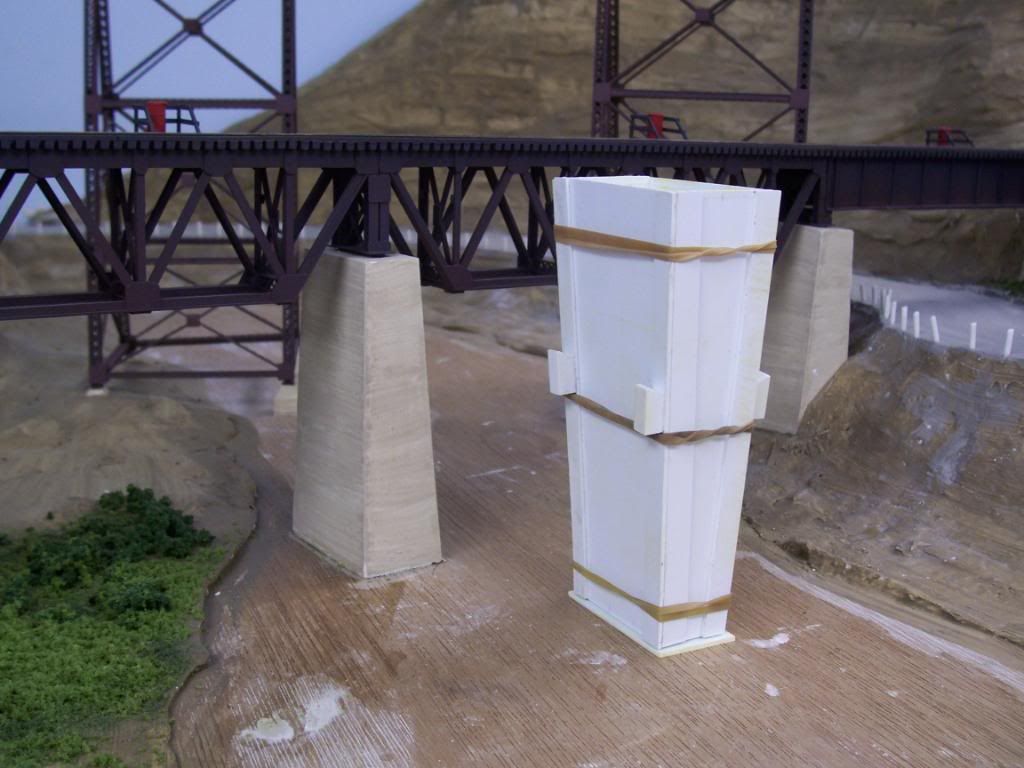
…and in homemade moulds for casting the support piers for bridges…
Everyone so far has mentioned this as a medium that you can cast and mold with, the way I did with a big tub o’ Plaster of Paris when I was a kid. But I keep seeing products made of Hydrocal, like the Downtown Deco kits. So those kits are basically plaster castings? Wouldn’t they be likely to chip and flake? The main reason I’m interested in this stuff is for structure kits.
I have built a handful of Downtown Deco kits. I love the way they take paint, and I have never had a problem with chipping or flaking.
For wargaming, we have built tons of plaster structures using hydrocal plaster and Hirst Arts molds. Hydrocal casts very easily and we have never had problems with durability.
I’ve read that it is harder than Plaster of Paris but I’ve used both and haven’t noticed much difference. Plaster of Paris is more readily available so that’s what I go with.
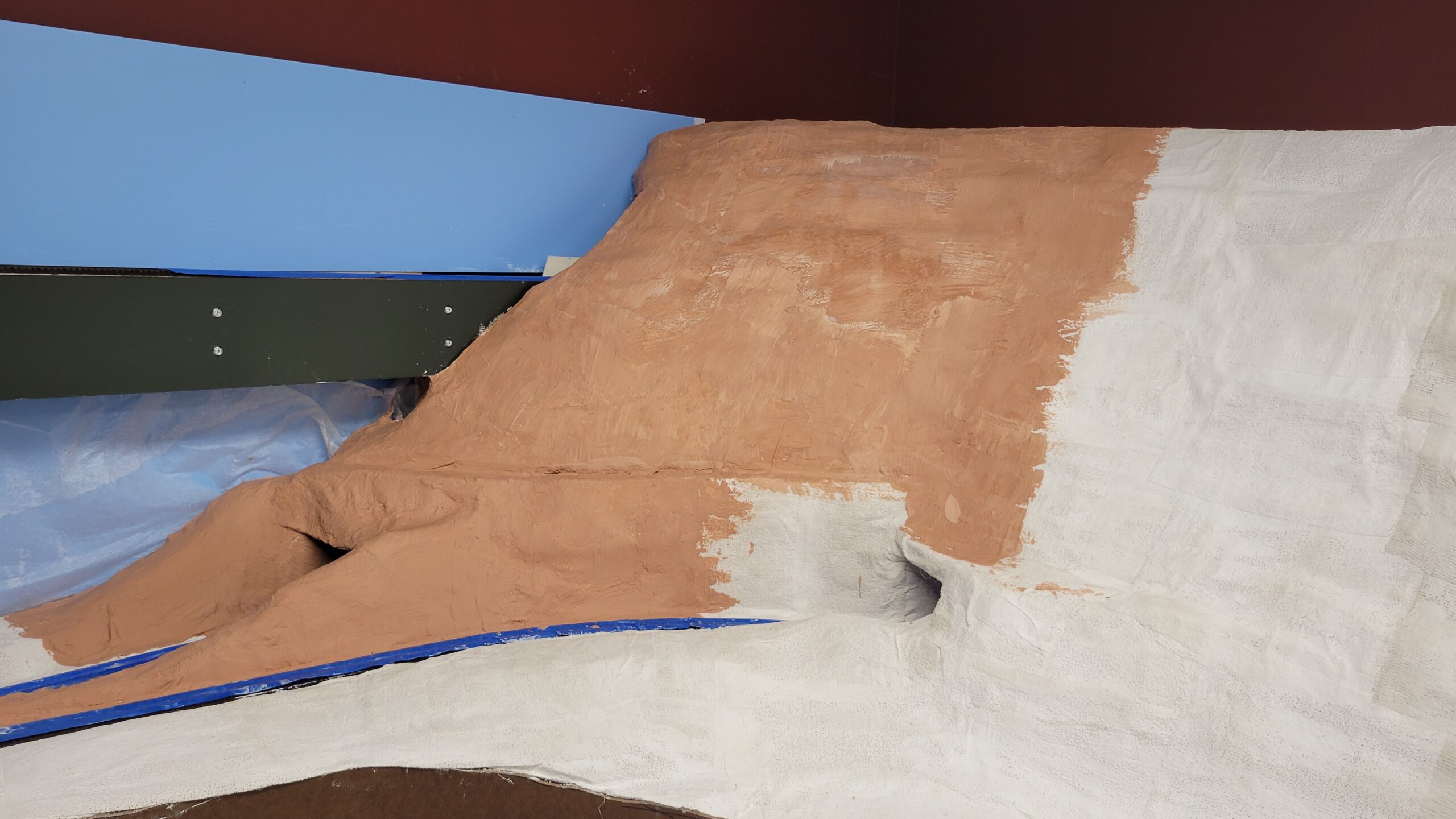
I’m using Hydrocal over plaster cloth and for rock molds in my version of the Wind River Canyon in Wyoming. Hydrocal is much stronger than Plaster of Paris, and is lighter. A thin layer has strengthened my canyon walls significantly ( the colored part is Hydrocal):
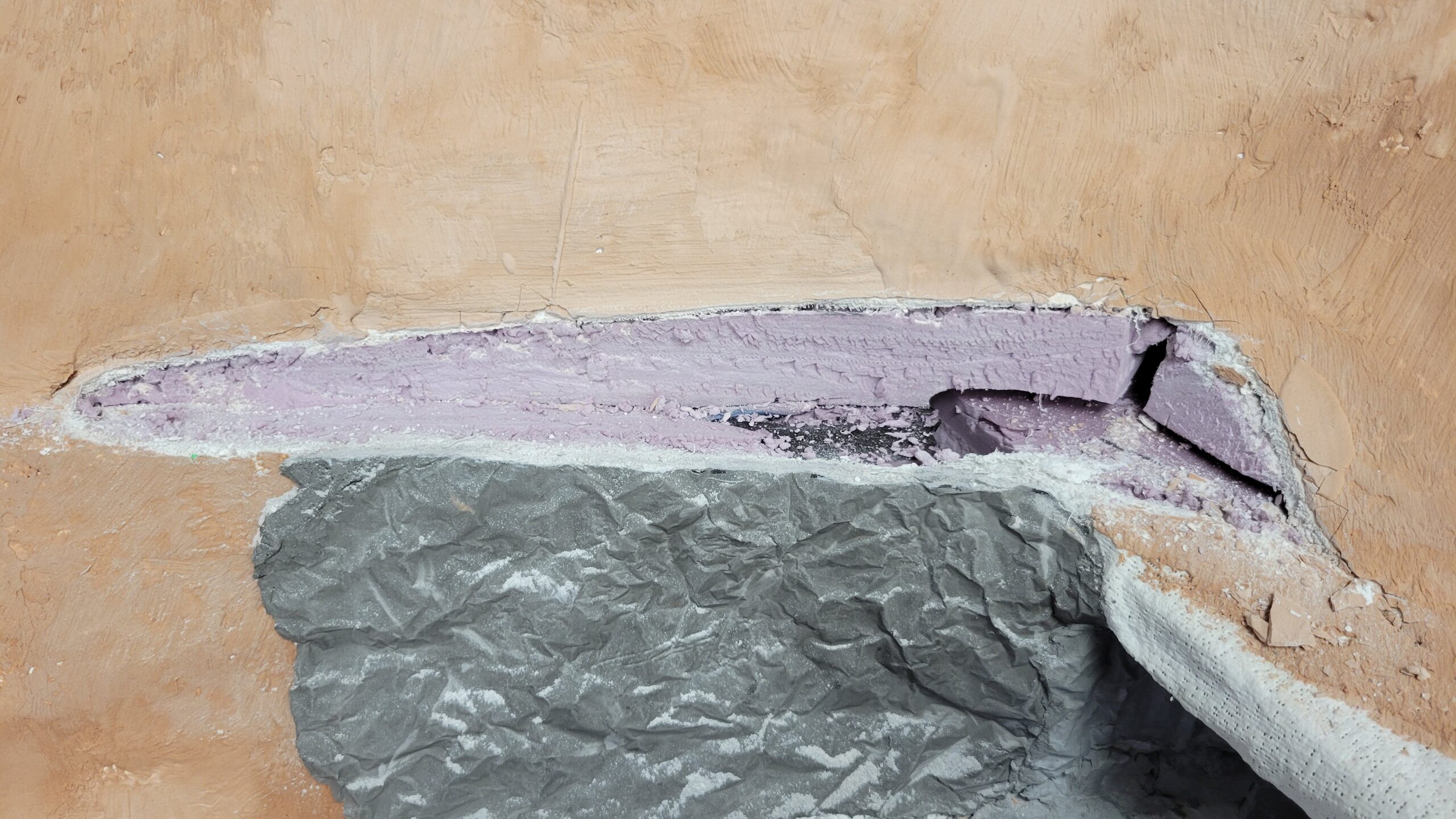
It also makes very strong molds. I cut the top of this casting to reconfigure the wall above a bit. Took me half an hour to cut through a 1/4" thick casting!
It holds mold detail very well, and is very resistant to chipping and flaking. I’m very pleased with it’s physical properties.
I bought a cheap razor saw at Michaels. It has two blades. I save one for trimming plastic scratchbuilding parts, and the other is for Hydrocal. The razor saw works great on Hydrocal.
Sounds like a good reason to me. It will kick up lots of fine dust.
Not really. I think the common term for that tool is an “Oscillating Multi-Tool”. It just vibrates the end back and forth about 1/16" or so, and can do all kinds of things.
I use mine for grout removal and flush-trimming of trim pieces. It also has a detail sander attachment, but mine is a bit heavy to use for sanding.