I have owned this engine for 30 or 40 years. It has never been fast and it was used infrequently.
Now, it appears to be binding. Runs a bit, and then stops, apparently trying.
I want to disassemble the trucks and check them and hopefully fix any problem.
BUT, this engine has no identifying marks except Part No. 0590-5 in the plastic cover.
I found pictures that are similar and some identical to this. Lionel made by Athearn and just Athearn. So, I quess it is manufactured by Athearn. It is NOT a Hi-F which is what the Lionel version appears to be.
And I can’t find any info on how to disassemble the truck and I don’t want to force it. Nothing I found resembled these trucks.
Any help would be appreciated..
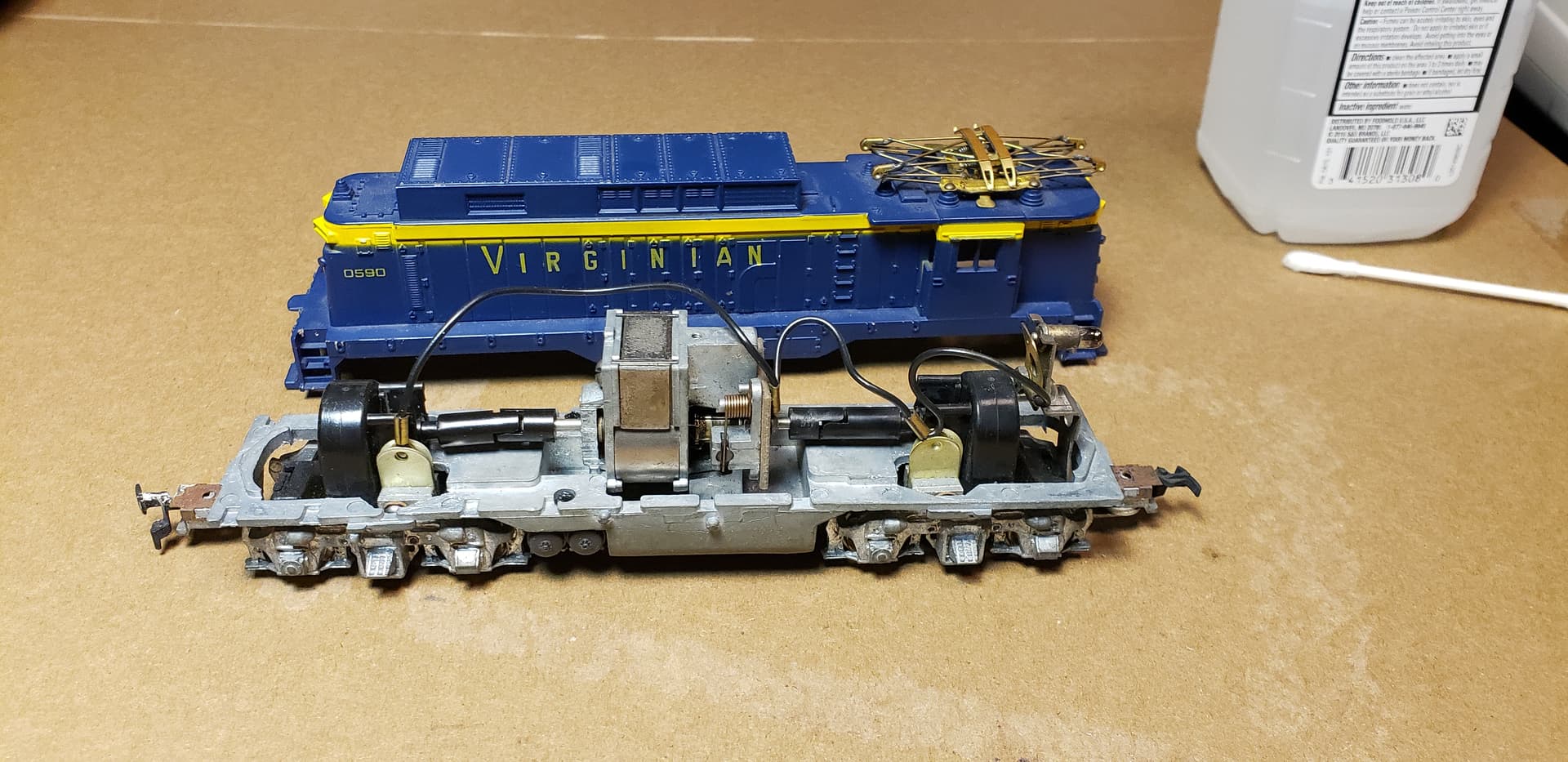
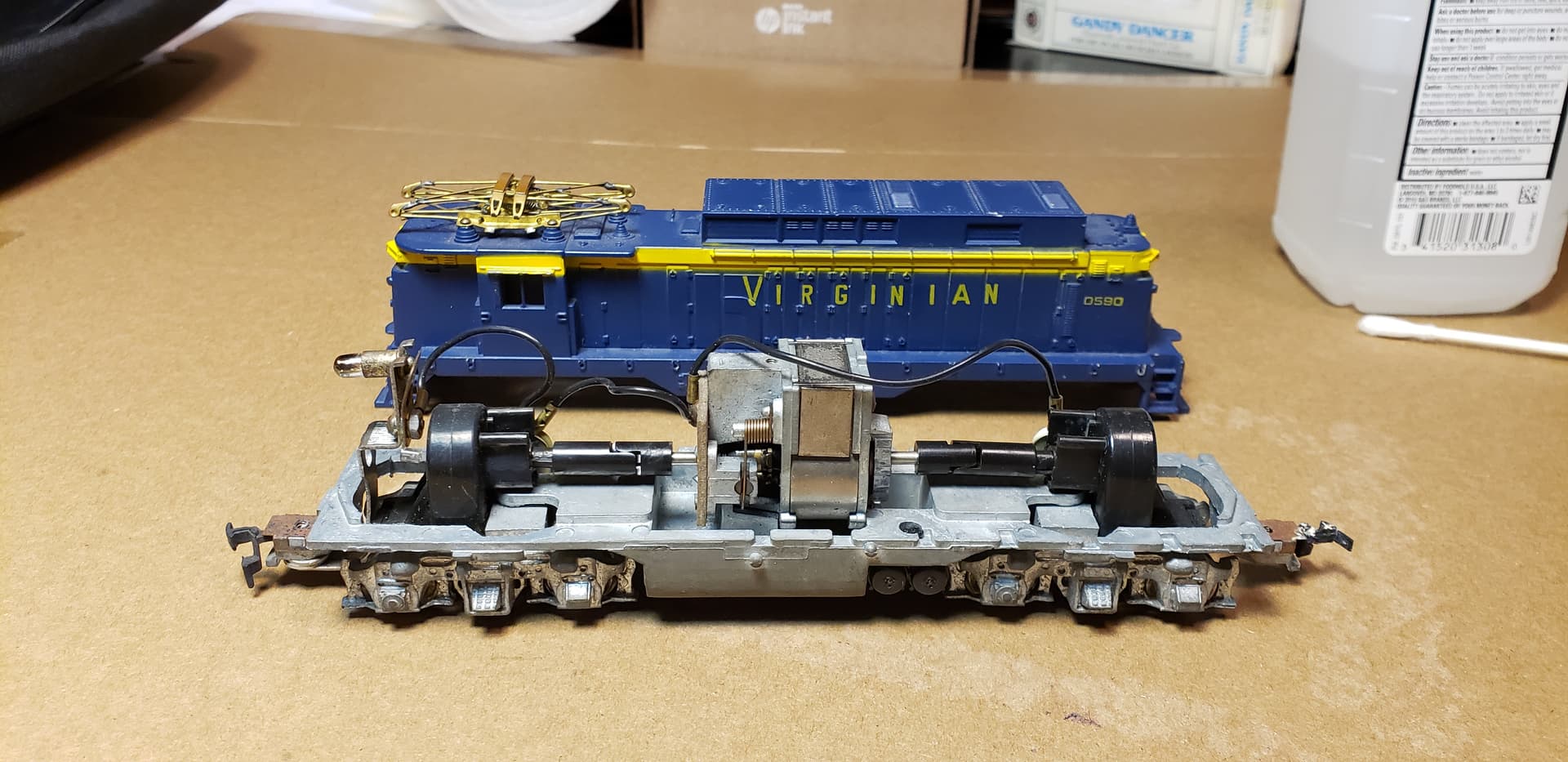
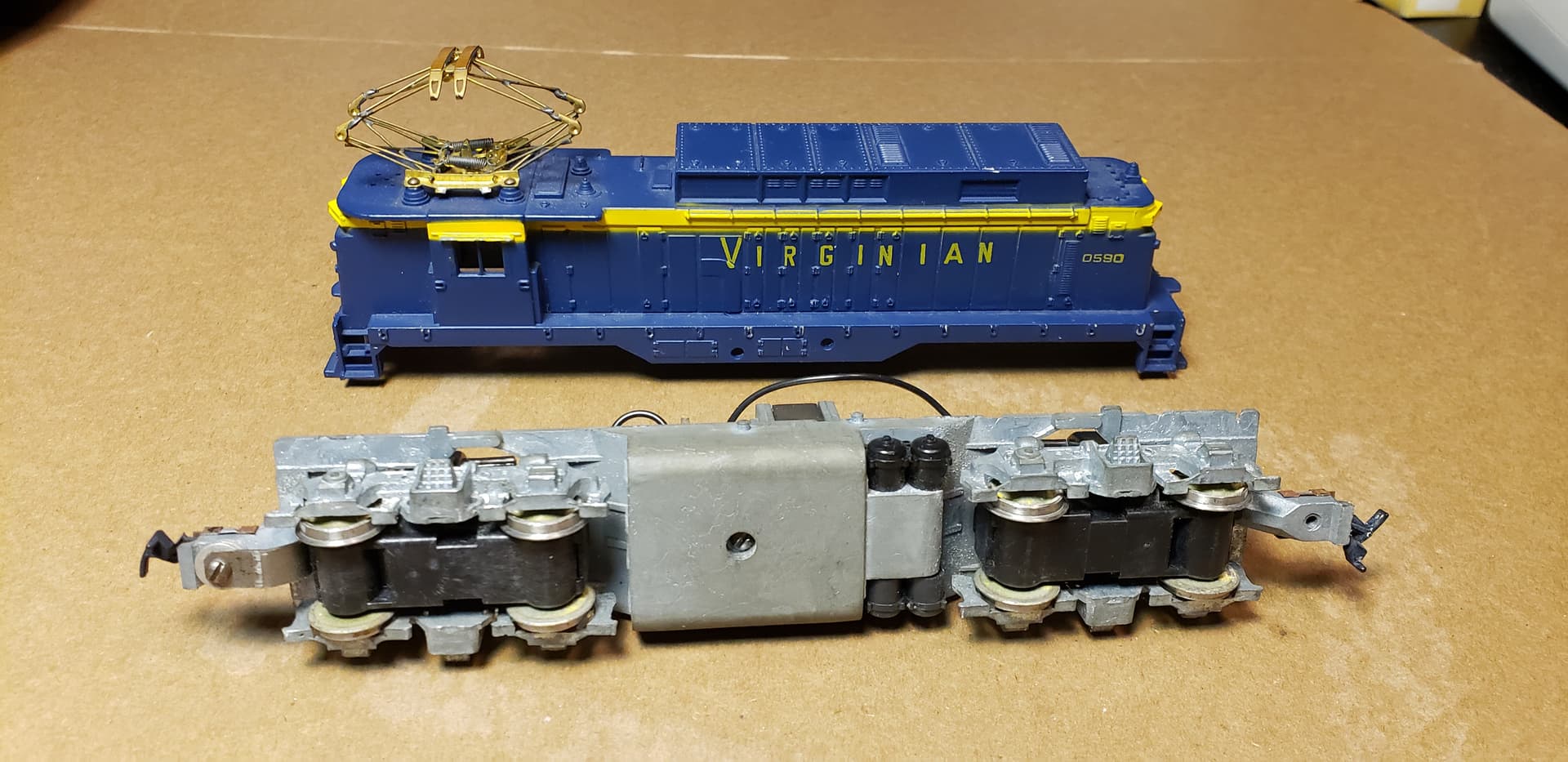
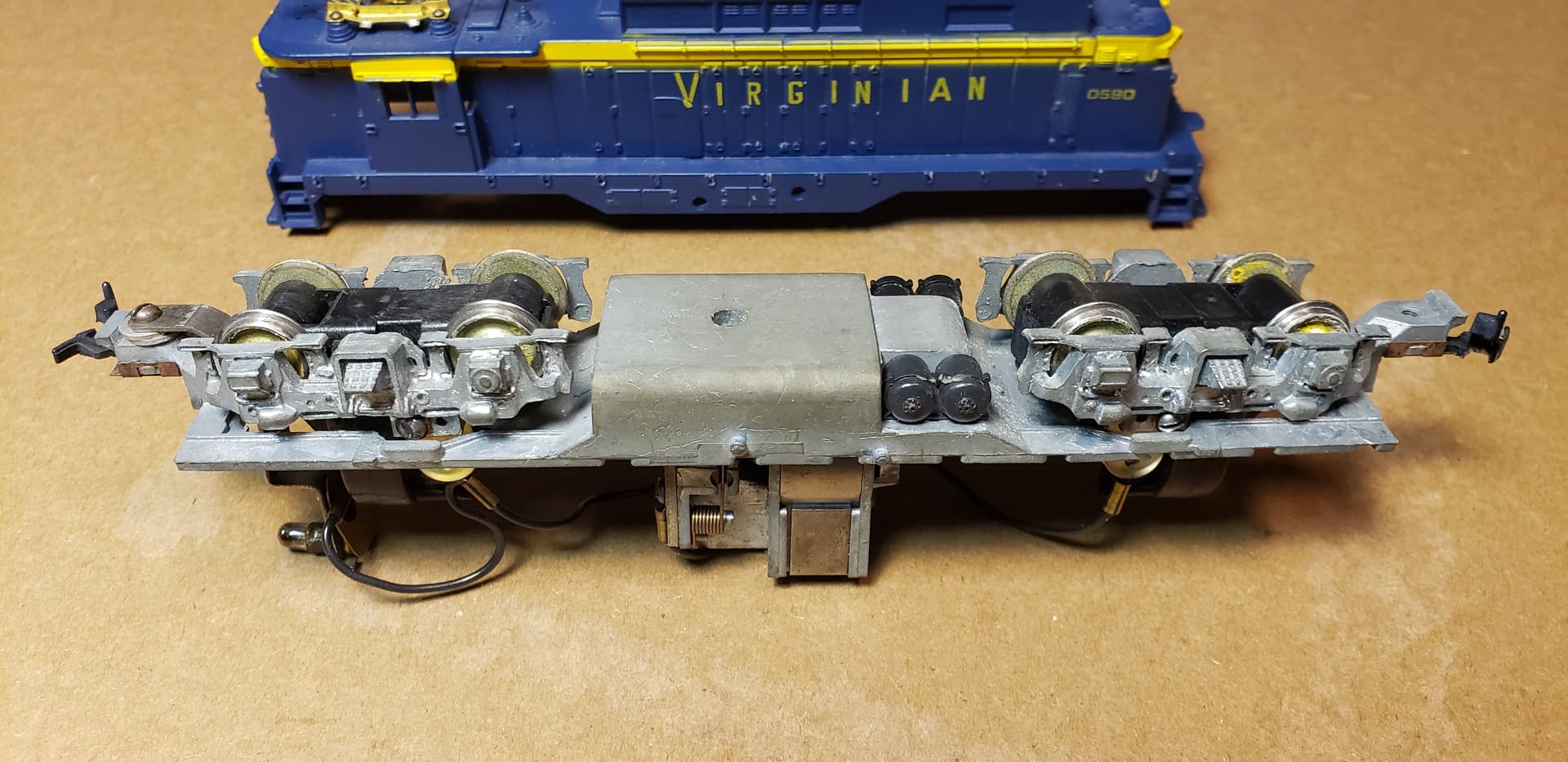
The 1958 Athearn made Lionel HO and all Athearn rectifiers are Hi-F driven locos, reusing the GP9 (GP7) chassis. ALL postwar Lionel HO item numbers started with a 0, and part numbers were ‘Item#-part#’, and since Athearn made the shell specifically for Lionel, it follows this numbering scheme.
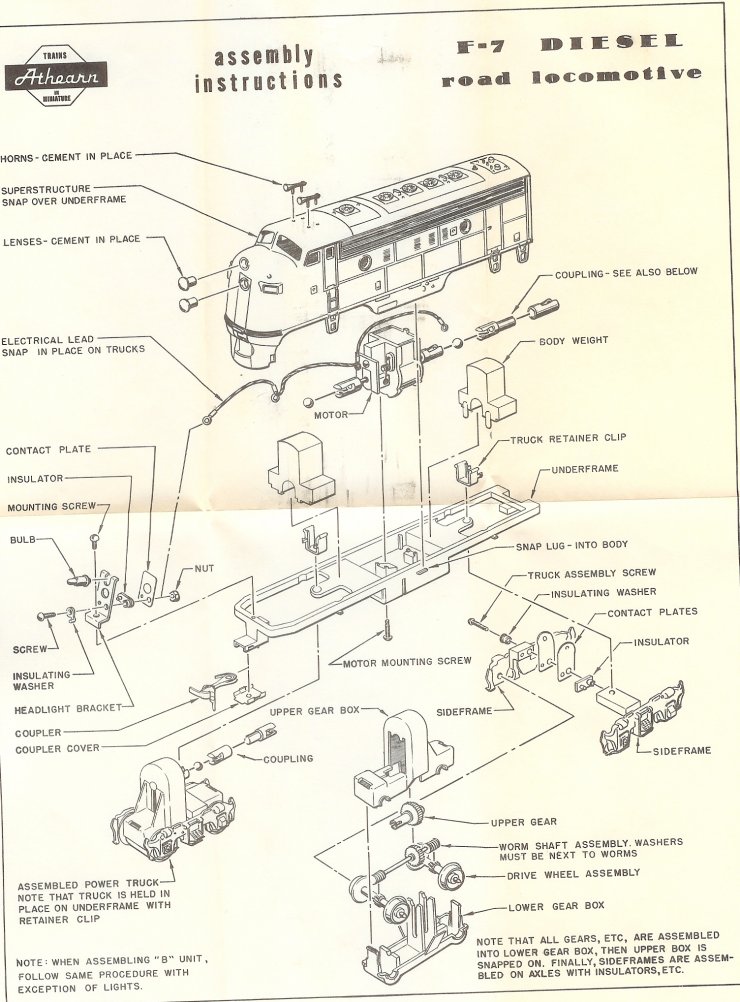
In terms of the chassis, this looks to be an early Athearn gear driven chassis. I don’t think the rectifiers were ever given this, but the GP9’s sharing the same chassis were, if the rectifiers were not offered with this chassis, someone probably swapped the chassis. I was not able to find the diagram for the GP9 chassis, but I was able to find the F7 chassis diagram. It looks like the trucks are the same between the models.
Assembly Explosion Athearn F7A Geared.jpg (740×1002)
2 Likes
Thank you so much!! That definitely looks like my frame and trucks but with a different body!!! I will post how repairs go.
Using your diagram I managed to disassemble the trucks. They snap together with 4 snap points to compress (with only two hands) and even when loose were a bit difficult to get apart. Worried about breaking one of the little clips.
All four axles have small cracks in the plastic part of the axle. The gear teeth appear fine. Everything was missing lubrication. In the next few days I will clean them up, lube and see if that solves the binding problem.
Have anyone ever seen cracked axles like this?
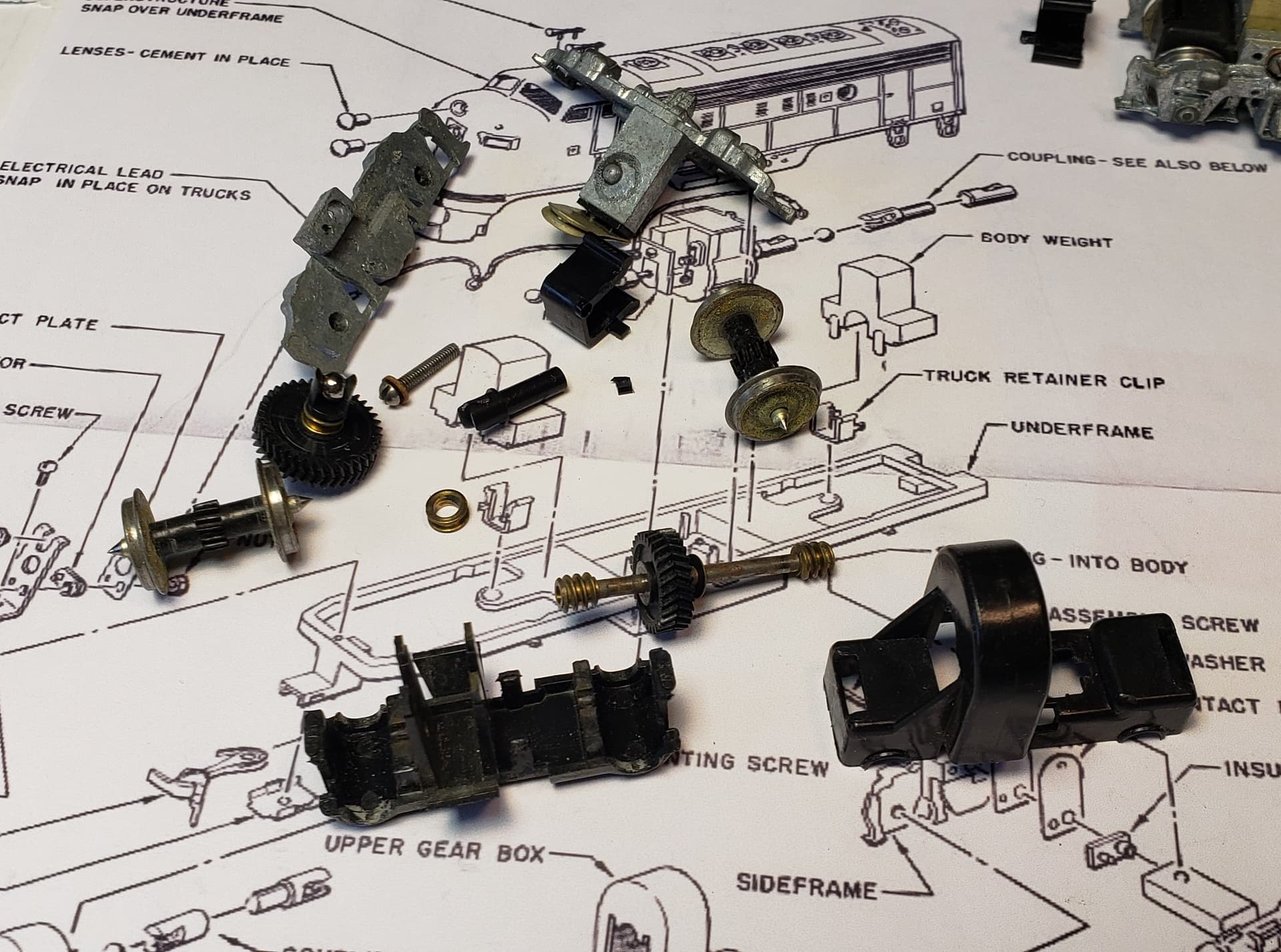
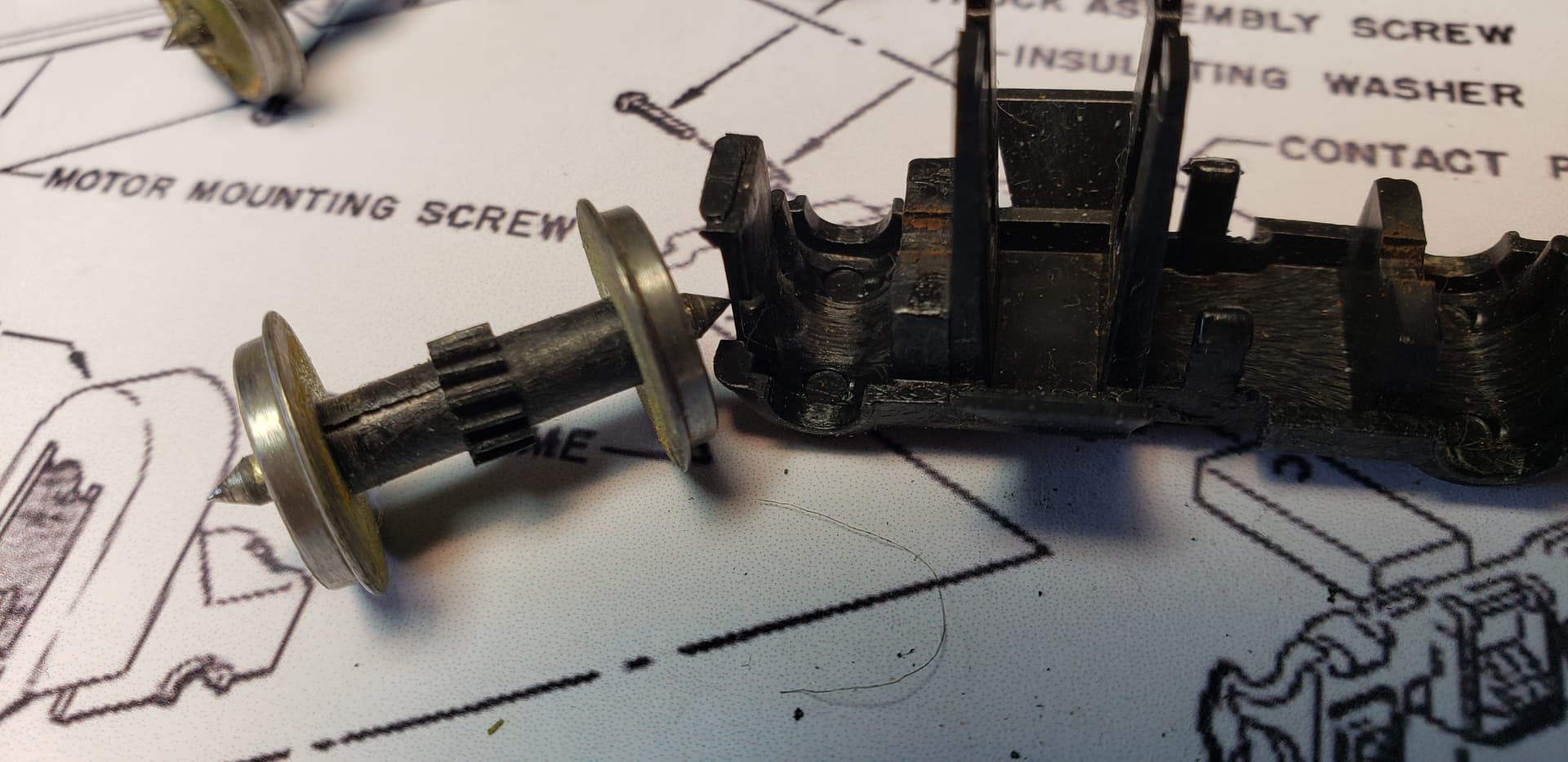
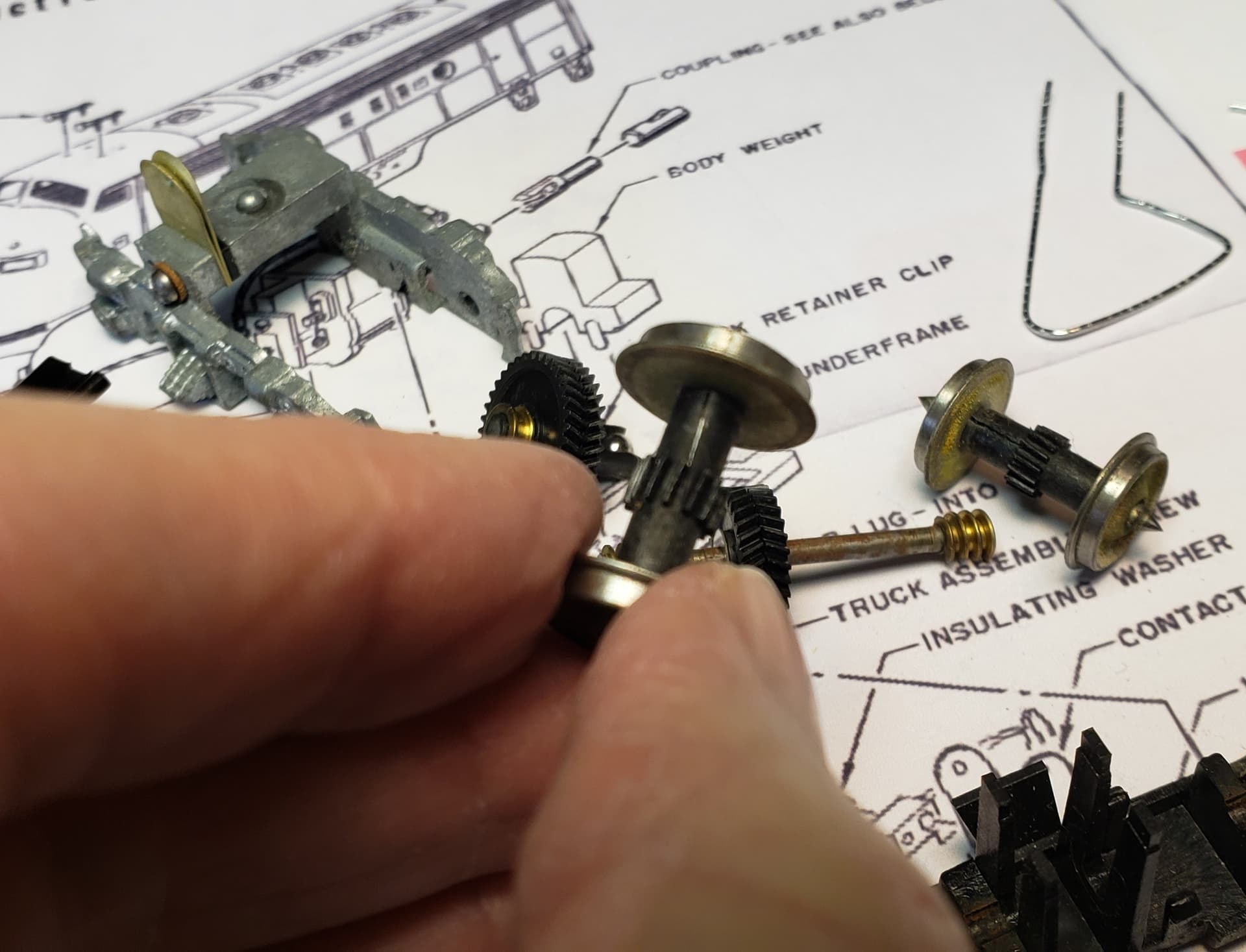
Seen a bunch of cracked axles on my early 90s HO Kato and Stewart-Kato Drive locos, but not quite to that extent. Most of the OEM replacements ended up the same. So far my repairs are holding up. Judging from your photos the axle gear teeth appear worn. But guessing that obtaining replacements would be tough at best, a shot at repairing the cracks might be in order.
Regards, Peter
1 Like
Thanks!
This engine dates from 1958 or so.
I’m going to grease and oil and see how it goes.
Well, actually I’m waiting for “plastic friendly” grease to arrive, THEN I will proceed.
The cracks in the axles seem to be the same type of problem 90s - early 2000s Bachmann locos suffered from (albeit part of the problem was the type of plastic used). What would happen is during extreme enough temperature fluctuations (mainly cold temps), the plastic axle would contract faster than the metal wheels, and because the wheels are pressed into the axles, the axles would break as they could not contract further due to the wheels being in the way. I would say leave the wheelsets and axles alone as long as the wheels are still firmly attached.
1 Like
First clue to the HO Kato plastic geared axle cracks was the inability of the wheel-sets to stay in gauge due to the loss of a tight fit between the hollow gear axle and wheel shaft. All eight of my Kato and Stewart Kato drives eventually developed cracked geared axles.
A Stewart HO Kato drive loco purchased as NOS several years ago arrived with geared axles cracked at all eight wheel-set fits. The model did indeed appear NOS and showed no signs of having been disassembled.
Kato never owned up to the defect that I’m aware of. While the dissimilar materials and extreme temperatures play a role, my guess is the main culprit is the plastic not of sufficient strength to accommodate the tight fit necessary to secure the wheel shaft long term.
Regards, Peter
1 Like
What is NOS and was Kato making axles in 1958?
Thanks for the feedback.
NOS = ‘new old stock’. Parts from the manufacturer, usually made as spare parts, as opposed to ‘aftermarket’.
1 Like
HO-Velo was just citing another example of a locomotive where the axle gear is cracked. I’ve also seen it happen on old Athearn locos (though not as old as yours).
Gear axles for blue box locomotives are available from Athearn, though last I knew they were sold out. I have no idea if they’ll work in your 50s loco.
1 Like
I’ve never seen a locomotive run “well” with cracked gears. And I’ve seen few successful attempts at gluing them back together. You might be able to find a 3D print of these gears somewhere on the Web. But there is no guarantee that these will hold in the long term.
Your best shot will probably be with NWSL. They might have a gear set that fits on your loco. You might want to send them an email or phone them.
Simon
1 Like
Clyde, Sorry about the acronym. Kato has been manufacturing model trains since the 50s, but not sure when their products began entering the North American market. Good luck with your restoration. Regards, Peter
Not a problem! Thanks for the input.
Now, I am worried that my trucks might not be usable as is and repair of the cracks seems like a lost cause. Are there entire trucks available as a replacement?
When I get the grease I ordered I am going to clean and reassemble and see how it works. Looks like the 12th for delivery.
A-Line/Proto Power West / Arrow hobbies sells Athearn replacement trucks and drives that you could probably make work with your engine. You might also consider re-motoring your engine as well. Or not, if you want to keep everything as original as possible.
NWSL and JayBee (not sure if they are still in business) make half wheel sets that would work with replacement Athearn geared axles available from many sources. Arrow Hobby, Athearn, Midwest Model RR Supply are a few of the sources.
Or you could look for donor engine / parts on eBay or at a train show/swap meet.
I recently picked up twAthean blue Box F units, primarily for their trucks, for $30.
Good luck!
1 Like
Because of how old these are, and the fact they are not the blue box era trucks Athearn is still using & making parts for, it will be near impossible to find replacement axles or trucks. The blue box axles are of a completely different design & gear size to this, so they won’t work either. Blue box trucks would in theory fit, but the frame and/or the trucks would need heavy modification (more than they would be worth). The gears are fine, so ticking or the gears slipping won’t be a problem. I have some locos I run with broken axles, worse than this, and they are fine, I wouldn’t worry about it. I’d put a drop of oil where the axles sit in the truck frame and re-assemble the trucks.
1 Like
Well, I cleaned, greased, oiled and reassembled and it runs great!!
Thanks for all the input!!
Have fun,
Clyde
5 Likes
The cracked gear is what your problem is. The old Life-Life models used wheel sets that are identical to Athearn newer wheel sets. I use the Athearn wheel sets to replace the broken Life-Like ones.
That being said, it will be hard to find the old Athearn wheel sets. It might be better to find a Athearn GP-9 frame and newer power trucks. This way you will get a smoother running model.
The body is definitely a Lionel number.
I checked my parts drawers and I do not have any of those old early 1960’s wheel sets. I do have a similar power truck set up, but the newer style gear trains were used.
I suggest to get a used Athearn GP-9 at a train show and use that for your model. Those 1970’s and 1980’s Athearn GP-9’s will have flywheels in them.
1 Like