What a nice engine----when it runs! It stops intermittingly,headlite stays on.Giving the tender a little wiggle and it’s on it’s way again.Does this every min or so in different areas of the layout.I run D.C. Think it’s just a bad connection somewhere.Anybody know? Thanks.
I don’t have the engine but if giving the tender a wiggle (I assume you mean the locomotive’s tender by the way [:-,] ) then my guess is electrical pick up from the tender’s wheels. But without having the engine in hand I do not even know what electrical pick up method they use. Sometimes it is flap of steel resting on the tender wheel’s axles. Sometimes it is through the tender sideframe itself in which case there needs to be solid and relaible contact from the axle ends into the “journal boxes” .
If you add a weight to the top of the tender deck does that take care of the problem? If so that suggests again that there is a slight gap in the electrical contacts coming from the wheels and trucks. Or that the tender wheels have some oxide or dirt or other barrier to electrical contact that the weight more or less bullies through.
Dave Nelson
Which Bach? Johann Sebastian? Carl Phillip Emmanual? P.D.Q.?
If the light stays on, you’re getting power. But, if you’re running the engine slowly it may not be enough to overcome the startup inertia and get the engine running. Cleaning and re-lubricating the gears might help, but it won’t solve the real problem.
I would give the track a thorough cleaning, as well as the locomotive wheels. Also, take a look at your track power wiring and make sure you’re not depending on rail joiners to get power from the bus to the rails. Re-seat the plug between the tender and the engine, too, if there is one.
I don’t know what loco that is, but… A) make sure all wheels, including tender are clean. B) Make sure all electrical contacts and any wipers on axles, including tender, if any, are clean. C) Make sure track, all track, is clean. From your description it sounds as though the tender may have electrical pickups? In that case you may also: D) add some weight to the top of the tender (if it is light) to see if this helps.
I would do all these before tearing into the inside. If these first steps don’t help, then a trip into the interior of the locomotive may be in order, in which case you will look for any loose electrical connections, frayed wiring, etc. If none of this helps, you may then need to determine if the motor is bad, which is the step I am in with one of my loco’s.
Hope this helps- Good luck and happy RR’ing!
Duane
cold steel,
I do know the loco you are refering to, the Bachmann B&O EM1 2-8-8-4.
First, make sure both plugs are plugged in all the way.
Second, make sure the tender wheels are clean and the wipers are making good contact on the tender wheel axles.
Third, since you are running DC, it might be a decoder glitch - do you have the sound module?
Do you plan to add the sound module? Do you plan to convert to DCC at some point?
If the answer to all of these questions is no, then I would strongly suggest removing the DCC decoder and rewiring the loco for straight DC.
I cannot give complete specifics on this, as this loco is wired a little different than older Bachmann locos, but it should not be real hard if you have any electrical experience with model trains.
There are also some capacitors across the motor leads that shopuld be removed for best DC performance, and I think on this loco they are located in the loco at or near the motor or the circuit board where the plugs plug in.
I have some info stored somewhere on this loco, I will see what I can find or you can go on the Bachmann forum and likely find the info.
Dual mode DCC decoders do not like all/every type of DC throttle, so the decoder may well be your problem.
Unless you want sound, DC locos will all run better without those decoders.
Sheldon
Of course I can’t be 100% sure or confident, but I have a range of tethered steamers across several makes. It is the tether, the first thing Sheldon mentions.
The very first thing I do when I get intermittent motion control in a steamer is to take it off the rails, lay it on its side on a clean smooth surface, and take needle-nosed pliers in hand. I place a tine beside the two outer wires on the plug, and carefully and forcefully push the plug further than it is at the moment. I can all but guarantee that your plug is not fully seated. Doing this cures 90% of my intermittent motion problems with HO steamers.
Crandell
that was the first thing I tried but problem continued. I was thinking of getting the sound module so I’d rather not remove the decoder but if I cant figure this out I wont bother with sound and subsequently remove the decoder\ capacitors if that is what it takes. Thanks guys.
My EM1 did exactly as you mention, It was one of those “pesky” little plugs and not seated properly. These 2 mini plugs are rather fragile and you really need to use care when connecting or unplugging them. I use very small serrated jaw needle nose. When installing, after placing in socket a small screwdriver was needed to seat them. I haven’t unplugged them since- not sure how many times until something brakes (wire or pins)
Had to reposition valve gear to free up a minor jamming, Not Bachman’s fault, my fat fingers slipped when rerailing.
It is an exceptional loco, otherwise. Excellent performance from stop, crawl to top speed/ Pulls 35 heavily loaded hoppers up 2%, 60 hoppers on level track.
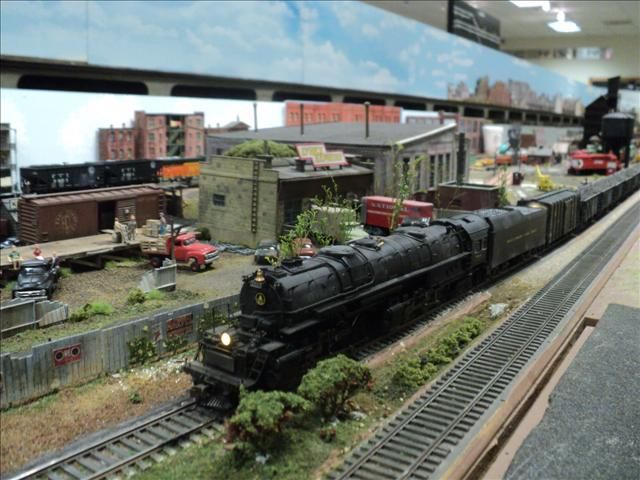
Pics before weathering- sure did need it
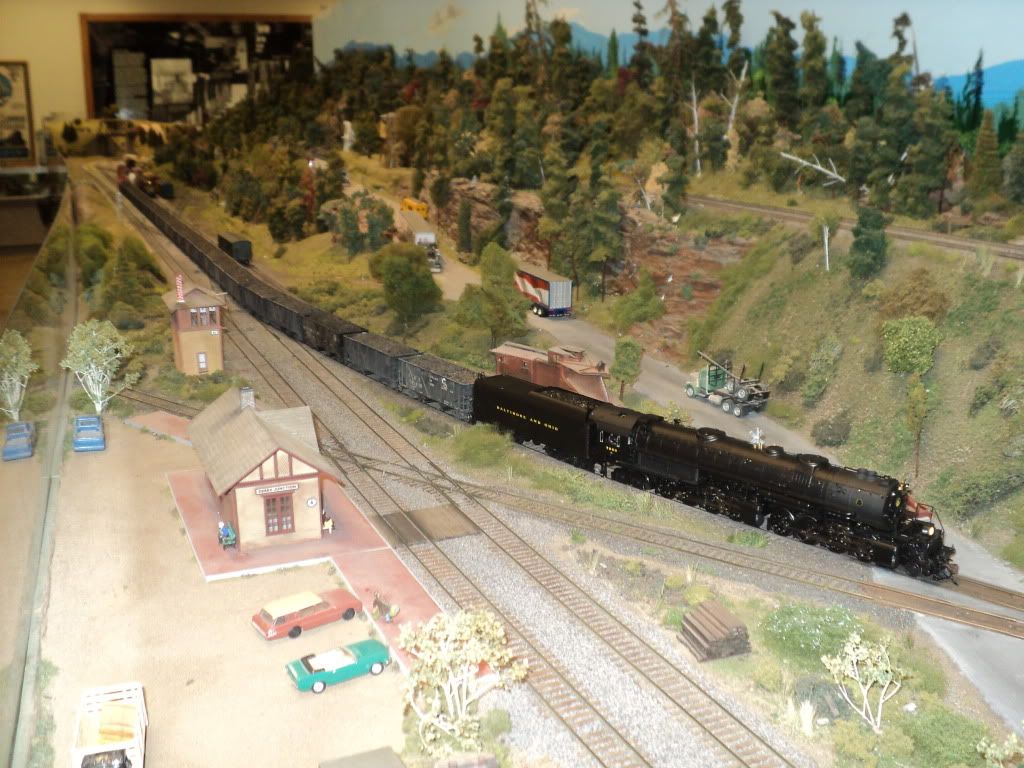
Yep,a little weathering really helps show off the running gear,not the best picture but the only on were she’s sitting on the track lol
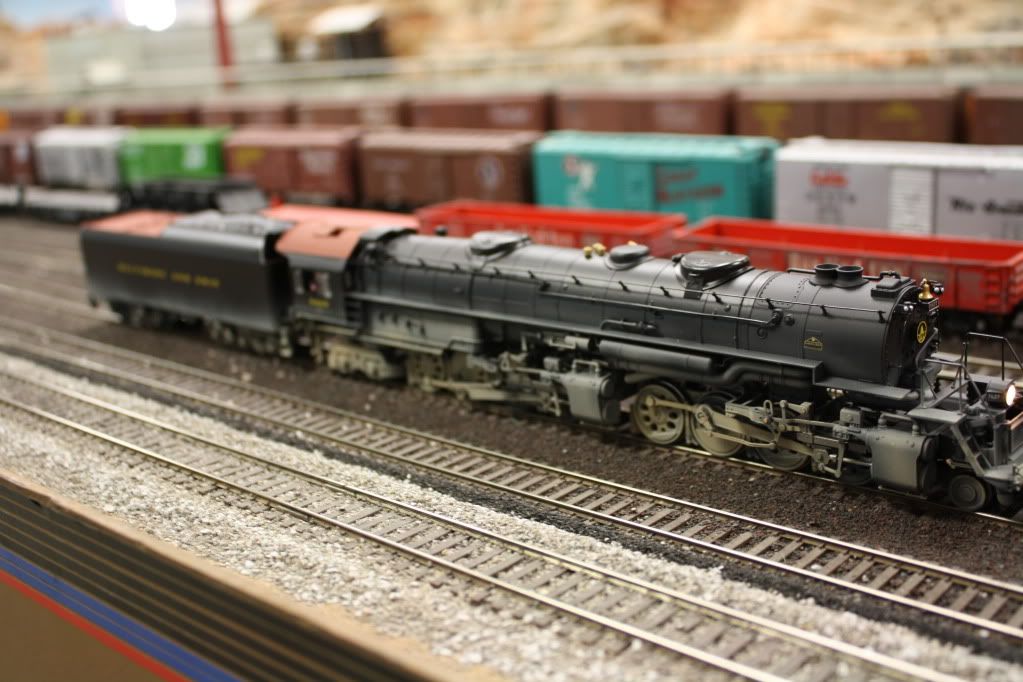
I also painted the cab roof and tender deck oxide red,don,t know if the B&O ever did that but its my locomotive…
When I read the original title of this thread: bach. E.M., I was totally confused as to what the thread would be about. I thought maybe the OP was talking about Back E.M.F. and maybe wasn’t a very good speller. Oh well!
The B&O EM1s ARE great looking locomotives! For the price you paid, I hope a fix is easily found and would be very interested in what you determined to be the problem!
If you’ve got a meter, set it to “continuity test” or ohms and check that all the pickup wheels are connected to each other on each side. If you don’t have a meter, get one.
Does this stalling happen at all speeds, or only when running slowly? Does it happen at certain spots, like on turnouts?
Watch it carefully. Does the light really stay on, or does it flicker before the engine stalls?
I don’t have this engine, but many Spectrum engines have an apron that folds down between the rear of the cab and the front of the tender. You need to put the apron all the way up, then put the engine on the track, and then reach in with a pencil or screwdriver etc. and fold down the apron. If you don’t do it that way, the apron can hook up under the ‘lip’ at the front of the tender deck, causing the front of the tender to rise up slightly and causing problems like you describe.