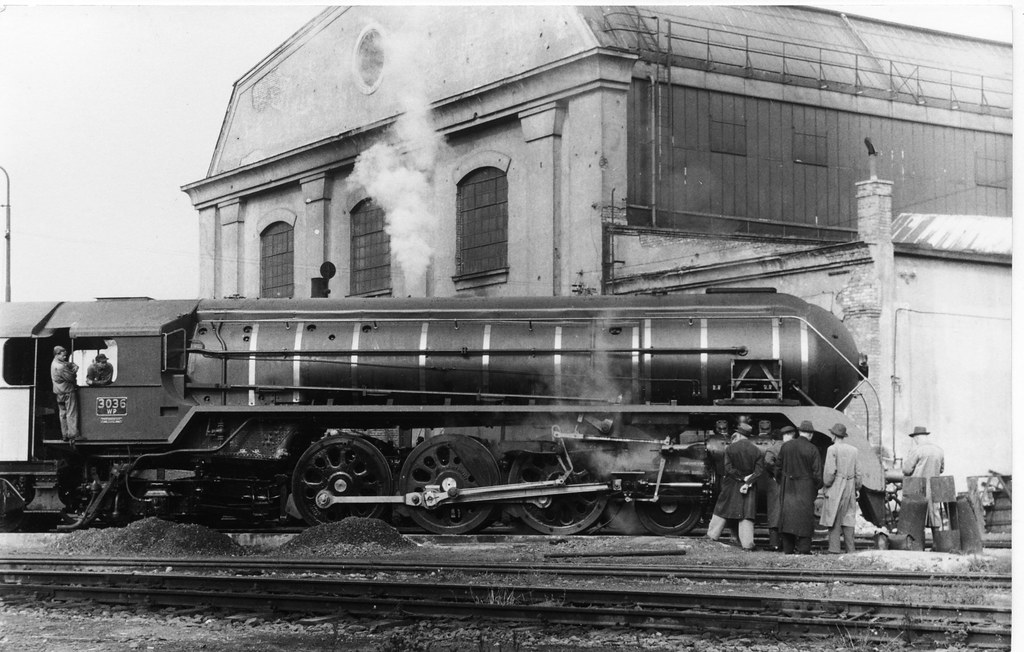
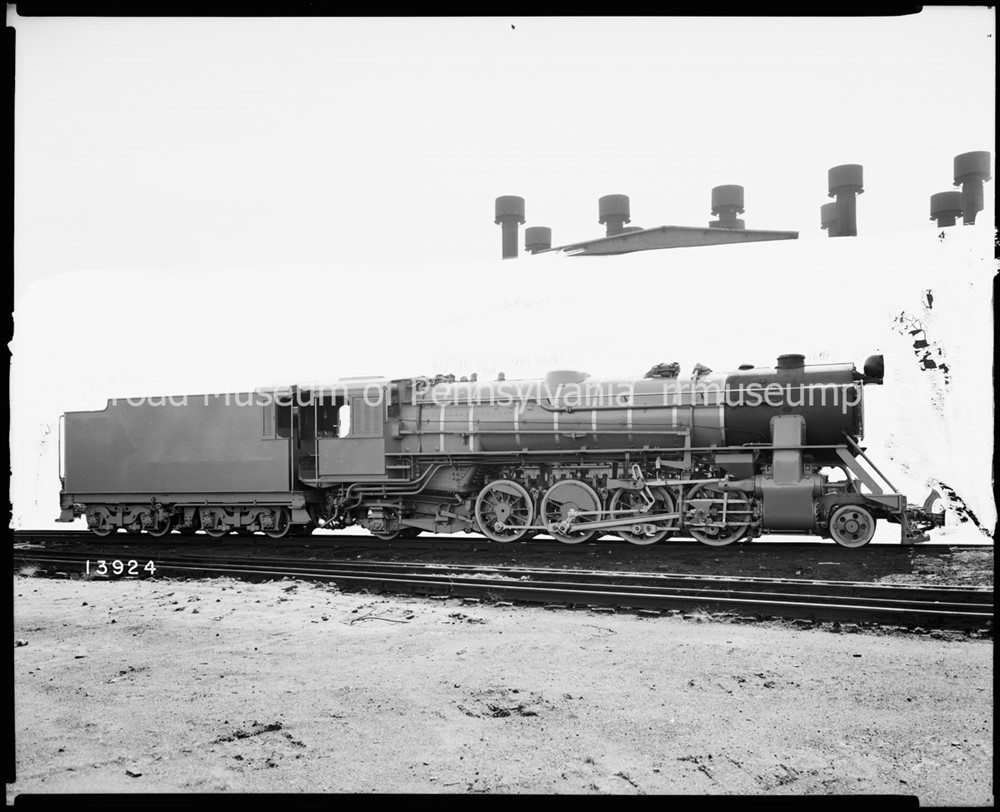
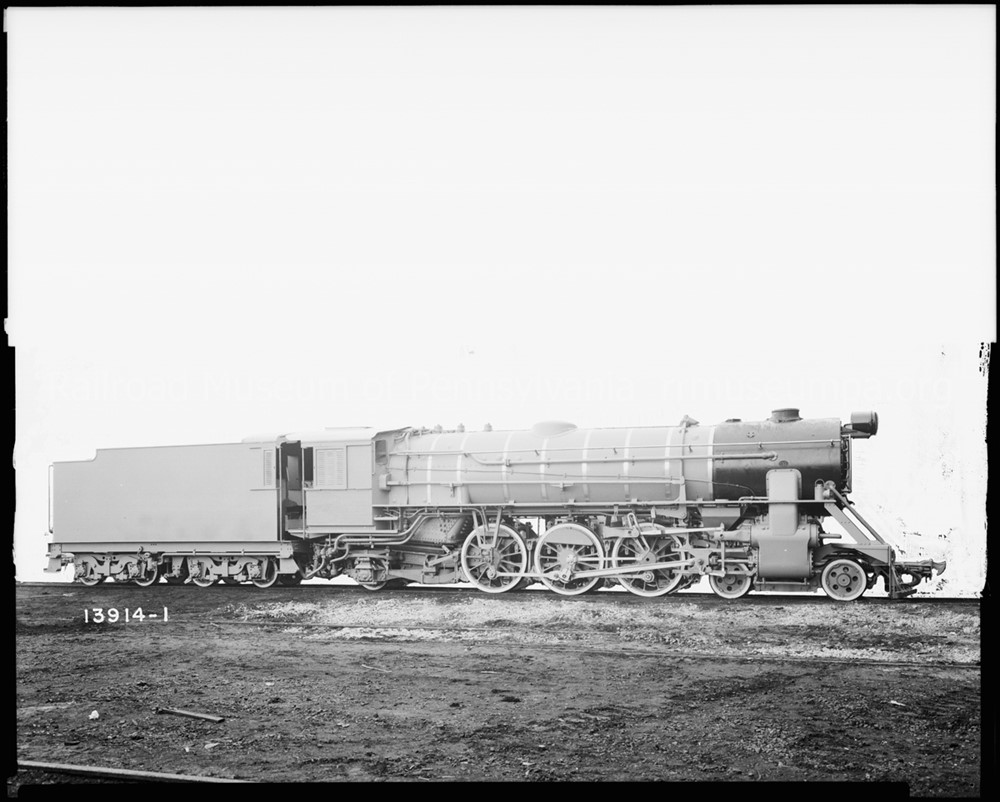
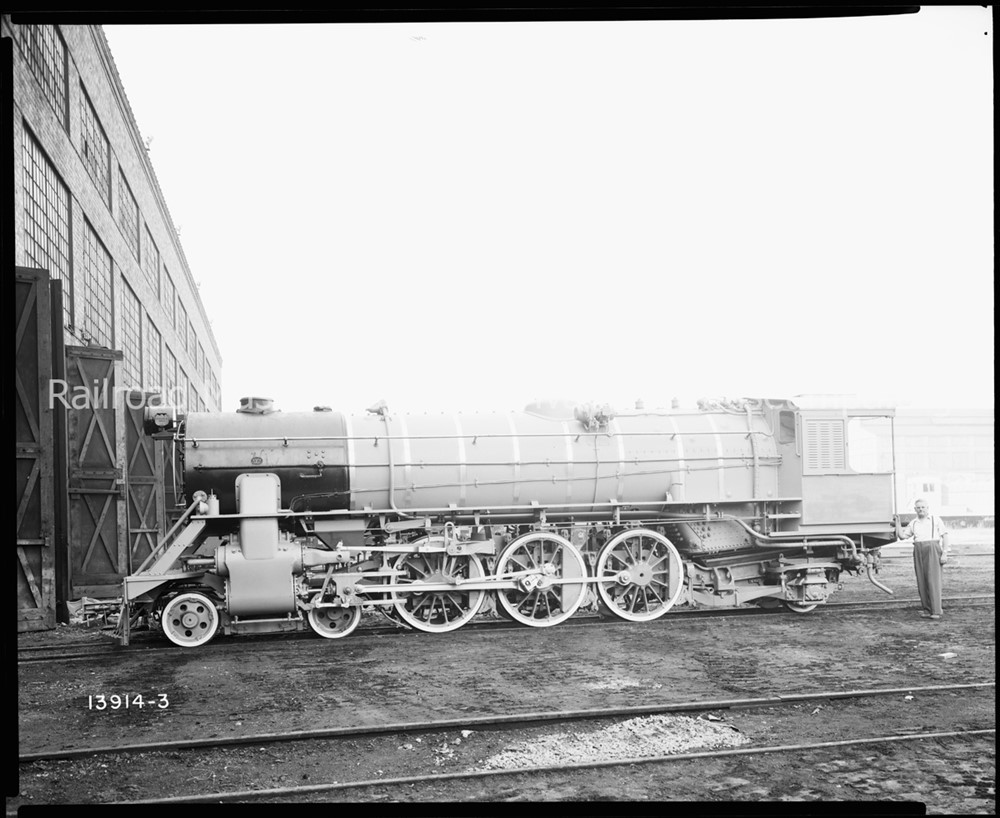
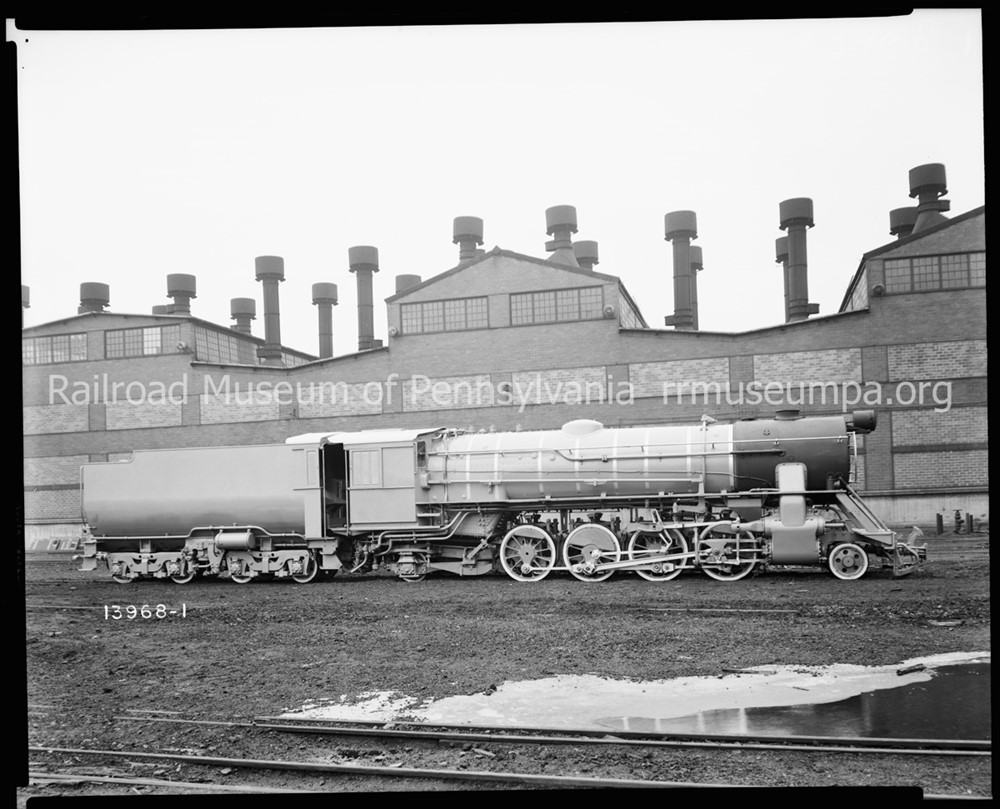
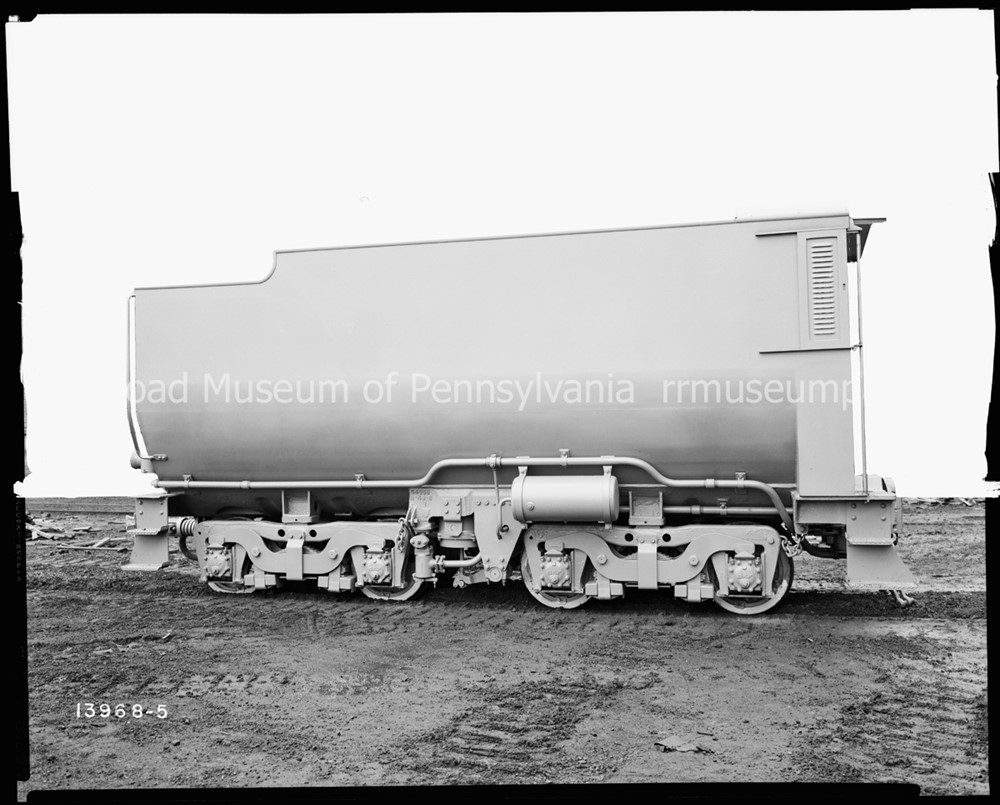
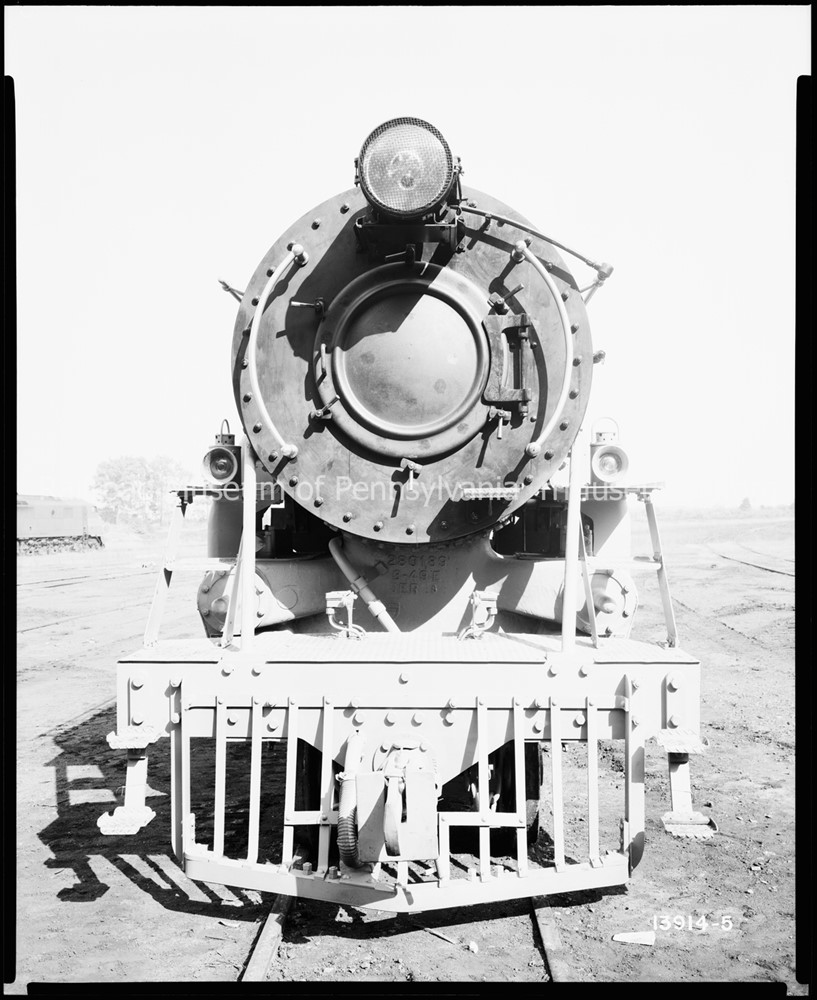
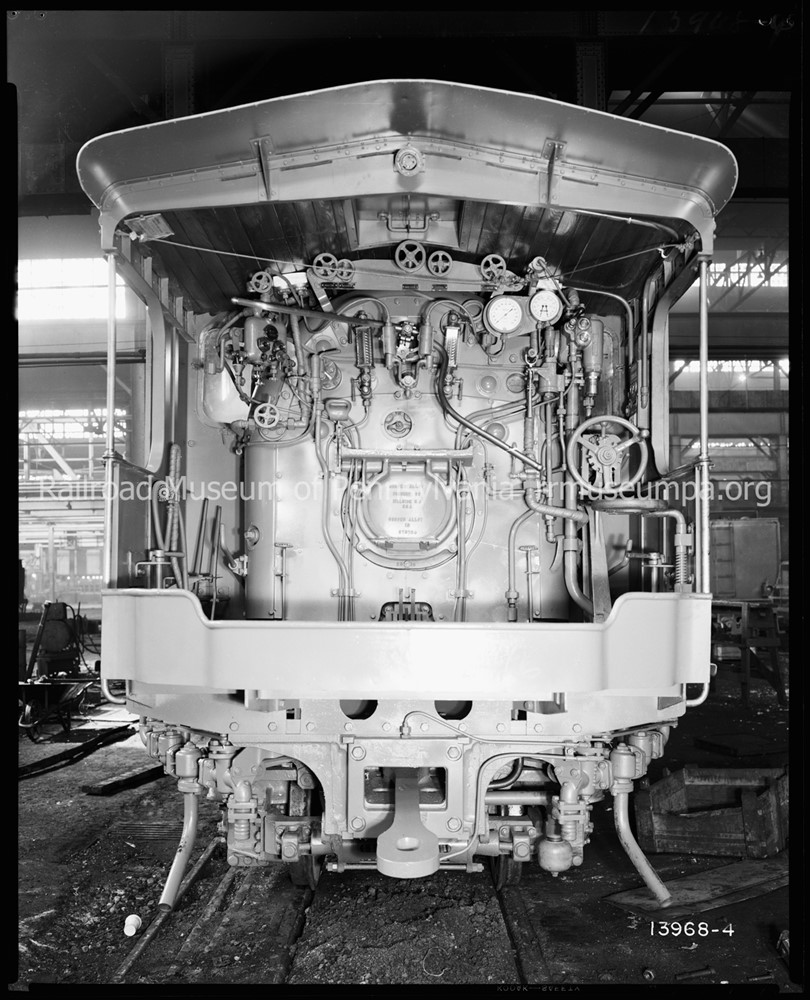
I found some pics of Indian locomotive class WP from rrmuseumpa. 116 out of 755 of these streamlined locomotives were built by Baldwin from 1947 - 1949, another 300 were built in Canada from 1949 - 1959. Light Pacific for passenger trains with 67 inches drivers, capable of reaching 68mph. TE was 30600lbf, power output was 2680dbhp at 74mph(est.). No mechanical stokers, probably not equipped with roller bearings. (correct me if I am wrong)
This was not the first time Baldwin export steam locomotive to India; other orders in the same period were 33S118 class locomotives and 253 (?)2-8-2 MacArthur dual-gauge engines in three gauges. (according to americasteamlocomotive.com) I am not familiar with India’s railroad history, your contribution is very much appreciated![tup]
These were some substantial overseas orders for Baldwin during the era of steam locomotive’s demise in the States. Chesapeake & Ohio 2-6-6-2 Mallet was the last 10 domestic steam locomotives built by Baldwin in 1948 for America at the same time period. I guess these were some of the largest orders for Baldwin after the 50 PRR T1 ordered in 1944.
No worries, Penny Trains! these machines wouldn’t be sweating even though the cargo hold was packed like sardines! But the smell of the fresh primer might made people felt dizzy if the door of the cargo hold was closed![:)]
It probably took the ship more than one month to travel from the States to India. If I was a crew on this ship, I would have slept inside the cab of these locomotives firebox or smokebox if they were not blocked. If I got fired for this, I will leave the ship and worked as a steam train engineer until 1970s! [8D]
I can’t see the comb over headlight thing you mentioned. I think it was the shadow makes the engine you see looks different. Speaking of Dreyfuss Hudson, I wonder how the work shop in India would have painted and decorated the Hudsons with their unique India styling. : )
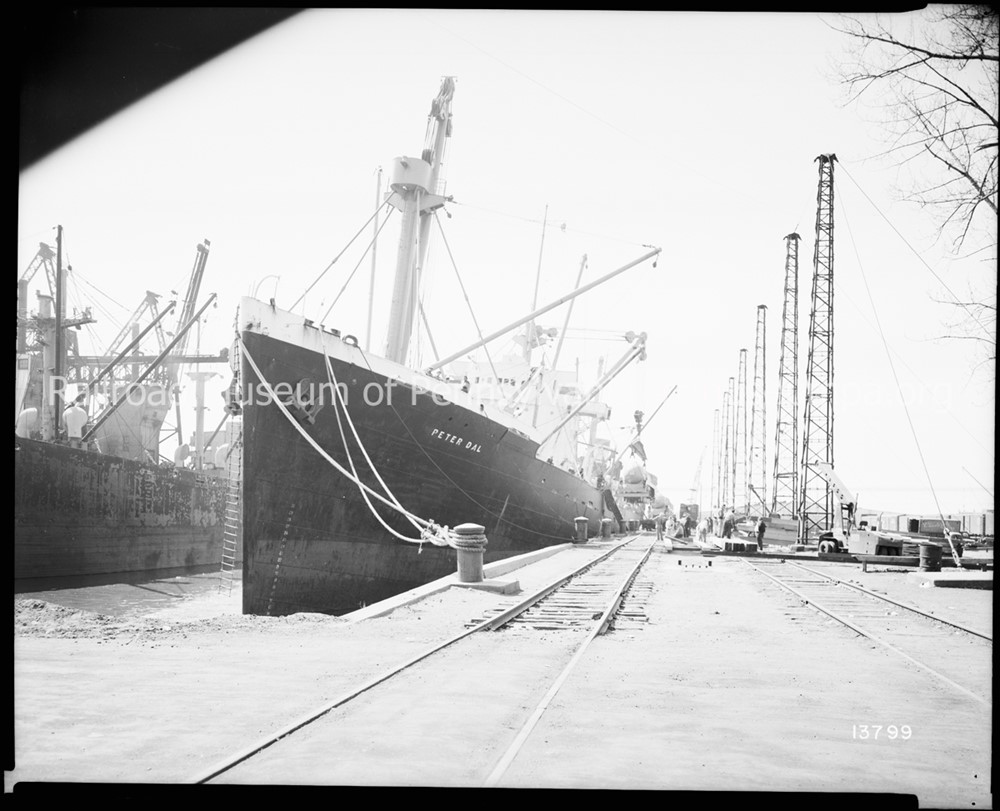
The ship used to take these Baldwin products to India.
That locomotive is like the other ones; what you see is the shadow of the beam immediately above. (Like the cool "paint job’ on Mr. Klepper’s ART reefer picture on the other thread…)
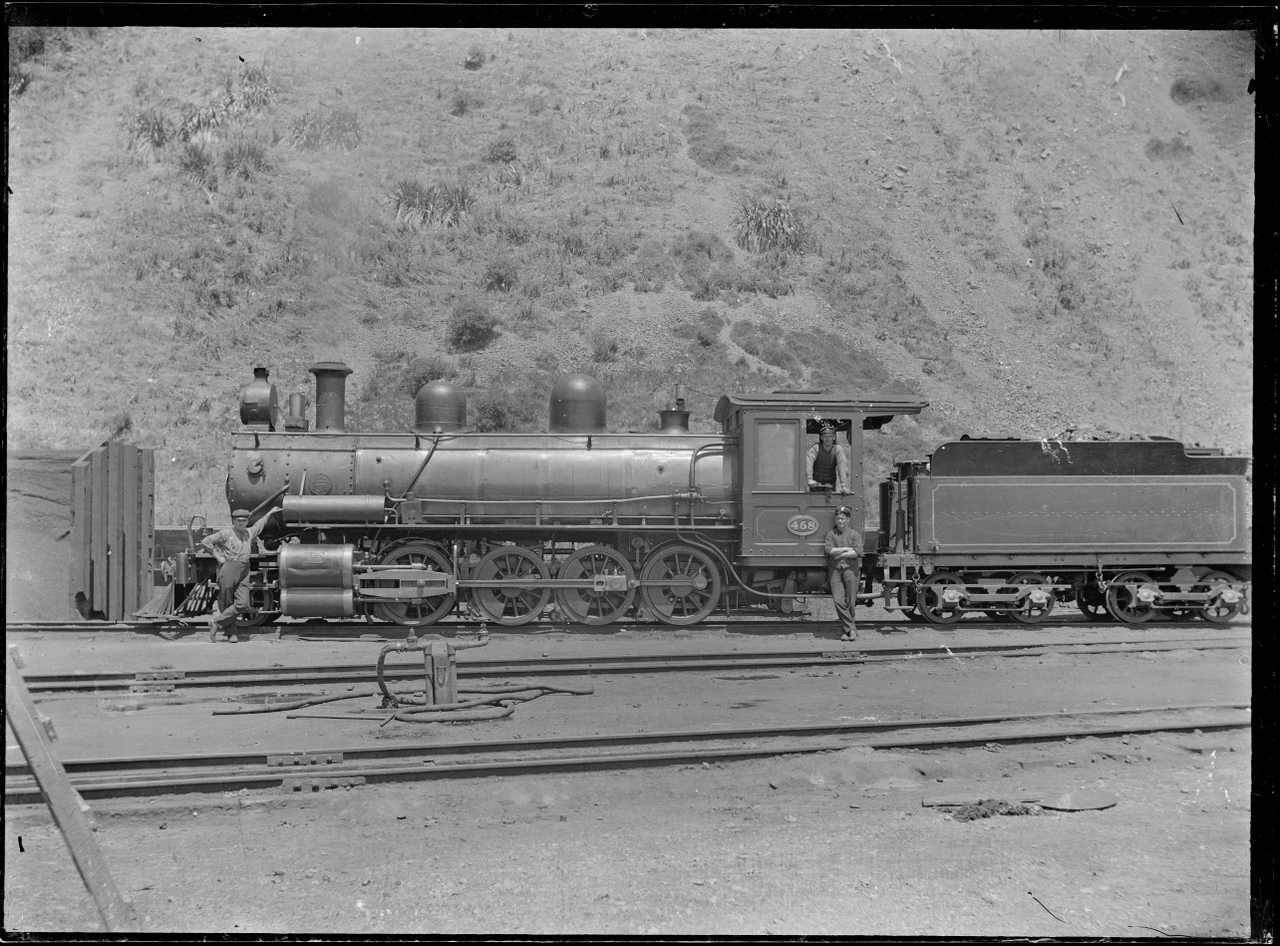
Perhaps the greatest export triumph for Baldwin was the power built for the Wellington and Manawatu in New Zealand.
If you are talking about the NZR OA and OC class, I agree that their TE figures were compelling for export engines used in New Zealand. 13,175 lbf for OA class, 15,110 lbf for OC class. Another two was NZR UD class built in 1904, TE was 15,280 lbf. I think I need to invest some more time in early steam locomotives!
( Missed the NZR Q class (1901), "the first locomotives i
The Wellington and Manawatu certainly had interesting locomotives, and the last two 4-6-0s, 19 and 20, NZR class Ud were quite impressive.
But the NZR had many more Baldwin locomotives than the W&M, the two classes of Baldwin Pacific, the Q and Aa totalled 23, more locomotives than the W&M ever owned. There were twenty Ub class ten wheelers from Baldwin which, while not as large or fast as the Uds, lasted much longer and earned their keep.
The W&M was a private railway and had a measure of support from those who opposed Government ownership.
But Baldwin earned more from the NZR, and the Q as one of the first true Pacifics was more influential than anything on the W&M.
I just read about the world’s first true Pacific 4-6-2: NZR Q Class (1901). It is a surprise to me that the first Pacific was built for NZR. Wiki says Baldwin Built 111 steam locomotives for NZR and the WMR since 1879. But British companies were the top suppliers all along. [C]
I found some pics of Indian locomotive class WP from rrmuseumpa. 116 out of 755 of these streamlined locomotives were built by Baldwin from 1947 - 1949, another 300 were built in Canada from 1949 - 1959.
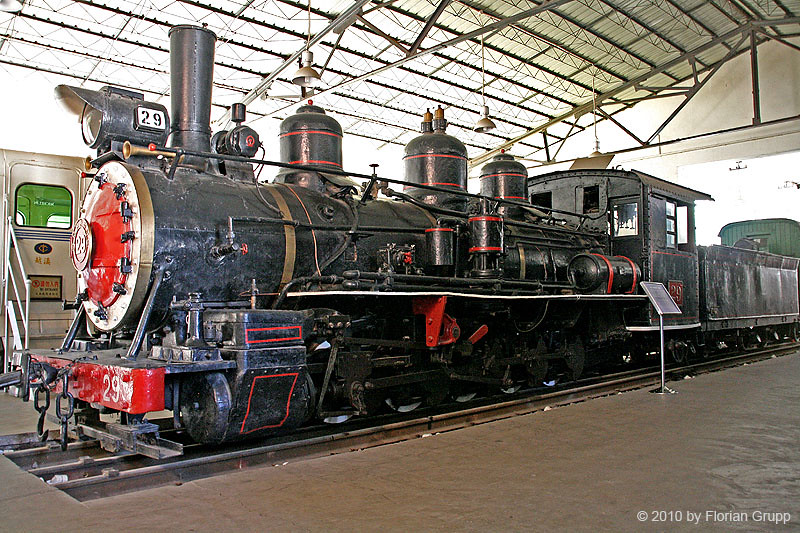
Looking at the first three photographs, two distinct versions of the locomotive can be seen. The first and third photos represent locomotives 7200 to 7215 built in 1947 The second photo represents the “production” locomotives built in 1949 numbered from 7216 upward.
The first batch, later known as class WP/P (for prototype) had conical casings over the smokebox door with a smaller opening section to access the smokebox door. This made them more closely resemble the New Haven I-5 “Shoreliner” locomotives, and even more the 1943 New South Wales streamlined C38 class which had many features in common.
Three hundred locomotives were built in 1949, 100 from Baldwin, 80 from Canadian, and 120 from Montreal. Canadian later supplied another 120 as aid under the Colombo plan in 1955-56.
Sixty more came from European builders in 1957-59 with lower numbers starting at 7000. All the remainder in block ending at 7754 in 1966 were built at Chiittaranjan in India.
The WP was the heavier of the two standard Pacific designs. The lighter was class WL which had a smaller boiler and smaller cylinders and was not streamlined. these were numbered
Thank you very much, Peter! If you didn’t point it out, I wouldn’t notice the first 16 prototypes had a different, stylish front end design. The really looked like New Haven I-5 and NSW C38 with their “flying saucer” style smokebox door.
It was a rather large overseas order from India, I wonder if Baldwin ever fight for more quota or they couldn’t handle more at the time. By the way, I need some time to study about the un-streamlined batch before posting.
It was a rather large overseas order from India, I wonder if Baldwin ever fight for more quota or they couldn’t handle more at the time.
The most likely reason that Baldwin received less of the WP production order was that orders from Baldwin required US Dollars while orders from Canada could be paid for in Sterling (British Pounds).
This shows up in the orders for Indian AWD and CWD 2-8-2s.
Baldwin supplied 225 in 1944 and 1945
Canadian built 250 between 1943 and 1949
Montreal built 337 between 1943 and 1948
These were based on the locomotives built for use by the British Army in Africa and the middle east.
Thank you very much for the list, Peter. It clearly shows that Baldwin did earn some good money from India in the 1940s, although they were light Pacifics and Mikados, the quantity was considerable! Before we move forward to the early history of Baldwin’s export steam locomotive for India. Let’s take a look
I remember there is an important movie line for Captain Smith in the movie Titanic(1998) “…Take her to sea, Mr. Murdoch. Let’s stretch her legs!..”; a movie which I was forced to watch with a different group of people for at least 4 times in 1998. Kate Winslet showed us more than legs stretching and I saw Mr. Murdoch shot himself 4 times. [C] It is a nice movie but I still prefer Lucy to Kate Winslet. I might have found Christopher Reeve and Jane Seymour on the Lusitania. [~]