I use this method on several areas or my layout. Just break the tiles over the edge of your workbench or irregularly and stack up. They do soak up a lot of your base color of paint but make nice looking outcroppings. I don’t see this method mentioned much anymore compared to cast plaster rocks which I also use. I would post pictures but have never figured the process out for this forum though it has been explained many times.
Interesting technique that would never occur to me. Be sure to use relatively new tiles; i.e., those made into mid-70s could contain asbestos.
This method of modelling rock outcropings has been around since at least the 50s. It can be very effective. The August 2014 issue of MR had an article on another “new” modelling method, using tree bark to model rocks. We oldtimers used these techniques. The advent of commercally available rubber molds for casting rocks pushed the tile and bark methods aside.
I started with the broken tile method, since I model north west Illinois, but now I use carved plaster of paris. I get an infinite variety with this method and a 10 pound bag goes a long way.
If you want to give the ceiling tile method a try, before buying perfectly good tiles ask the supplier if they have any broken tiles. You might get lucky.
I can attest to how easily the tiles break. When I worked for Home Depot we were throwing out two or three tiles almost every day.
Dave
Hi
Whats old is new again I read about this when I was a teenager along with cork, making rock moulds no comercial ones back then any one remember using tin foil to create rock moulds
I am 50er something now[:D]
regards John
Here is a sample of rock made out of broken ceiling tile. it was coated with a light coating of plaster and the painted.

Yes, this method has been around for a very long time. Back when I was in graduate school in Indiana in the early 1990’s I tried using it on my garage layout. It totally depends on what kind of rock outcrop you are trying to imitate in nature. I’m a geologist by training (BS and MS) but all you have to do is try to imitate what you observe. I’m planning on doing sandstone outcrops in Ruby Canyon in eastern Utah on the D&RGW, so broken ceiling tiles won’t work for me. However, for limestone, it could be good.
An example on a previous layout in the 1990s. The area to the left of the timber retaining wall is broken up suspended ceiling tile.

Some more broken ceiling tile rocks.
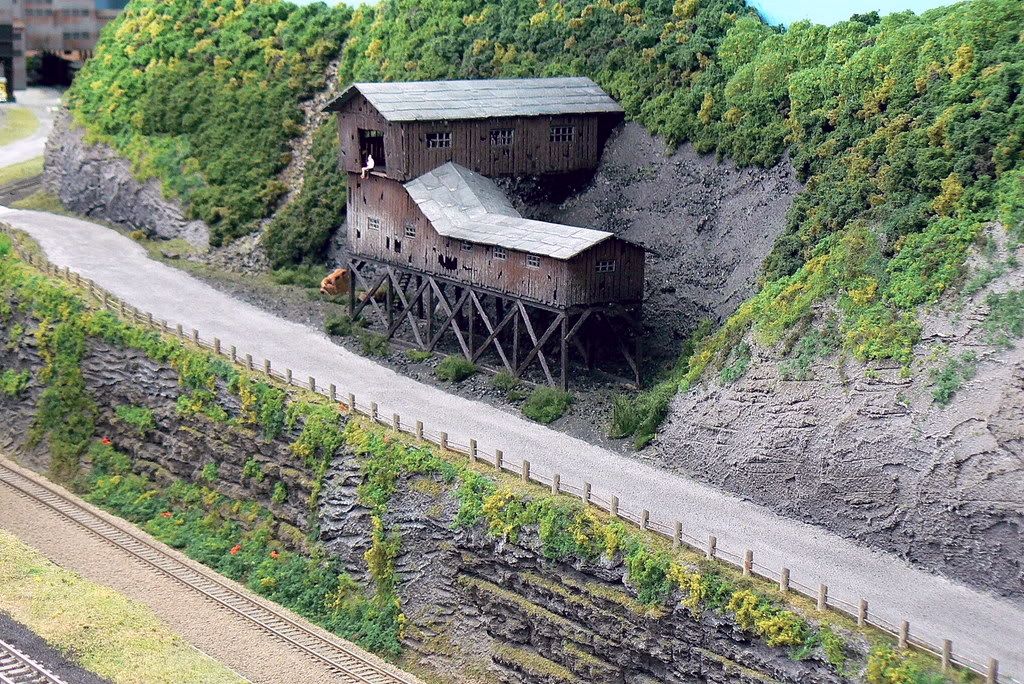
Thanks for the pictures. They look great. Just wanted to point out how realistic this method is and cheap. As others have mentioned, if you don’t have any tiles lying around you can get them free or very cheap at building supply stores.
Yes, nice pictures. As you can see the forums is mostly long in the tooth modelers but you never know, there are a few beginners around who can learn from them! Heck, I’m oldish but still haven’t much hands on experience with scenery so working on that now.
Creating outcroppings from ceiling tiles is also something I heard about at a scenery clinic. There were plenty of head nods, which is a strong indicator that others did that on their respective layouts.
Breaking the tiles at different widths can create the impression of realism. I try to make the croppings using plastic rock croppings made from plaster of paris secure to cardboard.