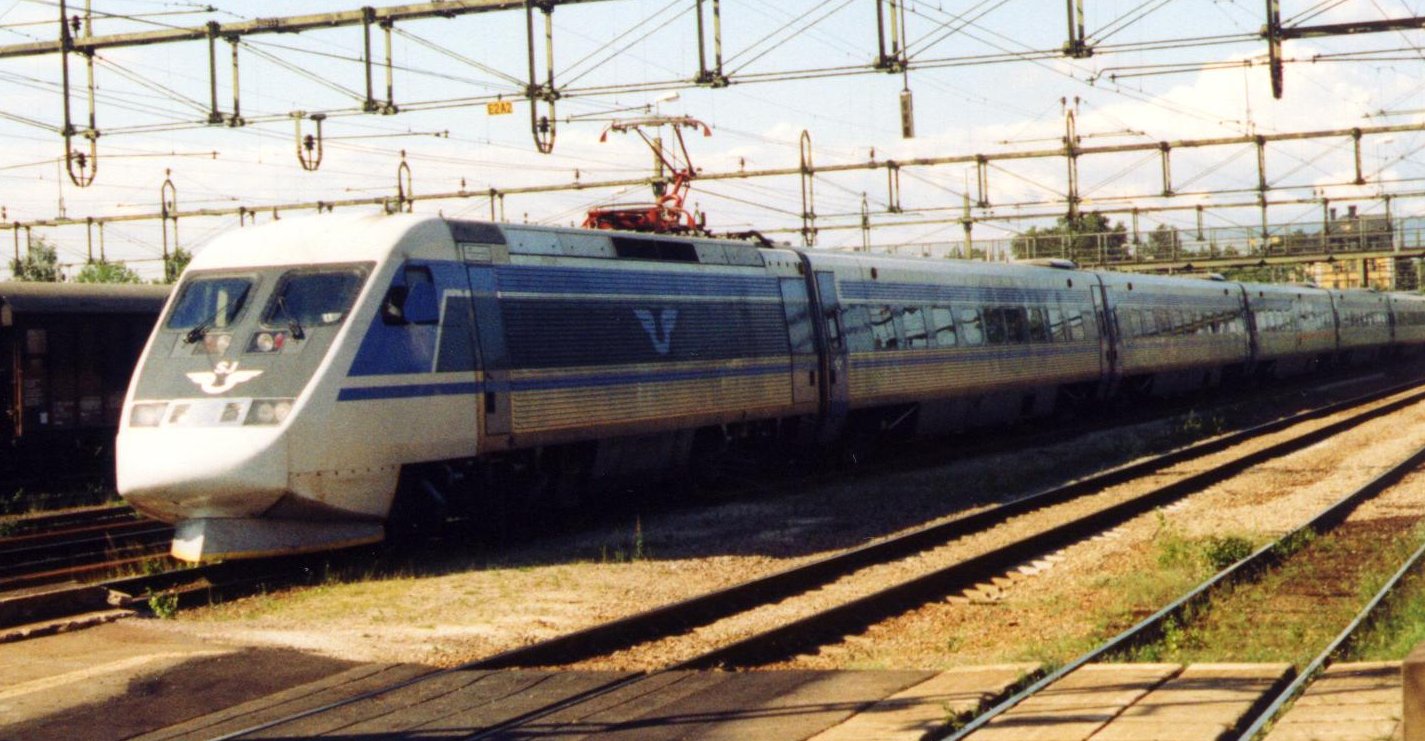
I’m assuming the Metroliner coaches did weigh less because they seem to encapsulate less interior room than previous generations of coaches, even if “fluted”. This is coming from someone with good memories of pre-Metroliner varnish and found the Metroliner and its drop-down lamps just a little claustrophobic, also today’s “Amfleet” shell based on Metroliner design. Or maybe I’m just prejudiced.
Also, am I correct to assume that the 1950s Budd coaches (at that time called “lightweight”) were built on the priciple of a rectangle (roof, side, floor, other side), where the Metroliner and its descendant coaches are famously “egg-shaped”? I am disallowing the extra weight from electric works in the cab, since previous Budds had a separate loco: usu. the GG-1.
As to what extent, if any, was the new design for 1960s Metroliner coaches (which I believe Budd also created) advantageous over the 1952 Budd and similar coaches?
– saved weight, therefore fuel?
– lowered center-of-gravity, allowing for higher speeds and (perhaps) thinner sides?
– cheaper to build, allowing for inflation and disallowing R&D costs?
– I’ve also heard that the Metroliner project was insisted on by Lyndon Johnson, thinking the new design would excel over the Japaese Tokkaido HST? Is that partially factual or just plain paranoid?
I’ve already stated my prejudices and may be making wrong assumptions all over the place. But I am anxious to learn mo