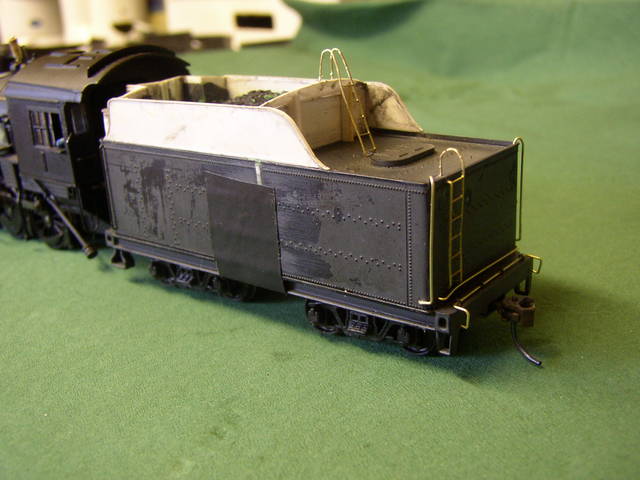
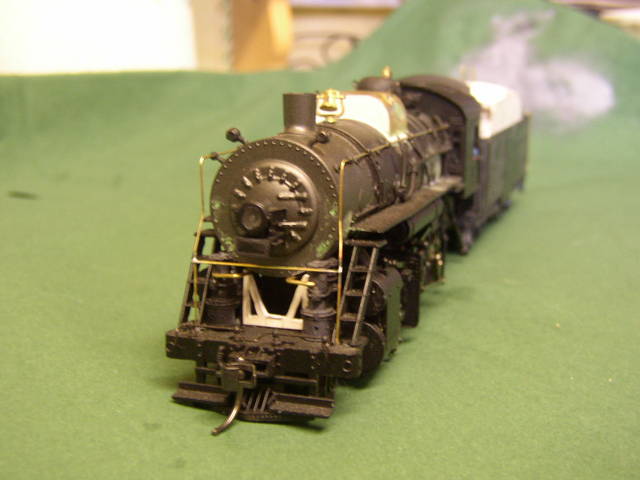
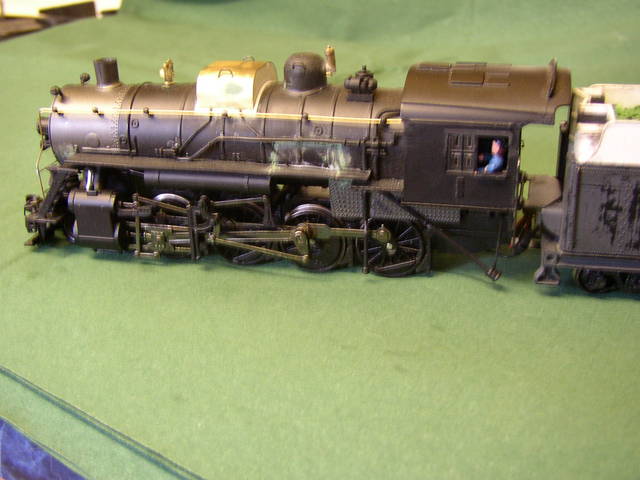
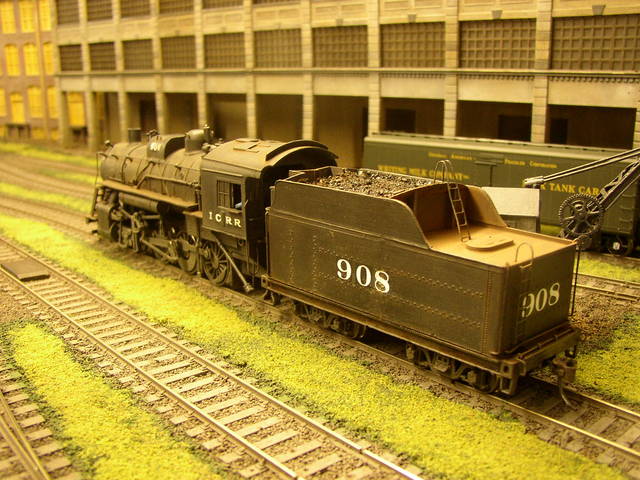
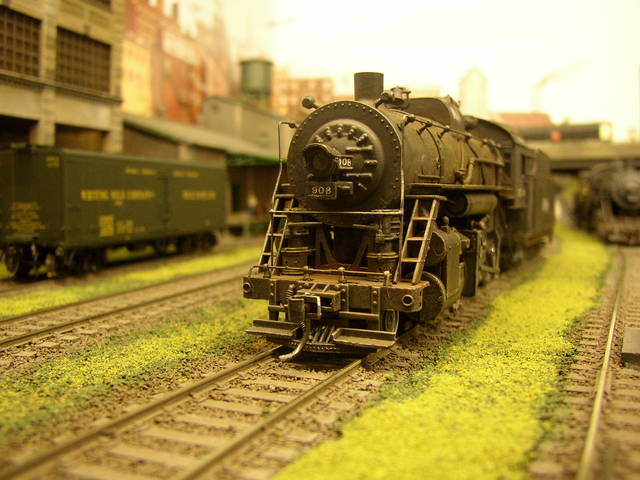
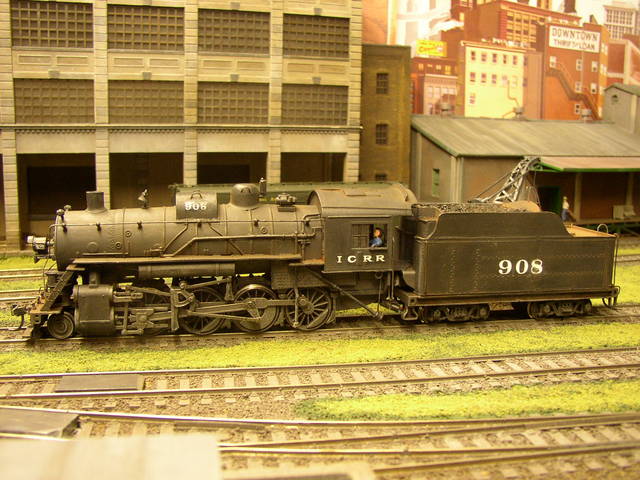
It is a well known fact that the Bachmann 2-8-0, while being a generic model, is pretty close to an Illinois Central RR ‘900 class’ consolidation, so I decided to detail one up.
Luckily, there is a scale drawing and some photos in the MR Steam Cyclopaedia, so the hard work was done for me already.
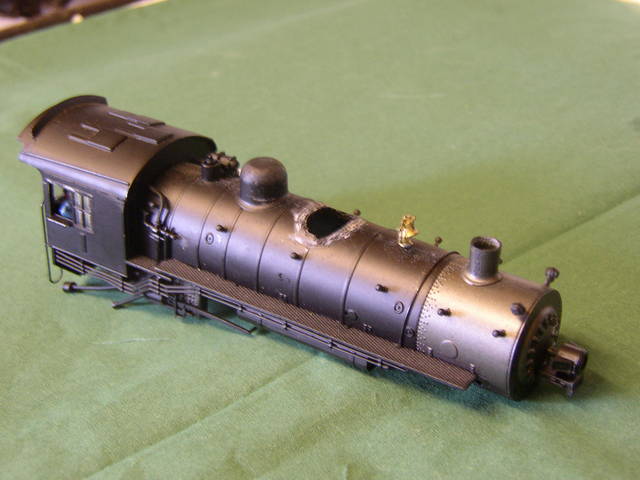
First, I stripped off any unwanted details - the sand dome, compressor, handrails and stepped footwalk on the left side.
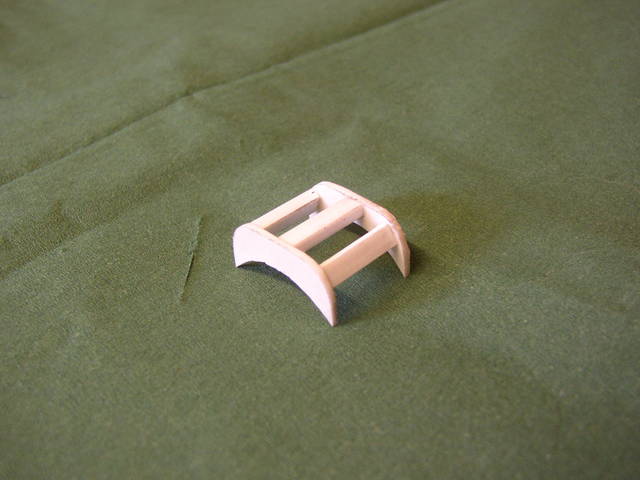
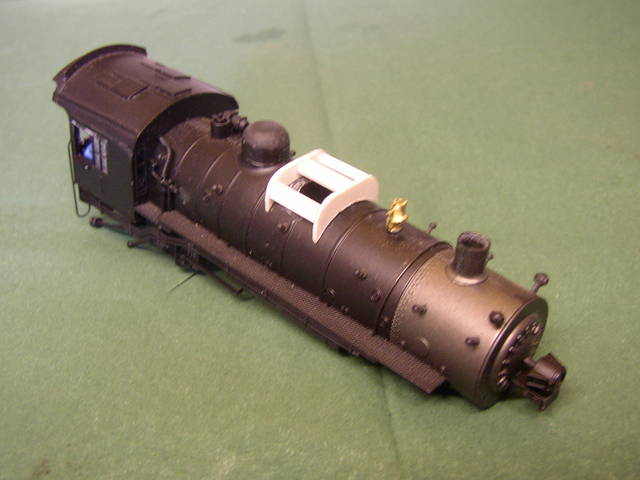
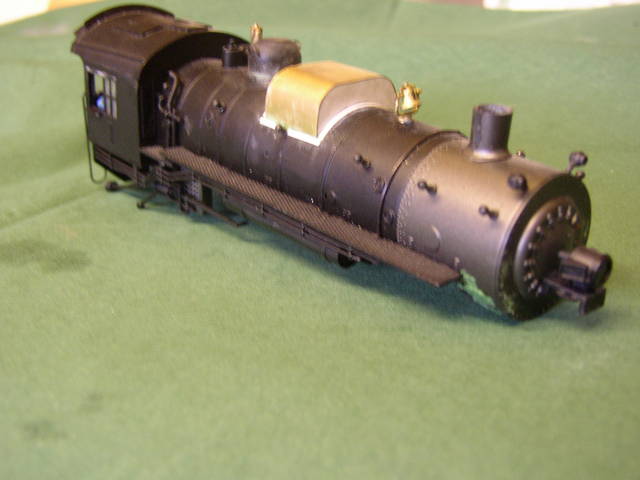
The main spotting details with the ICRR loco are the rectangular sand dome, the handrails, the location of the compressors, and the tender. I made a plastic frame for the sand dome which I mounted and covered with thin brass sheet
looks great !
not sure i’d have the nerve to chop into a new condition model , i’m going to have to find a junker or two to practice on before i take on a project like that . the sand dome really changes the look of the loco
Nice work! Although I’m not a fan of IC’s square domes [:D], it’s always interesting to me to see how people modify locomotives like you have. Ironically, I’ve got one of the Spectrum Heavy 4-8-2’s in ICRR lettering which I’m looking to re-letter to a different roadname. I’m satisfied with the overall look, so that’s as much modification as I’m going to do. Besides, I’m not brave enough to start hacking away at the shell!
The loco has been painted, lettered (with NYC letters - they were all I had available) and a start made on the weathering. I also added the visor to the headlamp.
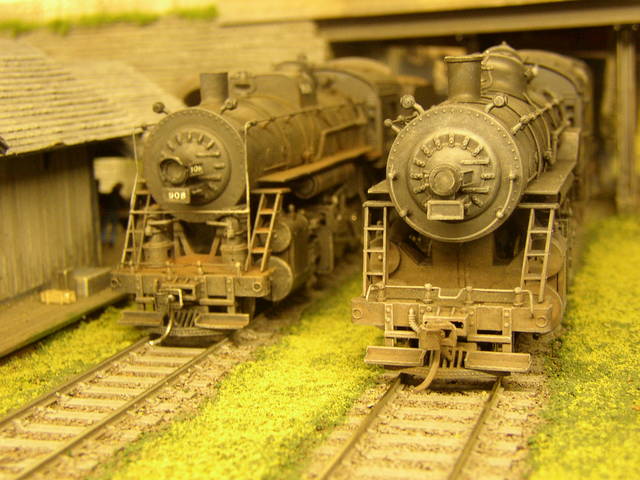
Compare the modified 2-8-0 on the left to the Spectrum original on the right.
It only took a couple of afternoons and evenings from start to finish. The hardest part was getting the soundchip to fit back into the shortened tender.
Great work Jon, very impressive results, amazing the difference to the overall look of the loco you have made. I’ll be looking forward to following your next project and picking up some more tips from you.
Very nice job!![:D] I don’t think I could ever bring myself to do something like that to one of my engines, but the pictures of your progress and how you did it makes it look easier than I thought it was.[:D]
The nice thing about generic models is that they can be modified easily.[:D]
Not bad at all, Jon. It’s good to see another IC steam modeler out there! One question: how did you splice together the shortened tender frame? I’m planning a similar project, and need to know!
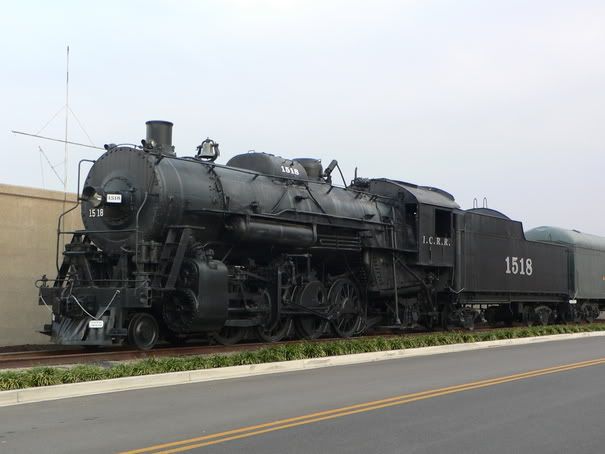
Anybody who would like to perform such a similar project should know: Jon modeled a single IC engine. IC 908 was the ONLY one of the 900-series engines that received the squared “Paducah Dome”. The other 11 engines in the series (the IC didn’t use “classes”) all received small USRA-style sand domes off 2-10-2s that were being rebuilt into 4-8-2s.
I’m planning on doing a very similar conversion, but for one of the more typical engines, number 904. In fact, about two weeks ago I sent out an email to several other budding IC steam modelers on the prototype aspects of the class, and what it would take to ba***he Bachmann engine into one. I was horrified to learn that the Bachmann model can only represent FOUR IC engines with minimal work. All the others of the series will require either new cylinders or at least more windows cut into the cab.
It’s very easy to understand why 908 is the most modeled of all the IC steamers, next to Casey Jones’ 4-6-0. Kalmbach based their plans on the photography of Bruce Meyer, one of the best of the late steam photographers. He started his photography “hobby” in Bloomington, Illinois, which is where the 908 was assigned in the mid-1950s. He also paled around with Bopb Hundman, also living in Bloomington, as well as several of the original members of the NRHS, which formed in the Chicago area. With so many people “wasting” film on 908 (I have about 30 shots of her taken by Meyer alone!), it was pretty easy to crank out a blueprint and brass model of her!
Actually, I’m way ahead of you on this one, Andre, and it’s simpler than what you’ve described. The IC’s early Mikes were aparently nothing more than stretched 2-8-0s. As both were from the Harriman-standard design team, both of the engines shared the same basic characteristics, including boiler diameter.
I compared the Bachmann 2-8-0 with the IC steam diagrams for both the 1400 and 1500 series Mikes, and besides length, they’re basically clones, with the Bachmann model coming to within 1"-3" of almost ALL of the major dimensions. Since the model’s so close (and so inexpensive!) I’ll be stretching one of them into a 1500-series Mike, by lengthening the boiler and the frame, and replacing the tender with a USRA medium. Most of the base detailing will have to change as well, but the hard parts (valve gear, drive train, base boiler) are already done!
I’m knee deep in both summer outdoorsy stuff and finishing up my second NKP Mikado conversion, so I don’t forsee me starting these two IC steam projects before fall.
I used an Xacto razor saw to cut across the plastic frame. Make sure you make the cut off centre, so it does not line up with the cut you have to make in the tender body shell - this will help to strengthen the finished model. I used AC glue to bond the shortened frame parts and strengthened the joint with some thin strips of plastic sheet. Lastly I glued on some sheet lead for weight and added strength.