I really want to buy a digital camera so that I can start photographing my models as well as prototype trains in my area! The problem is I don’t know much about this technology so I’m not sure what type of camera to buy. A local retail chain currently has HP E337 5.0MP cameras on sale for $59.99 CDN, is this a good all around camera for photographing real trains as well as models. The main thing I worry about is the ability to focus while I take pictures of my models so they come out clear. Can anyone please help?
For models, look for a Macro function. Often displayed on the menus or controls as a flower symbol.
I would suspect for that price, that camera only has digital zoom, no optical, or very little optical zoom. You’ll want a decent amount of optical zoom for railfanning.
Some may suggest you need a digital SLR, with a bag full of lenses, each of which costs more than that camera you mentioned. Hogwash. I just picked up a very nice Canon point and shoot digital for about $170US, model A560. I haven’t tried any model photography yet but it does have plenty of manual settings in addition to the fully automatic modes which should allow for very high quality photos. Ones I’ve taken so far look quite nice.
–Randy
First thing I do with a camera is go to the Macro setting and see if it can take an extreme close-up, and I mean mere inces. If it can’t, I pass it by. With the equipment I have, (courtesy of some other members on this fine forum) I can get within four inches. It works well for prototype photography too, even if it is outdated. I use an Olympus D550Zoom and a Vivitar Vivicam 3935.
I plan to check out the camera I mentioned tommorow so hopefully it will have the controls and abilities you mentioned. In the add it does say that it has 5x digital zoom but there is no mention of optical zoom so I don’t know if it has any.
One of my cameras has digital zoom and it isn’t worth a plugged nickel. Other cameras may be different.
Get a film SLR. Cheap, good for model photography. I just took half a roll of 100 ISO slide film…make sure you’ve got a tripod and cable release, though! Sure, if you want to take great pictures, you’re going to have to shell out a lot of money (Just like for any other kind of photography) but either a film SLR or a high range compact will get the job done. I suggest the film SLR because it’ll probably be cheaper to buy, have a larger depth of field, and teaches valuable photographic skills while it’s at it.
People may disagree that you can’t get great shots without a DSLR, but I say their standards are too low. [:P]
Film is obsolete, stick to digital. Been there, done that.
“film SLR because it’ll probably be cheaper to buy, have a larger depth of field” is total hooey other than the price comment. Depth of field depends upon the camera lens and its aperture, film OR digital. Digital cameras with minimum apertures of f/8 are quite suitable for model railroad photography, as this will provide more depth of field than a film camera will due to the smaller size of the sensor when compared to film.
In digital cameras, like most anything, you get what you pay for. A $59.95 camera will probably work, but not very well; you’ll get what you pay for. Expect to spend at least $2-300 for a semi decent camera. Stick to brand names such as Canon, Nikon, Pentax, Sony, HP and others. Make sure it has manual features so you can set the Aperture and Shutter Speed. Totally ignore digital zoom, it is mostly useless, stick to optical zoom. Most low end digitals will be limited to 3X optical zoom; if you want a longer reach, you’ll have to pay more. Simple as that.
Macro function on digital cameras is blown way out of proportion by those who do not know photography. The macro or closeup f
Problem is you hafta keep buying film for that SLR [;)].
I have a Nikon DSLR, and I love it. I went with the DSLR because I was looking at high end point and shoots anyway, so the difference ended up being about $200. It works perfectly fine for me with the lens that came with it, though I may look to buy another lens at some point… this one doesn’t always have enough zoom (though the shots are good enough that I can enlarge them about 5-6x before they start to get fuzzy)
unless you’ve been raised on film and REALLY know what your doing, don’t waste your time with it. Get a digital. You can get a desent close up camera cheap ($100) Look for the macro function as mentioned. Problem is, a cheap camera isn’t going to have much optical zoom for your prototype pics. Your probably gonna have to spend around $200+ for a camera that does both things well. Here’s a couple I’ve used.
http://www.fujifilmusa.com/digitalcamera/overview.jsp?prodCatId=863590&item=I863590&dbid=863590&urltype=overview&NavBarId=I863590
http://www.kodak.com/eknec/PageQuerier.jhtml?pq-path=9/19/131/8016&pq-locale=en_US&CID=KNC-M911D4486351
These can both be had for around $200. (US)
I agree with Bob, and some of the other guys…buy a Digital Camera. I waited quite a while before I bought my Digital camera. I still have my film camera, a Minolta 7000 with several nice lenses all the way up to 300mm. It is a great camera and served me well for many years.
I wanted an SLR camera because I wanted the ability to interchange lenses, I was spoiled with my Minolta SLR and the results that I got.
I settled on a Nikon D70 and am quite pleased with the results and the camera itself. The prices have really dropped on DSLR’s, so I would look for the best that I could afford.
Film may not be obsolete but it is obsolescent and getting things like photofinishing for slides at something other than a camera shop, or buying film easily, are heading toward history already. Here’s what worked for me: I wanted a digital with at least 6 Megs capacity, autofocus, something of a zoom, and compact. I found the Samsung L730 at Target for $120.00, with autofocus (most digitals have that), 7.1 Megapixels, and goodish zoom but no electronic zoom that I know of. One little feature I gained that I didn’t much know about was anti-shaking, which really helps action portraits (moving trains count, of course).
With a fairly simple editing program I can delete off-colors, straighten out the unwitting “tilt shot,” crop (which means you can single out the most interesting part of the composition and enlarge it), download by the ton or singly – the crop feature can even throw a “rule-of-thirds” tic-tac-toe grid over the picture. I have spent about $10 on photofinishing in the month-and-a-half I’ve owned the Samsung, but would have spent about the purchase price of it if I had had every photo finished, as you must do with film rolls if you want t
Go digital. It’s much faster, you can learn faster, you see your pictures sooner (like immediately). And, it’s a bunch cheaper to use.
While I now have a digital SLR (a Canon Digital Rebel XT) I for several years used a Canon Powershot A300 - a point-and-shoot. It has good depth of field, and its lens is centered just 7 scale feet from the bottom of the camera, which allows me to set the camera directly on the scenery to shoot, resulting in a picture which looks very much like it could have been taken by one of the railfans along the Flint Hills Northern. It is only a 3.2mp camera, but takes pretty good pictures. Check out my Photo Gallery on my website (in the signature). It took everything but the very last photo. It even took the video that’s on there.
I agree with a previous poster - your $59.95 CDN is a good price, even for an HP (I tend to prefer the more traditional camera makers, but that’s just me).
Get the largest memory chip you can afford for the camera - 2GB at least. That way you don’t run out of room to store your pictures while you’re out railfanning. In fact, I’ve found it is a good idea to have a spare…
Also, get NiMH rechargeable batteries (at least twice as many as will fit in the camera), with as high a milliamp/hour rating as you can find, and a fast charger. The normal alkaline batteries won’t last more than a few minutes in a digital camera - I used up about 6 pairs of AA batteries in my A300 before I wised up, and that was just in initial setup and testing.
I wouldn’t worry about the focusing - modern cameras generally have very good autofocus functions.
Have fun! It’s a neat aspect of the hobby to explore!
My wife says she’s getting a Nikon D40.
I see myself using a Nikon D40 in the near future![:D]
A: Qualifications: I am a professional Photographer.
B: Advise:
Film is dead. Buy digital.
Your eye can only resolve about 210 DPI
a 3.3 megapixel image printed at 300 DPI 8x10 inches is indistinguishable from a 12 megapixel image printed the same size.
Optical zoom is an adjustable lens. Digital zoom is croping the image and then reinterpolating it back up to size. Digital zoom reduces quality. How much it reduces it depends on the original image size and how much it is “zoomed”.
Maximum depth of field is achieved by smaller lens openings (higher f-stop numbers). Macro only means how close to the subject the lens will focus. Higher f-stop numbers and longer exposures will enable any lens to focus closer. Long exposures can induce noise into the dark areas of the image
If you are not going to make prints bigger than 8x10, any camera 3 megapixel or higher will work fine. If you have little knowledge of photography, stay with a point & shoot. My personal preference is Canon, but many brands are decent quality. Remember, the more complicated the plumbing, the easier it is to stop up the works.
If you plan to make large pictures, or shoot your own backdrops, then I recomment the Canon Digital Rebel. Otherwise I recommend the Canon Sure Shot.
I would like to add my 2 cents worth. My camera is older and only 2.2 megapixles but works for me. The advice I would add is to be sure any camera you buy has some sort of through the lens type viewing. The image displayed on the camera display is very near impossible to see in bright sunlight. The big advantage with digital is the ease of working on your photo,s. It may be because I am a sloppy photographer but most of my shots can be made better with a little editing. The greatest asset to digital is the fact you can take many more shots than you could on a roll of film. The best way to critic your railroad is take pictures. You soon see little things you can improve. Most of all Keep shooting.
Cliffsrr
I use a Canon Power Shot A540 6.0 mega pixels 4x optical zoom; I paid $179 about a year ago.
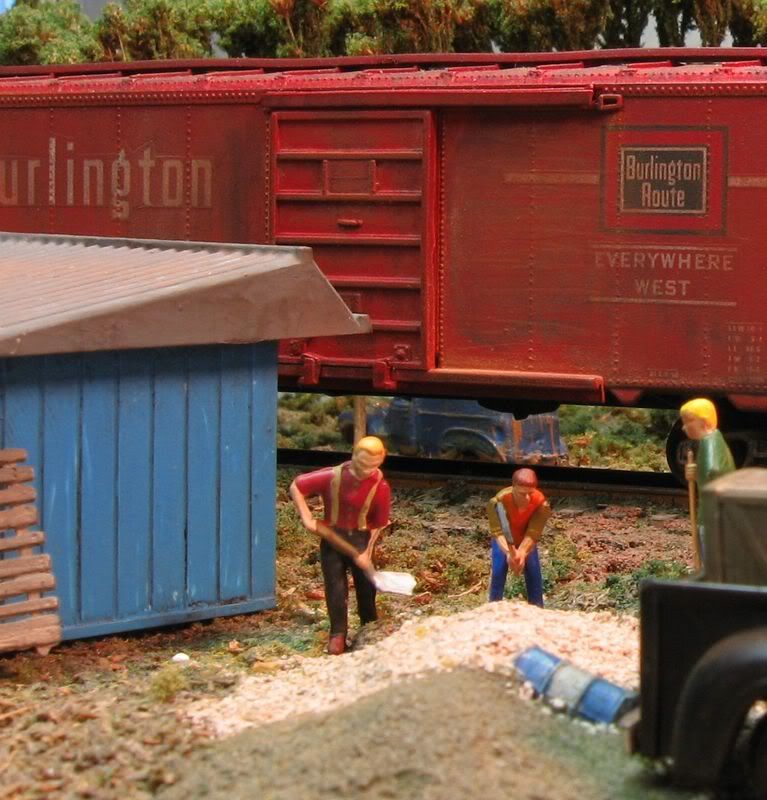
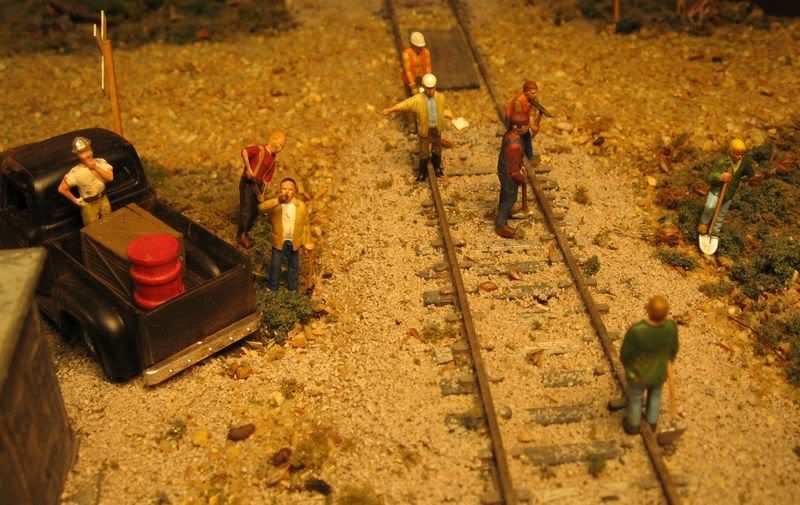
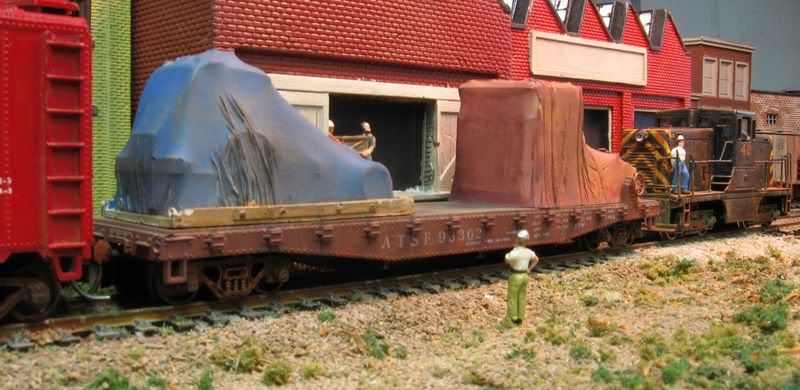
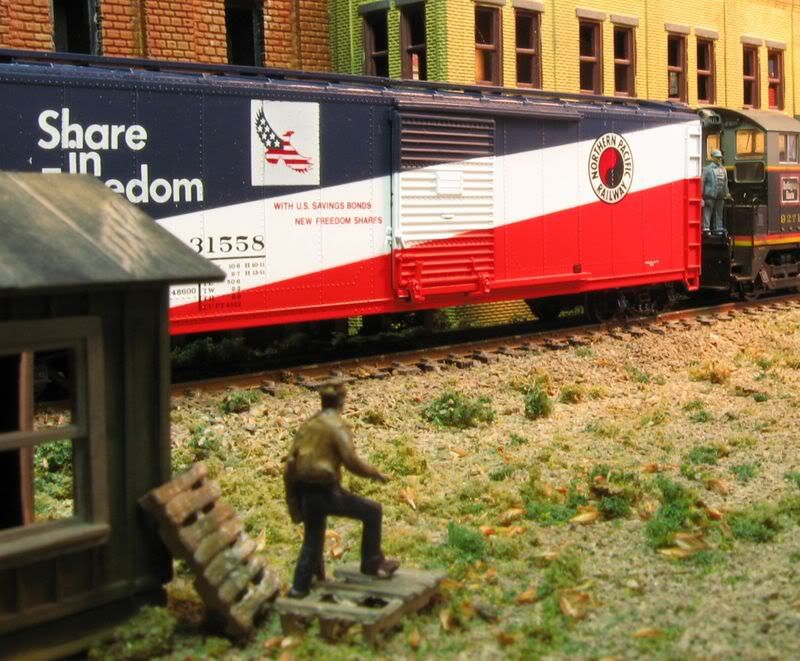
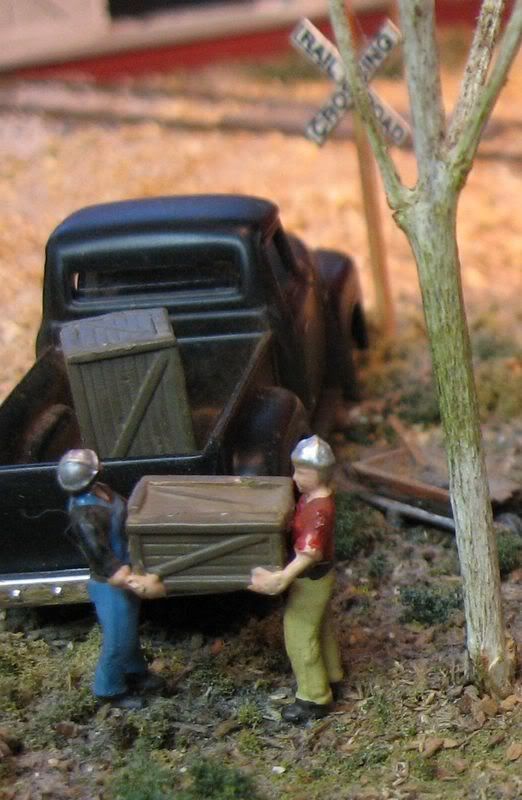
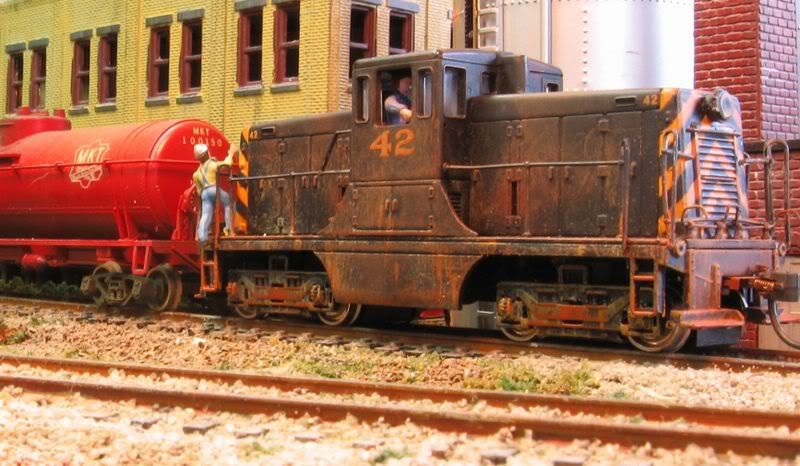
I shot film for years , mostly slidewith a Nikon SLR. A while back I got a Nikon D50 digitlal and love it. You need to do close ups a lens that has a very high F stop so you can get a better dept of field. You need a tripod for the camera so you can have the shutter speed slow , so you can use the high F stop setting. I have an old 55mm lens from my SLR that has an F32 and I get great pictures Also with the digital you can vary the speed and see right away what the exposure looks like.
I had a picture of my layout in Trackside Photos in MR , using the D50. Because it was digital I was able to send the the same picture with multiple exposures on a CD. Then they picked which one was best suited to be printed on the Magazine.
i get paid to take people pictures, but don’t do this type of photography specifically, but here is my $0.02
-
Already said above, macro function. Very helpful in focusing up close.
-
the ability to turn off the flash. Because you’re going to want to get a lamp or shop light to provide the lighting through a sheet of plastic to create a ‘soft’ lighting effect. Will look more realistic. Believe it or not the best days outside for pictures are cloudy days, as the light is ‘softened’ by the clouds. No harsh shadows.
Other than that, MegaPixels is like watts on a home stereo, they don’t mean a ton anymore and are a weird way of really measuring how good the camera is.
Also dpreview.com is a good place to see even the ‘little cameras’ tested and get some good feedback on what they think of them. Never seen that site ‘pull’ an interview to make something look good and they pull no punches in their reviews.
I now use a Canon Eos Rebel XT DLSR, but I used a 4-megapixel Canon PowerShot for a couple of years. Nice macro, f8 aperture for good depth of field, etc. It even had built-in correction for various types of lighting, including tungsten. I think I paid about $275 for it when it was new. My photos have been regularly published in magazines and catalogs, including a cover shot for one publication. I just used a tripod and the camera’s built-in timer to avoid camera shake in long exposures.
No matter what you get, read the manual to get the most out of your camera. Then start taking lots of pictures. You’ll quickly learn what exposures, distances, etc. will produce the kind of photos you want. Then you can start sharing them with us!
Boomer,
I recently purchased a digital camera after many, many years using film based SLRs. I was absolutely amazed at the quality of the pictures it took – right out of the box in full auto mode. I am not sure if I will ever use my film camera again.
Other posts have already outlined the important things to look for:
Macro Setting
F-stop of at least F8
Also:
Tripod Mount
Delayed shot timer
You want to make sure your camera does not shake when you take a picture so a delay timer helps here.
As many “manual” or adjustable settings as your budget allows. Even lower priced cameras are now coming out with lots of features. Don’t worry about the playback or editing features, those things you would normally do on a computer anyway. You want actual picture taking options.
Only you can determine what your budget can afford. There is no reason that you can’t start out on the low end and move up later.
I purchased a SLR “look-alike.” A Fujifilm S6000fd. It has though the lens viewing (that is what an “SLR” does) but it has a non-removable optical zoom lens. It can F-stop down to F11 in manual mode. It also has a 200 page manual!
The greatest thing about a digital camera is that you can quickly take 50 to 100 pictures (also buy the most memory you can); upload them to your computer and sort through the ones you want to keep. If you don’t like any of them you can start again – all within an hour instead of waiting days for film processing and return (and at no cost).
Good Luck,
-John