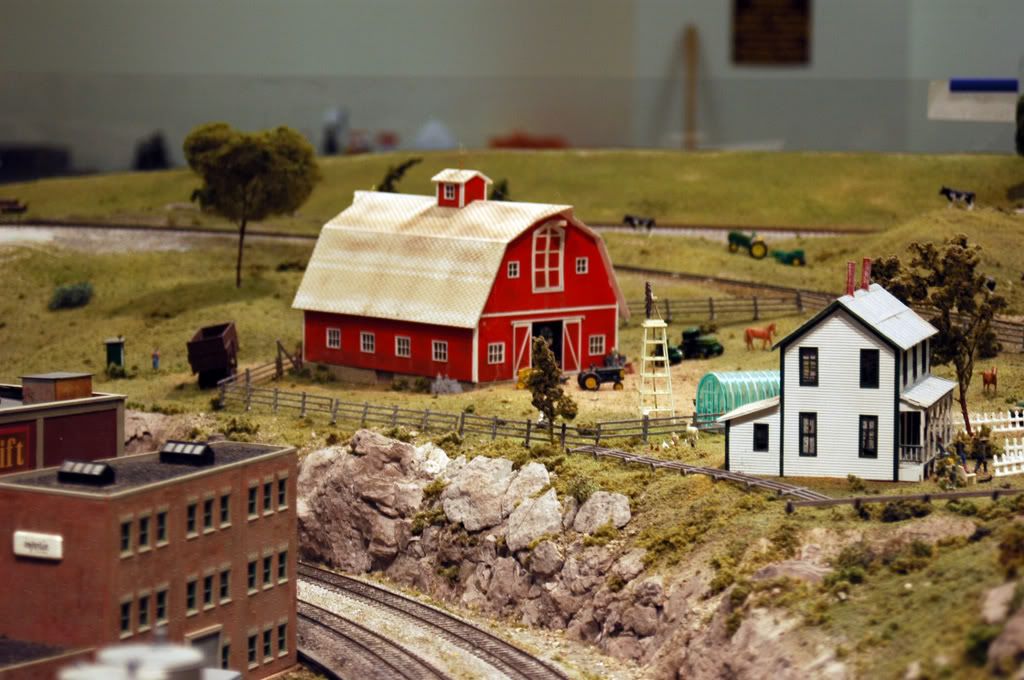
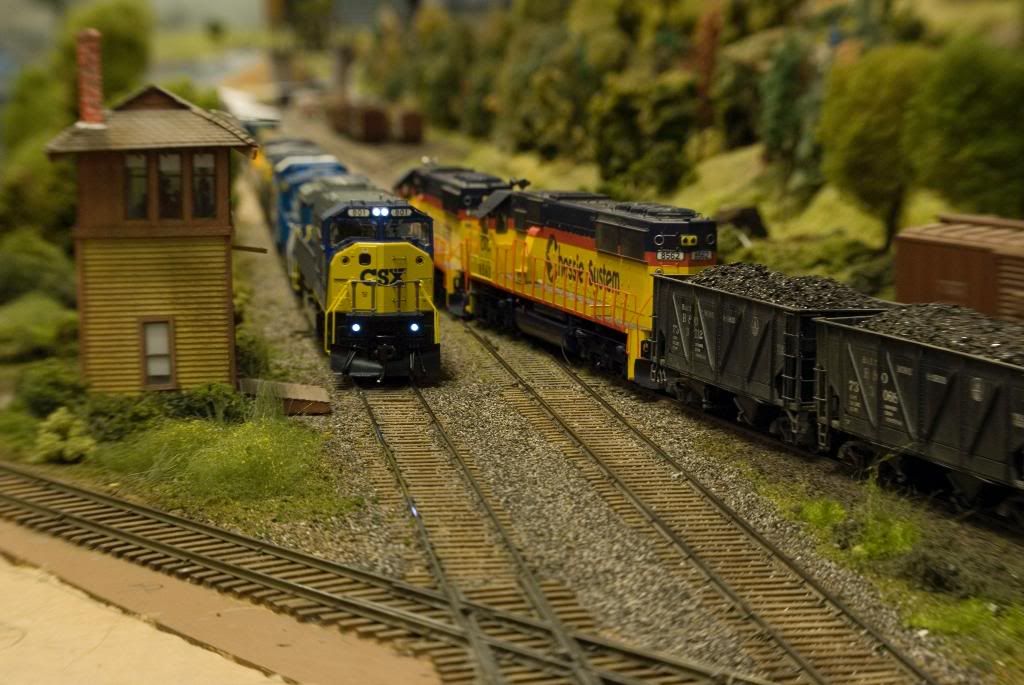
I’ve just repainted two train show purchases. An assembled Depot and a Signal Tower. It’s not going to be easy removing the existing kit’s bases and am sorely tempted to keep them and “bury” them under ground cover.
Do you guys n’ gals do this very often? Any tips for the way YOU like to hide them? I’ll try lst, using the bases but will see if they’re detectable or hated later. I’m thinking that as long as they’re realistically sceniced they’ll be fine.
Just wondering how common it is to use the existing kit bases/platforms for structures and more delicate styrene kits like, say, a Forest Fire Watch Tower, or Water Tower.
I’ve just been on a structure building spree, and as always, found that some structures just have to have a base added, while others are ok as is.
I built two crossing shantys, and an elevated crossing shanty, and added 2 1/2 x 3 inch plastic bases to them, which allowed my to attach detail parts (i.e. crossing signals, garbage cans, etc) to the scene and have it one piece.
The biggest model was of the Als Victory Station that I built into a postwar Mobilgas station, and added a 12 x 8 plastic base, which was painted as the concrete driveways, and of course could hold the signage and oil cans, pumps, etc., etc.
Other structures like sheds and warehouses didn’t need bases - but in retrospect, adding a base is pretty much a good idea to most any model.
I’ve added bases to most of my buildings. For me it just seams easier to detail it that way and then set the finished product on the layout and blend the scenery in around it. What ever works for you is the best way…
I am going to assume that you mean the base that comes with some / most plastic kits.
Well, sometimes I keep them on and sometimes I don’t. It all depends on the building and the base that it has, and if I can make it look like it belongs. If it is toy-like, I don’t use it, but may make my own. If it looks good and looks like it belongs, then I keep it.
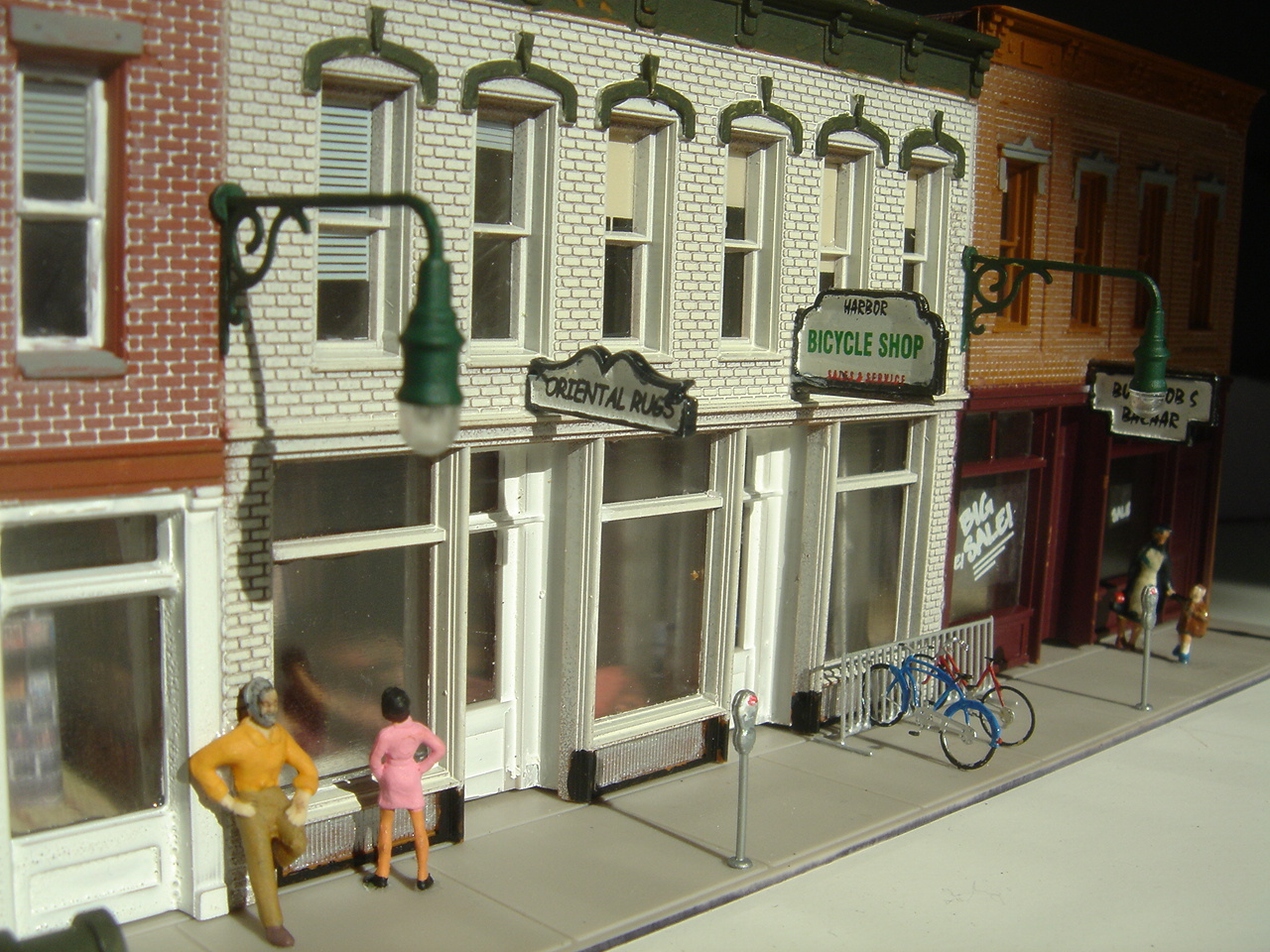
Sometimes I do, and sometimes I don’t. For some structures, the base helps in the construction process and makes sure the structure is square while you’re gluing it together. I liked the sidewalk that came with this Walthers Merchants Row kit:
On the other hand, I didn’t like the sidewalks on this kit, Model Power’s “Annie’s Antiques.” So, I removed the sidewalk from the base and used it, although the base itself is only minimally visible. Here, I built up my own sidewalks out of styrene, so I could keep all the sidewalks in that part of the layout looking the same.
This building also came with a base. I use Gypsolite for the texture of earth, and put turf and ground foam on top of it.
Whenever I’ve got a structure with earth coming up to it, I use Gypsolite right up to the edge and add scenic materials. Since I light most structures, it’s important to cover the base so that no light gets out. For urban structures, I like to cut and fit the sidewalks around the structure walls rather than placing the buildings on top of the sidewalks.
For me it depends on the building.If the base looks fairly decent I will use it for stand alone buildings and blend it into the scenery.All store bases with sidewalks get the sidewalk removed and replaced so my sidewalks have a consistant look to them.
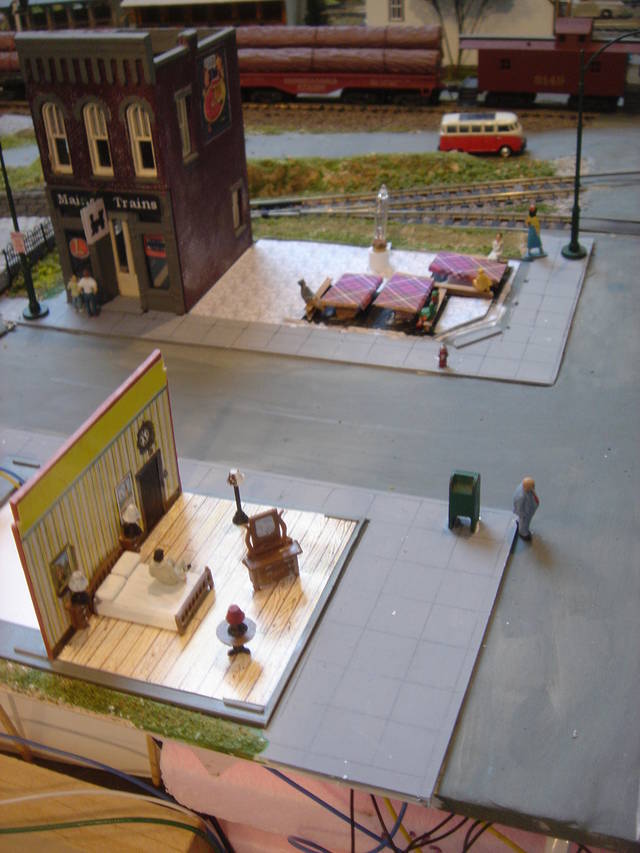
Some buildings with out bases get bases built for them.The down town business district on my Z layout will have one base with foundations and sidewalks included with locater tabs to hold the buildings in place.My N scale layout is done that way.When I was doing HO I made bases with locators.No matter what scale your in this helps keep buildings where you want them.It also makes it easier to work on the buildings if they need repair and/or you want to remodel them some.
One more thing which apparently your already doing is I paint (in some cases repaint) every kit or built up (yuck) that I put on my layouts.
It is true that pending you actual use and positioning of the structure that the supplied base would work fine.
I like to build foundations for most structures so that elevations of the scenery as well as building up of material will allow for the structure to show that it does sit on a foundation and not have dirt/ grasses planted against the walls.
Tower sits on raised stripwood to allow brush/ weeds up to walls. The wood ramp shows how hight to floor level.
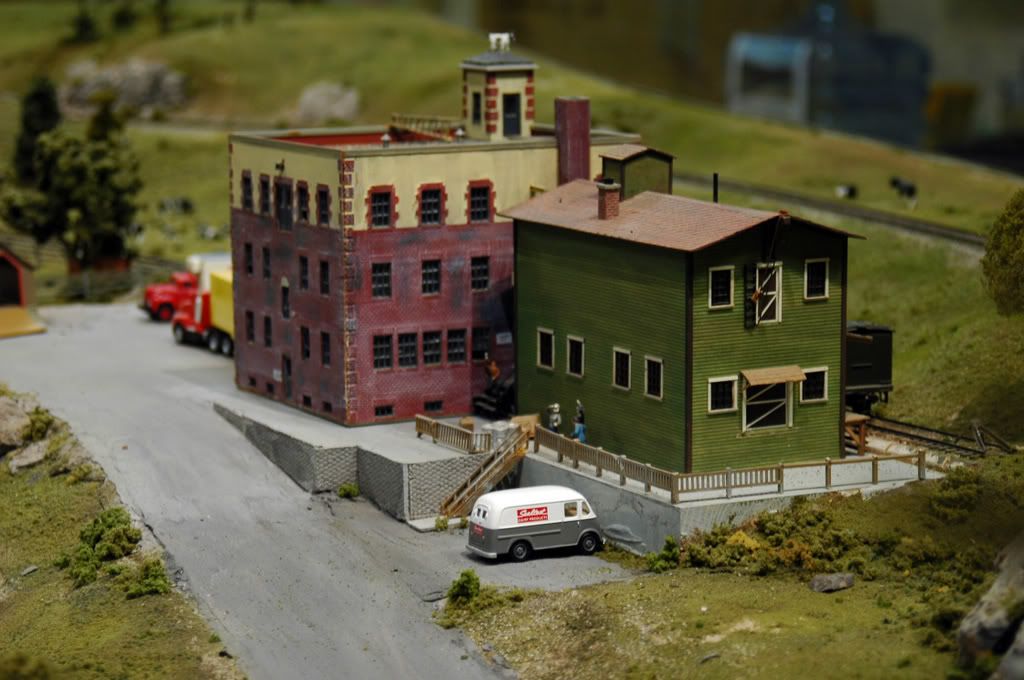
For industrial sites generally built on flat plywood base, most buildings will work placed directly on their base or no base at all. This is especially true for the Walther’s steel mill and other sets where the building will be built on the base w/ trackage included.