Sorry guys, my kid’s in the hospital with blood clots in her lungs so I’m distracted, and I was using my small iPhone (SE5 or whatever), which makes it hard to navigate long strings. Thanks for these links/recommendations. I’ll quit posting questions until I have a chance to go back through the thread. Maybe everything I need to know is already here. Cheers,
Thank you John, we’re grateful for all prayers and good wishes. She’s doing lots better, but clots are scary so we’re on pins and needles. Not much to do but wait, which is probably why I jumped prematurely on the flux and solder. I hate waiting.
But I’ve found decent nonAmazon prices for both of the items Ed recommended (I don’t trade with Amazon). SRA’s own website had the flux for the same price as Amazon and shipped it for free (!), and I found a 1lb roll of the Kester Rosin Core 0.031" solder on ebay for 2.99 and three bucks shipping, which was 25 bucks on Amazon.
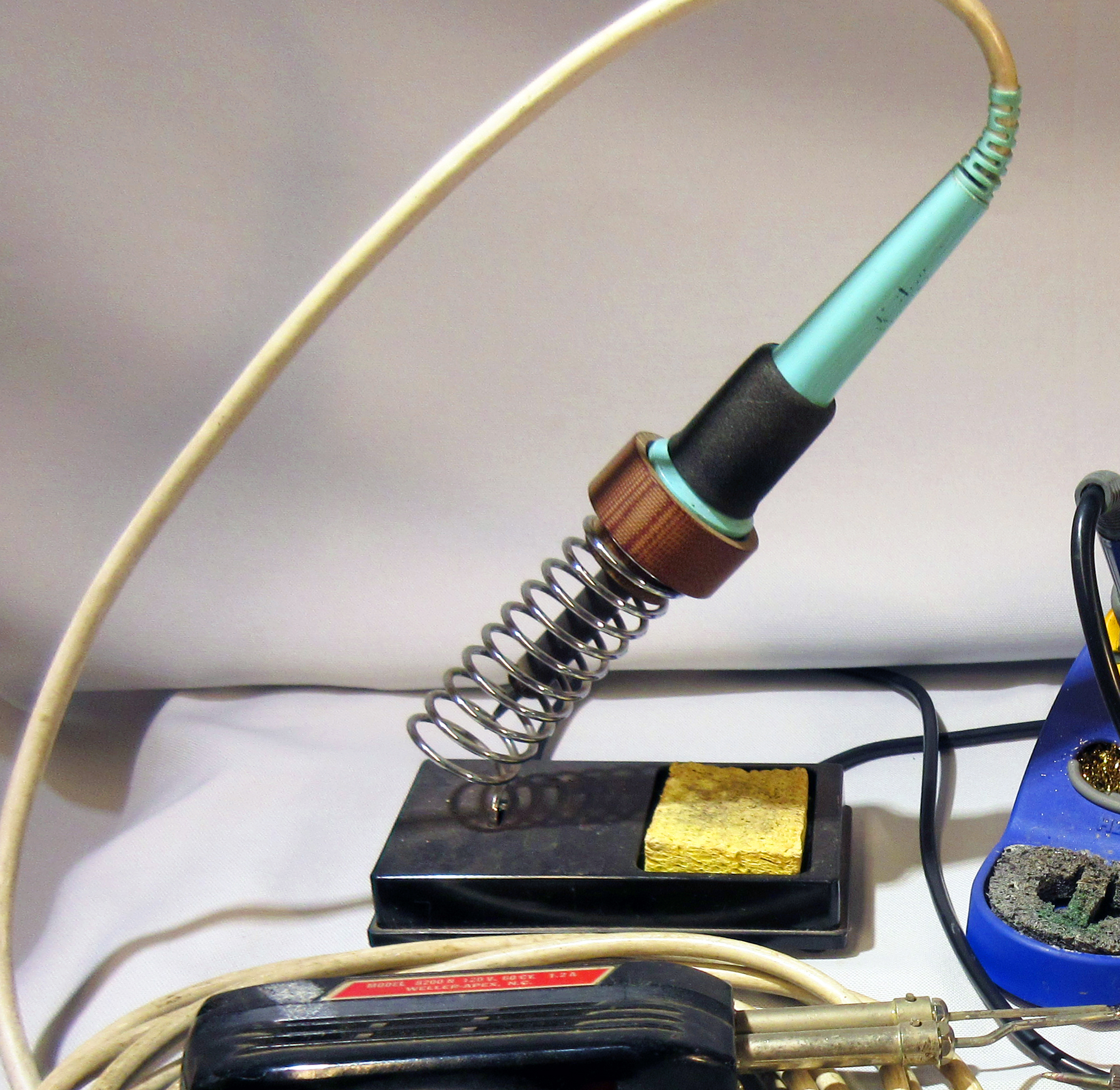
If that isn’t a hoax, I think I’ve done well. I should have done this research earlier, I’ve just been harried. I’ll return the other stuff I bought earlier, maybe even the iron, because the tip is the size of the Gustav cannon, probably too big for trackwork. Again, I jumped quickly because it was the only high-wattage stick that I’d been able to find on a shelf locally and they only had one. I like the 80 watts but I think Hakko makes a 60-watt iron that I can find at Home Depot that has a smaller tip. And before I do that I will go back through the thread to review what you guys have said about soldering irons. [8-|]
Thanks again Ed for the particular brand and product recommendations.
Glad to hear your daughter is doing better today, Matt [angel]
I did nearly all my track soldering with a Weller 35 watt pencil iron. Not really a cheap one but it was 35 watts. I found it plenty hot enough for joiners and feeders.
I post Amazon links as a matter of convenience. I usually mention a “for example” disclaimer. I don’t encourage nor discourage anyone from buying wherever they like. Sometimes going to the manufacturer’s website can be overwhelming and doesn’t always point to a specific product. Generally product descriptions and reviews can be helpful. Ultimately, it is up to the purchaser to source their purchase.
My daughter is home now, for those wondering. I’m still groggy and we have a long journey ahead but thanks for the kind thoughts. We are lucky to have Seattle Children’s Hospital so close.
Ed, absolutely. Probably I could have softened my statement, and I too use Amazon’s website regularly for research and reference. There’s room for everyone in this world (still!).
More to the issue at hand, your links were extremely useful in determining exactly what I should buy.
I did notice (reading back again in the thread), that LIQUID flux was mentioned, and I think I’d like to try some of that as well, because in videos I’ve watched it looks extremely easy to use. However, searching for “liquid no-clean rosin flux low activity” was turning up too many weird options. I found that Kester 186 kept turning up, but its “activity” level was not specified and I was warned (Overmod?) to avoid too high an activity. And at least one source onlined mentioned that there was a very low level of rosin in Kester 186, and that didn’t sound right, so I backed off. I’ve read through the thread twice but cannot find a specific product anyone recommended for the no-clean liquid flux. I’m still open to suggetions for that. If the Kester 186 is low activity, that seems like it might be the way to go.
Keep in mind that soldering rails is only incidentally like ‘electronic’ soldering, and somewhat more aggressive activity in preparing the area for good solder bonding is tolerable than would be the case for SMDs or fine decoder leads in an area that can’t be washed after soldering. So you don’t have to use only low-activity flux for such work – it’s much more important to understand how a given product produces its activity, and how those chemicals might react with the common materials found at the rail joints.
This is one of those subtle things like why there is silver and copper in quad-eutectic solder: it keeps those metals from diffusing from the joined pieces into the solder joint.
Several years back, MR published a letter from a person who had worked on the Redstone missile project, and they talked about soldering. In particular, he said that most modelers use way too much flux, and he said it’s better technique to lightly scrape the surface to be soldered.
I’ve tried it, for what it’s worth, and when soldering feeders, scraping the rail a bit first really improves how the solder sticks, and it’s much neater.
Remember that the flux and the ‘scraping’ do two different things.
For a good solder bond, you need a clean substrate, with any oxide dislodged. You also need to preclude formation of new oxide before the liquid metal wets the substrate.
Flux of higher activity is more aggressive in attacking contaminants on the surface… as with many chemical cleaners, etching primer, etc. The ‘catch’ is that it’s also aggressive against the material in or beneath that surface.
Best of both worlds is to scratch or abrade the surface under the ‘barrier layer’ of liquid or paste flux. Interestingly we see very little discussion of controlled atmosphere, as in fusion welding, as an alternative to flux blanketing – probably for reasons associated with cost and convenience.
At one time there was discussion of using power ultrasonics in conjunction with submerged-arc welding, to give mechanical fret breakup of any oxides at the edges of the weld zone. This might be applicable to cleaning irregular surfaces, difficult to access mechanically aside from scratching, beneath a passivating blanket. Again I think that cost would rule out such an approach for track joining.
Flux cleans off oxidation. Abrasion increases the available surface area as well as creating oxide free surfaces for adhesion.
Resistance soldering is just a variation on resistance welding, which, after all, would be ideal for all those model railroaders obsessed with rail joiner problems. As if protypical rail were magically continuous welded…in 1950.
Really interesting is “spinduction” welding…idea for hypercritical pipeline welding.