Many of the early World Land Speed Records were set by steam-powered automobiles since early internal-combustion engines had a terrible power to weight ratio.
Love it! Amazing speed and it is fun for me to watch the wheels bouncing under the simple leaf spring suspension.
Some random steam-powered vehicle photos and videos.


Amazing fun stuff! You know, “Steam is dead!” has been said so many times, but it just won’t stay buried, will it?
Higher tech steam from 1925
Cool.
In the 1970s I was in a rock and roll band named Stanley Steamer.
Steam is still around, a couple miles down the road from me is the Michigan Steam Engine and Threshers Club. They have annual gatherings and also appear here and there. They are sometimes in our small town parades here in Mason, MI.
https://www.michigansteamengineandthreshersclub.com/index.html
If the Stanley can be compared to a steam locomotive, here is a streetcar:
Interesting! If I were Rudolf Bauer, “my” 1937 Duesenberg SJ Town Car would be steam-powered. If the car body was too heavy, just made the engine room longer!


Duesenbergs are cool, but why not ask Mike to look over Bugatti history and find pictures of the T50 that was converted to steam power. Or the T74 project (during the War) with modular groups of 4-cylinder motors. Or more of the history behind this:
Of course if you are discussing ‘steam trolley equivalents’ why not go directly to the historical source, the Unit Railway Car Company?
The part 2 to the Steambus! video is available, and can be searched from YouTube: I can’t post the link directly because I can’t get YouTube to display correctly on the system I’m using, but searching “california steam bus pt 2” from the window that opens to show part 1 should produce it in short order.
There is a good discussion on the bus project on SACA that interested people should read after perusing the final report linked in the video description.
Bugatti! From Bugatti Royale to type 57, love them all!

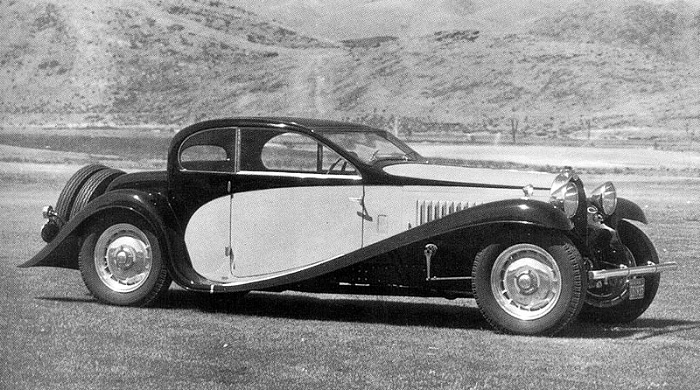
And of course, the Bugatti Autorails, my favorite railcar (New Haven Comet was great too):

I am not sure if this is the company you mentioned, but this is an interesting thing that I cannot randomly found on google search!
SELF-ENERGIZED MULTIPLE-UNIT RAILROAD CAR TRAIN
https://patents.google.com/patent/US2844107?oq=Unit+Railway+Car+Company
There were also four-wheel railbuses with a suspension that to me eerily predicts what Wickens would design in the mid-Sixties for true high-speed stability. One of those with proper resilient wheels might be an interesting replica project…
In America most of the effort went – quite sensibly, in my opinion – to the use of steam ‘dummies’ pulling more or less conventional cars, instead of all-in-one steam-powered tramcars. At least in theory that allowed horses and engines to coexist on the same system during any transition, and saved the investment in passenger cars.
As recounted in White’s American Passenger Car and a couple of other sources, there was a brief flurry of interest in self-propelled railcars (a larger version of ‘tram’; the early ones in the 1850s were actually small fairly high-speed locomotives built into the forward end of a passenger-car structure, replacing one truck). These had reached a fair amount of sophistication by 1860, but were essentially killed off by the Civil War and the type of development that characterized the years afterward. By the time interest had redeveloped, the type of plant used had changed (cf. Ganz cars) and of course once internal combustion motors had reached a decent stage of development we went to McKeen, GE cars, and of course EMC.
This begs the question a bit of why we didn’t see GAS dummies for street railways, in lieu of electrification. You are of course familiar with the Dan Patch lines; to me it would make great sense to use a small external power unit to push/pull a vehicle whether or not some part of its service involved wire. But I know of no succes
As you folks know, I’m too technologically challenged to post links. If you check out YouTube, you will see that Jay Leno owns and drives a Stanley Steamer. My respect for the guy soared.
If you noticed the first post was of Leno’s Stanley Steamer.
In 2005 I rode a rail group’s trolley in Astoria, Ore. The restored trolley got its power for the traction motors from a small attached 4 wheel car that had a generator and was low profile so the motorman could see over it on the reverse trip.
This has famously, or perhaps infamously, been discussed several times on RyPN. I understand there were some commuter or regional trains in Italy that used ‘power stations’ – self-contained electrical genset plants – to power what was essentially electric MU equipment ‘beyond the wire’ or adapt them to unelectrified service.
This is different from what I was musing about in that you have the complete capitalization and maintenance of the electric equipment on the car itself for propulsion, plus the capitalization and maintenance for the separate power unit and its connections, plus the power disadvantage of having to ‘tow’ the power unit itself. There is also the concern of economical power operation, with the genset having to put out 600VDC whenever the car calls for power, but perhaps not doing ‘load following’ at the times the contactor is closed – it may not be sufficient to have automatic regulation of the genset engine when load is detected, or provide a button or control to load the genset before moving the car.
In the Astoria case it permitted the car to retain full ‘historic fabric’ while operating in a service where it was economically impossible to put in overhead wire; in the Italian case, it permitted “adaptive re-use” of equipment built for one service, without expensive modification.
I was thinking more of something with a relatively small IC motor and perhaps mechanical drive that would move a streetcar (or the sort of rolling stock used with steam dummies) whether or not it had motors or high-voltage controllers. “Transition” to wire would involve shutting down or idling the combustion motor and putting its ‘transmission in neutral’ and th
Baldwin built a pair of “Soda Motor” steam dummies in 1886 for the Minneapolis Lyndale and Minnetonka, a suburban line in Minnesota. Charged with steam from a stationary boiler, they used lye and caustic soda to keep the heat up. Fred Westing’s comment from his book on Balwin’s output: “History doesn’t record the reason for its demise, but probably it burped once too often.”
I found a brief video of that Astoria trolley with its power unit.
https://www.youtube.com/watch?v=UDuGJBS9ds8
Certainly not a perfect solution to the “juice” issue but certainly a lot cheaper than stringing overhead wire and building a power house to supply it.
Reminds me of those railcars we discussed in this thread:
http://cs.trains.com/ctr/f/3/t/272833.aspx?page=1
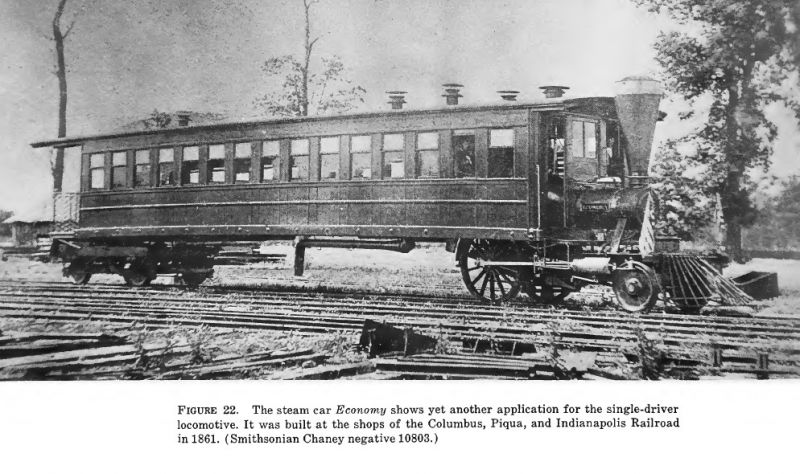
I found this steam rail car from 1861 on the web, predecessor of the doodlebug from the "ancient world?
[quote]
Double-decker + steam-powered = perfect!
But not as perfect as the same idea on the Boynton Bicycle Railway, something that I think deserved much more consideration…
I think I also saw him drive another car on an episode of Modern Marvels.
Jay’s also got some stationary steam engines, the oldest of which is (if I remember correctly) an English one from the 1830’s. Still works too.
I saw a show on the Speedvision Channel several years ago where he demonstrated it. He’s got a steam generator on the premises to run the stationarys.
Absolutely beautiful pieces of 19th Century technology!
But for big English steam, you can’t beat this!
https://www.youtube.com/watch?v=FuHJBIMj_rs
I’m not sure about this, but I think that particular engine is seen in the engine room shots of the 1958 film about the Titanic, “A Night To Remember,” or something very similar to it somwhere in Britain.*
Tea, cakes, and live steam, the Brits sure know how to throw a party!
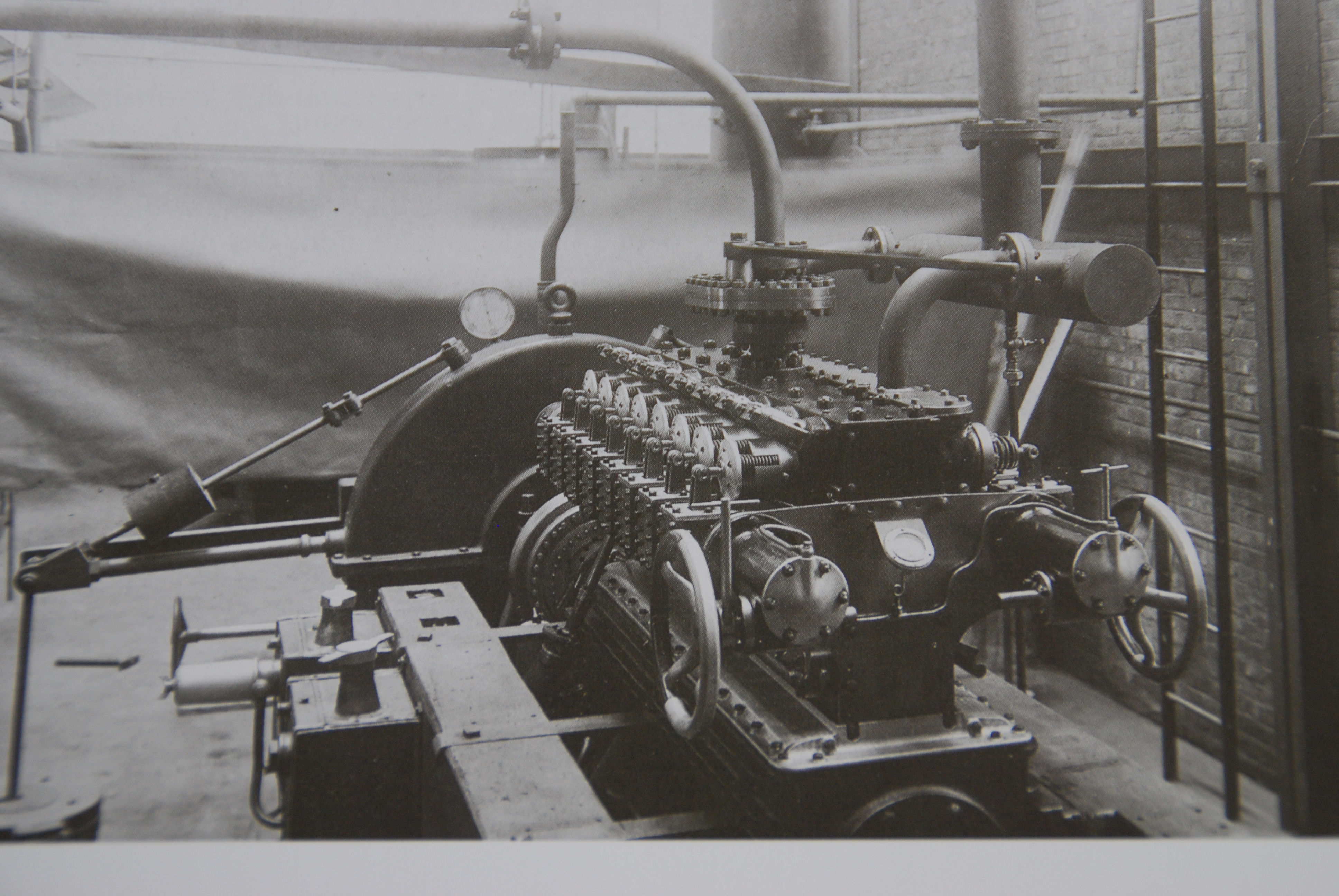
- The Cricklewood Pumping Station, Dollis Hill, London. Still in use but now electric powered.