Freight Rail and the Trucking Industry in the 20th Century

Excerpt from Yale Law Journal (1941) http://digitalcommons.law.yale.edu/cgi/viewcontent.cgi?article=5120&context=fss_papers The motor carrier industry of today has progressed far from its meager beginnings during World War I. Successfully resisting railroad efforts to stunt its growth, it has assumed within the past decade a position of substantial importance and has been largely responsible for returning transportation as a whole to a competitive pattern. Throughout its development motor carriage has displayed two distinctive characteristics. Intense competition between numerous small operators has gone hand in hand with and partly contributed to the steady process of unification of small carriers into somewhat larger units. More recently, and notwithstanding the Motor Carrier Act of 1935 with its requirement that combination transactions be “consistent with the public interest,” this unification trend has been proceeding at a constantly accelerated pace…

No problem in motor carrier unification is more fascinating or more crucial than fixing the role to be played bythe railroads. Today their interest in motor carriage is substantial and constantly growing, and while its extent is not precisely known, the trend is definitely in the direction of co-ordinated service between rail and motor carrie
Also people if you think it was easy to break into the OTR industry prior to deregulation your nuts. You had to prove to the ICC that you found a lane that was not being served by the current carriers they were given a chance to serve those routes first if they failed to meet ICC standards only THEN where you given the authirty needed to run on the routes you found. Yes while agriculture and other items where considered exempt and not regulated the other items that were regulated Lord help you if you wanted in on them.

Why did so many of the big carriers that were thriving prior to deregulation fail in the OTR industry 3 simple reasons. 1st off they were to rigid in how they ran their routes and could not meet changing route requirements. 2nd most of the larger carriers that failed had Union drivers and in the mid to late 70’s getting the Teamsters to agree to do anything that harmed the way they did business forget it that was not going to happen. Lastly carriers that were smaller and had been on the fringe could all of a sudden haul anywhere for any customer and for any price. As long as they made a profit for them they undercut the big boys and killed the larger carriers bottom lines. When it costs a carrier 1.50 to run a load and your compeititor can haul it for 1.25 a mile with the same service if your a company who do you pick.

It can be very difficult for those who weren’t around in the days of regular-route, common-carrier trucking authority (and the ranks of those who were are dwindling) to visualize just how rigid the rules were in those days.

The Jones Motor I went to work for in November of 1972 was among the nation’s 25 largest motor carriers, as measured in terms of revenue. (A proposed merger with Texas-based TIME-DC would have pushed us well into the top ten, but the deal fell through). But as with every other player in the game, there were plenty of gaps in the territory we were authorized to serve.

Eessentially. our territory consisted of, on one hand, most of the East Coast north of the Potomac, including just about eveywhere that counted in Pennslvania, plus the northern half of Ohio, southeastern Michigan, and much of Illinois (though we concentrated on Chicagoland and Metro St. Louis). We also served the I-81 coridor in Virginia, and were attempting to grow service in North Carolina – for which we had state-wide authority.

Any point not specified was off-limits; we did a good business in the rest of Ohio, but did so in cooperation with Lima-based Duff Truck Line, with which we formally interchanged traffic (including full trailerloads) at Akron.

That pattern of gaps prevailed throughout the industry, made for some strange strategies, and few carriers wanted to buy, sell, or trade their authority, So Cooper-Jarrett, known for prominence within the New York-Chicago market, had no authority into potentally-lucrative Detroit or anywhere else in Michigan. Branch Motor Express, a tough little outfit with its roots in the Garment Disrict, had acquired rights into Chicago, but was waiting to decertify the local union – and Branch succumbed to market pressures before the union’s rights expired – and so on, and so on.

When the economy contracted during the 1974-75 recession, I found employment with a pre-fab home builder

I worked for 10 years for a small LTL carrier out of NW Indiana which served Chicago to South Bend and then most of northern Indiana. I managed their “traffic dept” from 1980 until I left the industry in 1990…and saw quite a bit of change.

My employer did a heavy amount of interline business with most of the large carriers. You mentioned Cooper Jarrett (route of the relays), Branch, Jones, etc. We interlined with all of those. One by one, they fell off. Branch did have authority to Chicago but interlined to us at South Bend, until they shut down.

The relationships changed during the 1980s, from straight interline to “cartage agent” in which we would deliver their freight on their bills (as their agent) and receive a flat percentage, rather than interline splits.

We had interline agreements with over 100 carriers and did a large amount with Consolidated Freightways…they would bring 2 to 6 pups (28 ft) of LTL to our terminal nightly.

The advent of non union carriers, such as Conway (CCX) changed things dramatically. CCX was owned by Consolidated Freightways and was their hedge on union operation. CF ultimately failed and Conway is still in business (XPO Logistics purchased them 2 years ago).

Lots of strong regional LTL carriers failed…American, Associated, Branch, CJ, Crouse, Holmes, Briggs, Campbell 66 (Humpin to Please), Commercial Truck Lines of Indiana, Commercial Lovelace, Smith, Transcon…I could go on. I still have old routing guides downstairs in the basement along with a few tariffs, etc.

In 1990, I entered the world of sales with a large format screen printing company (decals, primarily to trucking fleets). I still have my foot in the trucking door, but it was a great decision to move into away. A few of my best customers are very passionate trucking company owners but they face challenges on a daily basis.&nbs

Heck fire Ed, you could leave out the word “regional”. Nationwide carriers such as Consolidated Freightways went under. It was amazing to watch, formerly financially rock solid motor carriers such as Gordons, Preston, Carolina, etc. just shut down in bankruptcy. Shippers were trying to find their freight in transit. It was sitting somewhere. But there was no one still working at the trucking company to answer the phone. If the phone hadn’t been cut off.

There never was a valid reason to economically regulate trucking. (Or railroads for that matter, but that’s another story.) But that didn’t stop the government. The government types always seek more power. The trucking industry sought regulation in the 1930’s. That ought to make anyone suspicious. Anytime an industry wants economic regulation (government control of prices and services) there is something rotten going on.

Professor Grant touches on the reason (but doesn’t develop it) in his awful article in Classic Trains. The “Problem” was that anyone could easily start a trucking business. There was little, if anything, that prevented someone from buying a truck and start hauling freight over the public roads. If you were already in the business you hated that. You didn’t want more competition. So the existing truckers sought regulation to keep new competitors out. With regulation a trucker would have to have “Authority” granted by the government to haul freight on specified routes. And price competition was not allowed.

MP173 mentioned the Campbell 66 (Humpin to Please) truck line. I well remember seeing their trucks–with a racing camel on the side–going through my home town in the late forties.

[quote user=“greyhounds”]

MP173
Lots of strong regional LTL carriers failed…American, Associated, Branch, CJ, Crouse, Holmes, Briggs, Campbell 66 (Humpin to Please), Commercial Truck Lines of Indiana, Commercial Lovelace, Smith, Transcon…I could go on. I still have old routing guides downstairs in the basement along with a few tariffs, etc.

Heck fire Ed, you could leave out the word “regional”. Nationwide carriers such as Consolidated Freightways went under. It was amazing to watch, formerly financially rock solid motor carriers such as Gordons, Preston, Carolina, etc. just shut down in bankruptcy. Shippers were trying to find their freight in transit. It was sitting somewhere. But there was no one still working at the trucking company to answer the phone. If the phone hadn’t been cut off.

There never was a valid reason to economically regulate trucking. (Or railroads for that matter, but that’s another story.) But that didn’t stop the government. The government types always seek more power. The trucking industry sought regulation in the 1930’s. That ought to make anyone suspicious. Anytime an industry wants economic regulation (government control of prices and services) there is something rotten going on.

Professor Grant touches on the reason (but doesn’t develop it) in his awful article in Classic Trains. The “Problem” was that anyone could easily start a trucking business. There was little, if anything, that prevented someone from buying a truck and start hauling freight over the public roads. If you were already in the business you hated that. You didn’t want more competition. So the existing truckers sought reg

I hold a BS in Business Logistics (Penn State - '71); the curriculum required 18 credit hours within that subject; I graduated with 24 of the 27 maximum offered. The course offered three options – Industrial Logistics (geared to working for a shipper), Carrier Management (working for a carrier) and Transport Economics (geared toward an academic career). The Industrial Logistics option was touted as offering the greatest earnings potential. Several recent grads were doing quite well – usually in the automotive industry where consolidation of component parts was critical. Carrier Management was popular among those who’d had exposure - (usually thorugh family) in trucking; several drove over the summer months, and one went to Canada to skirt age requirements. One of our number was heir- apparent to a successful family trucking line which, alas, turned out to be a sitting duck when deregulation hit home.

Interestingly, the Transport Econ courses, (all three of which I “aced”) were taught by a gentleman whose family had been in engine service on the NYC at Elkhart and Michigan City; those courses featured extensive economic exposure, including a history of the development of rate regulation, which included a field trip to ICC headquaters in Washington.

The overriding emphasis of the regulatory history course was that regulaton arose mostly in response to political pressures, evolved to a point where the necessity for rates sufficient to cover the rail industry’s high fixed costs (and a rate stucture designed to let high-value shipments cover most of the overhead) were recognized, but that rigid structure was imposed only a few years before the development of intercity trucking upset that balance. “Umbrella rate making” – the forced maintenance of artificially high rail rates to protect developing competition – was readily acknowledged and discussed.

Other courses included industrial traffic management

Excerpt from “Competing Modes of Transportation and the ICC” by Allen Schrag, University of Pennsylvania Law Review, July 1946 http://scholarship.law.upenn.edu/cgi/viewcontent.cgi?article=9208&context=penn_law_review The Barker Motor Freight case established the doctrinal rule on the permissible scope of coordinated rail-motor service where railroad “control” or “affiliation” has been shown to exist. The applicant, a motor carrier controlled by the Pennsylvania Railroad, proposed to purchase the property and “grandfather clause” certificate of an existing motor carrier. Cognizant of the valuable service which a motor carrier can perform for a railroad under such circumstances, particularly in transporting less-than-carload freight from a key point to between-points on the rail line, but fearful of the competitive consequences if a carrier controlled by a wealthy railroad with an efficient traffic-soliciting force were permitted to enter the motor-carrier field and expand its service operations over the acquired motor-carrier routes, the ICC adopted a compromise solution. It agreed to approve the acquisition provided the applicant restricted its new operations to service “auxiliary or supplementary” to that performed by the Pennsylvania Railroad (in its rail operations) rather than service in competition with rail and motor carriers, and to stations on the railroad’s lines.

OK, here’s the email I sent to the editor of Classic Trains. We’ll see if he responds.

Mr. McGonigal;

This communication is to express my extreme disagreement with the article “Railroads, Motor Carriers, Superhighways” by H. Robert Grant.

First, let me state some of my credentials. I hold a Master of Science in Transportation degree from Northwestern University. I also have a MBA from Loyola-Chicago. I worked in intermodal marketing for the ICG Railroad and RoadRailer. I also worked in market research for Navistar, which was then the largest North American manufacturer of medium and heavy duty highway trucks. I’m now retired.

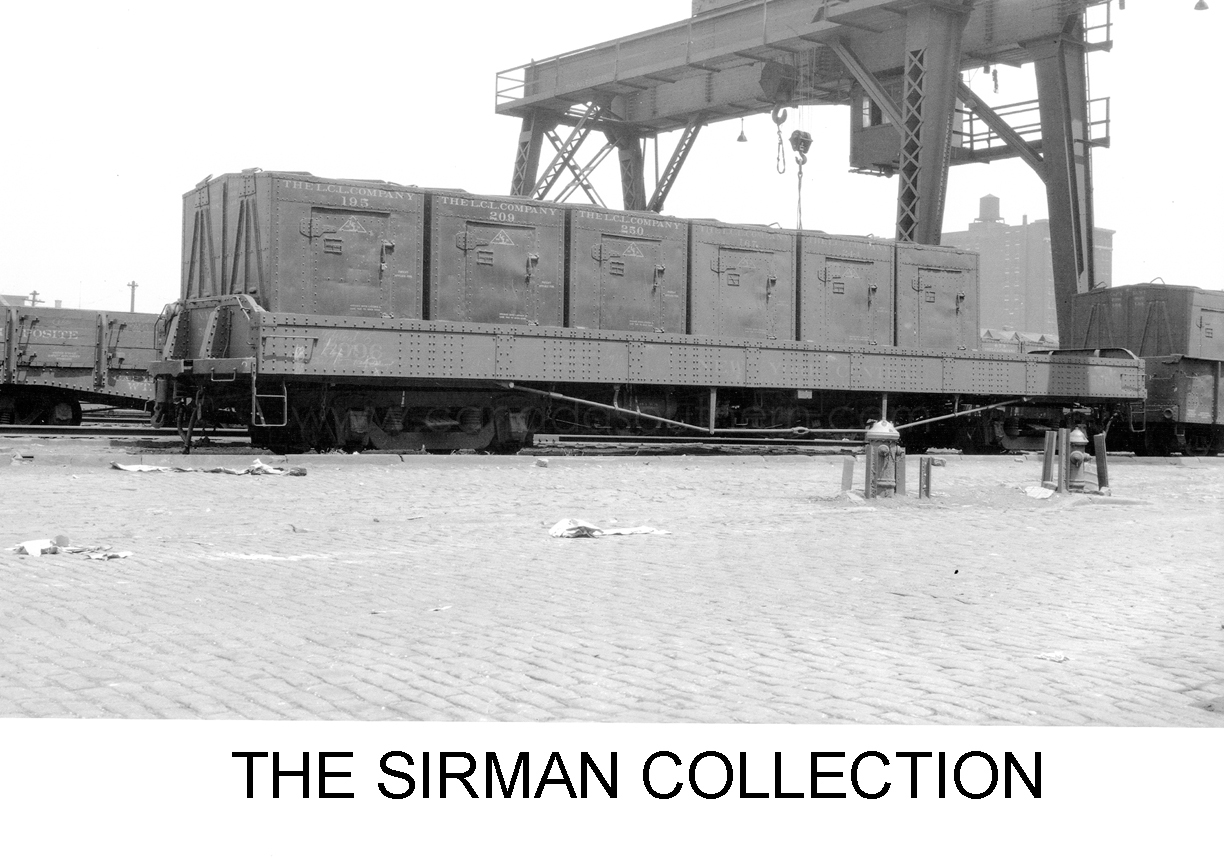
My thesis at Northwestern was “The Transportation of LCL/LTL Freight by Railroad”. I got the idea for the thesis topic while interning on a LCL/LTL freight dock at 1601 S. Western Ave. in Chicago for a freight forwarder, Merchant Shippers, in 1975. I watched a constant flow of smaller freight shipments arrive, move across the dock for sorting, and be loaded in to TOFC trailers and boxcars for rail transport. Despite what Professor Grant says, Larry Provo’s C&NW actively solicited and sought this business. (It’s easy to take a quote out of context.)

Greyhounds—good response!

I have never thought much of H. Roger Grant as a writer. He wrote a book about the Chicago Great Western, some articles for North Western Lines (the Chicago & North Western Historical Society magazine), and other articles for various publications. None were very good. He seems to lack any insight into what he writes about; just a superficial recitation of facts, figures, and anecdotes. I would not say he has “a left wing bias” but is more clueless than anything else.

For anyone interested in this topic there is a world of solid information in the previous messages posted here; far better than anything of Grant’s.

One thing to remember is the magazine editors generally do not commision articles but depend on submitted articles, and are at the mercy of what comes in. Many people have knowledge but never write about it; if you have a story to tell, write it, and submit it!

Kurt Hayek

https://archive.org/stream/transactionsof43amer#page/1012/mode/2up

http://www.canadasouthern.com/caso/search/search.php?zoom_sort=0&zoom_query=CONTAINER+&zoom_per_page=20&zoom_and=0&zoom_cat[]=0

Again, special thanks to wanswheel for his excellent historical research and documentaton.

OK, I wrote and submitted a story about this long ago. It was accepted and published in the March 1994 issue of Trains.

I didn’t recall Grant as the author of the CGW book. I bought it and it remains one of the very few railroad books I declined to finish reading.

In the book Grant indicates he was attracted to the CGW because its leader welcomed and sought regulation while other railroads fought it. Well, Duh! Anytime a business seeks economic regulation there is something rotten going on.

The CGW was constructed late in the game and depended on inclusion in a government enforced cartel for its existence. So, Hell Yes, they sought regulation. (A cartel will use too many economic resources to produce a given economic output. But the members do get paid at the peoples’ expense.)

I formed the opinion that the construction of the CGW was a method of fleecing money from communities that were not on the railroad network. At that time, being left of the network significantly limited any community’s economic future. So they were more than anxious to fork over funds to get the CGW built. Of course, there were great profits to be made in the construction of the line. And not so much in its operation.

And Grant just doesn’t appear to understand any of this.

Greyhounds, I hope that Classic Trains not only responds to you personally, but also publishes your response to the misinformation that has been published.

Article on pages B1 and B2 of today’s Wall Street Journal says the Over-The-Road common carrier companies can’t find enough drivers, mainly due to the better wages elsewhere and long times away from home. Instead, the people who might do that are going into construction and the energy sector. About 50,000 will join the industry this year - but 150,000 to 200,000 are expected to leave it in the next 18 months - the existing pool of drivers is aging pretty quick, among the other reasons.

What an opportunity for the railroads - esp. the intermodal side - if they could just get their acts together.

  • PDN.

With the way the carriers are being operated in the ‘EHH Era’ that they are now in - it will be time to furlough a few thousand more operating employees and drive away a few hundred more customers.

Actually the Mega Fleets are the ones that have problems keeping drivers carriers like JB Hunt Swift England the ones that are screaming driver shortage. Those of us in the industry that treat our drivers like human beings aka pay them well give them decent equipment to drive get them home on time don’t play games with them on dispatching them. Well right now I have a waiting list of applicants for when I need drivers. Last year where I work we had a turnover rate of 15% and that was all due to retirements. England had a turnover rate of over 150%.

And then folks’ll complain that this group or that group is taking all the driving jobs when, in fact, we’re handing them to them on a silver plate.

The editor of Classic Trains did respond.

He thanked me for my email and said that he had forwarded it to the article’s author, H. Robert Grant.

We’ll see where this goes.