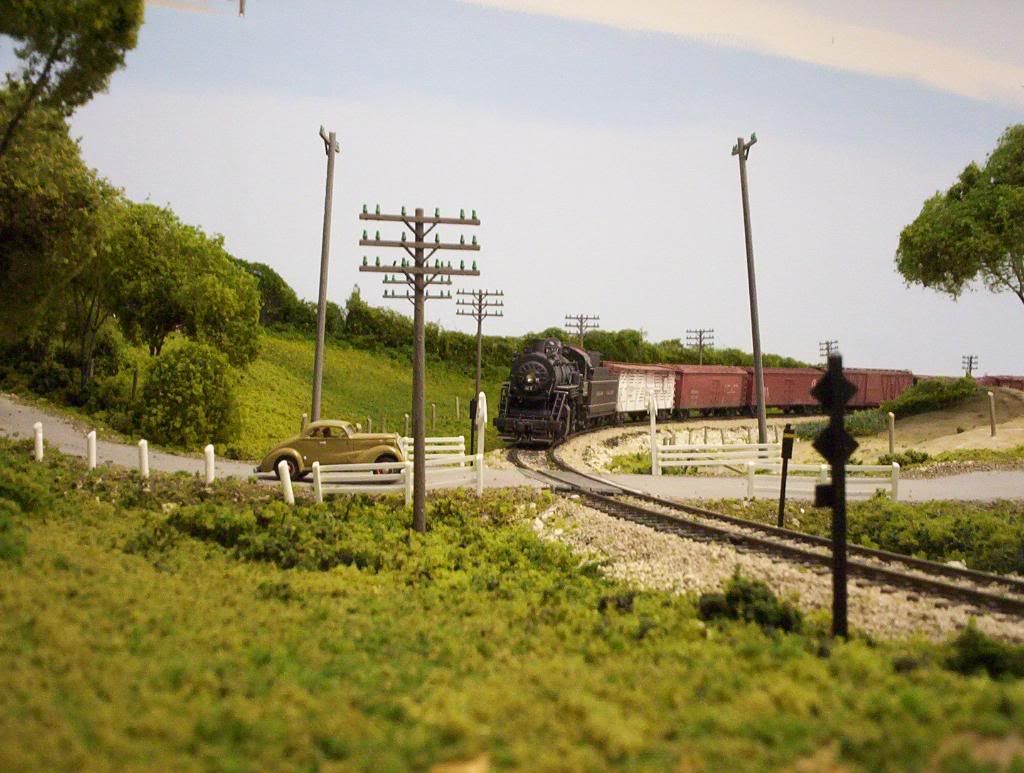
For scenery (ballast, ground-cover, etc.) I use ordinary white glue, thinned with water…
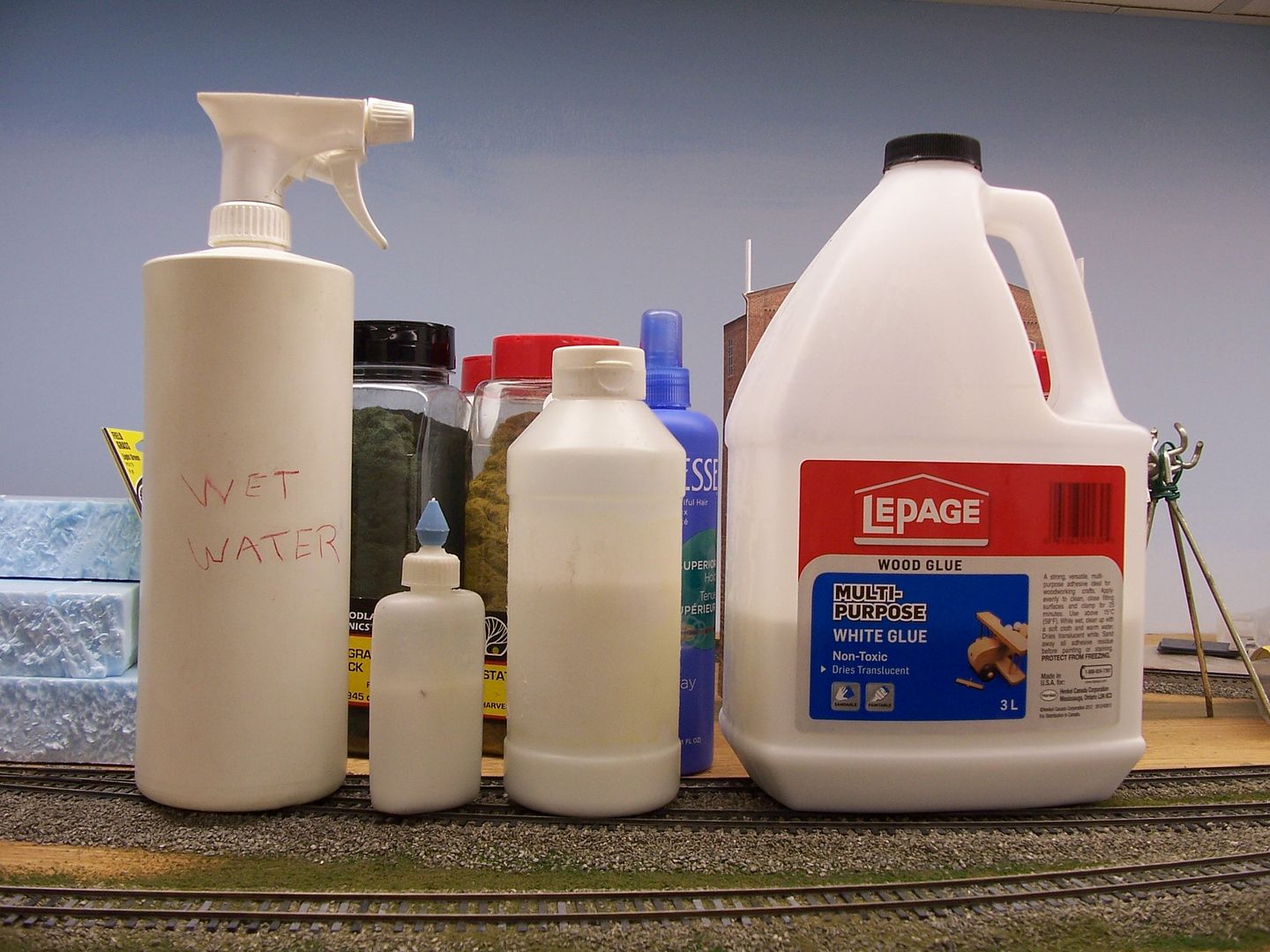
I usually add glue to the bottle (next to the jug of glue) about 1/3, then fill it with water (if you have especially hard water, use distilled water instead, available in gallon jugs at most supermarkets…I cleaned-out the collection bucket on my dehumidifier, and use the collected water both for thinning white glue, and for applying decals). After adding the water, I shake the mixture vigourously (and do so every time I plan to use it), then fill the small dropper-type bottle (blue cap) with the diluted glue.
The sprayer, labelled “wet water”, is suitable water, as mentioned above, with a few drops of liquid dish detergent added. This makes the water less viscous, allowing the water (and the diluted glue, when it’s applied) to easily penetrate through the scenic material (ground foam, ballast, real dirt, etc.).
To add ground cover of almost any type, apply it dry, spreading it as necessary. Once it looks the way you want it, the sprayer (hopefully one which will put out a very fine spray) is used to thoroughly wet the material…in most cases, I’ve found that it’s best to initially spray upwards, letting the droplets fall onto the scenic material. Once they’ve been dampened, you can then spray more directly (otherwise, the direct spray may simply blow-away the scenic material).
To create scenery that will stand the test of time, it’s preferable that enough water is applied that it will penetrate completely down through the scenic material - this will insure that when the diluted glue is applied, it too will penetrate right to the solid base.
Here’s some wetted scenic mat