Who needs the television?! These films oughta
keep you busy for days!
3 Likes
Thanks for the link.
I finally combed through all 48 pages of those films. If anyone else dug into them very much, they would see that not all these films are railroad films, although some are pretty interesting in themselves.
These are called outtakes which means they are film edited out in the creation of some larger story which now is lost apparently. So the presentation is going to be choppy and a lot of them. But it doesn’t really matter. With only a few exceptions, these films are from the 1920s and and early 30s and are a rare and incredibly valuable look into the railroading of those times, very very different from the world of today..
I’m going to start a curated selection of the Railroad films with commentary about what I observe in them. Stand by.
One thing that should be stated about these films, before you watch them, be sure to read down into the commentary with the dates and a few details about the film. The dates especially are really pretty important to the films,
The first two films are not action packed with lots of detail, but do show some interesting things.
The first one is a Pennsylvania railroad ballast cleaning machine of some kind. It’s peculiar because it only cleans the ballast between the two tracks, which I find odd, maybe some railroader can explain that. You also can see the earlier Andrews trucks on some of the hopper cars. And then the distance is an unidentifiable Pennsylvania steam locomotive pulling the train.
The next film is an award ceremony with a lot of dignitaries talking. It was made in 1929 and was one of the very earliest sound films ever made. The visual I found interesting about this was that with each generation of these guys sorted by age, they have a different shirt collar. The oldest guys have the late 19th century standup winged collars with the tiesort of holding it up, then the middle aged guys have the celluloid collar with the rounded edges. Not a whole lot of railroad content, but still interesting showing the different generations of railroad management.
1 Like
This one was filmed in 1920, well before the advent of sound film. The Notes describe it as a wreck on the Chicago and Alton Railroad. There’s lots of detail to see in this film, and wreck films in general actually. The first thing you see is the 4-wheel pony truck of the locomotive laying across the track. Next is the tender on its side, with its arch bar truck clearly pulled apart into pieces… showing the fragility of these trucks which led to their eventual banishment. The passenger equipment still has truss rods as part of the underbody, meaning that this style of car is quite old and wouldn’t be on the rail much longer.
Along the right way you see what you’re going to see in a great majority of these films, complex pole, lines with multiple crossarms carrying open wire telegraph and telephone lines, some for the railroad company and some for the telephone company. These lines persisted into the 60s, I remember seeing them along quite a number of railroads, but technology eventually caught up with them not long after, they are nearly all gone now.
And at the end, you can see the roof of the locomotive cab above the wreckage. It’s very flat, more typical of earlier engines than the 1920s, which makes me think that this engine was probably a 4-4-0 or 4-4-2.
1 Like
I forgot one thing it should’ve been mentioned, and that is the 4 wheel streetcar going under the wreck on the overpass at 30 seconds into the film. It was sheer luck that train didn’t go off that bridge onto the ground below.
The ‘outtakes’ are from newsreels, which were an early and enthusiastic user of early sound in movies. Some of the ‘hokey’ scenes were shot for ‘color’ to be edited into a presentation telling a story (like the one with three then-new B&M T-1 2-8-4s running parallel) and there was something of a trope that getting people to ‘speak’ was natural, even when it is painfully obvious to us now that the speech was stilted and rehearsed, perhaps even being read off a card by people uncomfortable with sight-reading…
A fascinating sample of this is the first couple of takes in the D&H locomotive-washer clip, where obvious enginemen are using what the film producers thought was railroad jargon – and if you listen a few times and are familiar with American Irish accents, you can figure out what the script was saying about labored engine cleaning over half an hour that a new system will accomplish in a 30-second runthrough…
… which we then see demonstrated on at least one 2-8-0 with an open cab window (!) when I suspect not only the spray water was very hot but laced with Oakite, an innocent-sounding ‘cleaner’ that was a fairly strong solution of acid.
I saw that open cab window and wondered if that guy was going to close it or not before the spray got to it.
Stand by. These films are loaded with details all worth talking about and it will take a while to get to all of them, if people don’t mind. I find all of this incredibly fascinating and very interesting although some may not.
Historic railroad film, film 4
The next film for some reason, focused downward at the ground on the right of the way passing the train below. After that sequence, around 2:53, the film gets to some scenes at a depot where what I believe to be an Erie ten-wheeler is stopped with a passenger train. The train shuffles back-and-forth a couple of times obviously trying to get a better take to use in the news reel.
Noteworthy here is the very deep and soft chuff of the locomotive, which says saturated steam. Plus, the two passenger cars are still truss rodded even in the late 1920’s. Most of those truss rod cars were originally wood sheathed but some got rebuilt with steel sides. It’s hard to tell in this video what it really is. If it’s wood, it is extremely well and smooth smoothly finished. The train itself is only two cars long, which to me suggests it’s not an actual train, but rather some equipment dedicated to the filmmaking session.
The second set of sequences is set at a country depot with a passenger train approaching in the distance. There are two takes, apparently to choose the better one for the actual presentation, which we don’t see of course.
The scene is very everyday and typical for thousands of rural stations in those days . The multi-arm poles for telegraph and telephone wire, the freight house with the boxcar spotted, the unpaved grade crossing, the lonesome 5-chime whistle squalling for the crossing, and the drum beat of the locomotive approaching, all long-gone and very evocative of a long past time in history, which makes these films especially valuable.
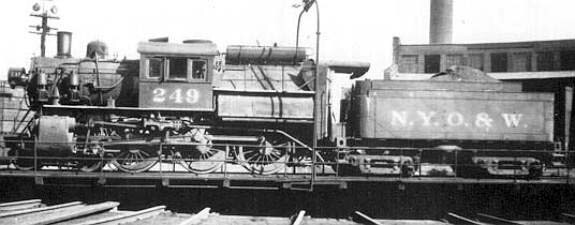
As the locomotive pounds up and passes, observant eyes can see it is a Camelback that appears to be number 241. The tender rolls past, large letters on the side appear to have been painted over, but not completely enough that repeated looks at it eventually reveal it to be the NYO&W.
An eight car passenger train rolls by, all truss rodded coaches, no head-end cars. I believe these are wood cars by looking at the millwork around and under the windows. The film was made in 1928 so these cars would be pretty old by then and probably won’t be on the rail much longer. This film also appears on an O&W website where it is called camp train, I’m not sure what that means, possibly being a chartered train to take youngsters to summer camps, since the location of the film is stated as being Bear Mountain State Park in New York.
A sister to the 241:
1 Like
This would not be on the NYO&W ‘proper’ but on the West Shore, on which the Old and Weary had trackage rights south to Weehawken, NJ, opposite Manhattan. That line runs directly past Bear Mountain…
Thanks. My knowledge of railroading in the northeast is below zero.
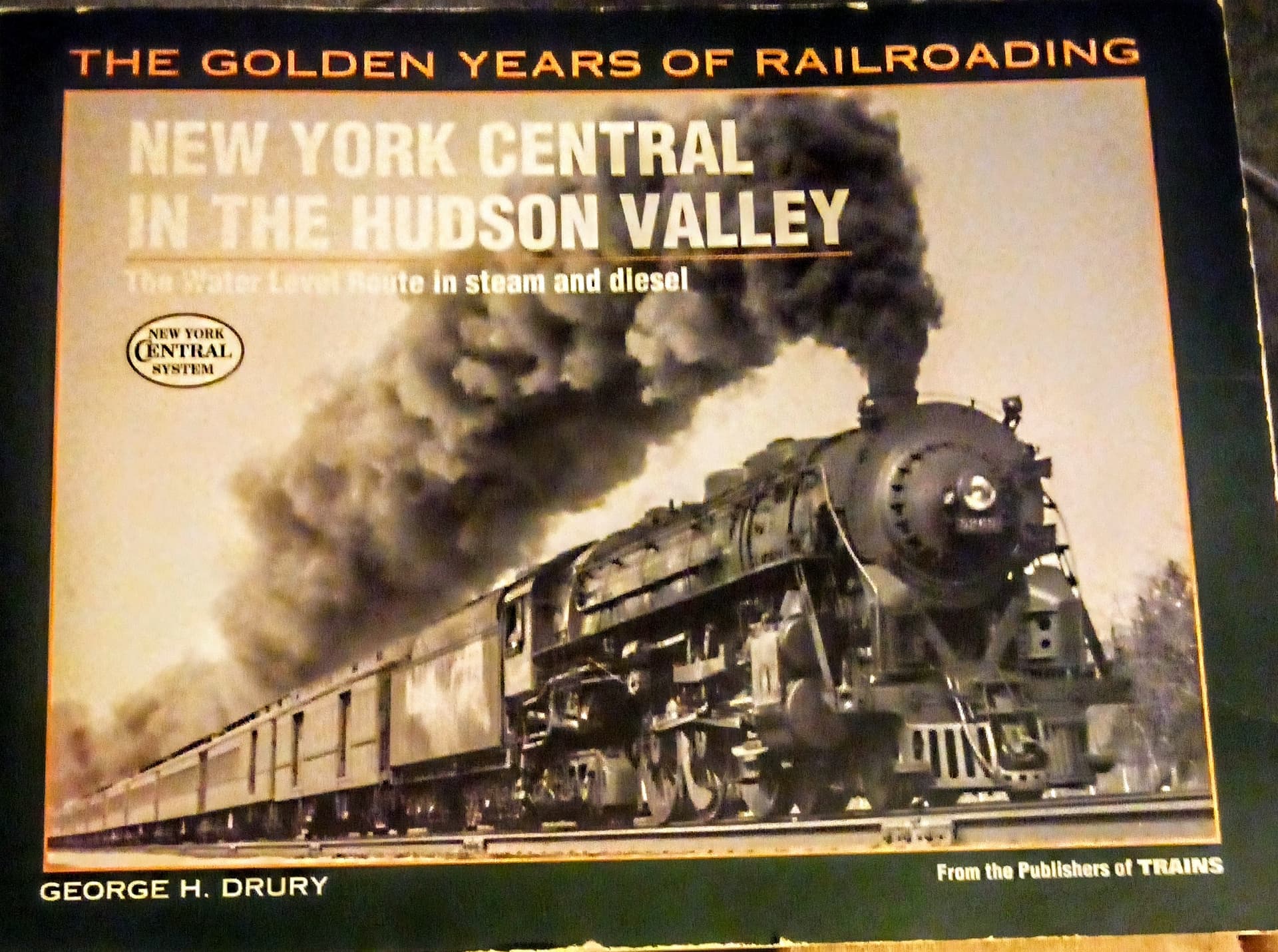
There’s a great book on the region by Kalmbach Publishing if you can find it called: New York Central in the Hudson Valley by George H Drury.
1 Like
https://youtu.be/TStjLRu2Pm4?si=AjmI24sCxwnX6spM this film turned up, the same film with commentary added, and some bonus Pennsylvania New Haven footage
2 Likes
Live link:
1 Like
One of these movies on the list above is worth looking at:
Prince of Wales in Australia–outtakes - Fox Movietone News Collection - UofSC Digital Collections
This appears to cover the 1920 visit of Edward, Price of Wales to Sydney, Australia.
It starts off with the Prince inspecting all manner of military troops and veterans, including an inspection of HMAS Australia. It then cuts to the 1920 NSW Royal Train, apparently at a press presentation where the train was run forward for the camera. I’ve seen still photos of this train at this location but never a movie. The two locomotives were painted blue for the occasion and in fact an HO model was produced a few years ago The locomotives are Class NN 4-6-0s
If you find the first half boring, you aren’t alone. The Prince, when another Royal train derailed is reported to have said “At last, something not on the programme”.
Peter.
1 Like
A derailment not on the programme.

I watched the half with Railroad content. I’ve always thought that Australian railroad equipment was and still is a very pleasing mix of British and North American practice..
I’m going to watch the first half a little later on, even though there’s no railroad content it looks like a very good view into the pomp and circumstance of 100 years ago.
Before we leave the subject of Australian railways, I thought this might be something of interest.
1 Like
Stories like this always touch my heart. Thanks for posting this tribute to Bob.
I believe the US also had such a train-traveling dog, but his name escapes me.
Harry Truman is supposed to have said, “If you want a friend in this world, get a dog.” I concur. (pardon the pun).