My latest layout design is a freelanced small harbor in South Carolina. If I go with this idea, I’ll need a couple of ships in the harbor. It’s modern-era, and the layout as a whole is 108" x 78.5". I’m not too familiar with coastal shipping, but I know that larger ships won’t work anyway. Could someone more familiar with this kind of thing point me in the right direction?
Sylvan offers several kits, but most are lake boats rather than coastal steamers.
In the link, the HO scale Lakes Class steamer could, I think, fit into the scheme that you want to create.
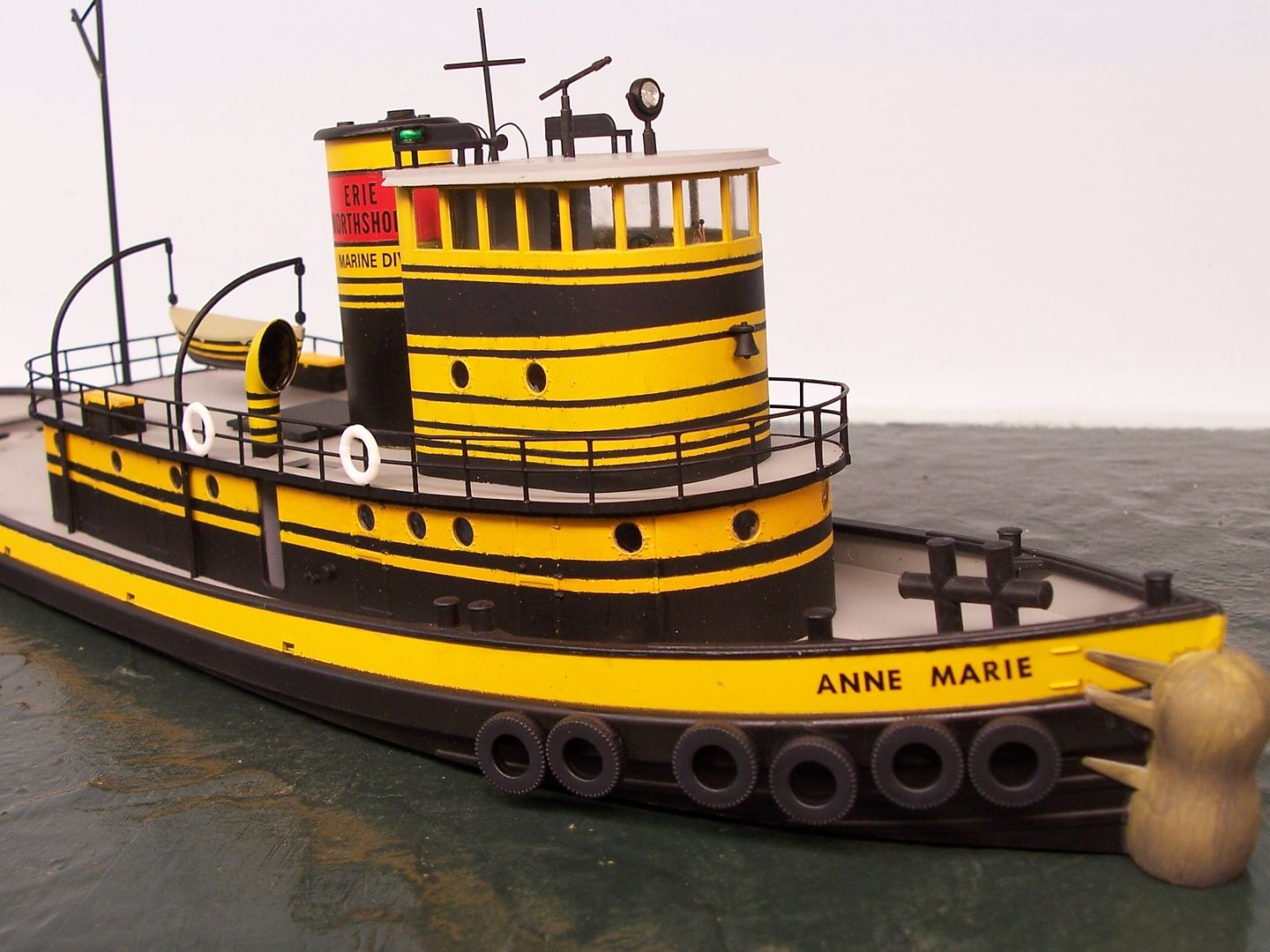
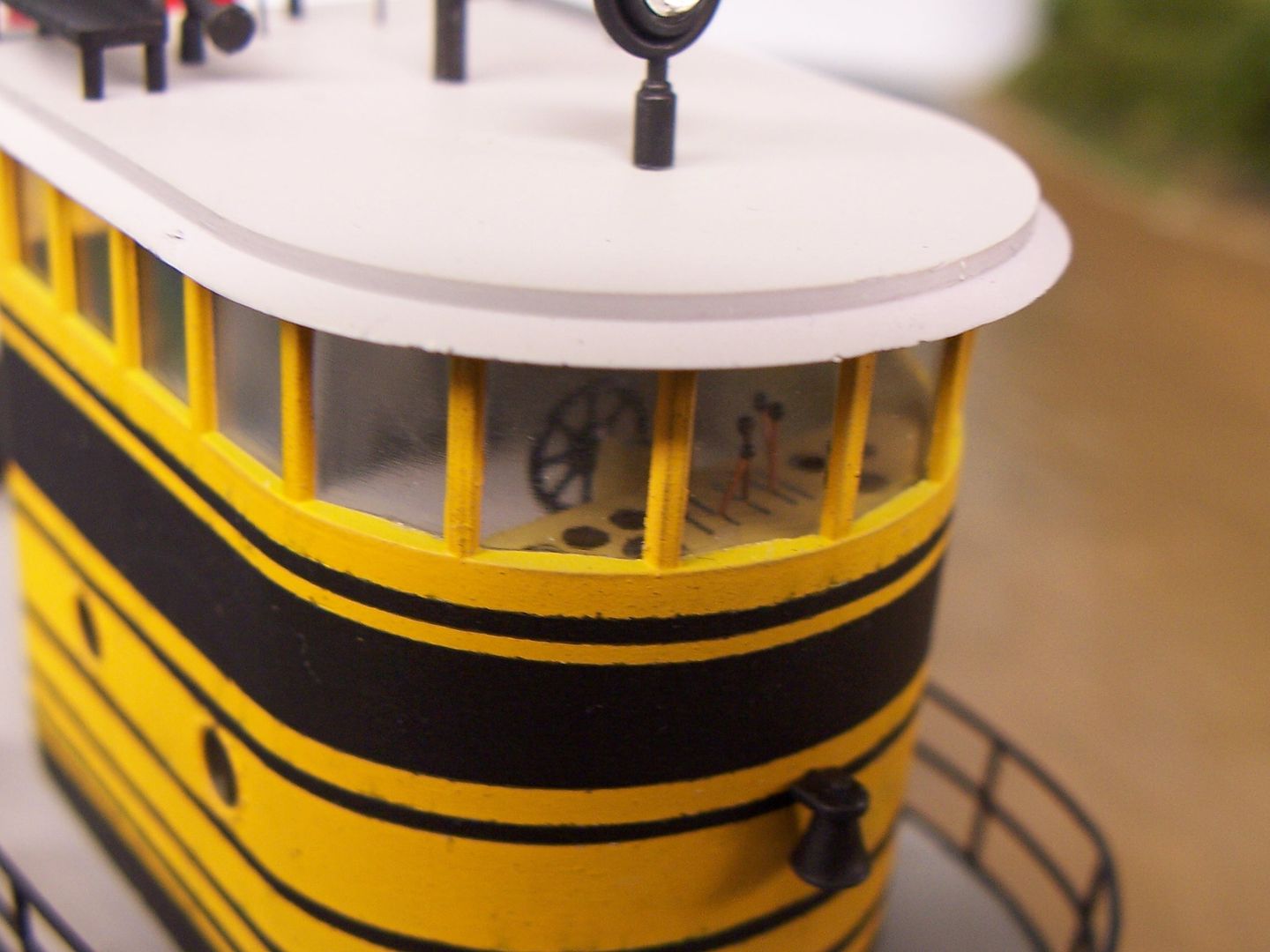
Walthers also offers a nicely-done tug boat…I built this one for a friend…
offers several kits, but most are lake boats rather than coastal steamers.
In the link, the HO scale Lakes Class steamer could, I think, fit into the scheme that you want to create."
The “Lakers” (Lake Class) were cargo ships built in Great Lakes ship yards. The were built for service on the oceans and used around the world some into at least the 1960’s.
They are a different design than the bulk cargo ships used on the great lakes and are designed to go through the Seaway to reach the ocean. The bulk cargo carriers used on the lakes were larger and could not sail to the ocean.
Thanks for that additional information. I knew that the lakers weren’t appropriate for coastal work, but wasn’t sure of the origin of the name Lake Class, especially since they look somewhat like the ocean-going ships I recall seeing in some movies from the '40s and '50s. I can’t say whether they’d be suitable for a current day layout or not, though.
I live only a mile-or-so from Lake Ontario and about 15 miles from the Welland Canal, so am fairly familiar with the lake boats - many of them also served the steel plant where I worked.
The entirety of the harbor on this layout design is about 80 inches long and 45 wide. Given the scope of ops on this proposal, a generic or small bulk freighter would be most appropriate, of course given that it could fit. The freight cars would likely be used would include boxcars, hoppers, flatcars, etc. I’m not planning any intermodal ops on this one. I could of course use modeler’s license and have an old ship still around. I’ve heard of old secondhand warships from the WWII period still serving in some places, so I could see something like that happening with a merchant ship.
What I was told by a person who I believe knows about such things was that ocean going cargo/commodity ships are assigned to one of four classes, Lake Class, Panama Class, Suez Class, and Open Water Port Class.
These are the largest of these canal systems that they will fit through. Thus, a commodity ship that would never leave the Great Lakes could be bigger than Lake Class, because it does not need to navigate the system to reach the ocean.
Open Water Port Class ships can be huge, because they will never go through the Great Lakes, Panama Canal, or Suez Canal.
I do not remember what the exact order is from smallest to largest, but I do know a Suez Class ship is larger than a Panama Class ship.
I like your approach. In addition, I enjoyed the part about the bridge, considering that I would need to scratchbuild or kitbash something to fit on my proposal.
On another note, I remember those old GE units. They were close to retirement when I was coming of age, and mostly were used in the yards (at least where I was at the time). Seeing an EMD SW1500 with a GE B23-7 switching is one of my most cherished railroad memories.
Also, there are fairly small barges on specific routes. The Port of Richmond (VA) handles barges that come up from Norfolk. They’re a little over 3 feet long in HO, but you could make a convincing model about 2 feet long.
You can only model a very short piece of any ship that might interface with a railroad.
The largest ships are ULCC (Ultra Large Crude Carriers) which don’t fit through any canal system on Earth as far as I know.
Crude oil tankers mark out the upper limits of modern shipping. In downward order of size: ULCC, VLCC, Panamax, Aframax and then steadily smaller. Some of the smaller tankers are the ones that serve the Atlantic seaboard of the USA.
A Liberty ship from WWII would be 7" wide and more than 40" long at 1/87 . That’s a very small cargo ship now.
According to Wikipedia the early container ships were converted from WWII era T2 tankers. About 70’ by 600’ (say 10" x 70" very roughly) to give you an idea of the scope of the difficulty you face.
Even back to pre container days you’re going to find it difficult to model in 1/87.
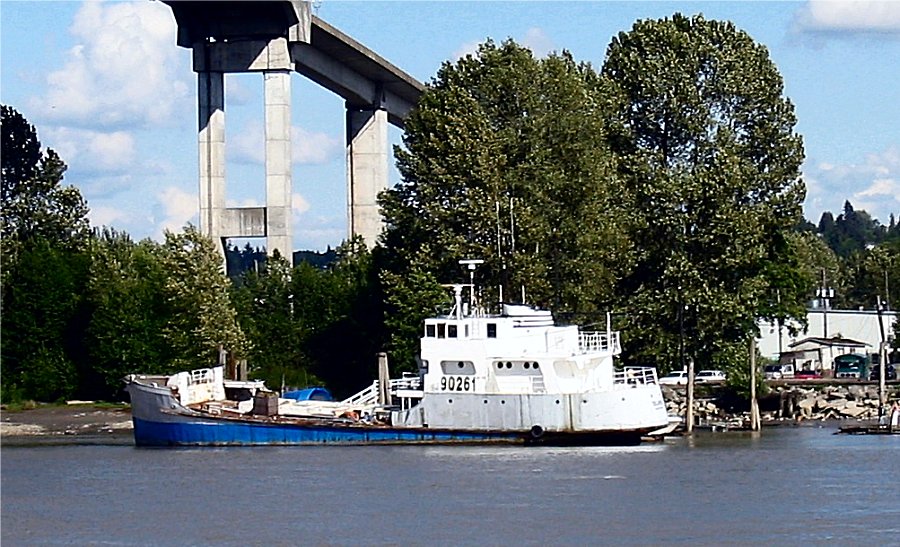
On the B.C. coast, small vessel shipping is plentiful as the coast is full of small communities. Maybe adjust your thinking and go for something a little different.
How about a barge and tug setup?
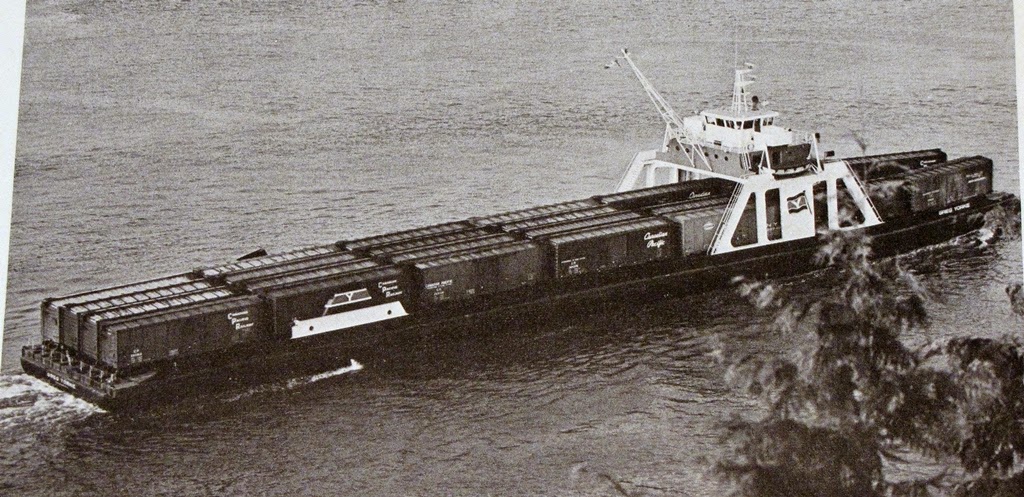
How about a small rail ferry? That would allow a loading apron.
Thanks for your kind words, Victoria. My friend wanted it lettered for his late sister, but was surprised and pleased that I also used the paint scheme of one of my freelanced railroads…
This is just an example of what shippers can do to get into smaller ports:
This is a small container barge unloading. I think it’s only about 6 containers long, maybe 4 wide and 4 deep. It seems to me this was in Hawaii, and I remember watching and photographing this while eating breakfast on the bow deck of a cruise ship.
Also, isn’t South Carolina on the ICW? That can only handle small ships. Maybe research that a little and see if pint size freighters used the ICW.
Googling this topic revealed tgatvCharkeston harbour recently welcomed the largest ship ever to visit that port, a 15,000 TEU container ship from Brazil. Only 1,200’ long…