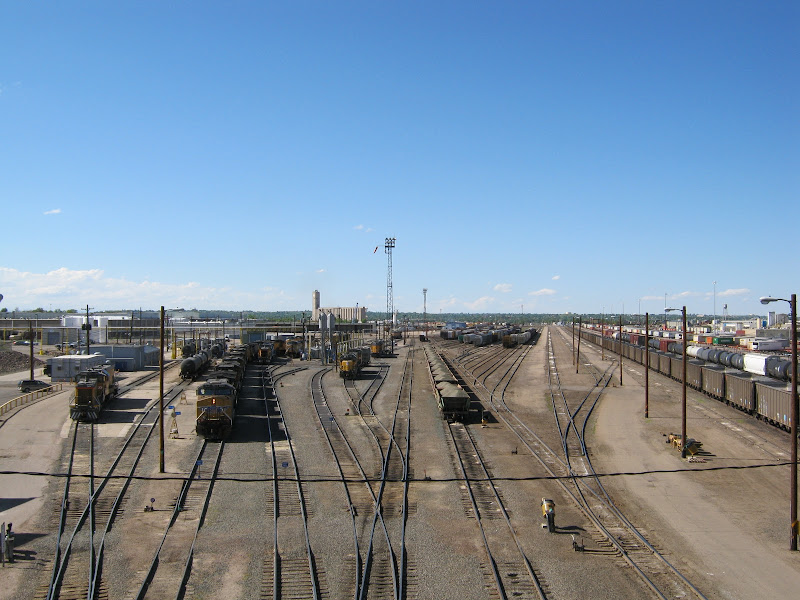
I would use the finest dust I could sift out of yard dirt, or from roadside dirt. Even so, it would be a bit oversized. For fidelity to the scale, you would be better off using plaster of paris and staining it. Nearest the tracks, a dark wash.
My recommendations would be for initial ground cover nothing works better then real dirt. Lately I have been using sifted dirt with great success. That is providing that the color of the dirt in your back yard or where you acquire it from is the shade your looking for. All dirt is not the same. What you do is simply dig up about as much as you figure you may need several quarts to start off with is usually more then enough. Spread the dirt out on a dollar store cookie sheet, don’t use one of your wife’s unless you like living dangerously. Set the oven at about 400 degrees and let the dirt bake for about a half hour. This not only sufficiently dries the dirt but also kills any microbes that were alive in the soil. You are building a model railroad not a science project. Once you’ve let it cool off you should run a magnet through the dirt to remove any iron deposits that may be in the dirt. Iron as you know is a great conductor of electricity and hence will cause shorts if it comes into contact with your powered track. You can toss it in a jar or container or sift the dirt and put the sifted contents in one jar and what ever else is left behind.in another. In my case our local dirt has a lot of little stones or pebbles in it and they make for great talus. After you have spread down a layer of straight white glue apply your dirt ground cover just as you would with any other type of ground cover.There have been some cases where I have spread the dirt down first then sprayed it with 70% Isopropyl Alcohol as my wetting agent and then secured it with Mat-medium or 50/50 white glue. for the ballast or I have used Arizona Rock & Mineral Southern Pacific fine cinders. It’s black in color so thats what I choose for my engine servicing terminal but you can use any real stone ballast of your choosing. it’s your railroad so what looks good to you is all that matters. You can also stretch fine cinders or some colored ballast with colored sand. You can fine it in any craft store. I have also seen where guys us
I seem to recall years ago someone using a combination of real dirt and plaster. If Andy Sperandeo sees this. he probably has the answer as that it really looks Southwestern.
Wabash2800, that is what I used, but I feel, now looking back, that the dirt I used, even though sifted through pantyhose, is coarse. Particles about 4 thou or so would be okay.
What do you think about mixing real dirt in with fine N scale ballast like Highball ballast? I think that may work well. I’ll do some experimenting until I figure it out.
There is no need to use the same material too thick, as it is only the top layer that is seen. I use regular ballast as a fill layer; just to avoid wasting the fine material. I then apply the fine “dust” on top. I have tried spraying some hairspray on it before applying the glue; It is to make it stay in place, and it works really well.
Well used yards have a very compacted, dense, mainly dirt, surface to them and often the ties have settled to, or even slightly below, ground surface level, with only thin evidence of ballast around them. Honestly, the yard in your photo looks to be in better shape and more maintained than most I’ve seen in reality!
Mikelhh has the replicating of that “nasty looking” appearance of a well used yard’s ground surface down pat (see his pix on page 2 of this week’s WPF). Hopefully, he’ll post to this thread with details of his approach at some point.
My own method to modeling this appearance would be to largely sink the trackage into a thin (in thickness), very soupy, layer of plaster which had been tinted a dirty brown. Over this, once dry, I would apply a very thin layer of finely sifted real dirt with some dark n-scale ballast mixed in, applying a higher ratio of ballast to dirt in the immediate area of each storage track.
Once all of this is laid down, soak the entire area with alcohol and then matte medium, until all the dirt breaks down to just a slurry. This will dry with an essentially smooth, dirt-colored, surface containing imbedded ballast.
Give the yard plenty to time to fully dry. Then come back in and start applying multiple thin overall washes consisting of what might be found left over in a jar of nasty old thinner used to rinse your airbrush/paint brushes in. Lacking that, a diluted mixture of Floquil Weathered Black and Grimy Black would give about the same results. When this is dry, come back and give some spotty, darker, washes here and there to give the impression of spilled oil, lube, etc. Also apply a few spots of very fine (virtually dust) sand on the tracks from the locos and also evidence of some spilled products.
This approach should give you the appearance you are looking for.
The surface you are looking at isn’t "dirt’ its “Chat” or very fine rock used for a walking surface in a yard. There are asphalt paved roads on either side of the yard tracks. Al the track surfaces in the picture are ballasted. Note the gravel road cutting across the tracks in the foreground is the same color as the ballast because its the same material.
While there probably is a coating of dust over the whole, thing, its not “dirt” for the most part. Note the ballast in the cut of air dump cars in the foreground is the same color.
Use the finest ligth grey ballast you can. Then mix some latex paint of your "dust’ color into the glue you use to fix the ballast. When you dribble that glue mix over the ballast to glue it down it will coat everything with a dusty color (ties and ballast). That gives a uniform color, but is still “transparent” enough to let the underlying materials show through. If that isn’t enough, use tan, light brown and off white chalk dust to weather the track and ballast. Note that a lot of the light colors are suff dumped between the tracks. the track next the cut of wide nose engines obviously has sand marks on it and the switch lead and the runner track, as wellas the A/D tracks on the right have spots where stuff has come out of the cars.
I would definitely use n scale ballast as it’s finer than ho. I’d mix it with some same colored dirt or sand, finely sifted, dust like. I think Dave’s on to something, mixing paint in with your ballast glue. This yard is well maintained, it looks like the whole area got sprayed with weed killer, there’s no green in sight. Grass between tracks isn’t a mistake if your modeling a maintenance deferred line. mh
You’d have to have an awful lot of iron in the dirt to cause any shorts. The reason to run the magnet and pull out any bits of iron, is to keep them out of the motor, not really an issue with can motors, but it could be with open frame motors.
I’m in the process of putting in a yard - 8 track stub end in HO. The “trackage” is on a 3/32 inch layer of cork, which raises it slightly from the “ground”. I painted the cork a dirty brown/grey color, and will put in the ground cover when the wiring is done.
I’ve walked several yards over the years, and every one was dirty and cluttered and not a pretty place. I’m looking to improve upon my memories, but still want something halfway realistic. I suspect I’ll end up with a base of brown foam, and ballast of brown/grey/black as I am modeling the late steam era.
By the way, in my youth, I used old coffee grounds for a lot of ground cover. They were first spread on foil and dried in the oven, and for a young teenager, it worked out just fine.
I’m enjoying the yard pictures, please keep them coming.
Get yourself a coffee bean grinder so you can make the sifted dirt or bought ground cover items as fine as you want. I first sift my dirt then do this. I also have started to do it to my sand and dirt mix I now use for ballast.on my N scale layout.
You didn’t put a smile icon [:)] or [;)] on that post. Are you serious? Graphite might not be magnetic but it certainly does conduct electricity. Catches fire too. Just ask the person in our club who used some to lubricate the slide contacts connected to the turnout motors. [#oops]
For those that don’t know that would be the loco facilities of the D&RGW (now UP) North Yard in Denver. Shot it taken looking north off the 48th street Viaduct.
Anyway, I would start by mounting the track on a flat sheet of something rather than on roadbed. That eliminates one more elevation that would have to be smoothed over. Then I would make certain the track is operating flawlessly. Then depending upon if you are concerned about the weight or not would determine the material. If you need light weight Woodland Scenics makes some foam filler putty. If weight is not a consideration there is always plaster. I would make it thin and kind of pour it in then wipe it down as it got dry and pasty. Only do a small part at a time so the plaster doesn’t dry prematurely, because if you make a mistake the fix is chiseling. Just as it is almost dry I would rough it up with a towel. THEN a fine sprinkling of the smallest ballast would finish off the look.
Thanks Tex, and everyone else for all the great suggestions. I’ve used that foam putty on the elevated tracks to make a slope. I’ll probably try that for the yard too.
I think I will use the highball ballast N scale fine, and mix some dirt in with it. And then use a black wash for the oil stains.
Bad suggestion, I retract it. I did not realize that it would conduct electricity. Aside from the obvious conductivity problems, it would be too expensive to use as yard cover even if you wanted to. [sigh]