How do you weather your trains?
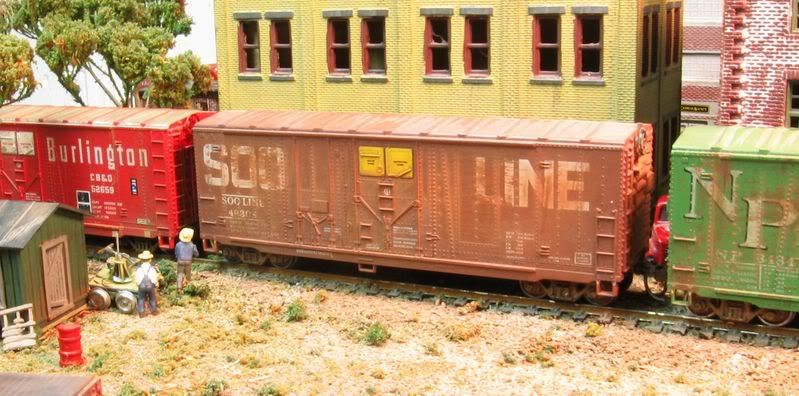
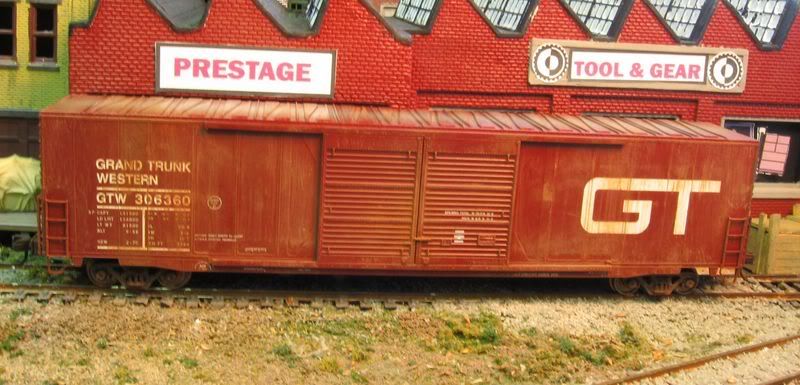
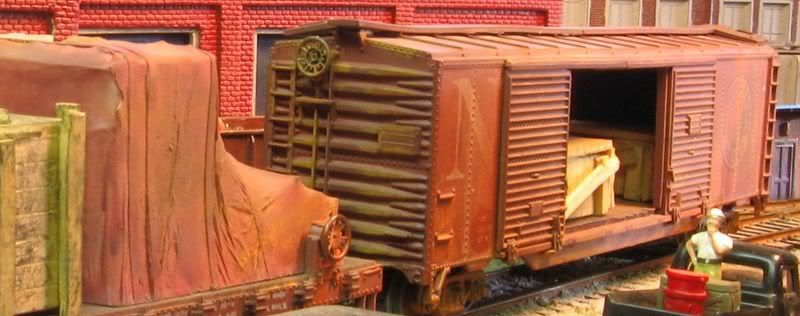
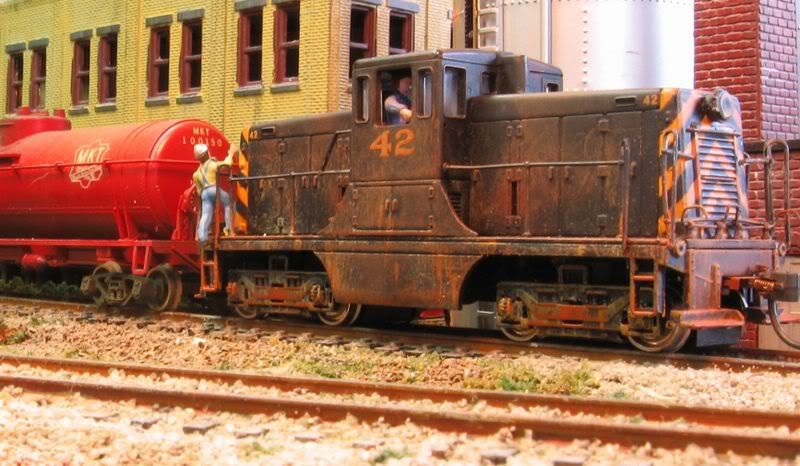
I’m far from being an expert, but I’ll tell you anyway. I go out and get as many pictures of the prototype as I can get. For the particular engine I was doing I was able to find 5 pictures on the Internet. Then I took each section of the loco and tried to figure out what caused the color distortion I was looking at. Was it carbon, exhaust, oil leak, gas spillage, splashed dirt, built up grime, foot prints, etc.? Then I would slowly work my way through the engine and duplicate what I saw. Most of the photos showed the engine pretty clean, but still there was some wear.
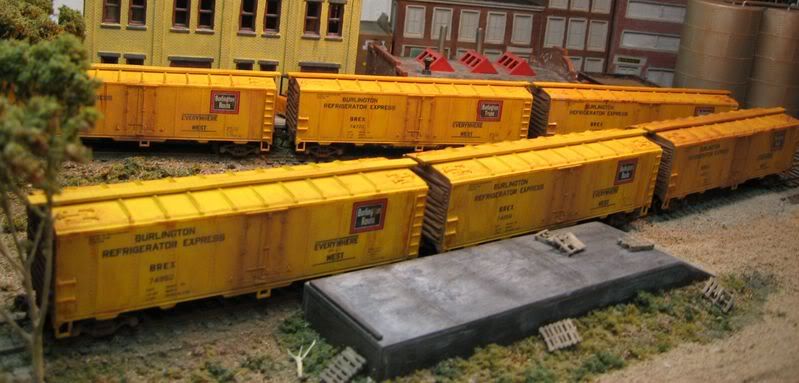
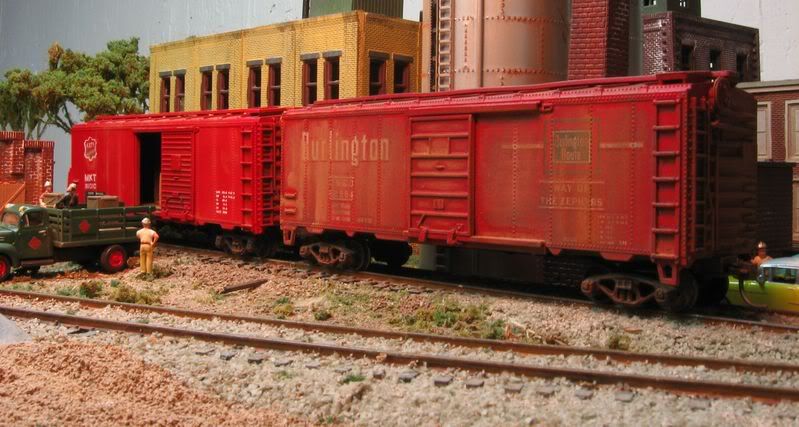
I generally go for a light weathering. Some faded paint, maybe a little rust here and there. Almost all of it is done with a fine paint brush and acrylic paints. On the rust areas I take a clean wet brush and drag it through the rust paint, thus smearing it a little. For the faded look I use flat colors and spray them down with Matte-Finish (I prefer it to Dul-Cote).
With professional weathering sticks of course. Like these…

Heres a caboose I weathered about 15 years ago. Its not very good, but its all I have right now to show you.

First I look at photos & color slides I’ve taken over the years to get ideas. If you do not have your own photos you can look in books about trains, look at photos on line, or with out going on rr property look at rail yards or busy main lines take your own photos. I like to use chalk, india ink wash, dry brush with paint, & markers. Practice on junk cars or scrap plastic to get it down. Just do a little at a time…let it dry…see how you like it…if you need more than you can add some…some use dull coat to seal the weathering. I like to go with an india ink wash first…this gets into all the seams, bolts, door frames ect…all the places grime would collect. then I like to dry brush to add fading or rust streaks. Then I like to add chalk to give that flat look of old paint.
This thread will self destruct in 5…4…3…2…
BOOOOOMMMM!!!
[:D]
Wheres the guy who weathers his trains by dropping them in a fishtank?
Just when we need a pro, they’re gone…
I save up $40 and have aggro weather my cars [:)]
-
Chalk
-
air brush
-
india ink
-
rust forumla
There is no general weathering pattern for everything. How a car weathers depends on the type of car, era, locale, loads the car would carry and more. Instead of learning how every type of car or loco weathers, the easiest way to get accurate weathering is to find prototype pics of your model. You don’t necesarily have to copy it rust streak for rust streak just try to get the overall look.
The best way I have found to learn new techniques is to experiment. If you have an idea try it on a scrap of stryrene or cardboard until you get the results you like. One thing to remember though is that lighter weathering usually looks more realistic and you don’t want to overuse rust.
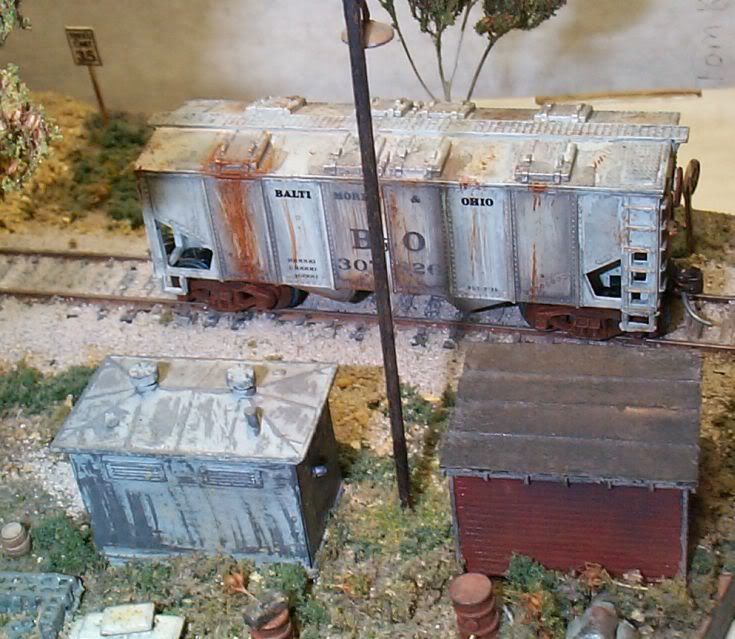
An easy technique I have found through experimentation is fading lettering which really helps a car look aged without looking overweathered. To do this mix an acrylic paint of color similar to the main color of the car with some water. I don’t have an exact ratio I just go by gut feeling. What you want to do is make a fairly thick wash that flows like water but doesn’t spread the color too much. Brush this over the entire car with a wide, soft brush. Then take a paper-towel and wipe off much of the wash. Wipe vertically to add streaks to look like streaks from rain. At this point it’s better to remove too much paint rather than too little as you can always add more but it’s near impossible to remove it without damaging the car paint once it’s dry. The goal is to end up with less contrast between the lettering and the carside with some visible streaks. I have had good results with this technique using white paint on a light grey covered hopper.
Now go try weathering something. It’s the only way you’ll learn. Just remember to experiment and keep it light.
Chad