The Little Joes were an order of electrics built for Soviet railways, but by the time they were completed, the State Dept had banned the sale of strategic goods to the USSR, leaving them orphaned. Some would wind up getting sold to the Milwaukee Road, some to the South Shore, and some to a railway in Brazil!
1 Like
The GN engine was a large square engine (sorta kinda like the CUT engines) that was in a wreck. GN bought FT bodies from EMD and kitbashed them into a new body.
1 Like
Somewhere in storage I have a picture we took of one of the P-motors at Harmon. There had been a mention in Trains Magazine of just how long the end platforms on some of the SD40-series locomotives were, which included a phrase like ‘heck, there’s room to set up a card table and deal’. We brought a card table, and chairs, and yes, there was room on that end platform to set up a card table and deal…
3 Likes
@Woke_Hoagland , oh PULEEEASE find that photo and post it! What a great anecdote!
4 Likes
For sure, I love those lightning stripes. Flashy looking in a classy way. I only have one striped loco, a Rivarossi E unit that acts as supplemental power when my Niagara takes the excursion train out to play.
There was an article in Trains written by a mechanical department guy, with great stories of when diesels were first put in service. He summarized with cost figures. Compared to EMD, cost of ownership for Alcos was significantly higher, and costs on FM and Baldwin locos were worse yet. I like seeing the variety of stripe treatments on the various nose shapes, but in the end, money talked and the other guys walked.
2 Likes
They also put them on GP7 and GP9’s

The below locomotive was the replacement for the electrics sent to the NYC
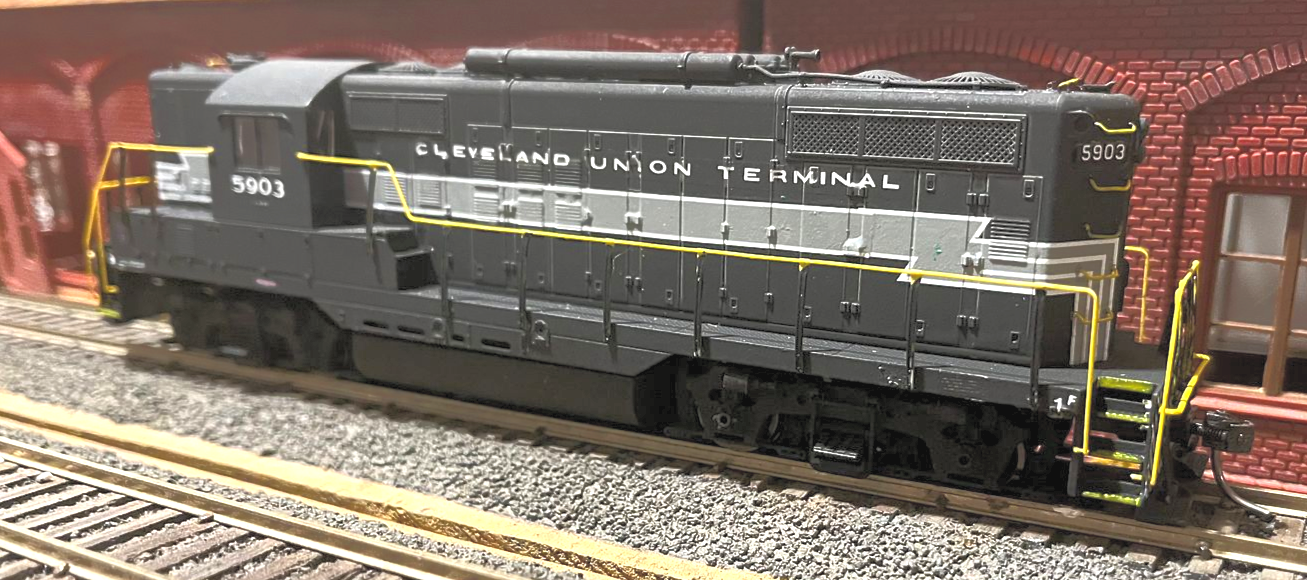
Rick Jesionowski
5 Likes
Our trains do not have Lightning Stripes. If they did the train would have to arrive on time. Cannot have that happen.
David
4 Likes
I don’t think the NYC or CUT were on time, so it doesn’t matter! Those Geeps do look good!
1 Like
From several years ago, Club member Murrays train and modules, “Sunshine Farm”, on the Clubs modular layout.
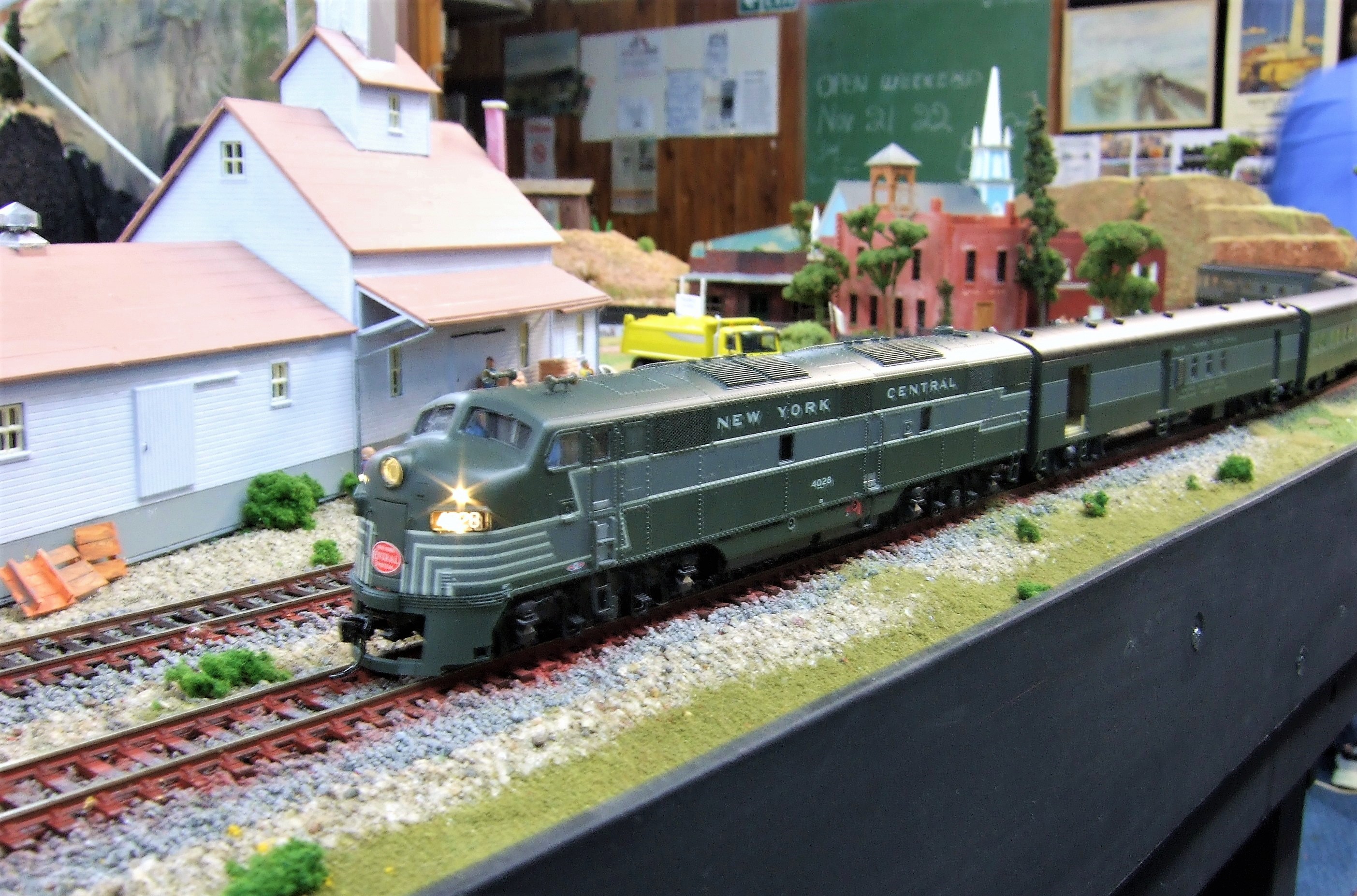 NYC@ Sunshine Farm by Bear, on Flickr

5 Likes
Torpedo Tube Geeps! Love them.
Did someone say Cleveland Union Terminal? 
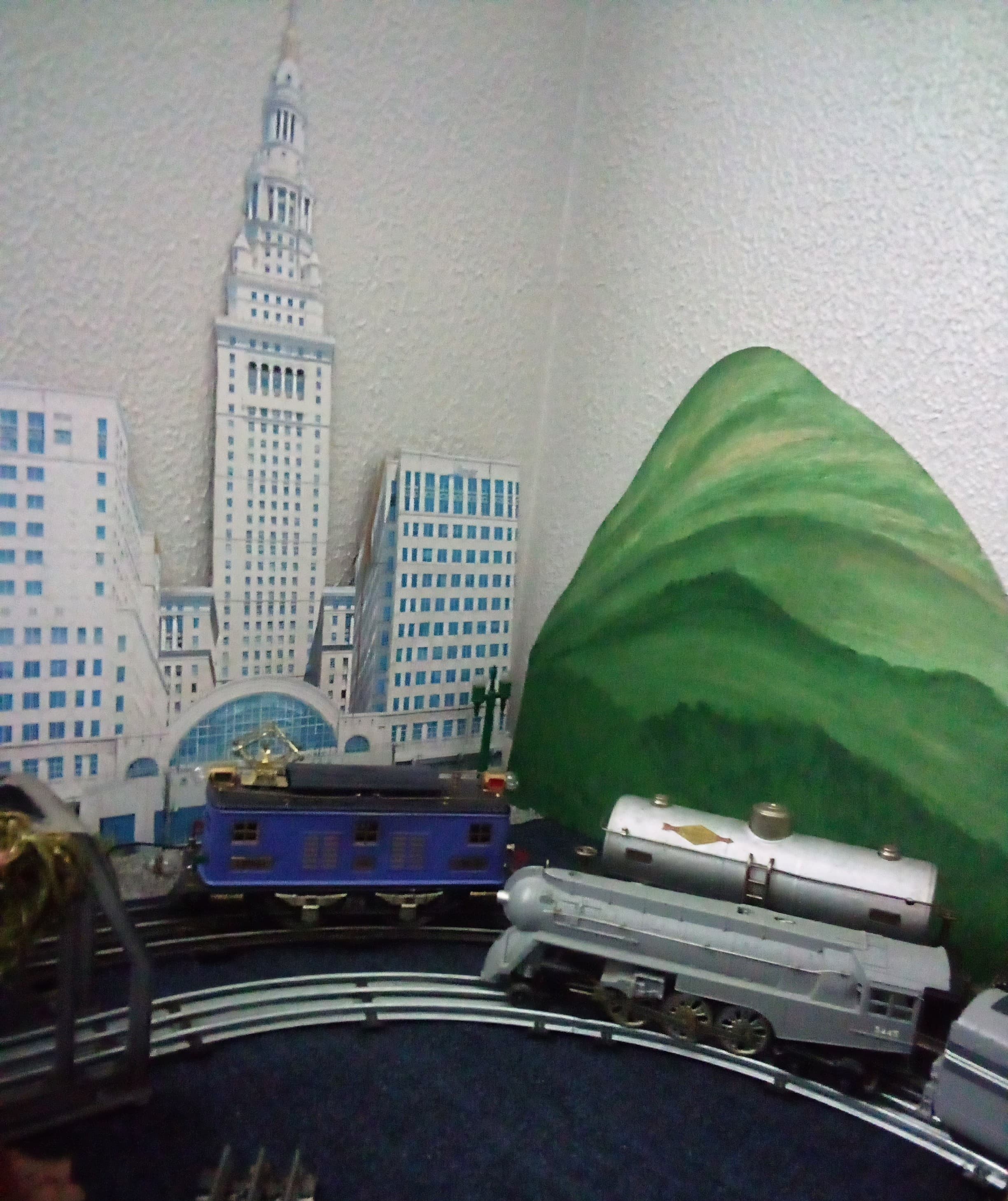
Best I can do is a Standard Gauge #8 T-Motor in custom 2 tone blue paint with a 402/408 pantograph replacing the tiny original one. (Is it a crime to have an NYC boxcab pulling Blue Comet coaches?  )
)
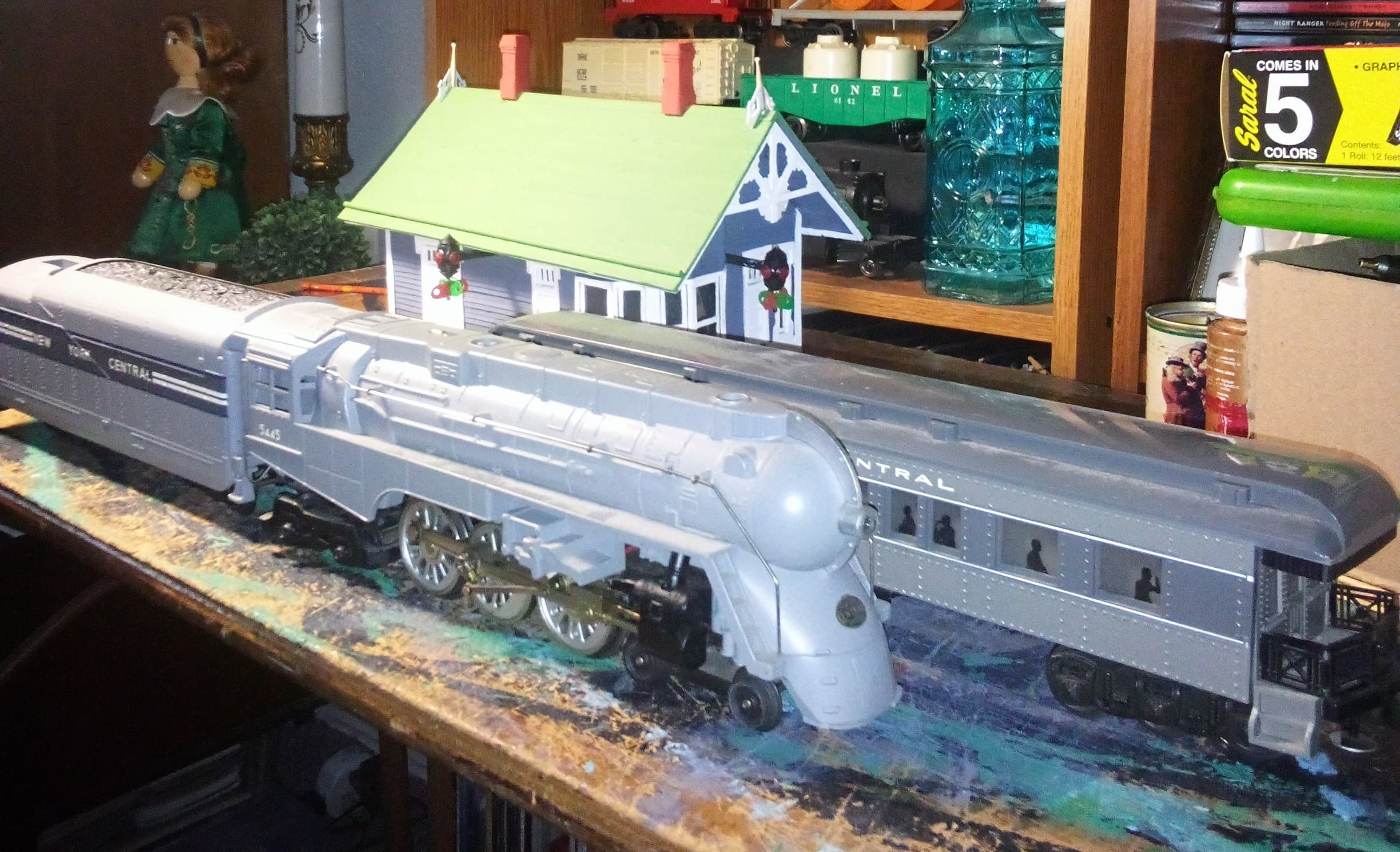
My “brainless” MTH ProtoSounds 2, 20th Century Limited Dreyfuss Hudson and one of the 3 Williams heavyweight cars (baggage, coach & observation) in 2 tone gray that I run with her. I say “brainless” because at the time this loco was cataloged in the mid 90’s nobody was aware of the damage a certain type of power supply would cause to the QSI circuit boards. So I ended up removing them and she’s hotwired to run on DC 3-rail.
3 Likes
I’ll buy that for a dollar! I love the McGinnis paint schemes as well. And I know I may get a rap on the mouth for saying it, but I also loved the Amtrak “Red nosed baboons” too!
2 Likes
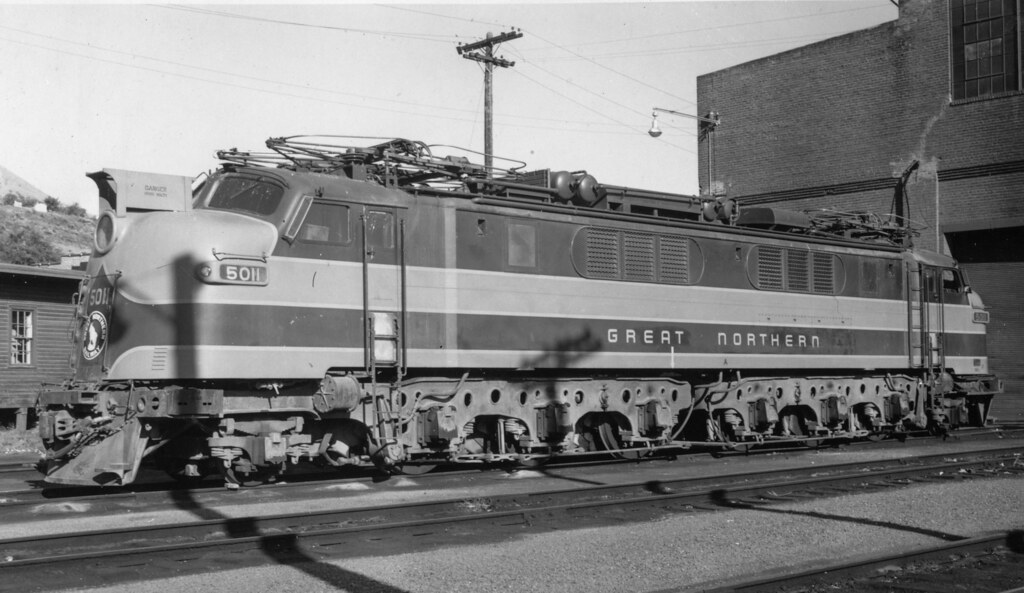
What is that “mailbox” over the headlight?
1 Like
I will have to get some confirmation on this but from what I understand is that the ‘hot side’ (11,000 volt catenary wire) and the pantographs were tied together by contacts between locomotives. That box housed the contact with the necessary springs and jumpers to tie the electrical continuity together between locomotives (or ‘motors’ as they were known). The Y-1s used this system for a while but I don’t know the time period when it was implemented.
 GN by Mike Keyes, on Flickr
Reading Railroad commuter M.U. cars used a similar contact setup.
 Reading 852, Philadelphia in September 1964 by Marty Bernard, on Flickr
Maybe it helped them get over unpowered frogs? [lol]
Regards, Ed
4 Likes
Thanks, Ed.

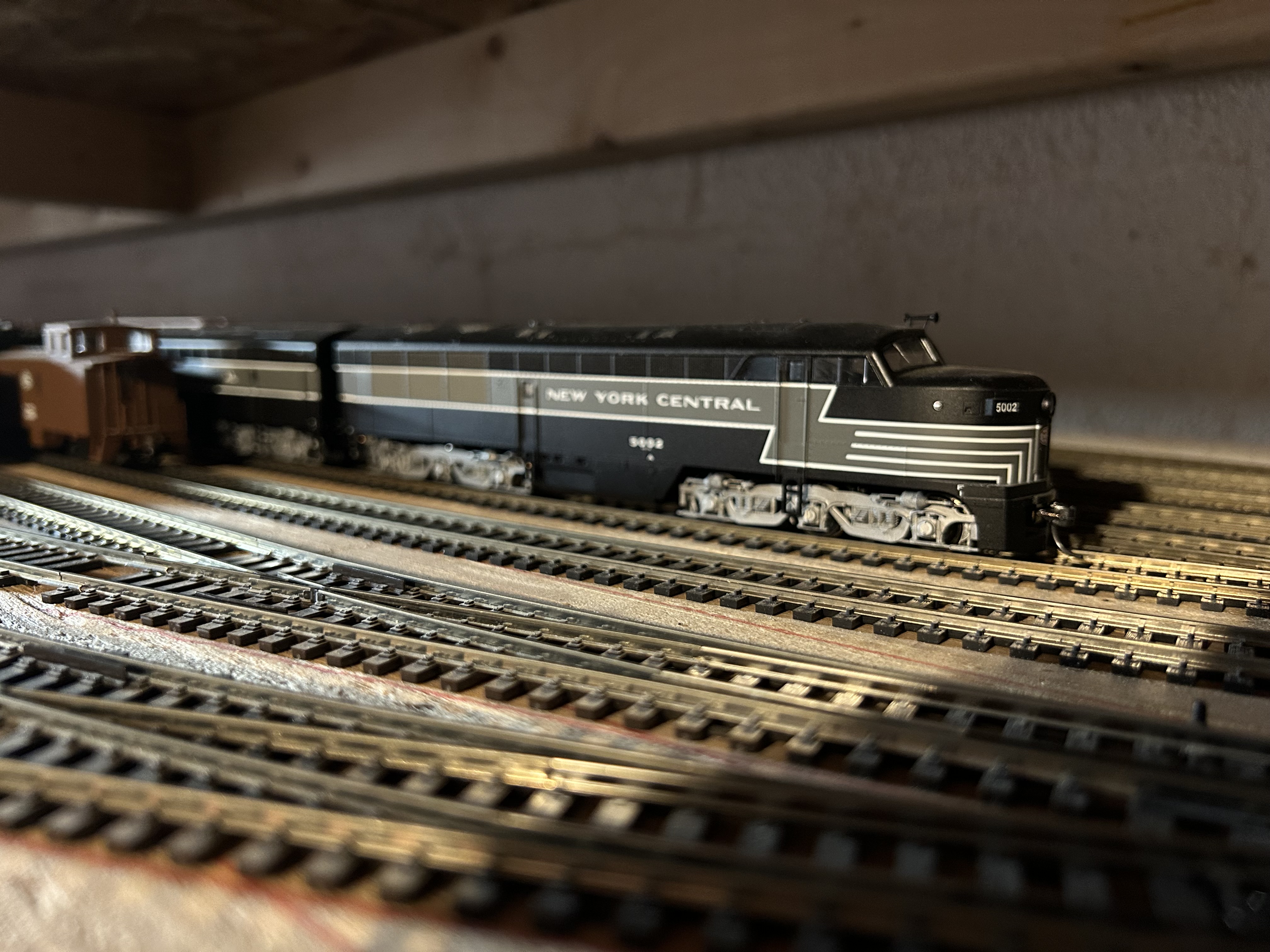
I wonder if the simplified ‘cigar band’ style came in to cut costs before all the first-generation stuff was weeded out. Certainly no few of the NYC and Monongahela Sharks got the bands.
As with the PRR T1s, there were equipment trusts on that early, fragile, hideously expensive diesel-electric stuff. A great wave of ‘rationalization’ of Baldwins followed when Ecolaire stopped the ‘warranty coverage’ of parts for all those individually-customized Baldwins, circa 1970.
But I confess that, as a railfan, even a Gertie with her oversized shoes and baby face and drips and ground faults everywhere was delightful to see in lightning stripes…
1 Like