Improving Our Steam Engines Performance

I’ll admit right up front, I am a hopeless steam engine fan. And the last 10-20 years has seen some really marvelously detailed plastic steamers that often rival the brass ones. And those plastic ones run better (smoother, better electrical pick-up, etc, etc) than many of the brass ones.

But there is one big failure that still persist. Their pulling power just does NOT match that of those new diesels. We keep adding as much weight as possible, and work on the electrical pick-ups,and add troublesome traction tires, etc,… but we still can’t match those diesel model trains.

Today I was prepping a few of my trains to run on Thanksgiving holidays,…both steam and diesel engines. Combining the two types in one consist has me wondering how we might expand on this idea??

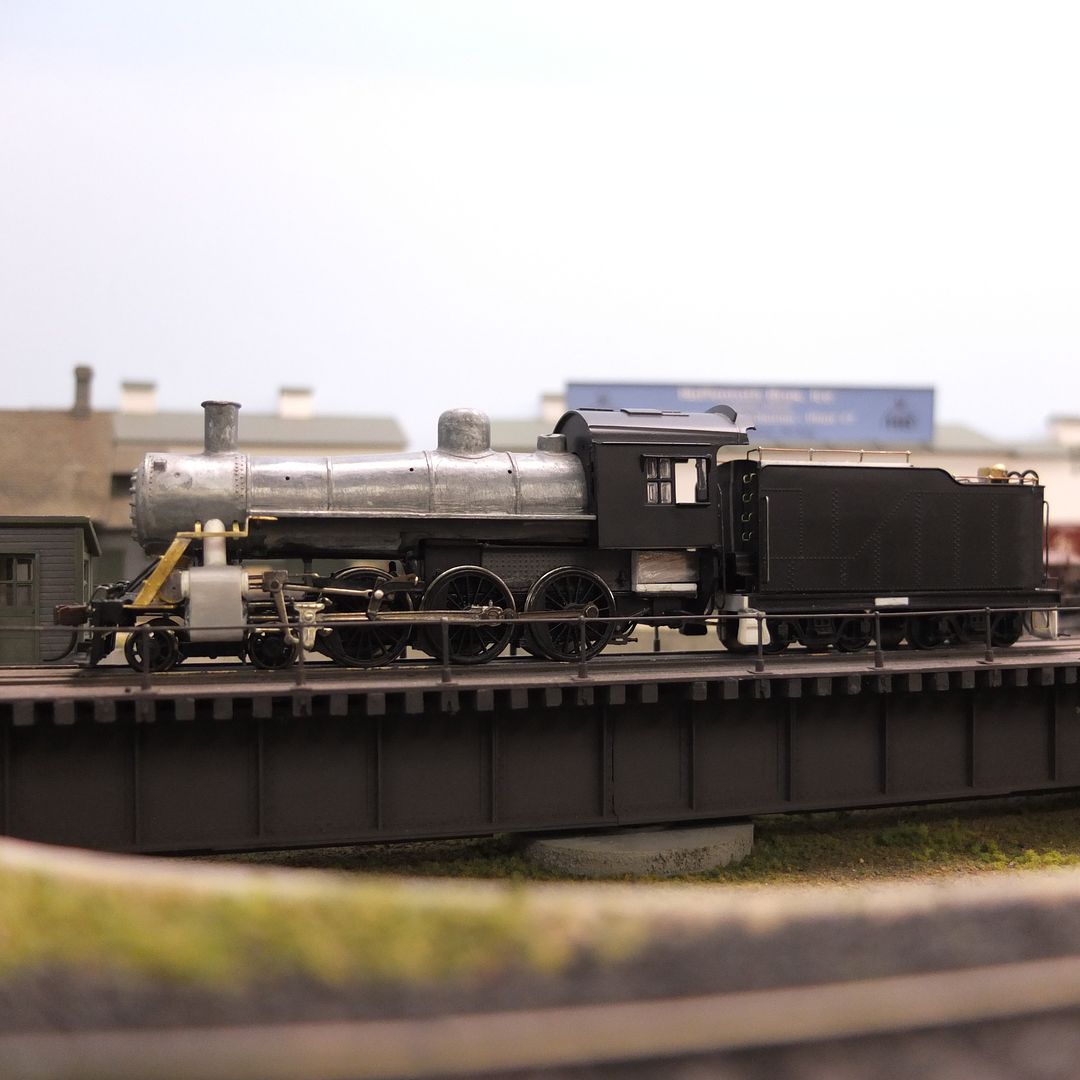
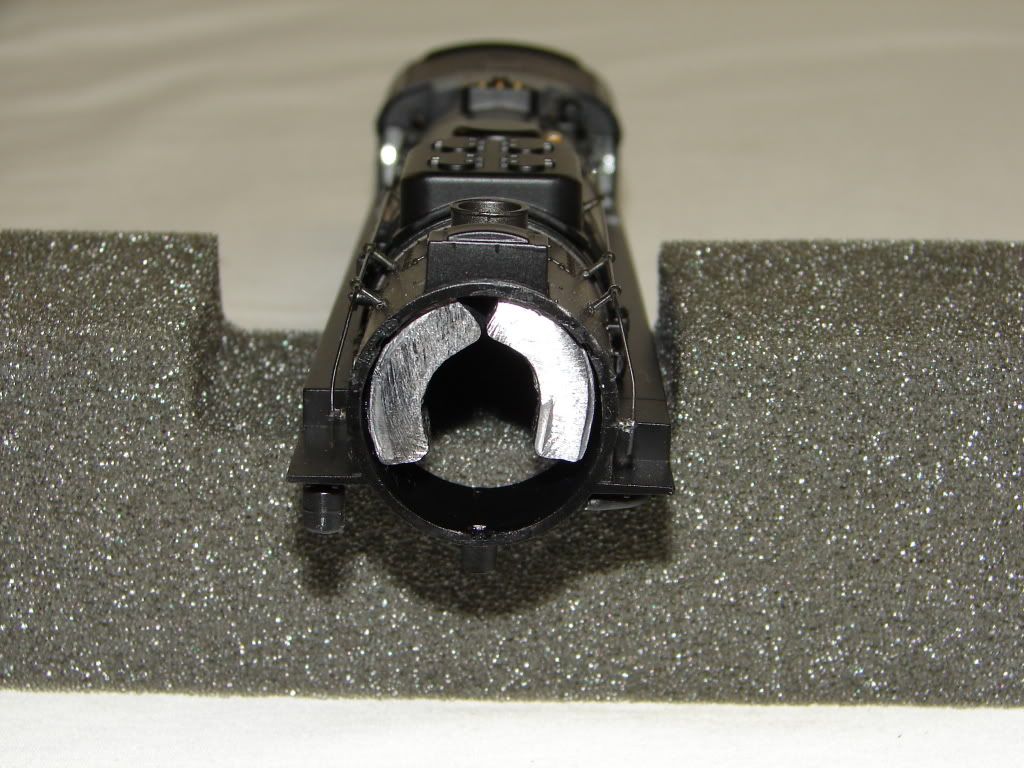
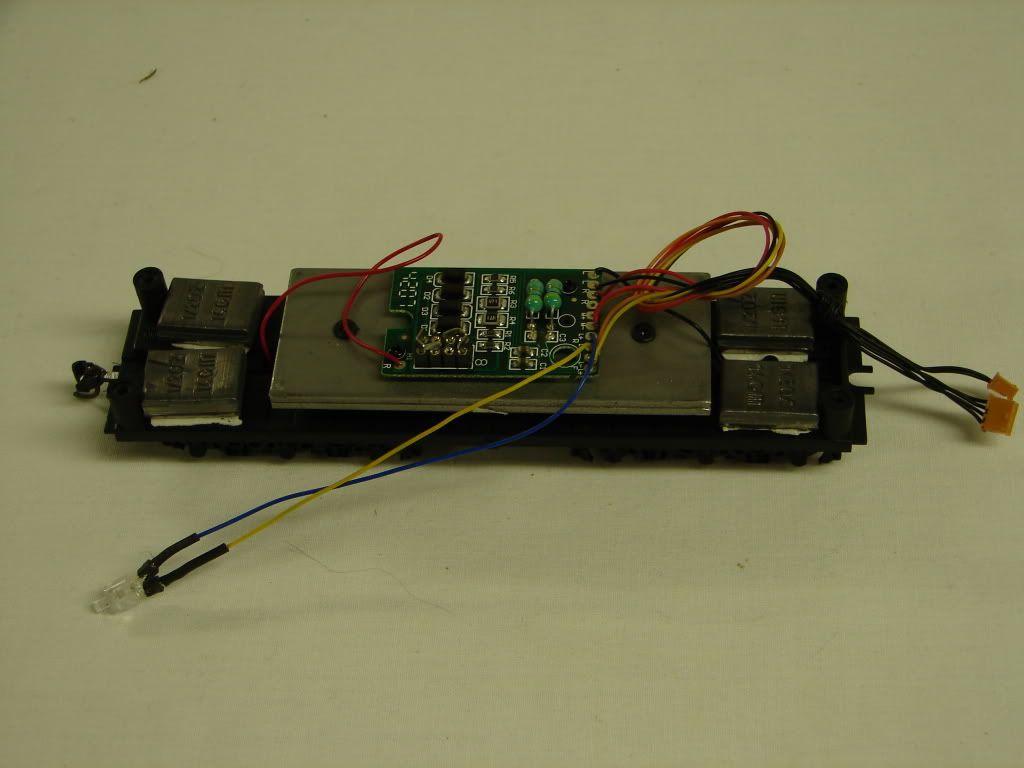
Yesterday I spent some time assuring that I had ALL WHEEL pick-up on my Bachmann 4-8-4, and that it was well lubricated, and the wheels were all clean. It was running very good, BUT it still could not pull that many cars up the considerable grades on my stone viaduct. I even added some external lead weights to the body of this steamer,…that helped, but I knew I could likely never get enough weight into that engine to make a really big difference.

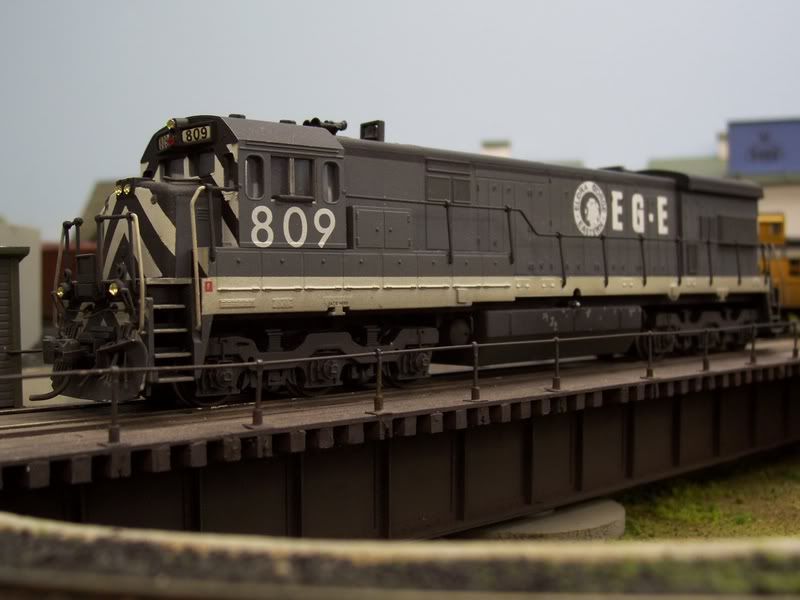
Today I thought what if I added one of my Proto 2K engines into the consist. Its a 1K model of the DL109,…lots of weight, lots of pulling power. I put it behind the steamer.

With both the steam and the diesel pulling it seemed like I could just keep adding cars, and it would pull them. I began to think of how I might disguise that diesel engine into some sort of ‘powered freight car’ to make it appear as though the steam engine was doing all the work . OR, how about adding power to the tender as a pusher?
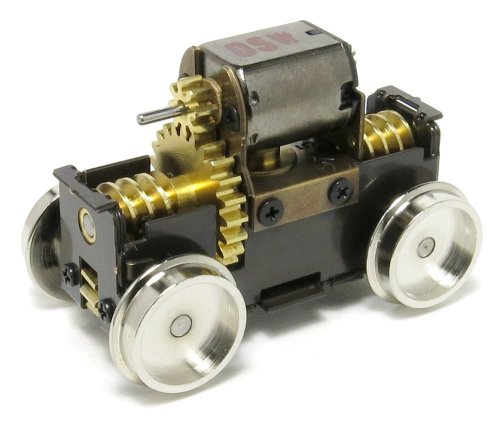
Motorized Bogies/Trucks

About a year ago i ran across this Japanese site,…
http://arumo.a.la9.jp/r0123.htm

Maybe utilizing one of these forms could allow the powering up of the tender, or disquised freight car pusher, or an aux water tender? And make that pusher car a very heavy weight to develop the pushing power of one of those good consisted diesels.

I’ve thought about this before myself, but never bothered with trying anything. I always thought taking something like an SW7, hacking off the fuel tank, and replacing the body with something bashed from a long tender body would be doable. If you try this, post some pictures of what you do. Could be really interesting.

I did exactly that in the early 80s to power a Tyco Chattanooga 2-8-0. I filed some of the detail off the metal trucks to look somewnat less like diesel trucks. I also had ot shorten the frame but I got it under there. It worked fine mechanically, more than visually. Dan

Brian.

Build a Bowser 2-10-0. Mine would pull stumps out of the ground. Weight on drivers is what you want. All my steamers ( brass and plastic) gets added lead weights as much as I can cram in. My Bachman K4 pacific reliably pulled 13-15 heavy weight baggage/ passenger cars even on the clubs steep grades. I have a brass 0-6-0 that weighs over a pound.

Pete.

Brian… I thought you were building a small layout.

My Heavy USRA 2-8-2s will pull a 12 car train, my maximum length, no problem.

Smaller layouts is the perfect solution!

-Kevin

If I recall, Brian is building a small multi-level layout. It’s not so much train size as the grades that are the killer here.

OK, got it now.

When I was testing how many car I could pull up my planned 5% grade, my Oriental Powerhouse 2-8-2s were the “best” steam pullers at two cars and a caboose. That was the same as my Kato NW2 would do.

I think it is a combination of things. The diesel locomotive trucks can pitch & yaw, and some can even roll. This keeps wheels on the rails. Steam locomotives have long semi-rigid frames that have more problems with wheel contact. I think the smaller drive wheel on the diesels help too making them less likely to break free and spin.

I only plan one grade, and it will be diesels only.

-Kevin

I add weight to all of my locomotives, both steam and diesels, although nowadays, most diesel models are filled with DCC paraphernalia.

I have only a few diesels left, but all were modified with extra weight - using DC only, I modified three of these…

…using two good-quality can motors in each, and with additional weight added, bringing each up to 33oz. (Had I not sold them, I could have easily brought the weight up to 40 oz, each, as there was plenty of room for it.)
Anyway, two of those locos easily pulled a loaded train of hoppers (44 cars, all with “live” loads of Black Beauty sandblasting grit) up a curving 2.9% grade, that was 47’ long. Total weight of the trailing train was 22 lbs. I didn’t have any more hoppers to add.

Still with diesels, four of these…

…also with can motors and added weight, easily moved a 71 car train up the same grade - I hadn’t weighed any of the cars, but they were definitely lighter than the loaded hoppers.

Surprisingly, I was able to complete that latter example using four modified Athearn Genesis Mikados, and again with four modified Bachmann Consolidations.

I also got similar results using various combinations of the diesel switchers (not the U-boats) with both types of steamers.

While adding weight to steam locos may require a little ingenuity, it is possible, but that depends on your requirements.

A layout with no grades should allow trains of a decent length, but if the curves are fairly tight (small radii) it will have an impact on pulling power. Curves on grades will exacerbate that even more.

Here’s a [url=https://bigbluetrains.com/showthre

As long as we are on the topic of improving steam locomotive performance…

What is anyone’s opinion on installing the boiler weights that come with brass steam locomotives?

I have read they do and do not improve pulling power, and I have read they adversely effect balance and increase derailments. They don’t fill all that much of the available boiler cavity. To me, it seems like adding rolled up sheet lead would be better.

-Kevin

I think the biggest problem with steam vs. diesel in pulling is the drive wheel traction. The trucks on diesels can twist and tilt to keep all of their wheels on the rail at all times, but a lot of steam engine models have their wheels solidly connected to the same rigid frame. With that, a steam engine with 8 drive wheels could only have about half of them making full contact with the track.

I have a few steam engines with sprung drive wheels and good weight distribution, keeping them all on the track with even pressure. These pull better for me than others of identical size and weight with solid mounting for all the axles, and can easily haul as much as a diesel of similar size and weight.

A few simple points:

In real life diesels are better on grades than steam, our models are no differen

Some steam excursion steamers have B unit connected to them, so that’s what I do for my GS4. Otherwise, I doublehead.

Simon

I appreciate all the wisdom and experience expressed so far. It seems, as a general preference, or maybe as a matter of avoidance (due to inherent complication), that most of us prefer to run a single loco on the head end. Due to prototypical practices, a person modeling the modern era is almost certain to want ‘lashups’, and that is the common practice. We steam lovers seem to hope that our lone behemoth 2-8-2, 2-10-2, or 4-8-4 is going to do the trick, but we soon learn otherwise.

I do know that many of us doublehead steamers, and I am proud to claim that a couple of years ago I finally shoved my long coal drag, headed by a 2-6-6-4 Class A, with my trusty Y6b. It took some fancy fingerwork, thankfully on my twin encoder Digitrax paddles, but I somehow managed to avoid a single derailment in about 10 minutes of running before the stress became too much. [%-)]

Doc Wayne has posted in the past how he has shoehorned the odd half-ounce or more into some of his fleet, but I would appreciate seeing and hearing from others, what they did, how they did, and what the difference was. I would like more heft to a few of my steamers, but also to some of their tenders, which I think could stand a firmer contact point on the rails.

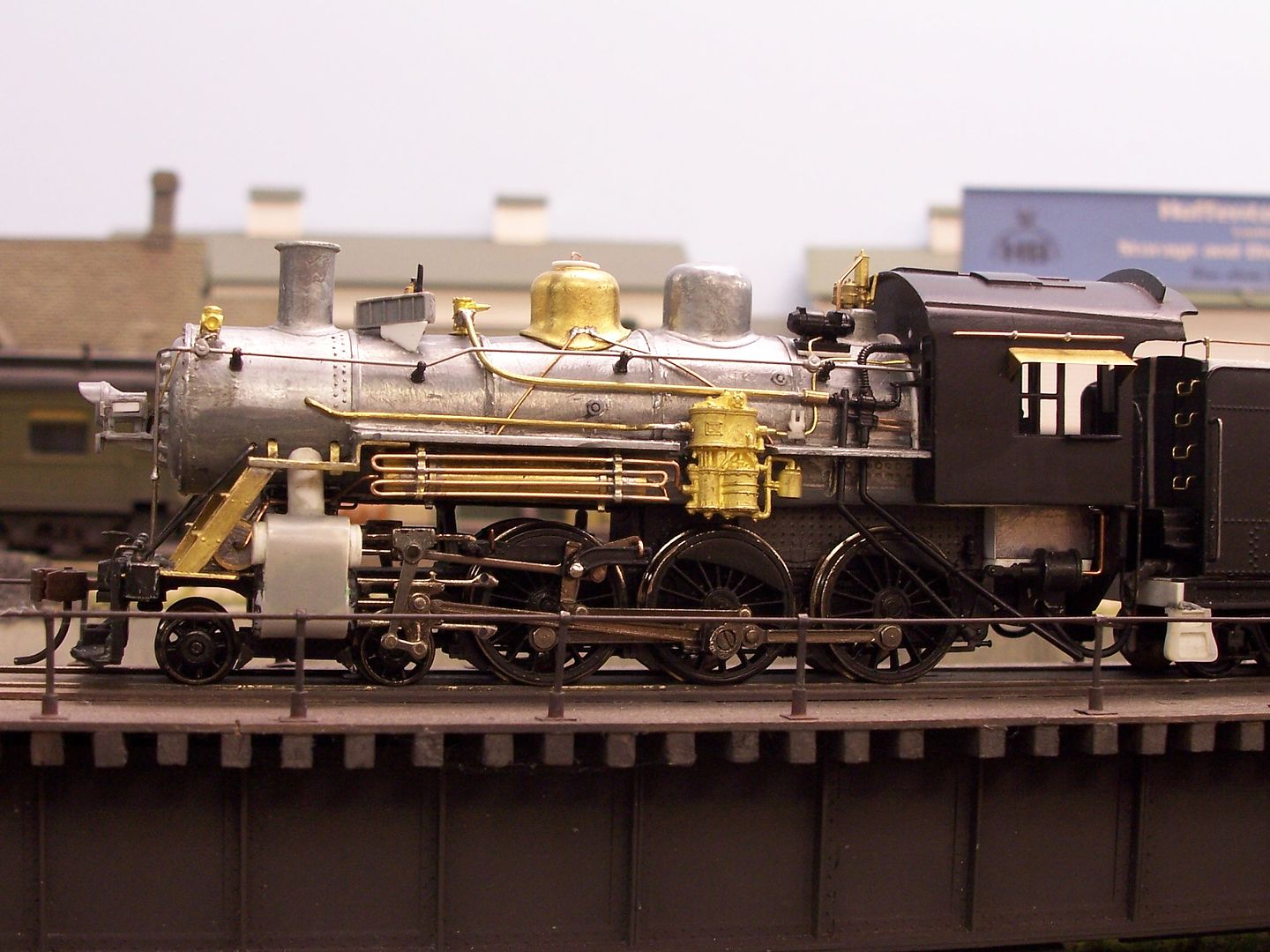
I bought a couple of these Bachmann Ten Wheelers, with cast metal boilers…

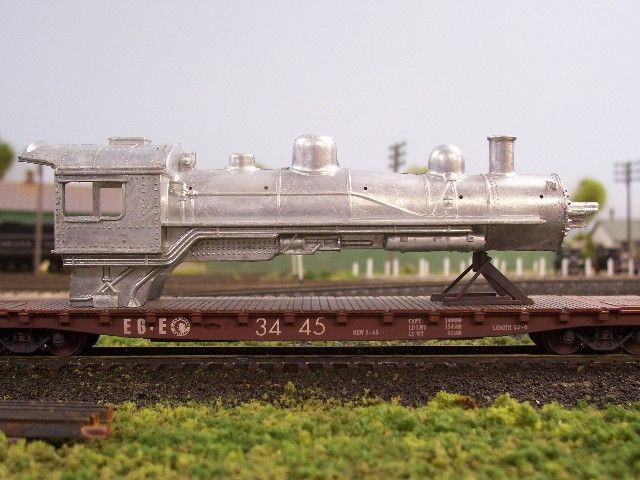
…but wasn’t overly fond of their archaic appearance. They did run nicely enough though, so I replaced the boilers by using ones from Bowser, (formerly made for both Varney’s “Casey Jones” 10 Wheeler and also the “Old Lady” Consolidation…

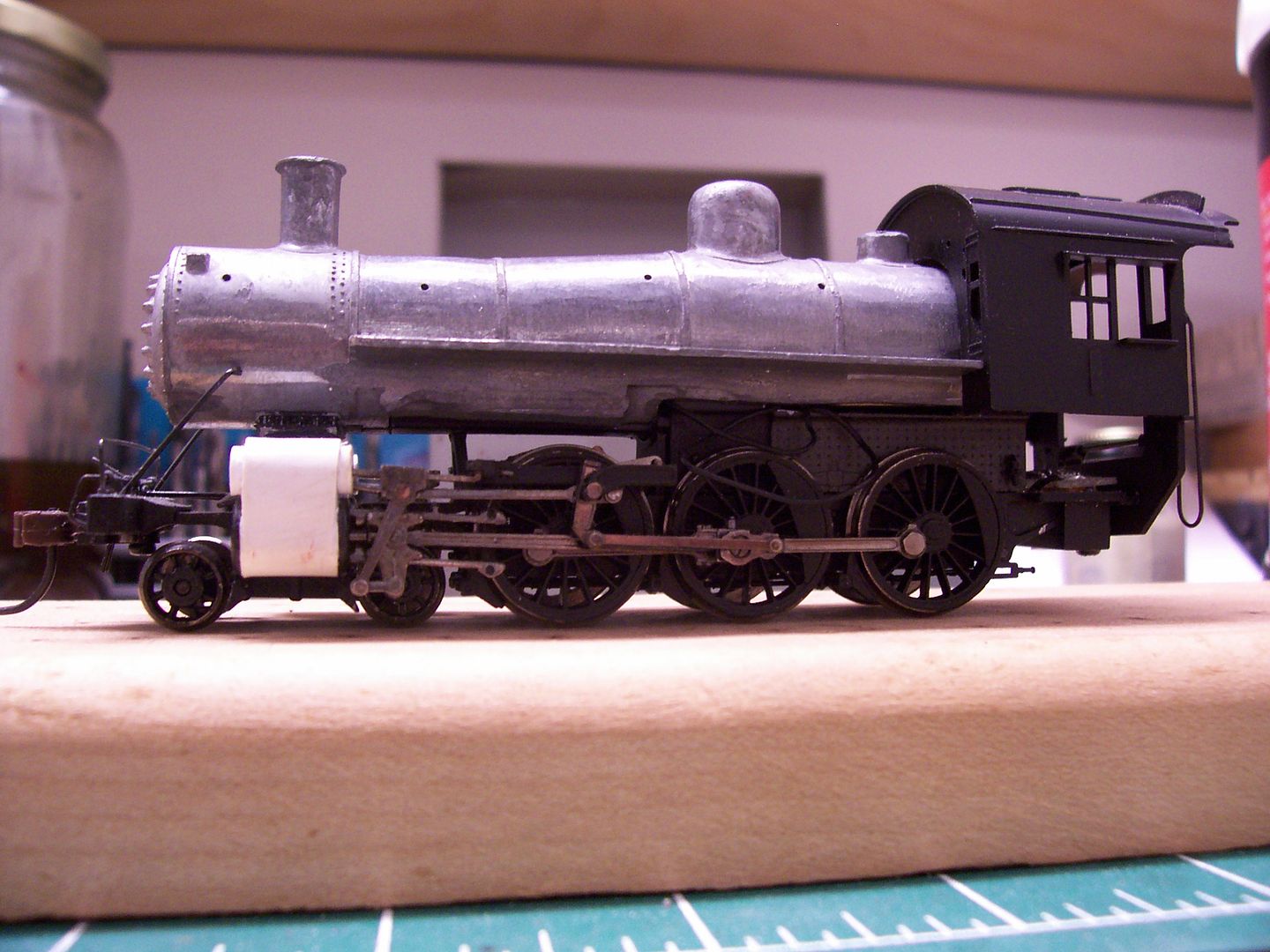
The cabs looked okay, but I decided to replace them with ones from Bachmann’s Consolidations, in order to give my loco roster a more uniform appearance. While the r-t-r Bachmann Consolidations come with a large metal weight in their cabs, buying just the cabs was cheaper. Here’s a cleaned-up boiler with the new cab temporarily in-place…

I later cast a couple of lead weights to fill the void under the cabs…

With some added brass details, along with lead-filled air reservoirs…

…the pair are dec

Why would you not simply consist the two steam locos together and run them with one throttle just like diesels?

Wayne and I can tell you that in DC we have no trouble coupling different steam locos together to pull our our trains.

My favorite double headed lashups include a Proto 2-8-8-2 and a Spectrum 2-6-6-2, they run beautifully together. Or a Spectrum Heavy 4-8-2 and my Bachmann 2-8-2’s (converted from 2-8-4’s).

Three Spectrum 2-8-0’s is really cool on the front of a train.

Two Mikados, any two M

The Bachmann 2-8-4, converted into freelanced heavy Mikes, similar to the DT&I 800 class:

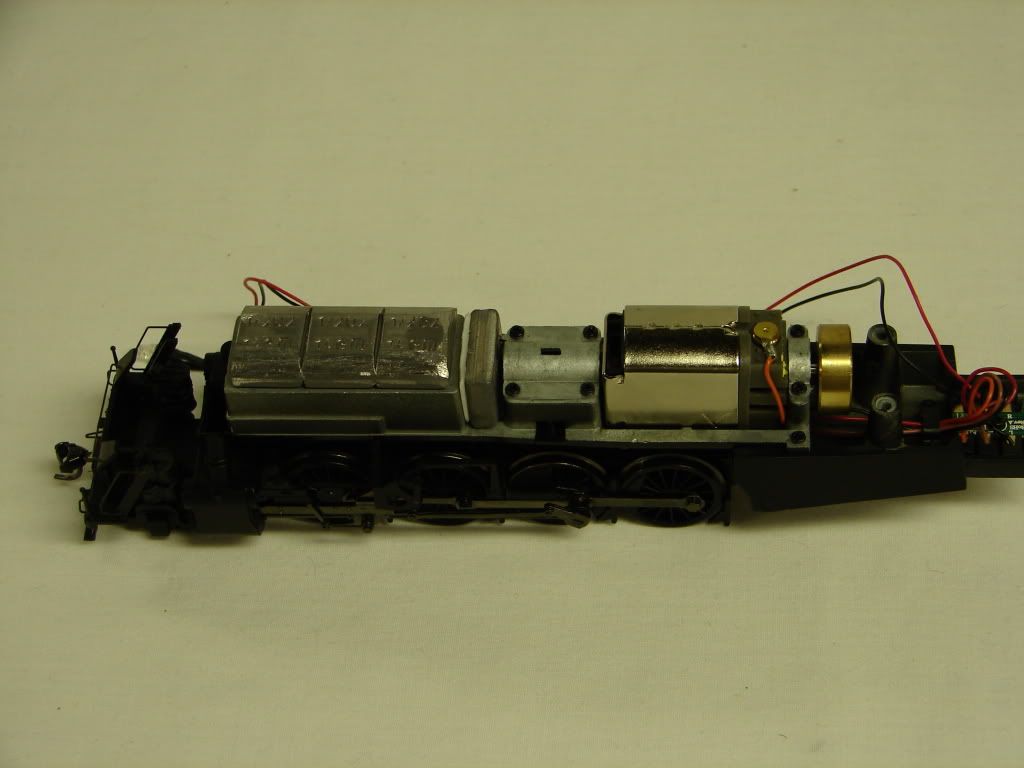
The revised drawbar design attaches just behind the last driver, not under the cab, proving a much improved pulling angle on curves for much better tracking.

And there is more in the crown sheet of the boiler that I don’t have a photo of.

Here is a typical tender with more weight:

No down force springs on the lead or trailing trucks here either. But then again I don’t expect them to squeak around 18" curves…

Sheldon

More weight is always better, but it must be balanced.

Sheldon

I have never seen steam locomotives in real operation. Just movies, excursions, and some special cases.

Double headed steam just looks unusual to my eye.

-Kevin

But it can be found on occasion even today in excursion service. The Strasburg Rail Road has done it a few times.

And historic pictures and film show us that in the mountains especially, it was an every day thing.

Double heading is nothing, I have in my analog world a series of photos showing the Western Maryland moving 90 loaded hoppers out of one of their mine branches in the 50’s.

Three 2-8-0’s on the point, two RS units and and a 2-8-0 in the middle, and two more 2-8-0’s pushing.

90 cars, 4500 tons, 7 locomotives. Less than 13 cars per locomotive to deal with 3% grades and sharp curves.

To me, long trains look perfectly normal with two steamers or 4 early diesels.

When GM designed the FT, the thinking was that the AB set equaled a heavy Mikado.

Sheldon