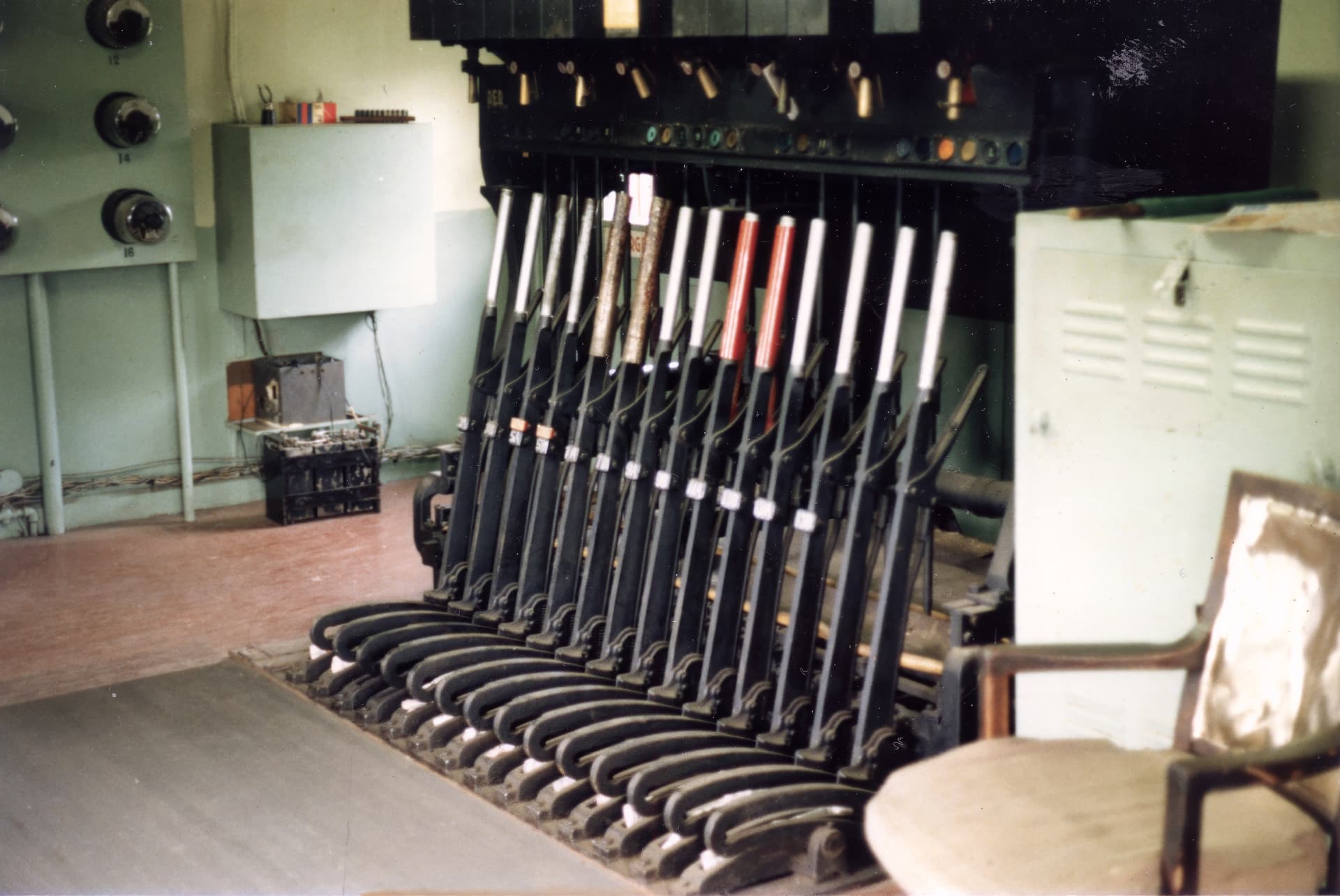
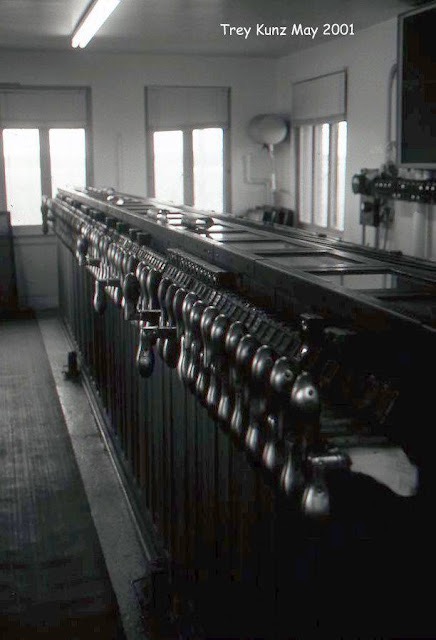
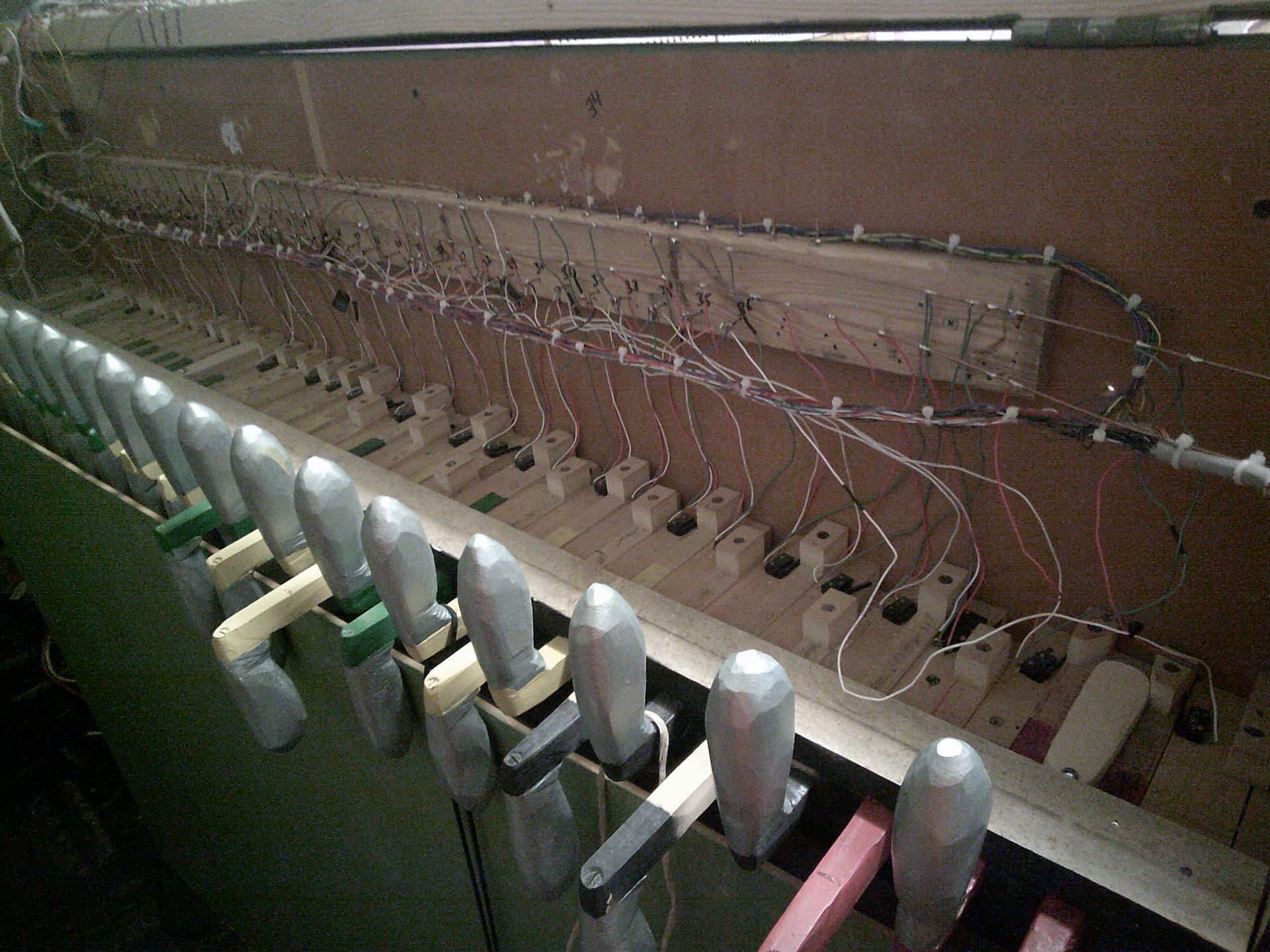
Here are photos of three different types of machines for controlling switches (and signals?). I wonder if some of you could explain to me how they work. First, what I believe are termed Armstrong levers:
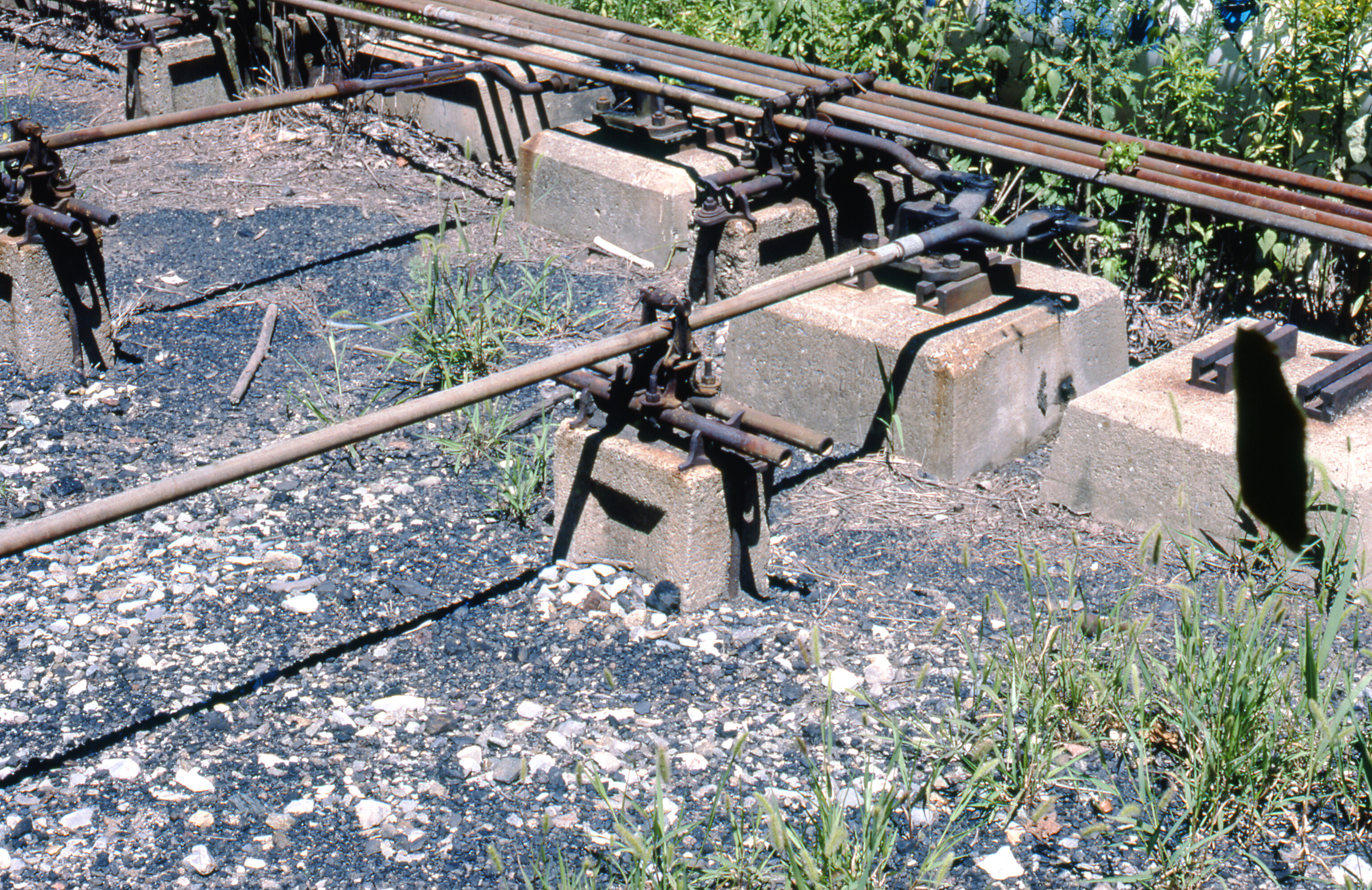
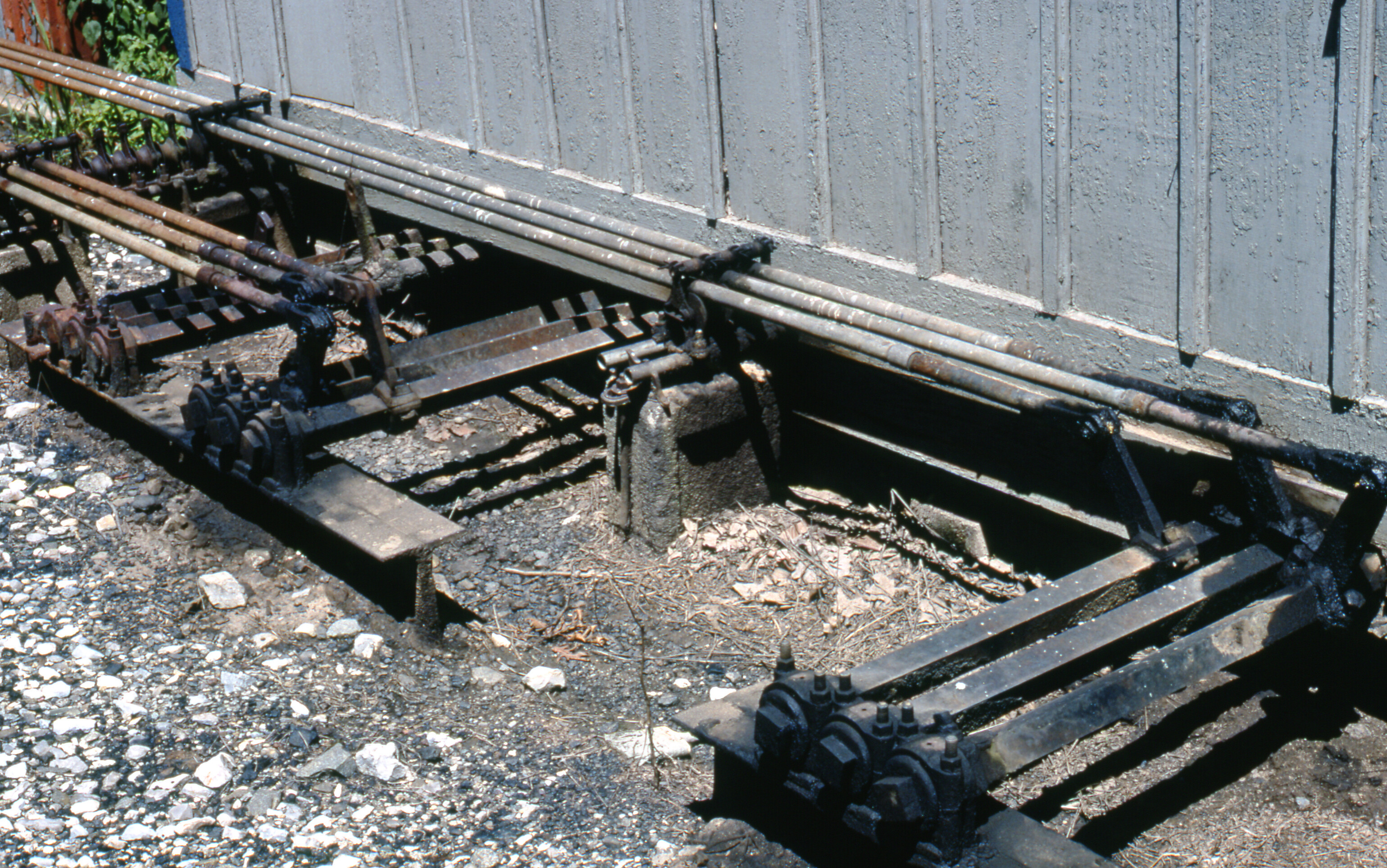
Top picture is of the Armstrong type interlocking. The levers are connected through a interlocked mechanical bed to pipe lines that manipulate switches, switch locks and signals for the particular location. Lining the switch locks and signals were normally fairly easy to operate. Operating switches and/or crossovers were significantly harder as more effort was required to slide the switch points from normal to reverse or from reverse back to normal - as you were manually moving those points and all the pipeline to do it. One had to focus and EXPLODE will all your energy to get all that metal moving - especially when it got cold. Signal Maintainers had full time jobs in keeping everything moving with a reasonable amout of force.
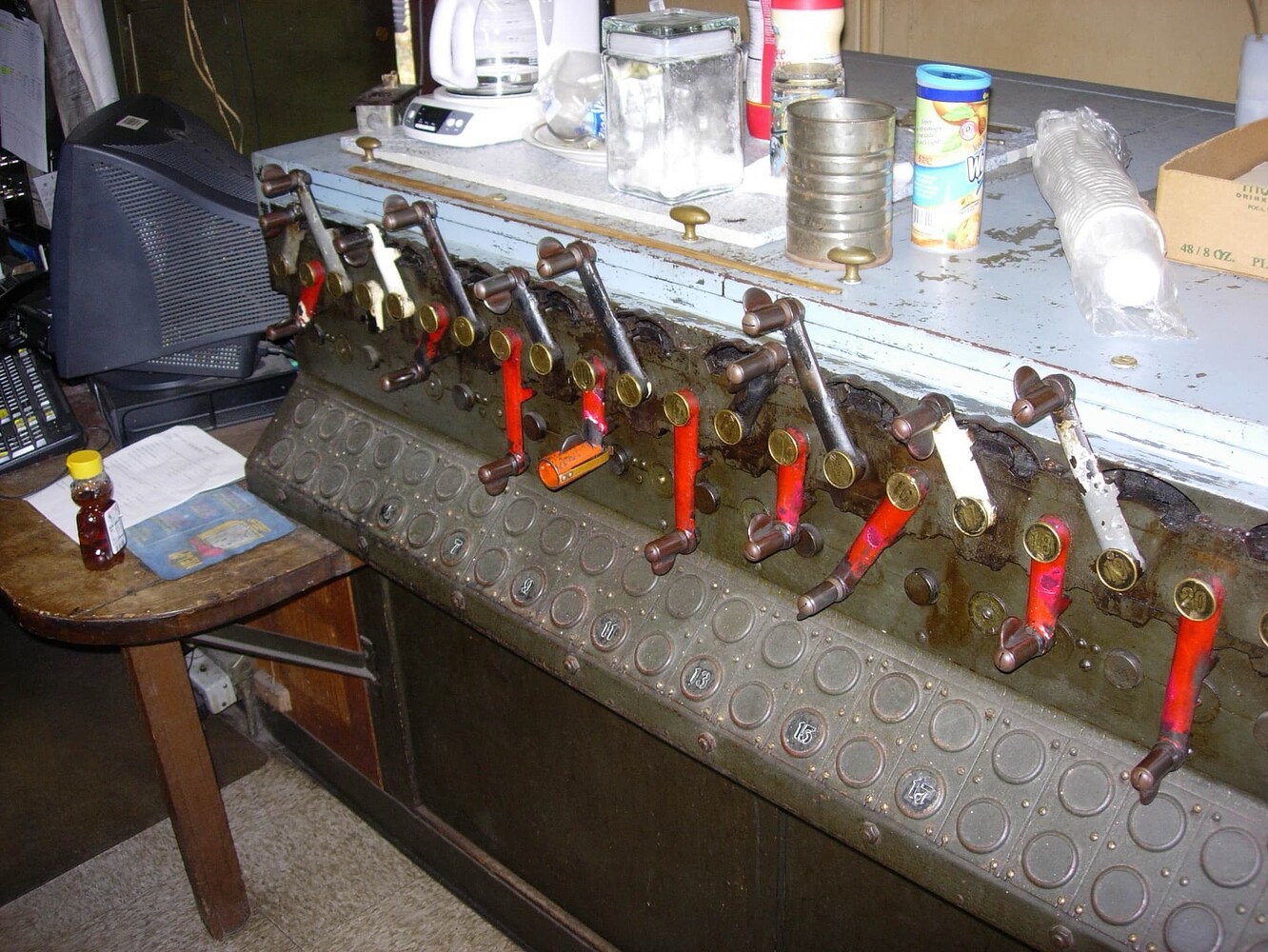
Is it a safe bet the pistolgrip machine in pic 2 is GRS and the one in pic 3 is US&S?
The levers in the first pic were originally all-mechanical – did lots of towers change to powered switches/signals that continued to be controlled by the armstrong levers? (I’m thinking of Colton Tower on SP/SFe.)
In the third pic, the top row is all switches, with signals below. Switches are just normal/reverse, so each lever is two-position. A given signal lever will often control two or three signals – 2R and 2L, say. So signal levers are centered when neither signal has been cleared, or can be moved left to clear signal 2L or right to clear 2R.
One lever throws the two switches of a crossover.
(In pic 3, all? the switches are odd-number and signals even-number. Same with GRS?)
In pic 3, the orange thing on one signal lever keeps the operator from clearing that signal. (The lever can’t move unless the operator turns that flipper thing at the end of the lever.)
Thank you to timz, BaltACD, Woke_Hoagland, & gmpullman.
I understand the workings of switch machines a whole lot better now. I enjoyed the word “EXPLODE” when Balt described what was needed to throw a stiff lever. The video was enjoyable as well as enlightening. But the explanation from the position-light blogspot really clarified the workings of these interesting machines. I had no idea US&S was using a license from an English firm.
Note how the rodding makes two right angles where it passes through tubes under the track. It takes a LOT of pull on the levers to overcome this mechanical linkage, especially in cold weather!
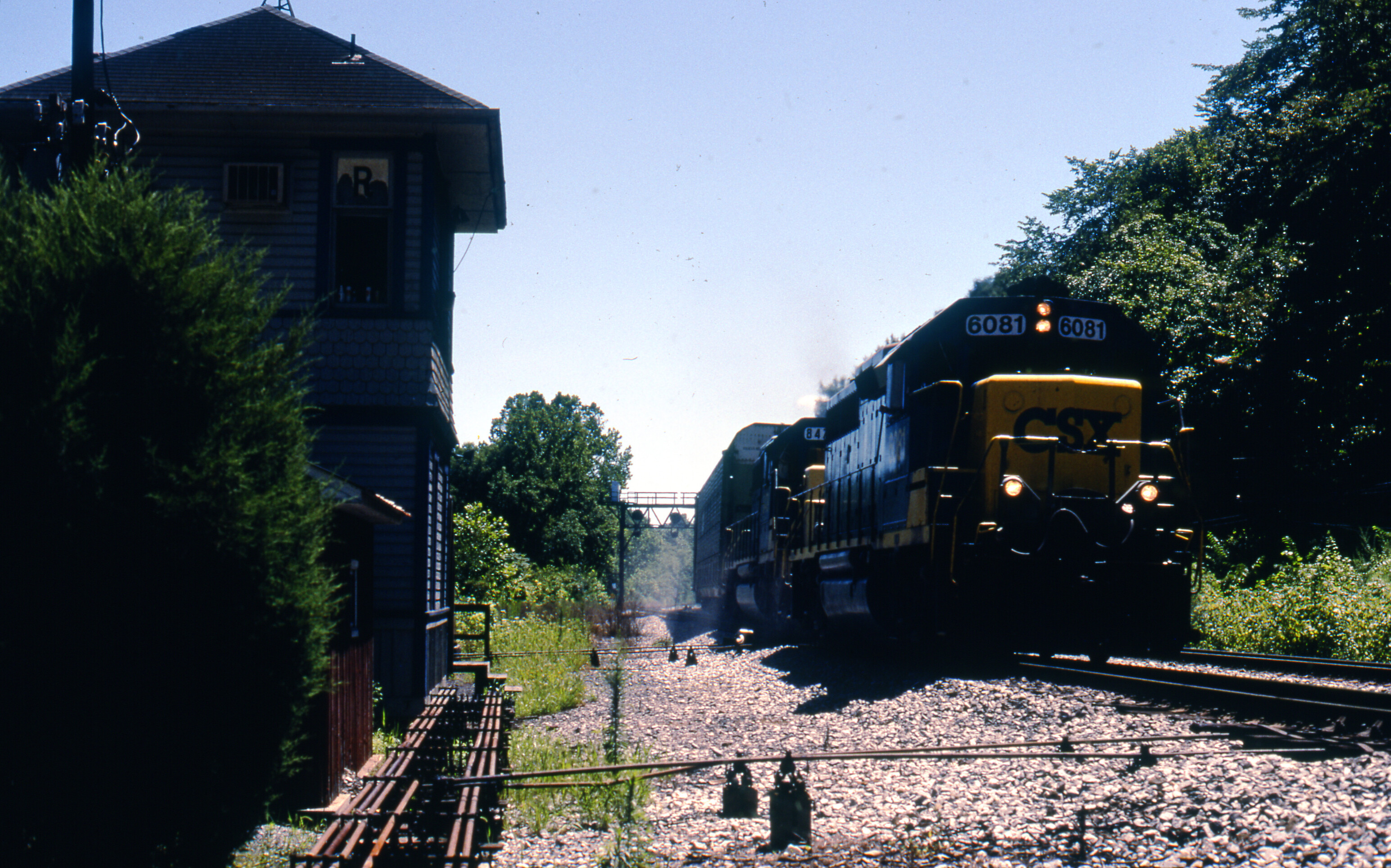
which was three miles south of Philadelphia 30th St on the four-track main line to Washington. Says Mechanical machine, but note that one lever throws both switches of each crossover. Suspect that means the lever just moves the rods in the interlocking machine itself, and the switches are pneumatic. The signals on the signal bridges were position-light, so the armstrong levers didn’t move them.
BRILL was where the four tracks changed from passenger-freight-freight-passenger to passenger-passenger-freight-freight – in other words, lots of crossover moves on a busy railroad. Ignorant guess: none of the armstrong levers was connected to anything outside the tower.
As you see, new “mechanical” interlockings were common in the 1920s
BTW “armstrong” levers (or turntables) were called that because they used only human muscle power. You needed “strong arms” to move them! It wasn’t a company or brand name.
Hand throw, a person on the ground physically operates the switch between normal and reverse as necessary for their movement using the hand throw machine that moves a bellcrank (aka switch lug) at the bottom of the mechanism in the proper direction. When a trailing move is made and the switch is not properly lined - the bellcrank breaks; if a facing move is made before the bellcrank is fixed you have a ‘run through switch derailment’.
RACOR (a trade name) for switches that are hand thrown for facing movements when a different route is required from the one the switch is lined for. These switches may be trailed through without destroying the ability of the points to be secured in position of the movement.
The Armstong interlocking switches that have been discussed earlier in this thread. In addition to throwing the switch, the interlocking requires proper switch locks be operated to secure the switch before the signal can be lined over the switch.
Pneumatic switches that are part of a interlocking that is operated on air pressure. In most plants, when the switch is lined to change position - the plant automatically unlocks the switch, throws it and locks it. If the air supply should FAIL for any reason, the plant cannot be operated until the Signal Maintainer fixes the issues.
Dual-Control electric switches that throw and lock upon Control Point control. If for whatever the reason, proper conltrol of the Contro Point cannot be established, train crews can be authorized to operate the Hand Throw mechanism that it part of the Dual Control Switch Machine for his route. Once the crew has confirmed they have lined their route through the Control Point as directed by the Control Point Operator (normally the Train Dispatcher) the Dispatcher will then give the train Authority to pass the STOP signal that is being displayed at the Control Point and continue on their way at Restricted Speed until such time as the get a signal that will authorize a higher speed.
I’ve heard of instances on the Pennsy when a compressor goes down (and the spare hasn’t been repaired!) a locomotive was pressed into service as an air supply. Some plants had more-or-less permanent tie-ins where either failure rates were relatively high or down time was intolerable.
In the railroad - anything operated by air, requires a lot of air. Air compressors on locomotive are huge when compared to the air compressors we may see on various construction jobs.
On the Southern Railway we used to call these “flip-flop” switches. Only used in yard tracks…not on Main tracks. And yes, they are different from Spring Switches. Which can be and are used on Main tracks. Usually at ends of passing sidings, or ends of double track, or at some junctions.