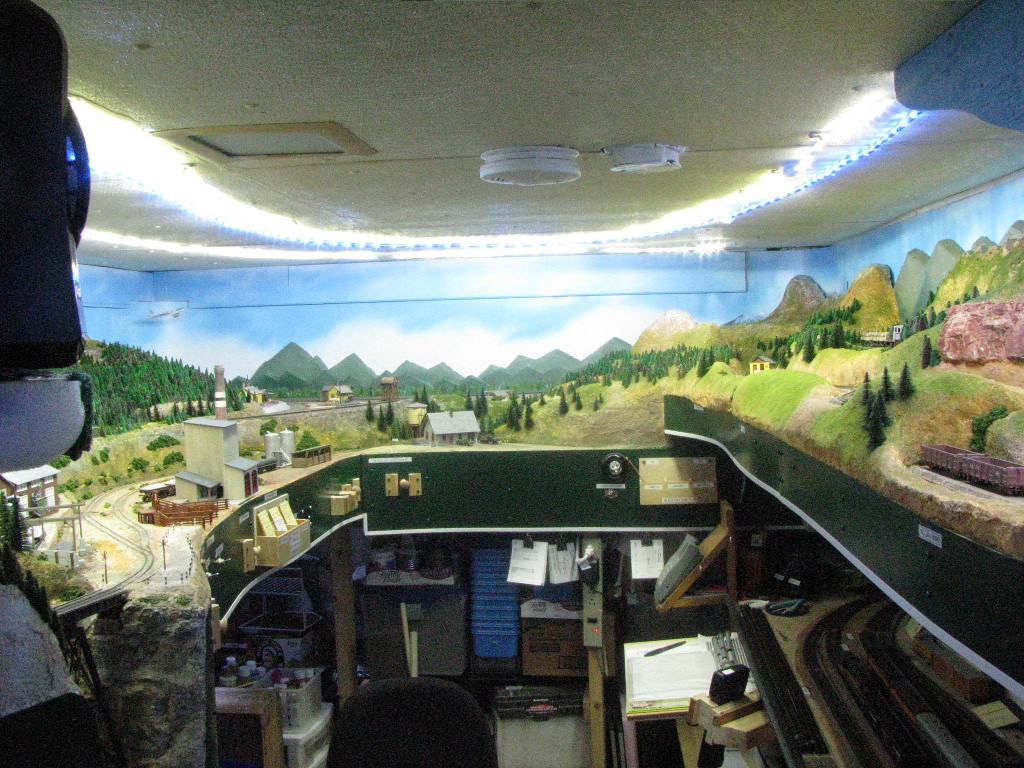
Folks, this probably old hat to most, but I’m just moving past incandescent lighting backed up with some CFL’s in heavy usage fixtures. It appears CFL bulbs are already passé and ELD’s are the current favorite. I have a couple in use in seldom used places like closets and storage areas.
But in researching the internet it appears there’s a lot of negative entries about LED’s regarding their effects on the human eye. Yet they’re the primary lighting element now so it seems they can’t be that bad. Or are they? It wouldn’t be the first time human safety is secondary to the green movement.
So what’s a safe LED for general room lighting? What do you use and what’s the actual hazard of their use, if any.
Never noticed any ill effects. There is a flicker in some LEDs, but not sure this applies to those used for room lighting. Mainly I’ve seen in in video of vehicle lighting, so may be specific to how that application operates? In most cases, it’s unnoticeable.
Plenty of good effects. Good color rendering if chosen well. Sharply reduced energy demand. Operate cool. Small and flexible with all the variants available. Can change color and easily controlled remotely. Can be powered in different ways. Very long lived on average.
I have been using a LED product from Menards by Patriot that is a LED strip encased in a plastic sheath. It’s relatively sturdy and plugs directly into 110V power. They link together up to some rather large max number. It’s been recently discontinued, though, so will plan to convert to the more common power-supply fed tape lights for future needs.
Here’s a pic showing how they work really well in the limited overhead situations we often face in the layout room.
I cut over my entire house last year to LED lighting and we haven’t had any problems. My wife loves the LEDs. They cut the electric bill enough to pay for them selves in less than two years. More light for less bucks.
I can’t find a lot of entries. There is a reference to a study only available in the French language, that raises concerns about Toxic Stress to the retina, from blue light or excess glare.
There is another link that claims to refute that study, at a website I never heard of, but requiring registeration. It claims to link to Physics World, which you can search without registering and there is no such article I can find.
We do know that people are adversely affected by lack of sunlight in the winter or northern latitudes.
We also know that “blue light” can affect sleep patterns.
One or two studies that we know only by hearsay, don’t tell us anything about safety and risks. Safety has not been established scientificly.
I have a drop ceiling, so for general room lights I am planning to use some of the 2x2 and 2x4 flat panel LEDs that drop in in place of a regular tile, like the old fluorescent versions. FOr the layout itself, I am going to use the LED strips, the upper deck will form a valence for the lower deck, and then I will have a valance over the upper deck for the lights there. Based on the strips I ran under the bototm shelf over my workbench, I will need at least 2 rows of white LEDs to provide sufficient light, then I will have a single RGB strip to do dawn/dusk, and a single blue strip for night. By changing the color of the RGB strip and dimming the white strips, and bringing up the blue, I can do a transition from day to night, and reverse it to do a night to day transition. What used to be so complex and regure all sortsof incandescent spotlights (not to mention the heat generated) is now so much easier with LEDs. The RGB strip I have to experiment with doesn;t step somoothly enough but htat’s the fault of the controller circuit only haveing 8 brightness levels for each color, the actual controller board that connects tot he LEDs can do as many levels as you cna break the PWM drive signal into, and even a cheapy 8 bit micro can do a lot more than 8 steps per color.
Strange. I goggled “are led lights safe” and got three pages of replies from various studies and seven related searches. There’s quite a bit of interesting information from various colleges and publications including Scientific American. The trend I’m seeing is a general suggestion to using led’s in the 2700K region, or as close to incandescent as possible. But like everything else there’s considerable contention.
I’m tending toward using some species of them in the basement because they do throw a lot of light down in that old cave.
The physical threat to your eyes will be from light that is in a part of the ultraviolet range. Visible light, by definition, is not in that range.
LED’s only emit UV if they are designed to do so. It would be pointless to design household light fixtures to emit UV light, as no one could see it, and it would be wasted.
So. LED’s are not physically dangerous to your eyes.
2700K light is considered by many to be more pleasant than the bluer colder colors. However, I am here in a room lit with 5500K lights, and it’s just fine. Your brain is very good at doing color correction.
Most ‘white’ LEDs are at heart UV/blue, with a phosphor to actually give off white light. BUT - that’s how fluorescent tubes work as well. I’m going to hazard a guess that the LEDs are FAR less energetic than the fluorescent tube, so there is far less UV leakage compared to fluorescent tubes. That was always a caution using fluourescents for layout lighting - the UB would fade your scenery colors. You cna buy shields of tublar fluorescent bulbs to block some of the UV. I doubt LEDs actually need that.
Most of the ‘danger’ studies come from close up viewing, ie phone and tablet backlighting, which is, at least in the newest models, fairly high intensity in order to allow the screen to accurately reproduce the full color gamut. It does seem to foool the mind into thinkign it’s daylight, so it can have an effect on sleeping, especially if you use the device at bedtime. Many have a “night” mode which shifts the lighting spectrum more red. I use that quite a bit, on my computer as well as tablet, as it seems to reduce eyestrain, But man, do photos look weird. Not biggie, I’m not trying to edit photos, I’m trying to read text, and I read a LOT, so anything that reduces eye strain, I’m all for. IOS devices and Windows 10 both have the ability too automatically switch to the “night mode” at certain hours, or you cna just manually turn it on and off. I suspect Android devices have this as well, and if IOS has it, Macs probably do too.
But I have LED lights in every light fixture in the house, and I’ve never noticed anything with the room lighting making my eyes tired or blurry when reading papwer books. Or doing whatever. Unless I staand right under a light fixture and stare at it, typically the LED bulbs are 10-15 feet away from my eyes at least - a big difference from a phone or tablet held inches from my face.
I choose lighting as close to daylight (5000K) as much as possible. It renders colors more accurately and gives the impression better of being under the sky.
If you think about it, under the supposition that sunlight is dangerous, how. did our ancestors survive to get us advanced enough to build model RRs?
Now, if it’s ill-timed, it can disrupt sleep, as others have mentioned, for a few individuals. Like anything else that’s unhealthy under certain circumstances, like too much [B] , then it’s best to cut back. But I have my doubts about the idea of the LEDs illuminating our layouts being a “danger.” Guess at this point, it’s a risk I’m willing to take. [;)]
There is a known medical condition called “photophobia” which can induce migraines and other ailments to those so affected.
My wife has major issues with LED lighting to the point that she wears glasses especially tinted to block certain wavelengths known to be problematic. They are not dark as sunglasses. They were manufactured by Axon Optics.
I find the 5500K lights to be very hard on the eyes and much prefer the 2700K warmer tinted LED lighting.
Not trying to hijack this thread, but this post was very timely for me as I am about to embark on lighting the basement in my new house for my train room. I have been shopping at Menards/Home Depot for LED lights and trying to figure out how many I need, what size, and how many lumens. The layout will be roughly 12x25 ft. I was thinking three 5000 lumen lights spaced about 5 feet apart. Is that too much? Any suggestions are welcome!
Well, there is one difference with LED light - because of the way it is generated, LEDs tend to be very narrow bandwidth - unlike sunlight or the light of an incandescent bulb, bending LED light through a prism tends to not give a complete spectrum That is the argument used to say LED lighting is not “healthy”. But I have yet to see a true scientific study of this, so I have no fear of using LEDs.
Sunlight didn’t kill my uncle till he was 90. He had an amazing life and will be remembered in his field for 100 years. He survived a couple of melanomas and then died of squamous cell cancer of the skin.
It also killed a very beautiful woman who was in my medical school, 1 year behind me. We both did our residencies at UNC, In spite of a diagnosis of melanoma, she made the choice to give birth to her baby despite the risk. She had the baby and died in her internship year, at age 23?
You and I survived, despite the fact that Coppertone was no more than eye wash.
This didn’t have to be said, until recently, but just because we disagree on this point, doesn’t mean that either of us are deplorable.
Fluorescent tubes work entirely with phosphors. Without them they only emit UV.
LED’s do NOT work entirely with phosphors; they emit at an assortment of wavelengths. Usually visible. The phosphors come into the picture when there is a desire to shift the wavelengths. There may or may not be UV involved.
In addition, there are different wavelengths of UV. The shorter, the more energetic. And dangerous. There is little danger from UV that is just a snidge off of visible. But it may be cost effective to use them in combination with phosphors. I doubt there are any high-energy UV LED generators in home lighting.
I have been addressing only physical damage, by the way. Not variations on psychological (blue makes me sad, my sleep rhythms are funny, bright light keeps me awake…)
Good point. I didn’t mean to imply it was completely safe either.
Henry,
I know what you’re saying. I’m a survivor myself of that, so far, caught at the stage when it was just about the least amount of melanoma that could be considered cancer. Keeping my fingers crossed and still very appreciative my primary care physician saw something and said something during a routine exam. Anyone who spent a lot of time in the O-club pool or walking beans as a kid, like I did, should get that exam sooner, not later, when it might be too late.
As other have noted, though, what LEDs emit isn’t sunlight, it’s just a fair representation of sunlight. There’s little to no UV from LEDs (unless designed to sprcifically emit it.) I’m not at all worried that I really should be applying sunblock whenever I visit “Little Colorado” or my SPF-infinity hat or long sleeves in the train room. It is pretty bright in there though.
In my new house, which I have been in for 1 1/2 years, the builder put in all 60 watt equivalent LED’s (750 lumens) color 3000K. These work well for most applications and I have had no problems. Where needed I have upgraded to 1600 lumens (100 watt equivalent). Initially I tried 5000K, but found this to be much harsher light than I wanted. So I switched to 2700K 1600 lumens. I like these much better although they are a little harder to find.
One thing I have found is that more light fixtures is better than stronger lights. For example my basement train room is 17’ x 44’. In there I have 10 light fixtures in 2 rows of 5 each, each with 2 light bulbs, each light bulb 750 lumens 3000K. I find this arrangement works very well at lighting the room more evenly and have not felt the need for more light.
In prior houses I had fewer fixtures in the basement and used 100 watt or equivalent bulbs (both fluoresent and led). The lighting tended to be adequate only near the bulb, but shadows were a problem.