Just before I went on vacation I ordered some ‘Victorian’ figures from a local company, Northumbrian Painting Services, Hexham, Northumberland. They have arrived and are in a little scene outside Roseville Station. They fit in with the car my younger granddaughter bought me.
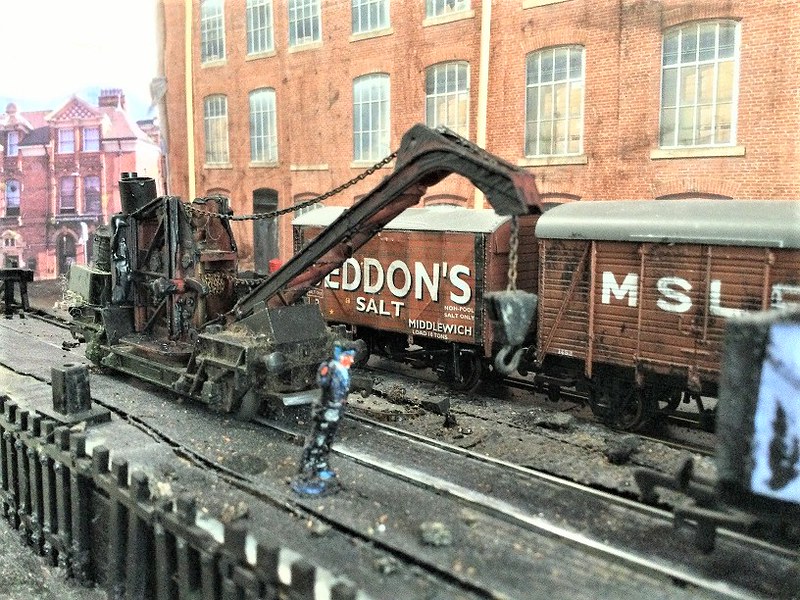
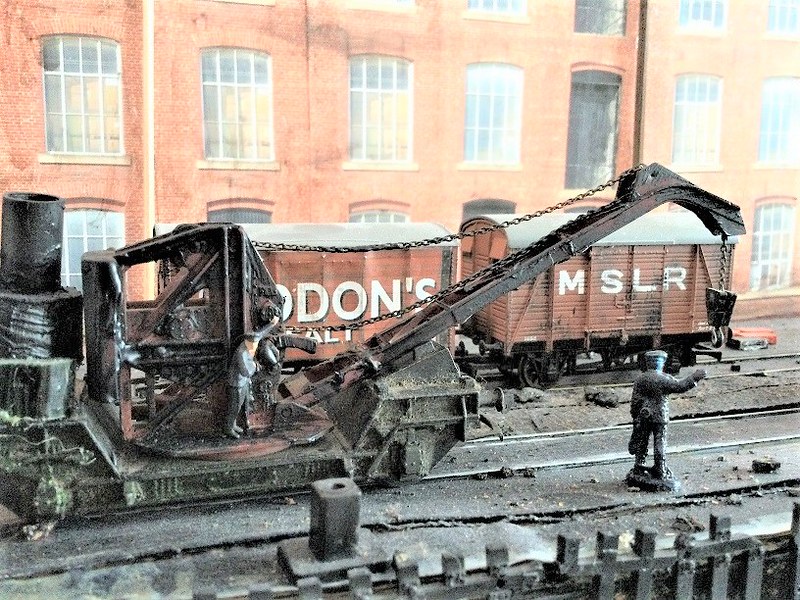
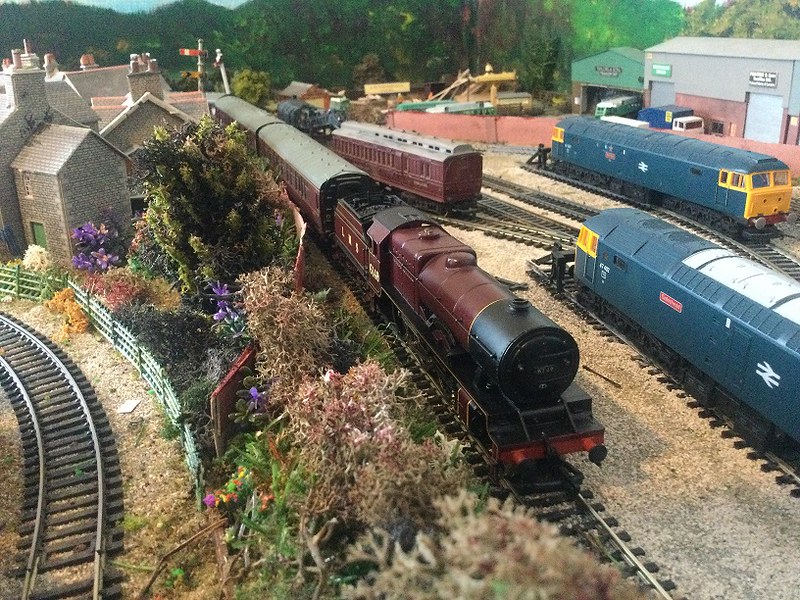
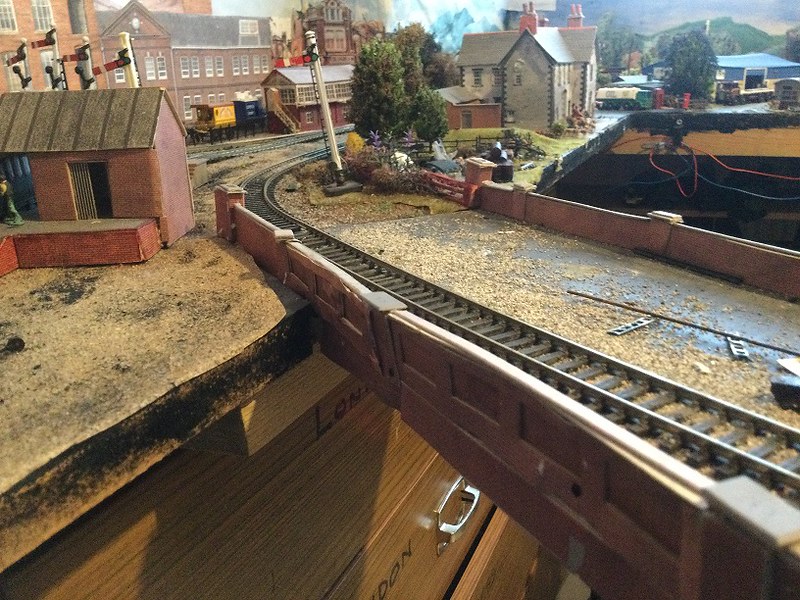
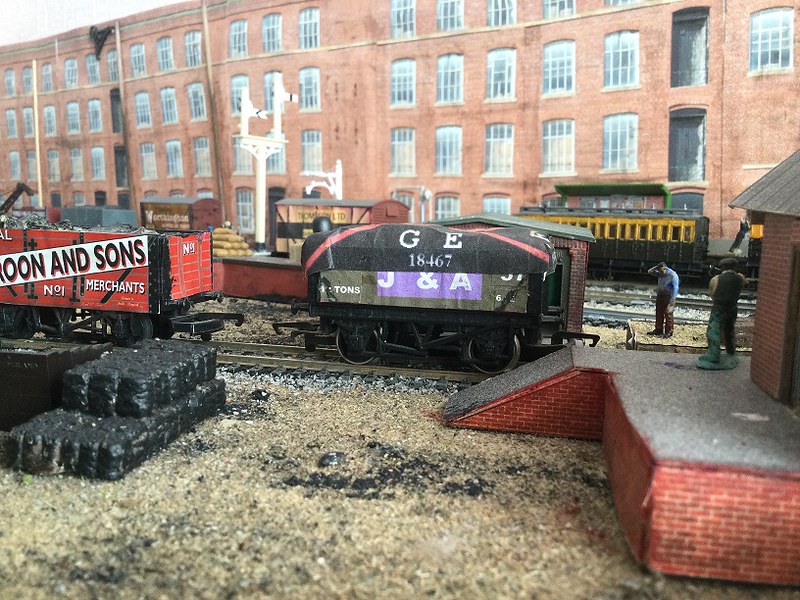
Clarence Dock Goods Yard. The building on the right was originally from my old diorama/layout of Lybster Station. Lybster is near Wick, Caithness, Scotland. The building was made of wood (typical to the line.) Here, brick papers are added to give a feeling of Leeds, Yorkshire.
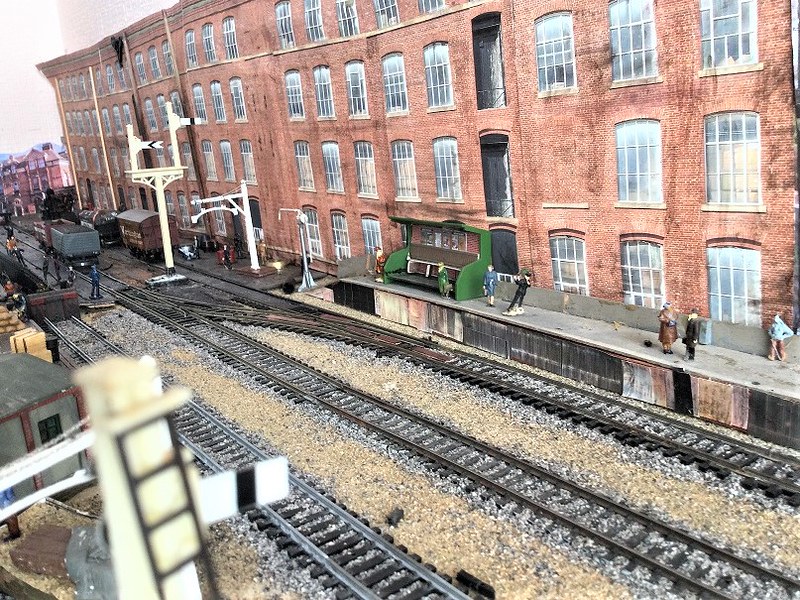
The platform at the rear is also from ‘Lybster’. The real platform at Clarence Dock was a temporary affair and lasted less than a year. Modelers license means it is still in use.
Clarence Dock. The Glencairn wagon is far from home. Glencairn is aso near Lybster. [:)]
The Signal Box controls the entrance to Clarence Dock.
When I am on my own and run the steam engines I have them running in a 1914/1919 timeframe. A timeframe that interests me. Not the horrors of the trenches. More the political side. Britain was preparing for war in 1909 and the build up to 1914.
A local business near me, Northumbrian Painting Services make models of figures for different theaters of war and different timeframes (as far back as 1513 and the Anglo-Scots War.) They also make various other items. I purchased some ammunition boxes and recently some ‘pit props’, all in HO/00 scale.
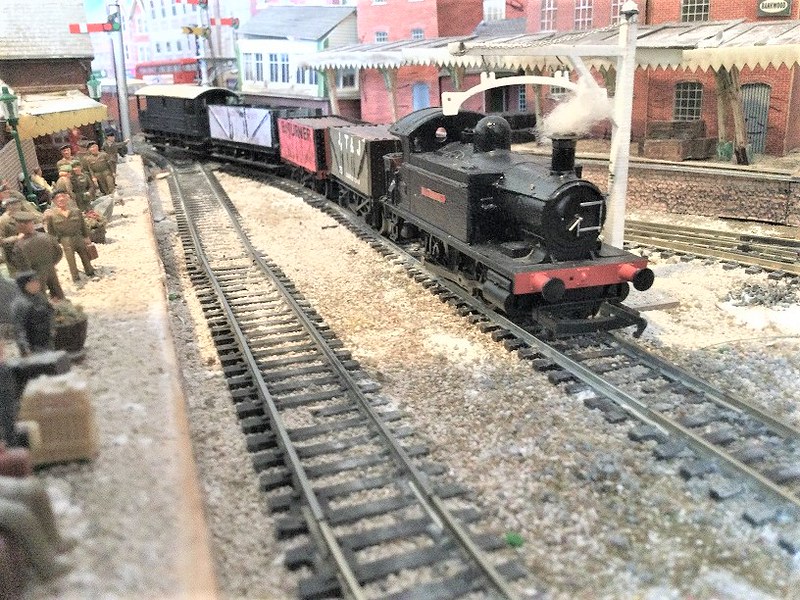
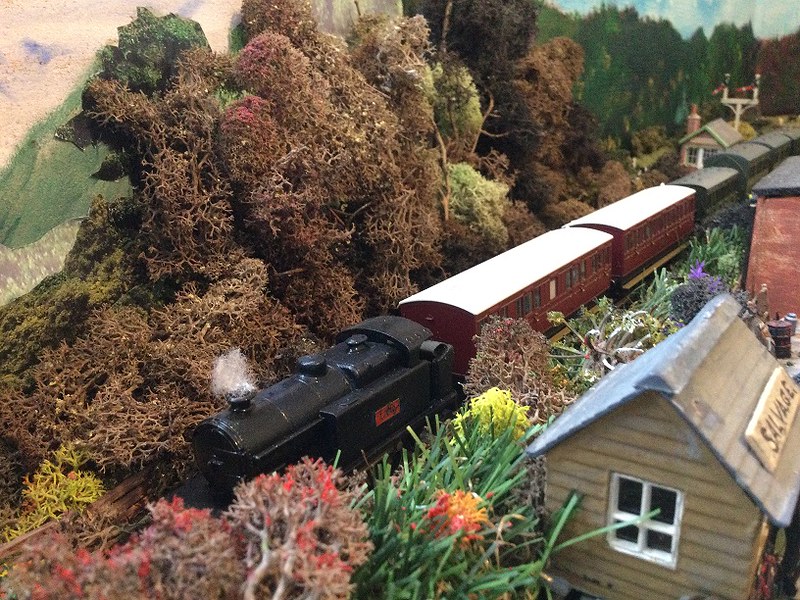
Here is a train of wagons with some pit props for usein France. Locomotive ‘East Keswick’ in charge about to pass Roseville Station.
The same train passing Leeds Sovereign Street Station
The train has been marshalled at Leeds LNWR Goods Yard and is now heading south with locomotive ‘Leefy’ in charge
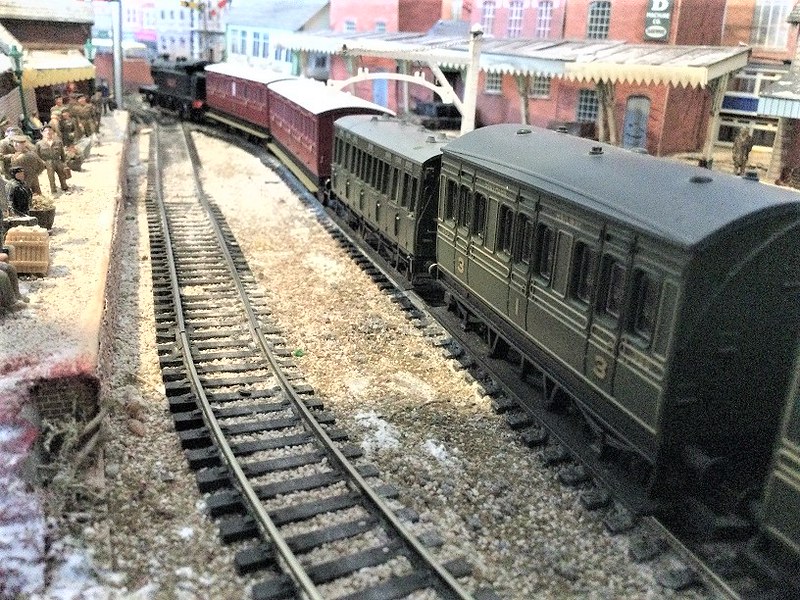
On the same running session as previous here is a heavy troop train with members of The Northumberland Fusiliers on board. They are passing Leeds Sovereign Street Station heading south.
The Railway Executive Committee took overall control of railway carriages and trucks etc to ensure supplies were reaching the Military in France/Belgium.
The troop train consists of various carriages from different Companies.
The front two are from the North British Railway Company. Others from The Stockton & Darlington Railway.
Searching information to add ‘life’ to the layout.
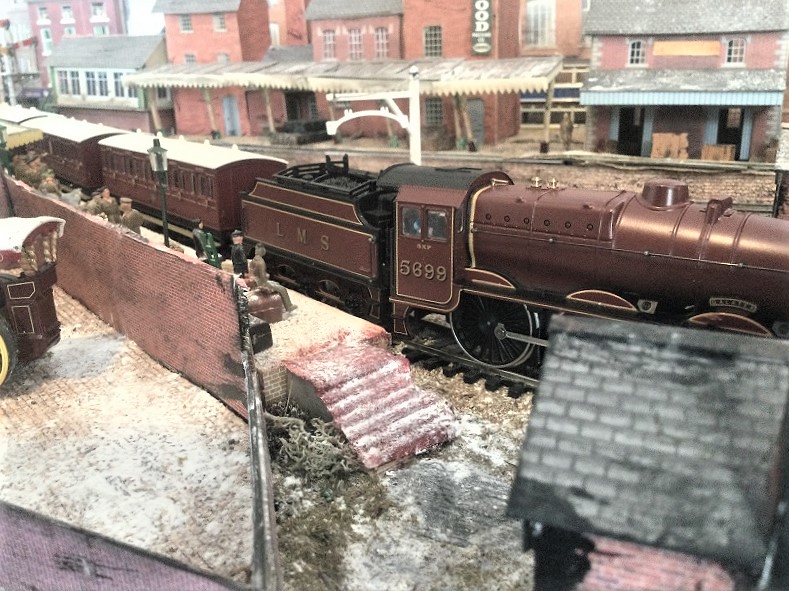
The soldiers on the platform are part of the 2/7 (Leeds Rifles) battallion Formed at Leeds, 15 September 1914… 1 March 1915 : came under orders of 185th Brigade, 62nd (2nd West Riding) Division. They have been on the platform quite awhile. [:-^]
We normally have heavy rains almost every day in the Summer, but this year has seemed more severe than normal. The rains seem heavier, and last longer.
I hope the layout will be easy to get back into shape.
Thank you for your kind comments, Chip. As for setting the bar pretty high; it is just a layout with lots of things that remind the grandchildren and I of times gone. A layout that brings joy to us all.
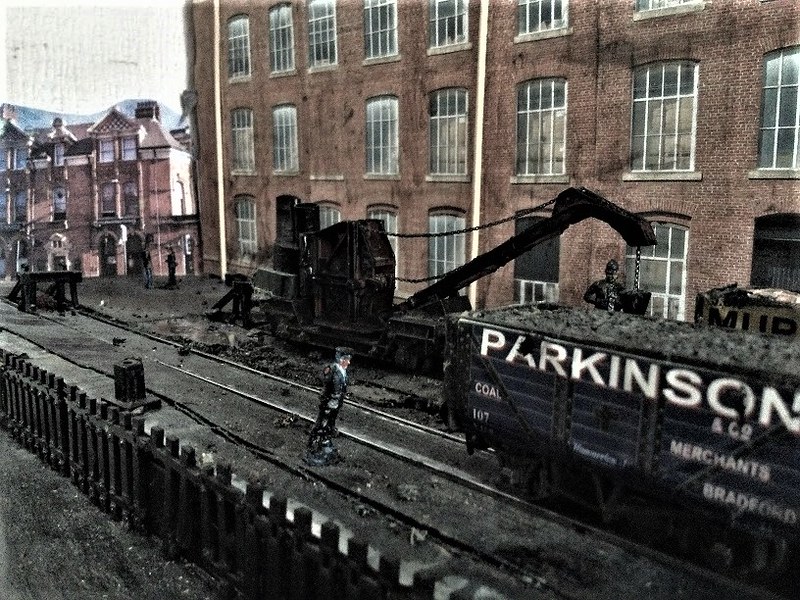
New scenes of Clarence Dock after the 1-1 weathering.
To get the effect I used a sheet of gravel paper cut to size and glued in place. The gravel paper was then dirtied up somewhat giving (hopefully) a worn, well used area.
I have retained the puddles after the rain look. Puddles are done by a little clear varnish and pieces of plastic over the top. The wet ground is varnish again leaving part as if the ground is drying out.
I just have to clean the area every so often when it becomes a little dusty.
Douglas. The ‘red thing’ is a Victorian Post Box. It is hexagonel in shape. Later post boxes are now round in shape. People and businesses post their mail in them. A Mailman comes round and empty them.
A scene on my 1970s section of the layout. The post box is a round one in the scene
and take them to the Sorting Office.
Kevin. Bumpers (we call them bufferstops) are made of different materials. The old wagonways had wooden bufferstops. Metal framed ones (the ones in the picture) had wooden bufferstops attached to the frame. More modern ones are hydraulic.
Not a good picture of the bufferstop. I was taking a general picture of the scene.
And yes, the buffers on trains strike the bumpers on the protrusions in the picture.











 [/url]