Hello all, I am currently reviewing the History of C&O’s Dreamliner - The Chessie, one of the most ambitious plans of the States orchestrated by C&O’s leader Mr. Robert R. Young’s. It was not only ambitious and also extremely expensive. Tons of money ($6.1million for the consists, $1.6 million for the 3 Turbine engine); time and effort thrown and put into this project but turn out it became one of the biggest flops ever in America railroad industries due to leak of marketing research and insufficient demand, restless investments like riskily introduced the technically unmatured Steam turbine engine from Baldwin etc.
C&O’s rival B&O used another approach to face the challenge. In
Post War - the railroads acted upon their pre-War understanding of the transportation marketplace without taking into consideration the technological advancements of the War and their meanings towards personal transportation. The rise of the automobile and the affordable airliner, both of which trumped the pre-war thoughts.
I went off to college in 1965. Took the train from Washington DC (Silver Spring really) to Lansing, MI. QUickly found United Airlines had a 12/21 CLub - half price for students within those ages. Round trip was $36. Train couldn’t compete.
I agree with Balt too. I don’t know how early most of the CEOs or leaders of Class 1 Railroad tried to experience their number one rival: Airline service in person.
If they did and still believe that purchases 700 new pullman cars and sleepers or advertisement campaigns could save their passenger services from a rapidly; years after years decline, they were somewhat delusional, just like what Mr. Robert R. Young did to C&O in late 40s.
If I was a businessman who needed to travel between NYC and Chicago constantly, I will choose the fastest route or even the cheaper route. Not all people are railfans who enjoy stuck in a consist for 16 hours. And to be very honest, beside railroad like B&O, NYC or PRR’s Broadway or General, trains service were not really that luxury, compare to hotels or even a house of middle classes in tier one cities in mid 40s to 50s.
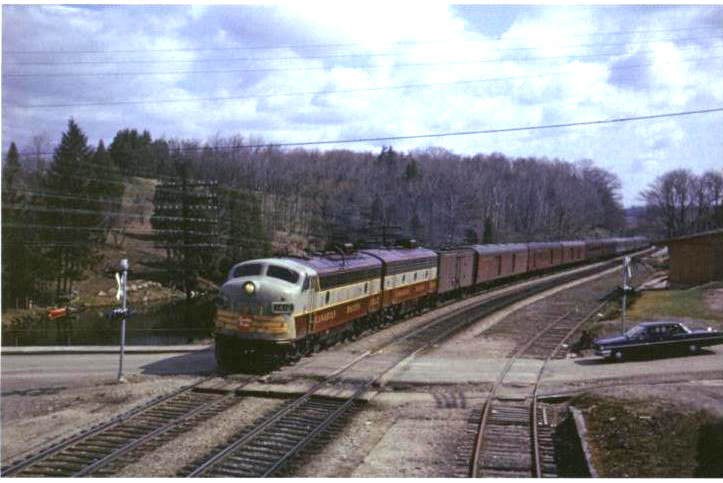
Some trains remained very popular and were exceptionally well patronized, especially by the buisness class. One train that comes to mind was the Canadian Pacific’s Chicago Express Toronto-Chicago service. CPR killed it in it’s massive train-offs in the early sixties. You did not need to be a streamliner, or refurbished anything…just good solid parlours, sleepers and diners. CPR simply got out of the passenger business with the exception of ‘The Canadian’ which remained the icon image of the railway. A few dayliner Budd car runs were not permitted to be discontinued. All these were to areas the CNR could not serve. Basically they handed over everything passenger over to the CNR. There was a hew and cry over discontinuing the Chicago Express. The CNR/GTW service on the International was pretty much what you would expect from a quasi pseudo government organization and did not match the free enterprise spirit of the Canadian Pacific service.
So what am I saying here? The railroads were more than glad to get out of the passenger business and out from under all that obligation of providing perpetual passenger service in exchange for land grants and such 100 years earlier. It was not because the business left, it’s because they never made any money doing so and there was no hope of doing so even if the trains were full every day. The ONLY exception was WWII where folks had no choice at all and government troop trains on an unprecedented scale put it over the top.
Some trains remained very popular and were exceptionally well patronized, especially by the buisness class. One train that comes to mind was the Canadian Pacific’s Chicago Express Toronto-Chicago service. CPR killed it in it’s massive train-offs in the early sixties. You did not need to be a streamliner, or refurbished anything…just good solid parlours, sleepers and diners. CPR simply got out of the passenger business with the exception of ‘The Canadian’ which remained the icon image of the railway.
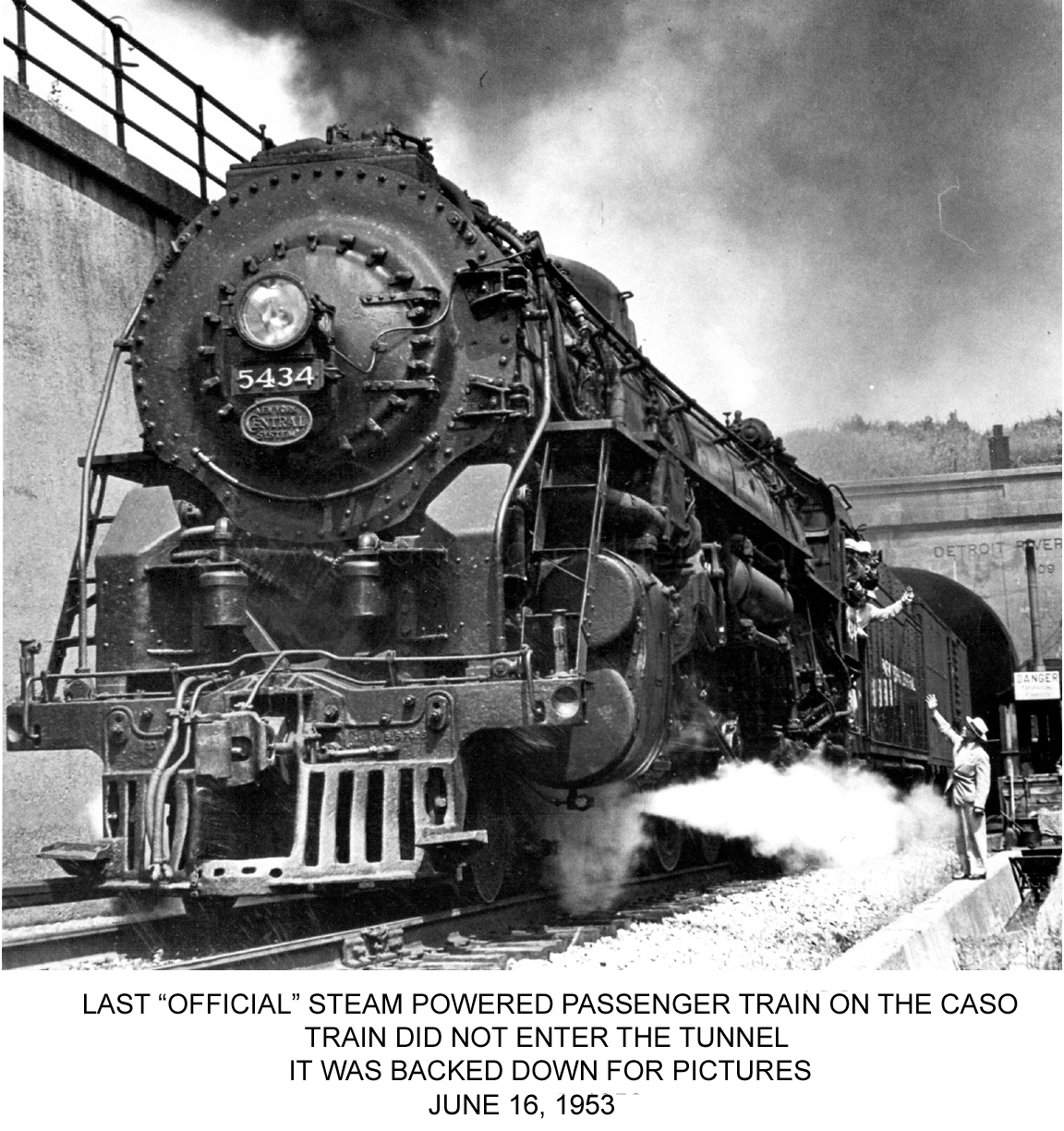
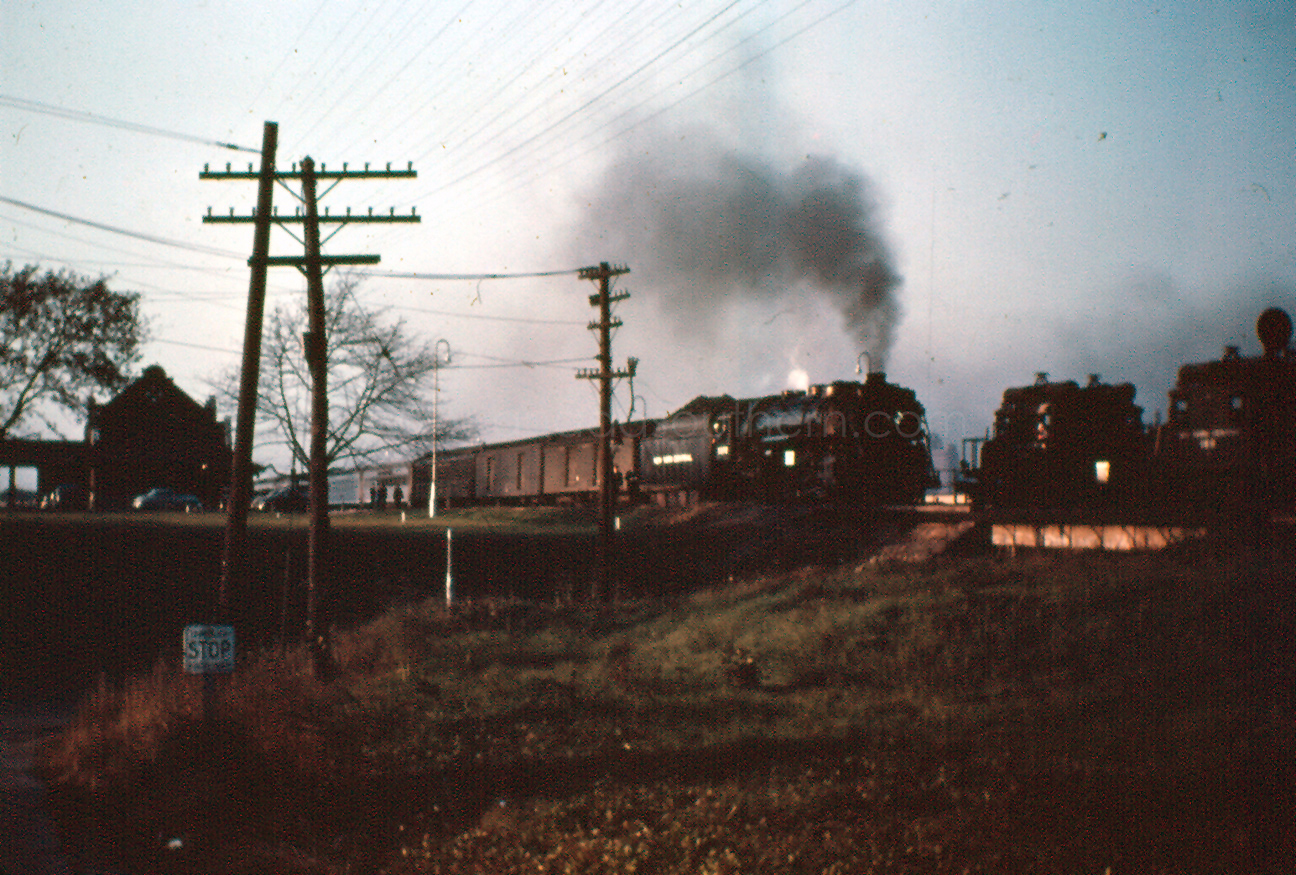
The picture caption above, stating last official steam run on the CASO, is not quite accurate. 1290 and 1291, a pair of 4-6-0’s were based out of St. Thomas and the power for the St. Clair branch until the spring of 1957. Also I have pictures of Hudsons in passenger service approaching St. Thomas up to 1955, but these were almost for certain ‘one of’ substitute power. Also freight continued on with steam here and there for a few more years yet, Mikes and Mohawks but rapidly thinning out.
Just a personal preference thing… even a street lamp looked 100 times better in the past. But please don’t send me back to that era by your time machine, unless you gave me tons of money I can use at that time. [C][swg]
To revert to the original topic, while B&O were a big user of rebuilt heavyweight cars (sometimes referred to as “betterment cars”), the B&O were right there at the beginning of lightweight cars with the Royal Blue and Abraham Lincoln trains built by ACF in 1934, so about the same time as the better remembered “Hiawathas”.
The observation from the Abraham Lincoln, which passed to the GM&O through the Alton is preserved, and is probably the oldest lightweight car still in existence.
So why did the B&O replace a purpose built lightweight train with rebuilt heavyweight cars, in the case of the Royal Blue? Probably it was cheaper to upgrade car you owned, rather than build new.
The most common explanation of why the B&O shipped the lightweight train sets off to the Alton was the Daniel Willard (B&O’s President at the time) did not feel the ride characteristics of lightweight equipments was up to the standards he felt the Royal Blue should possess. It had nothing to do with cost.
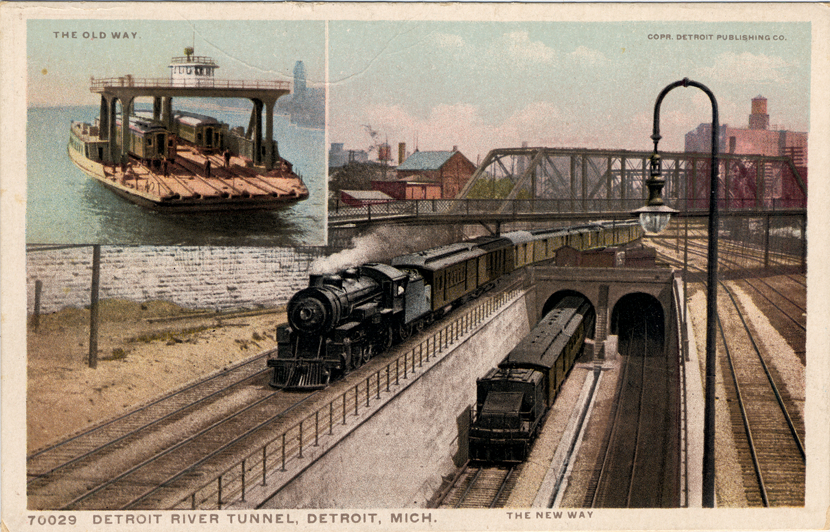
Yes, one bore was enlarged, but I believe it was not feasible to go to complete doublestack clearance for 9’-6" boxes. At the time many were international boxes, which frequently included 8’-6" and 9’-0 heights.
Thank you Peter and Balt! I almost forget that B&O was the first railroad company to use lightweight cars on their premier train like the Royal Blue (they even re-christened it) but I can’t remember that B&O actually replaced them in 1937 because they unsatisfied with the ride quality. This really shown how enthusiastic and discreet the management of B&O was. I guess those 6-wheel trucks of the heavy weight cars played an important role in “Pullman level ride quality" wasn’t it?
Many other railroads used Betterment cars too, like NYC and PRR, I love these betterment car with streamlined appearance and 6-wheel truck even more than those newer lightweight cars or sleeper. My favorite were PRR’s betterment sleeper carried F.O.M livery, they always appeared in the consist of the General.
My understanding is that all the ‘betterment’ coaches, combines, and dining cars were all done at the B&O’s Mt. Clare shops. Pullman Company did all the betterment construction on all the Pullman operated cars.