I’m brand new to the HO scale scene and am working on my first real layout. I was wondering how I should build level crossings with roads. My crossing are on curves so the BLMA sets will not help too much. If anyone has good recommendations please reply.
LIONS are cheap. They do not buy things like this.
So the next question is what era are you modeling. If it is an older era you would fill in between the rails and the outside guards with wood. Just leave a good flange way inside of the gauge.
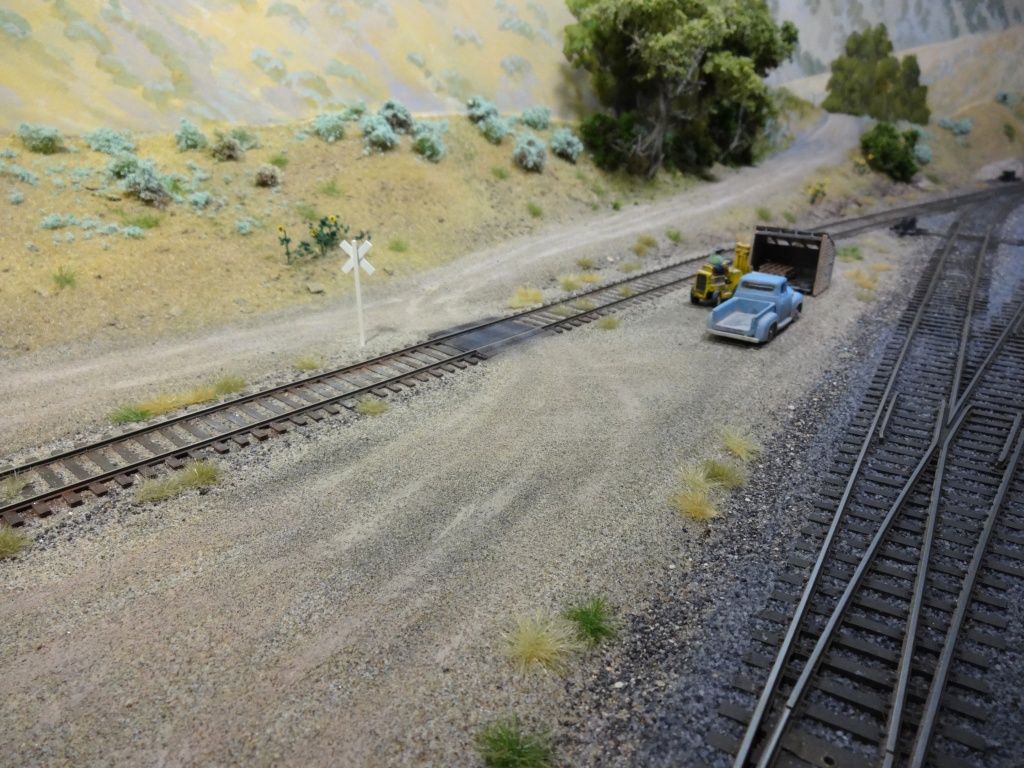
LION has had good luck using cardboard, other modelers use plaster. LION has used “asphalt”. Him mixed N guage black cinders (ballast) with Elmer’s glue until it was the consistency of well asphalt. Again keep the flange ways open. Here is a modern main line crossing of a rural dirt road.
Cut some styrene, or cardboard, or even that foam material sold at Walmart to fabricate this.
Hand-cutting balsa or basswood and then staining it is also an option. The PRR used a “6 rail” design that had a rock fill in the flangeways. Check out http://prr.railfan.net/standards/standards.cgi?sortby=1&sortdir=up for prototype plans of crossings (sorry only PRR, PRSL, and PC.)
You can make a pattern to work with from paper. Take a sheet of paper and press it onto the track where you want the road crossing to go. You should wind up with an impression of the rails on the paper. Next trace the rails with a pencil. Then cut it out. You should have three patterns. One for the outside curve, one for the inside curve, and one for between the tracks. Then you can trace the patterns on plastic sheet or wood, cut them out, then fit them to the area.
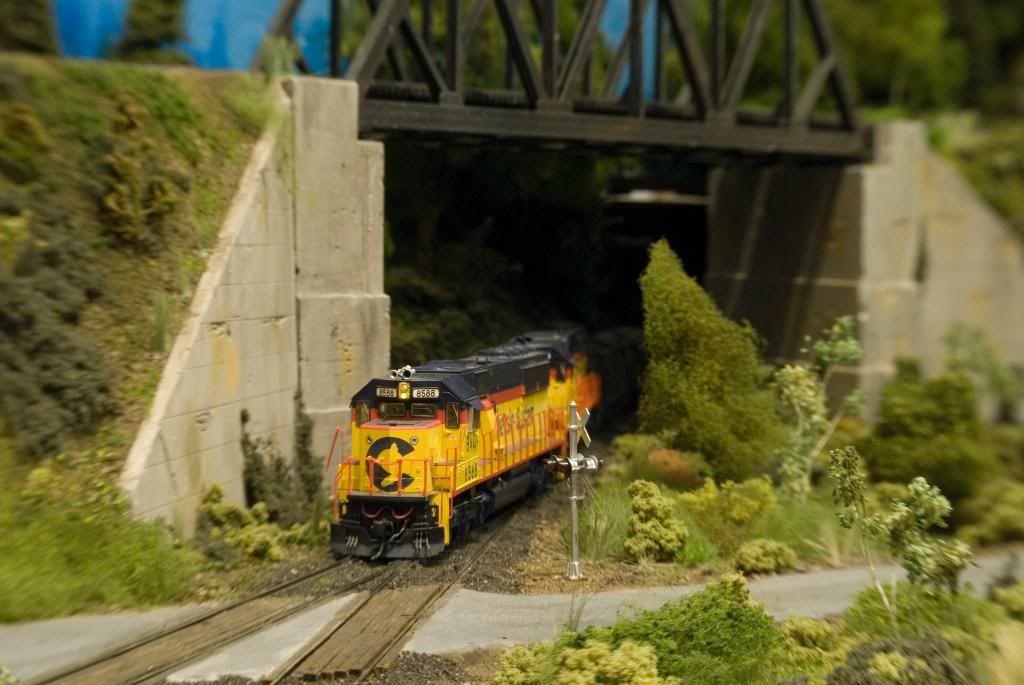
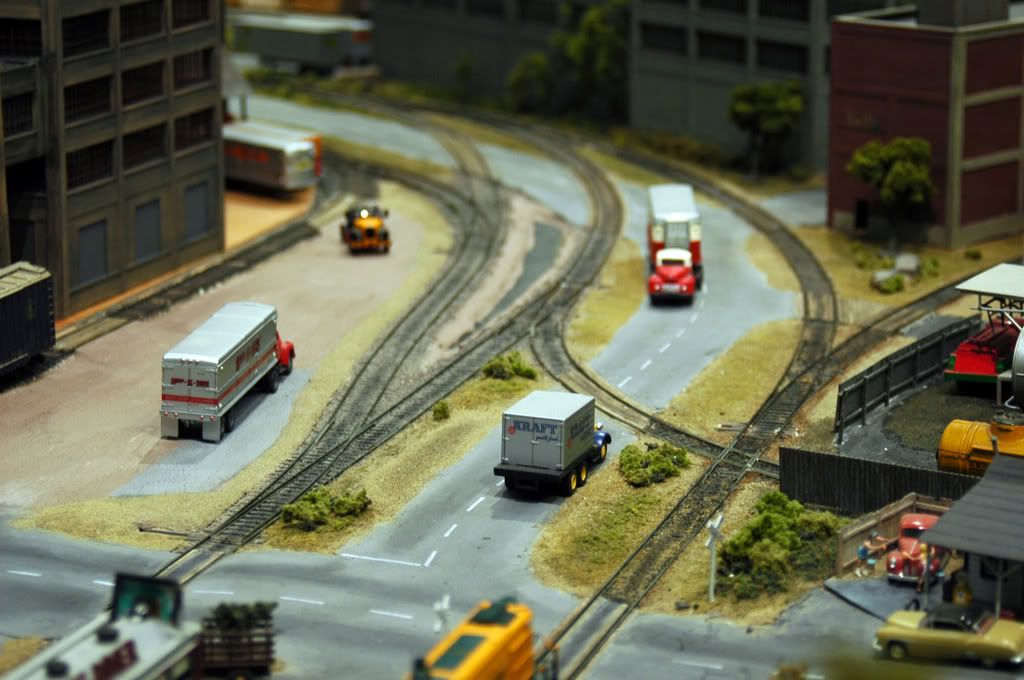
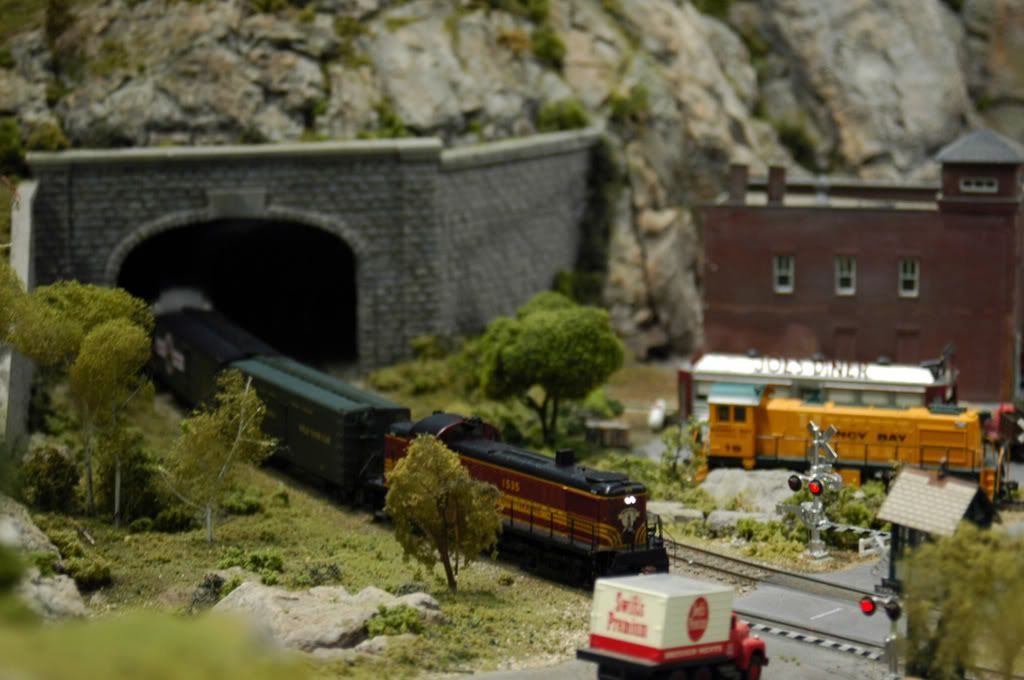
I built the small crossing in this photo from strip wood. Since the rail is code 55, and I wanted to ensure the crossing would stay clear of a track eraser and coupler trip pins, I used HO scale 4 X 8 or 4 X 10 stock. You could use thicker wood if you have taller rails. The wood ended up taking color from India ink, powdered chalk and some dry-brusing with acrylic paints.
I used styrene strips and wood strips, laid one at a time,directly to the ties. If you lay the first one against the spike heads, you should have enough clearance for flanges. Lay one side first, then the other, then fill in the middle (you might have to use a thinner strip as the last piece, depending on how big your strips are). Make sure the road and crossing are below the tops of the rails so you can clean the rails without rubbing the road/crossing.