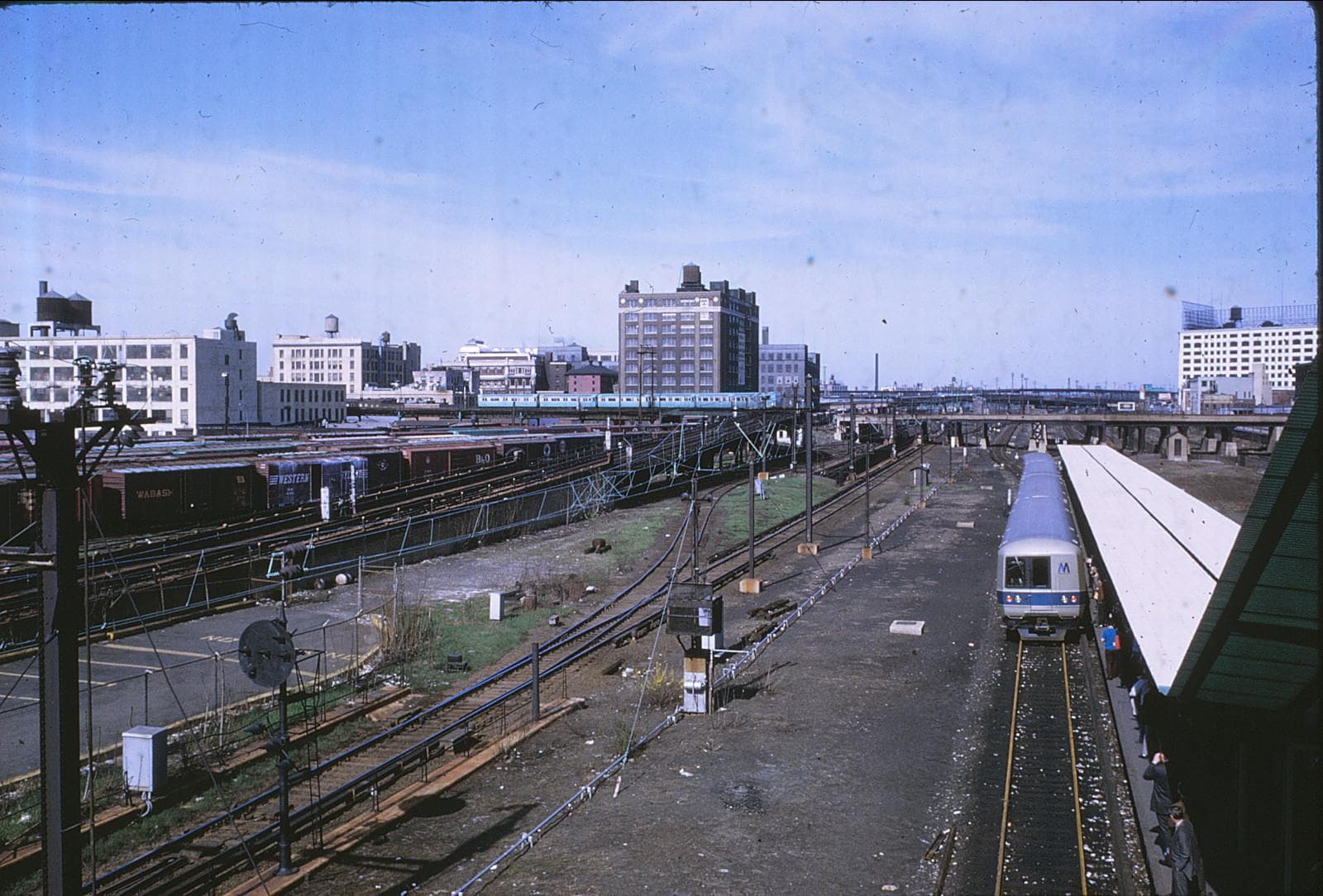
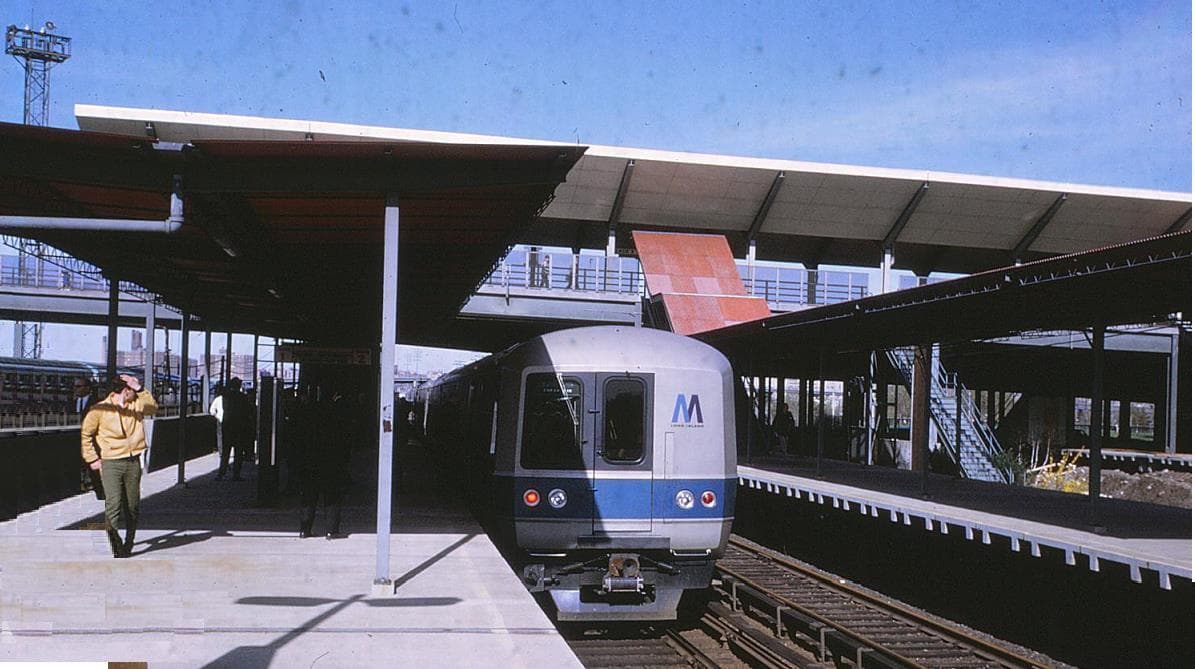
This shows Laurelton Station before it was elevated. Note the third rail, and how easy it would be for a small child to get hurt. One of my classmates at PS 161 did get seriously burned during a fight with another student. Yes that is myself blocking the view.
That is a cute picture. And yes there were a lot of risks to children that people would get all shook up about today. Growing up in a railway station likely wouldn’t be allowed anymore!
If, I remember what my Father told me, sometime in the early '30’s., when he was a young Lad living in Mariner’s Harbor, Staten Island, N.Y.C., N.Y.S., in his neighborhood ran the Staten Island Rapid Transit.
The Road had steam, early diesel and third rail and though the R.O.W. was fenced off, the children used to take a short cut through the holes in the fences, to and from school.
It was a rainy day and a young girl with an umbrella, for whatever reason, touched the third rail with the metal tip of her umbrella, causing her own death, by electrocution.
This, incident left a lasting and unpleasant memory in my Father’s mind.
Though, electrified third rails are dangerous, they do provide an alternative means of power to locomotives.
Railroad personnel, of the Railroads that I worked near, were always checking to make certain that all safeguards were in place.
After all, safety was most important to all.
Vehicle roadways should have as many safeguards as Railroads, then THERE would be fewer fatalities, injuries and/or property damage!!!
When I used to walk to school, there were no fences, though I see one in the picture of the station. apparently intended to discourage people from crossing from one side to the other. One time on a tour of Sunnyside yard, my father tried to teach me the right way to cross a 3rd rail: by stepping over it, not stepping on the wooden board that covered it. That seemed dangerous, as my ankles would be very close to the rail. But stepping on the board would inevitably result in its collapse when you discovered a rotten board. At least my schoolmate was not killed, but had a nasty, permanent scar on his forearm. Ah the good old days!
Before, I retired from the City, of New York, when ever we had to enter an electrified Railway R.O.W., we had to ask the proper authority to shut down the voltage power, which took several minutes and we had better have a good reason to do so!!!
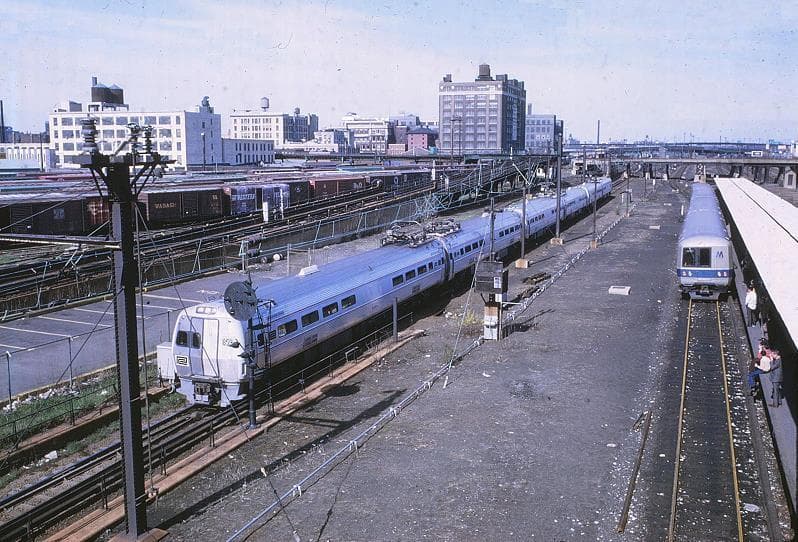
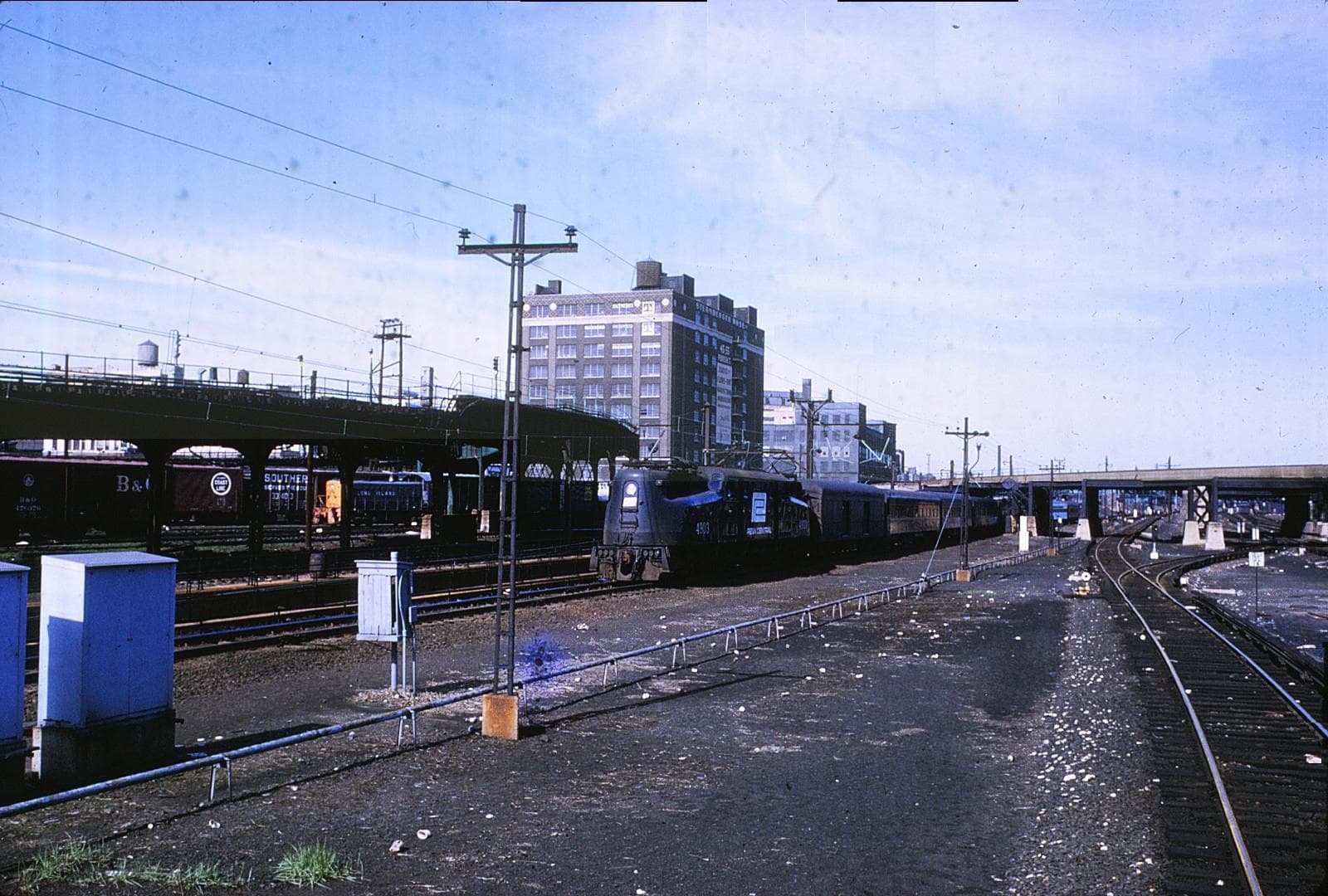
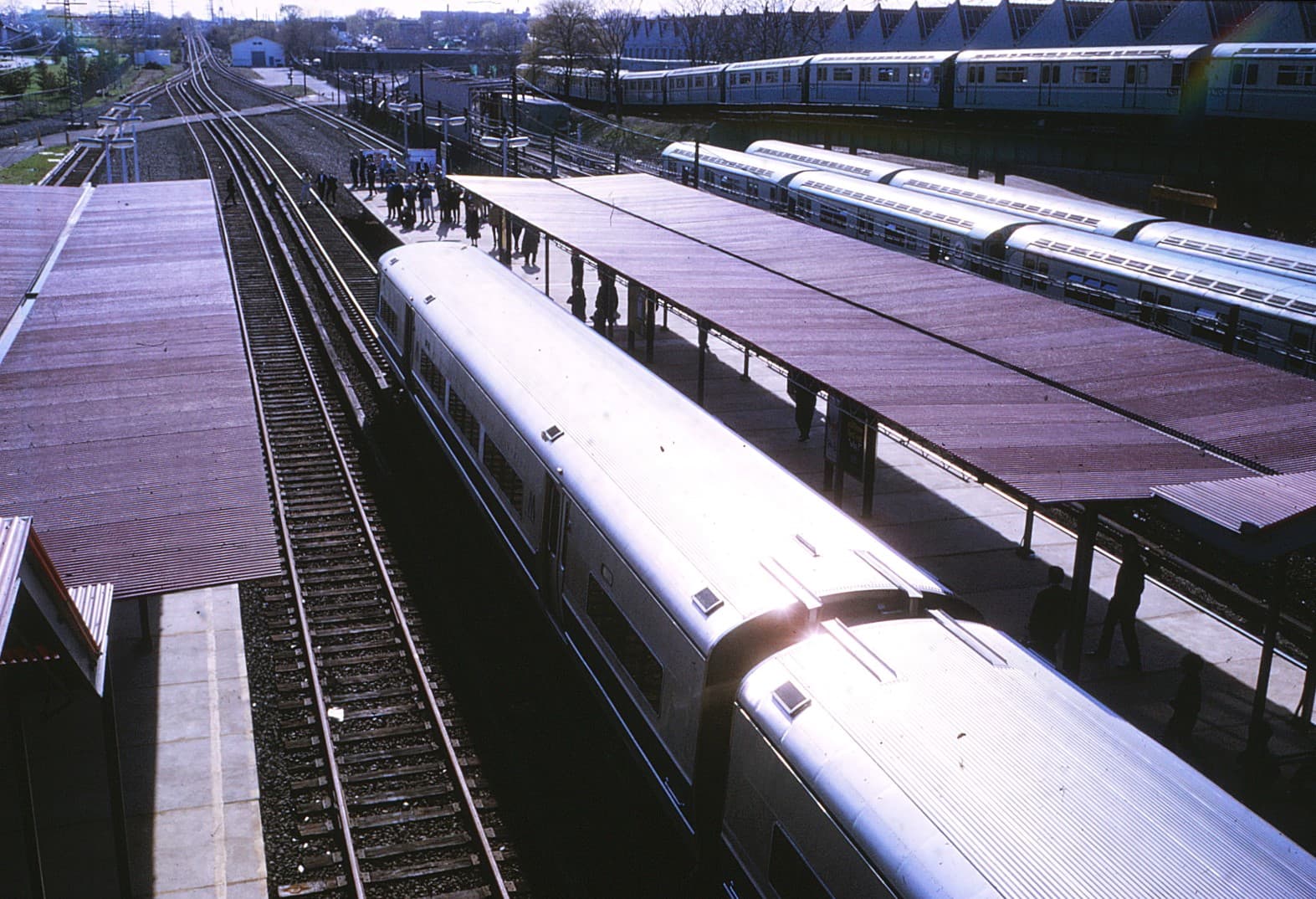
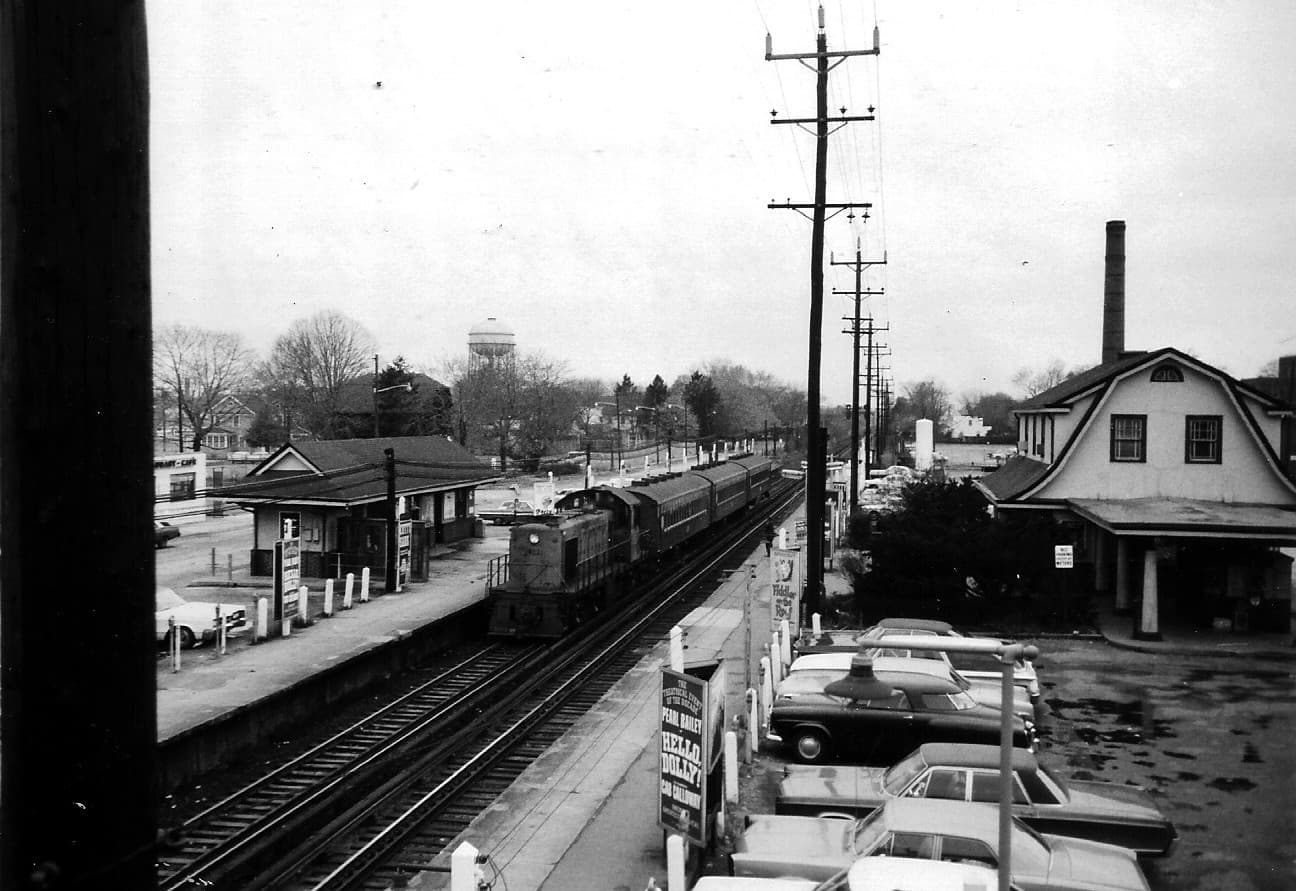
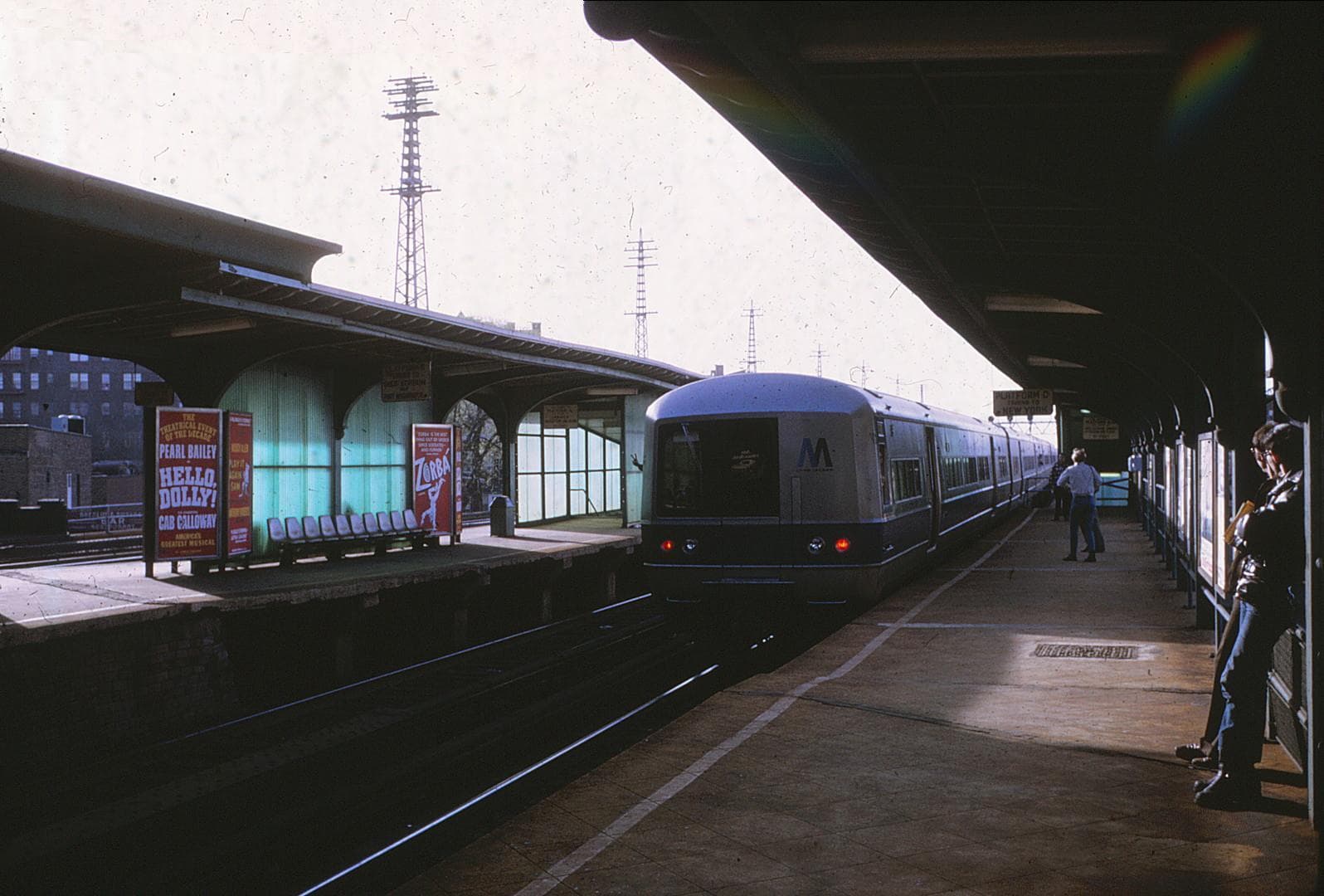
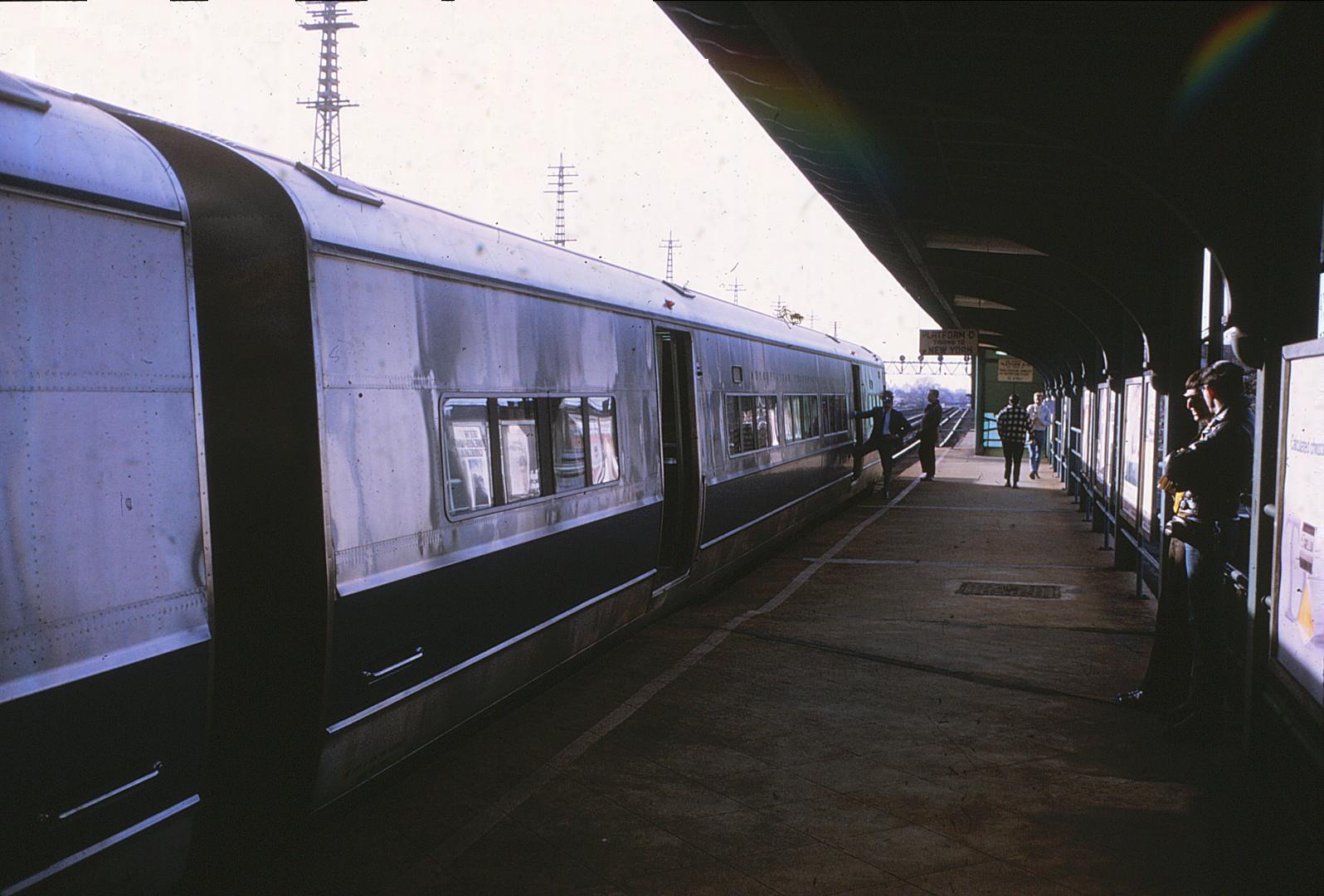
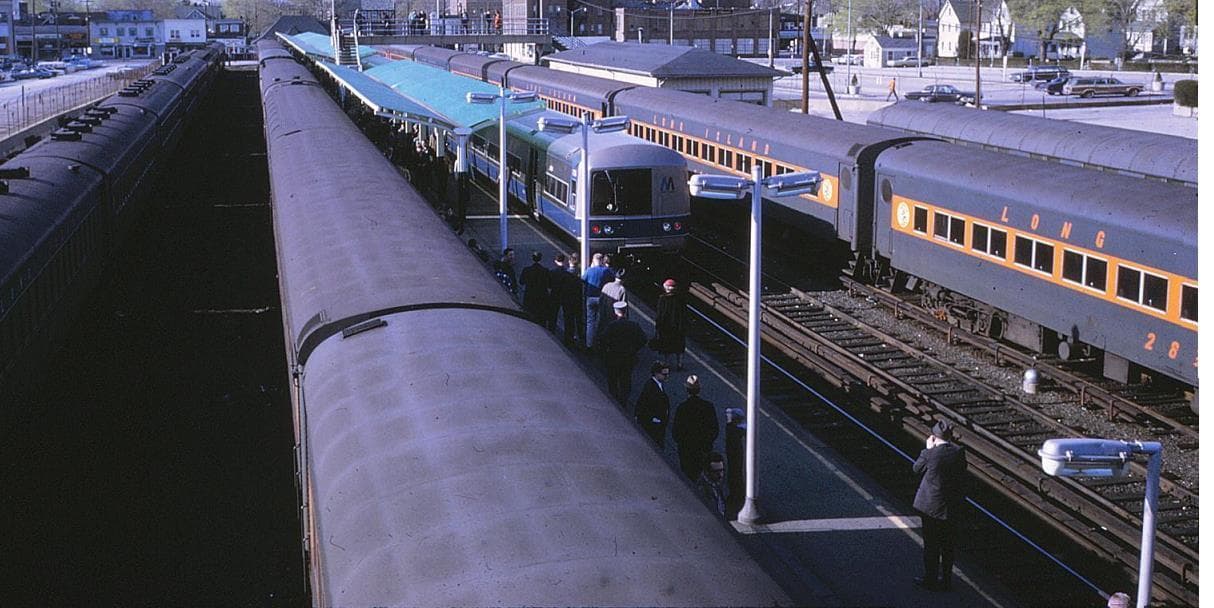
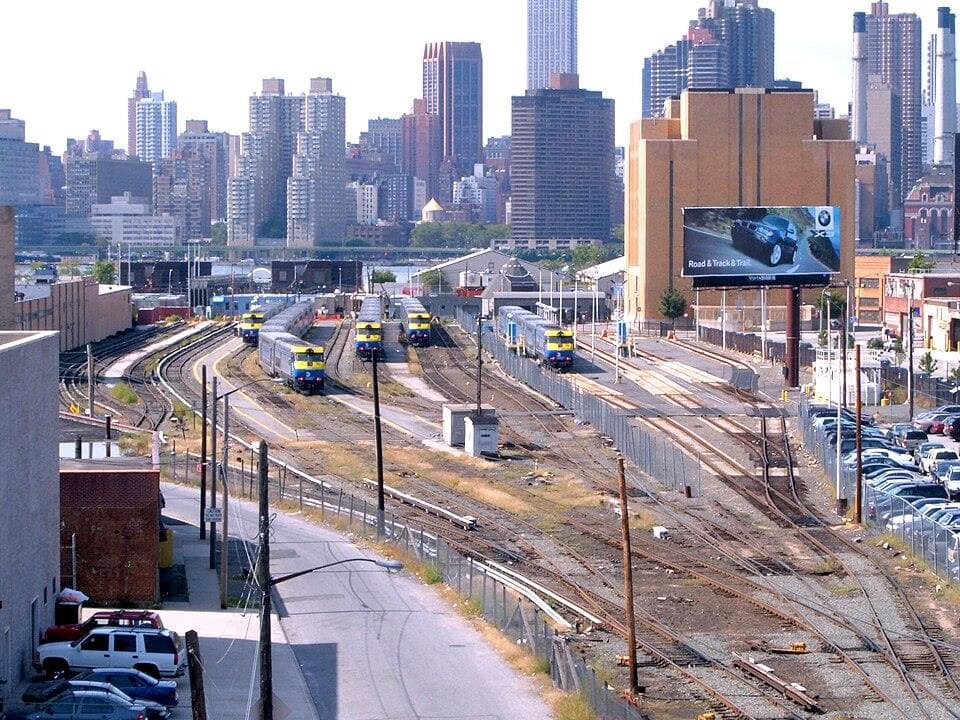
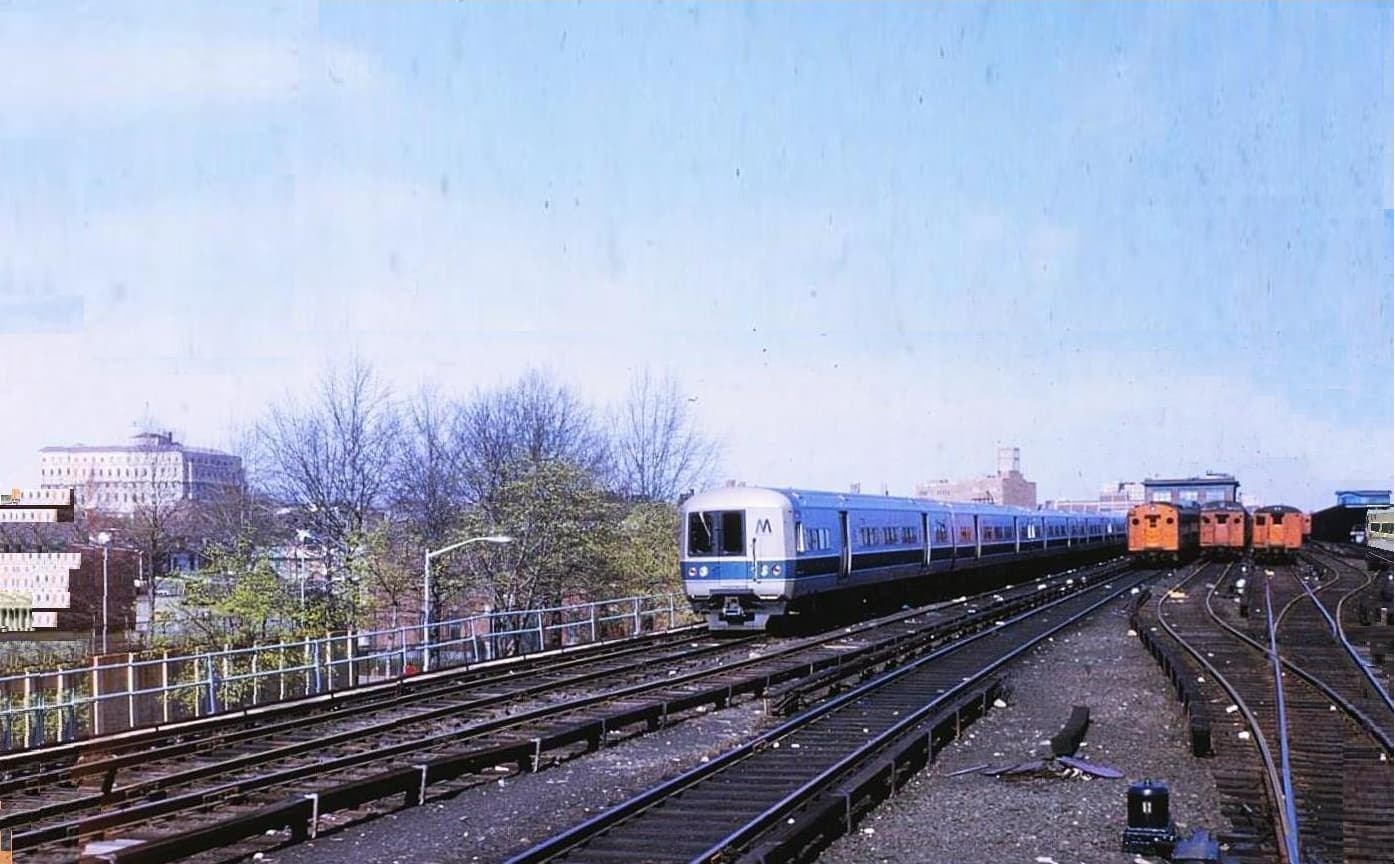
The first two color photos are at the Hunters Point LIRR Station, used by trains terminating and originating at the Long Island City Station or Yard, not going to or from Manhattan’s Pennsylvania Station. A four minute subway ride from the nearby subway station got one to Grand Central. I wonder if the LIRR ststion here still has service after LIRR trains began serving Grand Central with East Side Access’s opening. The third color photo is at Willets Pt., the old Worlds Fair site The B&W diesel train is at Mineola, about ten years earlier.
This was the newest LIRR threadcI could find on Classic Trains
But not Long Island City? They just use the yard, but not the station? Ocured often after opening of Pennsylvania Stagtion. (LIRR trains operated into Penn. before PRR trains!)
I sustituted a cropped top edit of the L. I. City photo, because the slide I took was not properly scanned, or a hacker damaged the picture. The Manhattan skyline was in the original.
Correction: The slide was properly scanned. The problem is that the image was near-noon in the summer, and the sun was somewhat in the north, and the view is eastward to a Queens skyline, not across the East River to Manhattan.
In the picture, I’m pretty sure that’s Waterside on the extreme right, which means that the Empire State Building, amusingly truncated in the picture, is in the middle. The extension of the Long Island Expressway (I-495) runs east-west immediately to the right of the picture and enters the Queens Midtown Tunnel.
Jay interlocking, southwest of Jamaica Station,building in background, 1970 or1971. Platform used only by LIRR people. “B” yard in center. Tracks at extreme right to Brooklyn, .Tracks at left to Penn Station & LICity.