I have several MDC 50 and’ 60’ passenger car kits and athearn heavyweight and lightweight passenger car kits i want to letter for my fictional shortline and need to know what size of lettering to use, especially on the 50’ pullman car kits. the lettering on my MDC 50’ passenger cars is so small i dont know if anyone makes decal lettering that small. What size of lettering has anyone on here used on MDC and athearn passenger car kits?
I have always used Microscale HO scale decals. They are scaled to fit these cars per the full scale railroads and have always found them to the correct size. I have painted and re-decaled Athearn Heavy Weight passenger cars that were Santa Fe cars and changed them to the Northern Pacific.
Simply measure the height of the available space (most lettering is sold in full-size dimensions, either fractional inches or decimal metric values, usually mm) and then check what’s available. You may also find a choice of fonts and colours, too, although with the demise of Champ, the selection is more limited than it used to be.
I’ve also used dry transfers for lettering both freight and passenger equipment, and while the choices in that medium have also decreased, Woodland Scenics offer some styles and colours. The drawback is that each particular font-style is in multiple sizes on the same sheet, limiting the number of identical cars you can letter from a single sheet.
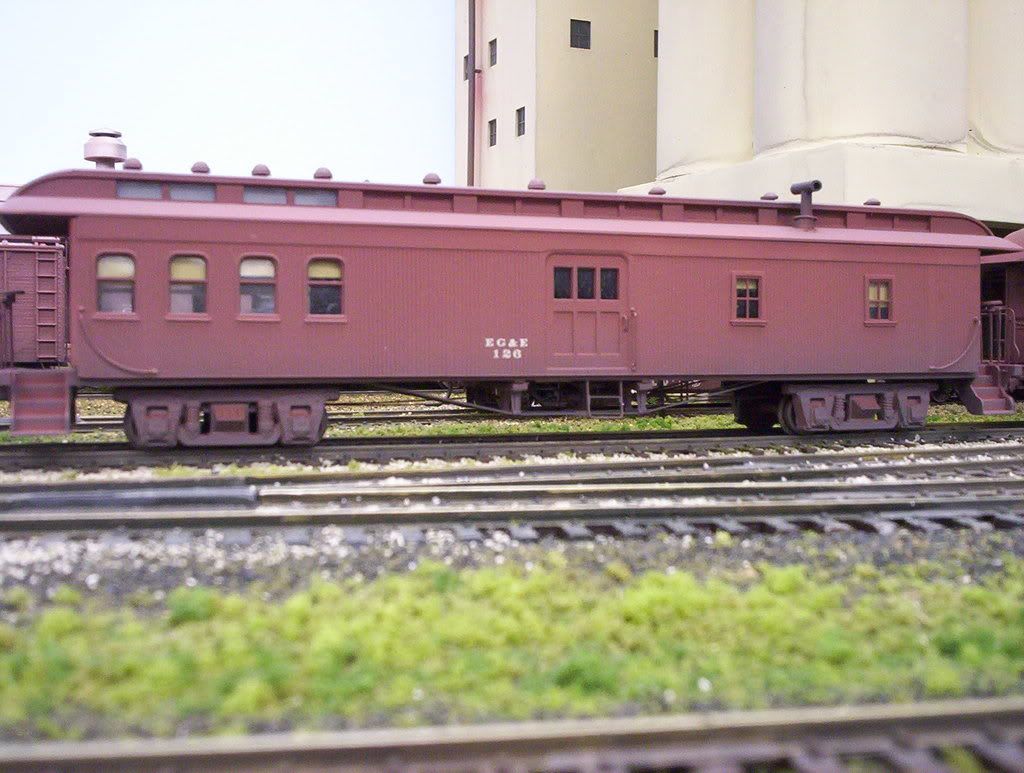
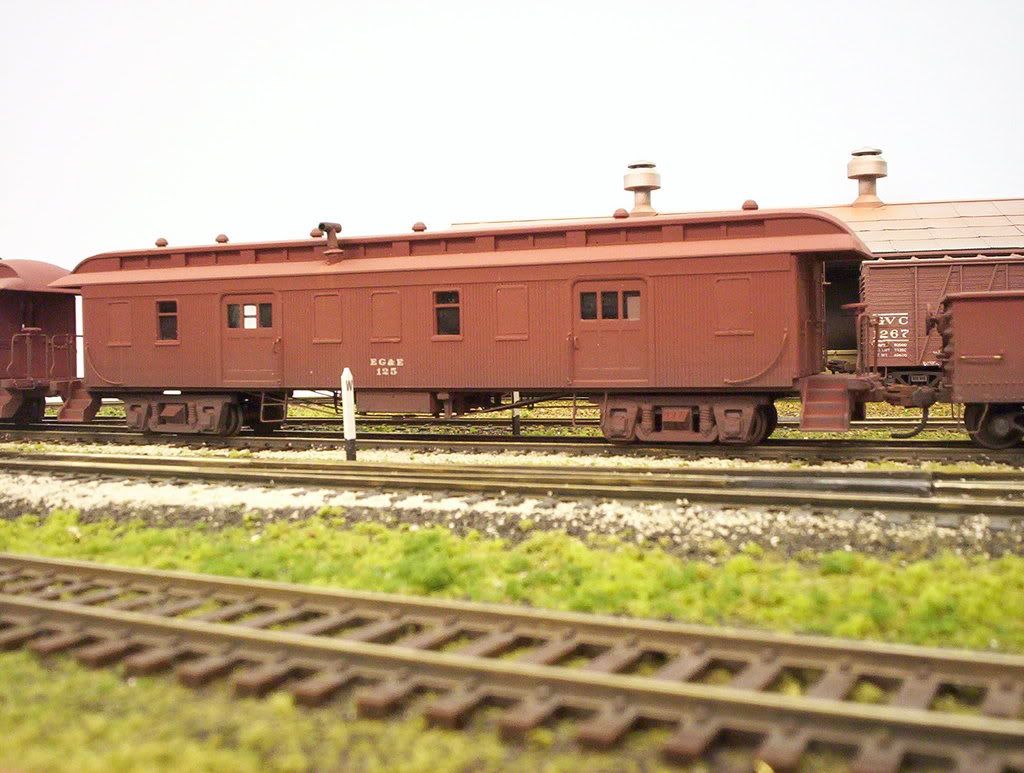
My 50’ MDC passenger cars have been relegated to work train service, so there’s not much lettering on them. For a car still in regular passenger service, the roadname is usually in the letterboards, while the car numbers and/or name would be between the side sills and belt rail (below the windows):
This re-worked MDC Pullman Palace car was lettered with C-D-S dry transfer alphabet sets, as was most of my passenger equipment:
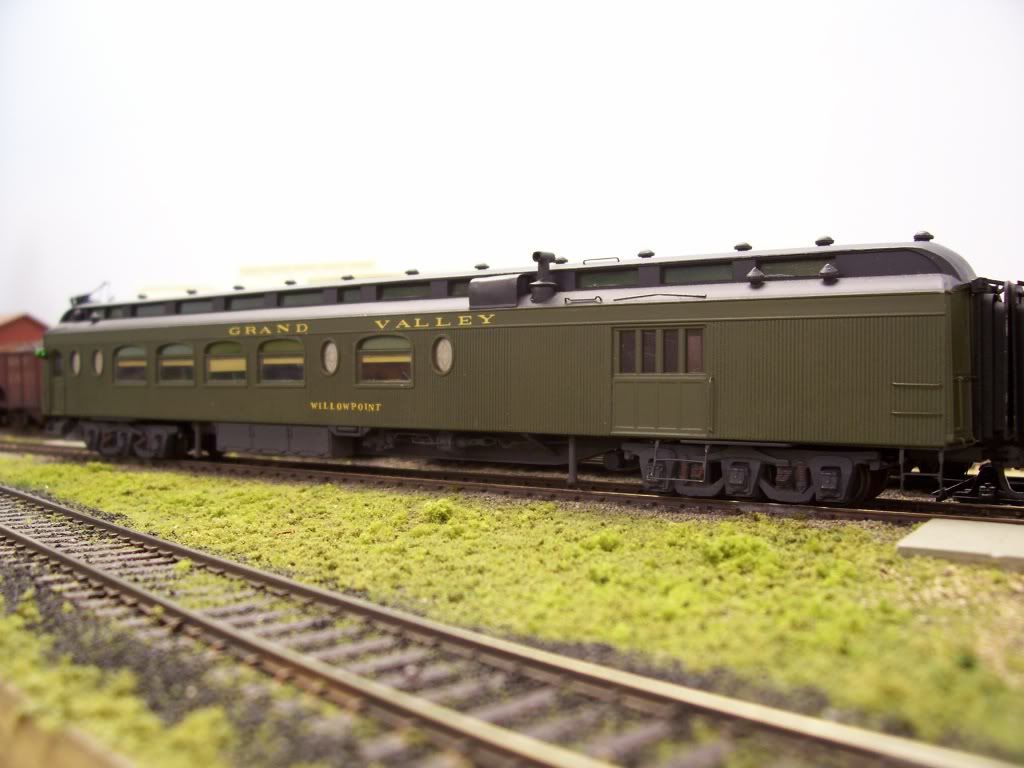
Unfortunately, C-D-S is also no longer in business.
Wayne
Nice MOW cars, Wayne.
Wayne mentioned the letterboards. If you’re free-lancing, the crucial measurement is the height of lettering you can get to fit on the letterboard. If it fits there, then you can usually use it elsewhere on the car, too.
Same size lettering all over is less than ideal. But if you’re doing just one car or are on a budget, getting one sheet the same size sometimes is the cheapest way to get going. Some sheets may have multiple sizes, but not enough in the right size for what you need. Always check that when planning.
If you’re doing multiple cars, it pays to plan on how many sets you need. Sometimes you find out you need 3 sheets of one size and 1 of another to do 4 cars. In any case, always try to get a look at what you’re getting. Nothing worse than to be doing a train of 4 or 5 cars and end up 8 short of a letter just when you’re halfway through[:(!]
Always count up how many you sets need to do one car, then multiply as needed. Remember, one passenger car can have 4 sets of number (instead of just a centered number using just 2 sets in that case), they often had a number near each end, plus 2 more usually smaller sets on the car ends
Manufacturers put different arrays of lettering in different alphabet sets. If you have strange a roadname, like something with 4 J’s and 3 Z’s, then you may need an extra set to account for their higher than average presence in terms of the distribution of letter usage.
Mike makes some very valid points, especially concerning the letters you require and what’s available on the sheets. This should have an effect on your choice of name for your freelance railroad, too.
I did say “should”, but the importance of that was lost on me when I began freelancing. Instead, I chose the roadname of ELORA GORGE & EASTERN, the Elora Gorge being a scenic spot on southern Ontario’s Grand River, and “Eastern” just because it sounded right.
After using decal alphabet sets (and some dry transfer alphabet sets) to letter approximately 40 diesels in this scheme:
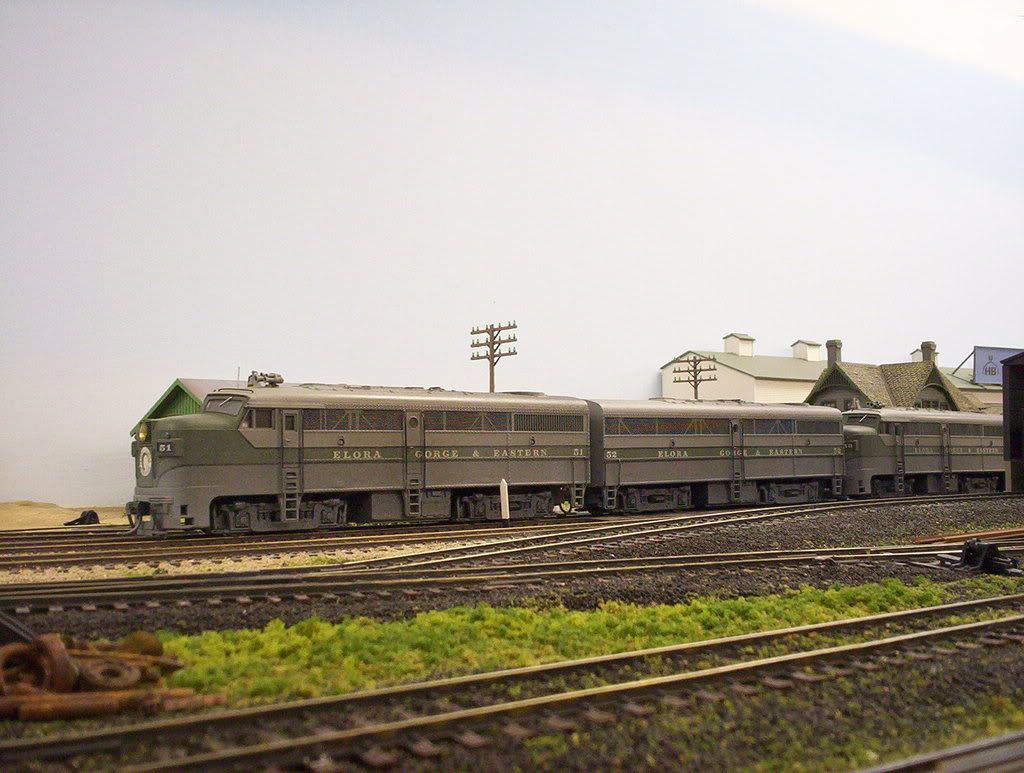
…I finally decided to simplify it to this:
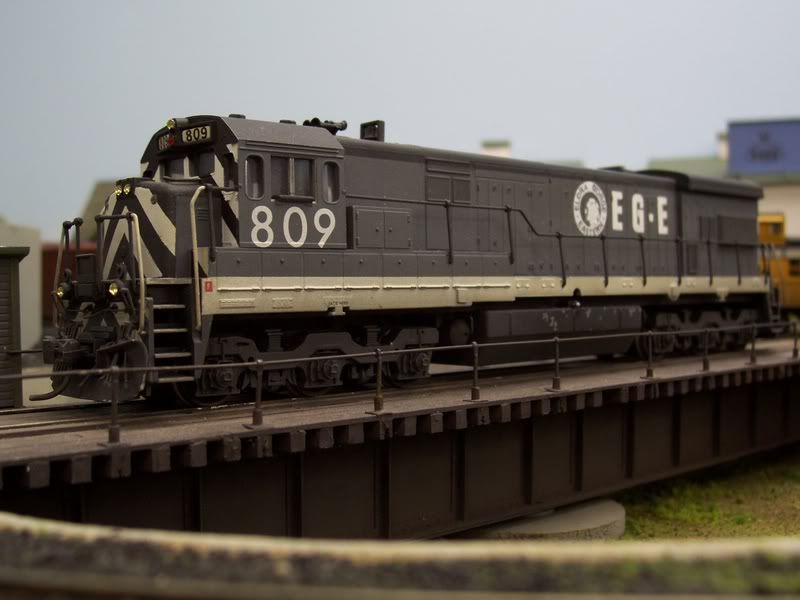
…before eventually opting to backdate my layout to the late '30s.
Passenger cars, including heavyweights, smooth-sided lightweights and stainless steel streamliners got the same roadname, plus individual car names, all done with dry transfer alphabet sets, approximately 80 cars in total:
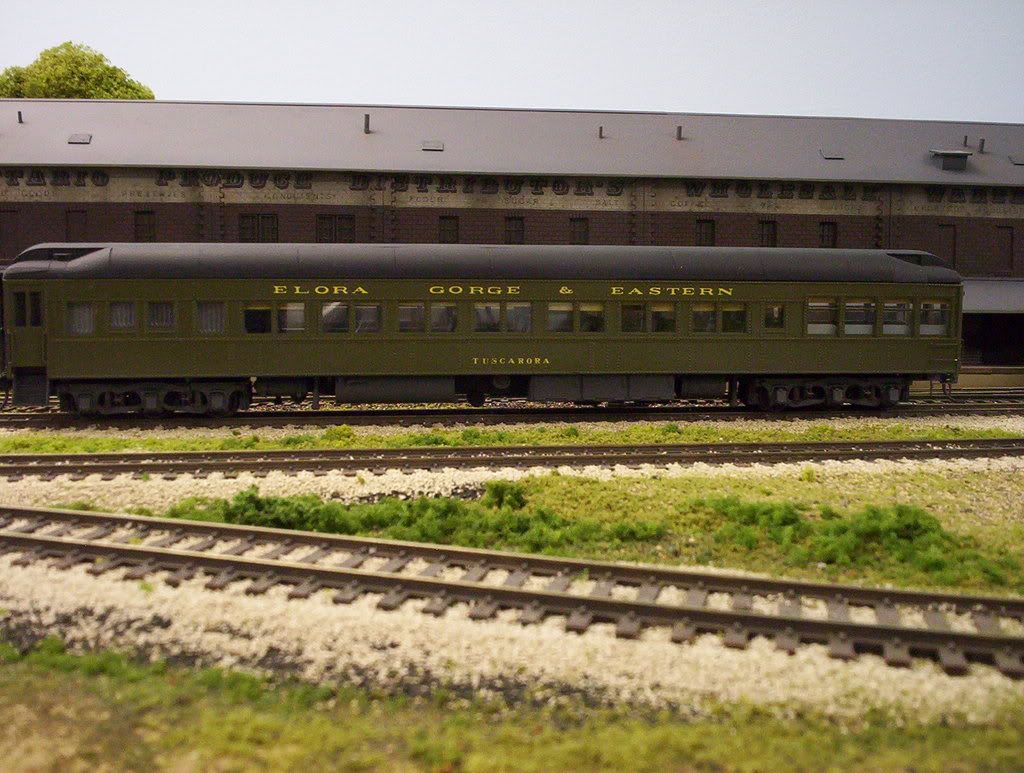
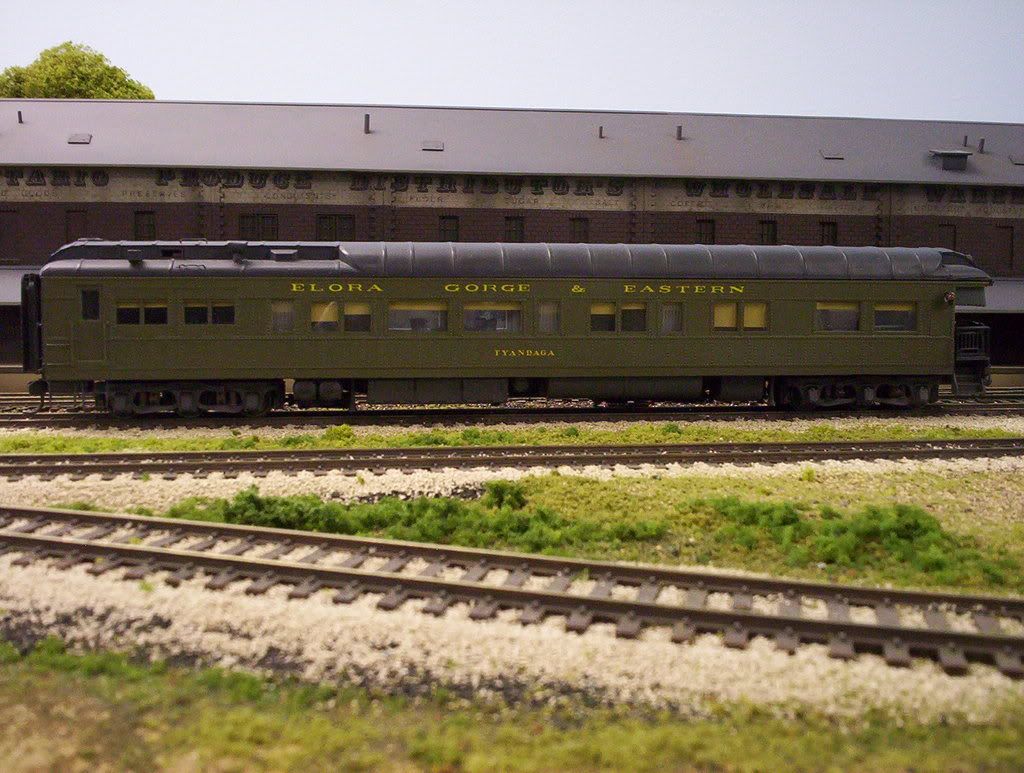
I discovered that dry transfers give you one chance to get it right - if it’s crooked, it needs to be removed and replaced. I also learned that "G"s can be made from "C"s, "O"s, and "Q"s, with parts from other letters for the fancy bits, and that "E"s can be made from "F"s, "L"s, "T"s, and "I"s. There don’t seem to be any suitable parts to make your own ampersands, however. [banghea