Missouri Pacific branch line - 3

Decapods Part 1

In 1961 I had my first 4x8 layout, a typical non-defined collection of random stuff running on an oval. But the Big Bang for my short line and branch line modeling was in 1963 when several major events met in confluence at almost the same moment in a blinding flash and put me off of mainline modeling forever. One of the most important discoveries in the early period was the Missouri Pacific Russian decapod. A love affair started that never quite died over many long years. But, I had to suspend model railroading in 1966 when I left home .

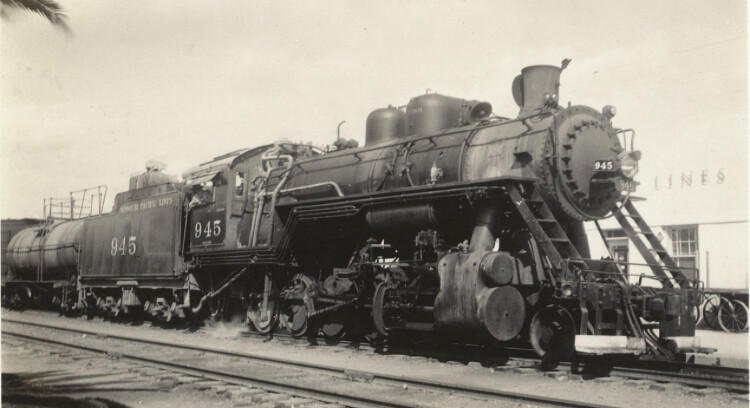
Prototype Missouri Pacific decapod:
I often thought about getting back into it over many long years, but always was cursed with the same problems that everyone has; space, time, and money. 39 long years went by, a couple of tentative and abortive restarts failed.

It was the Russian decapod that made the final push to get me back into model railroading. My neighbor at the time started fooling with 027 Lionel trains, I would go next-door sometimes and run them with him. One day in June 2005, he said, there’s a train show in Mobile, Alabama, let’s go to it. So we went and I looked at all the stuff, and in another blinding flash, a major discovery was made. Bachmann was offering a plastic ready to run Russian decapod in HO scale. I saw one and did backflips. But I still had the same problems of time, space, and money.

Hurricane Katrina solved the space problem for me. My house survived, but was flooded and all my furniture was ruined. It took two years to get the house renovated, but when it was done, it was beautiful and empty, looked like an art gallery with white walls, hardwood floors, and track lighting. I asked myself a serious question. Do I want to fill this house up with furniture that I’ll have to handle when I move out? Or do I just want to get enough to eat and sleep and fill the rest of the house up with a layout? It didn’t take long to answer that question. :joy::joy::joy:. I went to a hobby shop for the first time in many long years and saw two DCC Russian decapods for sale. I asked the proprietor what DCC was, he explained it to me, and I decided right then to go that route and snapped those two decapods up.

These engines are not completely prototypical for the Missouri Pacific, but close enough. The real MP engines were numbered 941 through 948. I chose to number these two just outside of the MP numbering since they weren’t completely accurate. The Missouri Pacific decals didn’t come till a couple of years into them being with me. At the time only old Champ decals were available, which I found out later are not very accurate. The 949 is pretty much the way it started out with me except for a new set of drivers and rods. The 940 ended up with a new mechanism and decal job with better decals, but some of the details are still missing. Both came with factory installed on board DCC/sound, replaced early on with early Soundtraxx tsunami decoders, which in turn have been replaced with the tsunami 2–2 decoders presently in the locomotives.

Here they are much later in life but still hard at work after 18 years. I’m away from home at the moment so these are the best photos I have but when I get back, I’ll take some looking at the front of the engines.

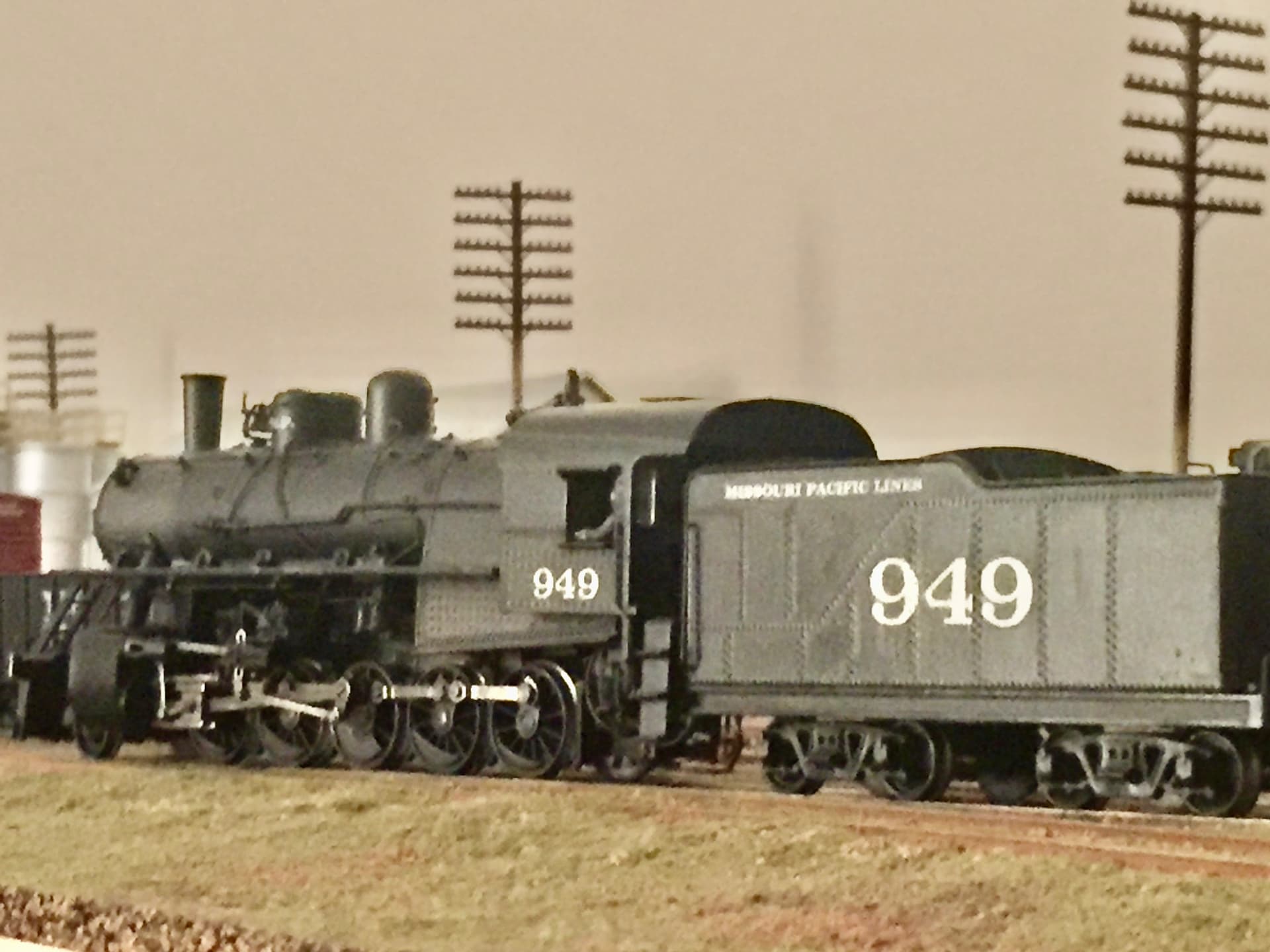
The 949 in early morning natural light, switching in Thunder Grove:
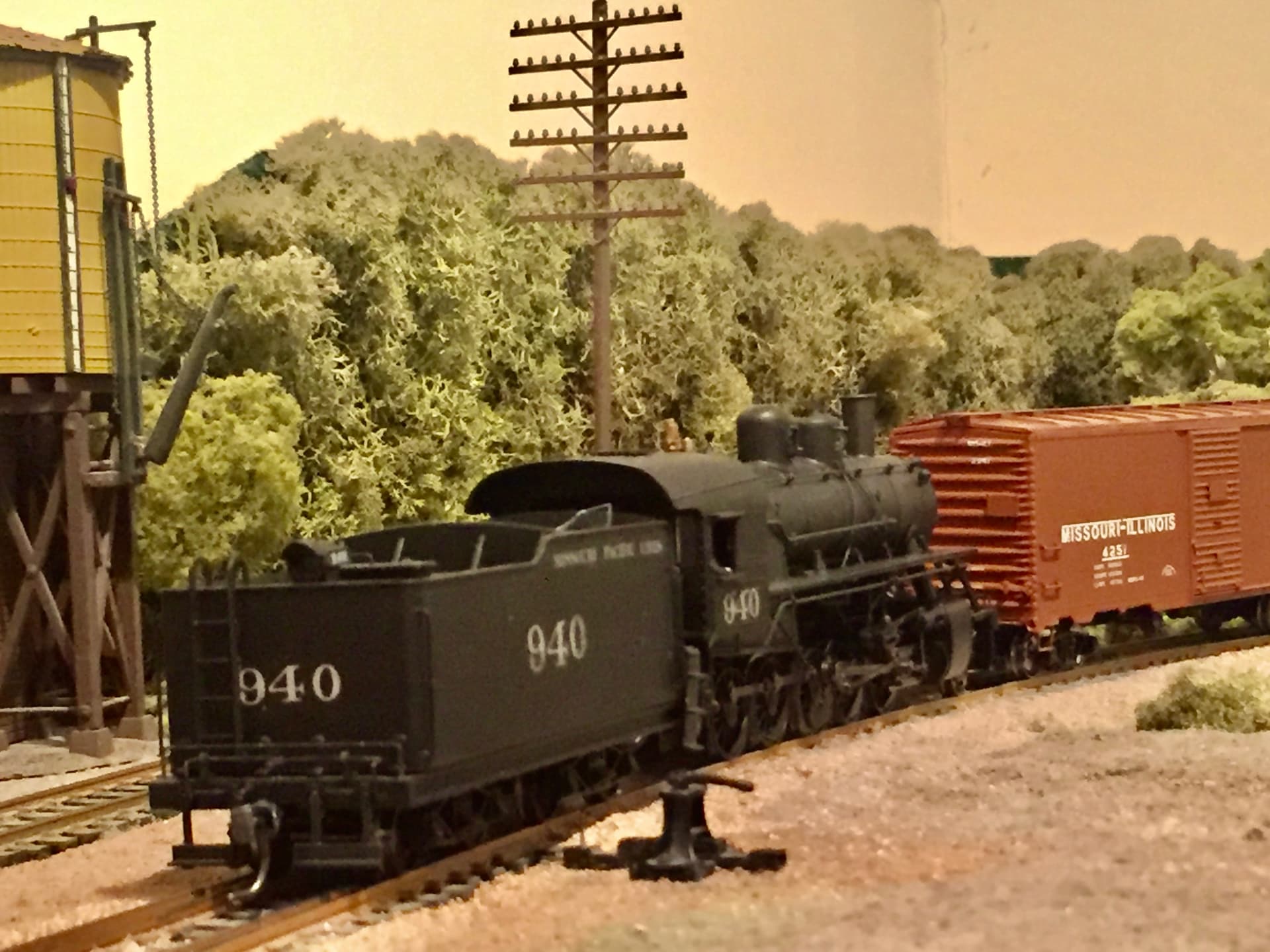
The 940 with the second more accurate decal job, working the Frisco interchange in Thunder Grove:
(I am sorry. No matter what I do I cannot get this photograph to load this location.)
Passenger service on my layout - Part 1

Ever since I decided that I wanted to model a branch line, I was interested in having low-end mixed-train passenger Service that so many of those lines had . I studied photographs religiously of these old short steam powered trains trailed by either a combine or a side door caboose.

I believe it was in Railroad Model Craftsman that I saw an article by one of my favorite modelers of the time, Chuck Yungkurth, who showed an easy conversion of a Mantua 1860’s combine into a side door caboose. Of course I went and bought one of the combines and made myself one. It is long lost to history, but I made another one for a friend a few years ago. I wish I had kept it, but I did buy myself a third combine in case I ever want to do it even one more time.

3 Likes

Passenger service on my layout - Part 2

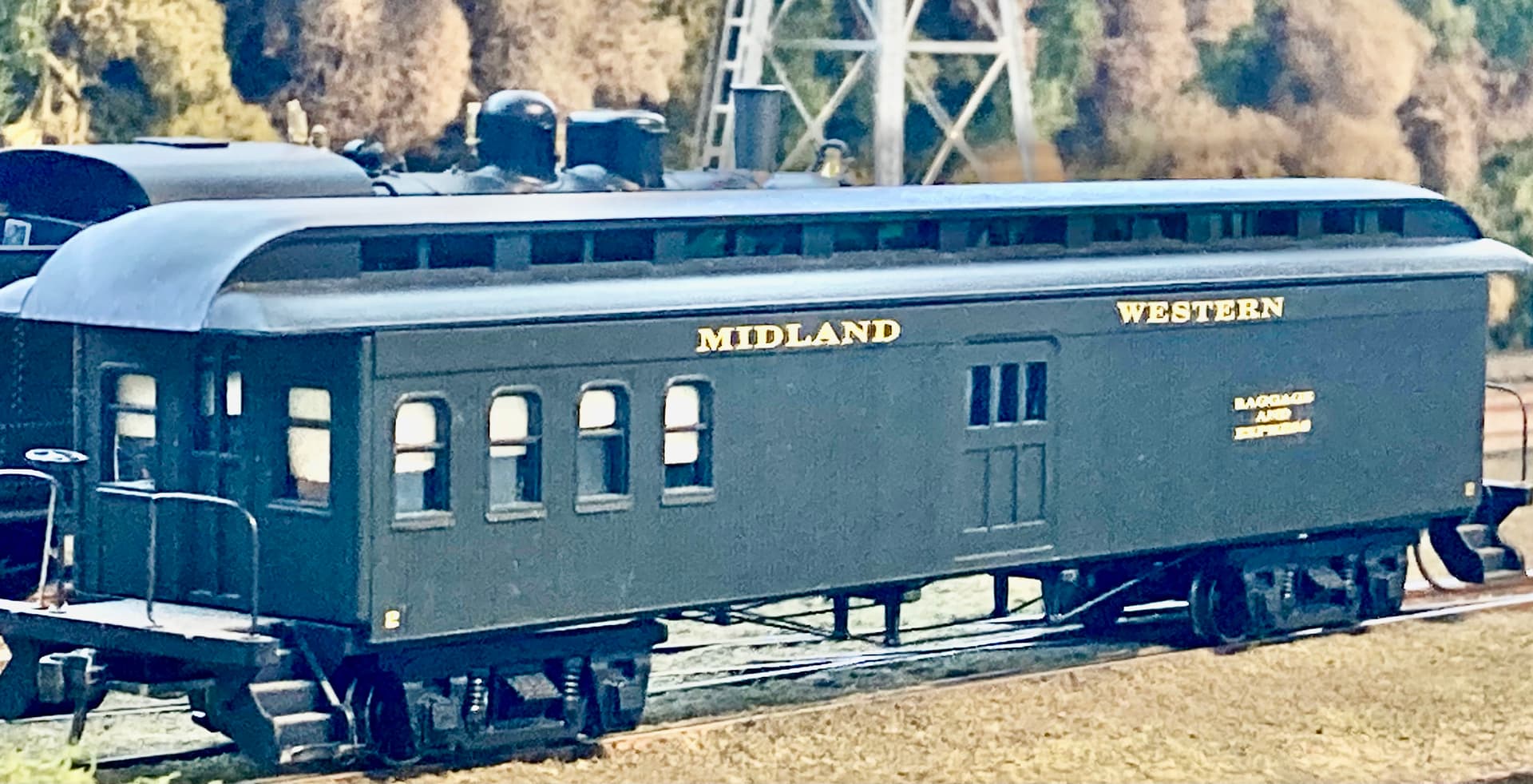
Fast forward to 2007 when after many long years, I decided to be a model railroader again. My only true love in railroading has only ever been steam powered short lines and branch lines, but this time I decided to go with an open-platform wood combine, a car like many short lines squeezed final usage out of in their last years of service. Roundhouse was offering a nice 50 foot car, of which I got two.

Naturally, not long after I got those cars, Roundhouse reintroduced their “drovers caboose.” Anytime a car like that becomes available I go into total meltdown and accordingly bought three. One I chose for slight modification by replacing the end, ladders, adding cupola braces, and eventually changing the trucks to arch bar trucks.

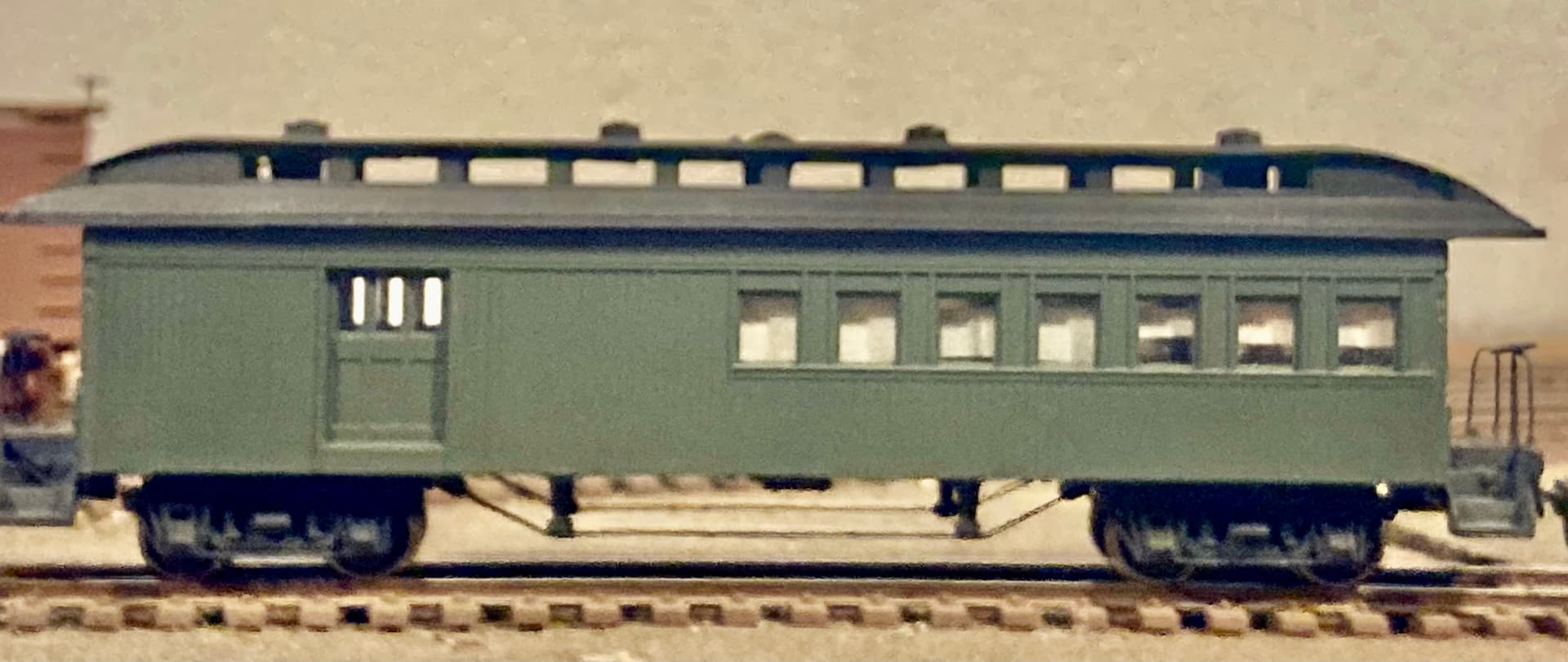
Around that time, a Bachmann 1860s combine fell into my lap. I repainted it, replaced the handrails with scale wire rails, replaced the truss rods with scale wire items, added window, glazing, and shades, and repainted the car pullman green. It was a perfect car for my operation, and even with psychiatric therapy I would never be able to understand why I traded it off.

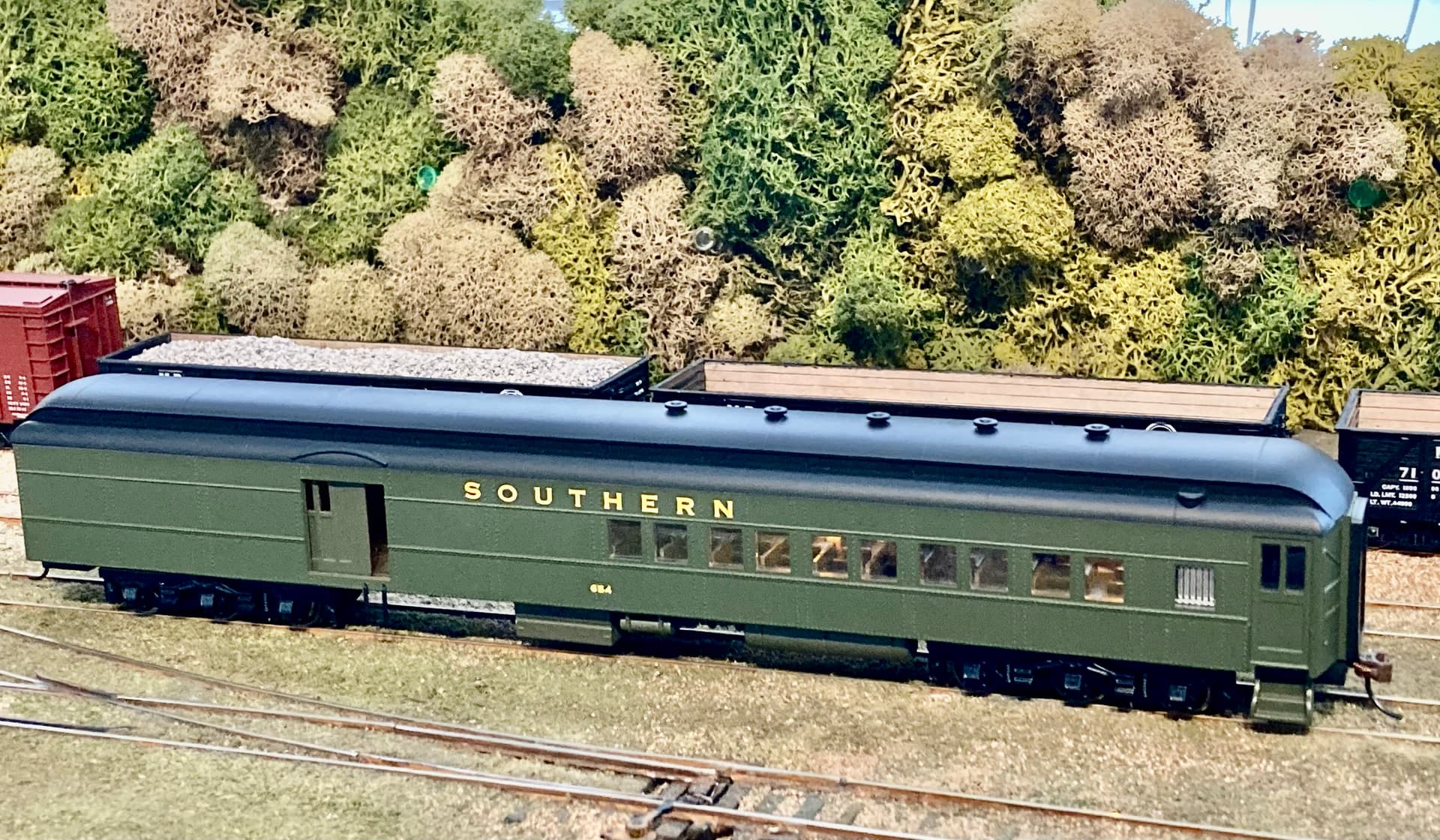
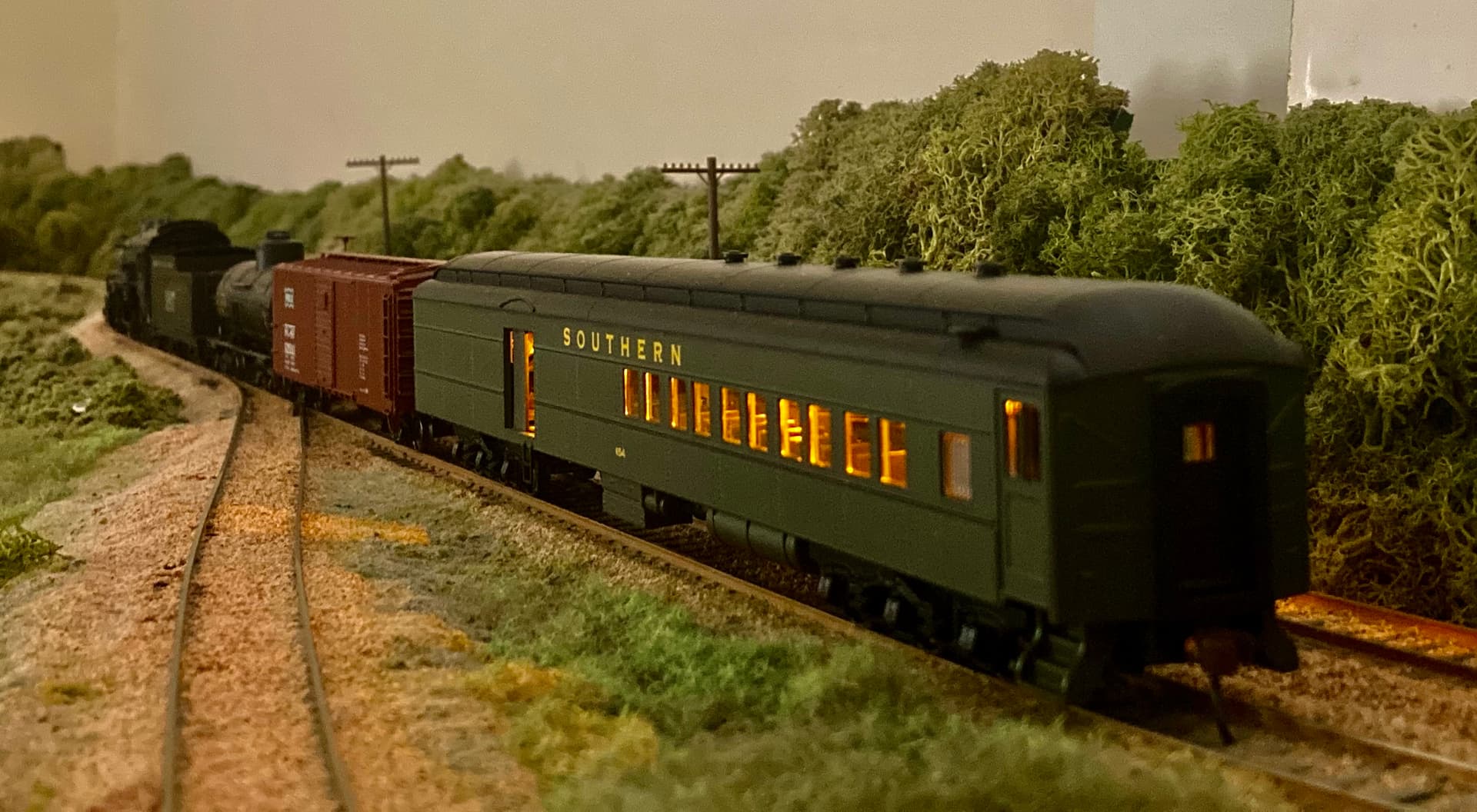
I also acted on a misguided impulse to try a full length heavyweight combine on my mixed train. I bought a Bachmann heavyweight car and it looked great, but it was just simply too large for my layout. After a couple of runs, it went into storage, and is now awaiting some future run on a full size club layout somewhere.

But it really looked good on its night run.

2 Likes

Passenger service on my layout - Part 3

Back to passenger caboose’s -

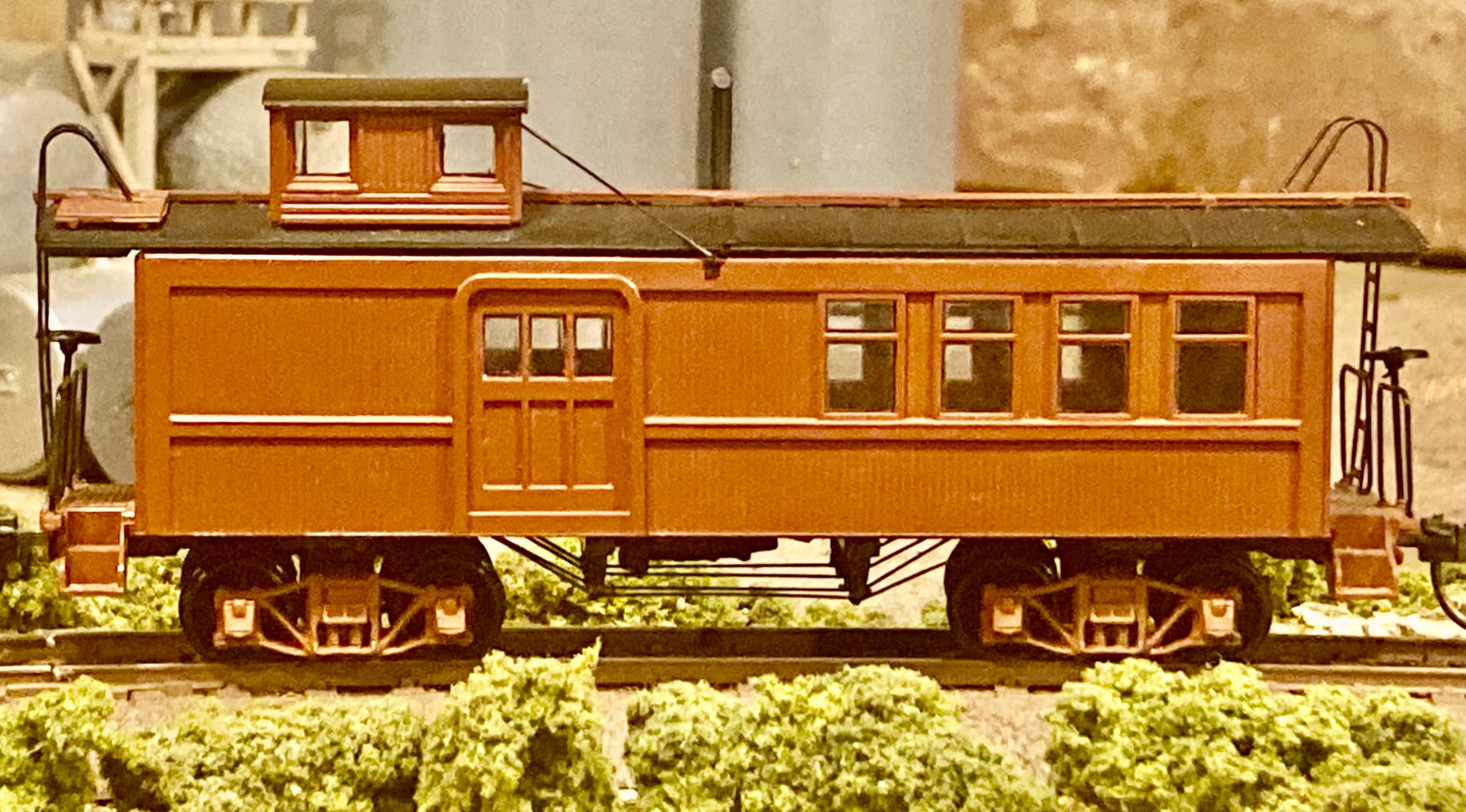
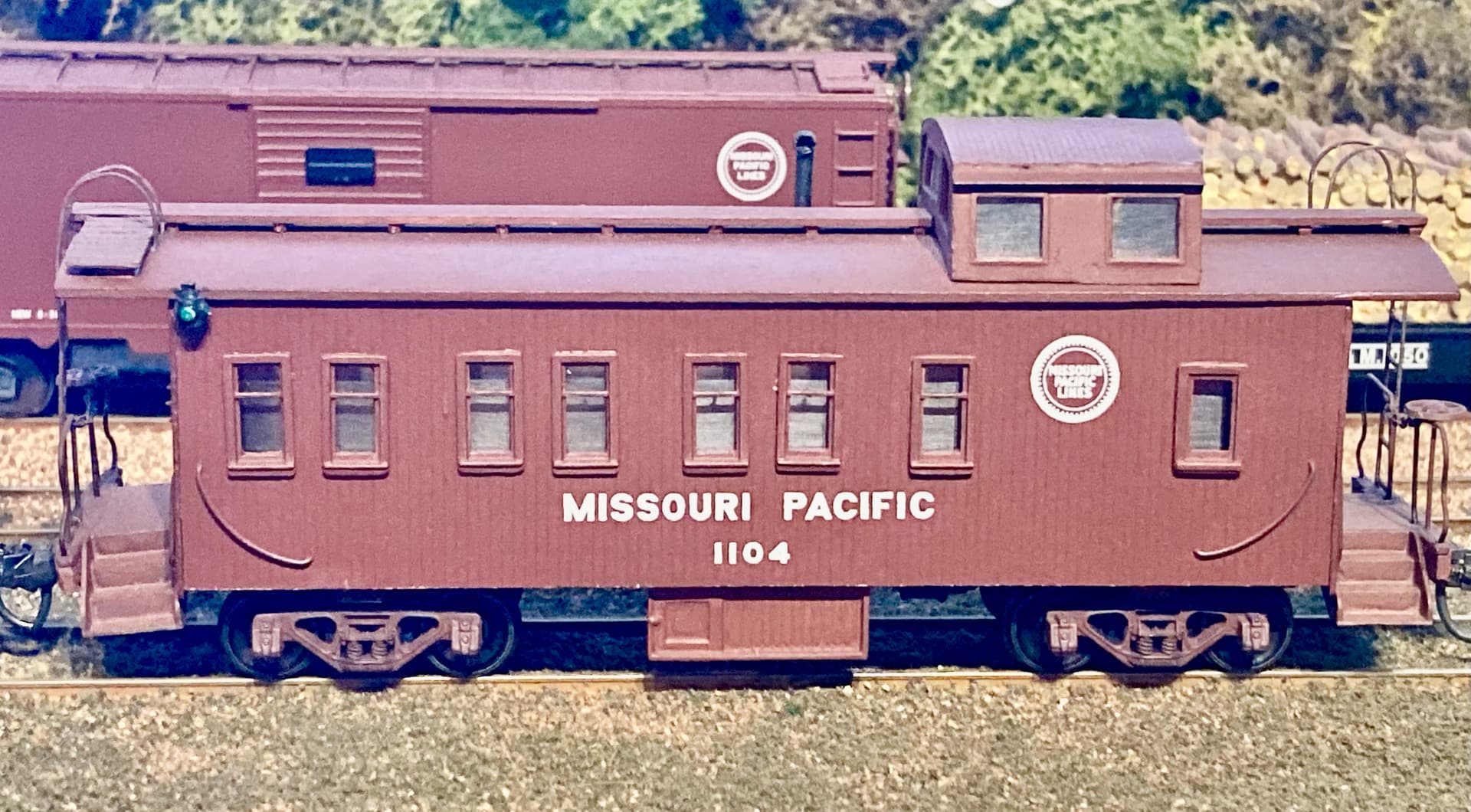
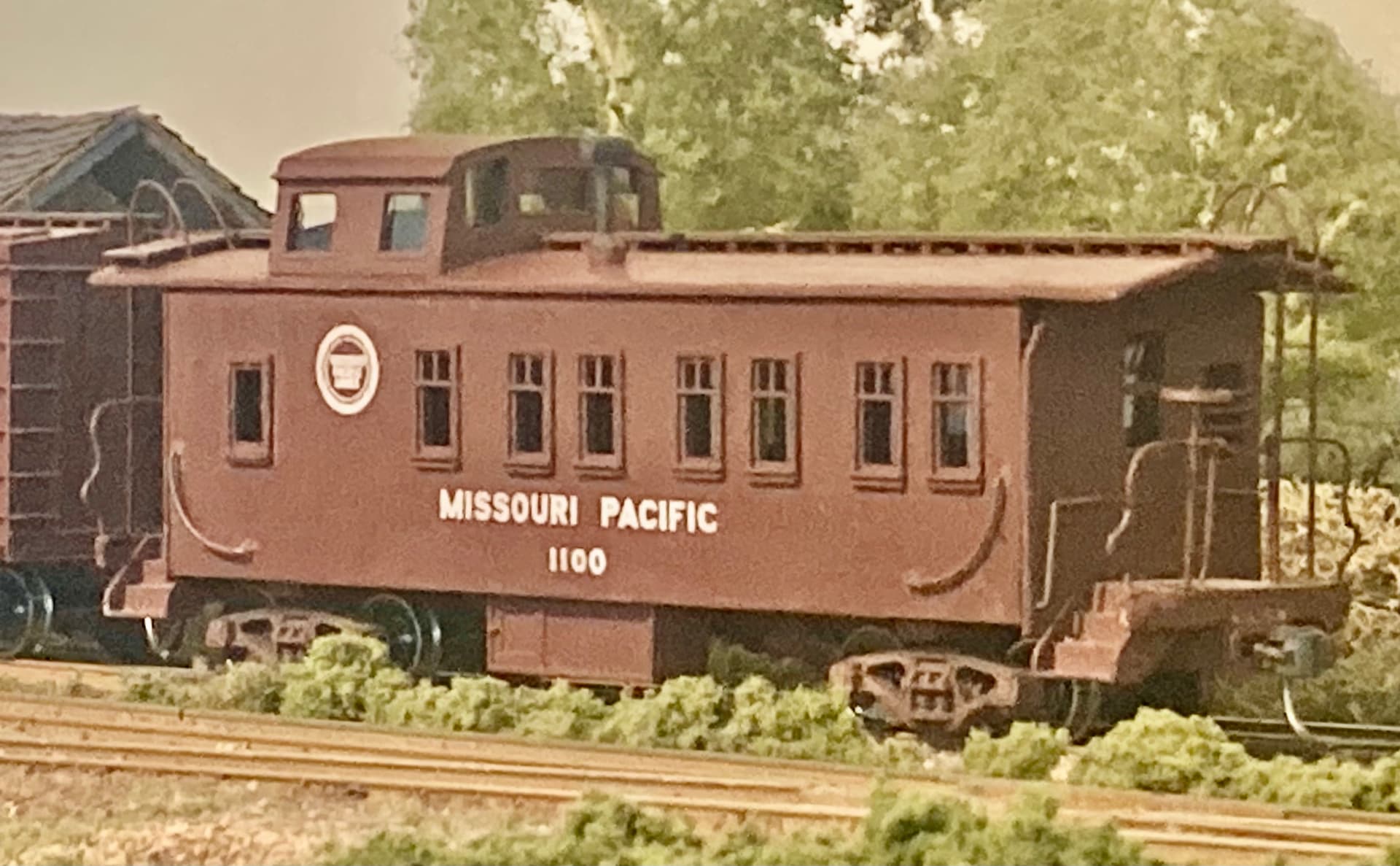
For several years, mixed trains ran on my Railroad with one of the several combine cars shown above carrying passengers. Surprisingly, and I’ve never quite understood why, the Roundhouse “drovers’ caboose” never captivated me the way I thought it would, and it rarely traveled the branch. I still wanted a passenger carrying caboose, but one more to my liking than the Roundhouse car. Two quite different passenger cabooses did captivate me from the times I became aware of them, and those were the Silver Streak Missouri Pacific drovers caboose, and the Cotton Belt long caboose.

I had been aware of the Silver Streak car since my earliest days back in the 1960s, but a wood caboose craftsman kit was just too intimidating for me in those days. When I started up again in 2007, I saw that the kit still appeared to be available, but I was still put off by the assembly requirement. Imagine my pleasure when I found that assembled cars appeared occasionally on eBay. I bought the first one I saw, it turned out to be an extremely cleanly built and well paint-matched item. I was lucky, because it was not very long before I sought a second one, and found that nearly all of the ones available online appeared to have been built by chimpanzees. I was able to eventually acquire a second one from a friend who had also done an excellent job building his.

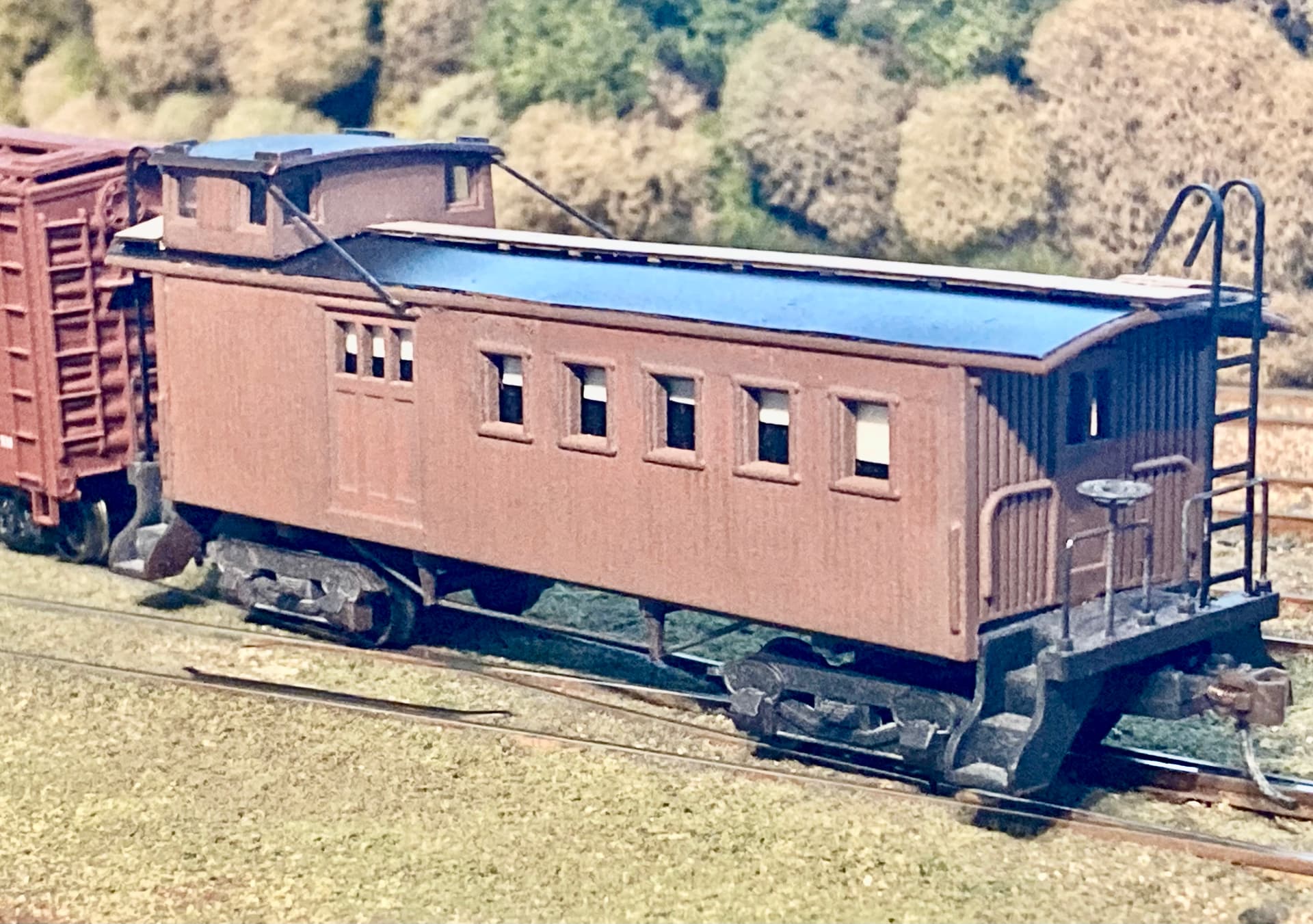
The one my friend built:

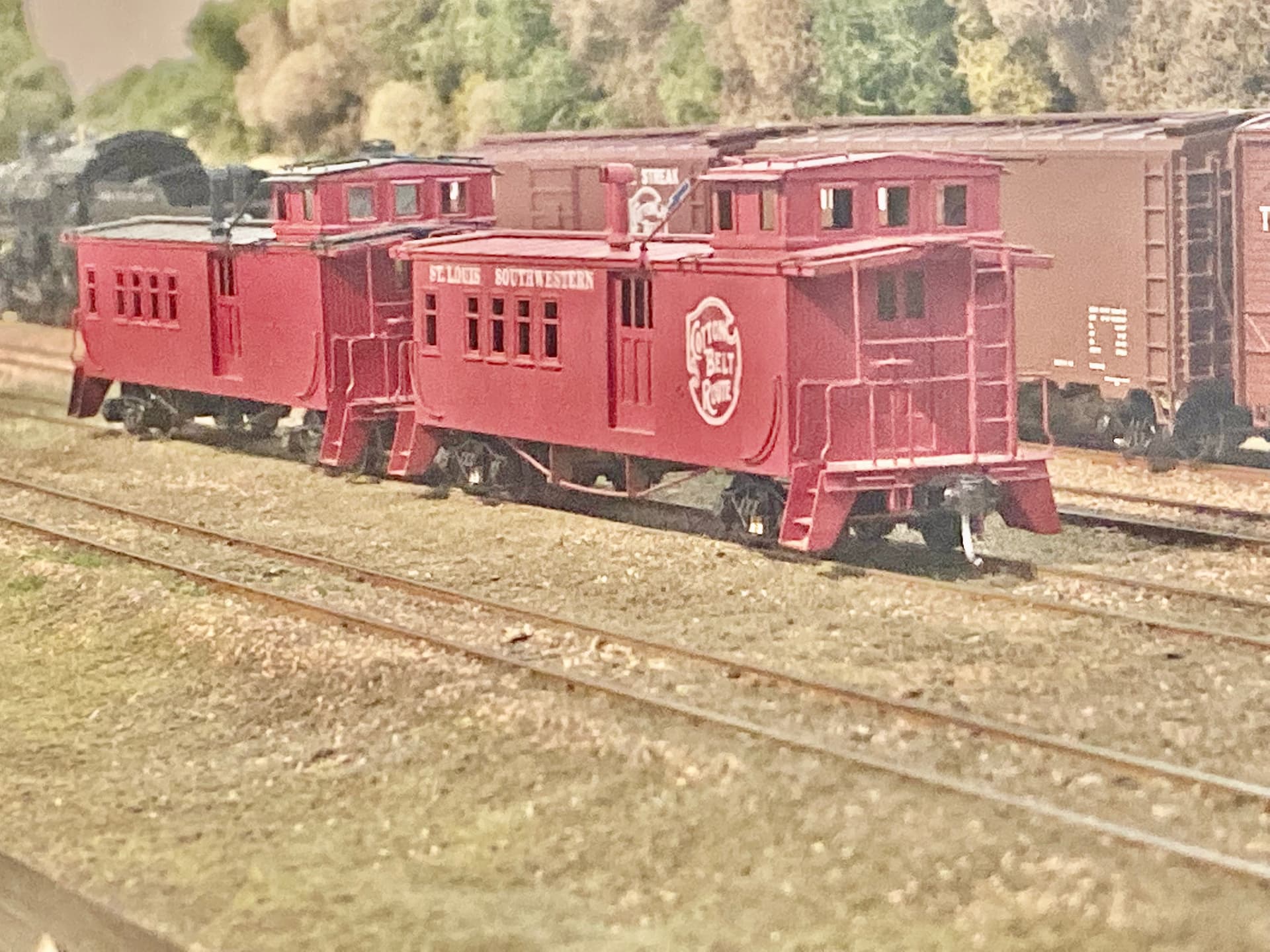
The other car was a very late discovery, a very, very long Cotton Belt side door caboose. I first saw a prototype photograph of the car and after some time realized that a brass model had been offered years in the past. Some mental readjustment was required to get my head around the idea of paying $150 for a caboose, but I just wanted it too much, and dove headfirst first in the pool

It took a while to find a painted one, my preference, but one finally turned up on eBay. As things always happen,a couple of months after I bought that car, I found another one quite by accident in a hobby shop in Florida. Of course I bought it too, who wouldn’t.

Both of them in the Midland yard:

For some time now, these four cars have punctuated nearly every train on my branch, although I have at least a dozen other really nice cars.

3 Likes