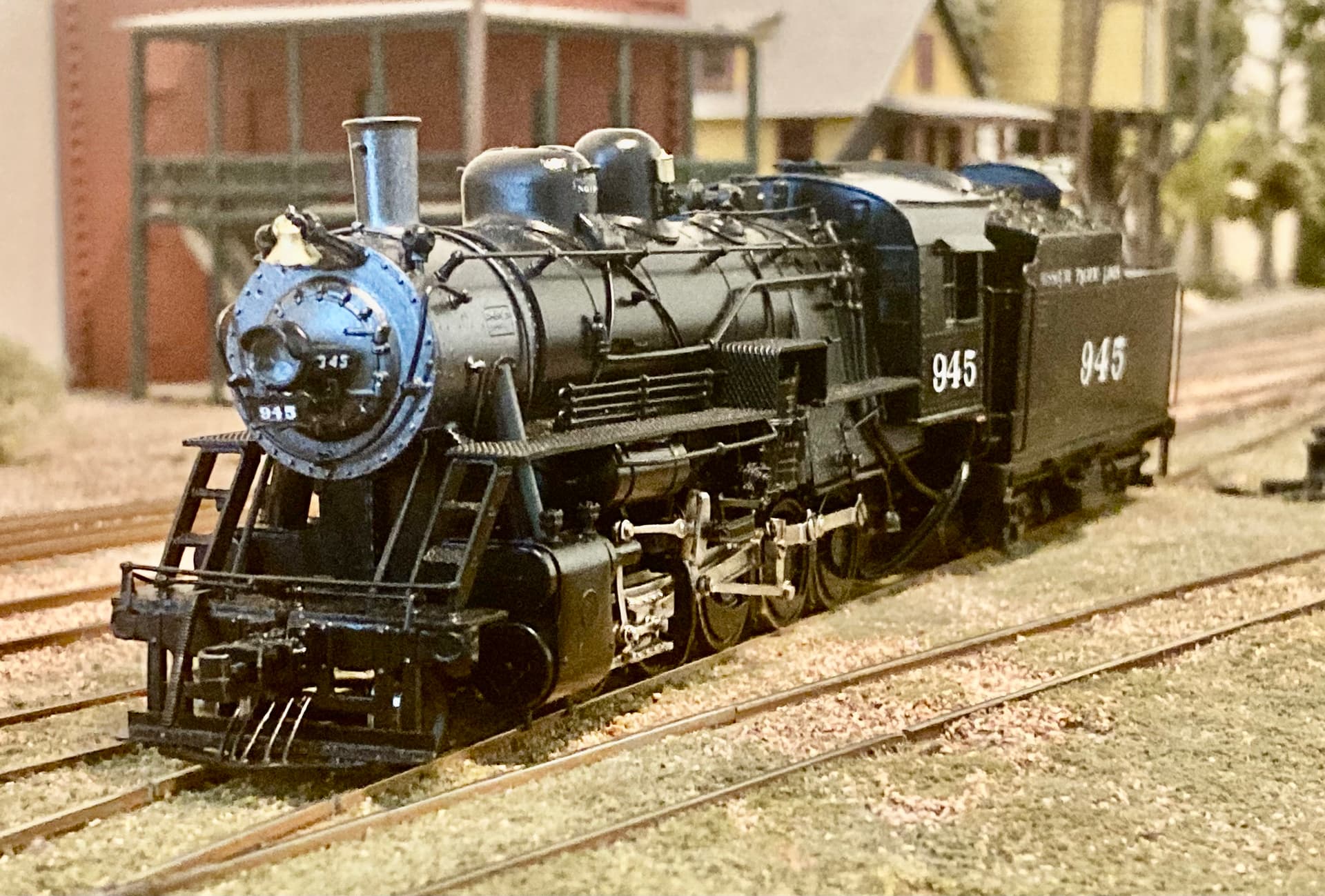
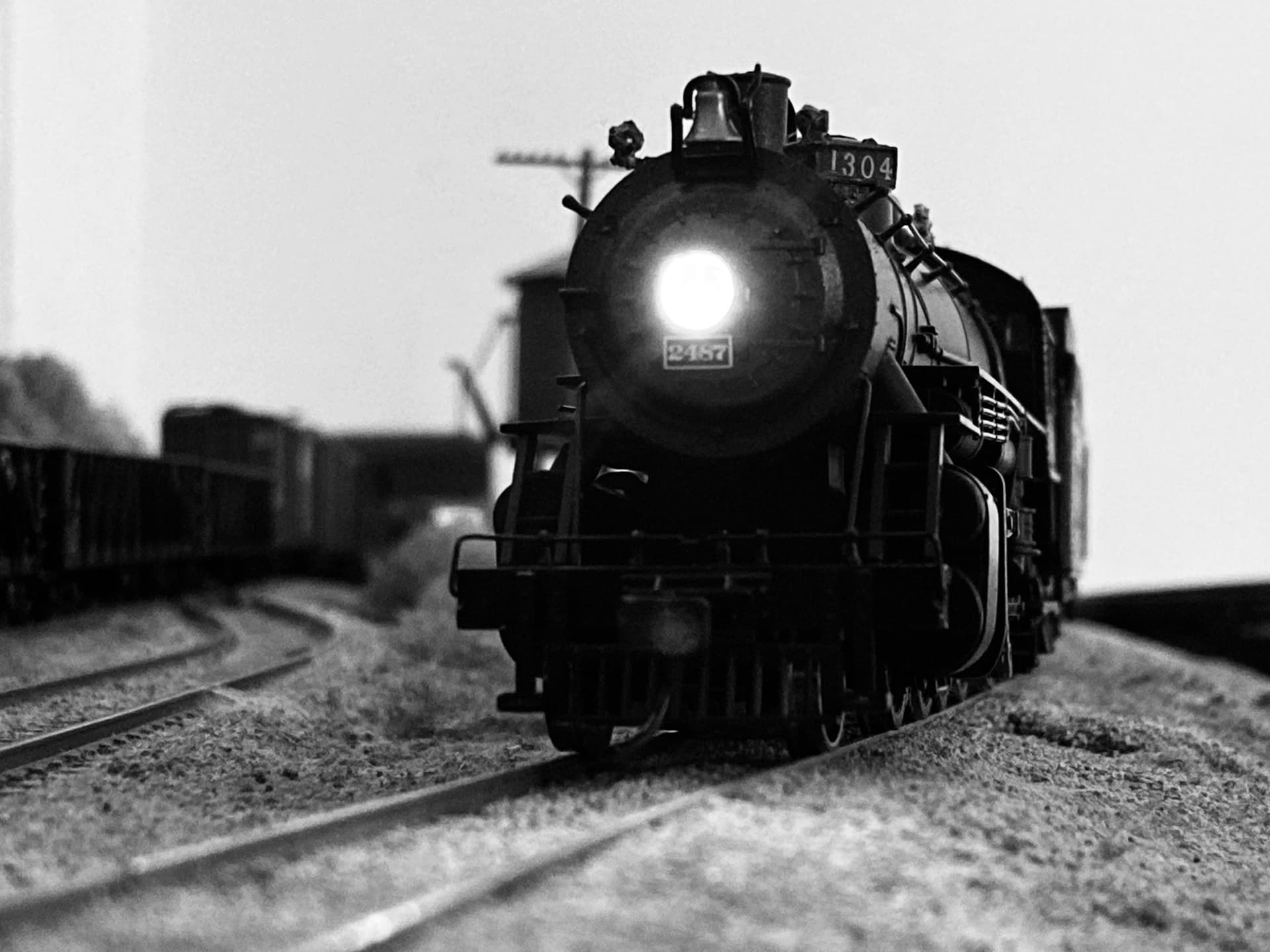
Missouri Pacific No. 945 in the Thunder Grove yard. Hattie’s hotel and bar, the Midland Western office building, and the water tank are in the background. There is no depot in Thunder Grove, passengers buy tickets in the office building.
The 945 is a Pacific Fast Mall brass import from years back. I don’t normally go looking for brass engines. But like the others I have now, this was a deal that fell in my lap that I could not refuse. If no one else has ever done it yet, we’ll talk about brass engines in a future topic.
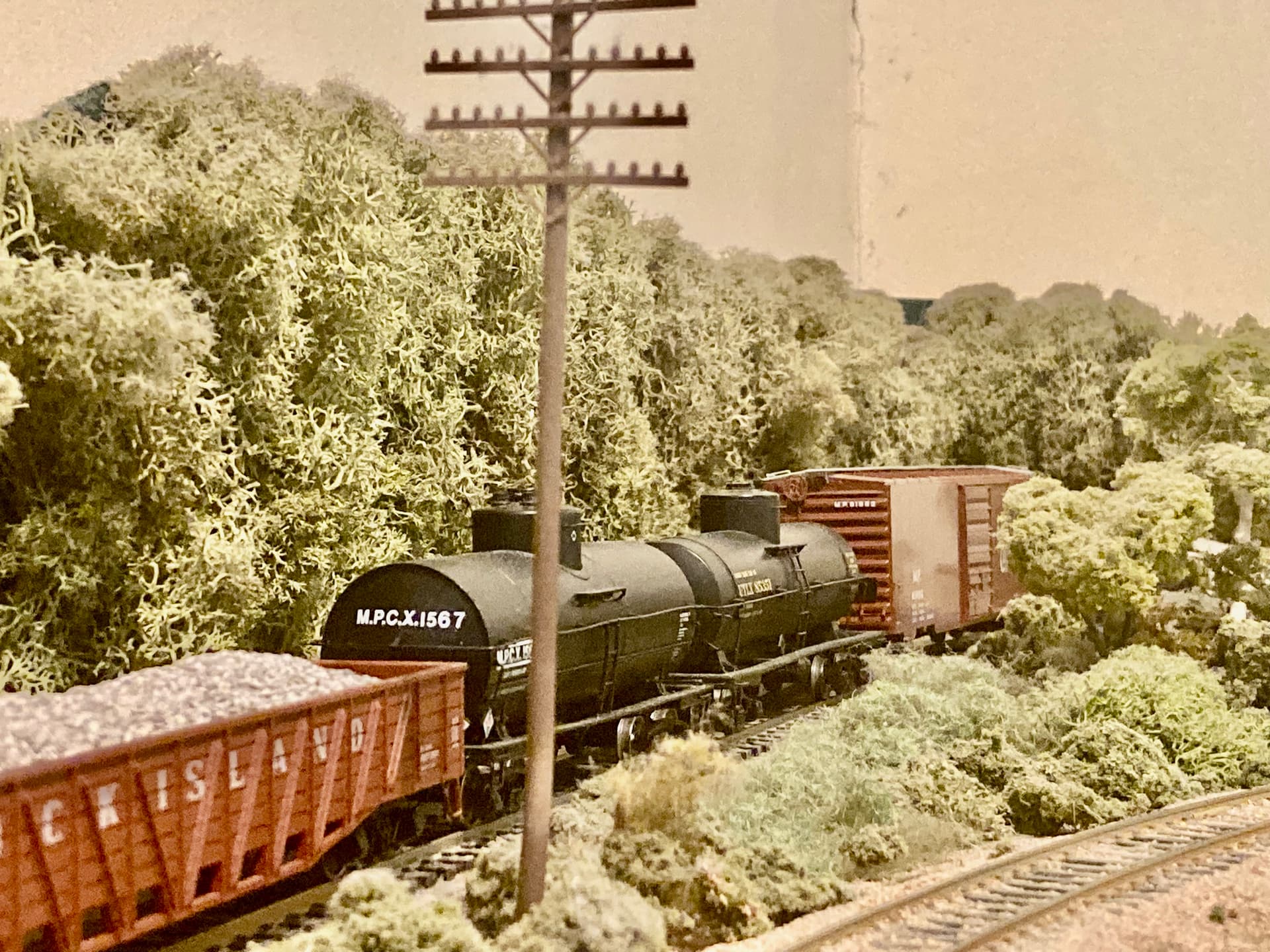
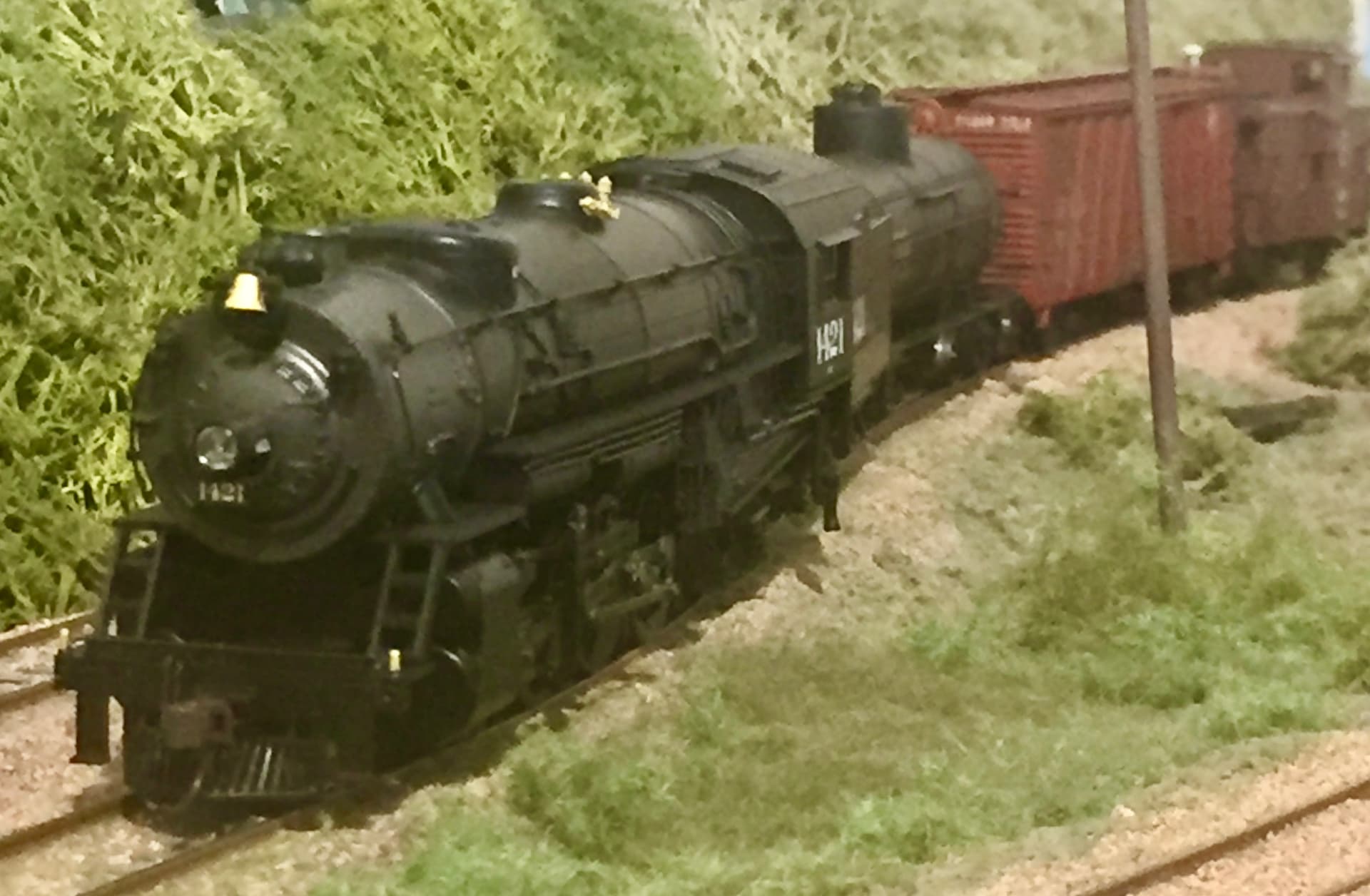
The Frisco interchange at Thunder Grove. Down south, the jungle is always threatening to take over the right of way, you don’t see this much on layouts.
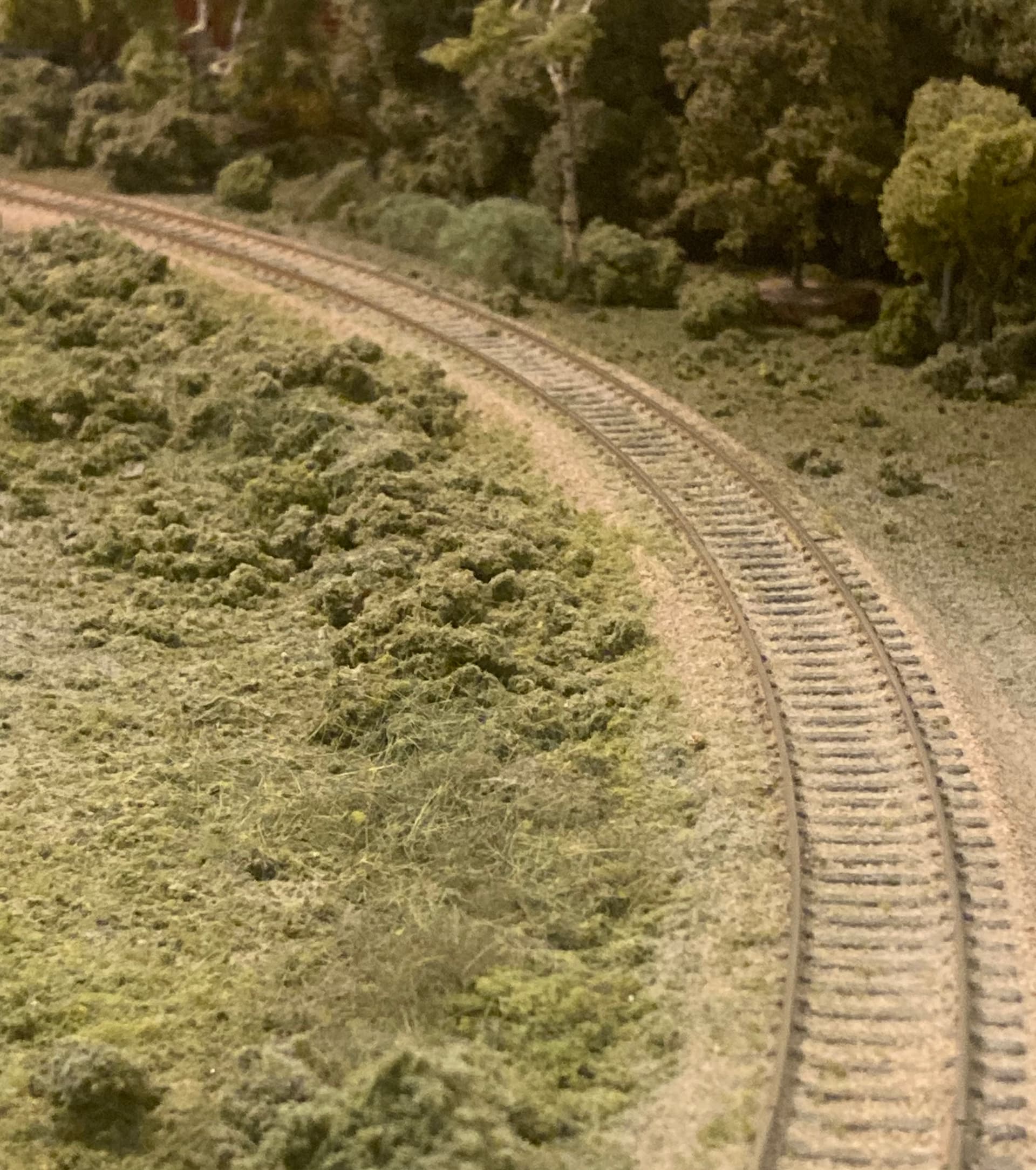
And a last long look back westward towards Thunder Grove along the sharpest curve on the Railroad. I made a lot of rookie level errors on this layout, and one of them was the choice of track, which is mostly Bachmann Code 100 EZ track. I chose it to get some kind of layout operating as fast as possible, and I had the eastern division operating in embryonic form within a week of installing the benchwork. But I have always regretted that I didn’t use smaller rail. I buried the track under ballast as best I could after painting, which was not an uncommon branch line tactic. But if you look around, here and there the code 100 will peek out and laugh at you.
The Missouri Pacific in my part of Louisiana largely used pea gravel as ballast. I got relatively close to the appearance with a 50–50 mix of Woodland Scenics brown and buff. But after looking at other layouts that used real rock ballast, I’m sorry I didn’t exercise patience and order some of that stuff. I haven’t been able to spend much time on this layout in the last year, but one of the top items on the agenda is to put more grass and weeds around the track on stretches like this.
Whatever, but we’re talking about “layouts”, not prototypes. Let’s say that an HO scale layout is designed to accommodate locomotives such as 4-4-0 steamers by using 18” radius curves. A 4-4-0 can “easily” negotiate those 18” radius curves. But, can a 2-10-2 easily negotiate 18” radius curves? I think not.
He builds the curves to suit the 2-10-0 (which likely for a Russian Decapod has oversize tread width and blind drivers) and the 4-4-0 happily fits.
There is an enormous structural difference between a 2-10-0 and a deep-firebox 2-10-2. And no one but an idiot would consider any 2-10-4 as a branchline engine…
(1) He’s obviously been running 2-10-0s over the curves of his layout, so that excuse for an argument falls to the ground immediately.
Careful lateral on driver pairs 1 and 5 and a ‘poley’ on #3 will give you both a relatively short rigid wheelbase and “reasonable-looking” curve following for a model. You will have to be careful with how the tender connects to the locomotive if there is substantial rear overhang, but that is a comparatively small issue for a freelanced or protolanced operation.
I built both my layouts to use the broadest curve possible in the space I had, not to fit a certain engine. I knew ahead of time that even a 2-8-2 would work even though I would hardly ever use one since that’s not really within my layout concept.
A lot of people starting out read what the minimum radius is on some engine they have and then they build that sharp curve even if they could’ve built a broader one. Real railroads don’t like curves and we shouldn’t either.
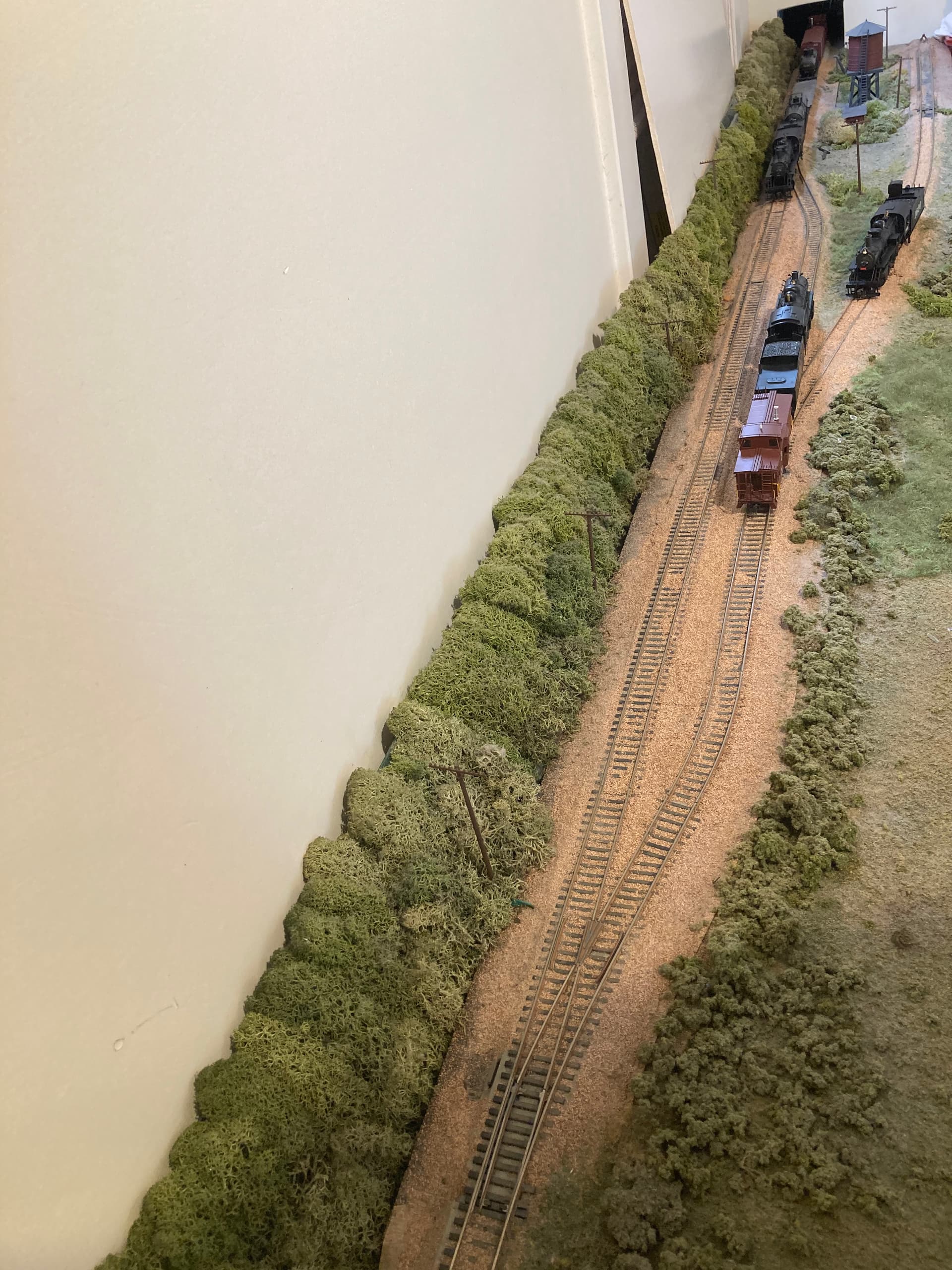
The helicopter is hovering over the curve out of Thunder Grove, looking east toward the highest point of the layout at Donna Pass. A three-way meet is underway.
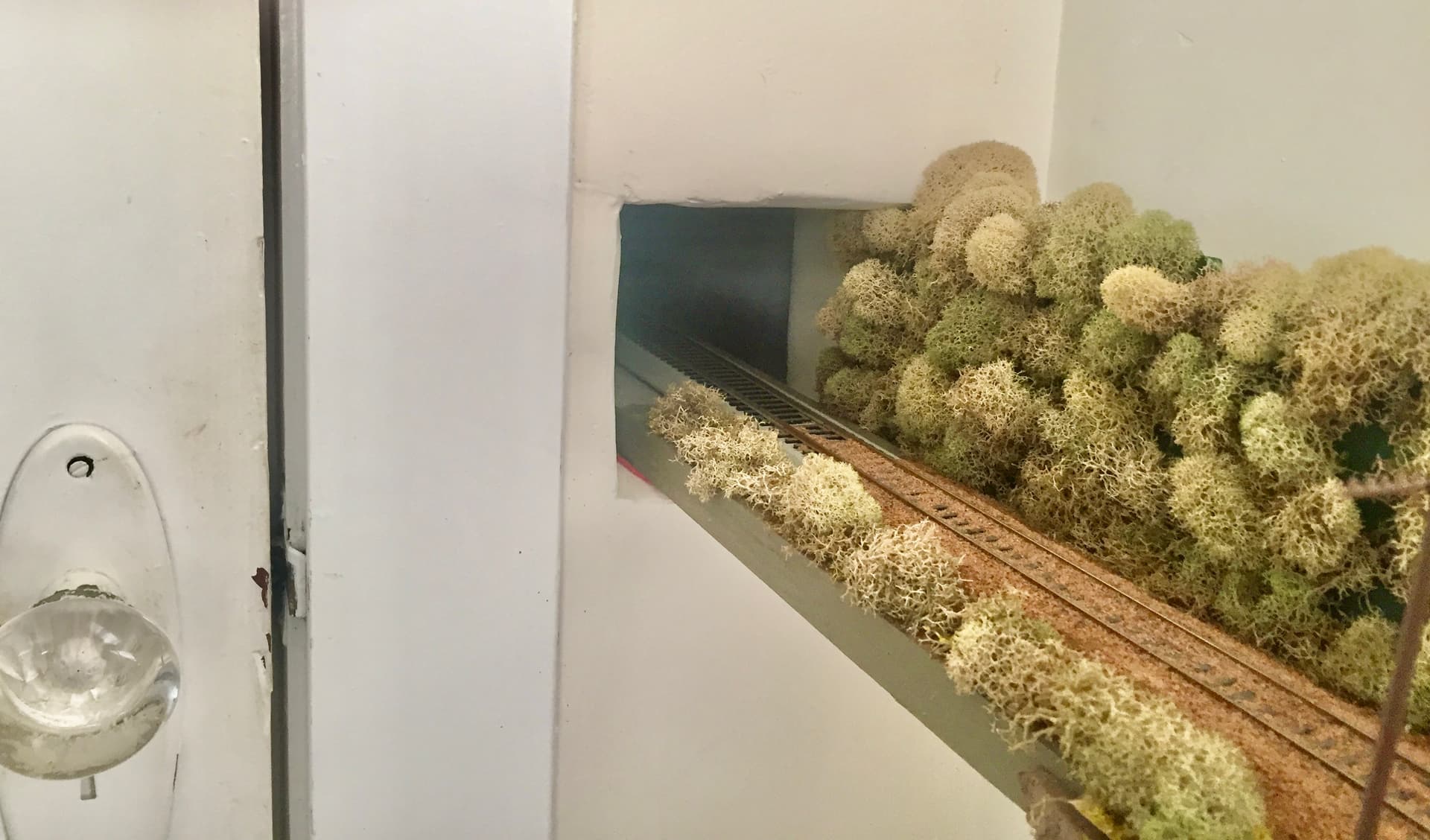
In the distance Is the water tank at the summit and the entrance to the Metairie Ridge Tunnel, actually a passage through a closet into another room and the Eastern Division.
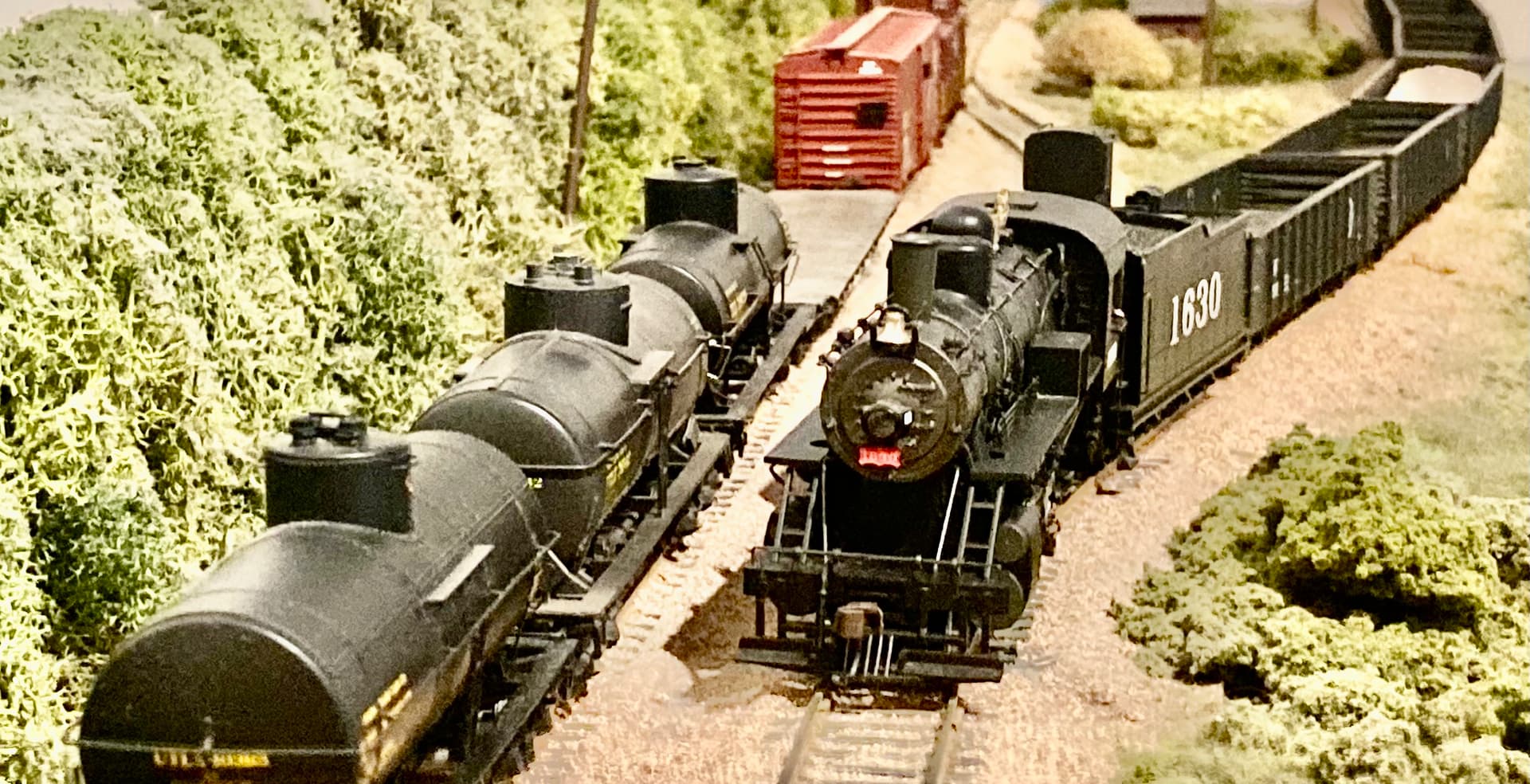
Frisco 1630 setting out cars at the Donna Pass team track:
I’d have to search, I recall some here and there on the Internet or several years.
I will check again, but I’m pretty sure that one local club in the area down here only allowed steam on certain days and only a few days a year. They did tear down their beautiful roundhouse to build a run through diesel servicing facility.
Yes, nearly all of them did. But they didn’t have to do it on the club. The message was clear . Steam was no longer welcome.
I worked on a crew repairing a restored steam locomotive in a real roundhouse in 1986 just a few months before it was demolished. It was very melancholy to say the least.
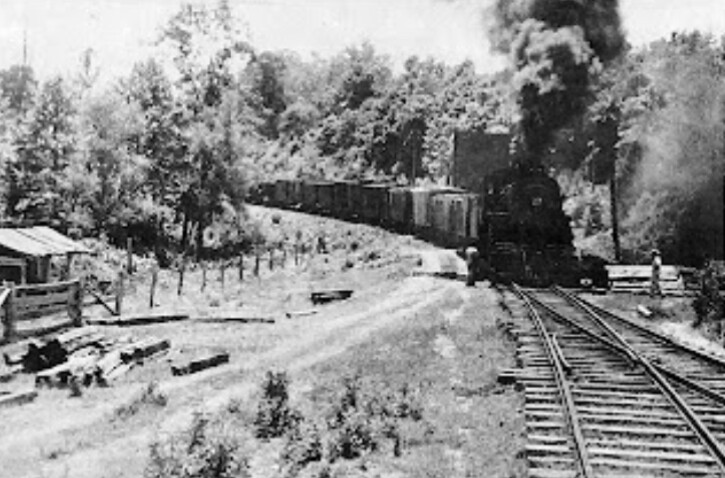
Before I continue with the layout photographs, I thought I’d post this photograph I saw by chance . It very much captures the atmosphere that I want my layout to have.
Moving further east on the railroad, we emerge from the east end of the Metairie Ridge Tunnel and look back at it. We are now in the east room of the house. My railroad would not have been possible without being in two rooms with the passage between them.
It’s actually nice because you don’t see the entire railroad at one time. A good sense of distance is created. The layout is only 6 inches wide at this point. I’ve intended for years to put tunnel portals on either side of this, but I’ve never gotten around to it.
Patrick, just curious – where did you get the name “Metairie Ridge”? At one time, I lived in Lakeview of New Orleans, and we were on the Metairie Ridge. It was only five feet below sea level, while some of the surrounding areas were 8-9 feet below sea level.