Per the MRC instruction sheet, I bought a 25’ telephone extenson cable (Four wire) to extend the MRC Controlmaster 20 Throttle walkaround range to 40 feet. When attached to the transformer along with the supplied walkaround coil cord, my engine starts running with the throttle at zero as soon as I turn the transformer power ON. What am I doing wrong?
I don’t know anything about the throttle, but there are two types of telephone cables … There is a ‘straight through’ and a ‘reversed’, you must have gotten the wrong one … if you have a modular cable maker and a spare end , you can make it, otherwise it’s -probably- a new cable …
The instruction say that on the walkaround, the throttle must be at 0 and the momentum and direction switches on the handheld must be to the left, THEN you turn on the main power on the ControlMaster 20. Otherwise the walkaround may malfunction. Seems a strange way to design a circuit, but hey… Give that a try, turn it all off, make sure the throttle is at 0, and the direction and momentum are to the left, then flip the main power back on.
–Randy
There are two versions of hand-held controllers with the CM20. Be sure and use the compatible controller. If you’ve switched or replaced the hand-held, this could be the issue.
On the 40’ rule, that is the maximum distance they will function. Try using a shorter cord if at all possible to see if that fixed things.
I put a similar cord on my ControlMaster 20, but never really cared for the performance of the hand-held throttle…
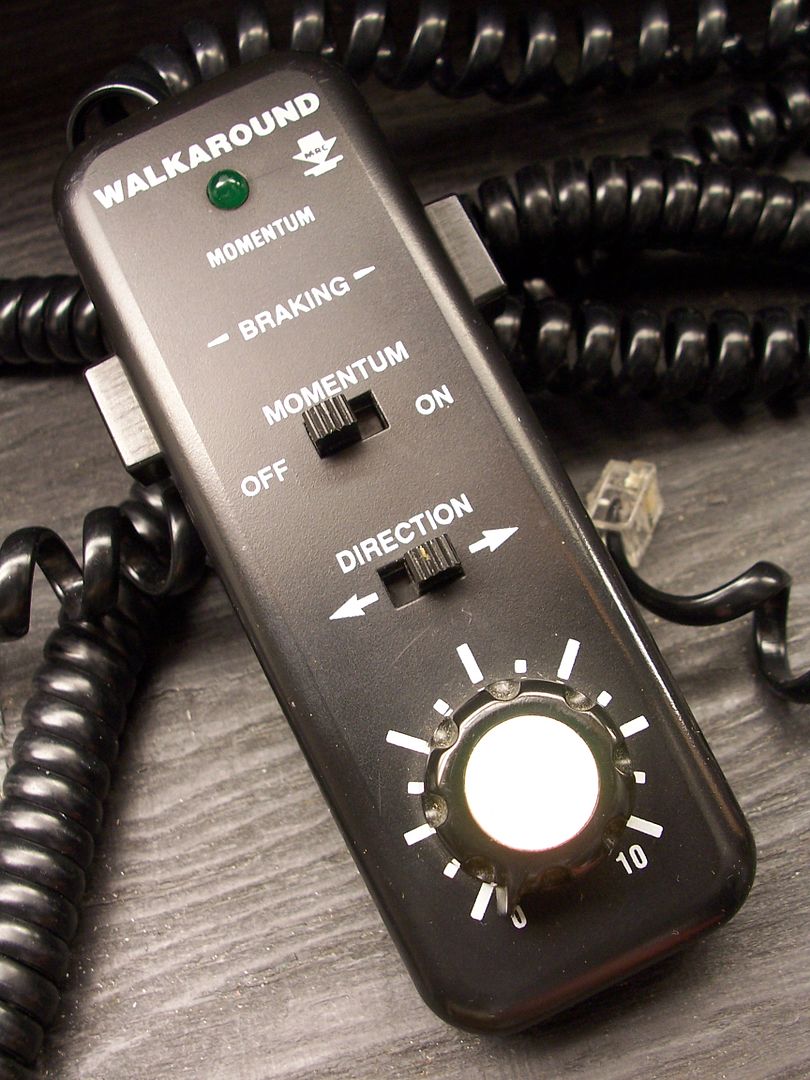
The momentum feature never worked properly - if engaged, the loco simply sat motionless for some time, then took off at whatever the throttle setting happened to be. That wasn’t really a concern, though, as the ones I’d seen used by others didn’t impress me either. I wasn’t, at the time, a fan of momentum, as most trains were heavy enough that it didn’t need to be simulated.
I modified the wiring from the CM-20 to allow a variety of handheld units to be used, depending on the locos I wanted to run and the performance needed from them.
The four switches to the left, in the photo below, DPDT/centre OFF…

…could be set according to the fascia labels, to utilise a variety of hand-held throttles, including these two…
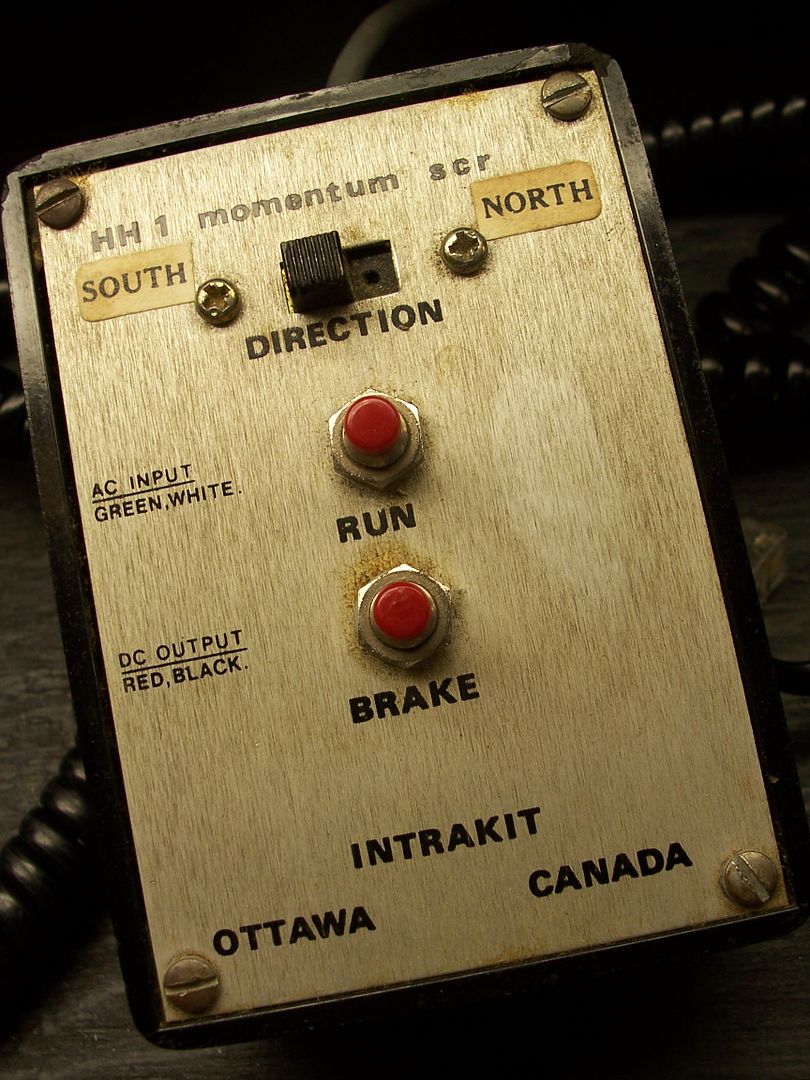
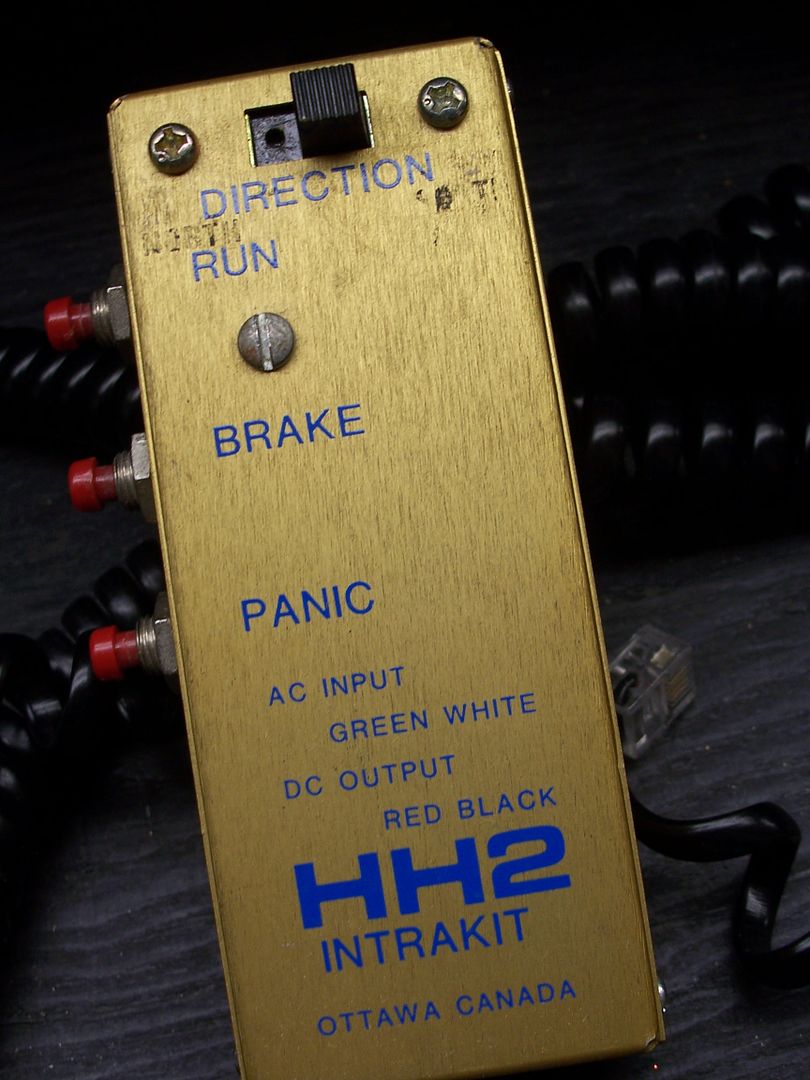
…which were similar, with the second one have an emergency stop button. Of the two, I preferred the older, larger one.
They offered very good low speed control, and a very smooth rate of acceleration and deceleration. Their main drawback was the inability to handle multiple locomotives, especially on heavy trains or steep grades.
A friend gave me two of these…
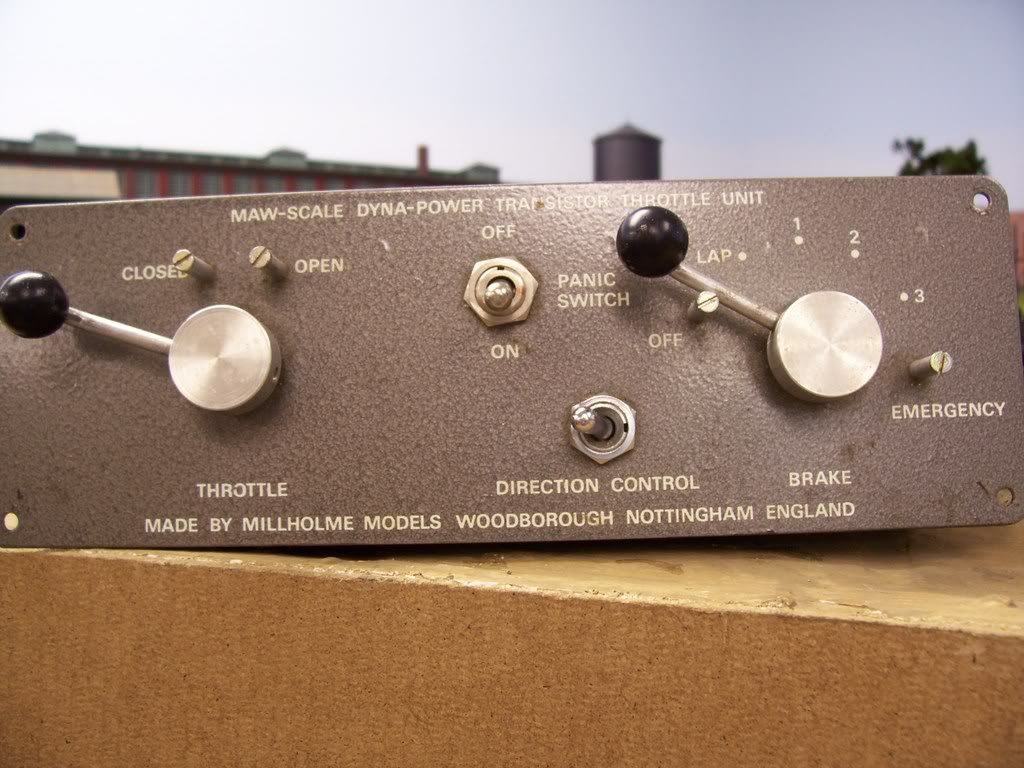
…and my intention was to fit them with neck-straps, so that they could be more easily operated while following the train.
To run a train, you si