Ok! Here goes (showing ignorance but also willing to learn)…In the replies to my post “Hong Kong / China”, there were references to “Pancake” motors and “Pancake” drives. I do have an HO background but never really got into the mechanical “nuts & bolts” of the trains.
Please…In simple non-technical terms, what is a ‘pancake’ and what are the alternatives, pros and cons. As always, many thanks.
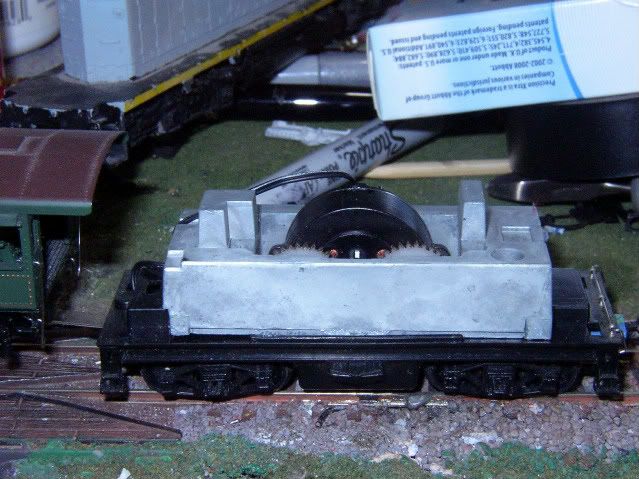
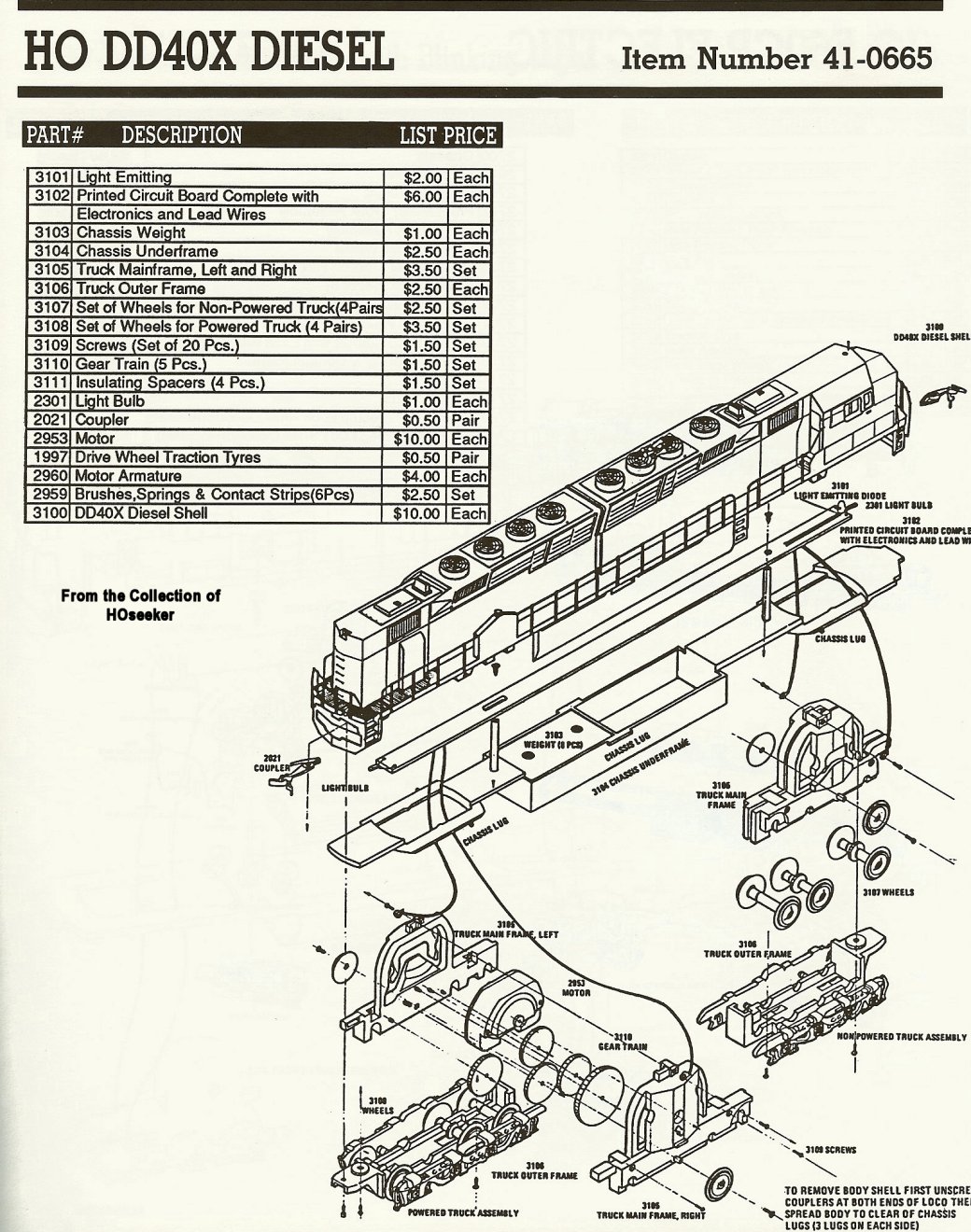
A pancake motor especially on the older Bachmann locos is a small motor mounted atop one of the trucks. All the wheels in THAT truck are driven, the wheels in the other truck pick up power. The armature is usually small flat and thin and the motors for the most part are noisy as the gears were quite cheap.
The old “pancake” motors were mounted on a single truck, so you only had four wheels powering an 8 wheel diesel. They resembled a short spool mounted on the truck. They were offered in cheap discount house train sets. In short, they were junk. I’m sure many youngsters were lost to the hobby after receiving those train sets for Christmas, discouraged by the poor performance.
I love this old engine! I paid less than $10.00 at a swap meet very early in my modeling career. As far as I can tell it would be a waste of time to try to convert it to DCC, but running it on DC is a hoot! It smokes like mad and the smell of burning electrical contacts is intoxicating![(-D] Scale is a bit off too wouldn’t you say. None the less, in my early experimentation I took the time to add some weight and Kadee #5s.
And here’s one I have in the tender of an old PEMCO 2-6-0. It still runs pretty good considering it’s around thirty years old. No smoking or arcing and it’s fairly quiet.
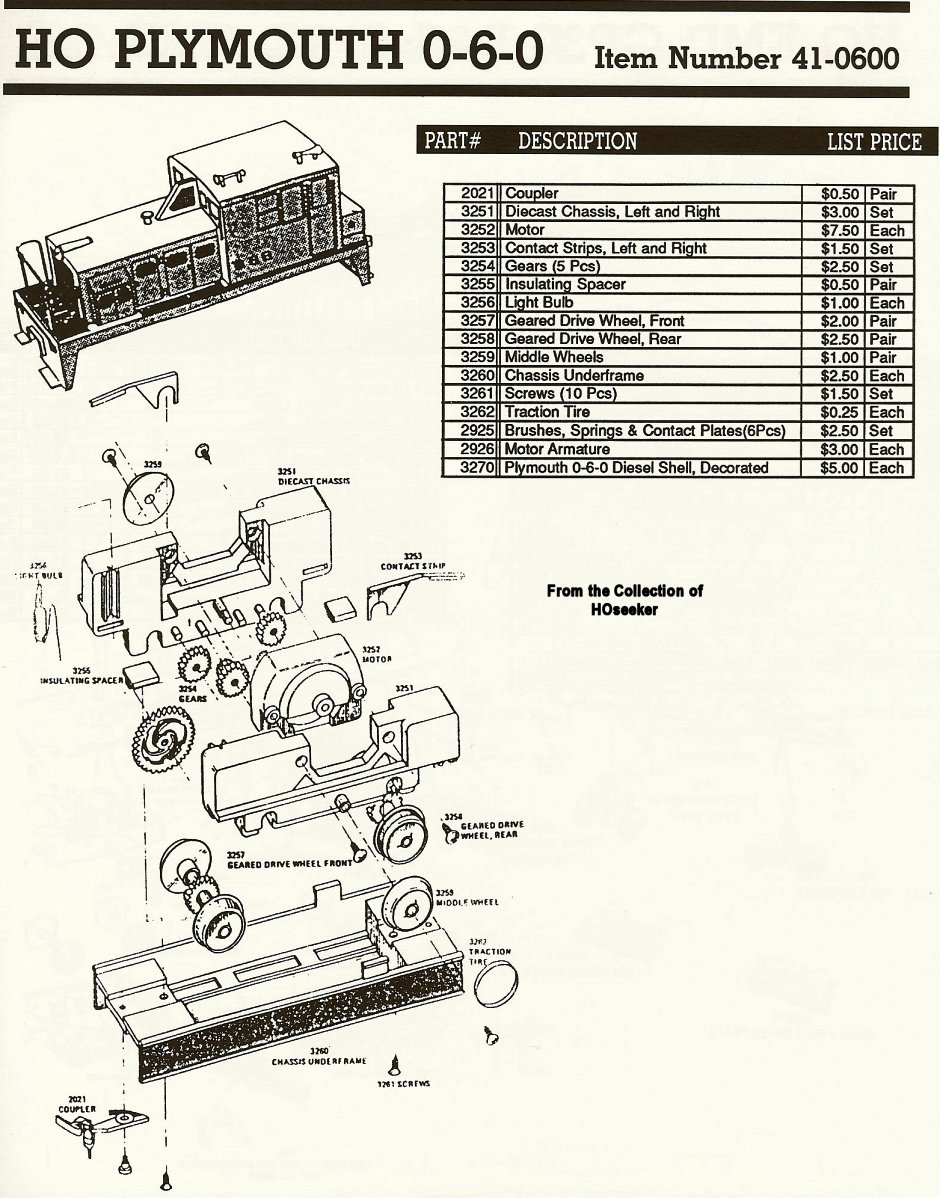
I have the Bachmann Plymouth switcher with pancake motor running with a DZ125 decoder. Just needed better pickups. Not the best runner but just wanted to see if it could be done. Kind of noisy as you would expect.
The Bachmann, Life-Like, and Tyco “pancake” drives were cheap and often broke fast. However, pancake drives can be excellent if actual quality parts are used. For example, the Marklin/Trix ALCO PA-1 diesel set uses a single powered truck in each engine, with a full in-line “pancake” motor and traction tires. When MR reviewed it as part of a digital set, they thought it was great, and I’ve never heard reports of failure![:D] And then of course, there’s the good ol’ Lionel, American Flyer, Ives, and Marx toy trains, which could be run into the ground, get hit by a nuclear bomb, or be thrown at the sun, and they would just keep on going.[:D]
The shape of the motor, either in pancake form or can form, really has no bearing on how good it is (or could be). There are good quality pancake motors - there are poor quality can motors. The pancake shape has gotten a bad rap because of some really bad ones, like the Bachmann “life is measured in minutes” ones used in many of their pre-Spectrum locos, and those horrible Consolidated Foods-era Tyco junkers. Unfortunately it has become an identifying feature - when Brand X switched to the pancake motor, quality went down sort of thing. And usually accurate, too.
One quick way to determine if a loco has a pancake motor without even taking the shell off is to look at the wheels.
If it had a pancake motor, chances are the driven wheels were plastic with traction tires. The other truck used metal (brass) wheels because they were the only ones that picked up power.
We’ve had 20 or so old Life Like, Tyco, or Bachmann locomotives with pancake motors donated to our club over the years. Some of them had hardly been used, and I installed decoders into them for other club members. They are ran almost daily by one member. I even put a sound decoder into one of them, so they were not all cheap junk.
I was thinking a nice homemade stack with a big pat of butter melting on top and maple syrup drooling down the sides…
More on topic - I have met the pancake (motor) and it is junk. Not even scrap - unworthy of a spot in my scrap box. Fortunately most of my powered models have hefty open-frame motors and metal gears, features guaranteed to minimize road failures. (Those other things make good, `Back of the engine house,’ derelicts…)
Today I built an SD40-2 from scrap box parts (another Frankenstein using parts from three different types of locos) and the motor is NOT a pancake type. While I have a couple of locos with factory installed pancake motors I WILL NOT put one into a loco I build.