I was planning on doing a few rock molds. My LHS is about 45 min. away and I was reading in MR how a couple of the modelers have used alum. foil to create rock faces. The techniques are described in one of last year’ s issues. Have any of you tried this and how does it compare with rubber molds from WS? ----Rob
I don’t know about foil but I have just tried Bragdon Enterprises rock molds and I’m very happy with the result. [2c]
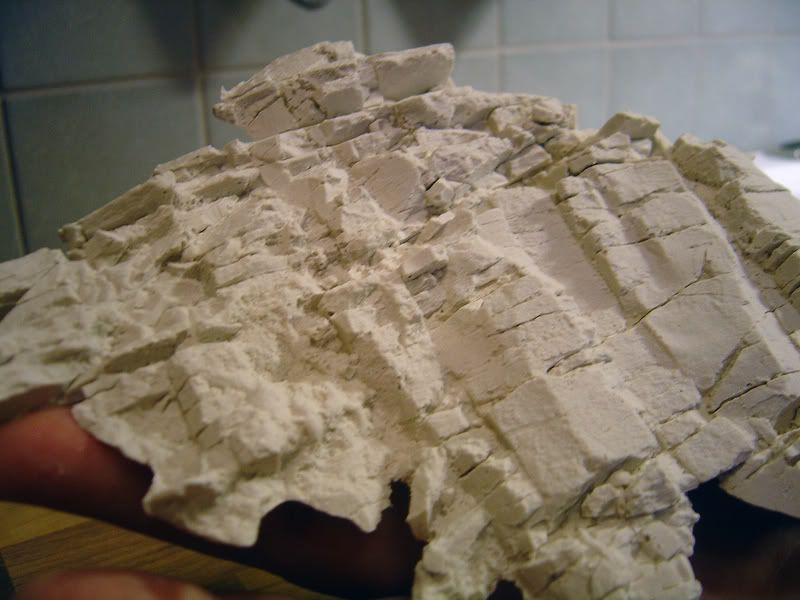
I’m on a limited budget and a cheapskate by nature, so I don’t own any molds. The rock outcrops on my previous layout were exclusively foil-formed. The layout’s gone now & I didn’t own a digital camera at the time, so sorry no pictures. The foiled rocks were passable, just not particularly spectacular. They lack the geologic interest and complexity of molds, but can still produce a “rocky” feel.
Foil doesn’t look as good on close inspection that’s all I’d say. The WS moulds aren’t too expensive I’ve got 5 different ones and use a thin rolled sheet of air drying clay in them, (DAS clay designed for kids ), makes very light castings.
Another option is to spread fairly thick, clay like consistency, plaster on the scenery and then use a 1 inch brush dipped in a pot of water to stipple the surface. Keep cleaning the plaster out of the brush in the water so it doesn’t pull up peaks of plaster. You should aim for the a rough but slightly rounded surface which looks like weathered rock. With a bit of practice it looks better than foil but not as good as WS moulded rocks.
Paul
See if a train buddy will lend you some as it takes many uses and or years for them to go bad and most long time hobbiest seam to have them arround.
I used aluminum foil to create rock face molds, but not of actual rocks. The technique I used was to crumple a piece of heavy duty foil into a ball, then carefully spread it back out. The edges were folded up to form a dam, a piece of fiberglass screen wire was cut to size, and watery casting plaster was poured into the mold. The fiberglass screen served as reinforcement. After the plaster was thoroughly set, the foil was stripped off, and the resulting rock face was put into place.
This was for a rock quarry wall, which needed to be fairly smooth.
I have had fun, and quite decent results if I may say so, with just plastering on goop in a rough shape, and then using a serrated blade, the laser-cut sharp toothed ones, to slice down to create facets at angles. Then, while the plaster is nearly set, and still cool to the touch due to moisture, I use a sharp blade to draw and press cracks in the rock for stratification and real cracking and spalling. You don’t need to go deep at all! Just a press, or a gentle and short swipe here and there, plus some vertical and angled ones to keep it looking natural, and then colour and stain as you need.
I would say, by all means, try the foil method. Take your time, and try to come close to what a mold with offer you before you pour your plaster. Support the foil where you know it will sag or lose the shape you want, especially the critical ones. You can do this in a sand “bath”. Pour sand in a pan, line the sand with the foil, and then very carefully begin to shape the foil. In fact, shape the sand somewhat first, then place the foil and tuck it into the sand. Create detailed facets from there, but nothing too involved. Pour your plaster.
When it is nearly set, place it carefully in situ with some plaster behind it to glue it in place. Shape the stuff around the edges to blend it all in, and then start your detailing as I suggest above.
You need determination, but not the kind to scale Everest. Just set aside an hour to do all this, maybe two, and go to it. I’ll bet you will be pleased.
I found some molds at a flea market.
I am getting better results carving rock faces directly into extruded foam and then painting the carved surfaces with acrylic paints (many washes).
What I have seen of foil rocks, is that they don’t look as good as the people who made them wished. Good luck, and keep us posted. You may invent something we can all use.
If your budget is tight and the hobby shop is a trip away, you might want to try aluminum foil. You can use the foil by pressing it into a real rock, carefully peeling it away and using it for a mold or you can just crumple it up, spead it back out and pour some plaster in. Either way will give you some sort of rock moldings to play with.
If you are trying to duplicate a specific rock type, getting the proper mold is the preferred method. It is difficult for us artistically-challenged folk to hand-carve realistic rock! LOL
Experiment with the aluminum foil. You may get some surprising results. If not, all you’ve wasted is a little time, foil and plaster.
Darrell, quiet…for now
The Model Railroader PDF for Scenery has a section showing how to use the edges of cut ceiling tile to carve rock faces. Using a little Sculptamold as needed can make a good looking, inexpensive rock face.
Rob,
I used the alum. foil method. It was ok, but not very realistic. I have since scrapped them. I am using the molds from www.bragdonent.com. He makes his molds by spreading latex on actual rocks. You might try making your own molds.
Sue
