What would be better to make plaster rocks out of those woodland scenics molds, hydrocal or scuptamold?
I use Plaster of Paris. It is cheaper than Hydrocal and I like the texture. I have not tried Sculptamold because I couldn’t imagine it working well. Seeing I am now carving most of my rocks out of styrofoam, I will stick with P of P for what I do.
Actually, and with all due respect to my buddy Art, Sculptamold can be used well in rock molds. The trick is to mix it 50/50 with water, making it a ‘soupy’ mixture, then pouring it into the molds. It has to set longer in the molds than plaster or Hydrocal, but during that time, the plaster grit that makes up part of the Sculptamold mix itself, settles into the mold crevices. It’s a slower method than plaster or hydrocal, but I use it out here in California, because the dry climate in my area makes Hydrocal set up way too fast, and Plaster of Paris turns out to be too heavy for what I need. Sculptamold, being a maiche type material is lighter than plaster, just a little heavier than Hydrocal, and takes enough time to set up that after you’ve pressed the mold into the portion you’re working on and peeled it off (total time from pouring to pressing to peeling is about 25 minutes) you have a nice gritty texture that will take additional carving very well.
Here’s part of the Sierra Buttes I’m working on. 95% of what you see is from Sculptamold castings blended with Cripplebush rocks.
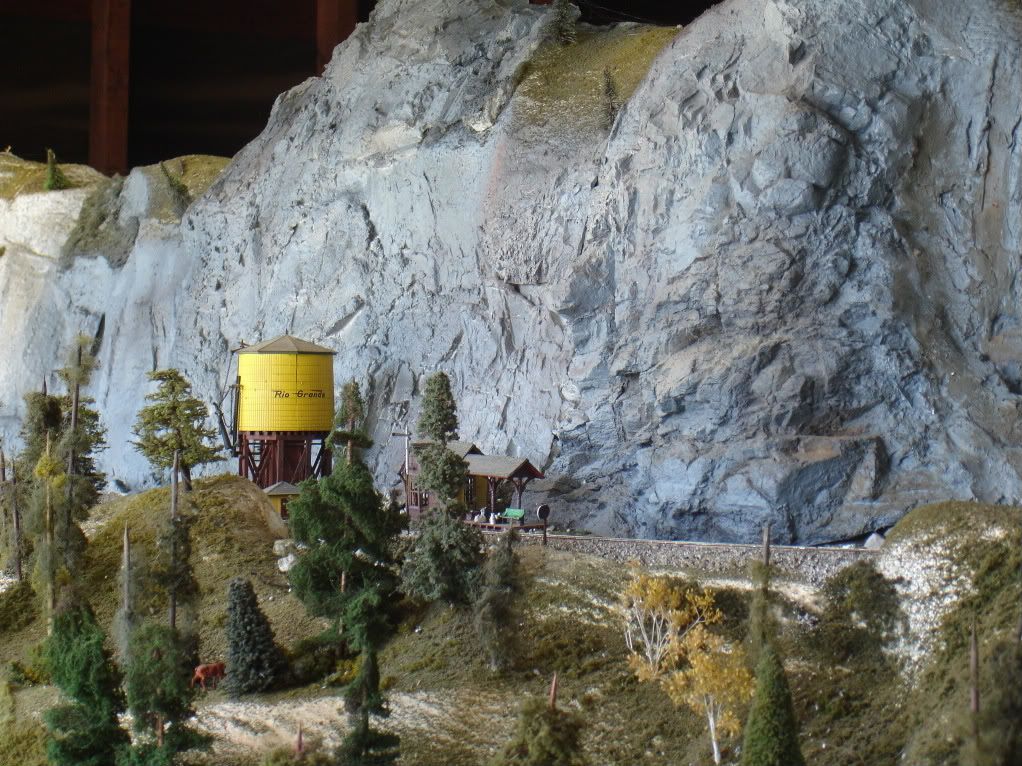
I like Sculptamold.
Tom [:)]
With all due respect to my buddy Tom, I prefer to use White Art plaster. It dries to a pure white color and has a much finer finish texture compared to Plaster of Paris. It also takes washes of color very nicely, can be carved once applied and it sets in a moderate amount of time. Here is an example of my rockwork that was created with homemade latex molds:

Don Z.
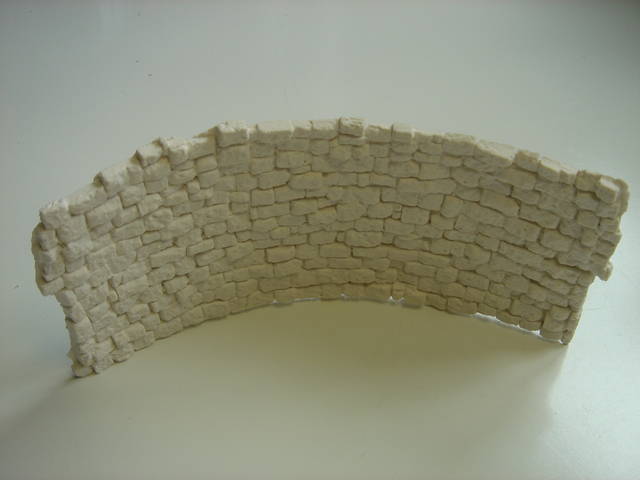
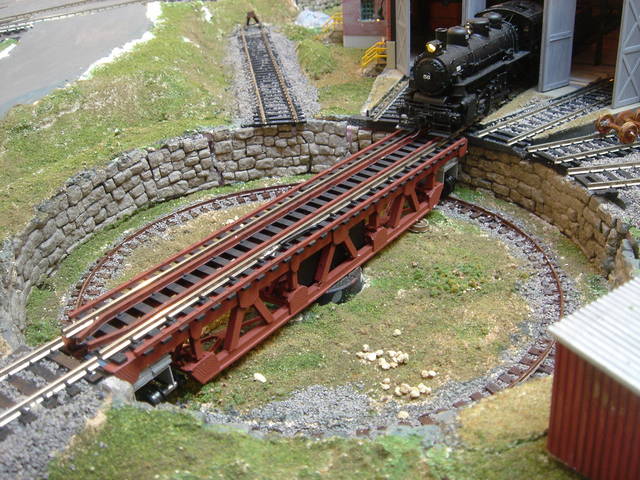
With all due respect to my buddies Don, Tom and Art, I like Hydrocal. The very fine grain brings out the details of the mold. That’s not such a big deal with the low-resolution Woodland Scenics molds, but this one is from Dave Frary. Just to be difficult, I waited until the Hydrocal was almost set up, and then curved the mold around a form to get a curved wall:
After cutting down the casting, painting and weathering, I ended up with this"
More recently, though, I’ve started using Bragdon Foam. This isn’t a great picture, but I’m really impressed by the quality of the castings you get from this process:
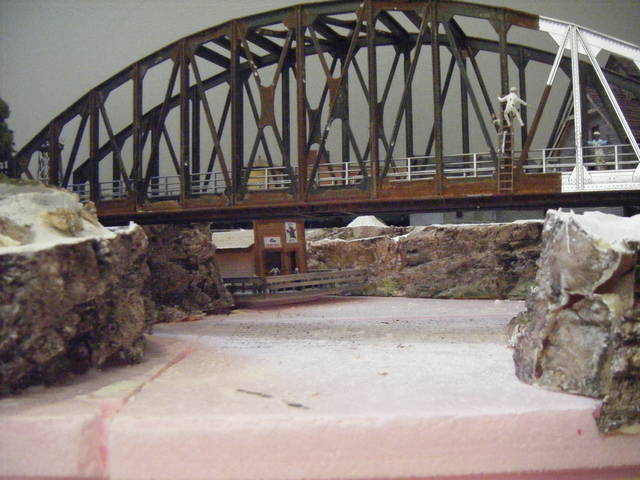
Bragdon Foam is a 2-part resin mix. It’s very labor-intensive, unfortunately, but the results are very good. The Bragdon molds themselves are very high quality, and the casting resin brings out all the small details. www.bragdonent.com if you want to check their web site.
With all due respect to Art, Tom, Don and Mr. B… they all look great! 
I tend to have the best results using Hydrocal. Whether casting a production mold or custom, using Hydrocal has allowed me the most versitility for cutting, carving or curving the final result. I will always color the plaster with powdered masonry dyes to eliminate any white chipping to show from any future abuse.
This spot was done with simple molds for pouring the stepped sheets, cut, carved sanded for fit
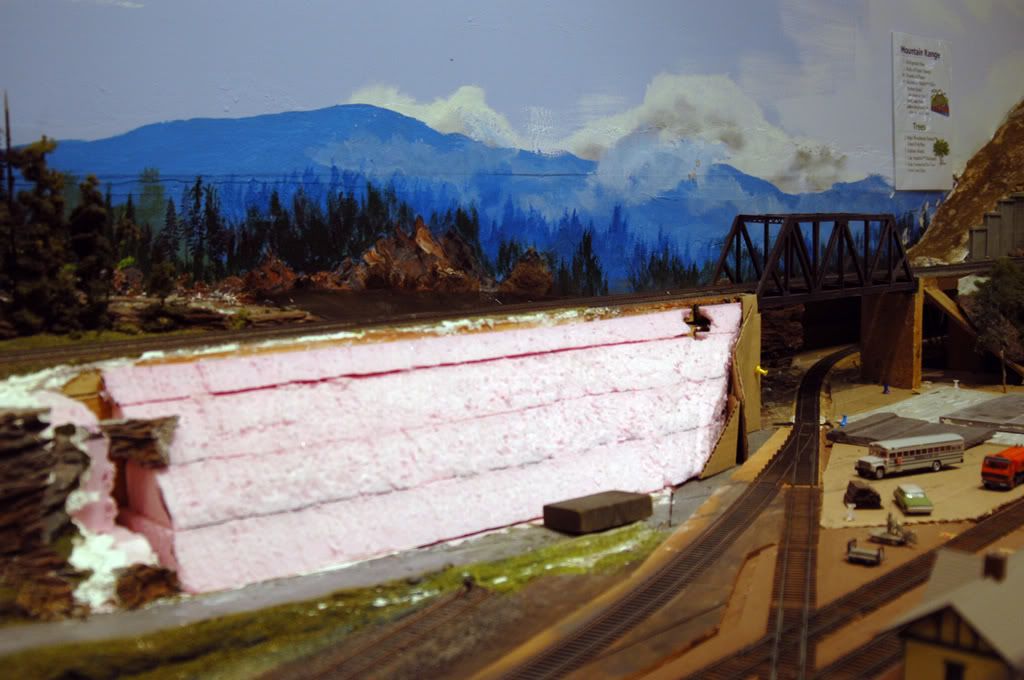
Fitting of the pieces
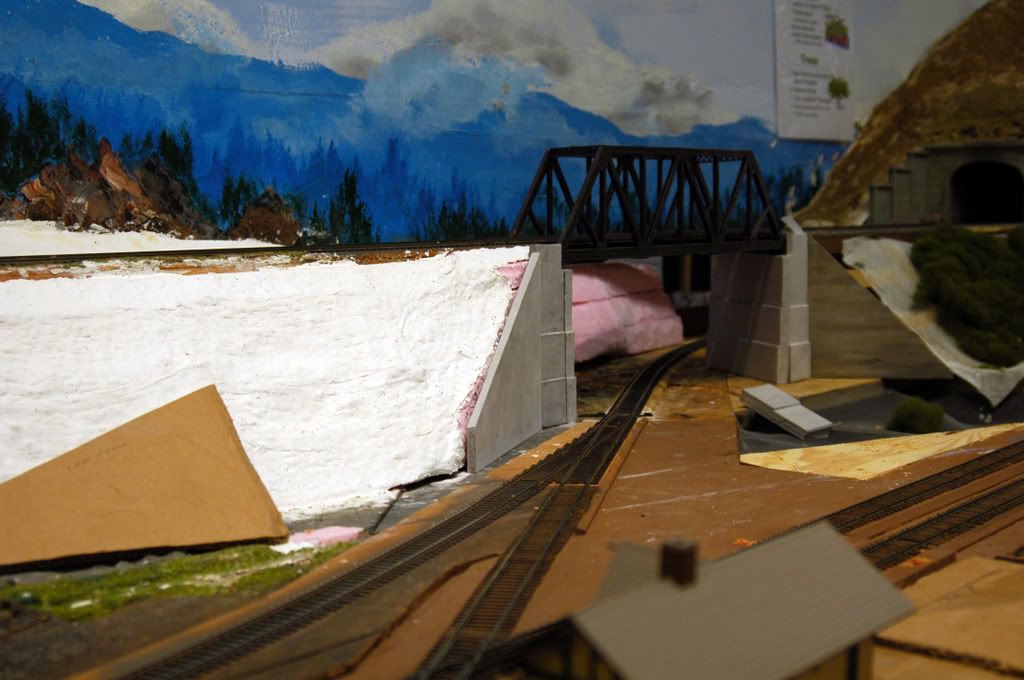
Finished area
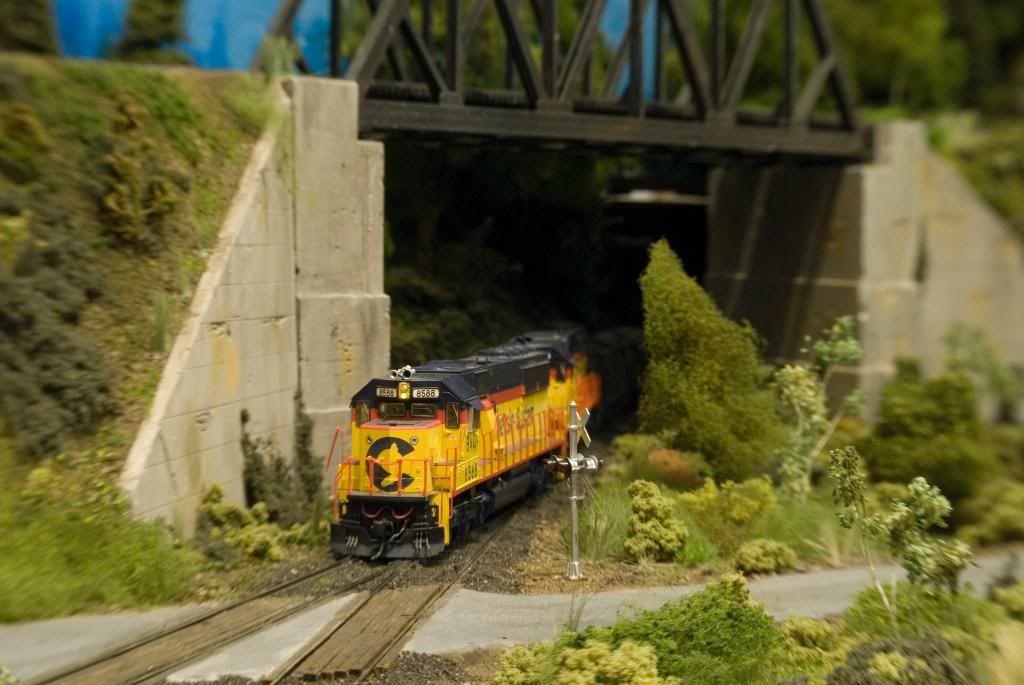
This spot was done w/ Woodland Scenics production molds
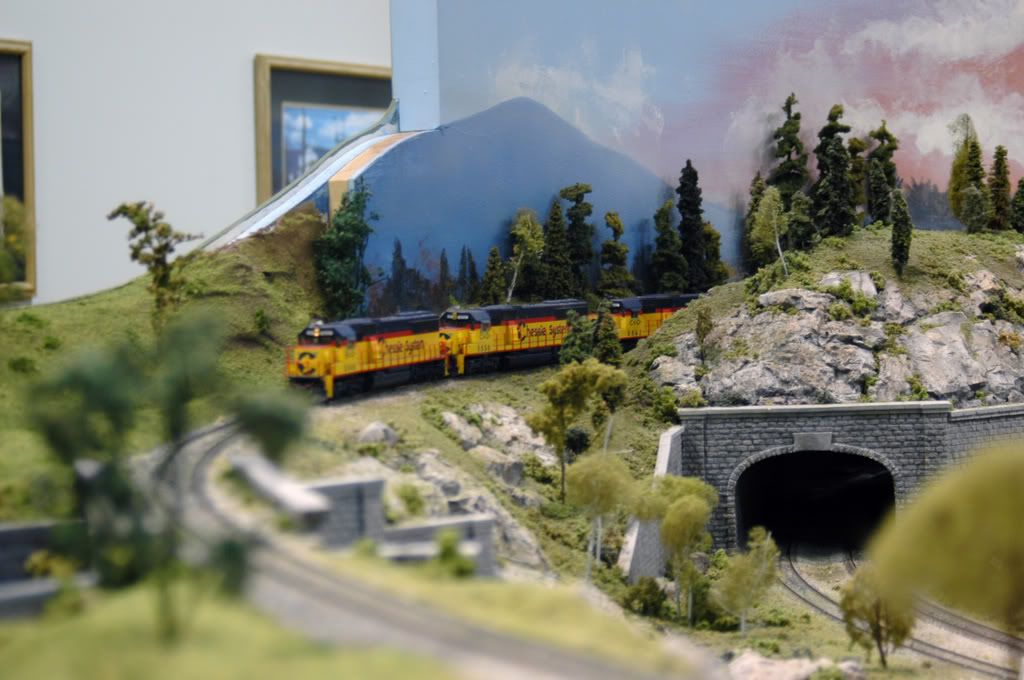
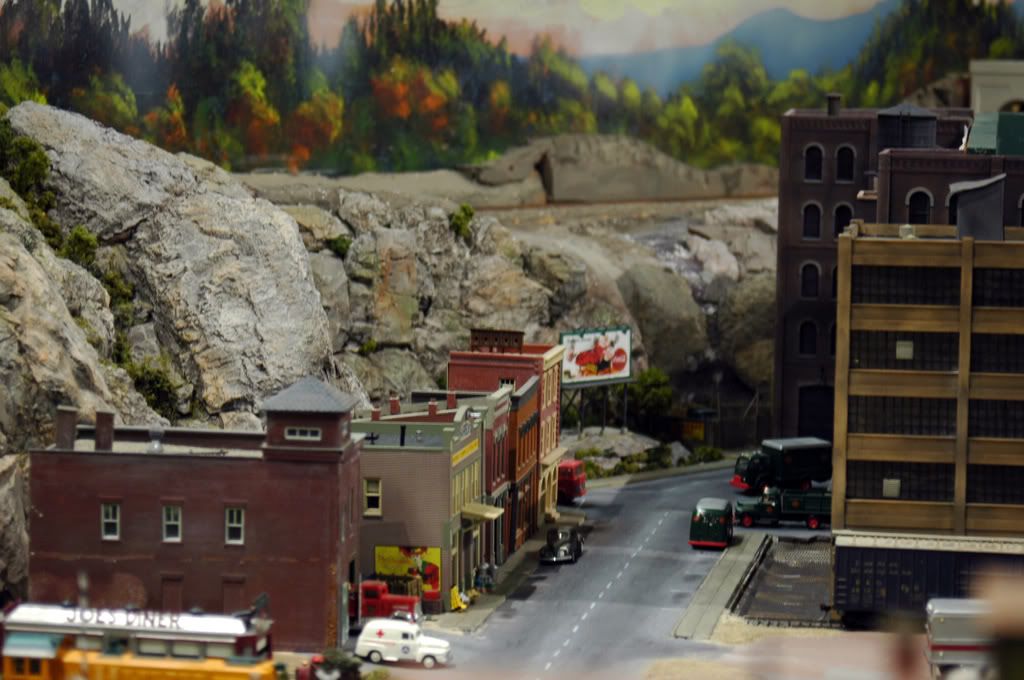
Mant times slabs of colored Hydrocal are used as starting stock to rip/ cut on a bandsaw and glue in place for retaining walls, pilasters and caps.
Wetting the dried plaster allows for ease of shaping or carving.
The rock work all looks really good and I can’t tell the plaster from the sculptamold, from the hydrocal, etc.
In regards to cost, I have heard that Hydrocal, if purchased in a large sack from a building supply company is much cheaper than when purchased in boxes through a hobby or craft shop. I haven’t tested that theory myself though.
hey bog, do you happen to know which WS rock mold you used in the last 2 pictures, specifically the 2nd to last, for the one over the tunnel portal? THAT is the type of rock I need for my layout.
Greg,
Not sure off the top of my head. Been a few years since I did the double portal. That mold is a favorite of mine and I try not to use it too much as the detail of the casting does stand out. Next time I’m at the club I’ll locate the molds and see what # it is. I do remember it is somewhat rectangular and a single digit. I have seen it quite often at stores and shows so it is popular.
For rocks, plain old plaster o paris. Cheap and it takes stain well. I tried Sculptimold, but found it doesn’t stain/paint as well as PoP.
I know exactly what one that is, got it myself and i can recognise it easily. Il have a look and report back later!
Hi: Greg, that might be layered rock, C-1241.
Just my 1/2 cents worth -
I’m in the same thinking as Loather on this at this time. I’ve had very little success with either Sculptamold or Hydracal actually taking stains very well. I think one must be good at painting Sculptamold or Hydracal to have the appearance of rock (the pictures do show such ability). Stains just don’t do the job for me and my efforts at painting, (as opposed to staining), have not been accepable to me.
Thats exactly what i make of it too!
I bought some WS cast walls and portals that were supposed to be hydrocal. They took stain really well. But they weren’t light and broke really EZ. I wonder what they’re REALLY using to cast those?
Richard:
I’ll agree with you that Sculptamold does not necessarily take staining well. Though I’ve found that if you give it a base stain while it’s still drying, it will saturate in a little better. Actually, to get the color I was looking for on the Buttes, I gave the Sculptamold (and the Cripplebush mixed in) a light gray latex base from a spray can, then over-colored it with thinned tan and earth stains. Then I used Bragdon weathering powders applied with a Q-tip for highlights.
Not using Hydrocal, which as I previously stated sets up too fast in my climate to really work with successfully, I can’t speak for how it takes a stain.
But perhaps Don Z can chime in here with how his Art Plaster takes stains. From his photo, it looks as if it does very well.
PS: Don, how heavy is that Art Plaster? As I’ve told you before, I really like the results you get!
PPS: Bob K: That’s some BEAUTIFUL rock-work!
Tom [:D]
I have used the WS moulds with both hydrocal and PoP. Both turned out well, but I would rate PoP a bit more friable and easily damaged. Hydrocal is the harder of the two to paint.
-Crandell
Hi: I would be in the hydrocal camp. I made my rocks with WS molds and hydrocal as separate pieces. Then i applied them to the layout with Sculptamold/Structolite mix. I colored them using Dave Frary’s method in his modeling the Pennsy Middle Division book. I applied, (spray or brush) an alcohol/ink wash as many times as necessary. Then a thinned brown latex, followed by more alcohol/ink before the brown dried. When I got the color I wanted, a final dry brushed light gray, almost white, was applied. These represent rock color found in Pennsylvania.

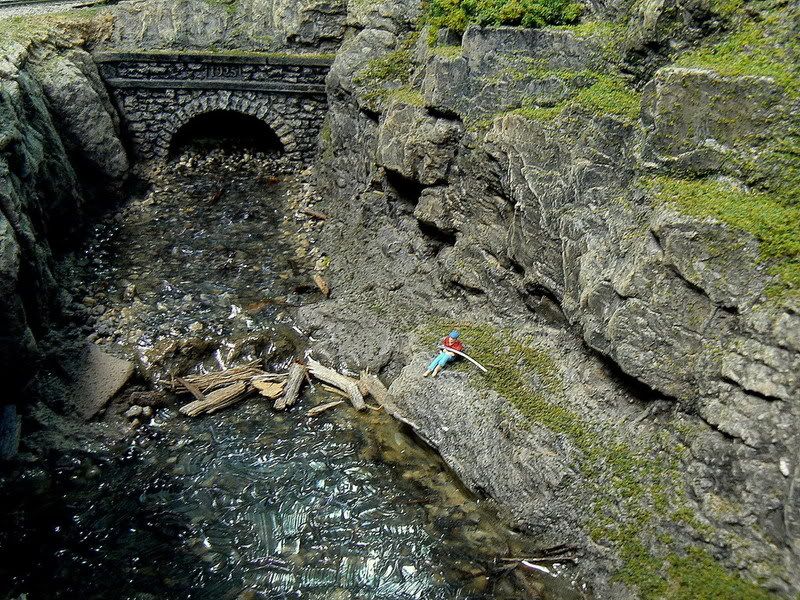

Wow. Those are some nice rocks. Some to the best I have seen.
Well, i went ahead and bought some hydrocal today. My first set of rocks are setting now. Hope it turns out all right.