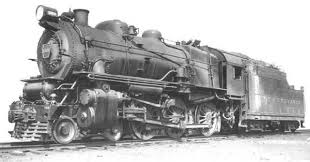
The Pennsylvania railroad has always been a mysterious entity to me since I live halfway across the country in an entirely different region. But its immense popularity and continual discussion always intrigued me. This is a good natured chat I’d like to start to find out some things that would be good to know.
As best I can tell, the PRR was one of the most maintenance efficiency aware roads that ever was, with fairly standard interchangeable components, on a larger scale than usual.
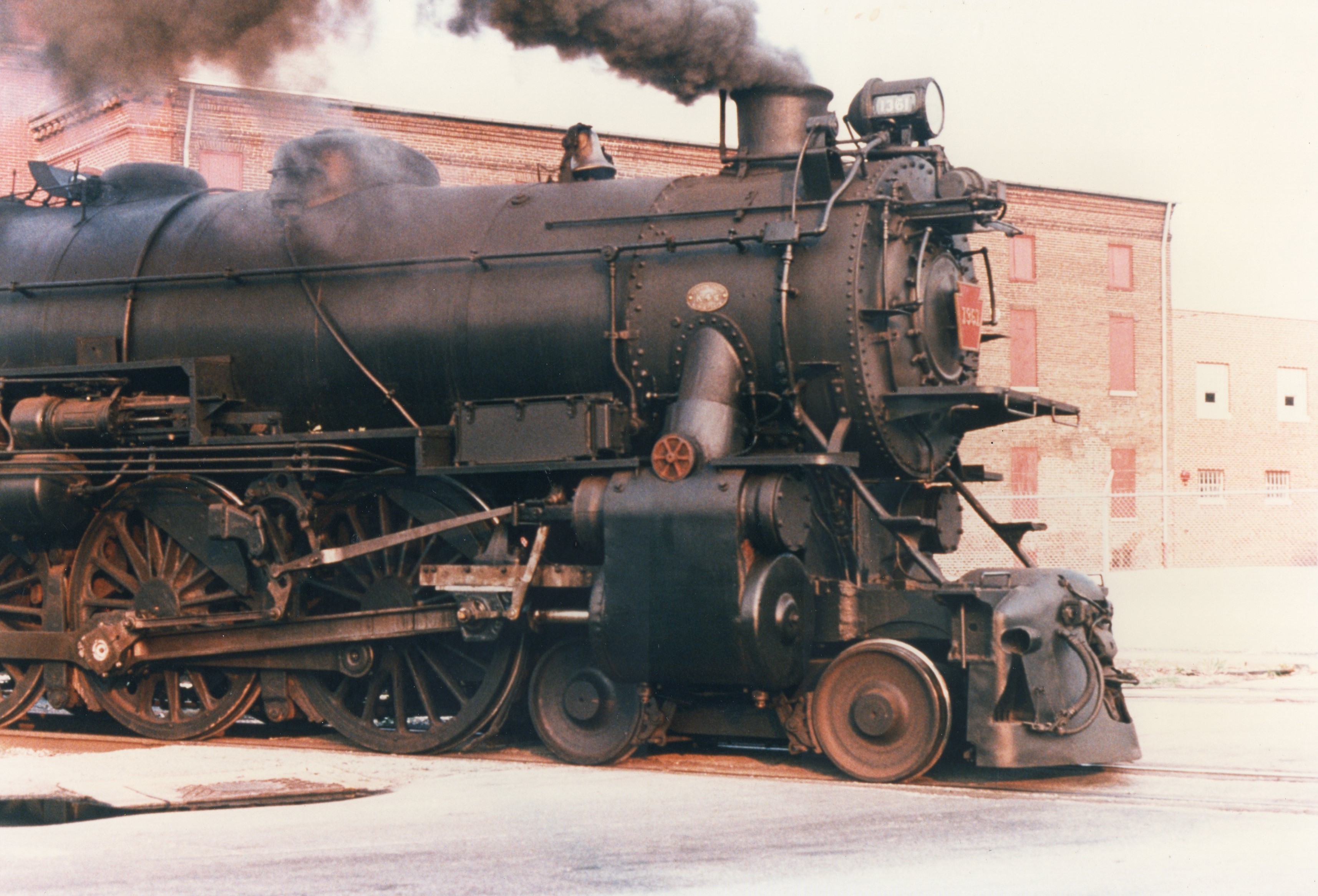
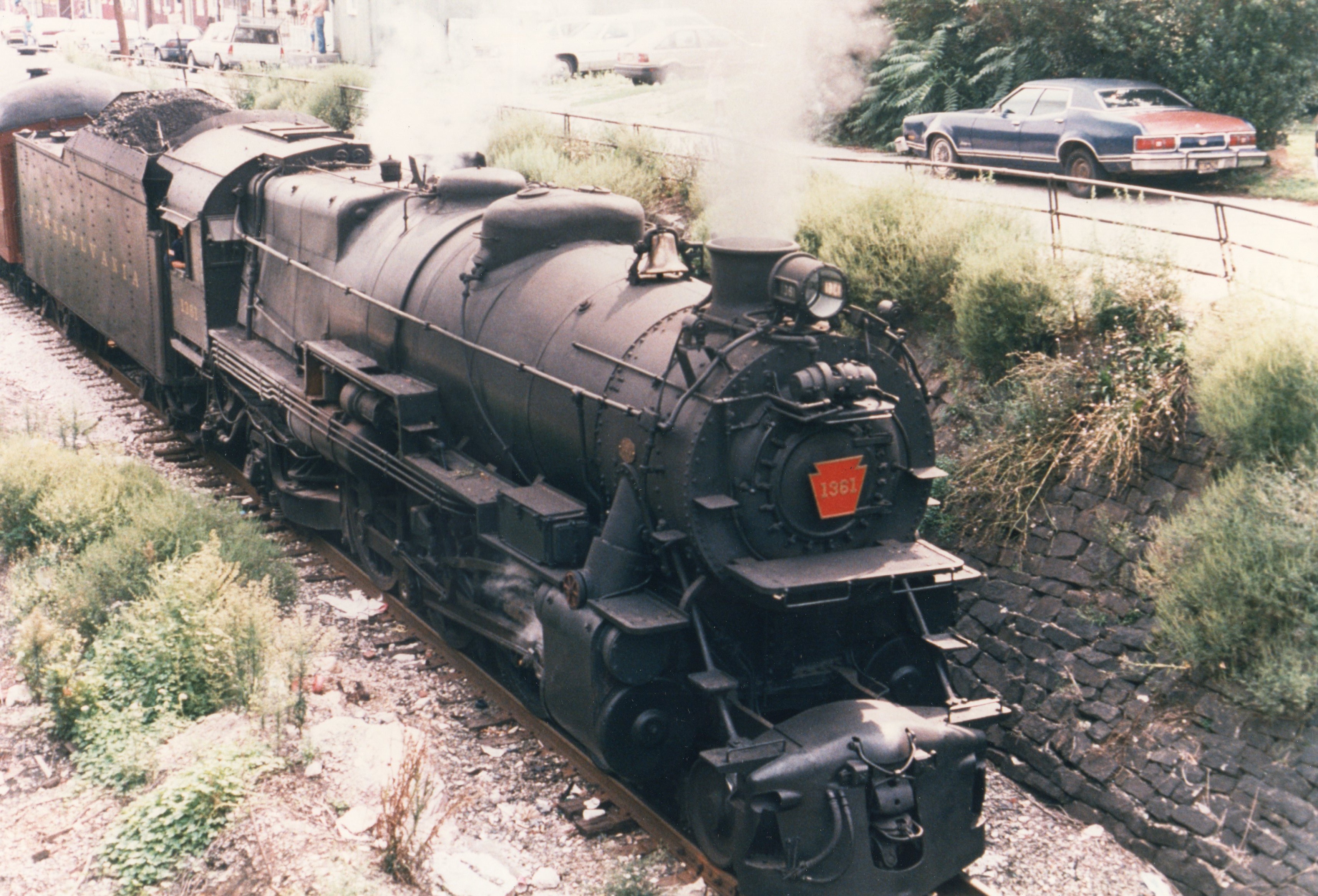
Since there seem to be some knowledgeable people here, I want to ask a question I’ve always wanted to ask. With all of that in mind, why did they mount their headlights so high up on the smokebox front where they could hardly reach them to maintain? Which was compounded and made worse in the later years when they took the headlights off the brackets, put them up on top of the smokebox itself and use the bracket hold a dynamo.
The dynamo needed more regular maintenance than the headlight in its enclosure, so it was placed down on the bracket for easier access. The high-mounted headlight gave somewhat better front lighting.
Of course the front-mounted dynamo needed a longer steam line if fed from the turret/fountain, but as the dynamo is in reasonably continuous operation and (since it needs as low as possible exhaust restriction to run efficiently) there is no recuperation of exhaust heat or mass flow, just a reasonable amount of insulation keeps steam quality reasonable.
If you have a modern engine with a front-end throttle, of course, you can draw superheated steam from the header and (not incidentally) maintain steam flow through the elements with even the starting poppet closed. Even with a flexible extension down to the dynamo in the smokebox front this would be comparable to other engines carrying dynamos or generators on the top of the firebox area fed from a turret. Of course this was not typical of older PRR power with dome throttles ahead of the superheater…
The other big element of the postwar ‘beauty treatment’ was the relatively heavy-looking cast pilot with integral drop coupler. This was very likely a wise thing to install on relatively high-speed road power where there are road grade crossings.
PRR like any other corporation have individuals that have ultimate responsibility and policy making ability over specific elements of the organization. Like any other form of human activity and organization - holders of any specific policy making position are vain enough to want to ‘leave their mark’ on the organization.
Couple that vanity with the continual march of technology that happens in all during the time span of any policy maker and you have detail changes in how any organization moves along the timeline of its history and in to its future.
I never worked for PRR, nor on the mechanical side of the B&O and its successor CSX. With that being said I was involved, as a Dispatcher (user), with signal systems. When CSX established the Dufford Dispatching Center in Jacksonville and installed the Union Switch & Signal Computer Aided Dispatching System (CADS) they took on the task of integrating multiple carriers signal systems that had been designed and implemented nearly a century back in time and making them ‘seem’ to operate in a consistent manner for the Dispatcher’s using CADS. No fallen flag carrier installed their signal systems as whole cloth for the entire property at a single point in time, every carrier installed signal systems piecemeal.to solve specific operational problems. The reality is each signal system was installed with the ‘latest’ technology that existed at the time of its installation and the policy decisions were made by the individuals that held the top company positions that were in charge of Communications & Signals. Each individual had their own personal ideas of what was ‘right & proper’ for their signal systems. CSX is made up of nearly a dozen ‘fallen flag’ carriers that each had their own ideas, implemented under a plethora of Senior Signal Engineers for each of the carriers over time and changing technologies. While the aim of signal systems is the same, the detail implementation of signals from multiple signal vendors over nearly a century of technological changes is a big, big task.
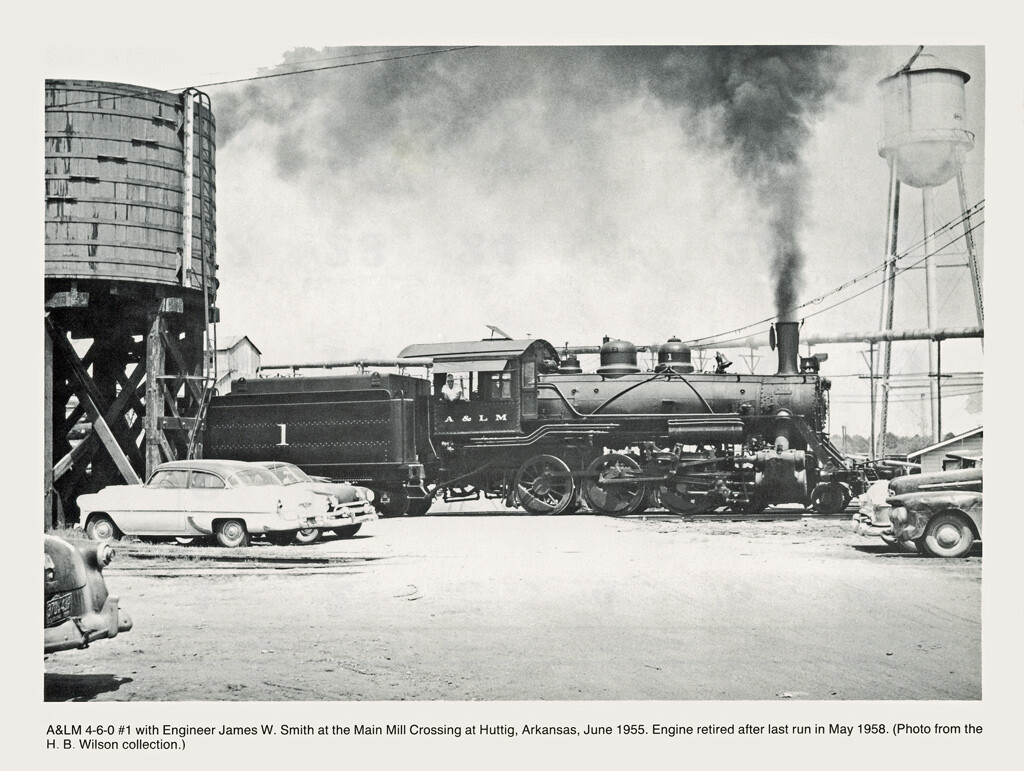
Here’s another question I’ve had for a long time. We see lots of pictures of large mainline Pennsylvania steam locomotives. But I don’t recall seeing any at all of very small branchline steam power.
Almost of the roads I’m familiar with customarily moved their older and smaller power down to branch line and switching assignments, engines like small 4-4-0’s, ten-wheelers, consolidations and such. But the only photos I’ve ever seen of such Pennsylvania engines are extremely heavy mainline examples. The only small PRR steamer I remember seeing was the 0-6-0.
I stand ready to be enlightened. Tell me about the smaller engines which have eluded me.
The H-8/9/10 consolidations were “small” by Pennsy standards, and ruled the branch lines. Many or most of the branches hauled coal and so the 2-10-0 “Hippos” were typical hauling the hoppers from the mines.
That being said, there is an excellent picture of an ancient and rusted D-16sb 4-4-0 plying the Easton branch in MD on page 91 of Ball’s Pennsylvania Railroad 40s-50s. Other examples of “small time” PRR railroading on pages 80-81 (4-4-2 Atlantics, Gas Electrics, the aforementioned B6b 0-6-0), and pages 88-89 (another Atlantic, gas electric, A5 0-4-0, and what looks like a Consolidation pulling a local freight.
Late in the game, the K-4 Pacifics closed out steam operations on the PRR on the New York & Long Branch, which sort-of qualifies.
Replying to this thread as I’m curious about it too. I know of their K4s and duplexes (the T1 is especially astonishing) but am also curious about their less glamorous power.
Here’s my take on it… I’ll preface it by saying that I’m 66 and got into railfanning in 1970, so I never got to see the Pennsy. That being said, it’s always been my favorite. Here goes—
While the PRR got a lot of coverage, it was extremely weighted to a few (important) areas. Those would be the electrified zone (today’s NEC) and the mainline from Harrisbug to Pittsburgh, with some coverage west of there on the line through Ft Wayne to Chicago. Like Gurkemeister says, the Consolidations were the “small” power. The K4, M1 and T1 have gotten all the press. The only reason you hear about the J1s is mainly when they ran the Sandusky line at the end of steam. The I1 was mainly known for the ore trains on the Shamokin route and as helpers on the Curve. The L1 Mikados are almost never mentioned and the N1 2-10-2 Santa Fe’s are an afterthought. I’m sure that I’ll get corrected on some of this, but those are my thoughts.
All good but where are the very light 4-4-0’s, moguls and ten- wheelers. If the BLI consolidation just mentioned is the same one that BLI made a model of, that engine is elephantine in the consolidation world.
It’s correct that for such a large system, remote fans like me only saw certain parts of the Railroad, like the electrified area, Horseshoe curve, and that branch up to the Great Lakes that had the decapods, which were beyond elephantine.
The PRR ran all through Indiana and Illinois on the way to St. Louis. Surely there were some agricultural branches in there that used very light power not seen on horseshoe curve, power On the order of the Wabash mogul.
I’m a Pennsy fan, among other things. The Pennsy marched to the beat of a different drum… sometimes ignoring industry standards. They did have some smaller power, like the G-5 ten wheelers, which I’ve read were preferred on the start and stop suburban service. LIRR ran a fleet of these, and occasionally some leased or borrowed K-4’s. PRSL ran some E-6’s. The K-4’s themselves were pushed to west of Harrisburg when the east end was electrified.
But all railroads in the Steam era had their distinctive look. Some high headlights, some centered. Some with headlights and mars lights. Lots of variety in those days!
Paul
Here’s something: the earliest pictures I’ve seen of the K-4, E-6, and L1 show them with a boxy oil headlight on the upper front of the
sThen, with the same headlight converted to electricity with the generator on top between the headlight and stack. Then, with a new electric headlight in the same position. I’m guessing they just went with the same headlamp location when they converted to electricity. The E6 Atlantic goes back to 1920, the K4 and L-1 to 1914. These are originally very old engines, but they were upgraded over the years.
Paul
E6s is really 1914 (see Apex of the Atlantics) and was not really a ‘small’ engine at all. Examples survived very late in service, as Dave Klepper can attest. They were comparatively rapidly eclipsed by the K4s (which is much like an E6s enlarged to have three driver pairs like Fat Annie and the other developmental 4-5-2s)
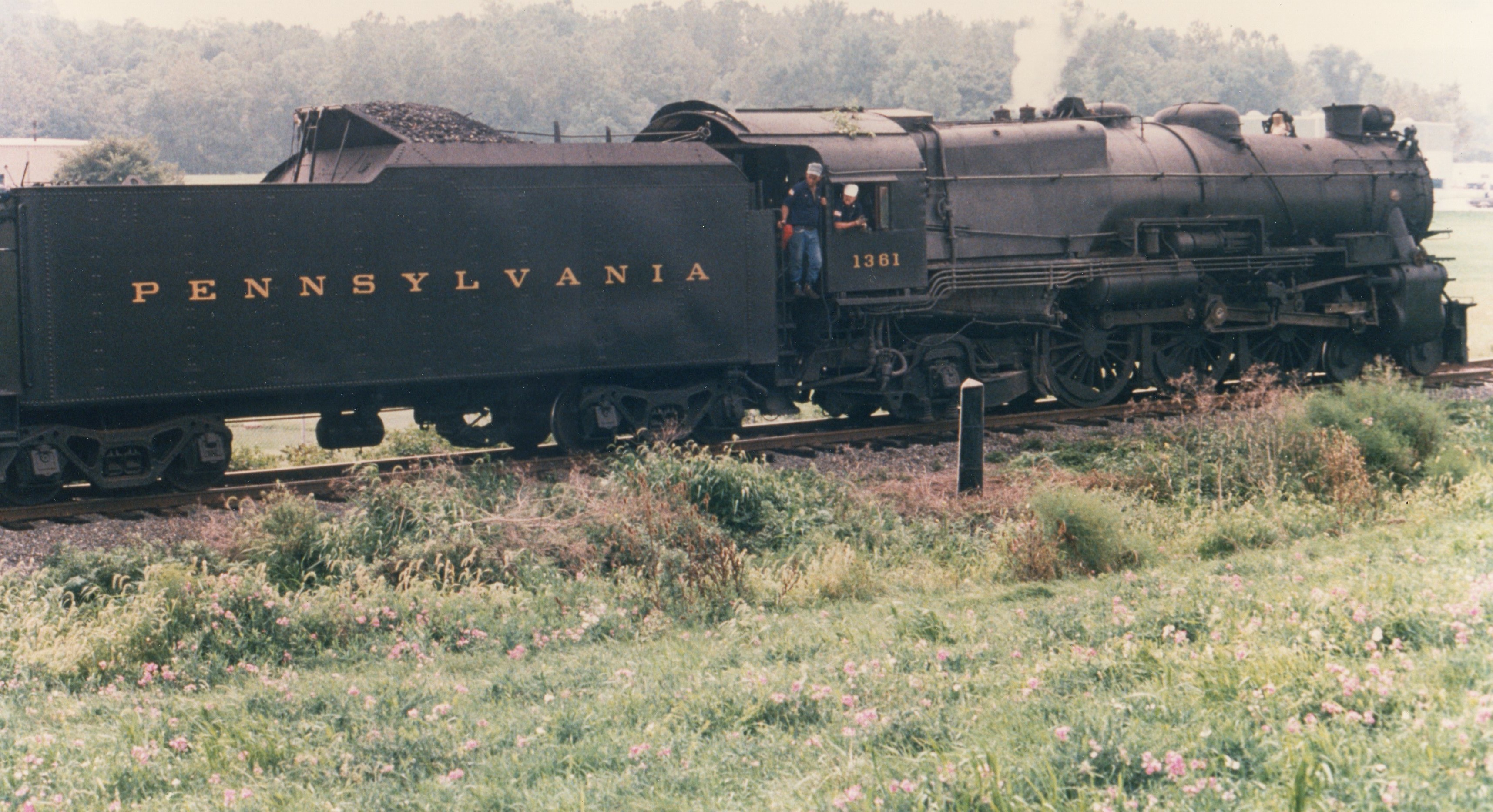
The whole Standard Railroad of the World thing (think of it as a double entendre) extended to the locomotive design philosophy in that era. Multiple designs used the same ((or fundamentally similar) boiler, which practice I think was adopted from Britain; the flip side was that some decidedly corner-cutting practices in boiler detail design were adopted (some of which badly impacted the 1361 restoration before the money to do an all-welded replacement was found).
The L1s ‘lollipops’ were the standard light freight engine after the Consolidations; my understanding was that they were very common in the East before electrification. PRR seems to have run out of uses for Moguls comparatively early, and gone from fairly big 4-4-0s to Atlantics and Pacifics instead of high-speed Ten-Wheelers; there were plenty of uses for various classes of D16 until very late but (to my knowledge) no great effort to modernize them.
PRR was a bit funny in being very gung-ho about internal-combustion power up to 1927, at which point the guy supporting the effort died and was not replaced (this is in Clessie Cummins’s autobiography) so much of the ‘lighter engine’ traffic went to gas cars as long as it was profitable enough to sustain.
If you want a laff riot, look at PRR electric development after the DD1. The L5 is one of the great disasters in locomotive design; if it had any distinctive competence I’ve been unable to find it. The replacement philosophy (upon deciding to expand with 11kV AC instead of the North River Tunnel third rail) was to try bidirectional E, K, and L ‘replacements’ (the O, P5/a/am, and L6 respectively) and of course doubling down with the R1 when something larger became desirable. Two Os together made a reasonable alternative to a 4-8-4 for Lehigh Valley trains, but scarcely counted as a cost-effective model for the future, and oh brother! were the P5s the wrong answer for a passenger locomotive. (The L6 may be notable as a class completely built out by Lima but never motored…)
Then they adopted a kludge in the form of the GG1, with motors designed to operate on DC into Grand Central Terminal; by the time they got around to fixing this with the DD2 they had a large investment in GG1s which was cemented by the WPB in the early Forties. (The wartime extension to Pittsburgh would have been done with those DD2 twin motors… but of course that didn’t happen.) I think the less said about postwar electrics up to the E44s, the better…
I think I’m speaking a different language than the Pennsy people
So far, I’m not getting any indication that the PRR had anything that didn’t have a very fat and large boiler on it. No big deal of course, it’s just something I always wondered, where were those skinny boilered old small engines.
PRR was an early, early convert to the doctrine that large boilers meant large capacity. But most of the obvious change came just a short time before the advent of practical (Schmidt/Superheater Company) large-mass-flow superheat. See in particular the K28 (Alco) Pacific as the example that defined the rule.
There were plenty of ‘light’ Atlantics in the era before the E6, including 7002, and it pays to look both at how those evolved and what their design language and assumptions were. Most of them were intended as light, fast express locomotives rather than ‘smaller’ power, so not something that translated well to being ‘demoted’ to secondary or branch-line traffic (where you’d expect the lighter power to wind up as it became obsolescent with longer, faster, steel-car trains).
Most actual ‘small’ PRR power was 0-4-0 to 0-8-0 and operated accordingly. Yes, there was an electric analogue, the B-class ‘rat’ – and yes, they did operate it all the way from Sunnyside to Altoona and back for maintenance under its own power at about 20mph…
The Pennsy largely shunned articulated power, although they did test out an N&W Y6b, before they settled on a modified version of a C&O 2-10-4 that would become the J-1.
They did have an HC1s— a 2-8-8-0 briefly used for helper service, and a CC2-s — 0-8-8-0 for helper on Horseshoe.They had 10 of these.
But they mostly stayed with non articulated power.
And dabbled with Duplex drive technology.
Paul