I have a Walthers Proto E8 loco with QSI decoder and speakers. I have it programmed on JMRI and went to reset the decoder to factory settings, but am finding now I can’t control the basic speed and I get a reading saying “programmer
error” and it is “speaking with my controller (360)”
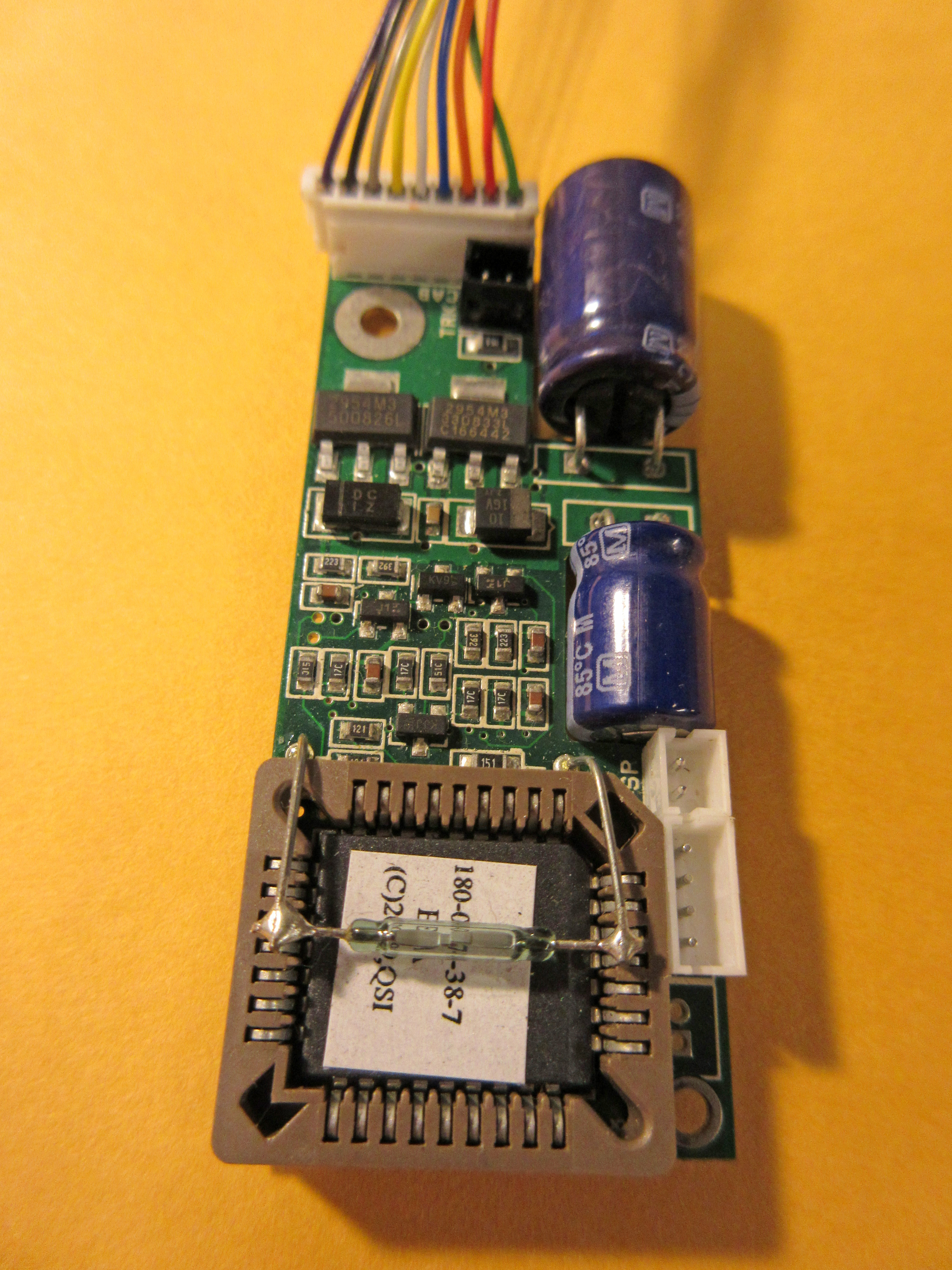
Most QSI decoders of the era used a magnetic reed switch to perform a ‘hard’ reset. You really have to remove the shell in order to activate the reed switch OR use a super strong magnet, say one removed from a hard drive. QSI decoders do not conform to the usual “write 8 to CV 8 to reset”. Instead it is done using the following multi step procedure:
(1) Place engine on main track and select its address. If not responding you may need to use the program track.
(2) Set CV49 to 128
(3) Set CV50 to 255
(4) Set CV56 to 113 As engine resets you will hear the 3 toots.
Sometimes, I’ve heard, the reed switch will stick in the closed position and your decoder will forever be in the reset mode.
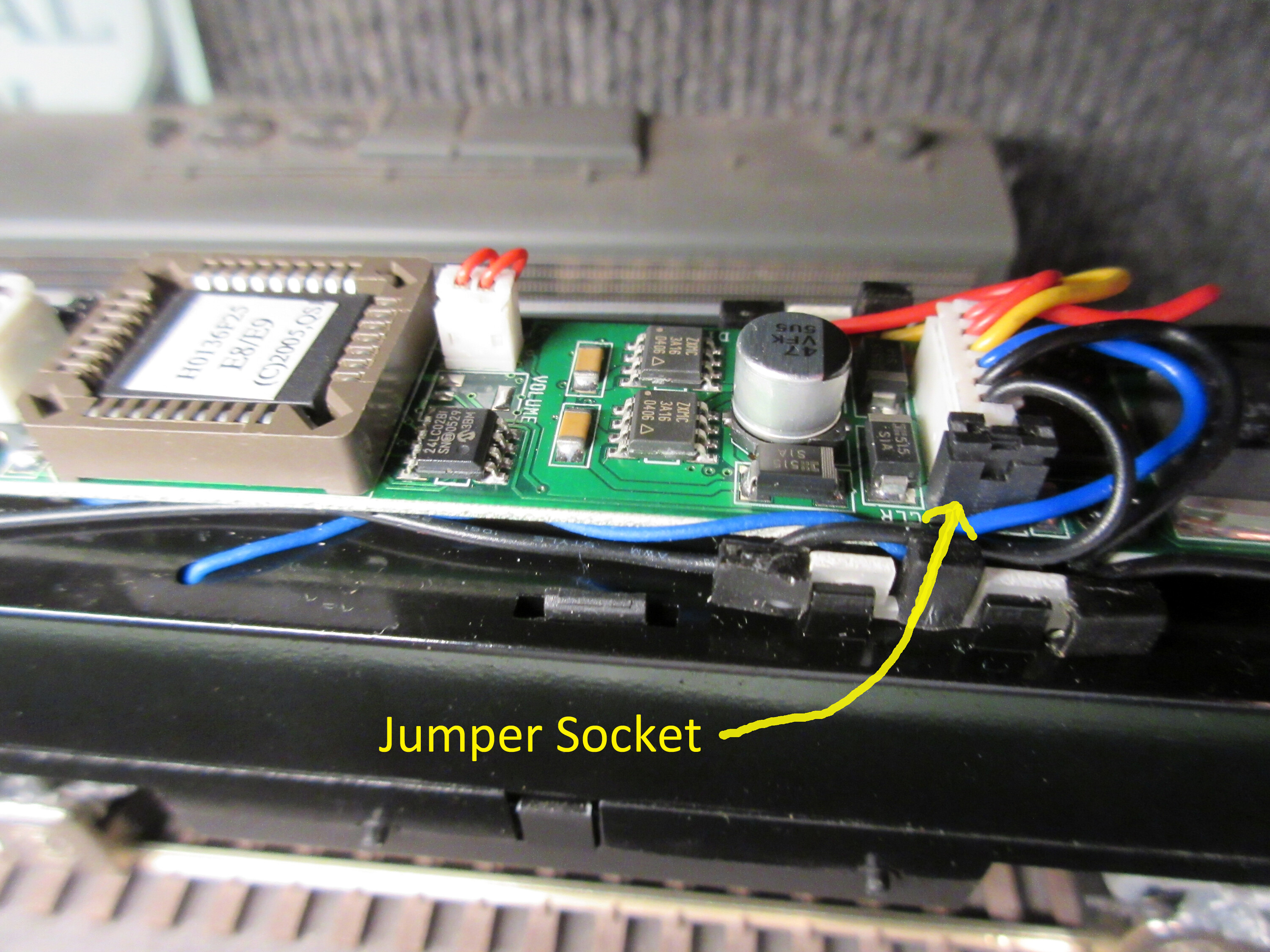
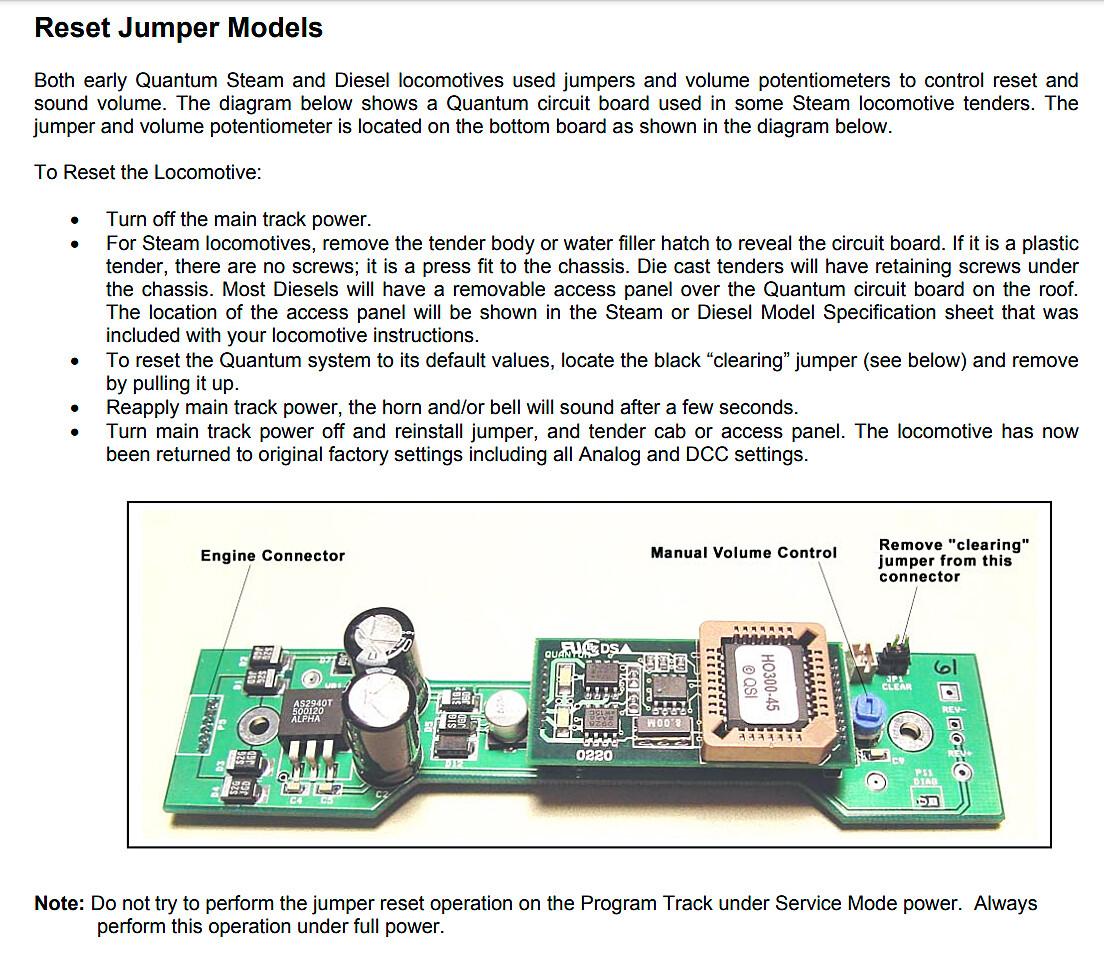
Later QSI decoders used jumpers or remote push buttons (which Broadway adopted and STILL use on their Paragon 4s). Not a very elegant solution IMHO.
The reset will be confirmed by a robot voice saying ‘reset complete’ or a couple honks of the horn as I recall. Been a while since I’ve played with one.
You can very easily desolder the reed switch and replace it with something less squirrelly. I had thought those reed switches were NC, like the jumper arrangement, and you held them open for long enough to reset, unlike the arrangement on many motherboards where you shorted pins with the jumper or a metal tool to ‘ground’ for reset. I also thought the long leads were provided to get the reed switch up near the shell so the reset magnet ‘wand’ didn’t need NIB Power. I am too lazy to dig into my early Quantums to confirm the action.
Note what it says about using full track voltage when you perform the jumper procedure. I’m guessing that might apply to the reed-switch versions as well…
Either way, they would not perform their intended function. Yes, you could clip the leads (some had rather long extensions on them) and jumper the remaining wire as needed.
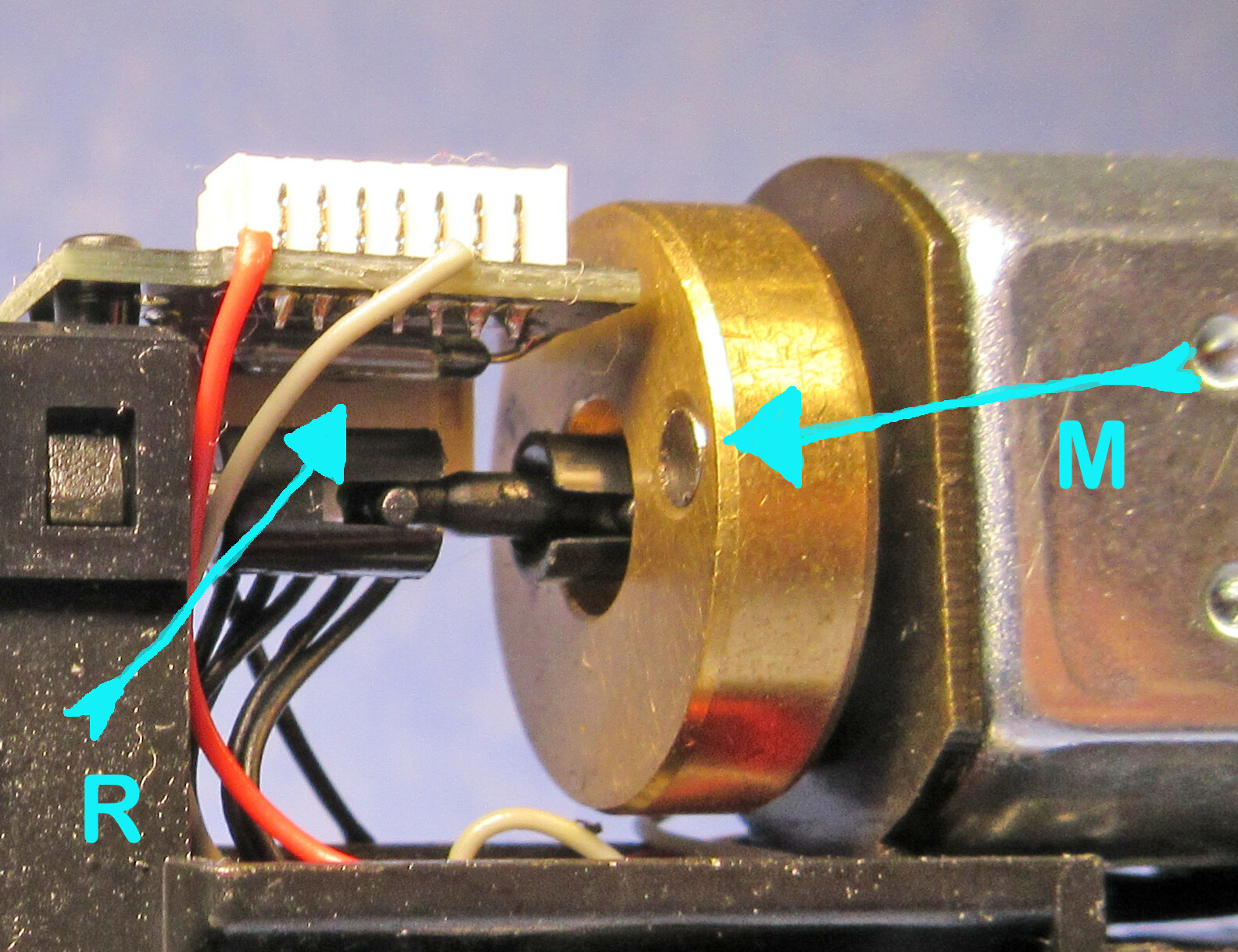
The reed switches were equally failure prone on the Broadway ‘chuff sensors’ as well. I’ve replaced maybe a dozen of these over the years. Broadway still insists on using these mechanical devices and that reed switch opens and closes with each revolution of the motor shaft (Driver RPM X 4!)