Hello all. Brand new to this forum, and I come seeking information. This is research for a (potential) work of middle grade fiction. I’d like the details to be as accurate as possible, so anything you could add would be much appreciated. All questions relate to 1949.
When a long distance train arrived at Grand Central, would the train be “serviced” right at the terminal (i.e., laundry and trash unloaded, train restocked, etc.)? And in a related question, would soiled linen come off the train in a bag, or a rolling cart, or… what?
Where would be the best place for a child to hide on a sleeper car (any variety) assuming they had the assistance of the porter, and that all the spaces (rooms, roomettes, compartments) were otherwise full? I’m guessing the soiled linen locker?
Does anyone have a schedule of precisely which trains would have arrived at Grand Central on Christmas Eve, 1949, with exact arrival times?
I realize these are picky details, and I have sought answers through broadly available sources, to no avail. Which is why I am now consulting the pros, which is probably where I should have started.
Others here are more knowledgeable regarding your questions than I am, but I’ll start the ball rolling by noting this. First, long distance trains would arrive at GCT, discharge their passengers, then be towed out backwards to Mott Haven where the servicing was done, Soiled linen would be bagged in each car, then tossed onto a rolling cart or carts. I can’t answer your second question about hiding places for kids. (Cary Grant hiding in an upper bunk comes to mind in North by Northwest).
Your last question is even harder to answer. What I can tell you is that in 1946, and I expect 1949 was similar, some 225 trains arrived daily at Grand Central, both commuter and long distance trains.
Plus, many passenger trains would be running in several sections, due to the increased patronage during the Christmas season. So one scheduled train like the 20th Century Limited might have actually been 5 or 6 separate trains.
Thanks for this. I had a feeling that train servicing did not take place right at the GCT platforms but was unaware of the Mott Haven arrangement.
I should have been more specific about Christmas Eve schedules. I can narrow it down to long distance trains arriving between 4 and 8 p.m. But I figured if there was some daily schedule in existence it would probably include the entire day.
Ah, North by Northwest… makes you want to ride a train, for all kinds of reasons.
There also would have been an engine change at Harmon where the road locomotive (possibly steam) would have been exchanged for an electric locomotive. This brief change over period could also provide you with a reason for the train being stopped if you want to do “extravehicular” activities for dramatic reasons.
Grand Central Terminal in NYC is the station in question. This is confusing, I know, since GCT (NYC) is commonly referred to, at least in the general public, as “Grand Central Station.” Or possibly just Grand Central.
All this info is extremely helpful, by the way. I clearly came to the right place. Still hoping for some additional speculation/suggestions on where a 12-year-old kid, say, who sneaked onto an all-Pullman train (that is sold out) might find to hide away. Not a lot of unused space in Pullman cars.
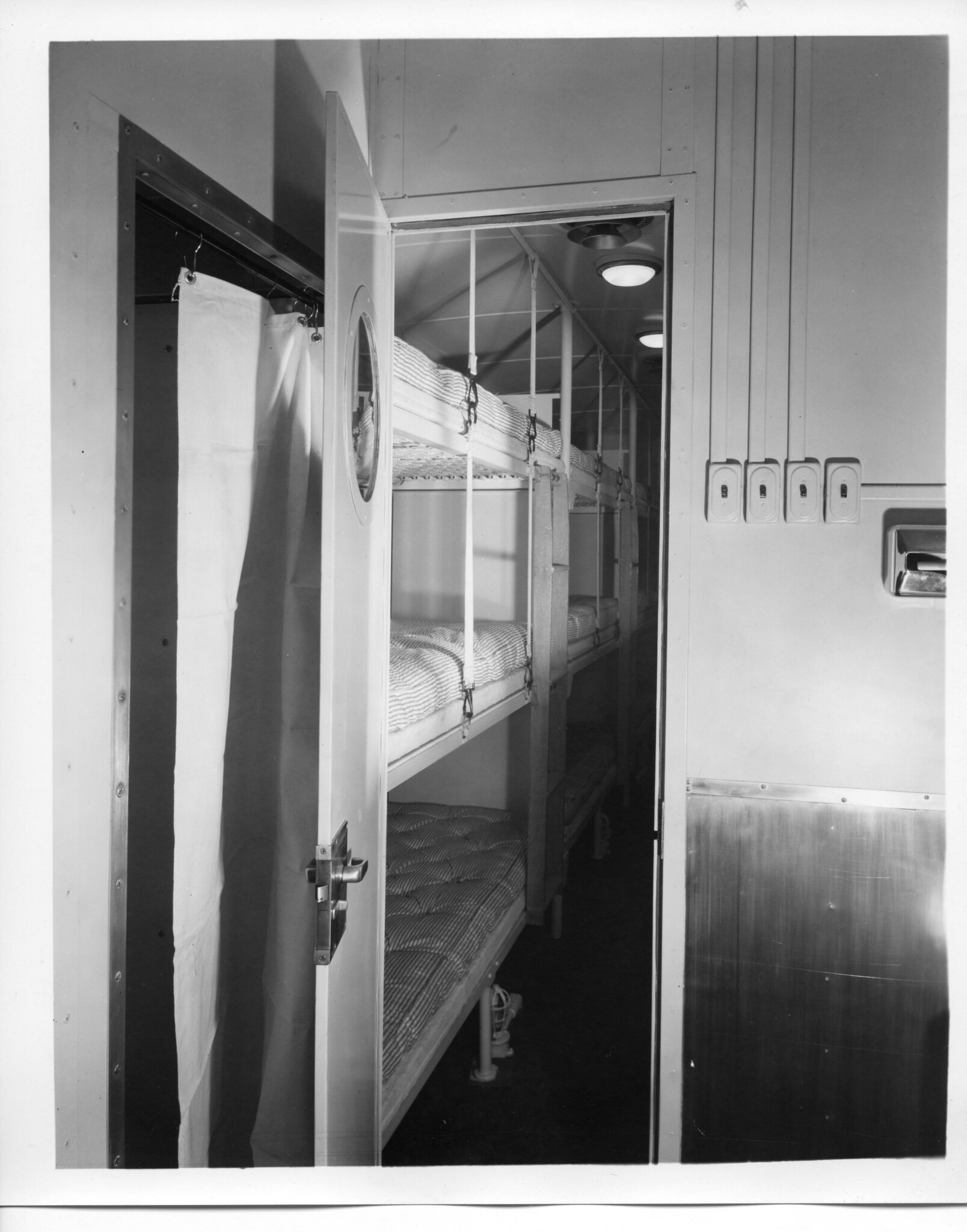
Many of the ‘All Pullman’ trains had dormatory cars for (mostly) the dining car staff but there would possibly be some Pullman porters staying in the quarters, maybe even ‘deadheading’. Our young stowaway could be squirreled away in there. Plenty of hiding spaces (see below the bunks):
There are ‘cubby holes’ and small storage spaces on either side of the porter’s small ‘berth’.
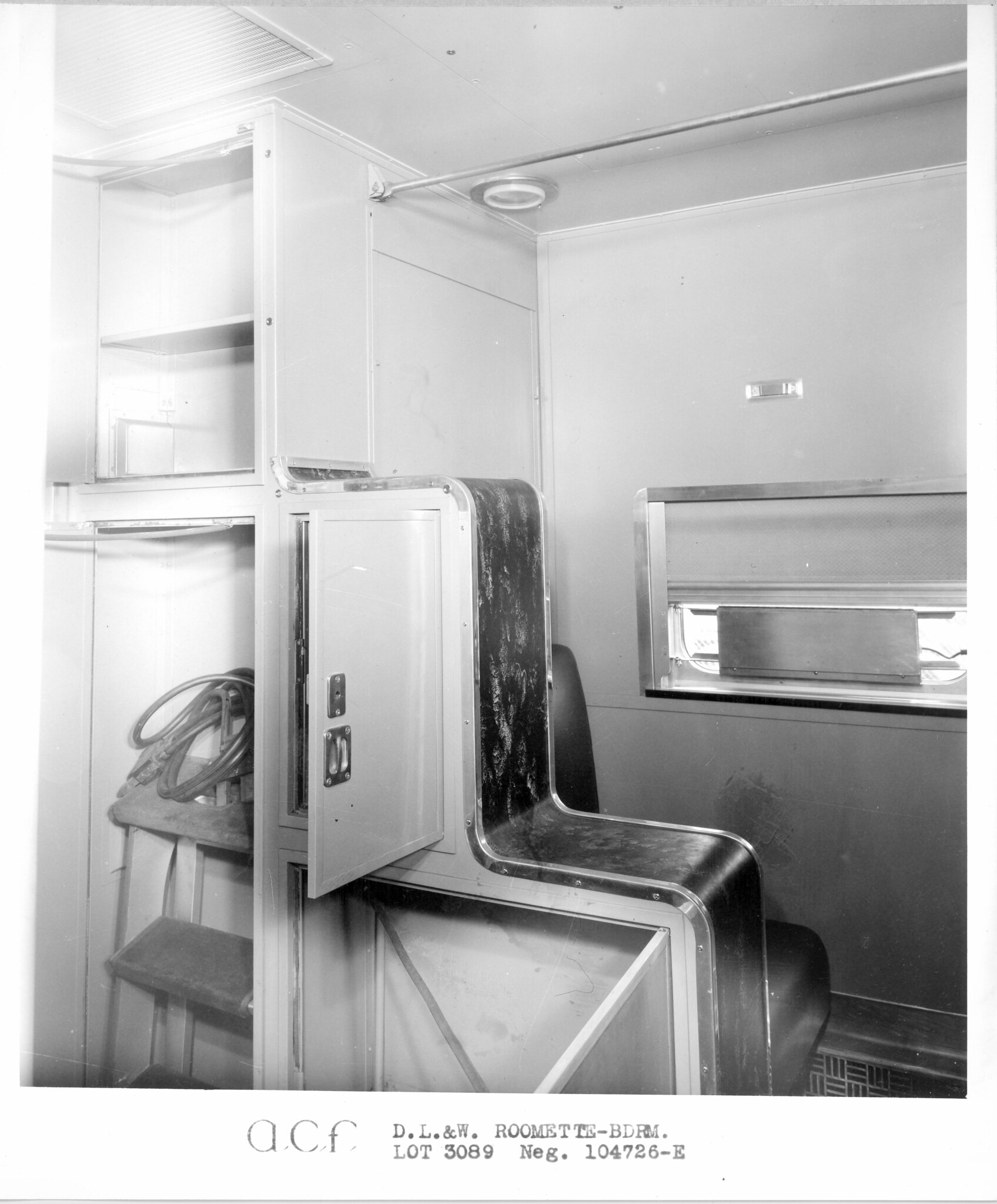
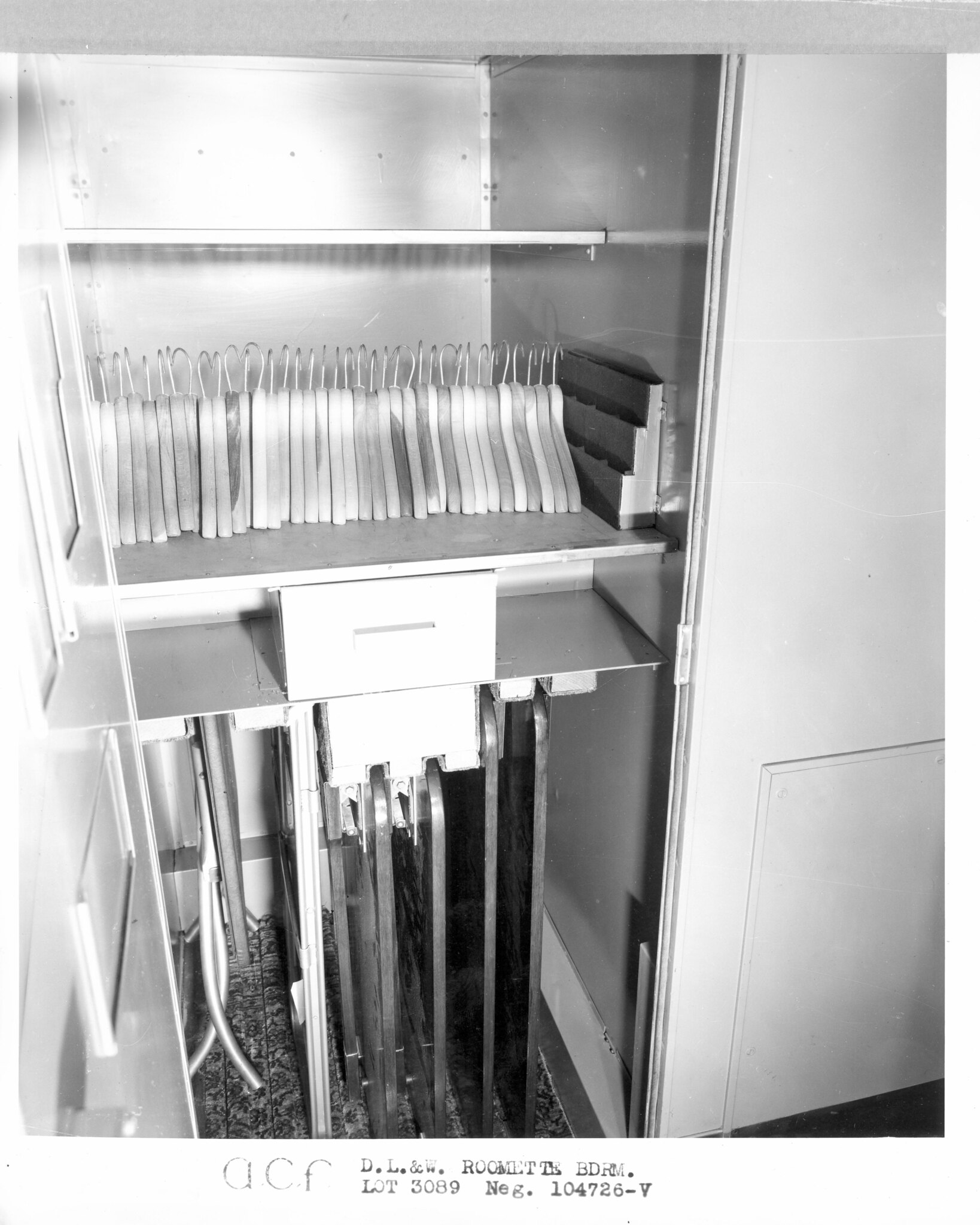
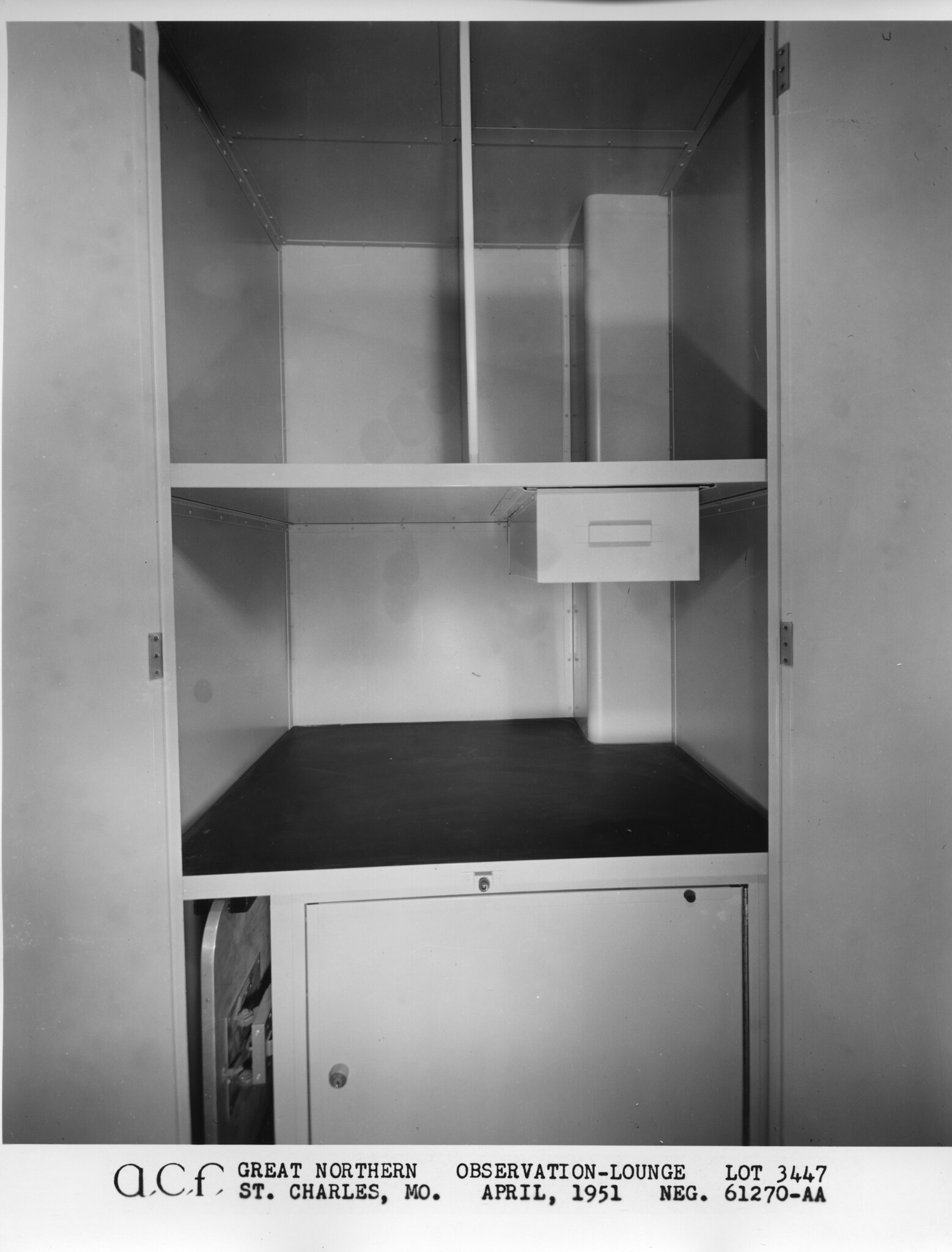
There were other storage areas on the cars besides ‘soiled linen’ lockers. This locker was used for tables, water carafes, stationery and possibly clean linen:
How many wooden coat hangers does a Pullman car need!!!
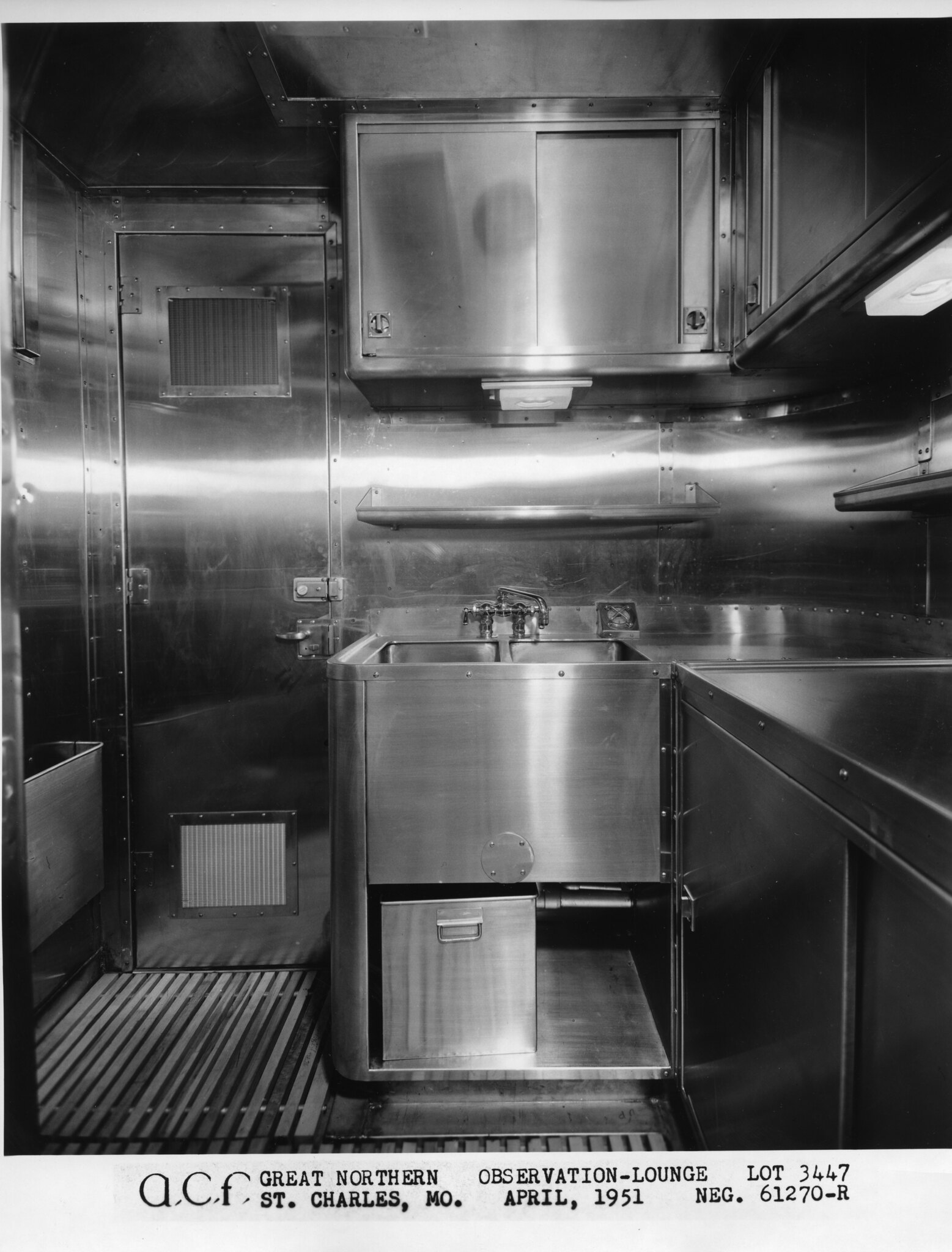
Some cars were lounge cars that had small kitchenettes or food prep areas. Since the fellow has the cooperation of the porter he could possibly be sequestered in one of those cabinets (a potato bin?)
No trains were serviced in Grand Central – they were pulled back out to Mott Haven soon after the passengers had detrained. Note that the first-class trains had their Pullmans turned so the Hudson River views would be on the ‘best’ side of the cars. See Hungerford’s Flight of the Century.
I wasn’t sure if the porter’s space at the end of sleeping cars had much more than a seat or bench. Sounds like it was a bit more spacious than that, but without a door. And I had forgotten about the dormitory cars.
Absolutely great information and suggestions. I’ve got a shelf of books on passenger trains and have done a bit of additional research, but I’m getting a real education here. And some great ideas!
It would be easier to find the ‘right’ train if you narrow it down a bit. Like are they coming from St. Louis or Chicago or Detroit or St. Thomas, Ontario to the west, or from Boston or New Haven in the east? Remember too that New York Central wasn’t the only railroad using GCT. You could get on a Southern RR train going to Atlanta for example, or go to Miami on a combination of several railroads.
Fun fact: CBS Television broadcast shows from GCT (including the evening news and other programs) from their third floor studios from 1939 into the 1960s.
How would you go to Miami out if GCT? Surely it would be better to go south out of Penn Station on one of the ‘silver service’ trains…
Same for Southern (or the C&O FFV) which Westing said was a regular ‘thing’ as early as a half-decade after the opening of the North River Tunnels.
New Haven famously went to both terminals, but any ‘through’ trains to the south did not go to GCT. The story of how some trains went through the Manhattan area on the water is interesting; the follow-on to that service ran over the Poughkeepsie Bridge and through New Jersey to the Bel-Del until the Hell Gate Bridge connection via Harold opened… but nowhere near a connection with the ‘River Line’.
Without getting into too much detail, the train would be coming from upstate NY, probably Albany. I say probably because that seems to be the station from which there are trains that arrive at GCT at the “correct” times (4-8 pm). And it’s important that the train be a long distance train, preferably all Pullman, even if the stowaway doesn’t travel a long distance on it. It doesn’t have to be a New York Central train.
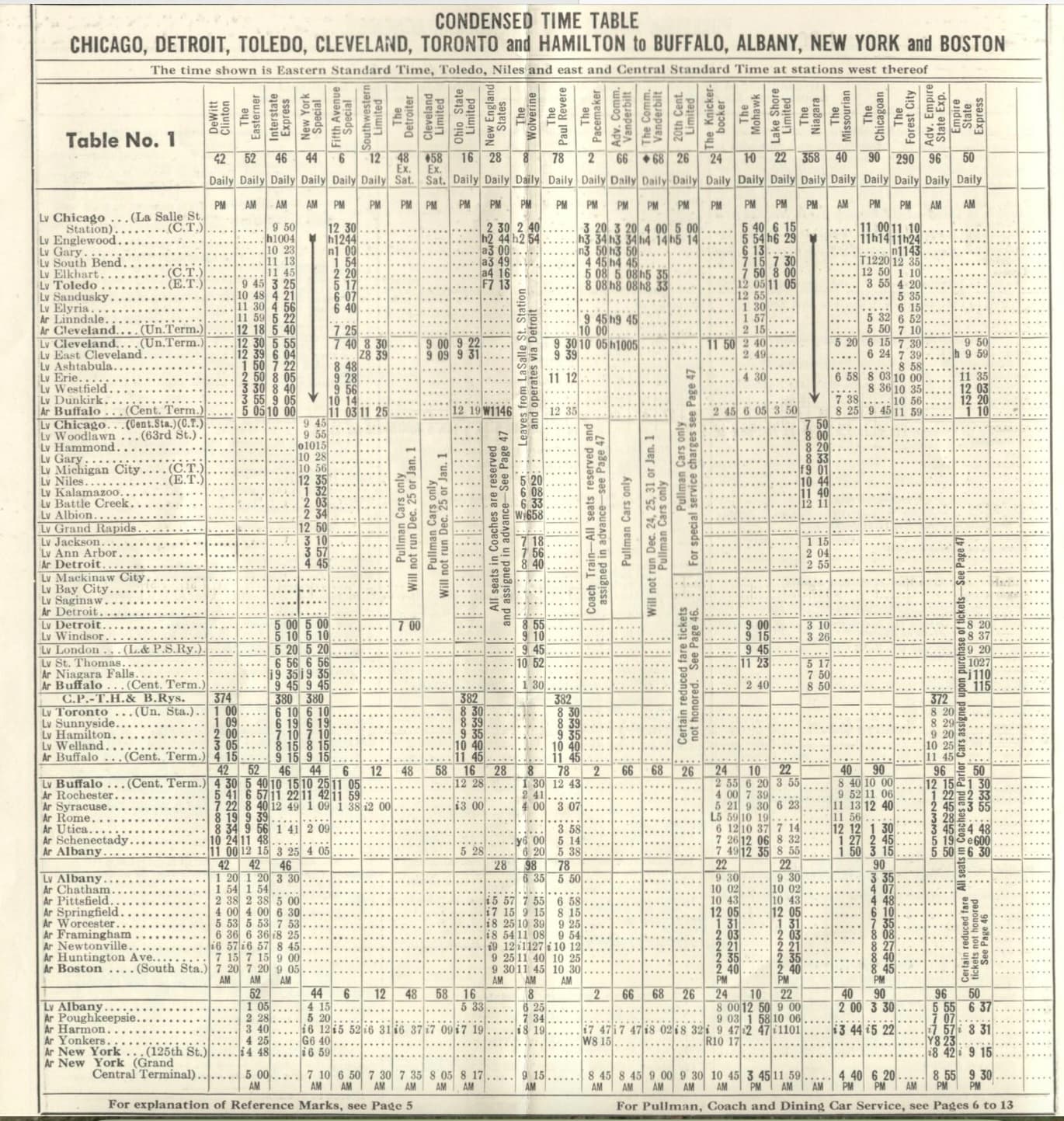
Ideally he would board a train in Binghamton NY, but I am utterly bewildered by passenger train activity in that city (in 1949). There were four railroads serving the city (the NYC was not one of them) and three different stations, but as I see it none of those trains were deluxe trains that went to GCT. The Binghamton part of this is probably too complicated to be worth it, in which case I will simplify the matter and just start from Albany.
How the heck did railroad agents ever book tickets from one small town to another small town in a different part of the country-- long before computers or even much use of telephones? You might travel on tracks managed by half a dozen railroads, switch trains a few times, maybe get lucky and have a through car for part of it… it boggles the mind.
Trains arriving NYC in the 4-8PM time frame would not be any of the ‘premium’ long distance trains - unless they were running on the order of 12 hours late. NYC is nominally a Origin/Destination city. Schedules are set up to accommodate the business day, nominally 9 AM to 5 PM, arrivals in the the hours before 9 AM allow the passenger the full business day at the destination, departure times are set for businessmen having completed their business and going on to the next city.
While your stow away is not a businessman, he has to move about on the railroads in passenger service that has been set up for the benefit of businessmen.
I get it now. Studying the arrivals schedule I was coming to that conclusion, but thank you for confirming it. I should have known: when my family took train trips as a kid we boarded at about 2 a.m. in a signaled stop in our podunk little town. Departure and arrival times were obviously set for the convenience of more important destinations and more frequent riders. However, that middle-of-the-night boarding added immensely to the mystique and the magic of those trips.