Mining and steel making are industries that tend to take up a lot of space. Just doing one part like the steel mill, and having the ore and limestone coming from beyond the modelled portion of the layout, to me makes more sense than trying to squeeze in something like the limestone mine that won’t look right.
Think of it from the point of view of someone living near the steel mill. They’d never see the iron ore being delivered at the Great Lakes port in ore boats and transloaded into railroad cars, they’d only see the loaded cars arriving at the mill, and the empties going back. Same would be true for the limestone.
There is a quarry/mine/mineral-extraction-thing on my layout called Mystic Mining and Materials (kind of a riff on Minnesota Mining and Manufacturing, aka 3M). Not very big; just a couple of stub tracks and a generic loading platform over in the corner. Here’s how I described it in my blog:
Mystic Mining and Materials – Produces all manner of valuable raw materials that can be simply dug out of the ground: coal, iron ore (hematite and/or taconite), specialty and transition metals (chromium, nickel, vanadium, titanium, cobalt, manganese, molybdenum, tungsten, uranium, aluminum, zinc, tin, copper, etc), limestone, phosphate, potash, gypsum, bentonite clay, kaolin, and various commercial non-ferrous ores (sulfur, mica, boron, silicon). This is a magical mystical mine.
One mine, any commodity. Strings of coal porters, shorty ore cars, open gondolas, drop-bottom gondolas, covered gondolas, open-top hoppers, air-slide or pressure-aide hoppers, tank cars (liquid minerals or slurry)
I know of no conveyers going over any mainline trackage. A totally enclosed conveyor is expensive and a maintenance nightmare. A covered conveyor would be used in spots where cross contamination of products accidentally falling onto one conveyor from another. There are also conveyors with water spray bars for dust control. I know a quarry with a conveyor going under a busy road through a large concrete culvert. It has covers on it except under the road. It’s used to convey screened sand to an asphalt plant.
Model railroading is as much art as technology. While some artist were of course considered in the realist school, there were also the impressionist, who were famous in their own right. Art is in the eye of the beholder.
I was searching for ideas and came across this picture. It represents the concept that prompted me to start this thread.
In real life you wouldn’t dig into a hillside beside a tunnel portal. When I mentioned earlier that I didn’t want to do something that looked stupid this is what I had in mind. I could easily do my scene this way but won’t.
I have the Medusa Cement kit that incorporates that type of conveyor. Does anyone know of that type of conveyor kit?
I agree that that picture is ridiculously out of realistic possibilities. The track looks to be a narrow gauge mine skip road. An excavator scraping down a rock face is something only a complete brainless person would do wanting to kill themselves. The portable plant is too full for no one feeding into it. This picture is something they would show us during our safety training meetings on what not to do.
Every vertical bucket lift I have seen has been enclosed to keep spilling material everywhere. There is a space underneath for cleaning up the spilled material. A laborer would be busy with a shovel and bobcat keeping it cleaned up. Google bucket lift pictures for some ideas.
Fantastic pic. I too let realism slidea bit, but like to depict operations, reporting marks, and industries commonly found in my location (SW VA). That’s why I model N&W and try to have reporting marks associated with it and commonly found on such consists.
Back to the original question. I have been in every integrated steel mill in the United States, Canada and Mexico during my career. I can unequivically say that not one steel mill I have seen has a backyard source of coal, coke, iron ore or limestone. They are all delivered from distant locations and probably by a different railroad as the source. The exception is the mills around the great lakes that get some of that stuff by ships but again it is not local. Having raw materials delivered by rail is the normal procedure usually to a yard outside the steel mill property where loads and empties can be marshalled. Loads of coal go to the coke ovens, limestone goes to kilns to be made into burnt lime or calcium oxide instead of pure limestone and taconite pellets go to a high line above the storage area next to a blast furnace or furnaces unless delivered by ship where a conveyer delivers the taconite to a blast furnace from the wharf. If you want a limestone source the best way to do it is to have two tracks that you switch the empties into the limestone source that goes through a view block and has the other end at the steel mill. The loads you pick up and take to the other end at the steel mill and shove in the other track. that way you can always pick up loaded cars at the limestone source and pick the empties back up at the steel mill.
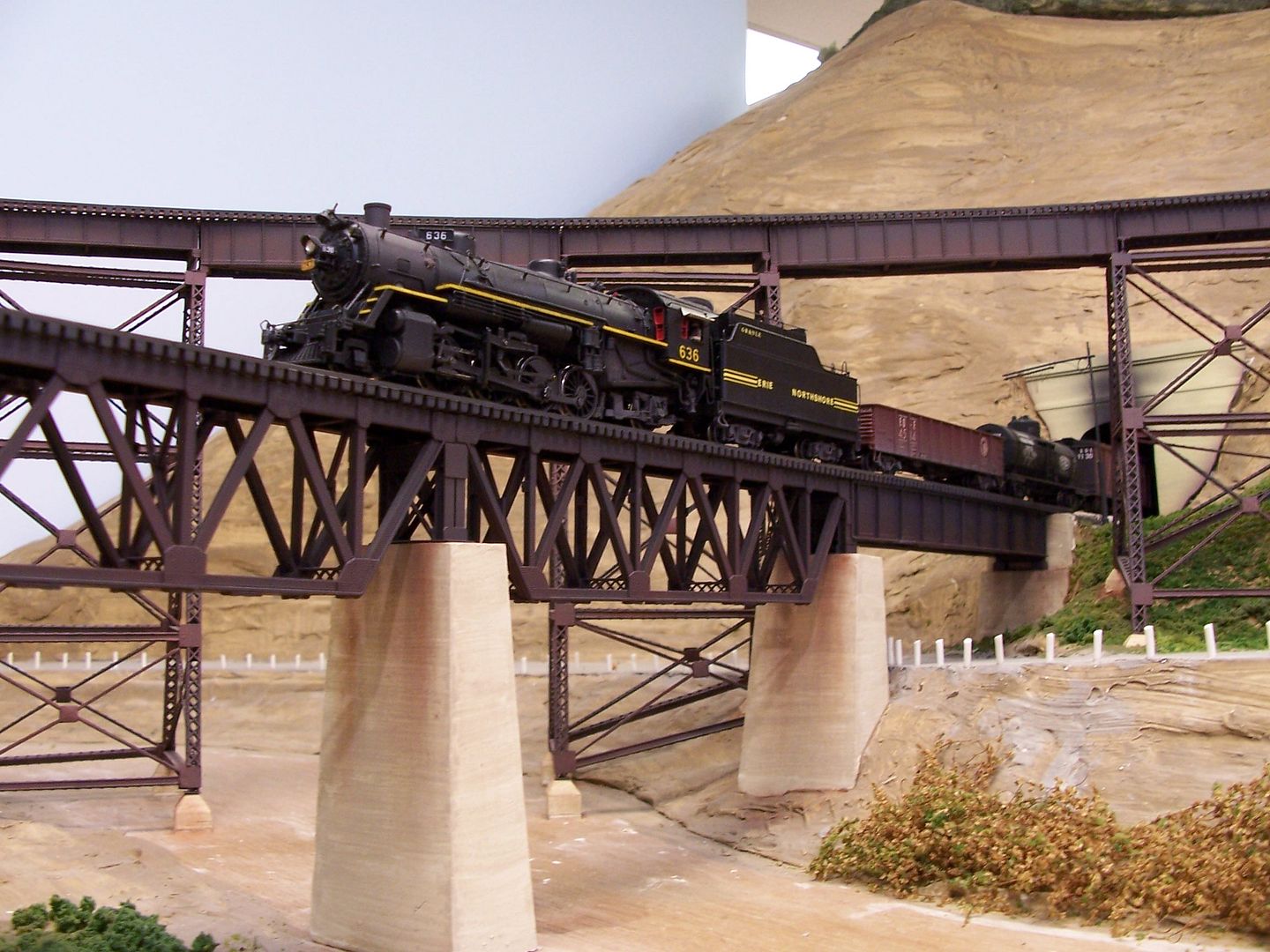
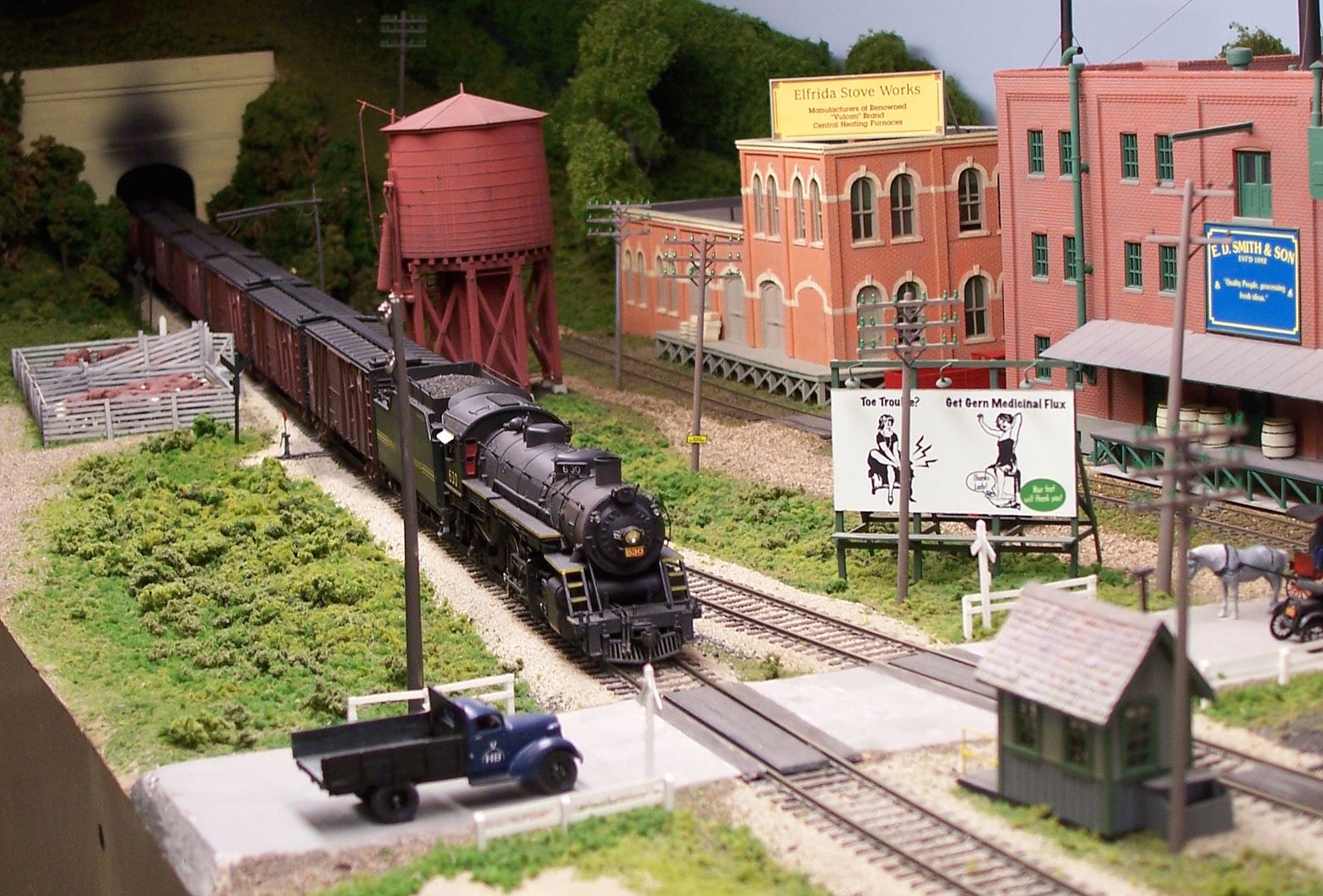
I didn’t want a tunnel, but I ended-up with one because I had planned to eventually create a partial upper level for my layout.
Here’s the upper end of it, with a train coming through…
…and the lower end (by about 2")…
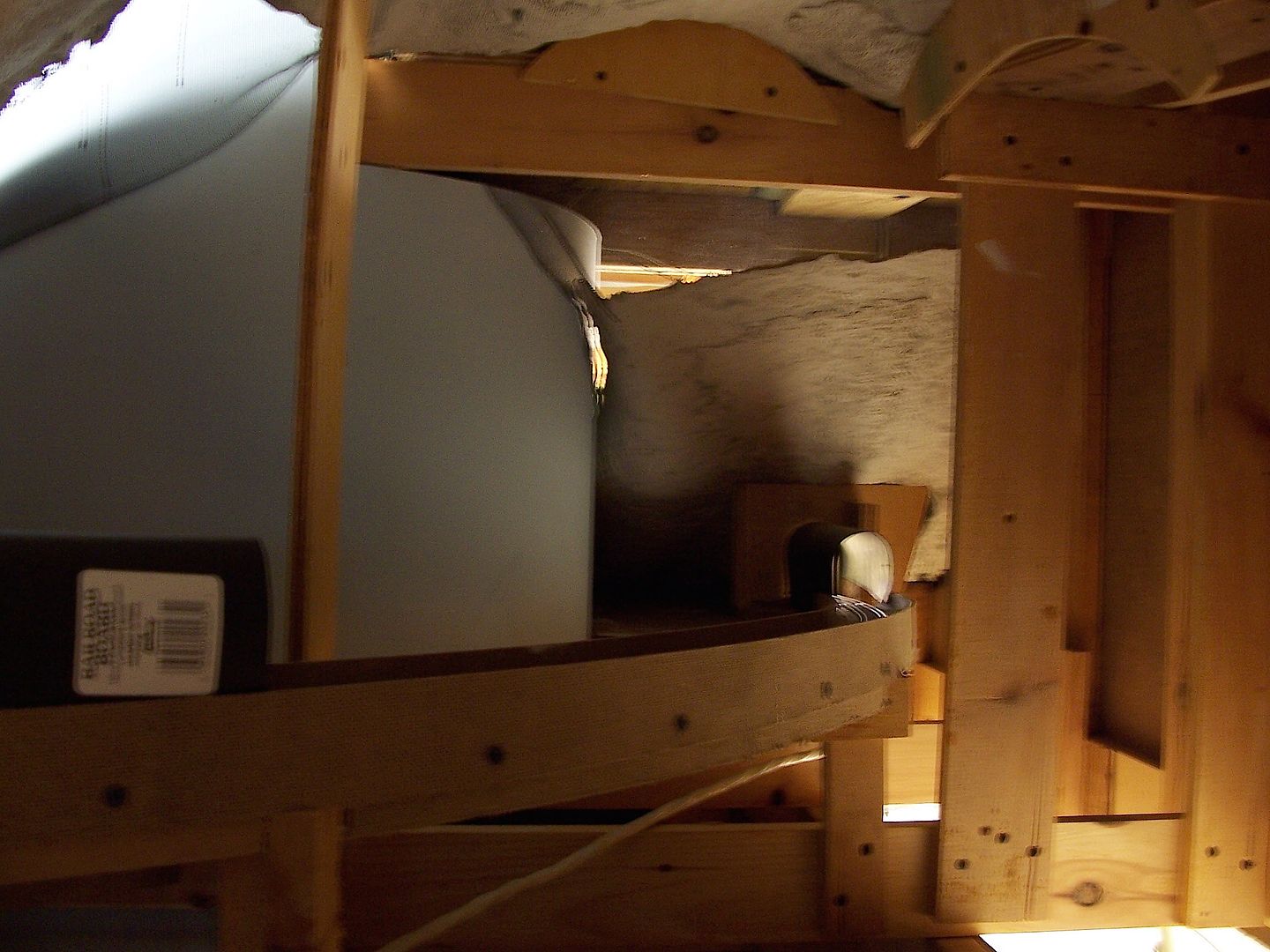
…and a view from under the layout…
The curving track and relatively steep grades present a challenge for most trains, so I’m not at all embarrassed to have included a tunnel on my layout.
The grade to the partial upper level is even more of a challenge…much longer and with many more curves.
Rock faces that have been stressed, and that have someone operating a smallish vehicle that is trying to impart even MORE stress to the surface materials, have a way of falling apart into slabs and chunks. Then, gravity obliges and does the rest.
Open pit mines usually drill down from the top surface, pack the holes with explosives and blast. Then loaders/shovels pick up the rubble. In granite quarries, they drill and cut the rock for dimension stone.
I would let it slide. Let’s face it, what we enjoy is called MODEL railroading. Like other posts have said, Our trains and buildings are plastic, and much much smaller than the real thing no matter what scale. Most of us build layouts depicting hundreds of miles of railroad, when in actuality the scale miles may be just a few. I’ve been to many outstanding layouts where the talents of their owners and or club are just jaw dropping. But in no way were these layouts “real”. This is coming from a retired 30 year professional Class 1 engineer. We all make compromises in our layouts. My layout is in no way real. Taking a boxcar from Acme tire in City A to Joes tire warehouse in City B a scale mile down the tracks is no way real. But it’s what makes me happy. A big part of model railroading is imagination, which makes it fun and exciting. Bottom line, you do what you want on your layout, and don’t worry about what other people may think. Do what makes you happy, it’s your layout!!!
Around here, on the Niagara Escarpment, most of the limestone quarries use dynamite, then large shovels to load the material into large dump trucks, to carry the material to the crusher.
The pits are often on two sides of the local highways, with short tunnels connecting them.
As far as I’m aware, there are no nearby railways transporting local limestone, as most of it moves in largish trucks…many with integral conveyors.
I get that. I have many compromises on my layout, most having to do with compression.
A big appeal of the hobby to me is figuring things out and then implementing it, from carpentry to electronics to building models to prototype info. That includes learning how industries work and making a representation. As an example anyone who knows steel would see immediately that my mill could never be found in the real world, but I don’t think anything about it is technically incorrect. To the casual observer it looks like a steel mill.
I spend very little time actually running trains.
[quote user=“doctorwayne”]
Around here, on the Niagara Escarpment, most of the limestone quarries use dynamite, then large shovels to load the material into large dump trucks, to carry the material to the crusher.
“Someplace” need not be modeled. On my layout, I have a loads-in/emptys-out track for coal gons and hoppers going to-and-from the mine and coal dock…
…and to your question, there is another loads-in/emptys-out track for general freight cars where the pick-up track is the other end of the drop-off track. The “geographic location” of these pick-up and drop-off points varies with each car as appropriate for the car type and is specified on the car card.
On the layout, both sets are double tracks, but a single track works too, its just not as convenient.
You know what adds to a model railroad’s level of realism? Places where the model, at least theoretically, connects with the rest of the railroad, or to other railroads. These “off-stage” locations mean that you can bring any kind of rolling stock or cargo that you need onto the layout–and the whole point of building railroads is to move freight around from long distances away, whether they’re components needed to produce a product (going towards an industry) or a finished product going out (coming from that industry.) So if you have an interchange track or a “backstage” where you can introduce cars entering and departing the layout, you have an ideal place to bring in cars of limestone or whatever else you need–and a place to deliver cars filled with steel being shipped out to places presumably a long distance from the steel mill.
I have a similar “realism” quandary on my layout; most of my industries are related to produce packing and canning in California’s central valley, which means a whole lot of my rolling stock is ice-cooled refrigerator cars. Unfortunately, there weren’t any icing stations in the locations that I actually model, which means that, theoretically, it’s unrealistic for me to deliver warm reefers to my packing houses–East Coast produce shippers would be most displeased to open a car filled with fresh peaches from the Sacramento Valley that had traveled cross-country at late summer temperatures!